Unknown's avatar

About Sv Ice Floe

I sail on a vessel named Ice Floe

Sailing the Caribbean

Overnight Sail from St. John to St. Martin

In retrospect, the weather, wind, and sea forecast for the evening was a bit confusing.  It forecast clear skies, moderate wind and seas, with winds from the east / northeast.  The conclusion of the report was that it was not favorable for our planned sail, nor would it be for at least another week.  We felt moderate winds and seas sounded good and, as we would be traveling southeast, the wind direction could work, if not ideal.  We decided to go – we were ready to get on our way.
Our passage was without event, albeit 26 hours, 19 of which were spent motor-sailing.  The winds were more out of the southeast – right on our nose – and varied from 5 knots to over 20 when we encountered small squalls of short duration.
Fishing remains a challenge due to the sargassum seaweed that catches on the line and hooks.  After less than a half hour in the water our planer popped to the surface with a load of weed it could no longer bear.  We ran a couple of lines right behind the boat that tend to be clear of the weed for a few hours and then called it quits.  You can’t catch a fish if you aren’t fishing, but I can’t find any recipes for sargassum.
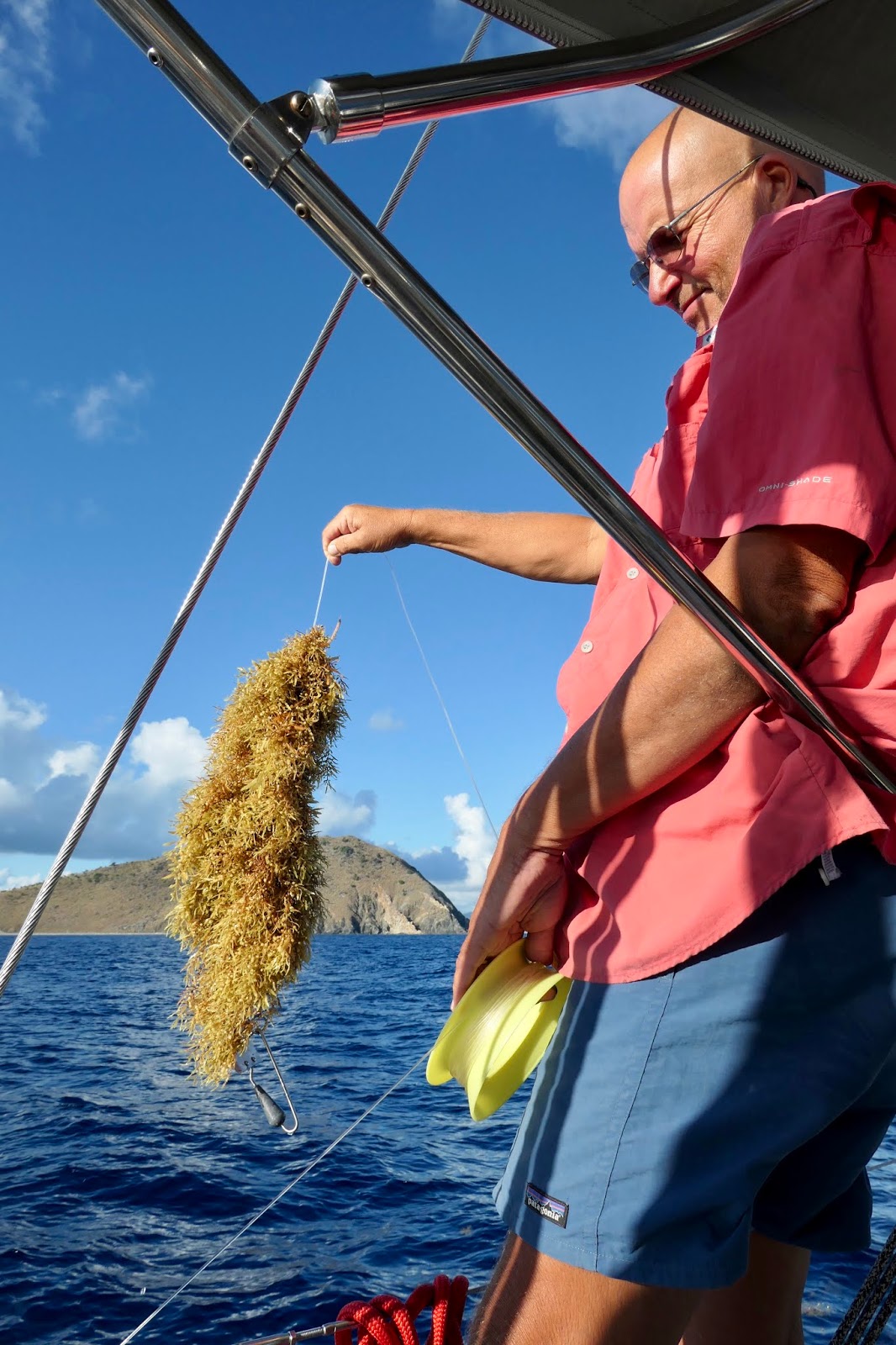
George with the best catch of the day
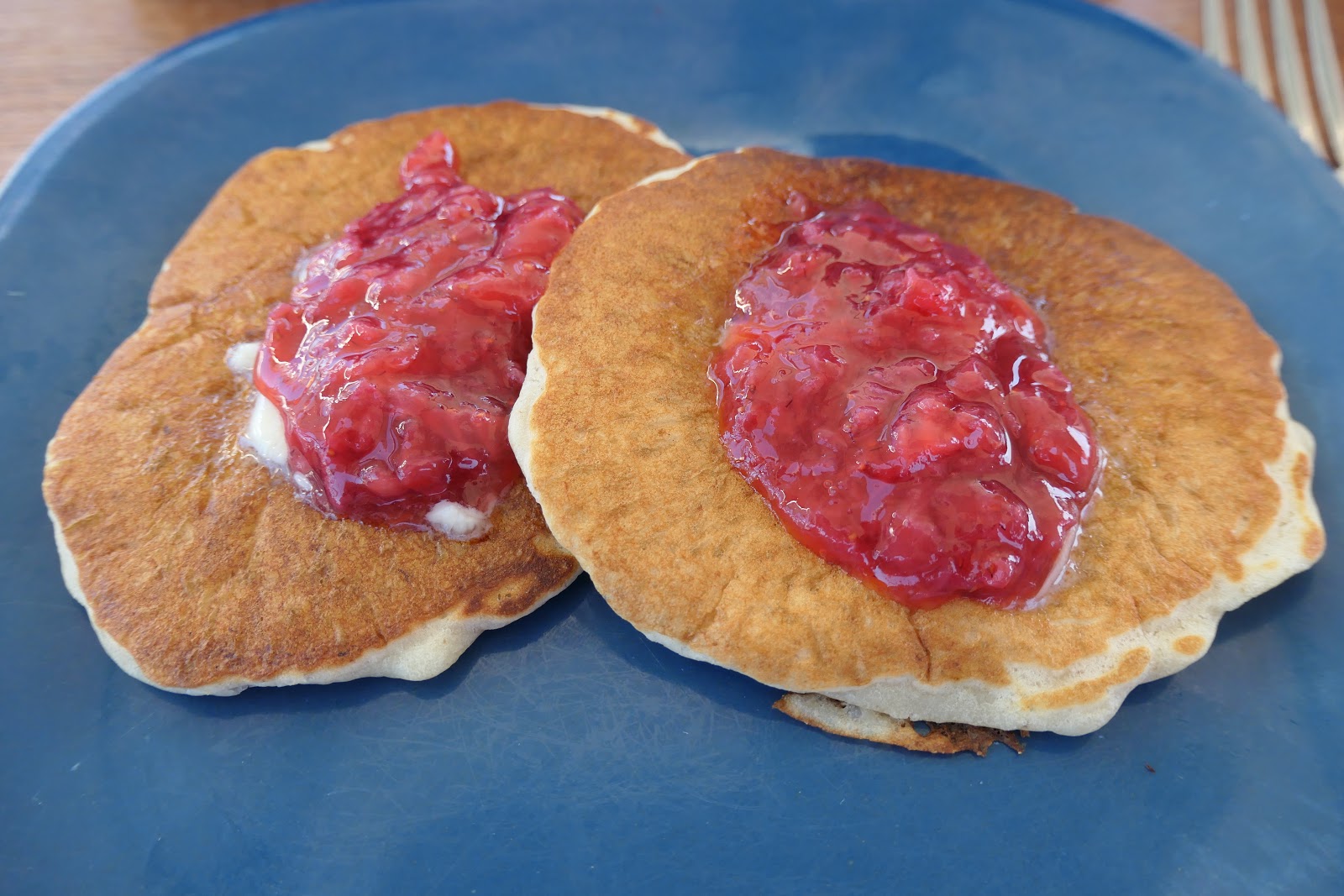
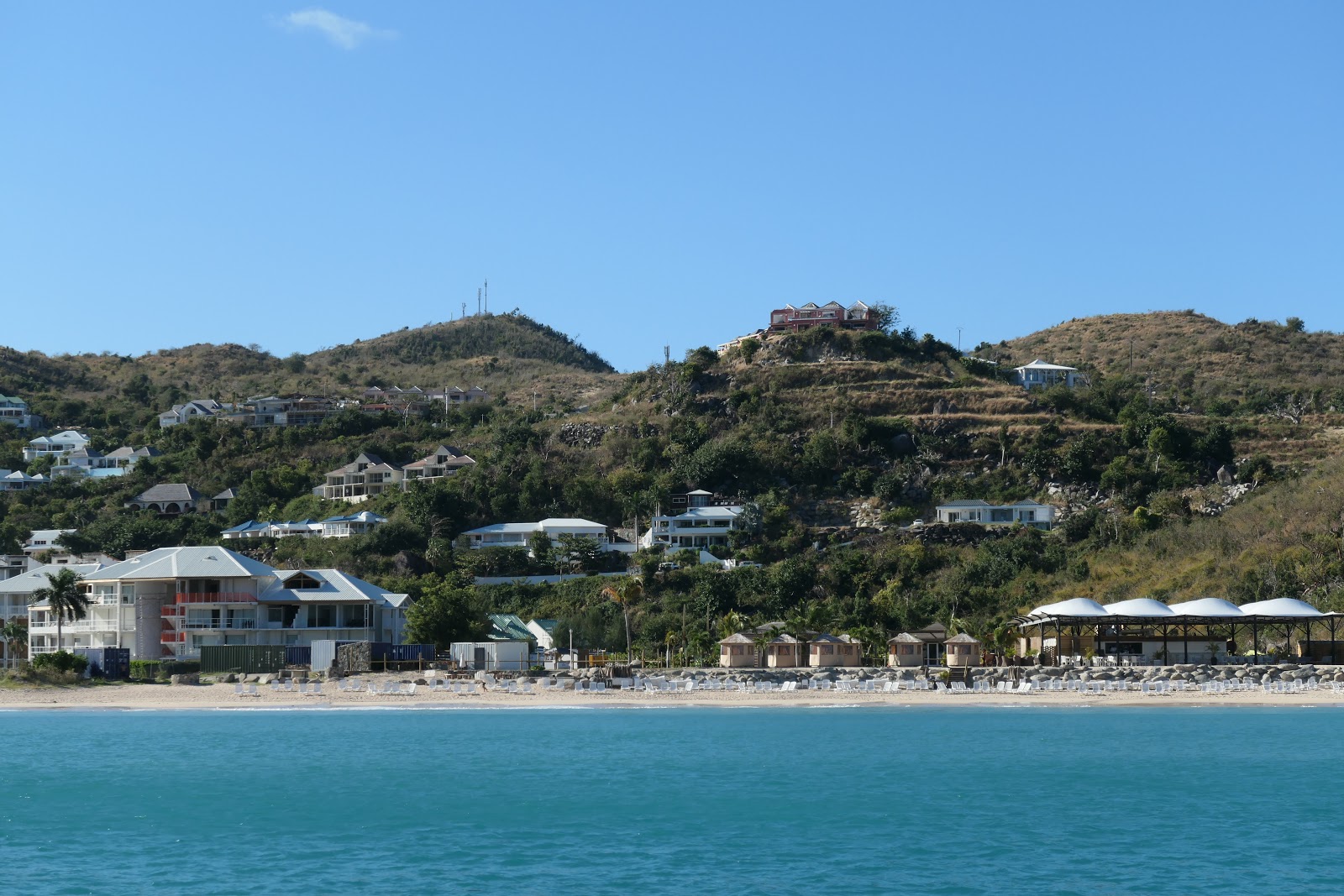
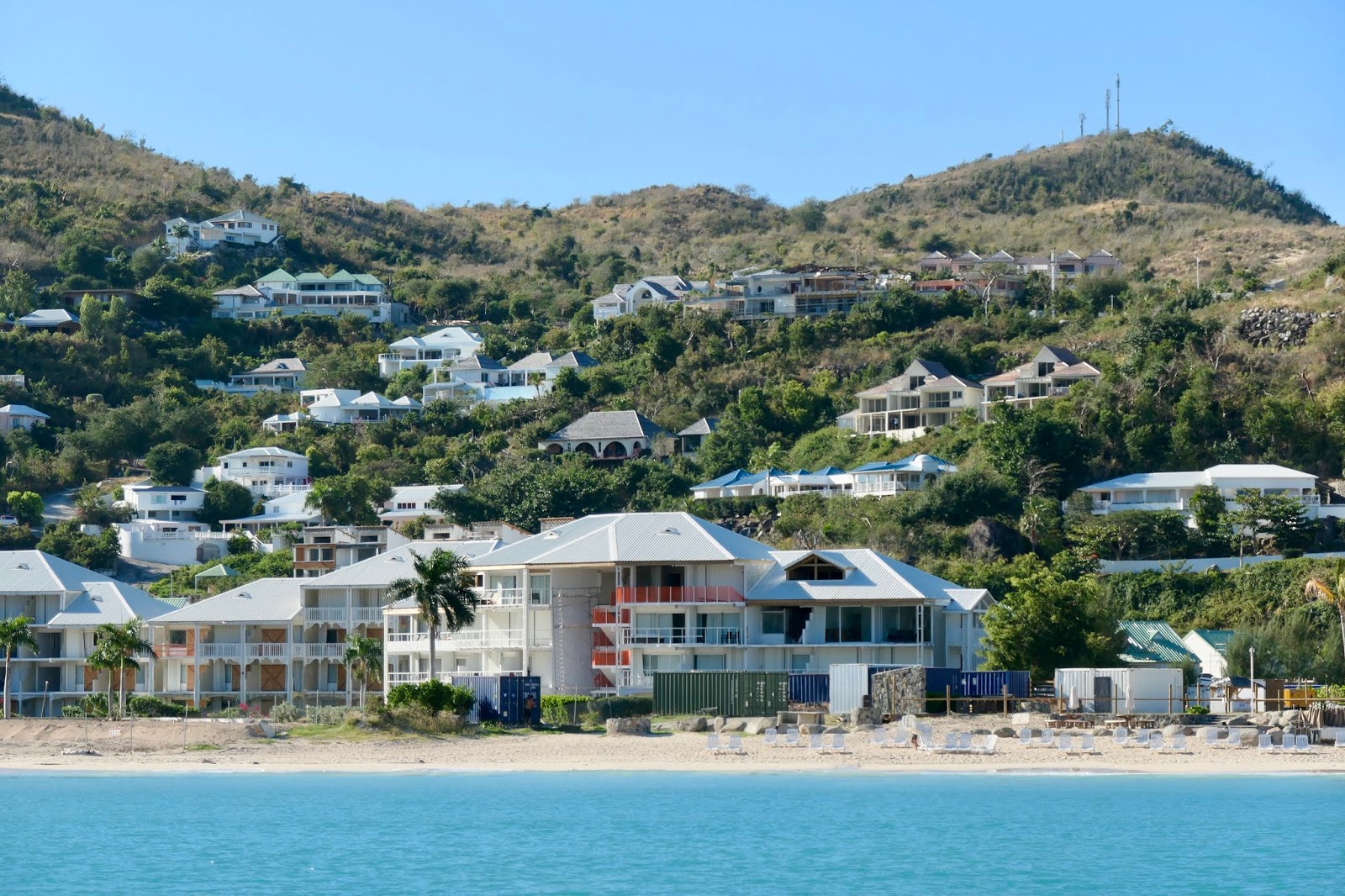
We anchored off St. Martin in Anse Marcel, with a view of incredibly turquoise waters and the Riu Palace Resort.  We are not cleared to visit St. Martin.  Although we are on the French side of the island, the pet restrictions follow those imposed by the Dutch side, and Duhkxy will not meet those until next year.  The VHF wafts French and we are lusting after pain au raisons and croissants but we must be patient.  We are having pancakes with freshly made strawberry jam.  George is prettying up Duhkxy and checking (on-line) into St Barthélemy (aka St. Barts), and then we will be off.  
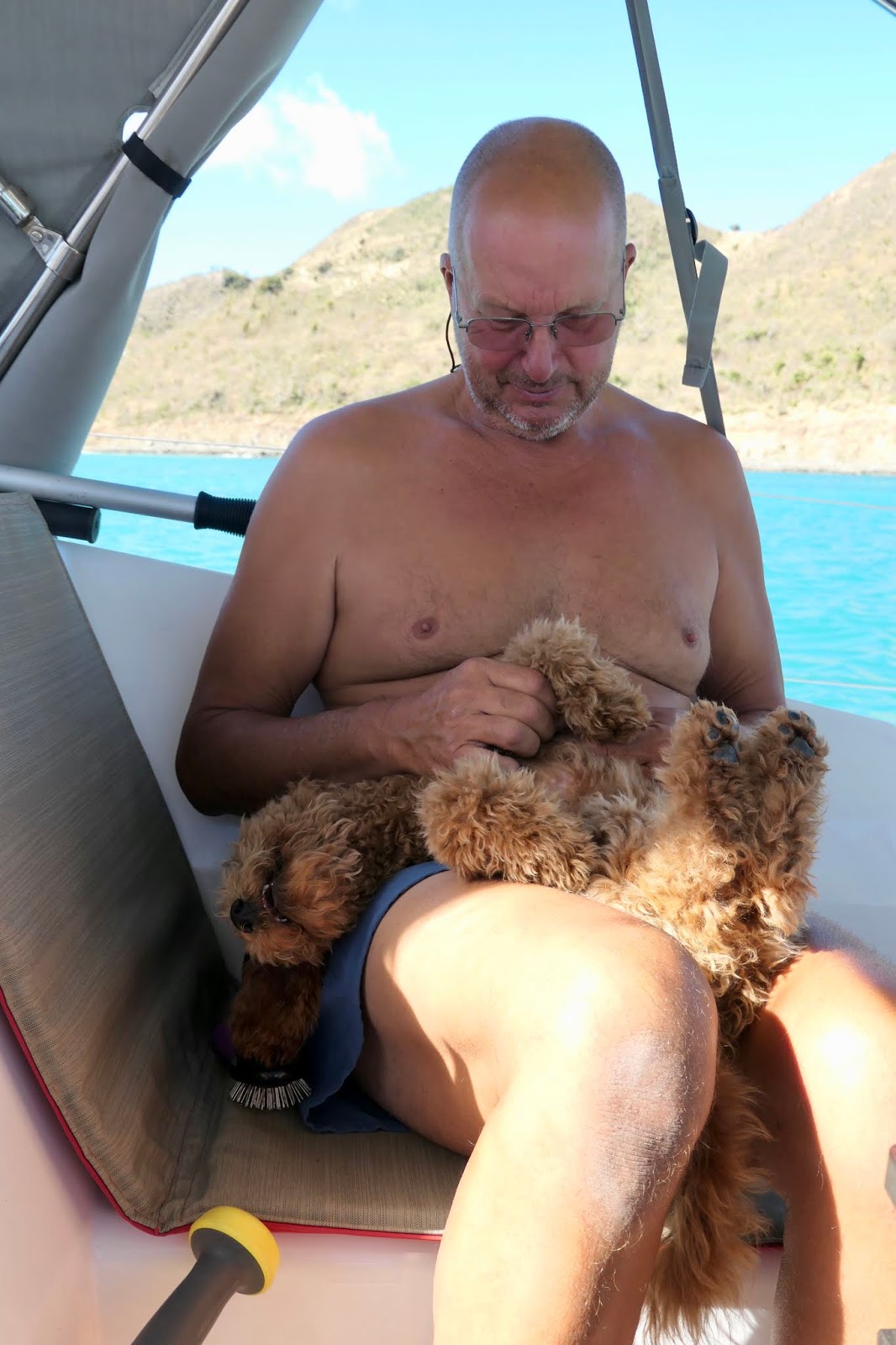
Dreadlocks are popular here, but not on dogs.  To keep them at bay, we keep Duhkxy’s hair short and he gets brushed at least several times each week.
Pancakes made with Mitch’s awesome sourdough.  He grew it from thin air in Flagstaff and we can revive it after it has been dried for travel.
Anchoring in the bay Anse Marcel

One of two hotels affiliated with the Riu Palace Resort, St. Martin

Off our stern, we see the heavily populated British territory, Anguilla, and a really smart-looking catamaran.  This 60ft cat is chartered and crewed.
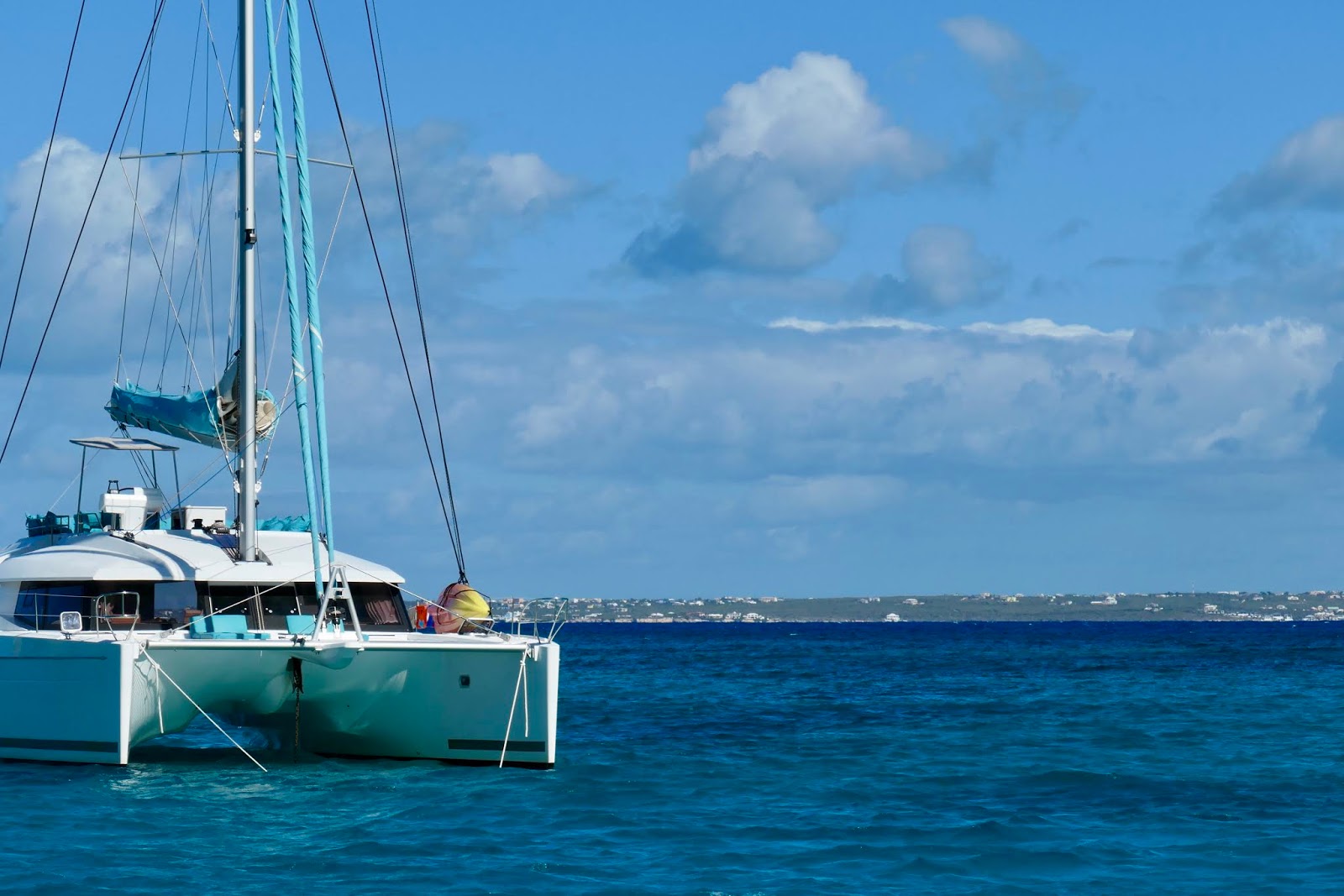
Anguilla, viewed from Anse Marcel

Caribbean Islands

I have often referred to the Caribbean as a collection of islands I imagine to be tropical paradises in the general geographic region south of the United State mainland and east of Mexico.  As we travel I make small efforts to be a bit more informed and find that I am not alone in my vague understanding of both the definition of what constitutes the Caribbean, as well as, the diversity of this combination of independent Island Nations and islands “belonging” to or with various types of affiliations with, remote sovereign nations (ie territories, commonwealths, et al.).
I now understand the Caribbean to be defined as those islands either, surrounded by the Caribbean Sea, or bordering it on one side with the Atlantic Ocean on the other.  However, some islands that fit that definition (ie those which are a part of Columbia, Honduras…) are not referred to as Caribbean islands and some islands that do not fit the definition (ie Turks & Caicos) are sometimes lumped in.
So, not so different from my original description.
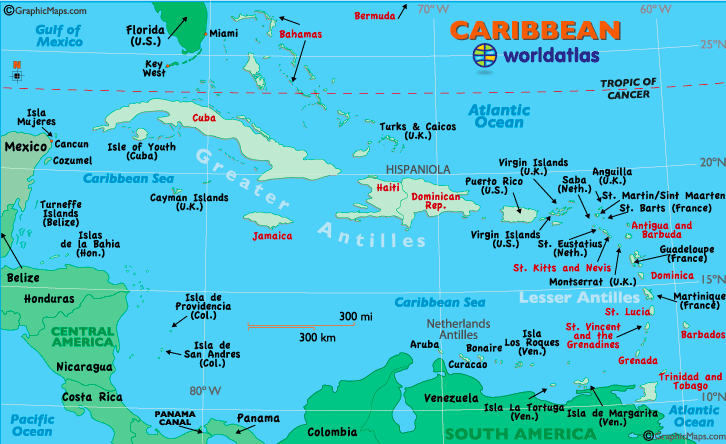
This map was reproduced from (Graphics.com)
However, when sailing through “The Caribbean Islands”, it becomes very important to know where you are, as each island, or group of islands, has its own regulations concerning Customs, Visa requirements, visiting pets, length of stay, et al).
This is very different from our previous explorations in the Bahamas and the Mediterranean, where, as citizens of the US, our passport obviated any need for a visa and allowed free passage between all the islands that constitute the Bahamas, and all countries that are part of the European Union.  You simply checked in with customs and border control once when entering the designated region, and once when exiting.  BTW – starting in 2020 US citizens will need a VISA to visit countries in the EU.  I can’t imagine how that happened!!

Where we plan to visit this year (2019)

The islands we will be visiting this year has largely been determined by their respective requirements for visiting pets and the fact that our boat started out in St. Thomas, US Virgin Islands.

Pet restrictions revolve heavily around concerns of rabies.  Britain and her territories have never had rabies and their requirements are the most restrictive (other than some which require quarantine).  Your pet need to be in good health, have all its shots up to date, be micro chipped or tattooed, have a UDSA certification of health.  This is pretty much the same for most of the islands.  However, those which like Britain, have not had rabies, require a rabies titre.  This is a measurement of the level of anti-rabies antibodies the dog has.  Dogs who have not had at least their first and second rabies vaccination, rarely mount enough rabies antibodies to pass this test.  We will not be visiting these islands until next year.  In addition, as previously noted, some islands require a lengthy quarantine.  We will not be visiting these islands at all.  

We will be heading east and south of the Virgin Islands to Grenada where Ice Floe will be stored on land throughout the hurricane-prone months.  Our current boat insurance policy requires you to store your boat further south in Trinidad / Tobago.  However, Duhkxy will not meet all the requirements to enter this country.  So we are switching to a company that, for a premium, will allow Grenada, which has rarely sustained a direct hit.  Along the way, we hope to visit the French islands (St. Barts, Guadeloupe, Martinique), Dominica, and St. Lucia. 
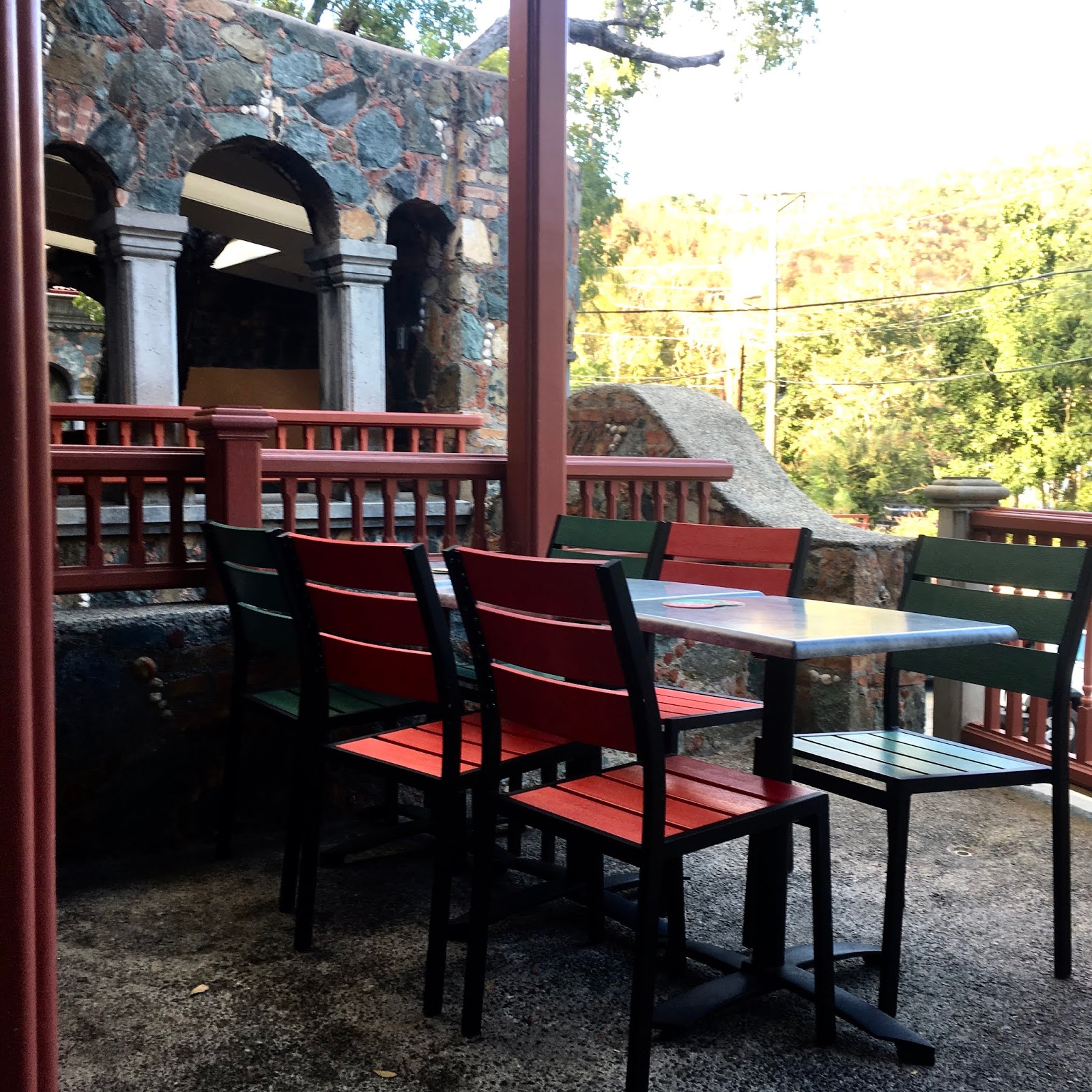
Cruz Bay, St. John

The Tap Room, Cruz Bay, St. John

Cruz Bay, St. John

We spent our last day in the Virgin Islands sailing the north coast of St. Thomas and then headed to St. John and moored in Caneel Bay.  We hopped in the dinghy for a ride to Cruz Bay to clear ourselves through US Customs and Border Control in preparation for our sail to St. Barts.  We missed the customs office by 30 seconds.  On line information indicated the offices hours were 7:00am to 6:00pm.  The agents’ information indicated they were open from 10:00am to 5:30pm.  These kinds of disconnects occur so often in the Caribbean, they are not worth mentioning.
Next stop – The Tap Room – where we enjoyed nachos and wonderful beers while we sent texts back and forth with Allison and Michael, recalling the summer vacation in 2009 we had on St. John when we rented a cottage.  We all had the same recollections of having enjoyed the beer and the R&Rs (rum and root beer) and saw our first iguana in a tree beyond the outdoor balcony where we were seated.  Riley, less than 2 years old at the time, went absolutely mad one evening – racing around and being silly – much to everyone’s delight other than her parents who knew she was exceedingly tired.
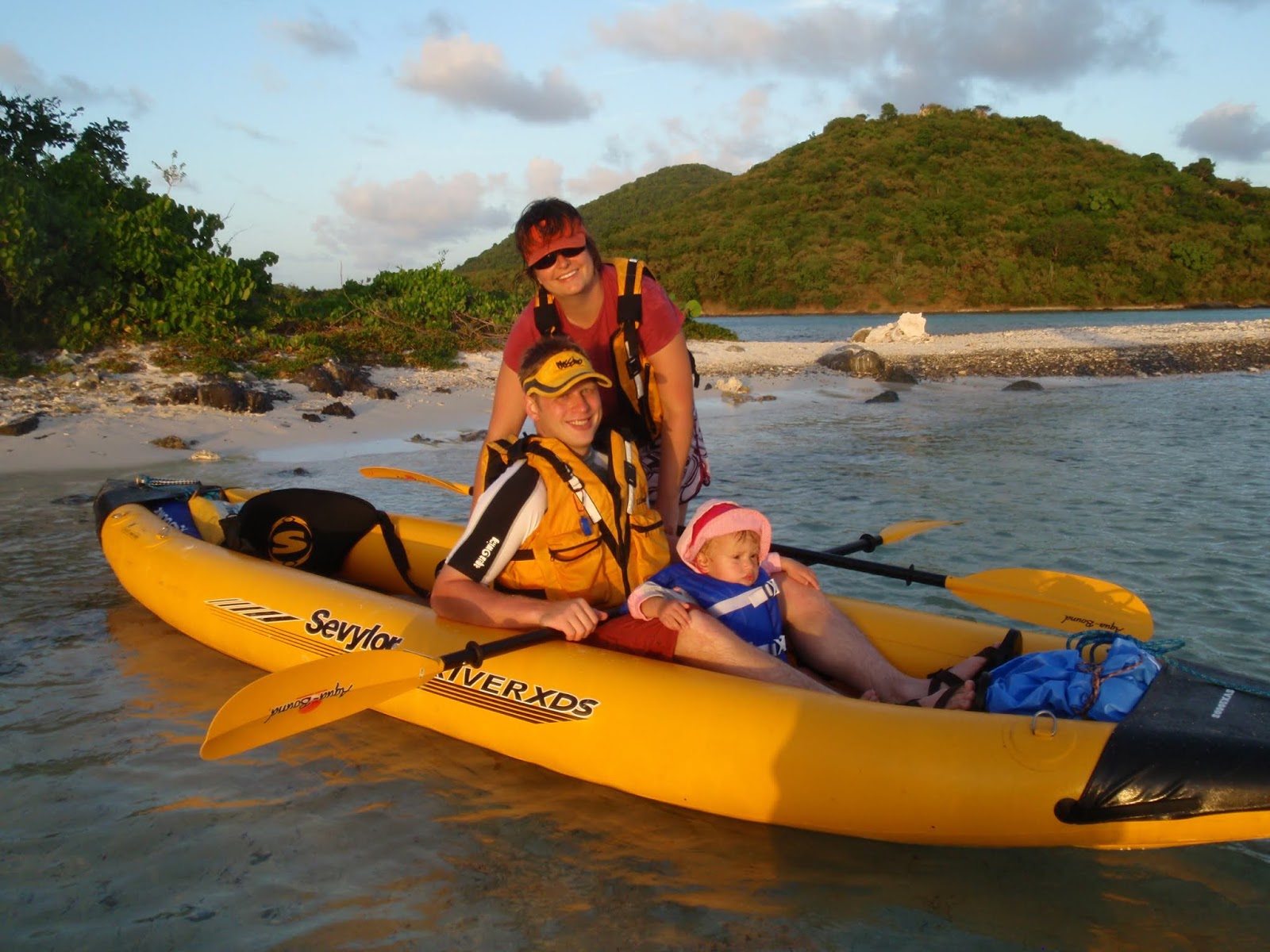
Allison, Mike, and Riley setting off in one of our blow up kayaks (St. John, US Virgin Islands, July, 2009).
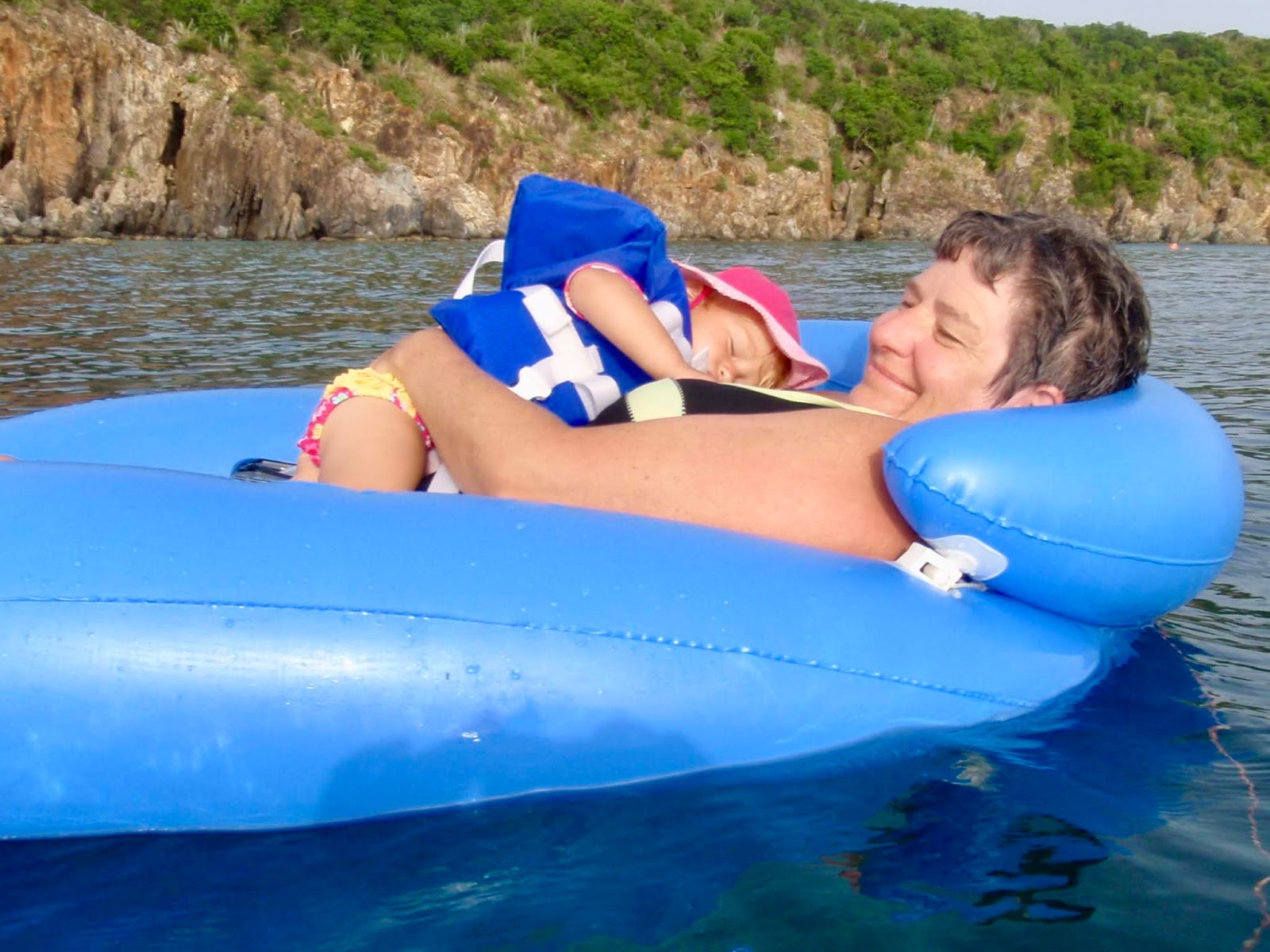
Mimi, always the first to volunteer for snuggling while the rest of the troupe is snorkeling (2009)]
St. John brings back so many wonderful memories. We rented a catamaran and sailed in the US and British Islands in 2011.  Marilla, Allison, Mike and Riley joined us for that vacation (Tristan and Mitch were not yet present in our lives).  This vacation solidified our dream to own our own cruising sailboat – and that was that!
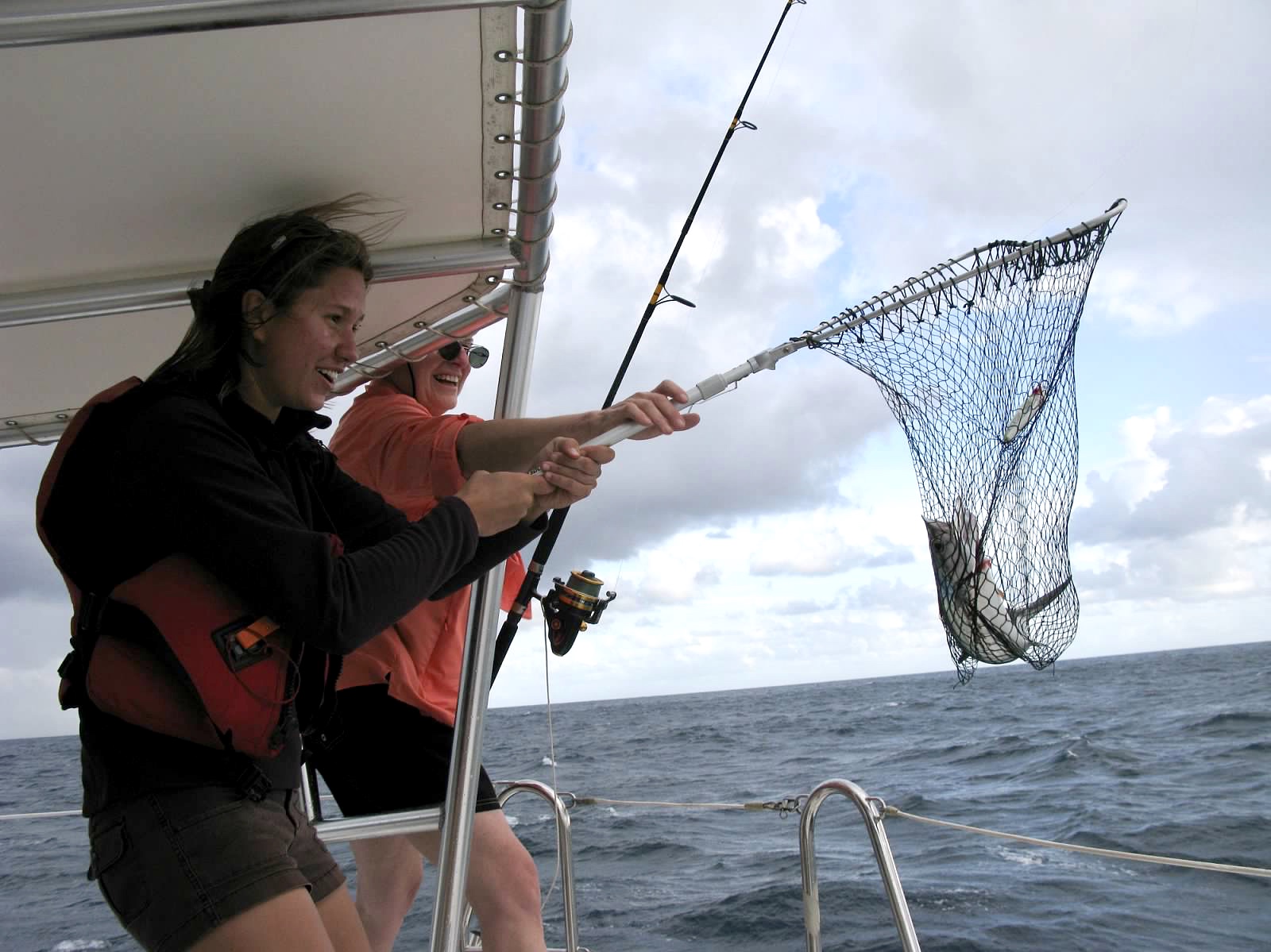
Marilla assisting with first catch from our rented Catamaran out of which the girls made yummy fish tacos (US Virgin Islands, 2011)
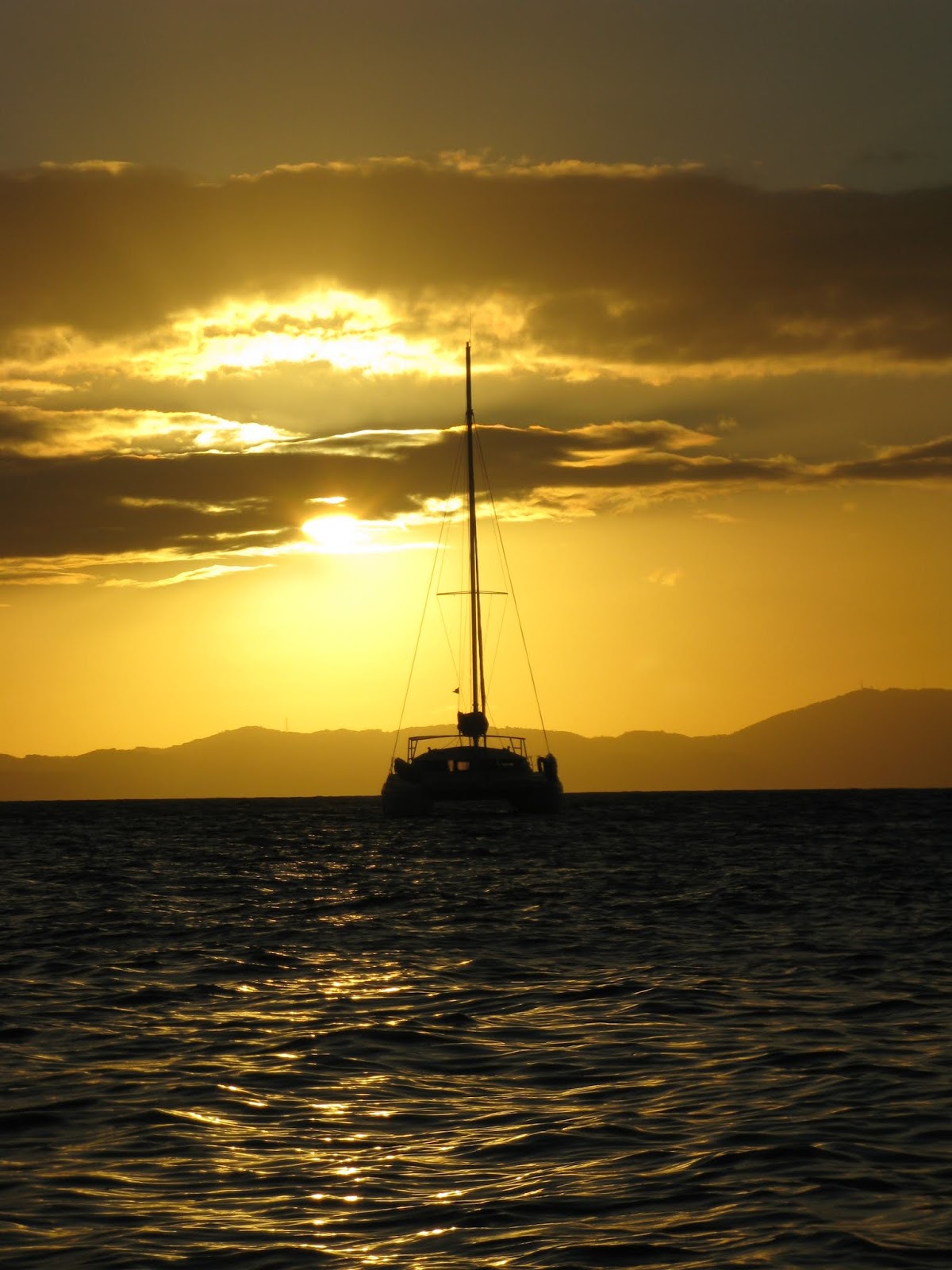
Chartered (bareboat) catamaran, US Virgin Islands, 2011)

Visiting St. John in 2019 we find much is the same as our memories, albeit damage from the 2017 hurricanes is still in evidence, especially in the shallow water reefs that took a beating.

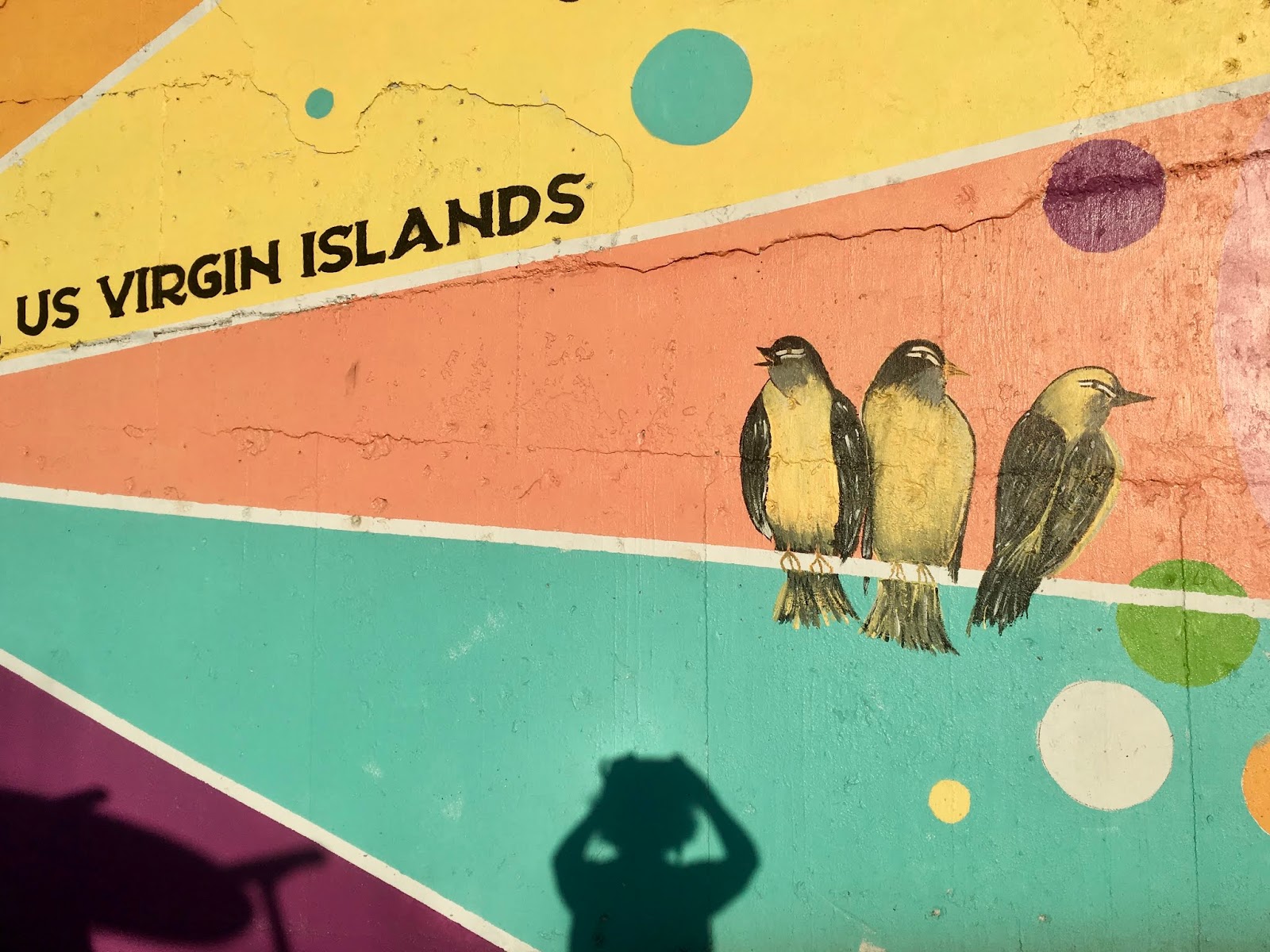
Mural depicting the ever-present, and beautiful Bananaquits
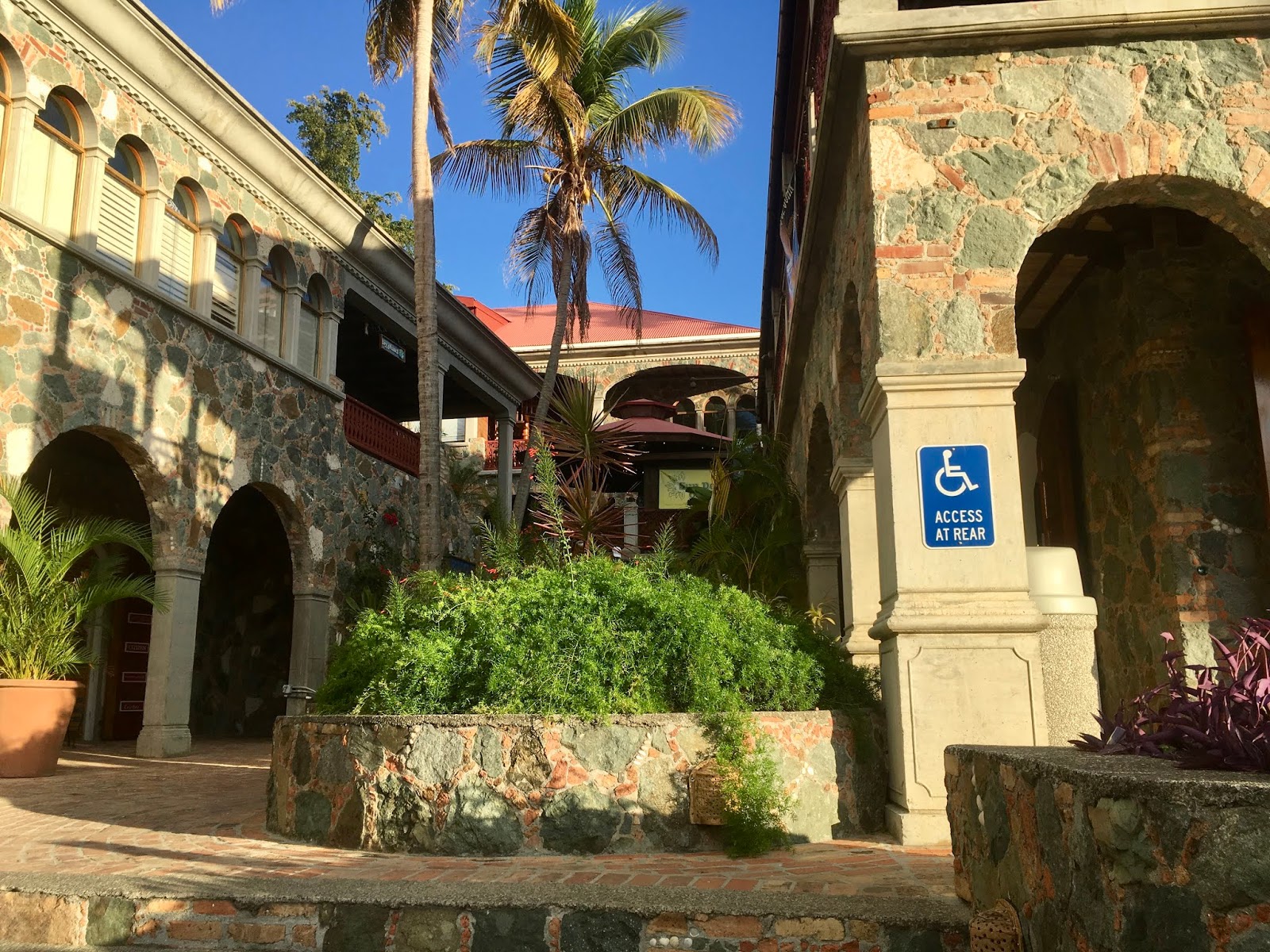
Beautiful shopping and restaurant area in Cruz Bay, St. John, US Virgin Islands

We are headed “down island” today, on an overnight sail to St. Barts.  We will start from the British Virgin Islands and exit just north of Virgin Gorda to make as much ground going east before turning south (as wind permits).

From the Mediterranean to the Caribbean

Catching Up

So much has transpired since my last post.

We arrived home from Italy mid-November.  To our delight and extreme indebtedness we found our property and home as if we had never left.  Our gardens were weed-free, our houseplants thriving, our home dusted and vacuumed, and our refrigerator provisioned with an assortment of fresh food including homemade salad, dressing, and curried butternut squash soup.  All, courtesy of Diana who wasn’t busy enough with her own life.

We had just enough time to catch up with some friends and we were on our way to Allison’s and Michael’s home for Thanksgiving.  Thanksgiving has always been my favorite holiday and doubly so, when family members from far away are able to come together.  We managed to have all the youngest members of our family make the trip to Michigan – Susan (California), Marilla and Mitch (Colorado), Brian, David and Brenna (Florida) – joining Allison, Mike, Riley and Tristan.  Margaret and Burt (Pennsylvania) and George and I represented the older generation.  It was a very special Thanksgiving.

Following Thanksgiving, Margaret and I spent very precious time with our oldest brother Tom. Sadly, our attempt to address his request to move to a long term care facility that would provide him with the support he needed was unsuccessful and Tom passed away less than 2 months later.  He joins, David, our youngest brother who passed away 10 years ago.  We will always love them, miss them and remember them.
David (Dave) Coughlin, left and Thomas (Tom) Coughlin, right


Life’s experiences include the highest, highs and the lowest, lows and we move forward – bringing both along with us.

Sailing in the Caribbean

Ice Floe arrived in St. Thomas the day after Thanksgiving and George flew down that same day to meet her and get her settled in at Crown Bay Marina, Charlotte Amalie, St. Thomas.  Details of the experience having her shipped across the Atlantic Ocean by Sevenstar Yacht Transport and our past two months in the Virgin Islands may be topics for future posts, time and internet permitting.  This one will serve to catch you up to the present.  

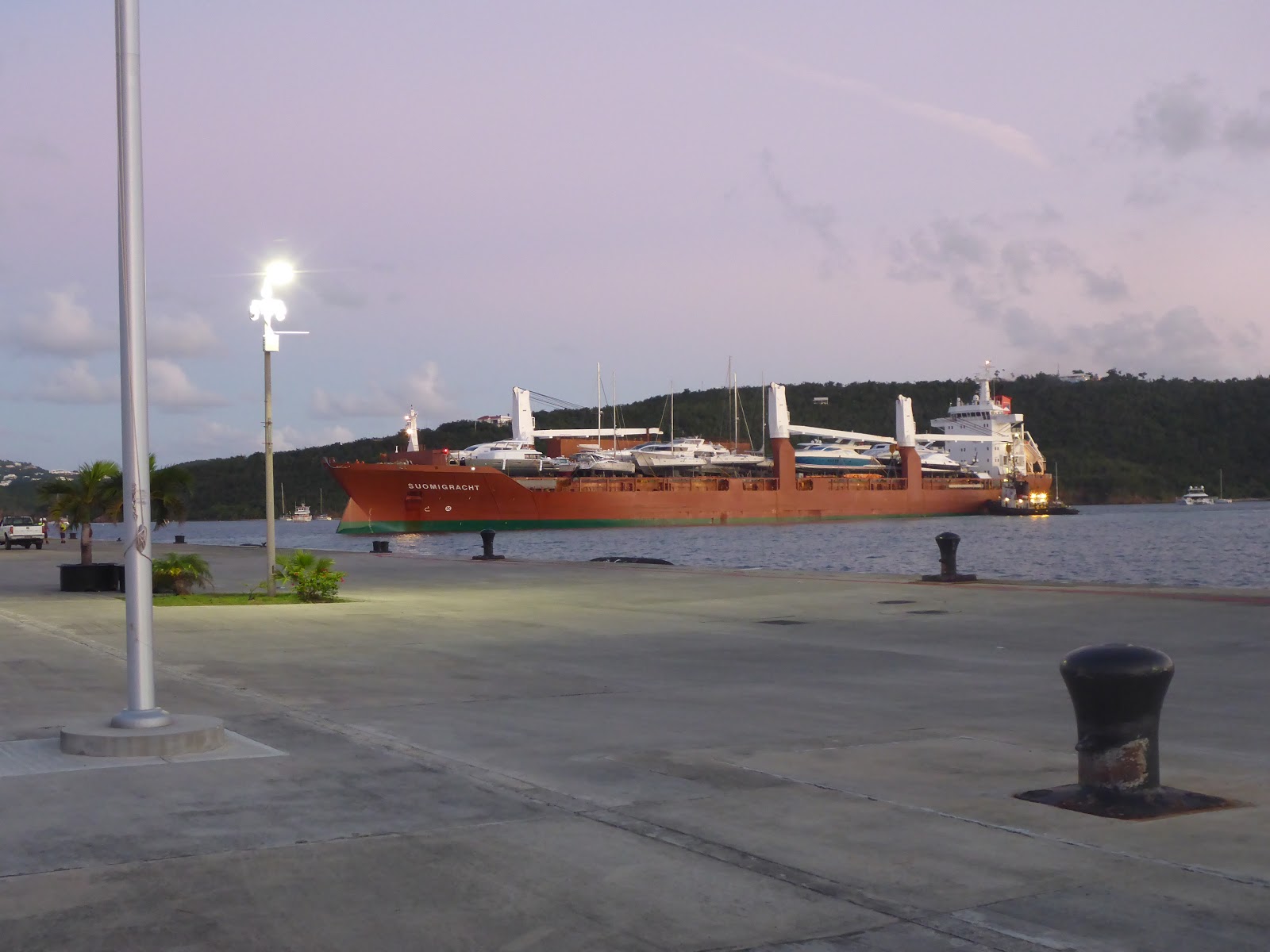
Boats are hauled from the water, put aboard ship in cradles that are welded to the ship, and strapped down for the passage.


George flew back north several days later, having already swapped the loaner prop for our refurbished one, refitted Ice Floe’s cooking fuel from butane to propane, lowered the stove so we could fully open the cabinet above it, and installed the grill.

Duhkxy, (Nov 29) at exactly 8 weeks of age, on ride from Lancaster to his new home

He joined me at Margaret’s and Burt’s, who had driven me from Michigan to their home so we could visit Tom AND attend the Broadway smash hit “Hamilton”, then playing in Buffalo.  Margaret, Burt, George and I had seen it on Broadway and Margaret, and I could not miss this second opportunity.  Margaret’s friend Ruth joined us and we could not have had a crazier, more memorable, and fun time.

Next stop was Lancaster, Pennsylvania to pick up the most recent member of our family, Duhkxy (pronounced Ducksy).

After Duhkxy got the all clear from the veterinarian and we fulfilled all requirements to bring him to the US Virgin Islands, we flew back to Ice Floe on December 29.


Duhkxy – First full day on Ice Floe – No adjustment issues!
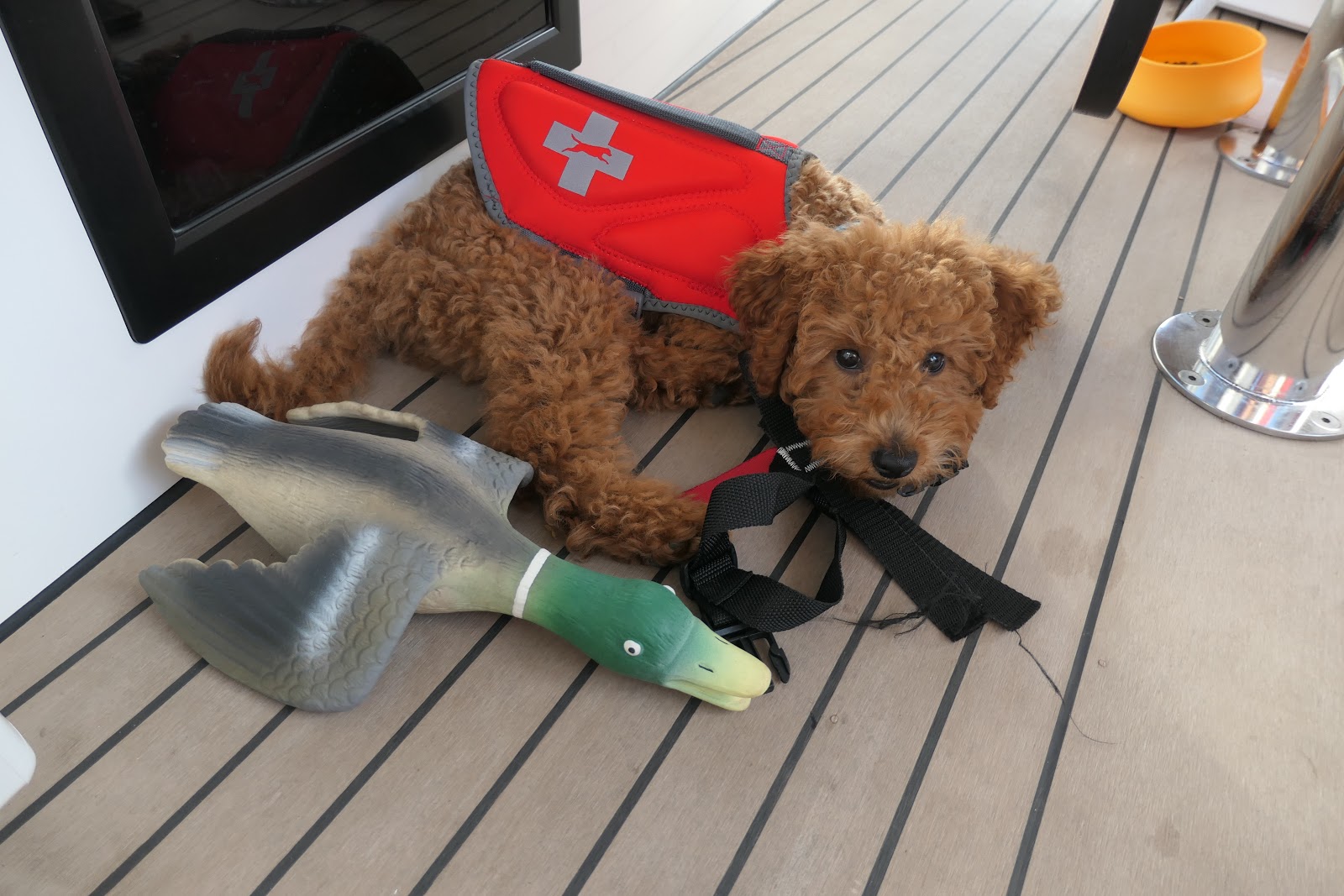
Duhkxy, Dec 23 on Ice Floe (Day 3) showing off his life jacket and rubber duck
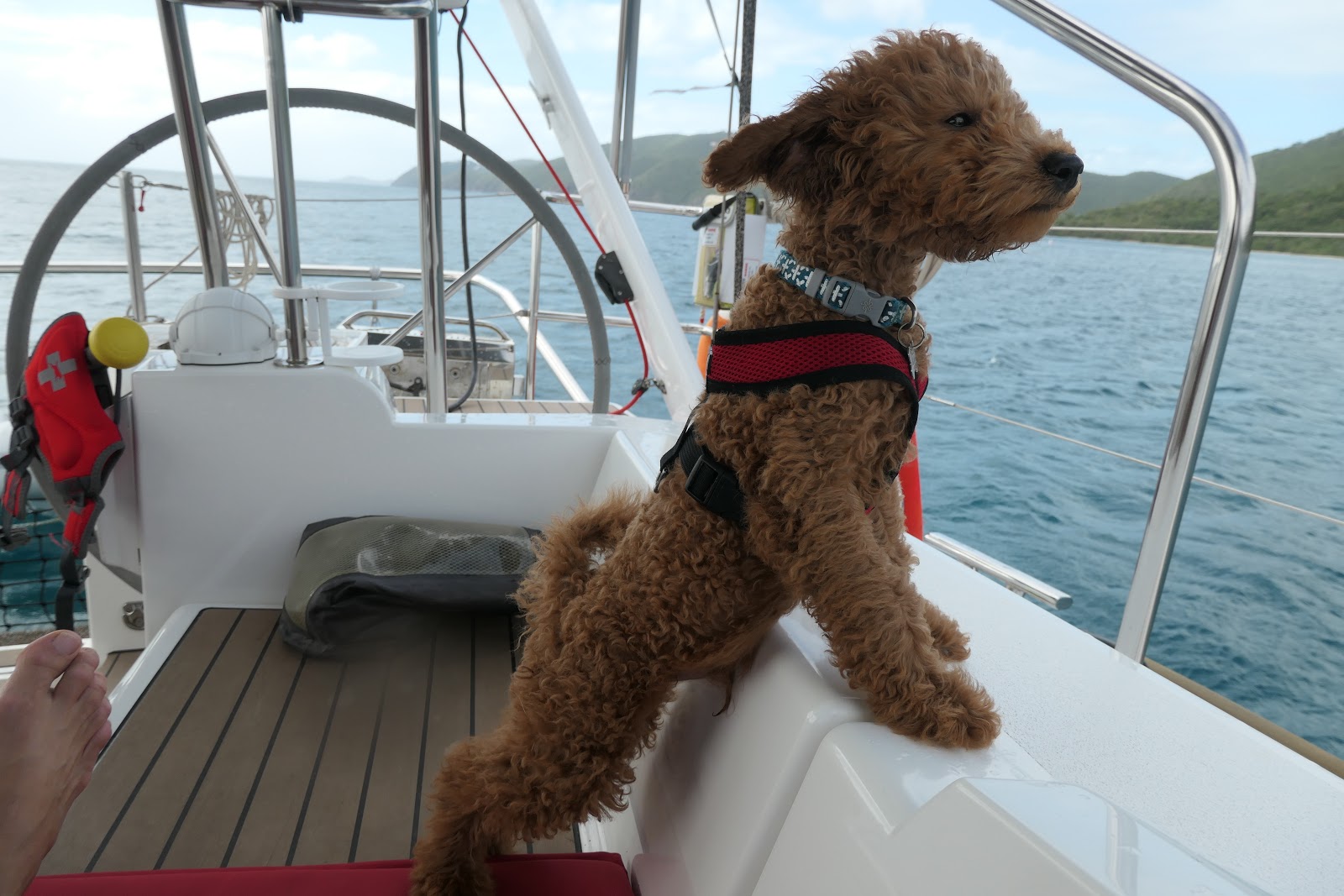
Duhkxy, Dec 29 – master sailor

We spent our first several weeks in Crown Bay Marina putting the boat back in order (cleaning, putting sails back up, and installing a wind generator and water maker).  These, in combination with our solar panel have given us independence to anchor out as long as we want rather than needing to stay periodically in marinas.  The winds are so nearly constant, we are able to sail almost exclusively – we have hardly put a dent in our first tank of diesel.

To date, we have been visiting the Virgin Islands (US, St. Thomas, St. John, and St Croix; Spanish, Culebra, Cullebrita, Vieques and Puerto Rico).  The British Virgin Islands were off limits as Duhkxy is not old enough to have completed some of the requirements for a dog to visit.

Zoni Beach in Culebra

Marilyn came to join us for a bit over a week in February which we spent in the Spanish Virgin Islands.  George and I were visiting these islands for the first time, as well, so it was all new for all of us.  Through Marilyn’s eyes we remembered our first impressions of countries where poverty is prevalent, litter is heartbreaking, and waste management stretched beyond capacity.  In combination with the damage from the 2017 hurricanes, this paradise has been sorely challenged. 


Nonetheless, we had a wonderful time snorkeling off beaches (turtles!) and touring via golf cart in Culebra.
Touring Culebra by golf cart
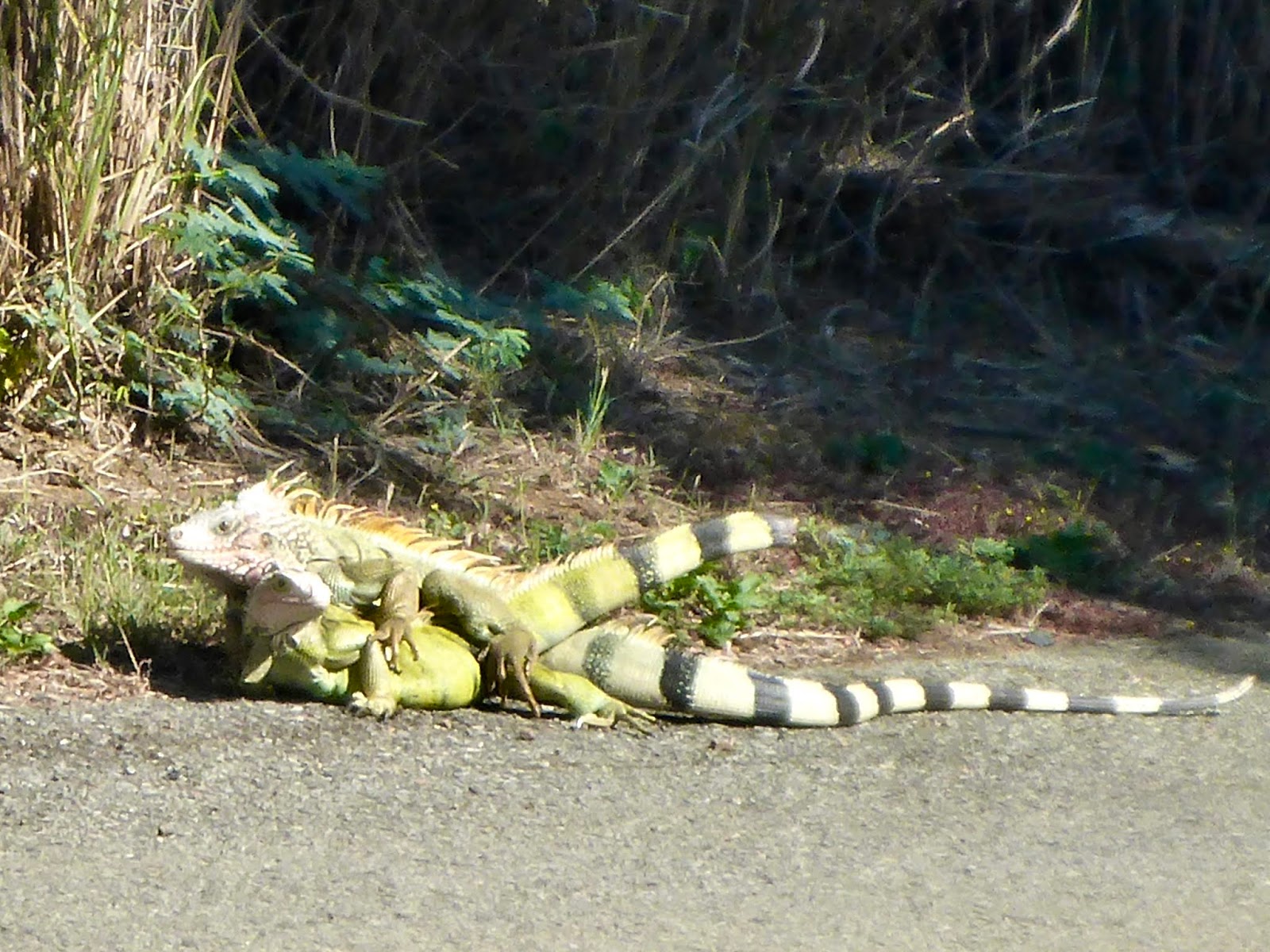
Fornicating Iguanas interrupted while touring Culebra via golf cart
We spent a night anchoring off Vieques and kayaked that night in the most amazing bioluminescent bay (Mosquito Bay) you could imagine.  The bioluminescent dinoflagelates lit up to show every fish swimming by (and there were hundreds).  If you placed your hand in the water and drew it out, it was as if the Milky Way was in the palm of your hand.  Just amazing.

 We enjoyed some local dishes and relaxed on the boat.  Winds were relatively calm.
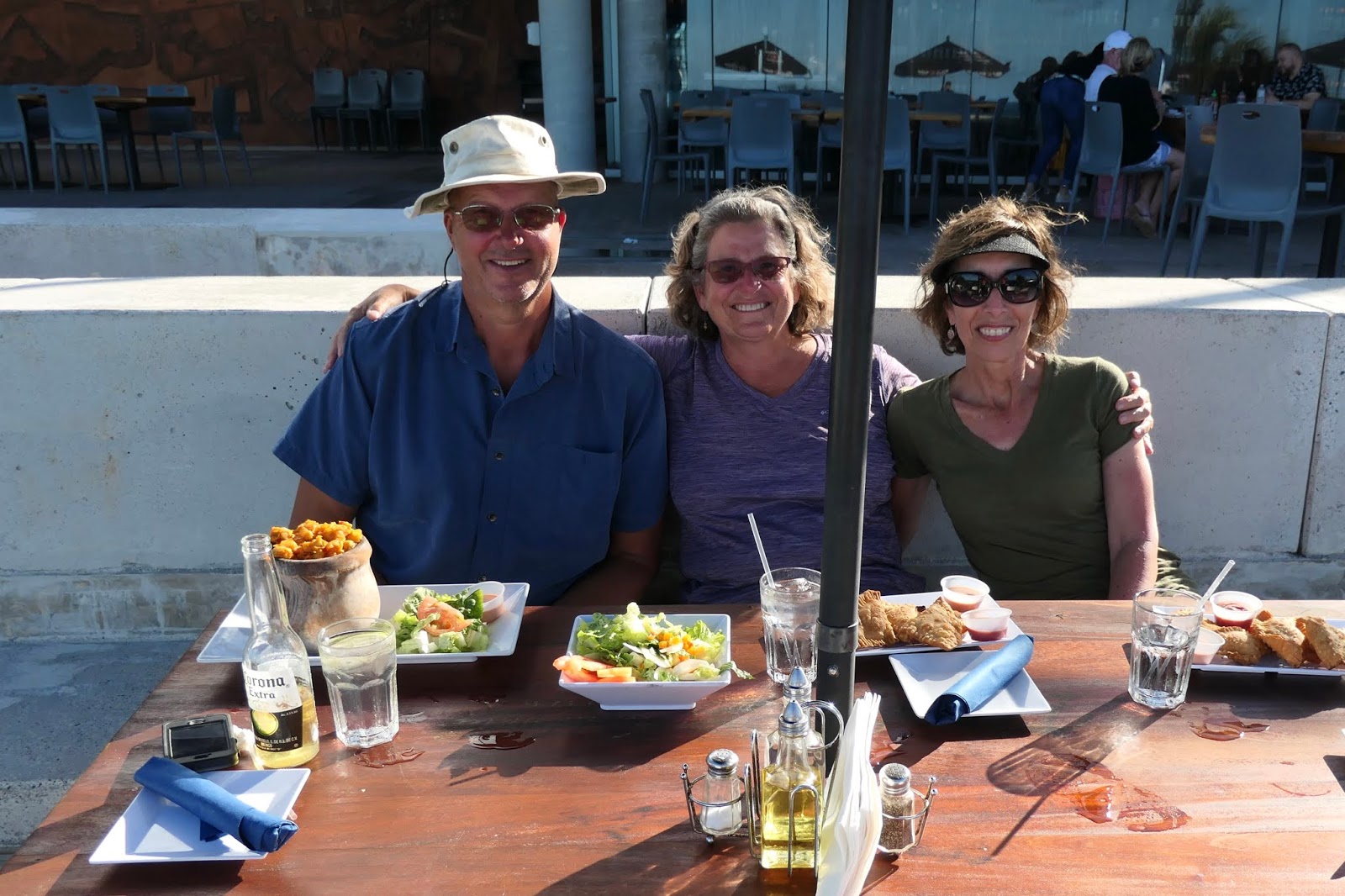
Marilyn ate everything on her plate (mostly)
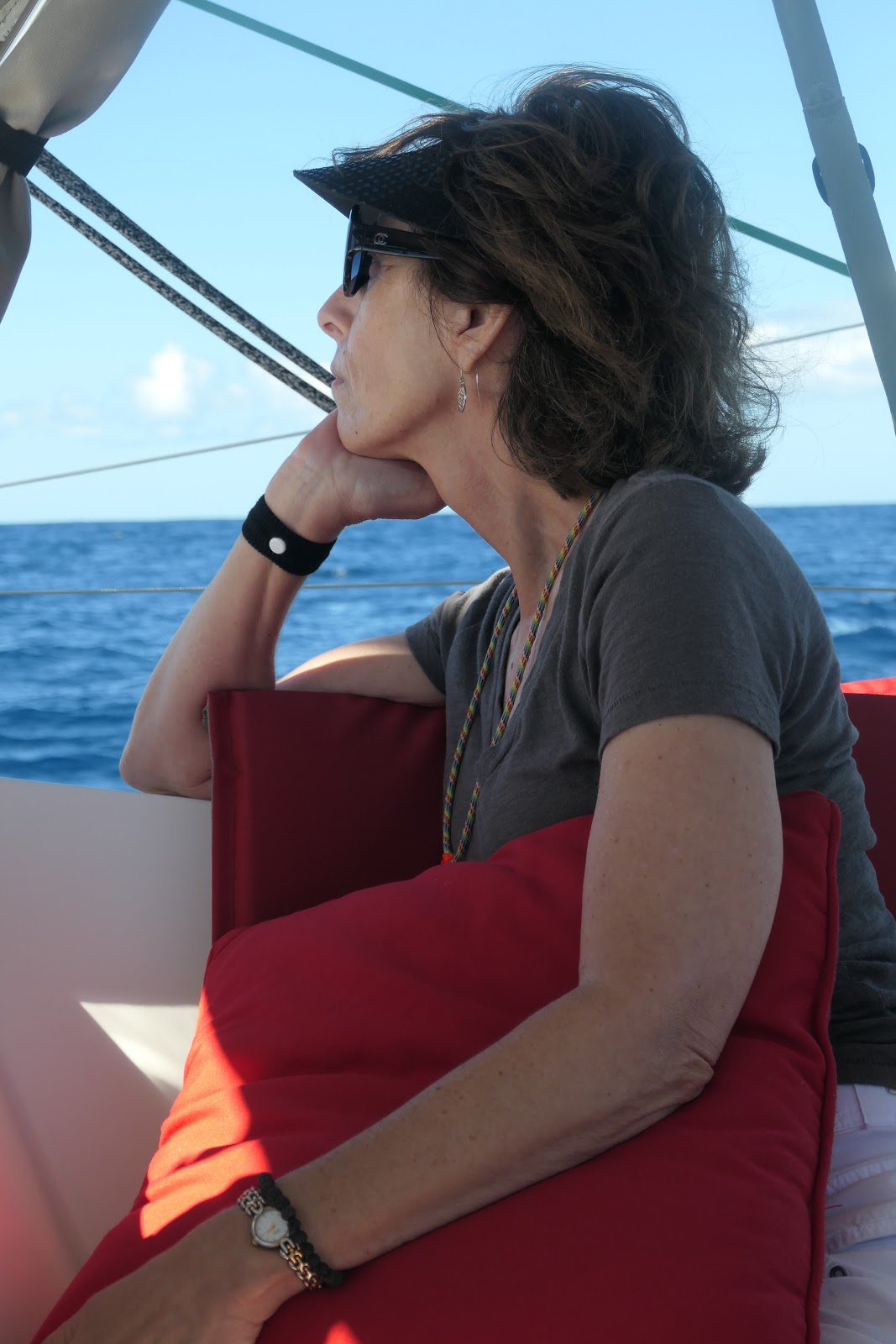
Marilyn on Ice Floe
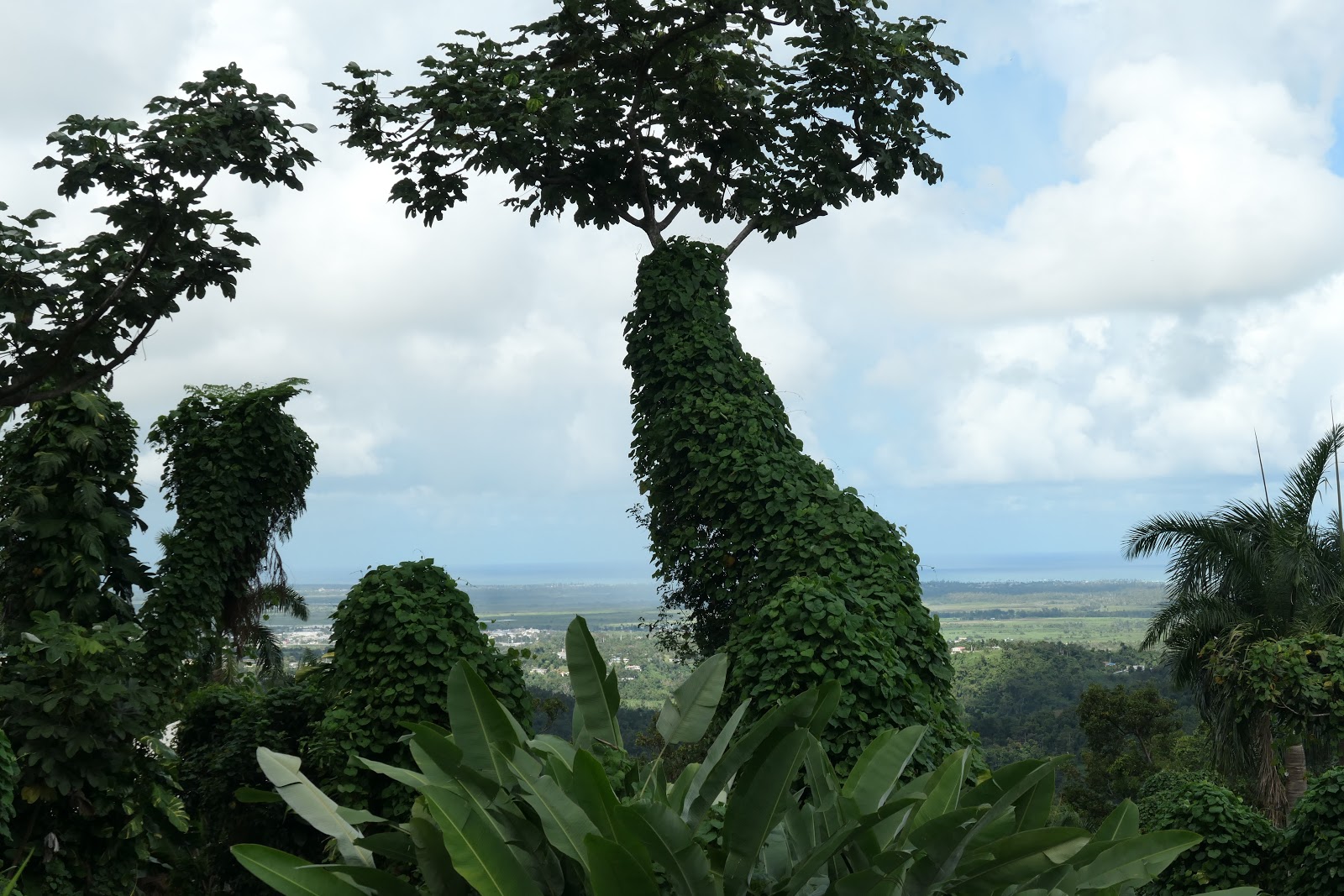
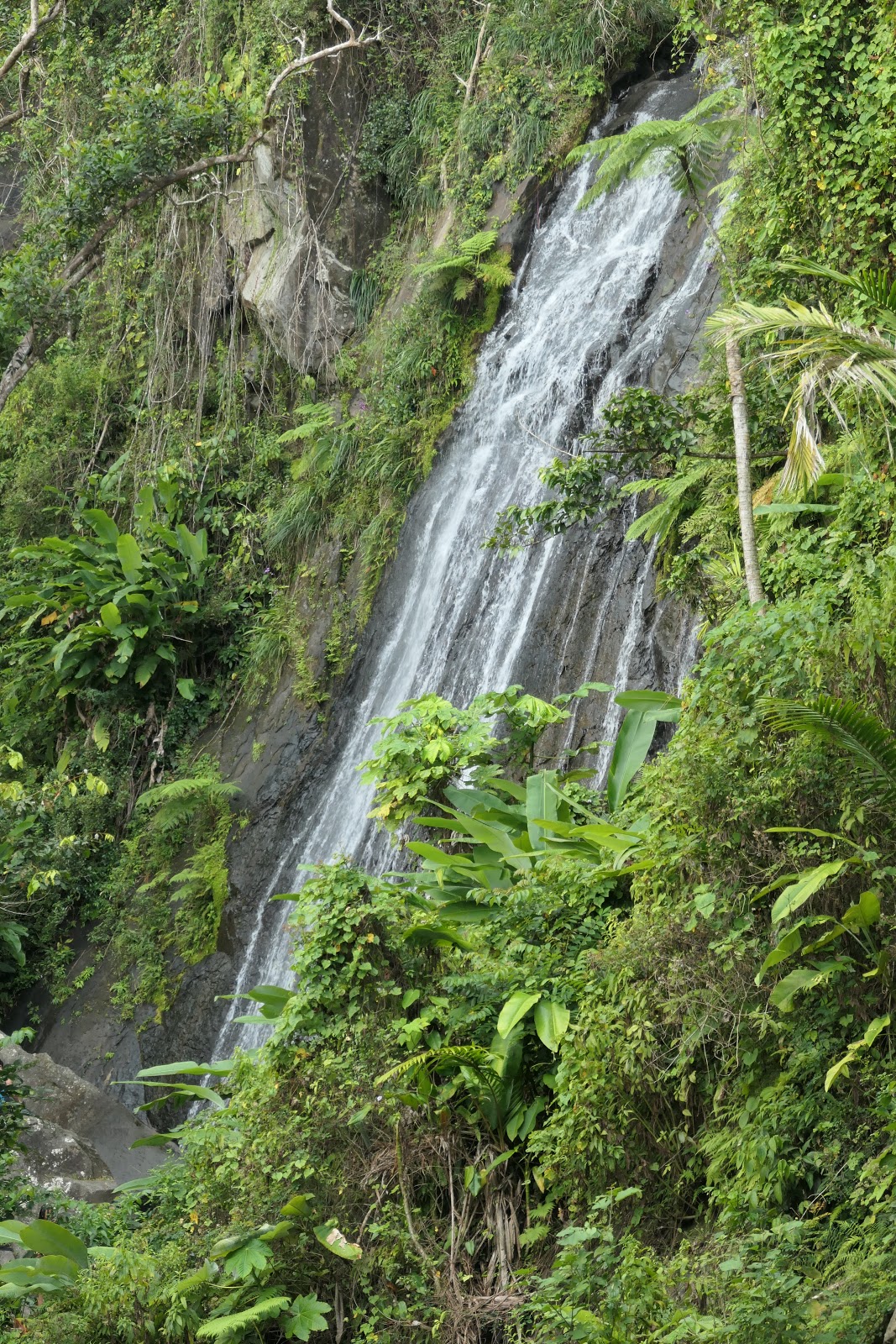
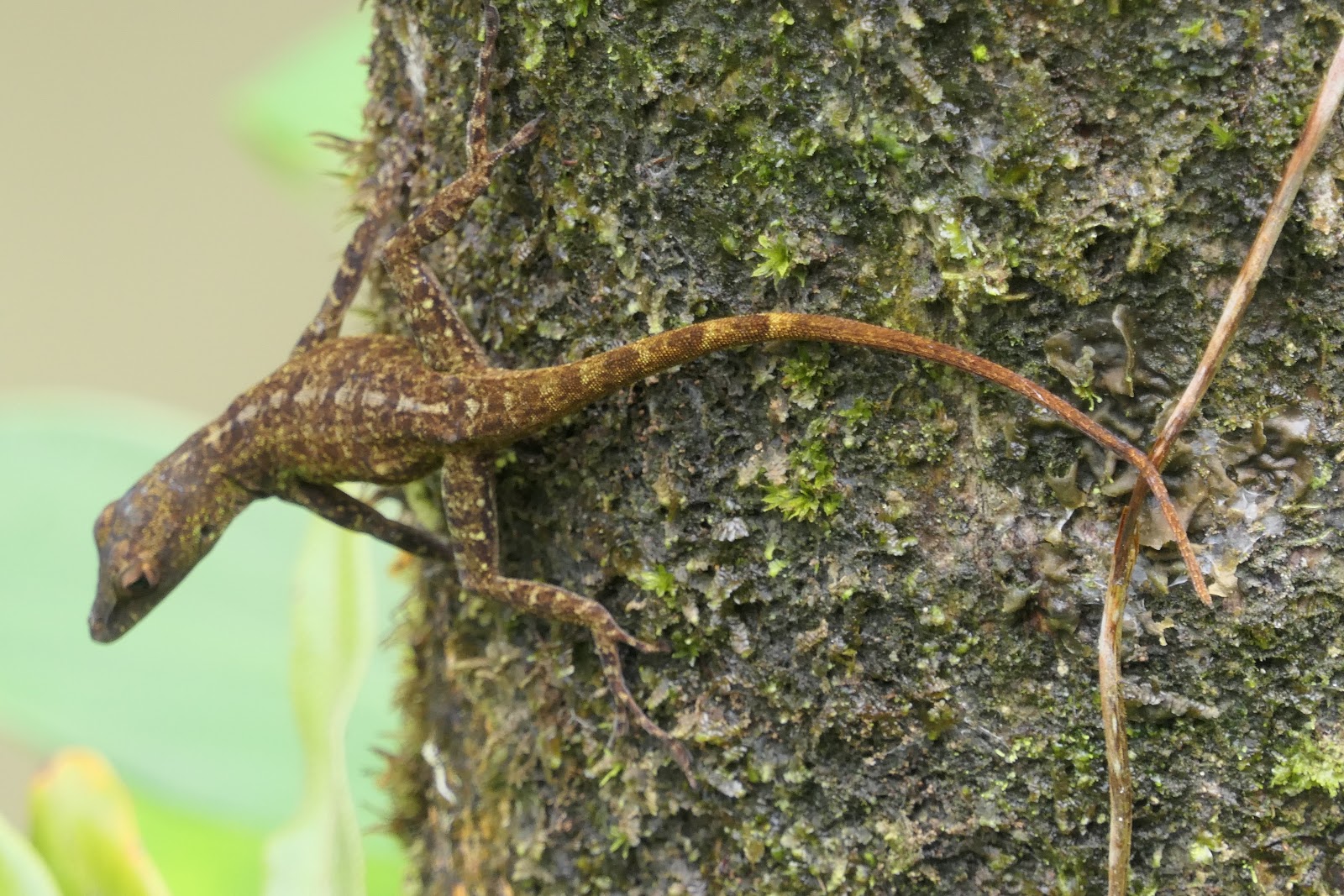
We rented a car to explore Puerto Rico.  First day out we visited the El Yunque Rainforest.
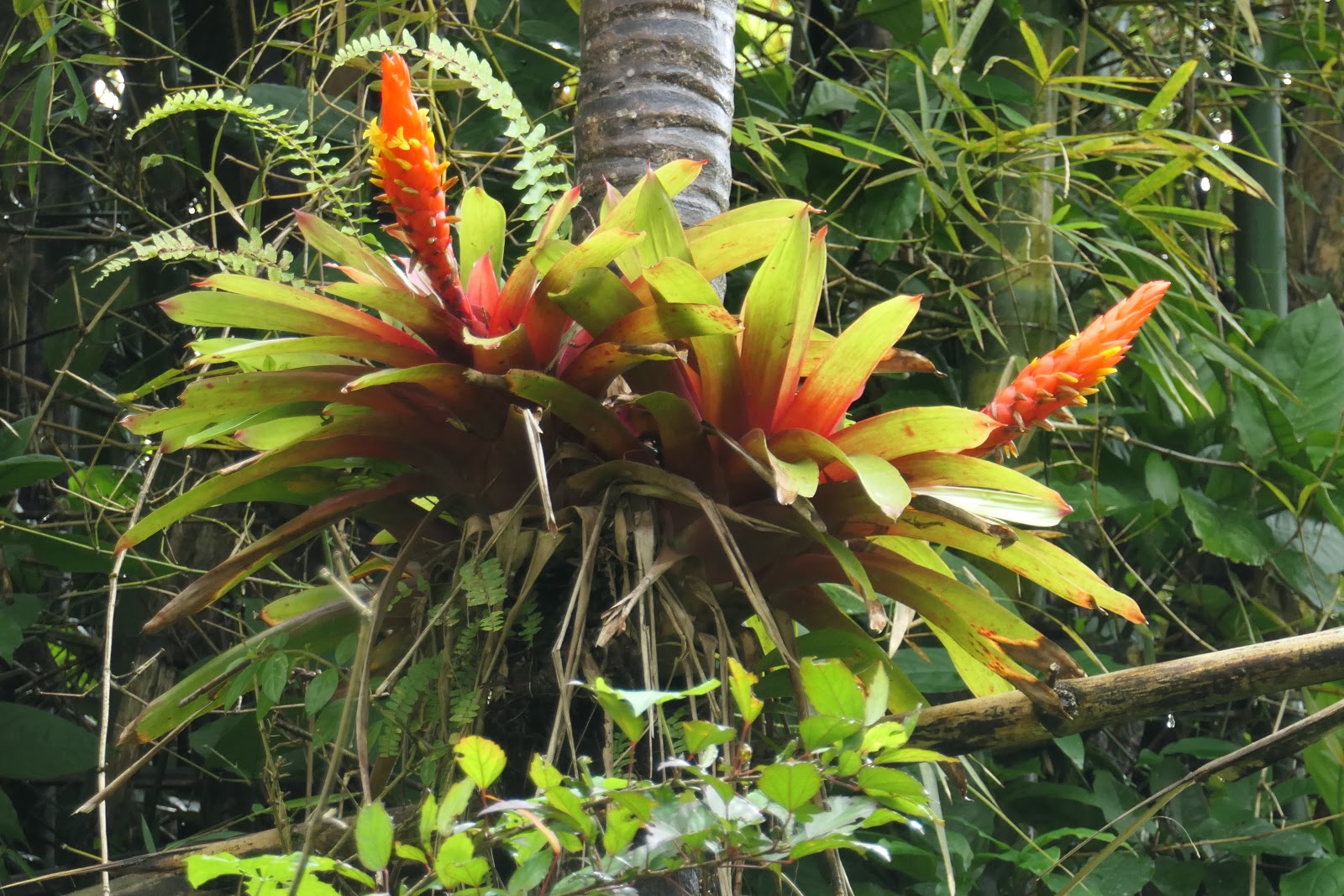
Bromelids in El Yunque Rain Forest
El Yunque Rainforest


Artfully cropped from this photo were some strikingly beautiful young girls in bikinis
who appeared to be posing for a portfolio.
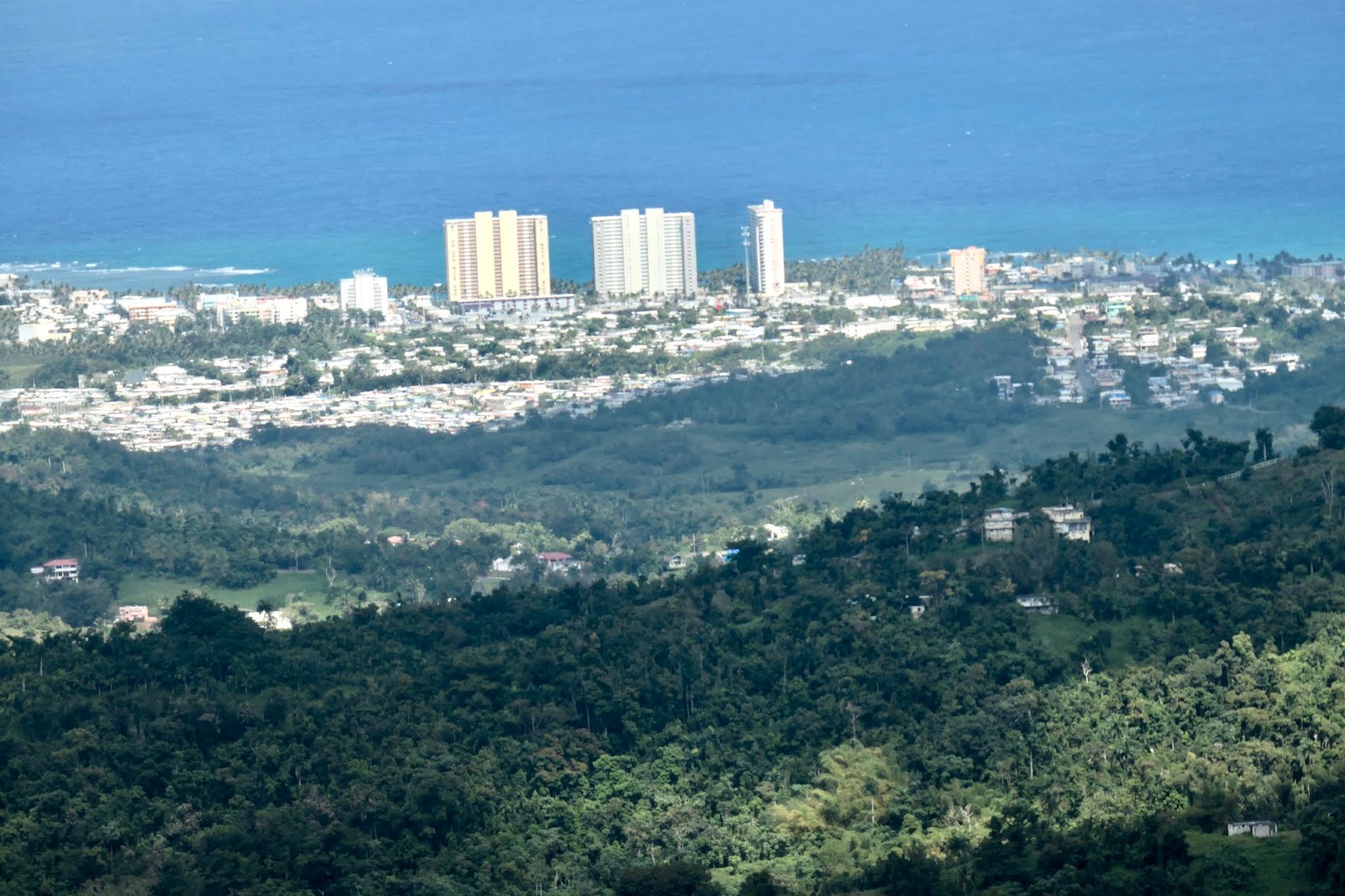
View of San Juan from tower in the El Yunque Rainforest
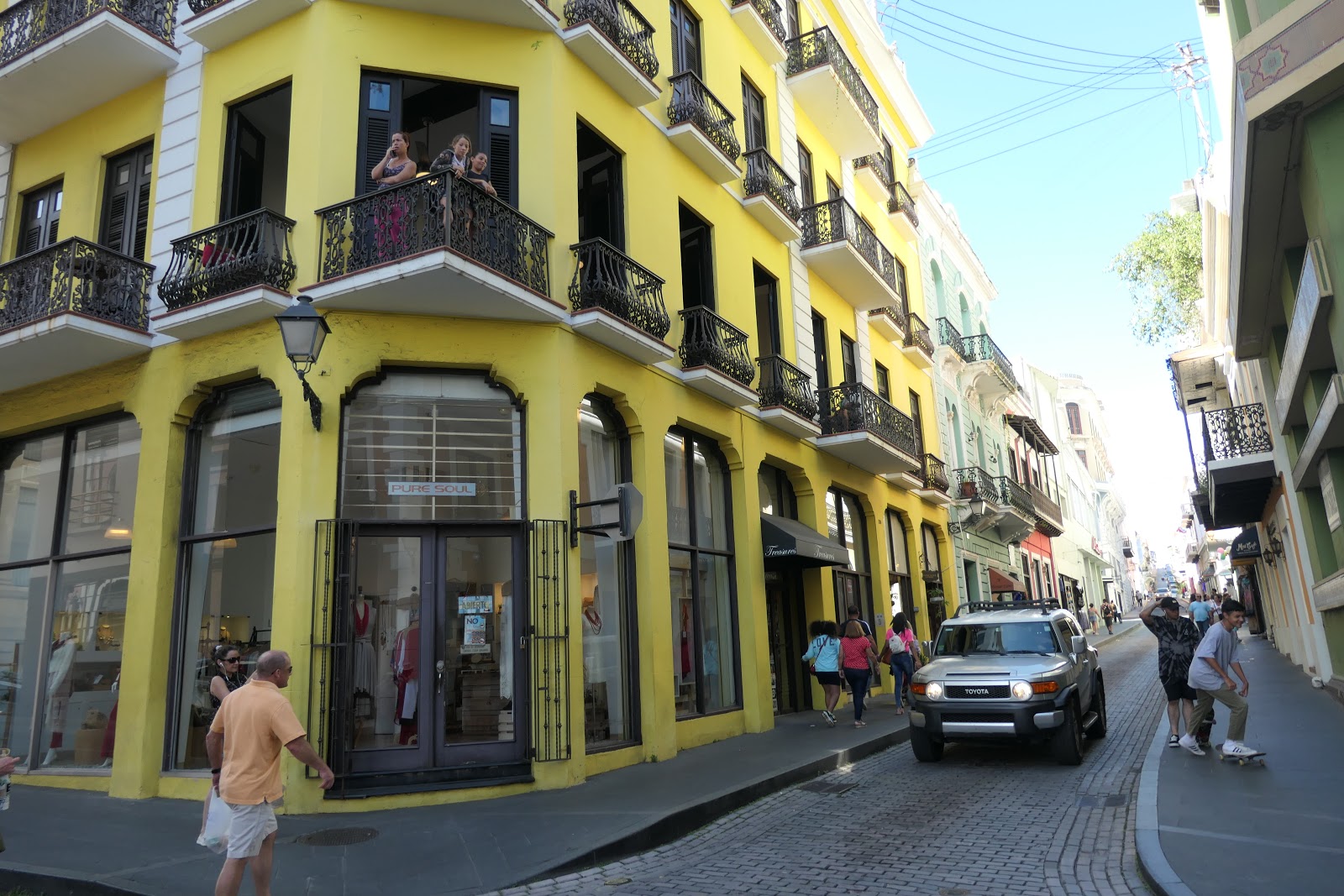
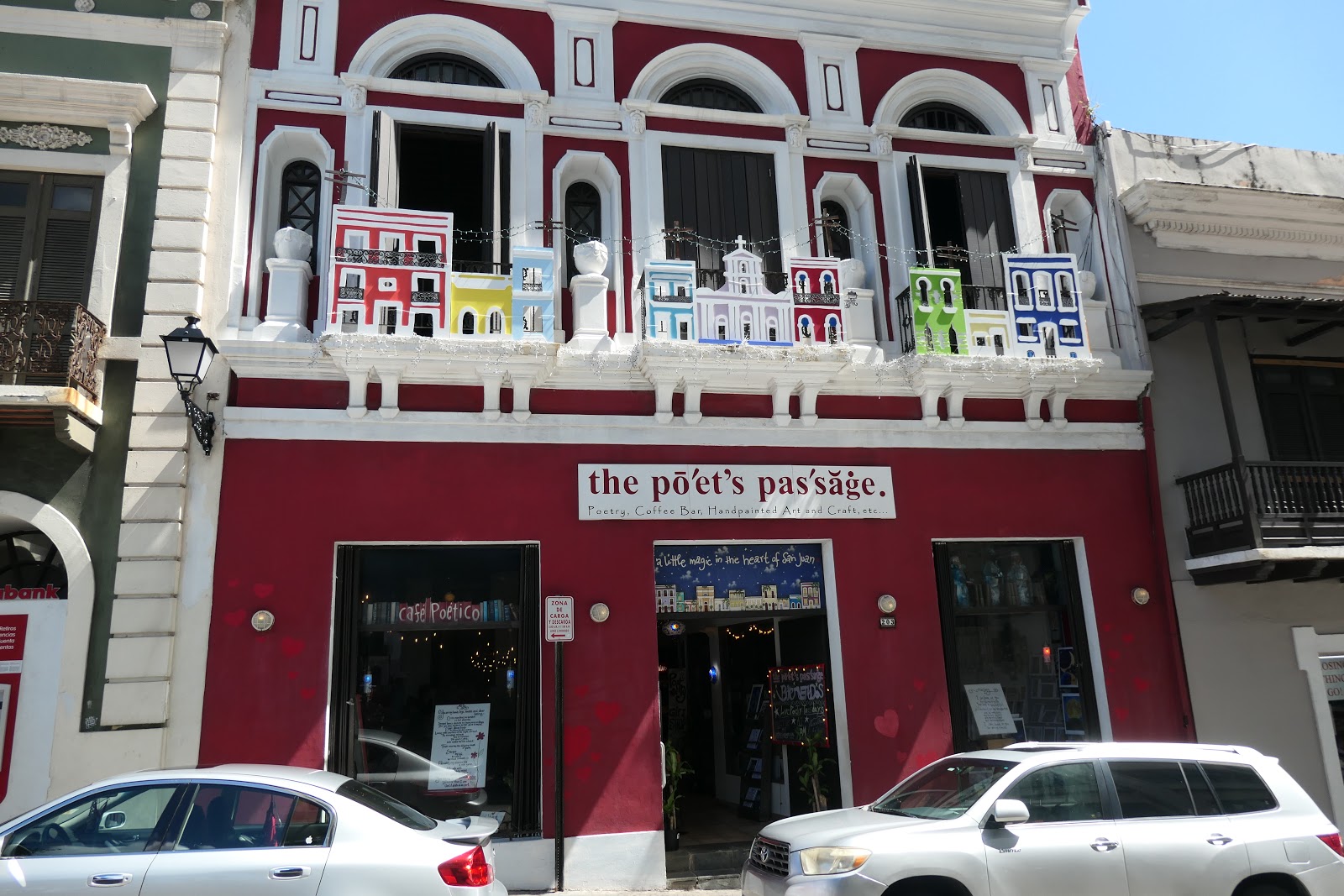
We spent a long and interesting day in Old San Juan.
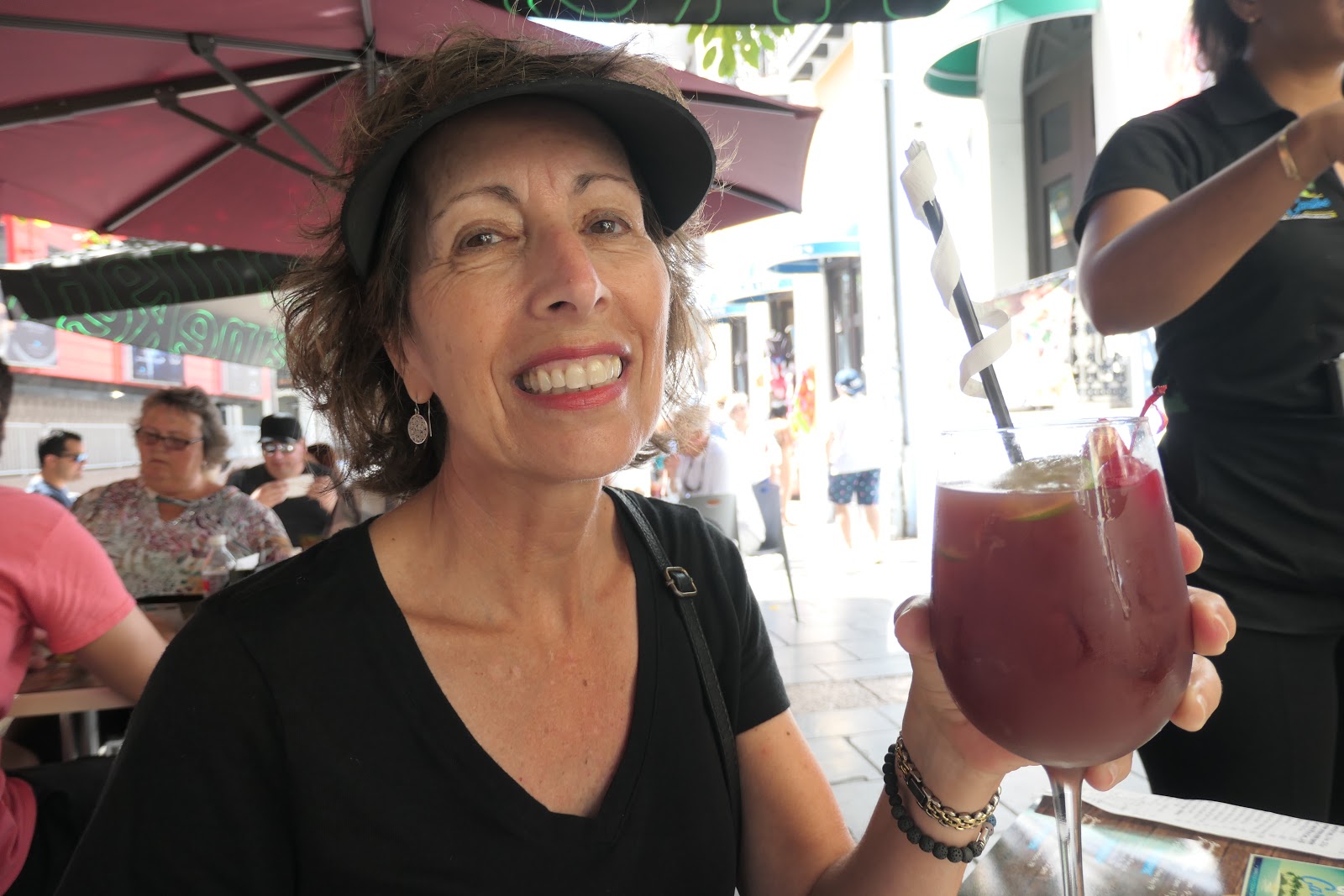
Sharing a carafe of Sangria with Marilyn (her favorite turned out to be Pina Coladas – George and I developed quite a fondness for them too!
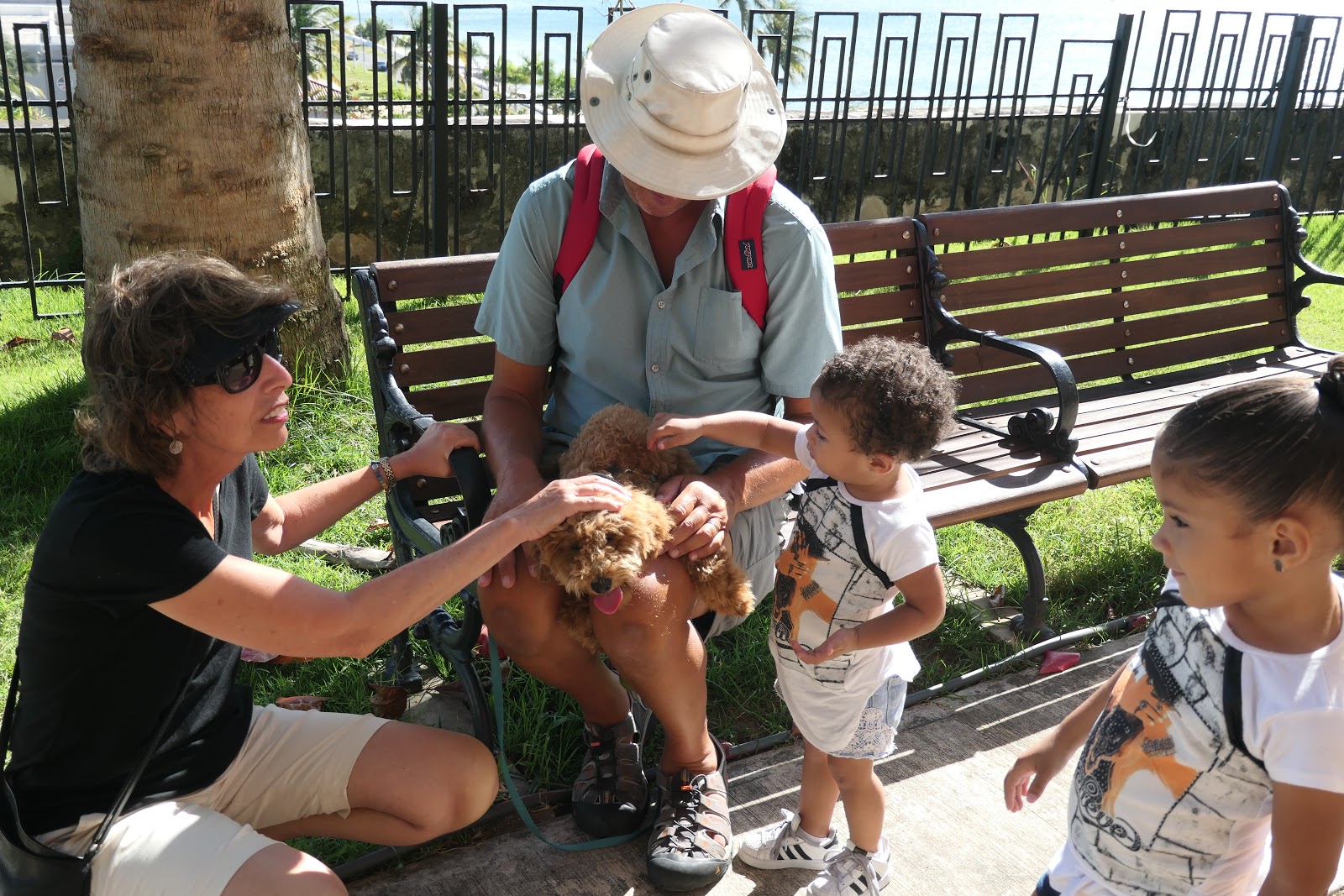
Marilyn managing crowd control for Duhkxy’s adoring fans
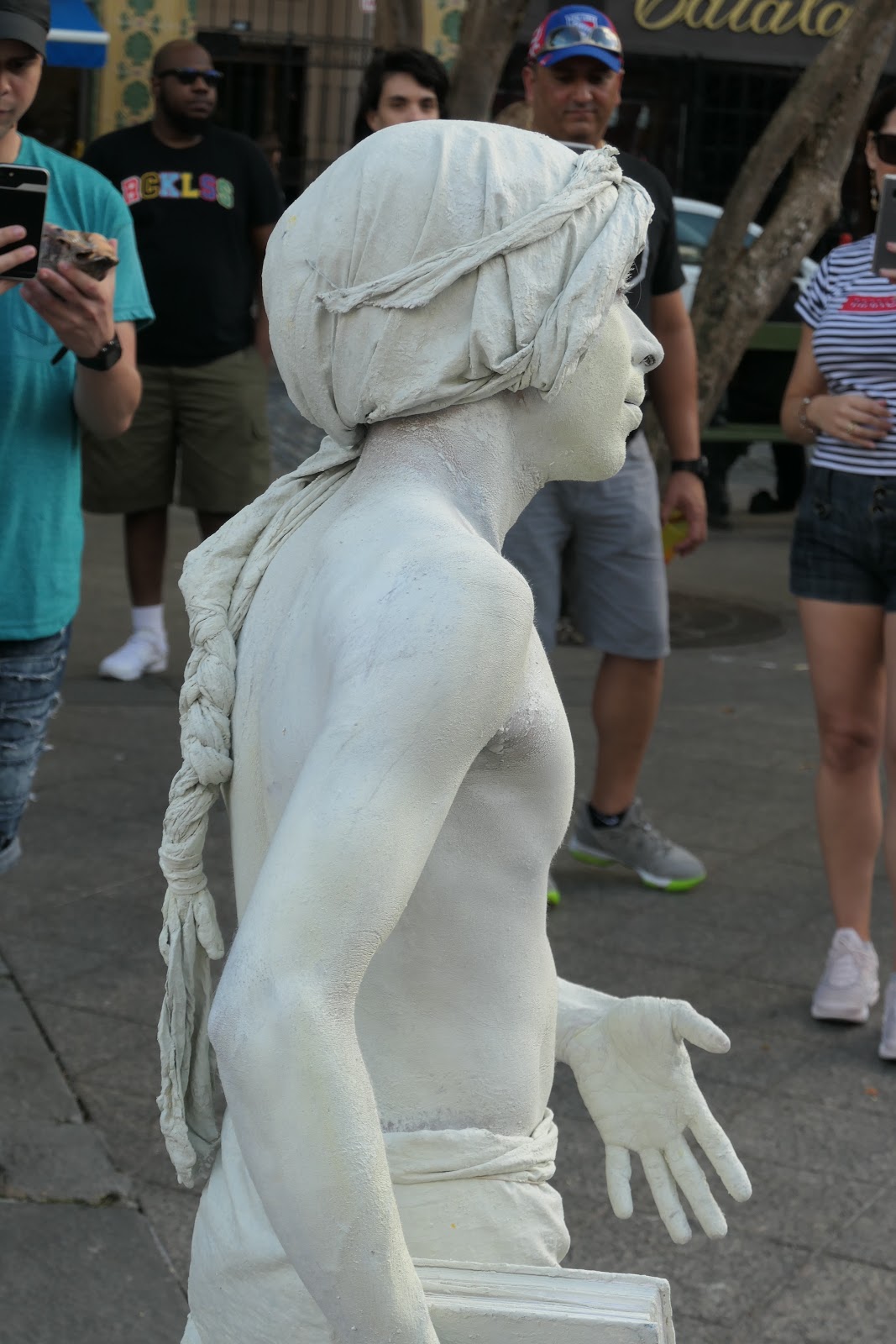
Performance Art in Old San Juan


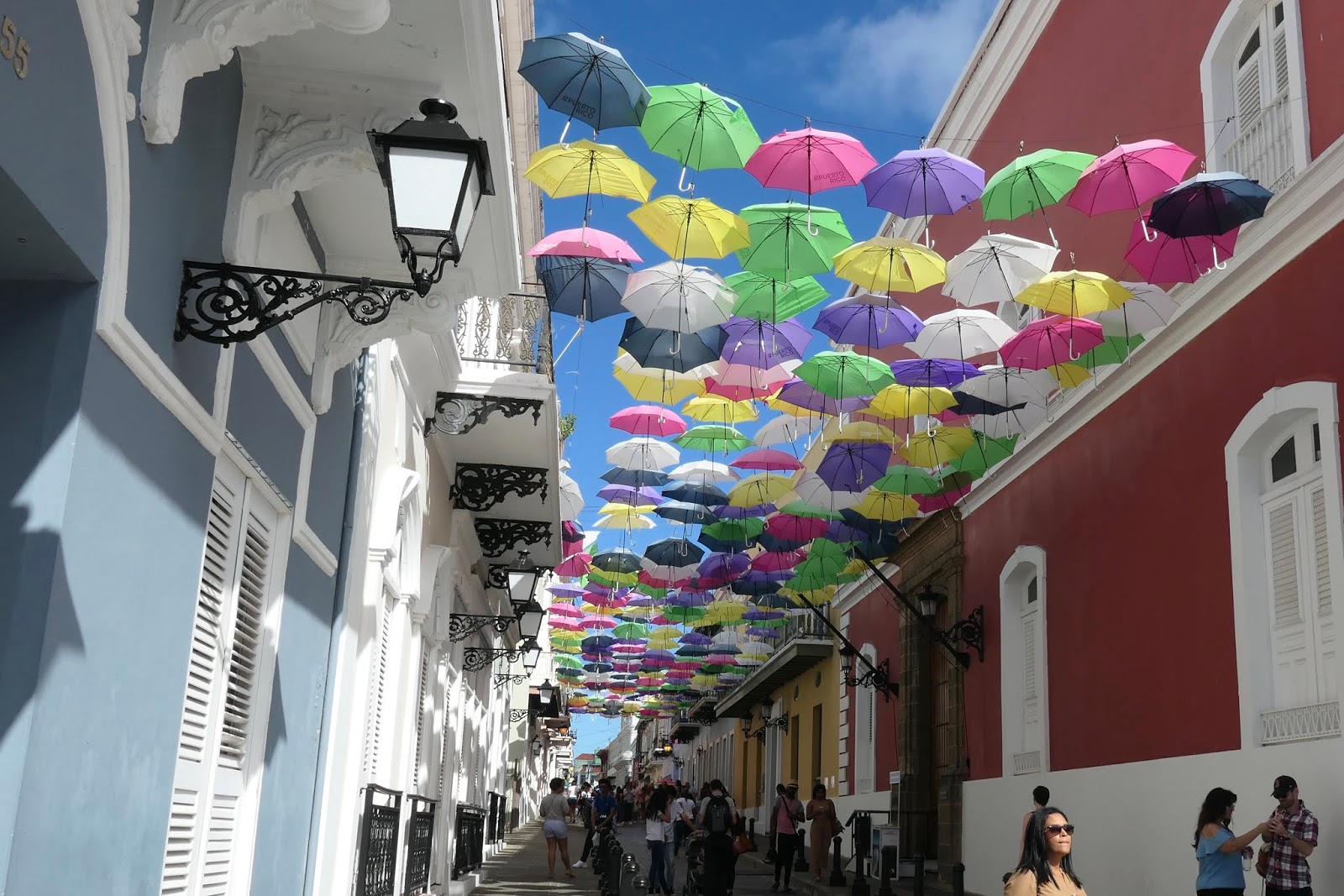
The festive umbrellas on this street on Forteleza Street in Old San Juan memorialize the recovery from Hurricane Maria
On our final day with Marilyn, we visited Ponce, a town that was described as a must see.  Unfortunately, we were not aware almost everything was closed on Mondays, the day we visited.  The boardwalk along the beach was also barricaded due to hurricane damage.  

Traveling and exploring some days are better than others – all part of the experience!  Marilyn took everything in stride – a perfect boat guest and friend.

Bonifacio and T Mobile Rant

What’s up

Before describing our time in Bonifacio I want to catch you up on where we are and current plans.  We are in Elba, a small Italian island off the west coast of Italy.
Ice Floe has been scheduled to be shipped to St Thomas, US Virgin Islands from Genoa, Italy between October 25 and November 5.  Even that broad window of time is not certain.  We are sailing to Genoa, arriving on October 15 to get her ready for shipment and to ensure we have cleared customs before our grace period expires for Ice Floe’s stay in the European Union without being subject to a costly value added tax.
It will take approximately 10 days for her to arrive in St. Thomas and we will meet her there.  We will need some time to get her all set up and then we will fly home to join the Thanksgiving holiday at Allison’s and Mike’s home.
We will be voting by absentee ballot.

T Mobile Rant

We could not have been more pleased with how well the T Mobile UNLIMITED international cellular and data plan has worked for us this year.  Unfortunately, there is some small print in the contract that indicates they can block roaming on your phone if your roaming use is uninterrupted for 3 months.  Interestingly, T Mobile sales representatives and customer service representatives are not aware of this policy.  George received notification his service would be turned off within a month.  During that time he spent many hours on the phone with customer service to see what alternative plan we might enroll in.  They vehemently denied that his service would be turned off.  They said “It is unlimited”.  Even as he read the notification to them they continued to deny it.
Here is the real kicker – George’s roaming service has been PERMANENTLY  blocked (as in his phone number will never be able to get data outside the US with T Mobile).

My phone number will be up soon.  It has hardly been used these past months.  This does not matter because the clause the restriction is to the length of time you predominantly use roaming – not about the amount of use.

So…. in the very near future we will have difficulty with Internet access – our phone and text services will not be effected.  Internet is a necessity as George needs to check multiple weather models each day to keep us safe.

Oh well – we are deep into our research of what plan may work for us in the Caribbean.

Now let me tell you about Bonifacio

Approaching Bonifacio Old Town

Allison, Mike, Riley and Tristan joined us in Sardinia on August 21st.  It needs to be said that I could not be more grateful that our children have carved out vacation time from their many obligations in the “Real World” to join us in our “Dream come true World”.


Allison and Mike took the spare cabin and Riley and Tristan slept in the workroom – Riley in an ample, if slim, nest on the counter top;  Tristan in a hammock that failed to grow as much as Tristan had over the past year.  Tristan did not seem terribly daunted by this fact and took to sleeping with his legs draped out along the hammock sides.

A bad weather system called a Mistral was forecast during their stay with us.  A Mistral is a strong, cold, dry, northerly wind in France.  The strong winds of a Mistral and the large swells that develop, make for uncomfortable, at best, sailing and anchoring.

One item on everyone’s “Choose your own vacation itinerary” was to visit old towns and castles.   So…We decided to sail the short distance (~ 7 miles) across to Corsica and spend several days in Bonifacio.

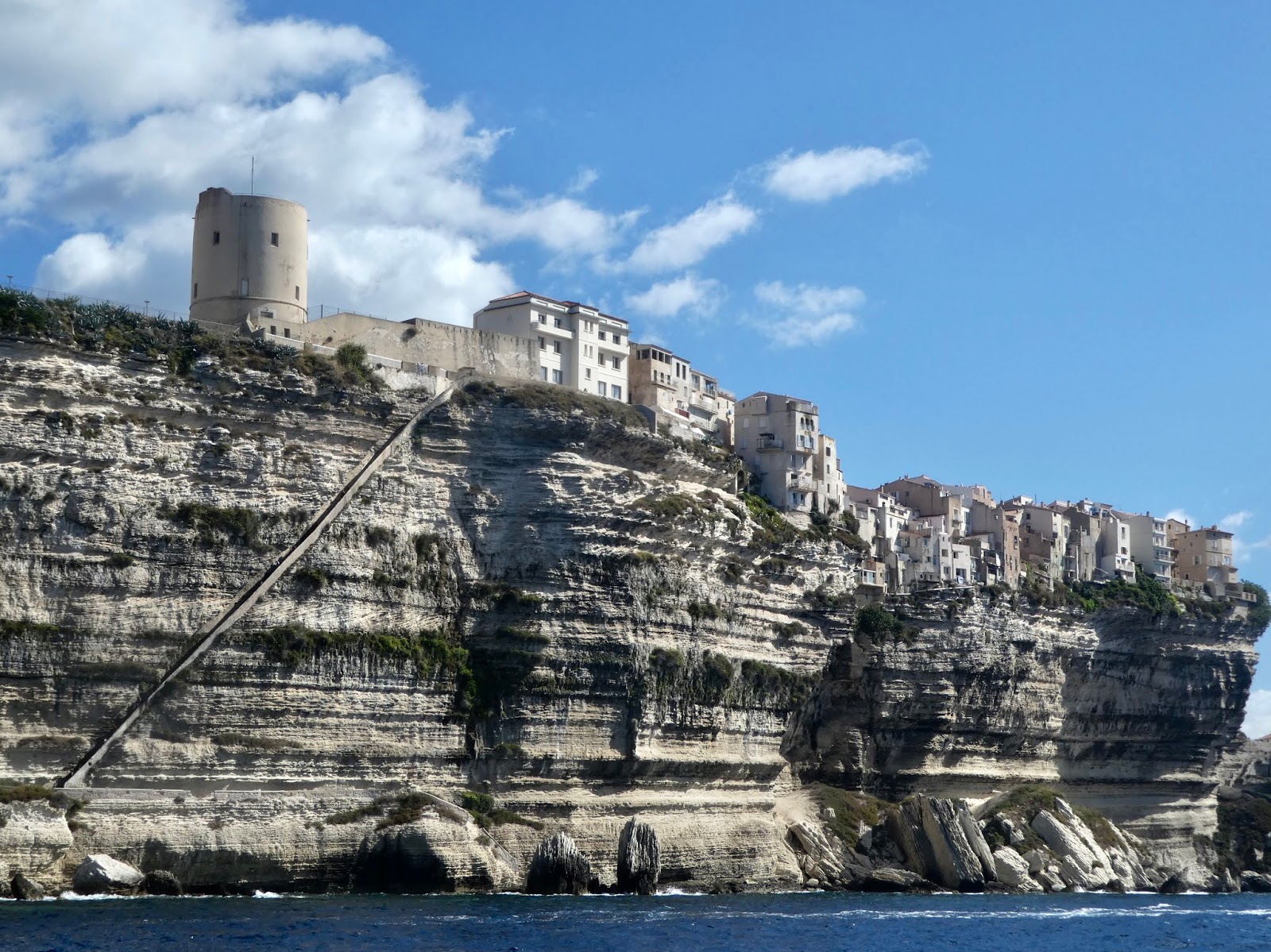
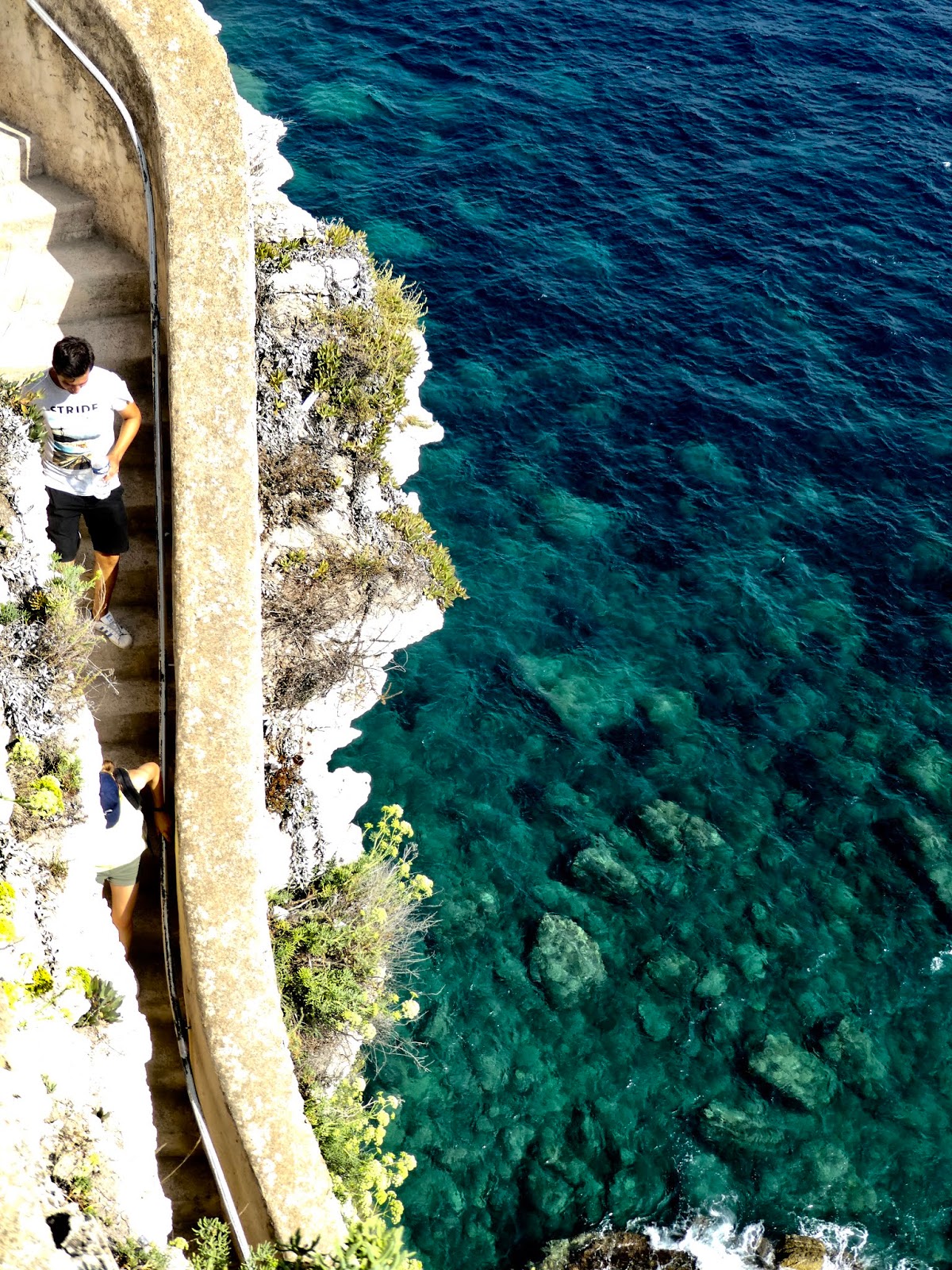
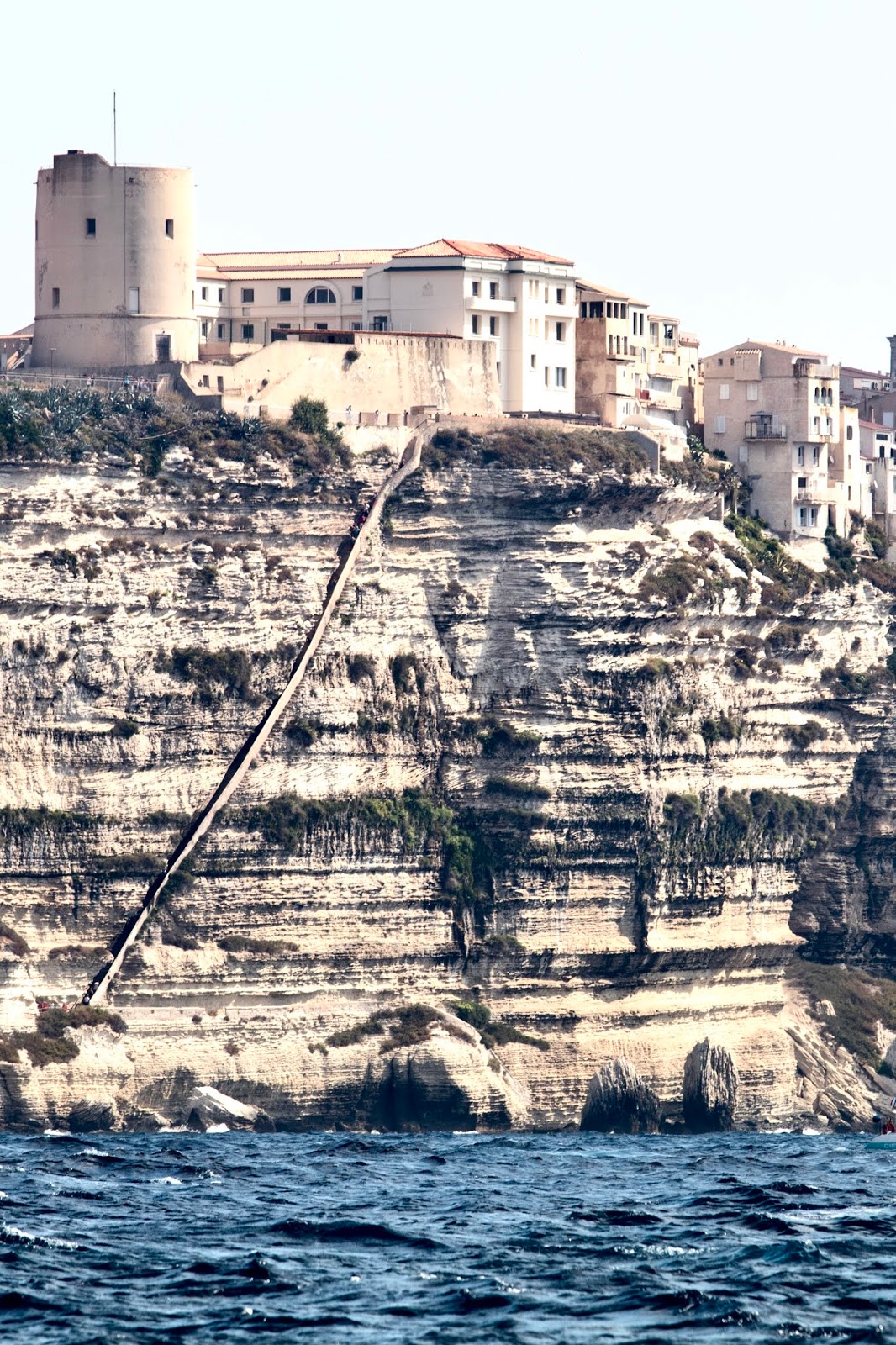
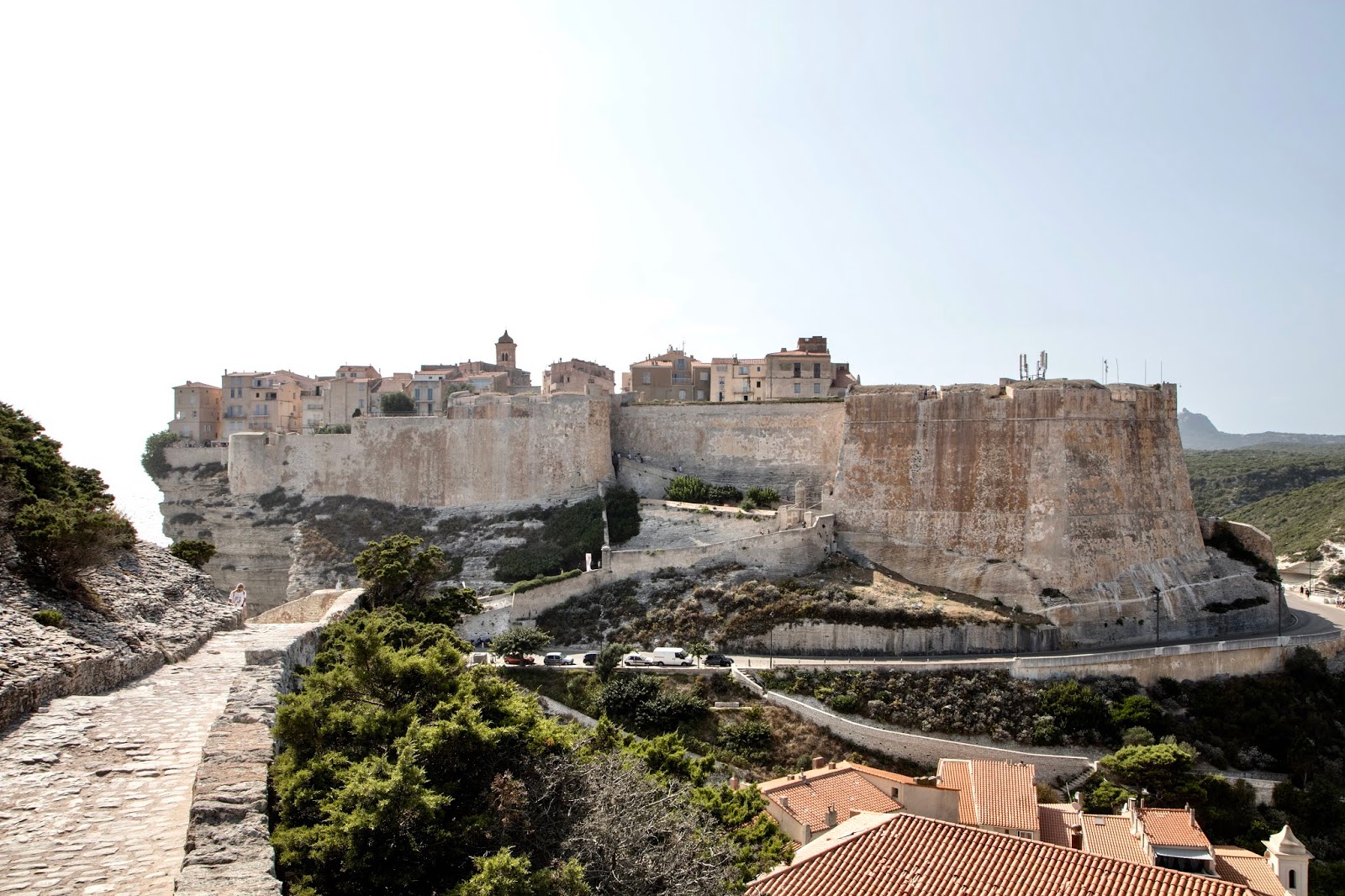
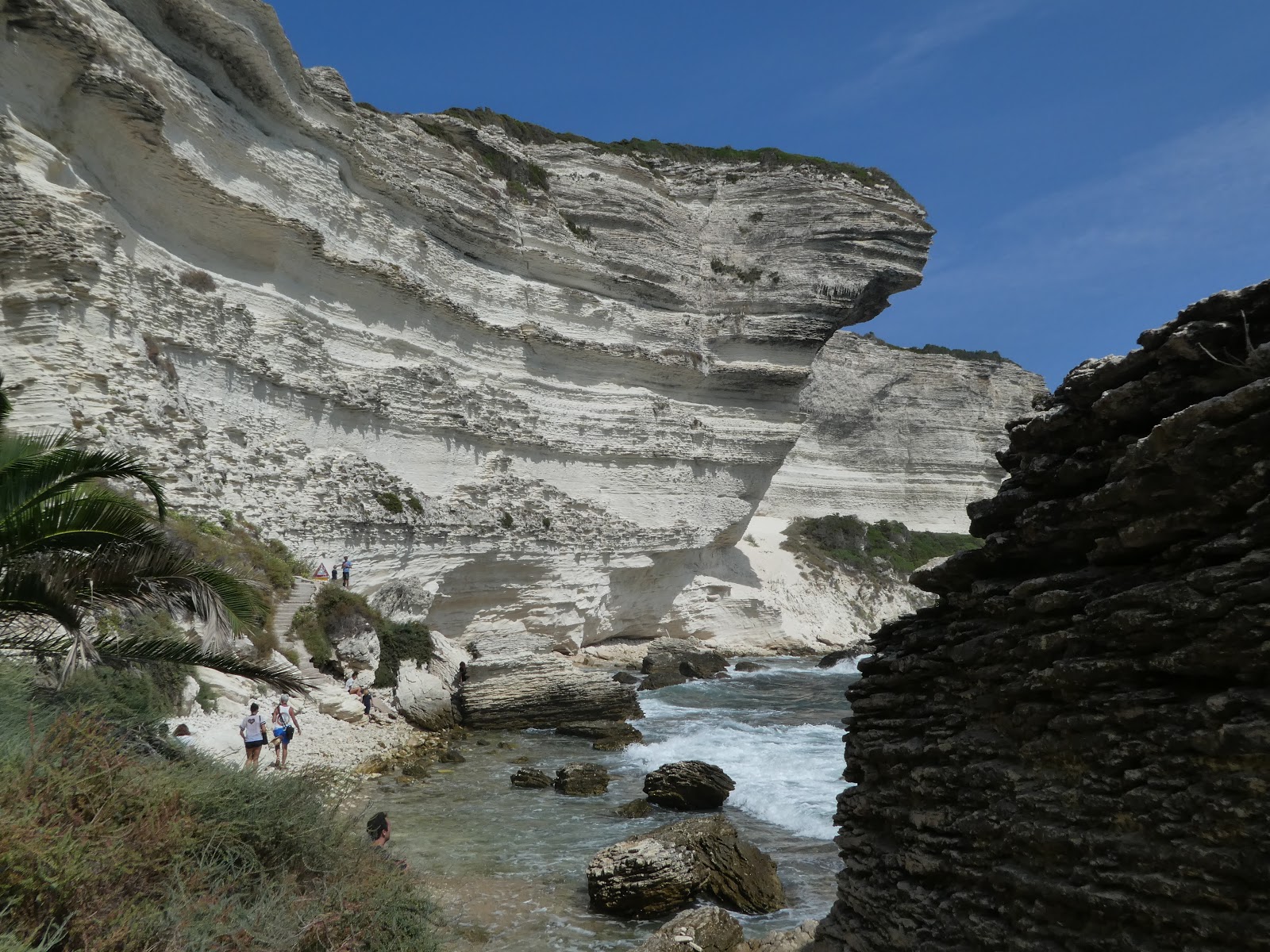
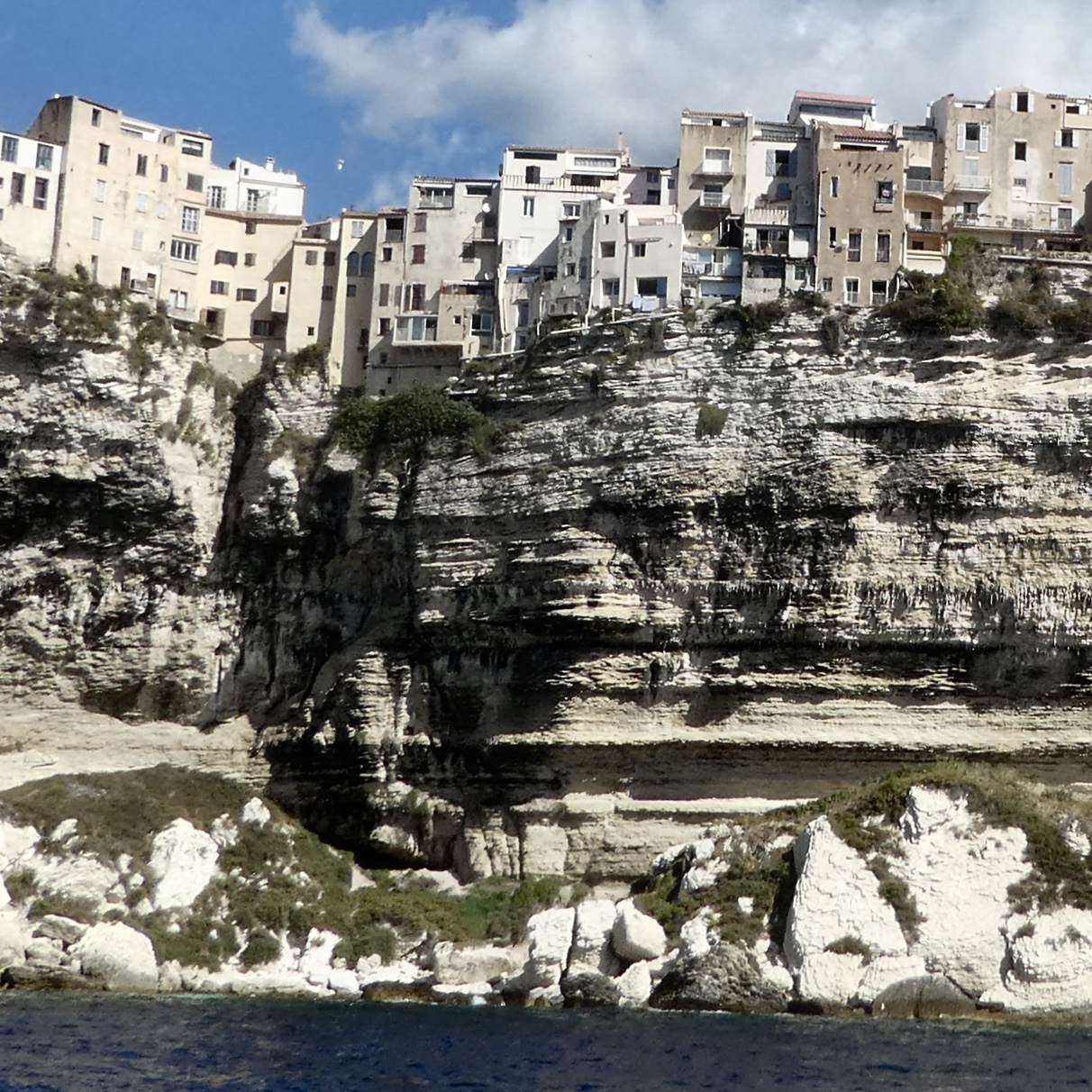
The Citadel and Old town of Bonifacio were built in the 9th century on the top of white, limestone, cliffs which are about 230 feet above sea level.  Legend has it that a staircase, named the Staircase of Aragon, was hand-carved out of the limestone in a single night by soldiers of King Aragon during a siege in 1420.  However, it is widely believed that it was carved out by Franciscan monks long before King Aragon’s reign.  The staircase leads to a spring with fresh water.

Staircase of Aragon showing modern safety
measures
Staircase of Aragon visible as diagonal line

Allison longed to climb the stairs and Riley was quick to second her desire.  I said I was not going to pay 5 euros to climb 187 stairs (said playfully, but sincerely).  By the end of our stay in Bonifacio we must have climbed 10 times that many stairs, but we never did climb these fabled ones.

I feel a little bad about that.

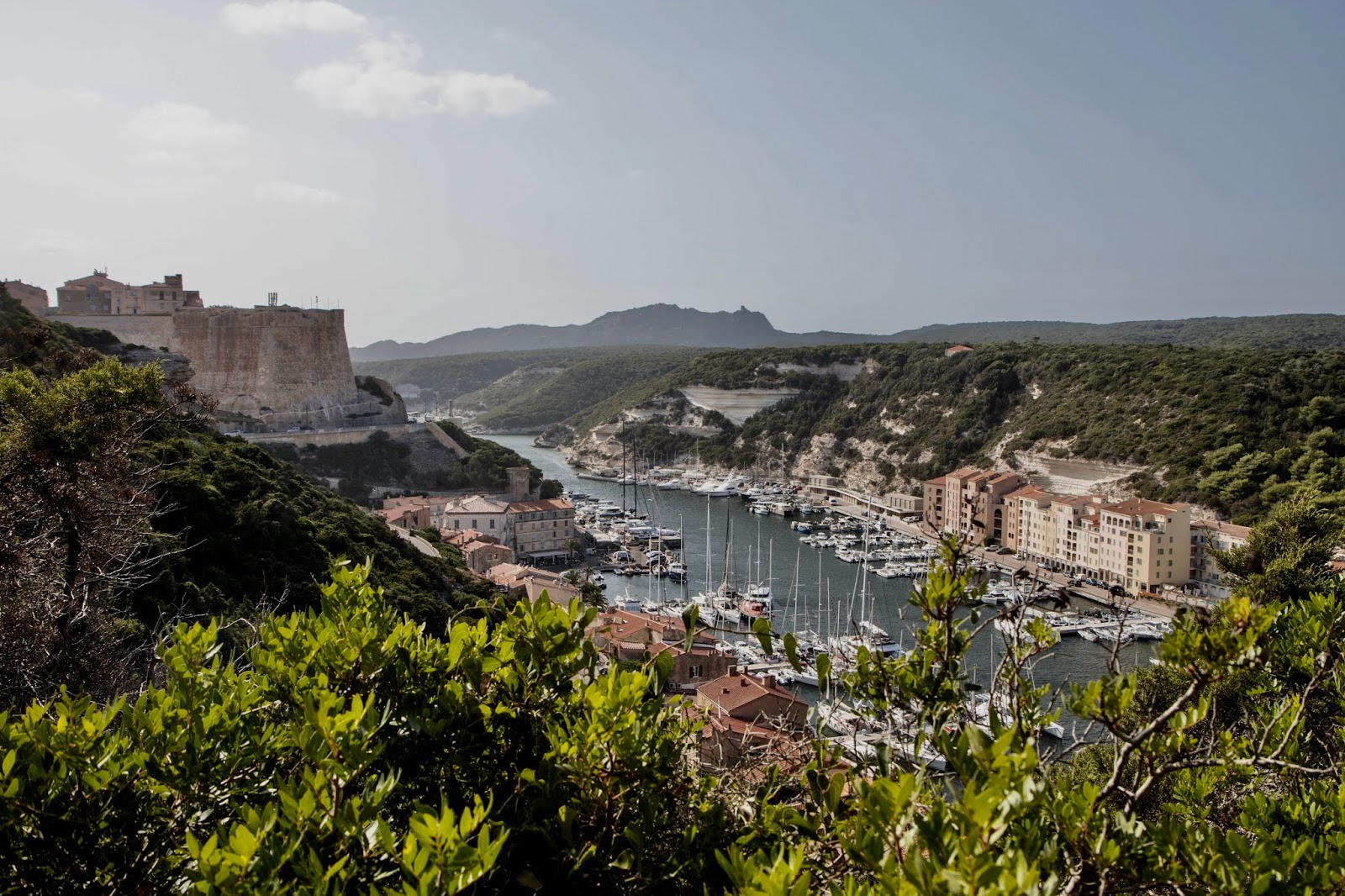
The town overlooks a natural harbor that now includes a modern marina.

This large, natural, harbor is both beautiful and unique in Corsica
Ramparts at edge of remaining cliff

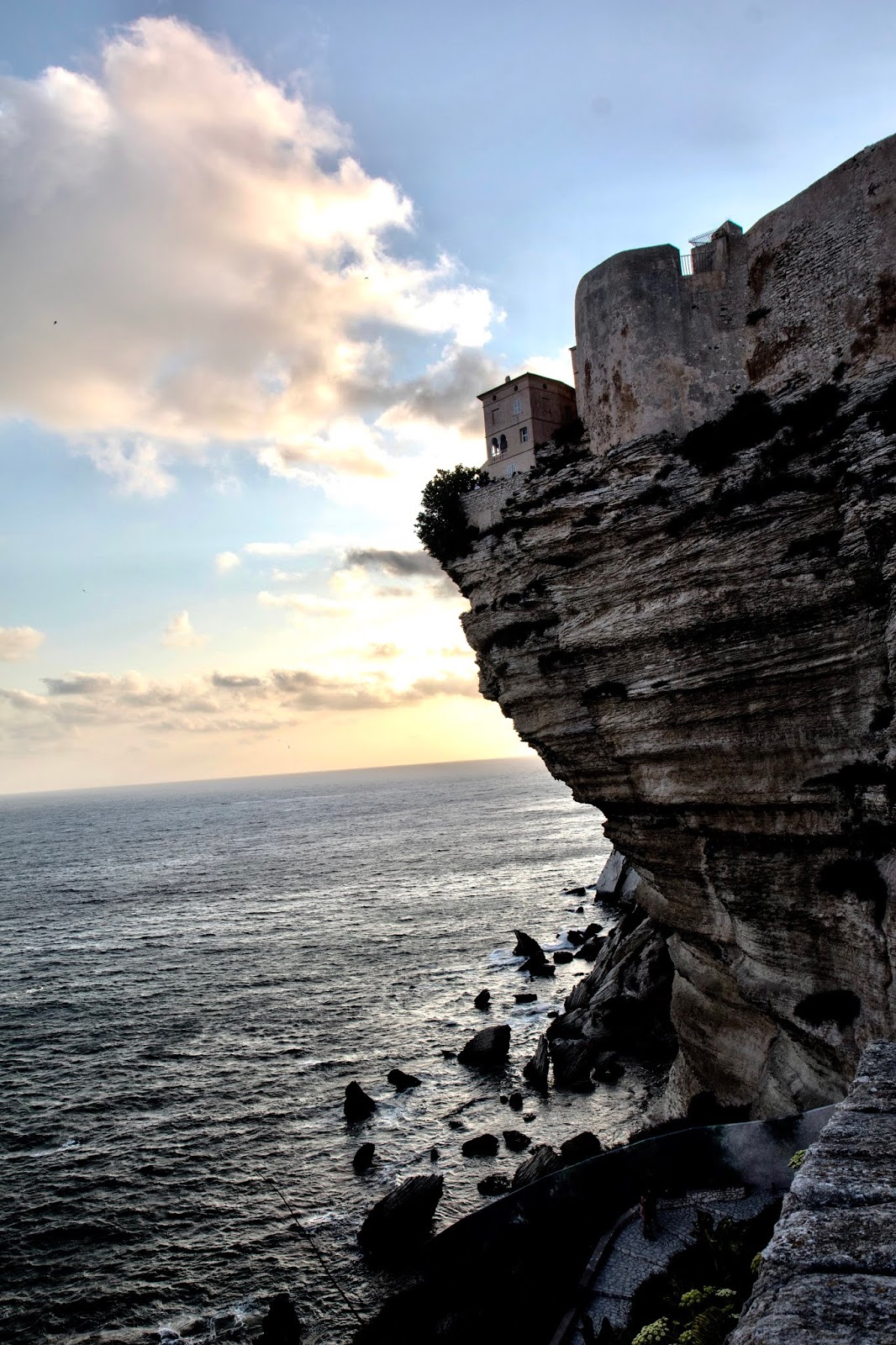
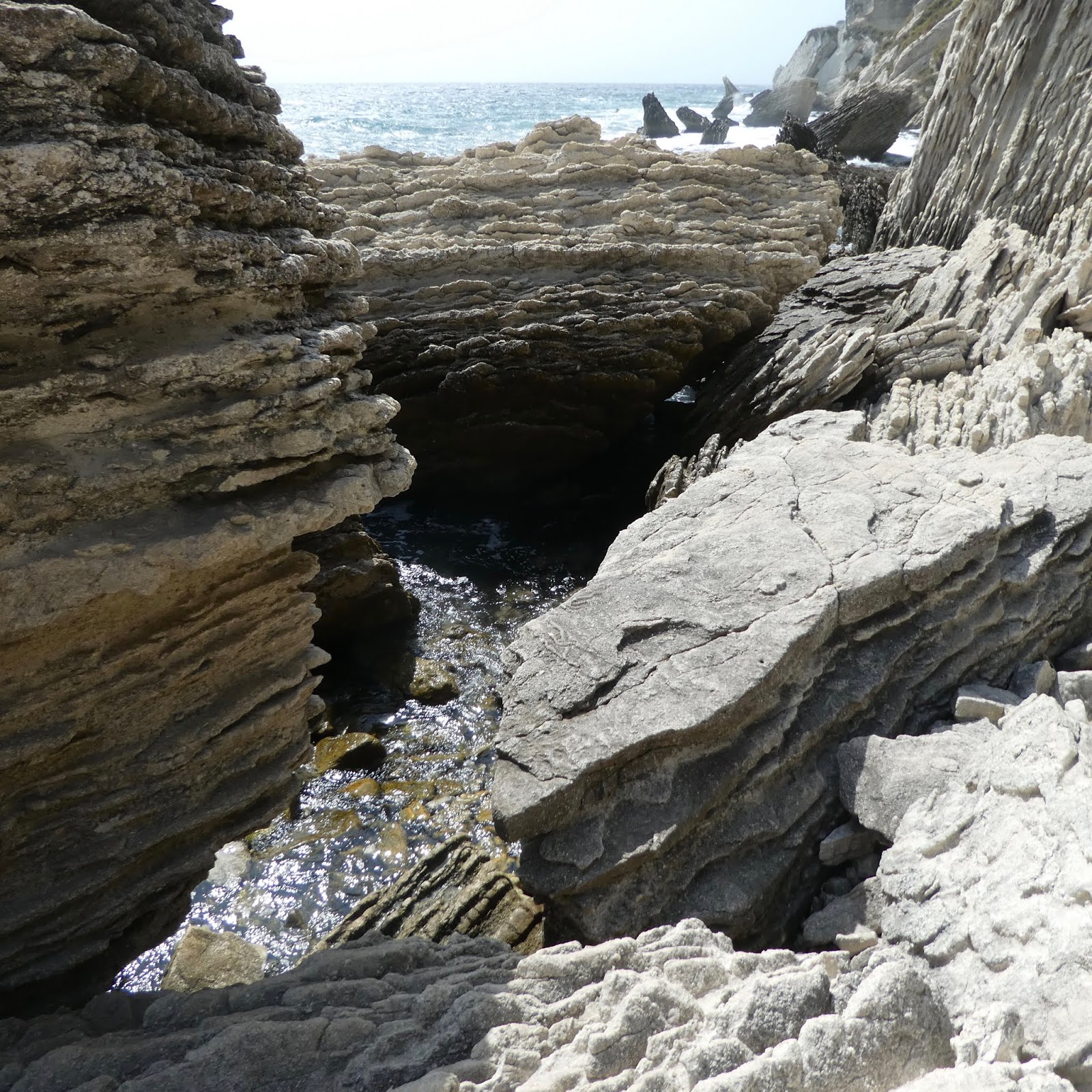
The cliffs have been undermined by the sea and portions of the Citadel walls and some residences seem precariously perched at the edge of of overhanging cliffs.  There is conspicuous evidence of large portions of what was once part of the cliff down below.

Portions of what once was a part of the cliff lie below
Note reinforcement of the cliff face

Despite the appearance of imminent collapse, I trust a close eye is kept on this national treasure to ensure it will be kept safe for centuries to come.

Old Town

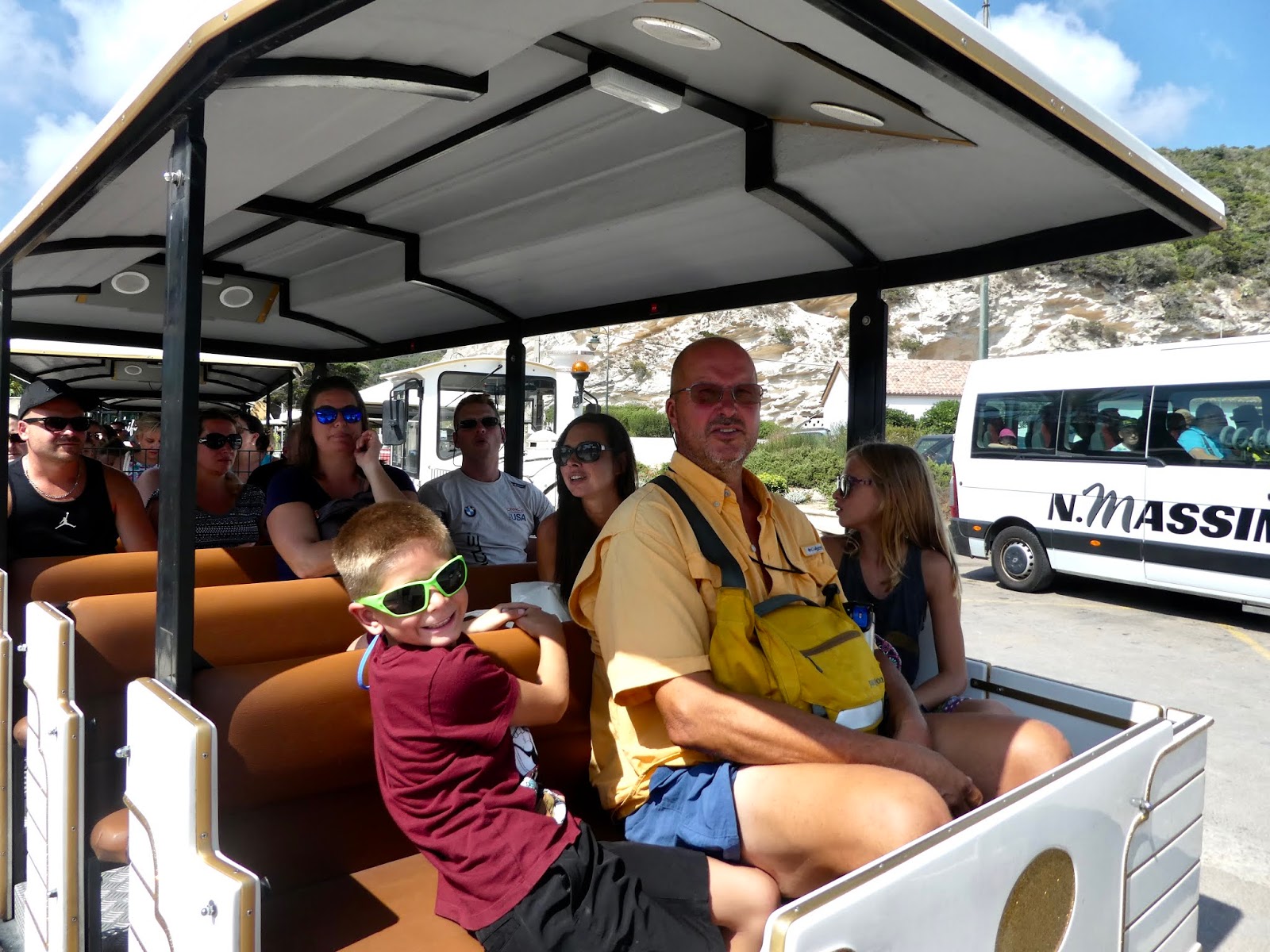
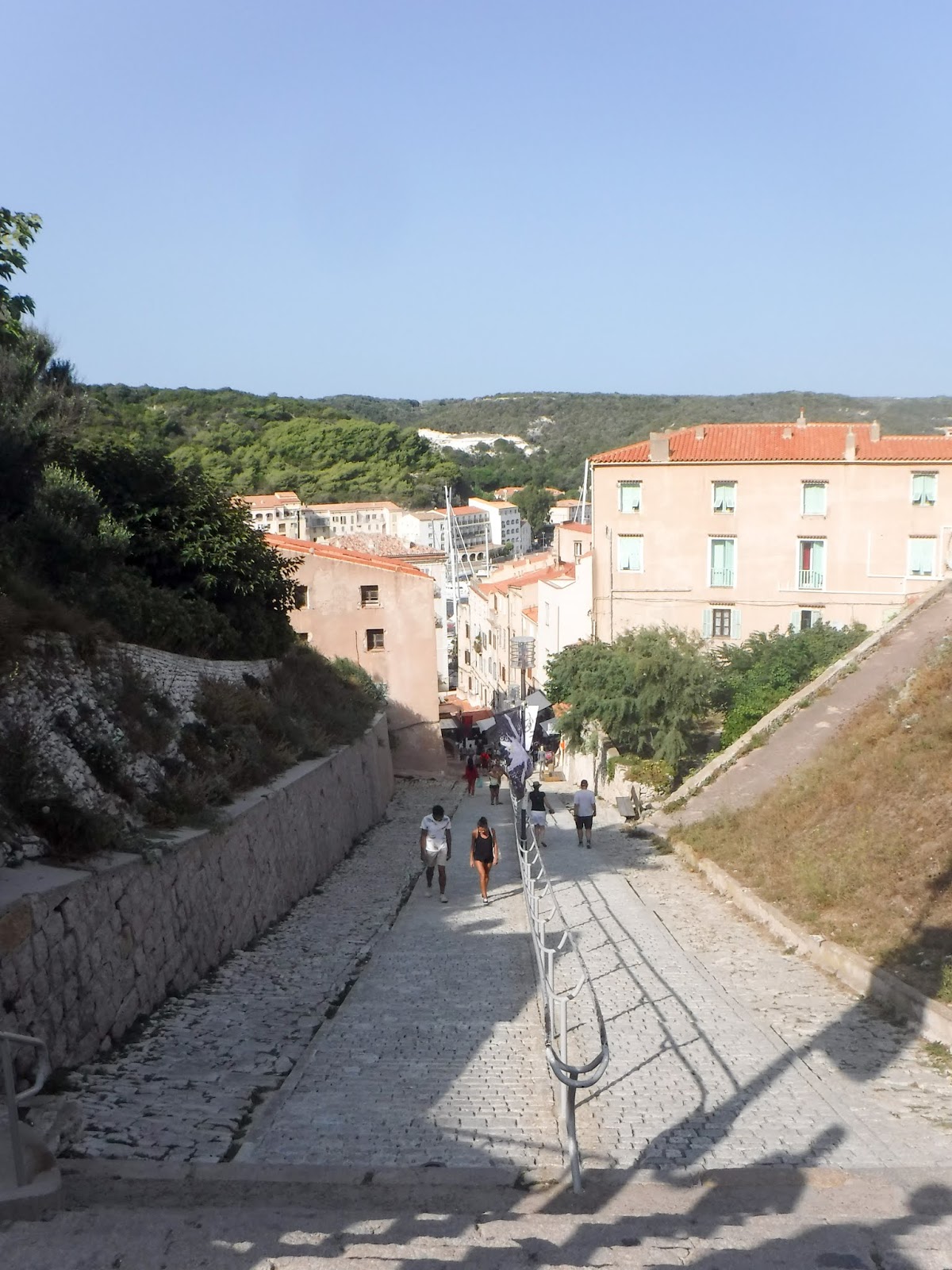
For our first visit to the Old Town, we rode a small “train”, similar to the one we rode to Monet’s gardens with Margaret and Burt.  From that point on we hiked up the 200+ feet – George and I likely made the trip 2-3 times a day – Allison, Mike, Riley and Tristan surely were up and down more often than that.

The climb sure felt more steep than this picture shows

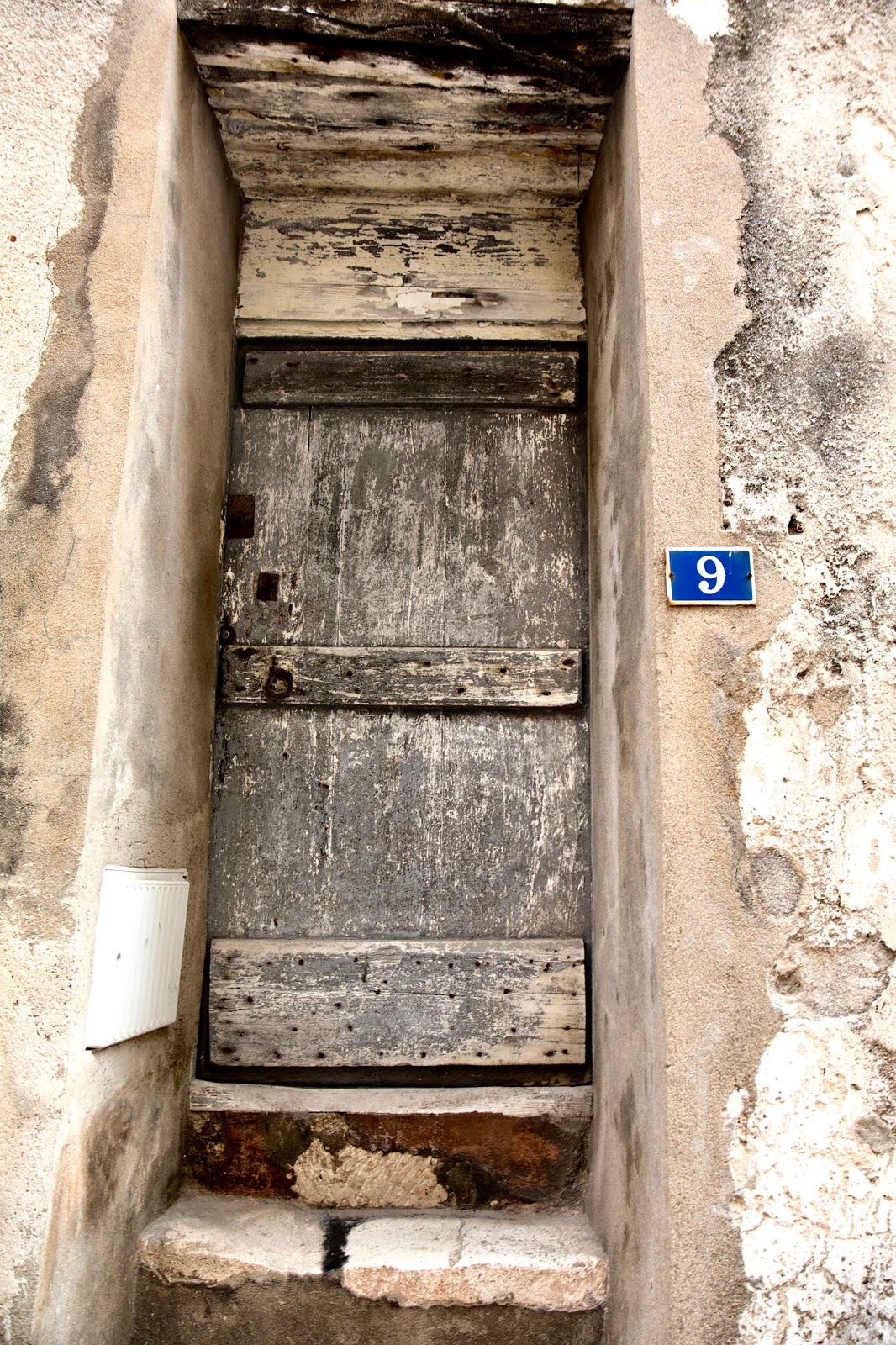
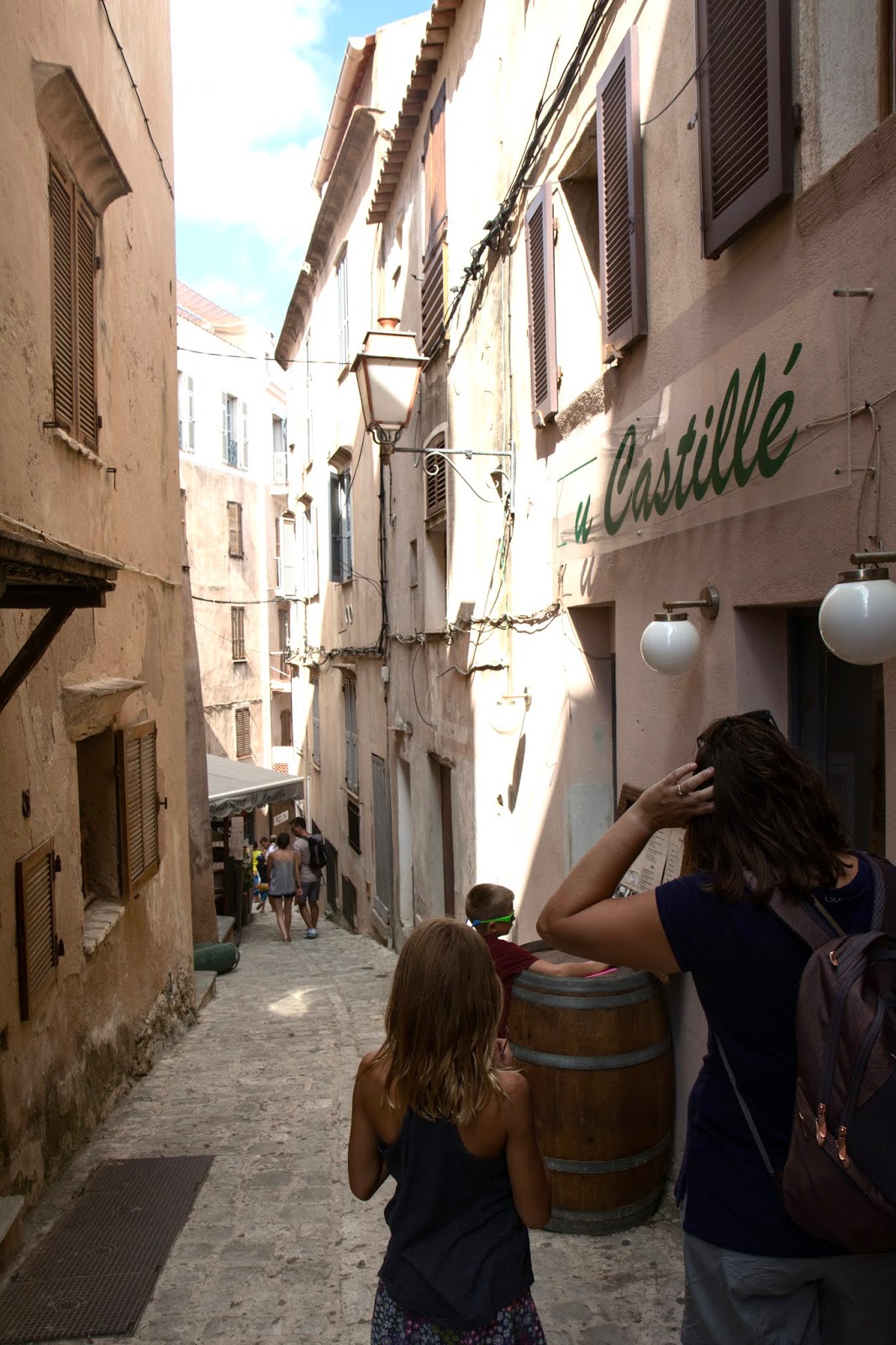
We explored the narrow streets, and like much of Corsica, found few adornments compared with Old Towns on the France mainland.

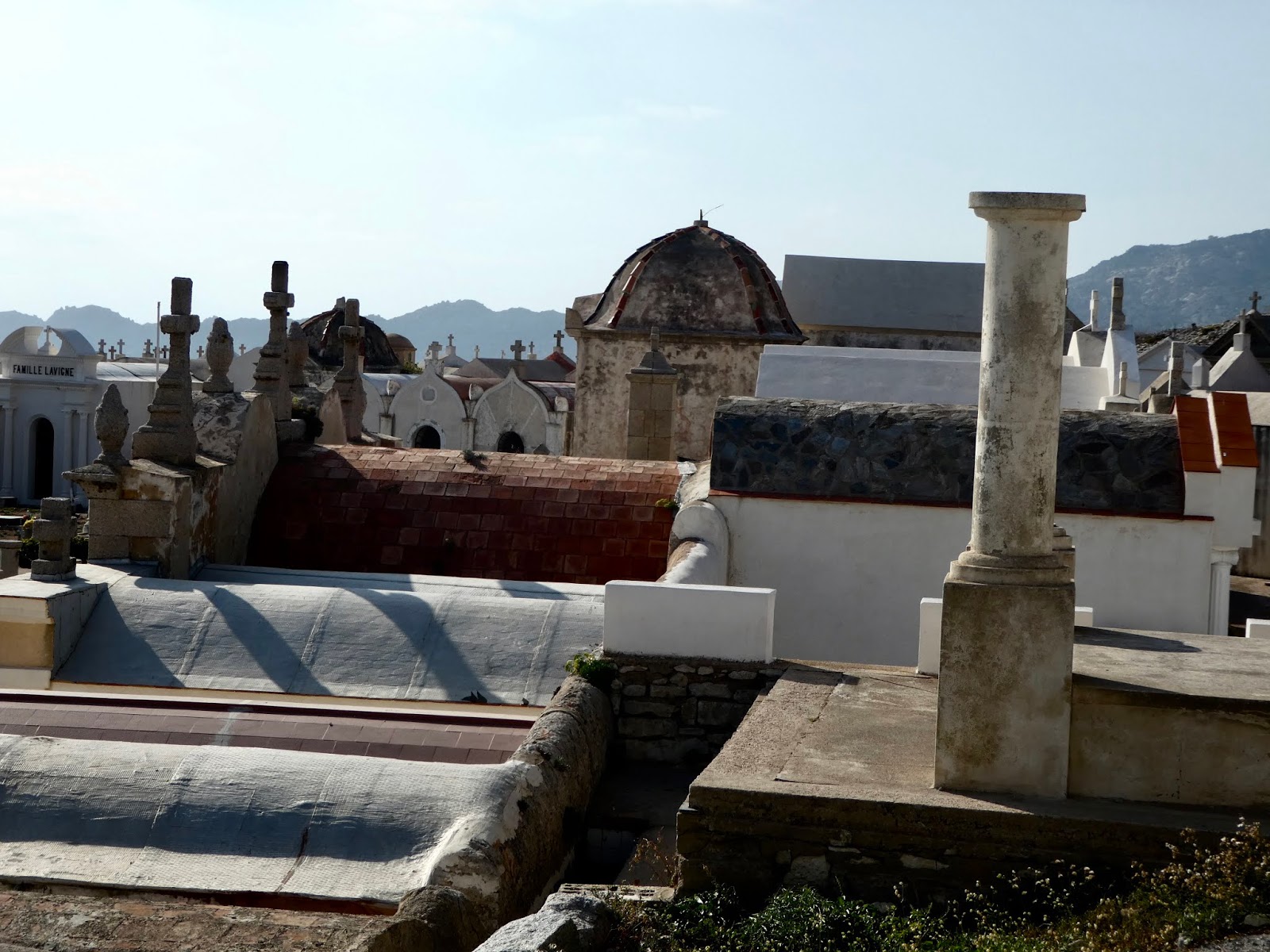
We followed gravel paths beyond the town that led us to beautiful new views of the town, cliffs, and an old cemetery.

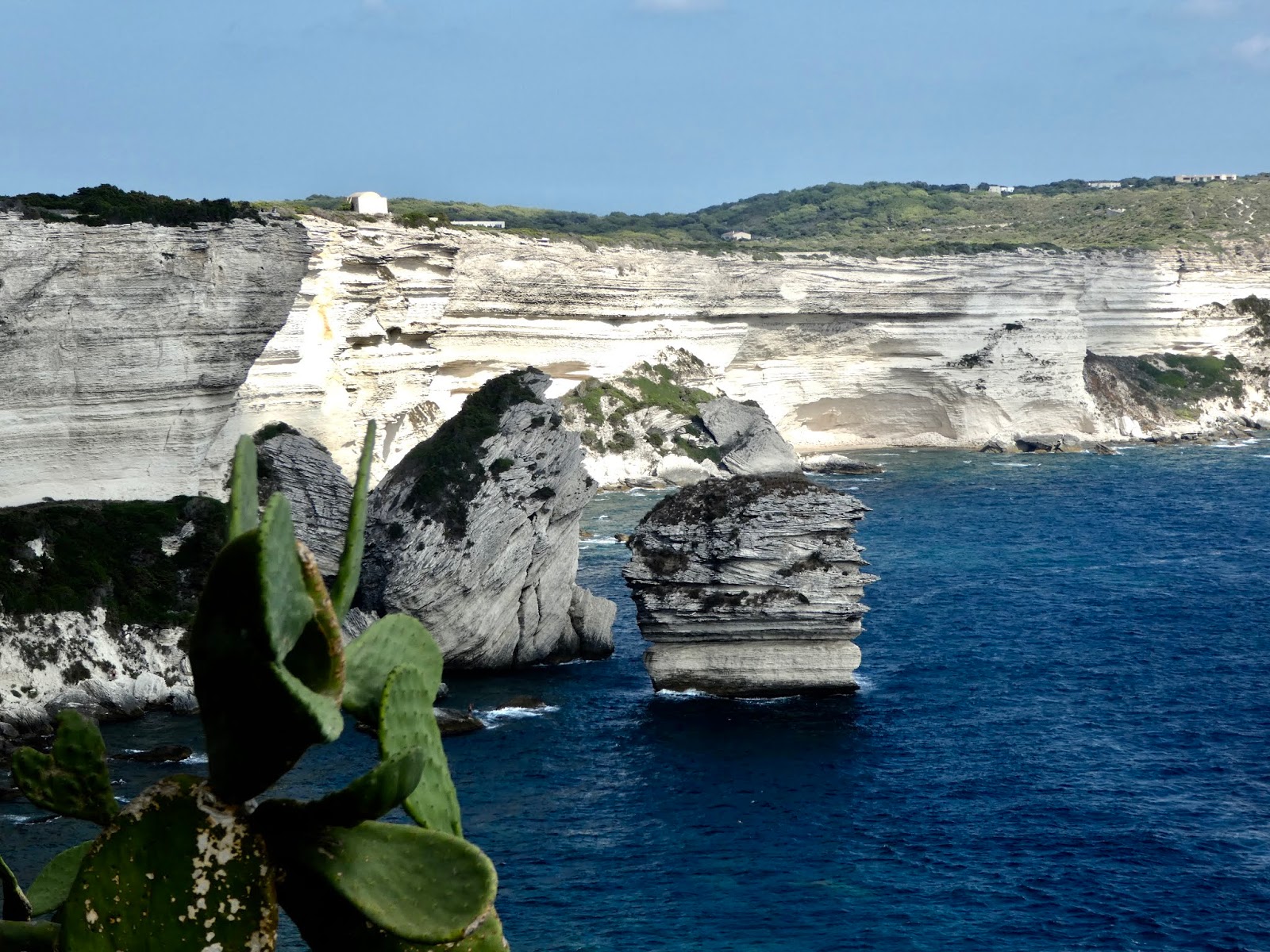
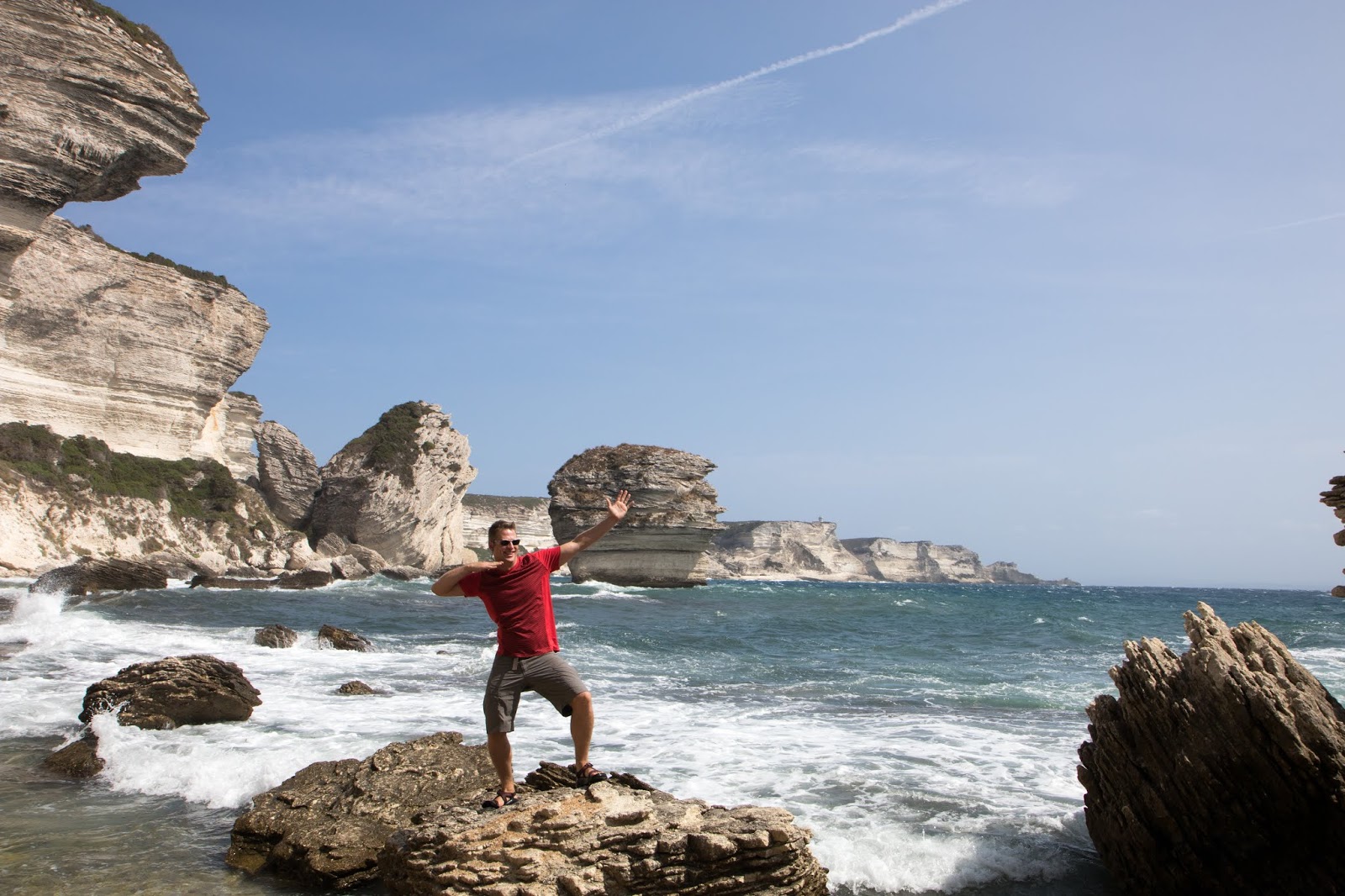
We must have taken 20 pictures of these cliffs.  This one, taken by Mike, is my favorite.
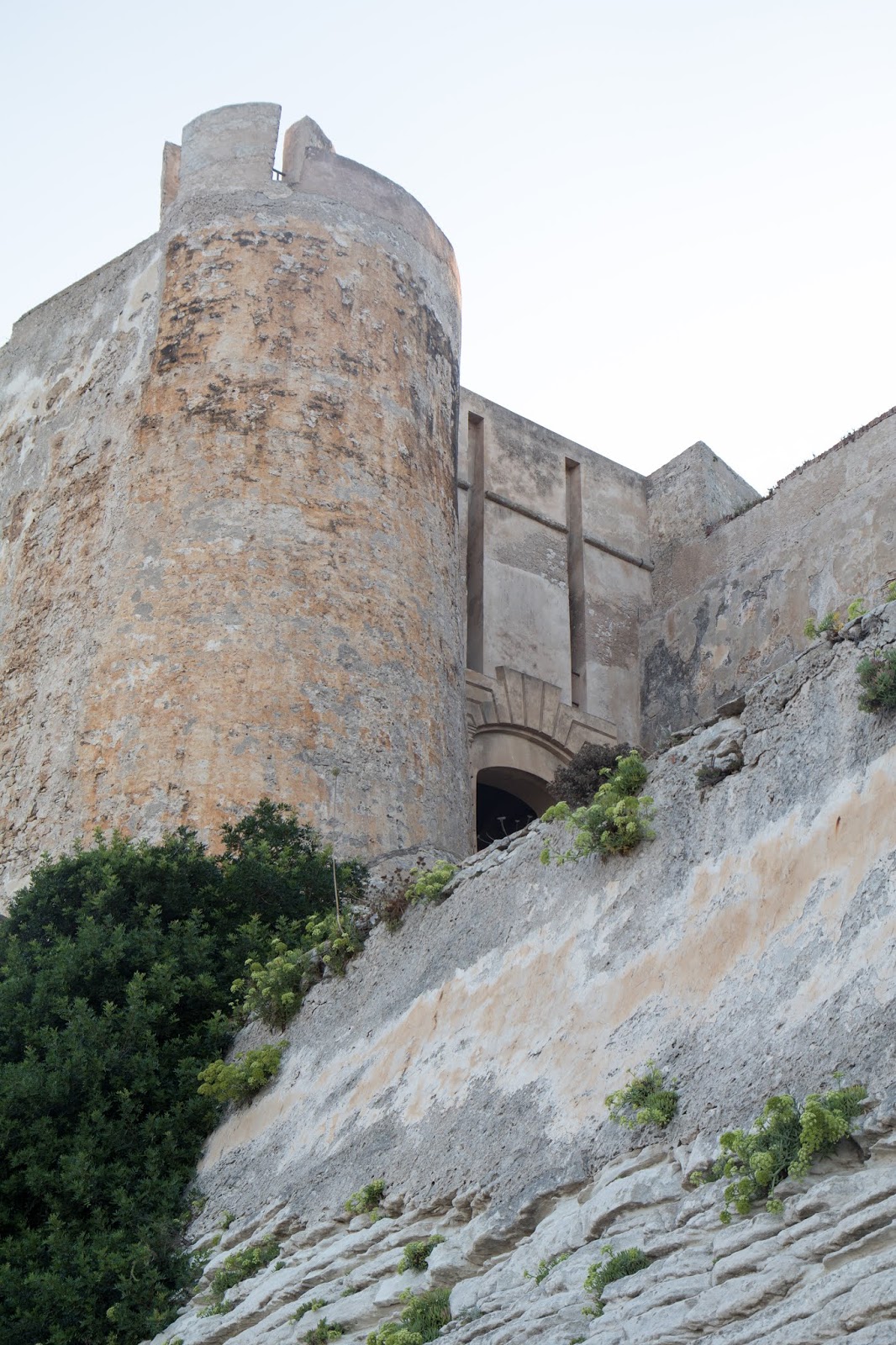
Defensive walls surrounding the ancient town complement the protection afforded by the cliffs
This cemetery in Bonafacio, like of most we saw in Corsica, was entirely above ground.

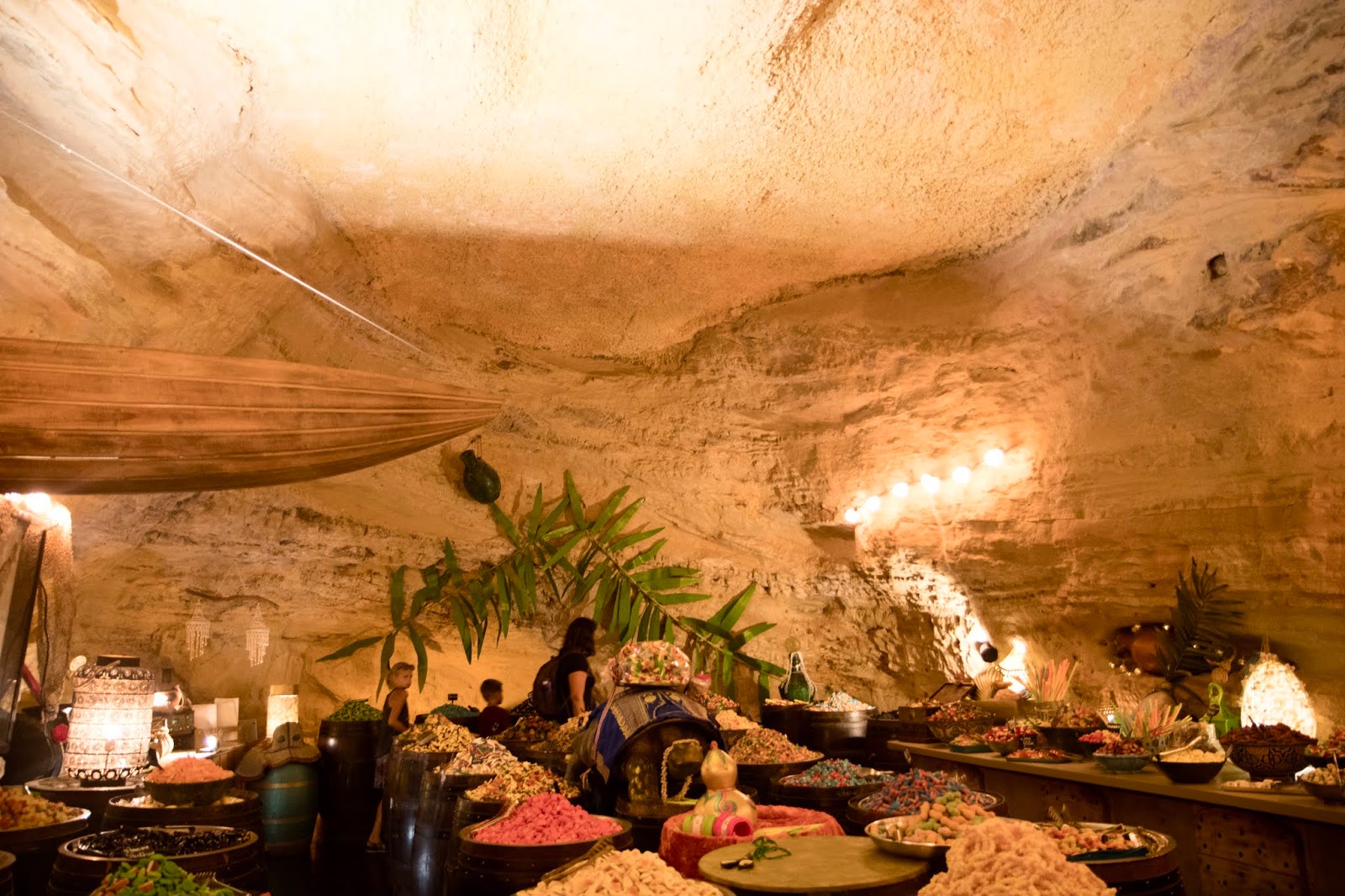
Many shops were essentially man-made caves carved out of the stone.

This candy store had a narrow entryway and continued deep into the mountain.

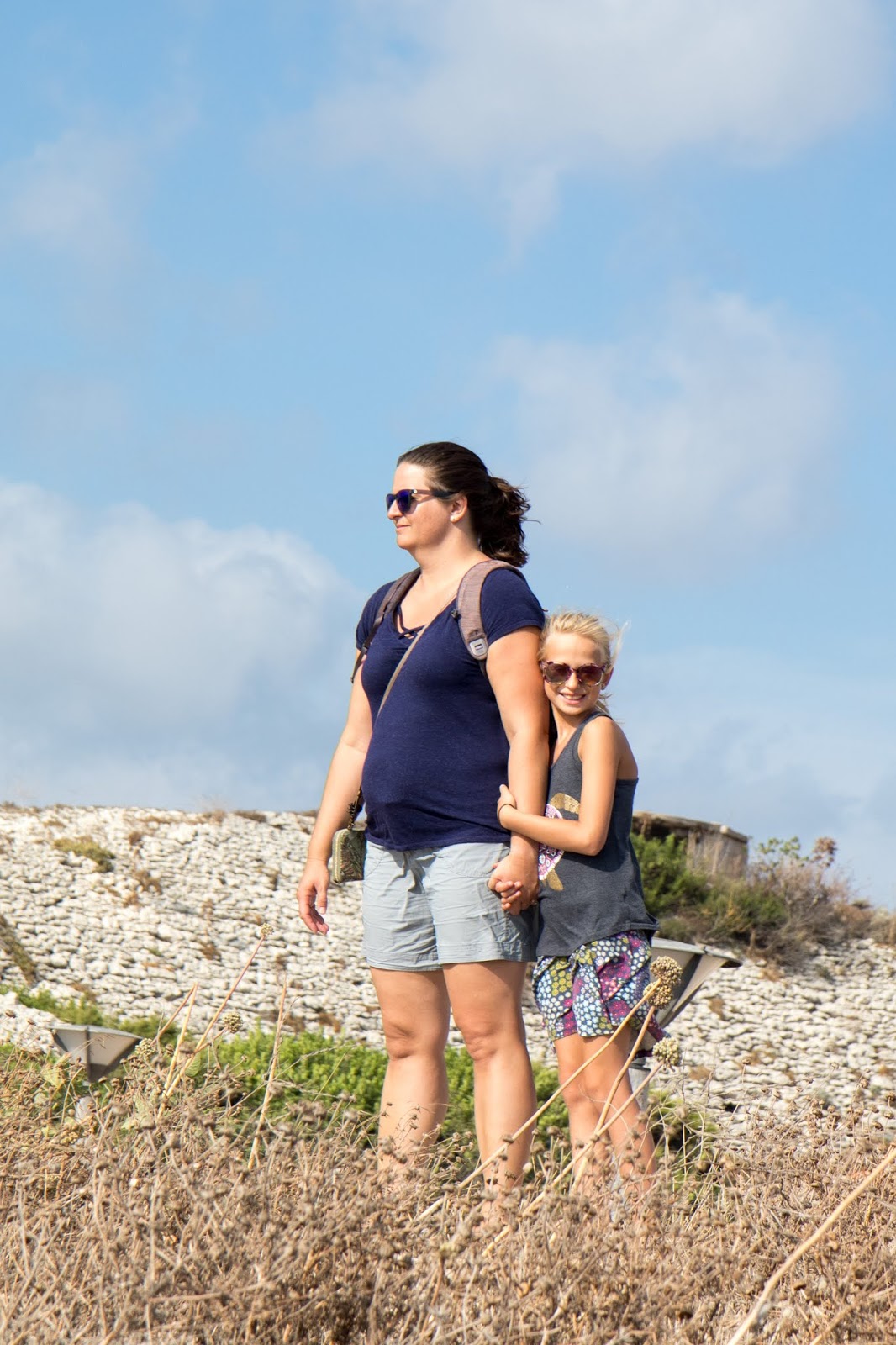
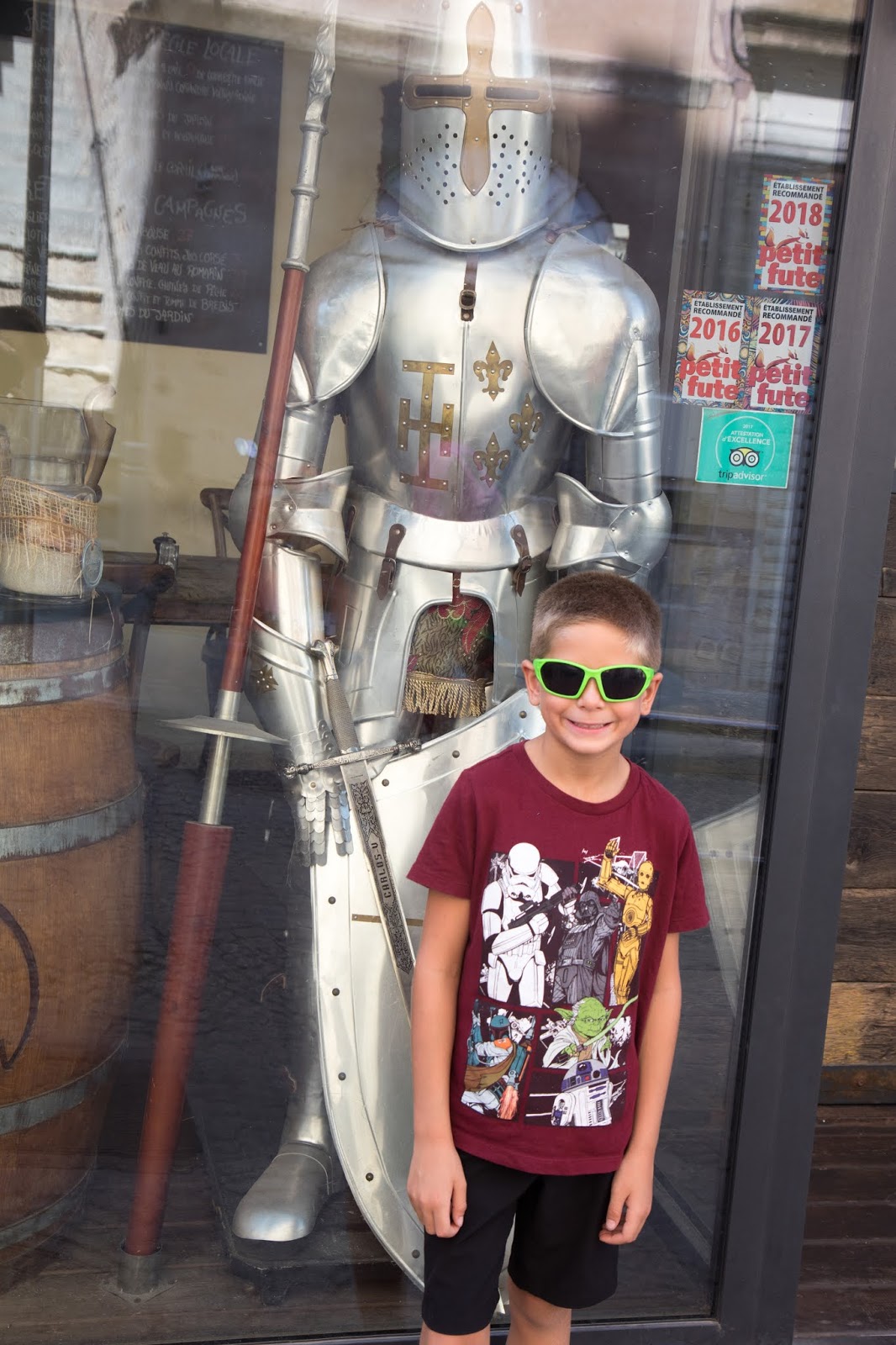
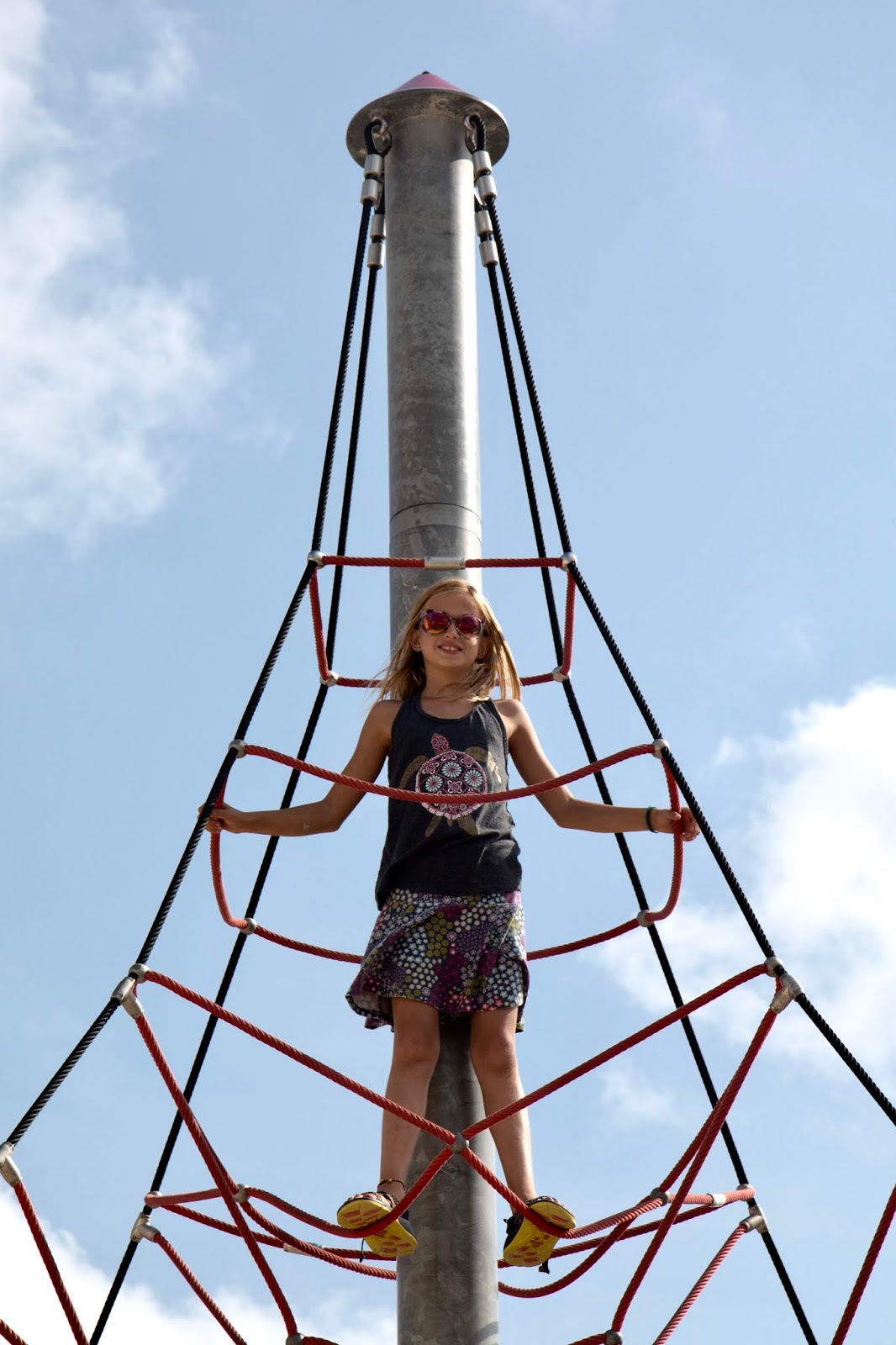
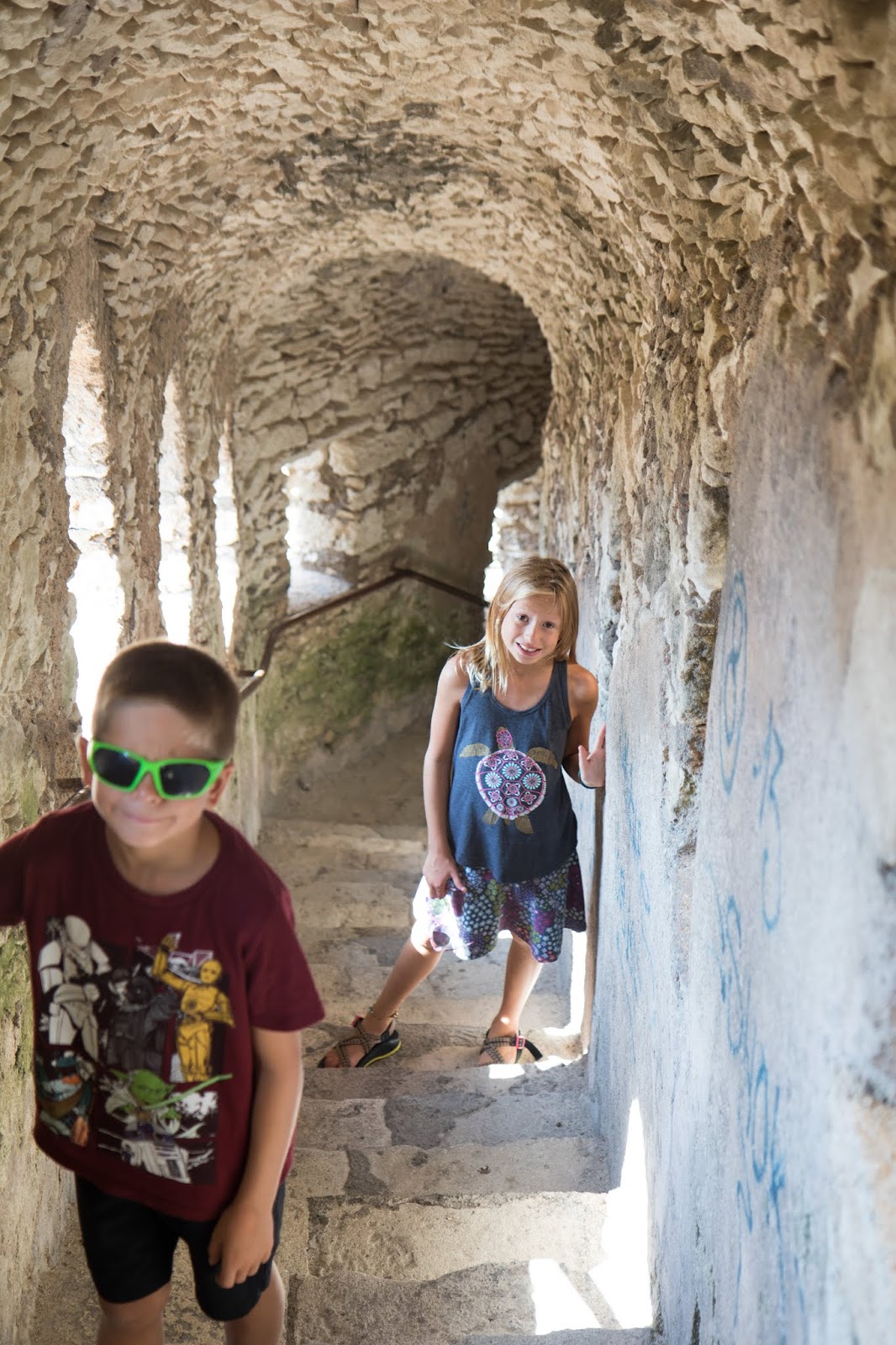
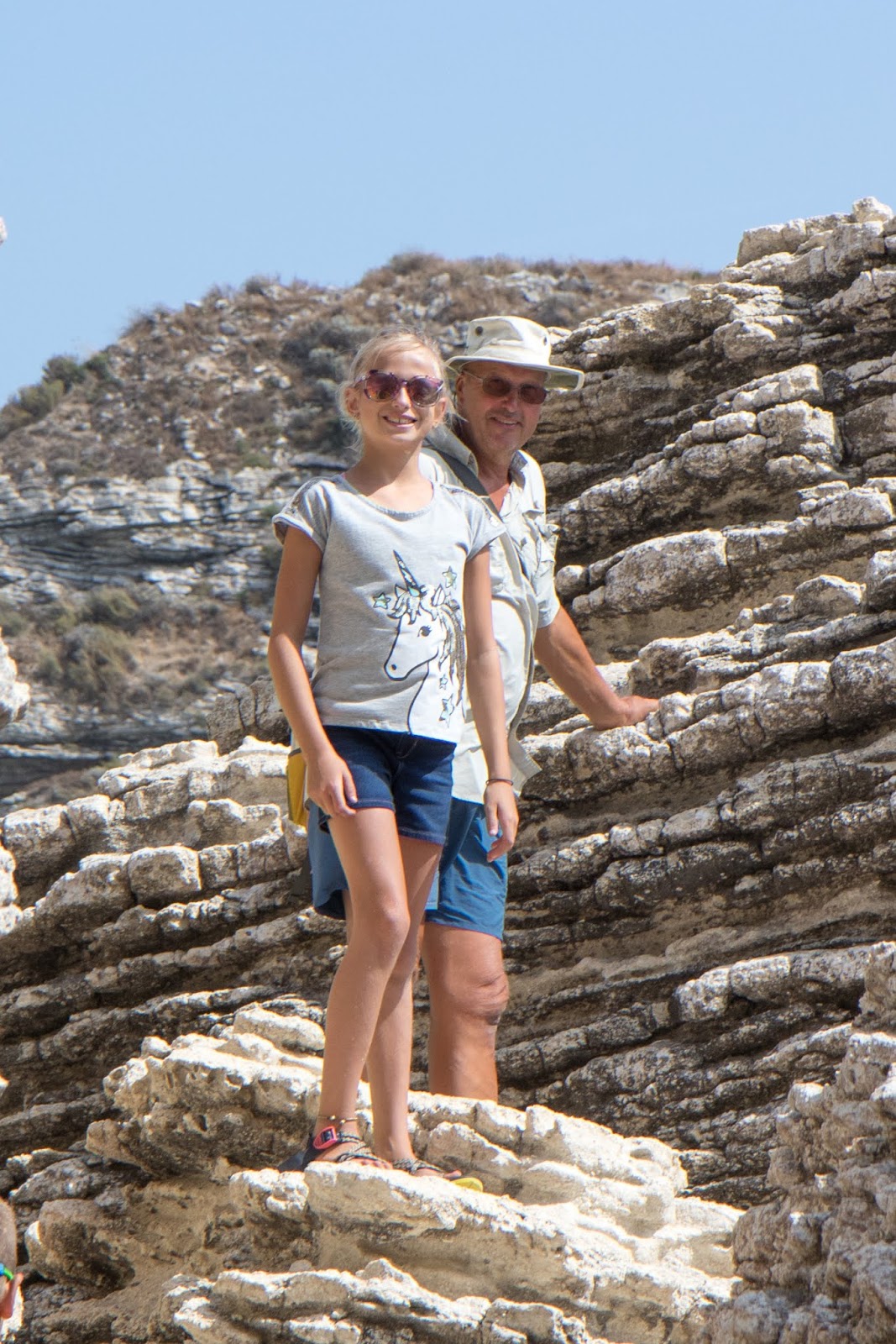
Riley and Tristan are great travelers.  They want to see and try every new thing and are always up to pose for a picture.

Tristan was excited to see a castle and unfortunately there is no castle, per se in Bonafacio.  On top of that, the fort was closed.  It appeared to have been converted to a school.

More stairs!

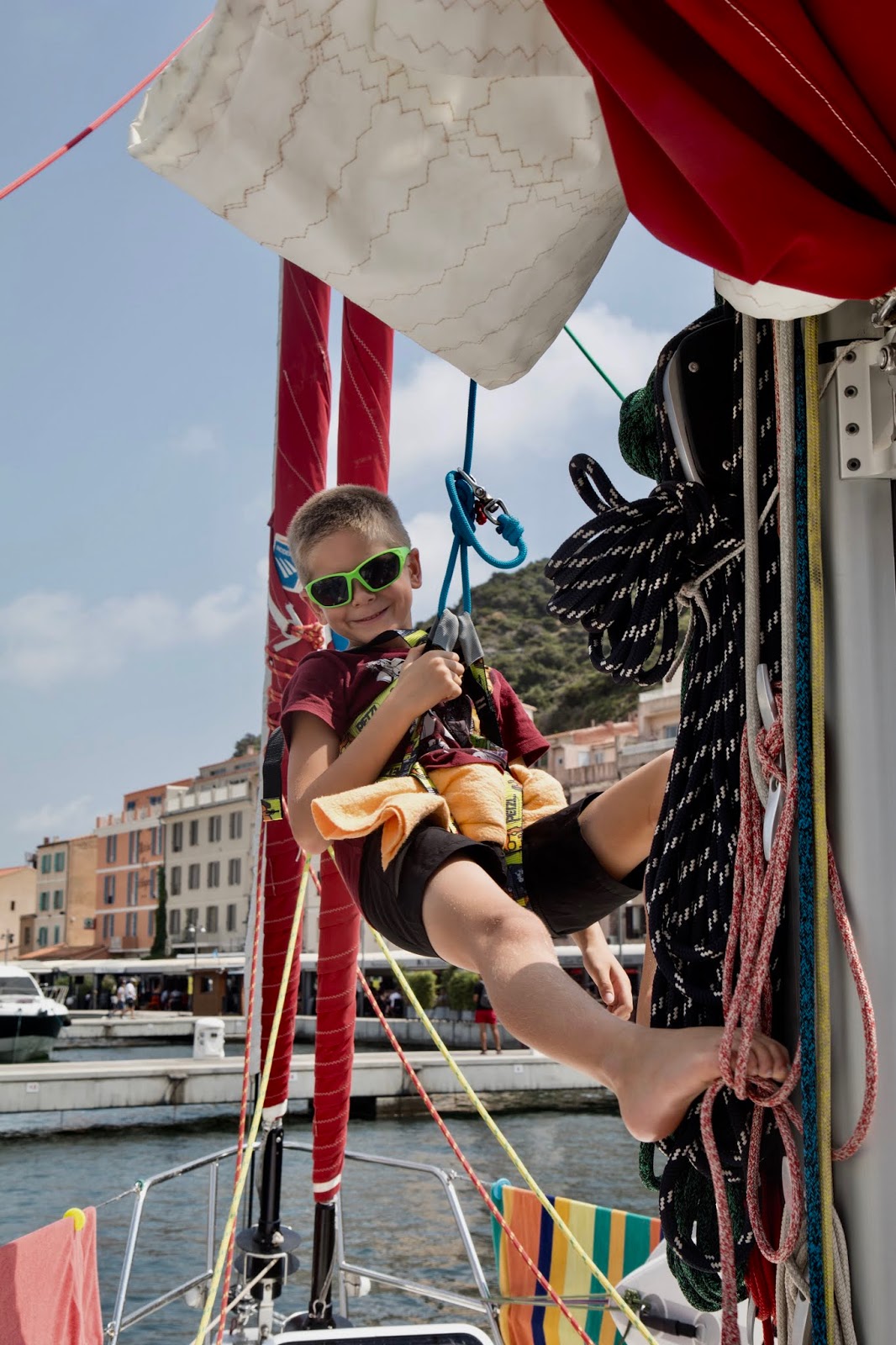
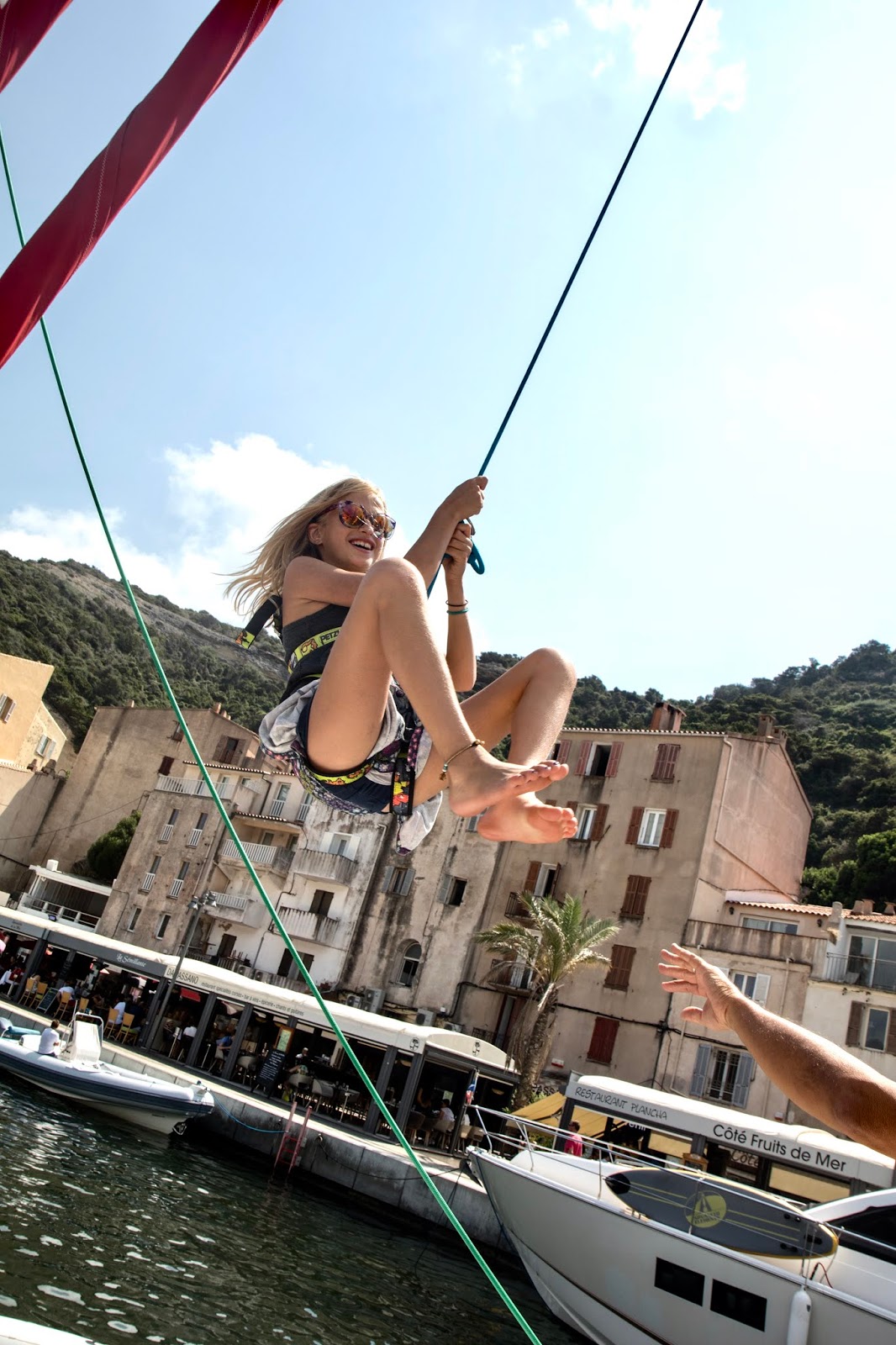
George hung a line from the mast so the kids could swing (when we were not under sail).

Tristan went first and suffered quite a bit until we got the harnesses padded better.

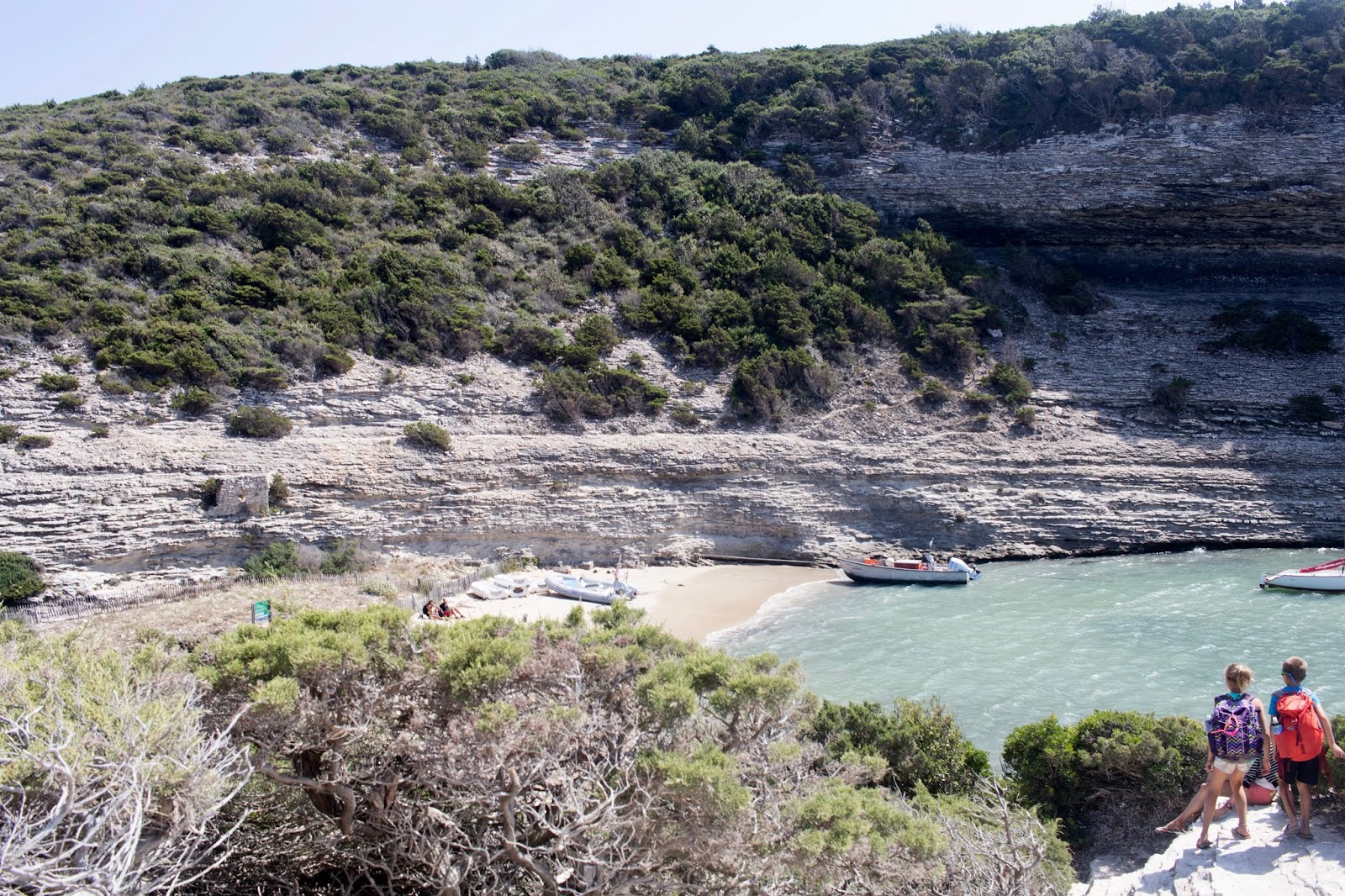
We (especially Tristan) were antsy for the beach so we climbed up to old town and then down to a small beach.

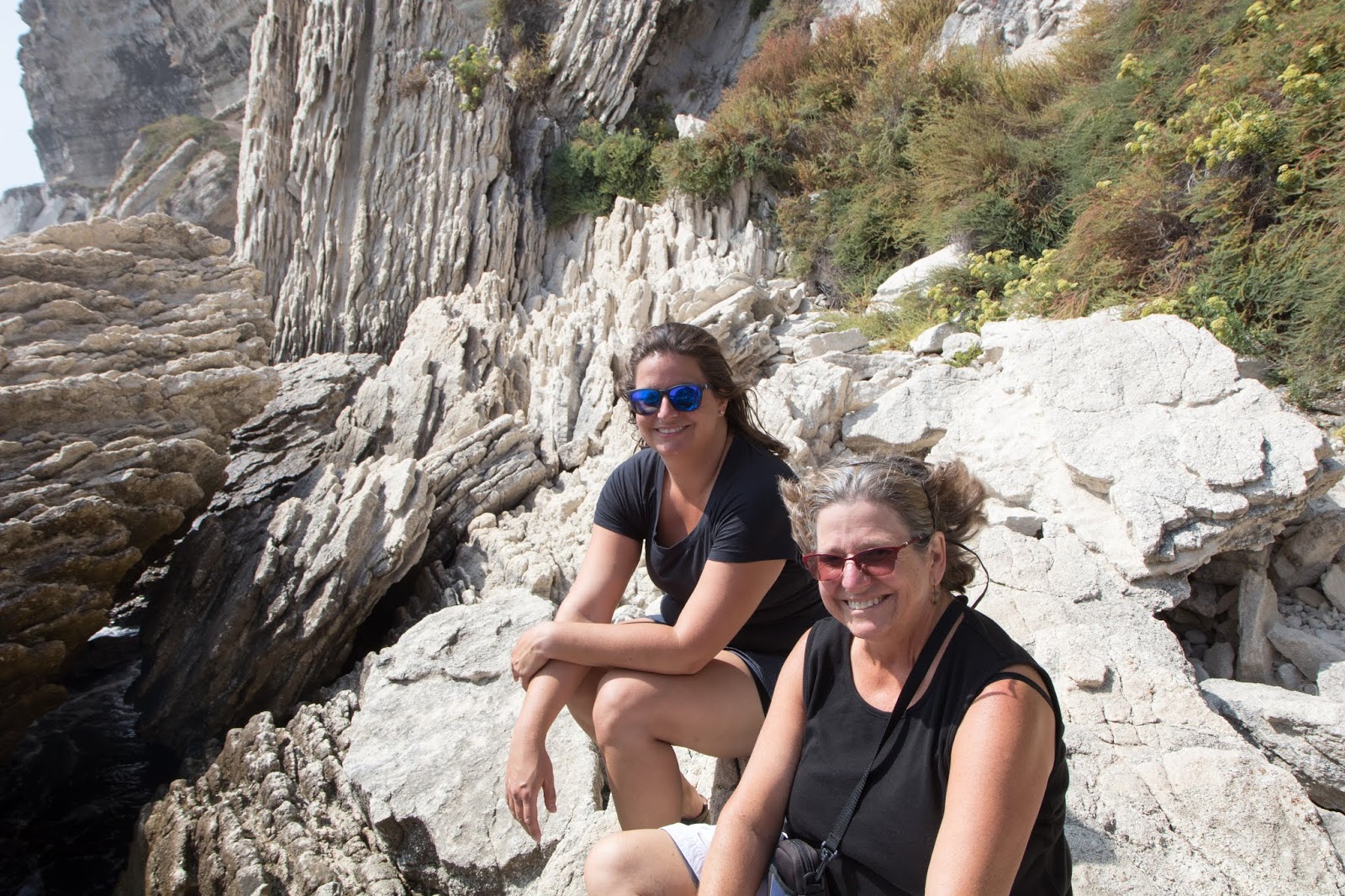
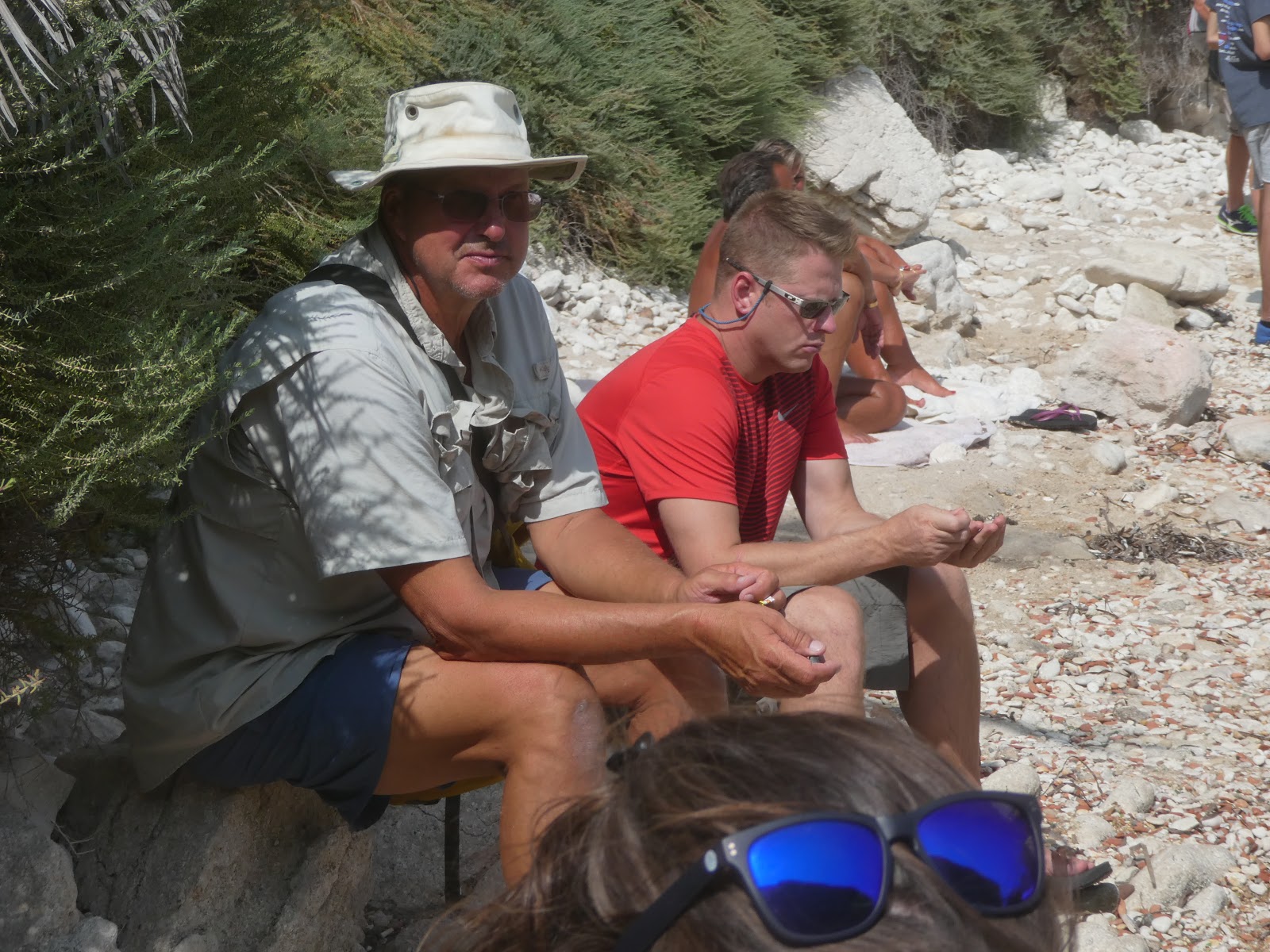
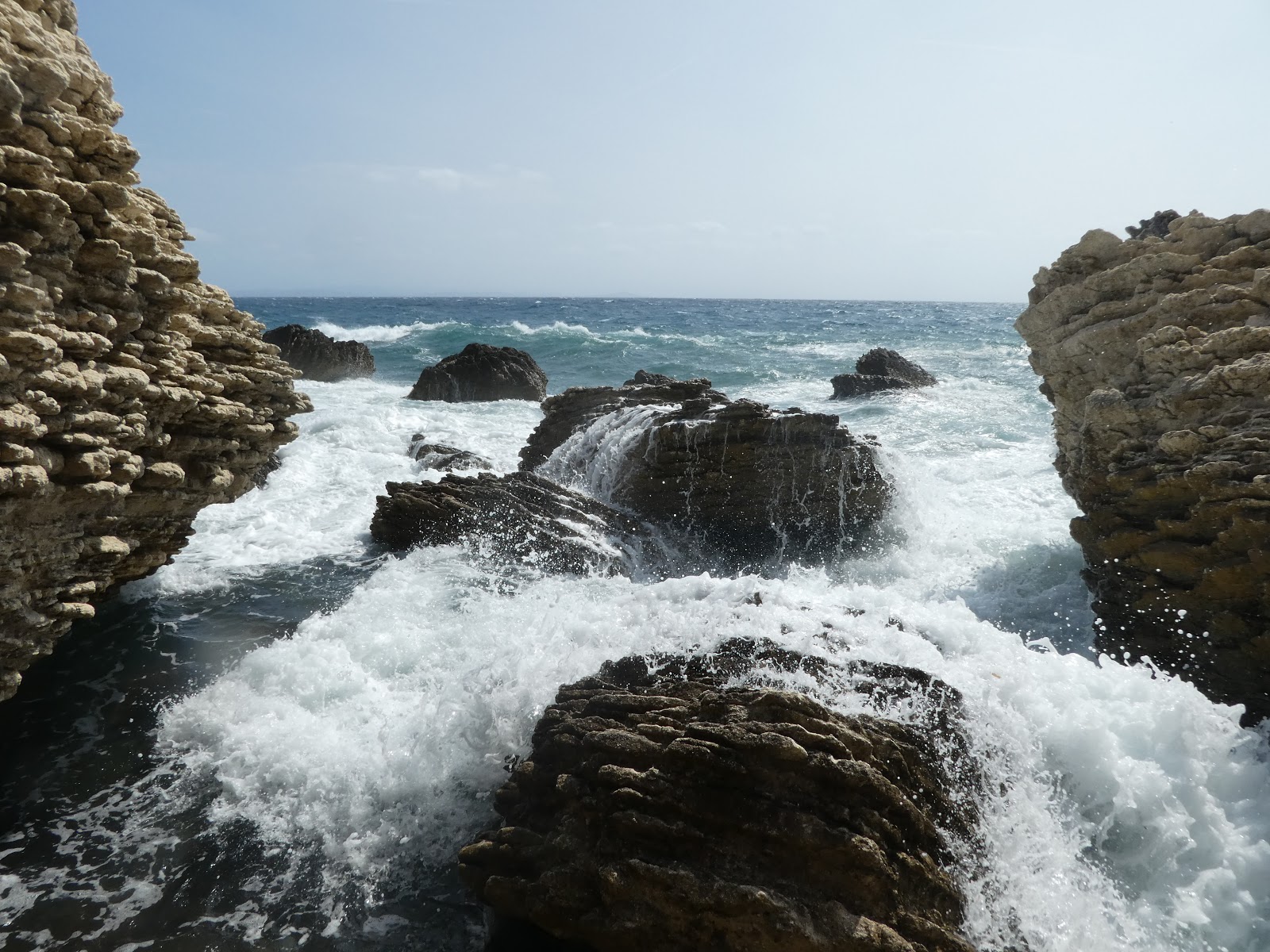
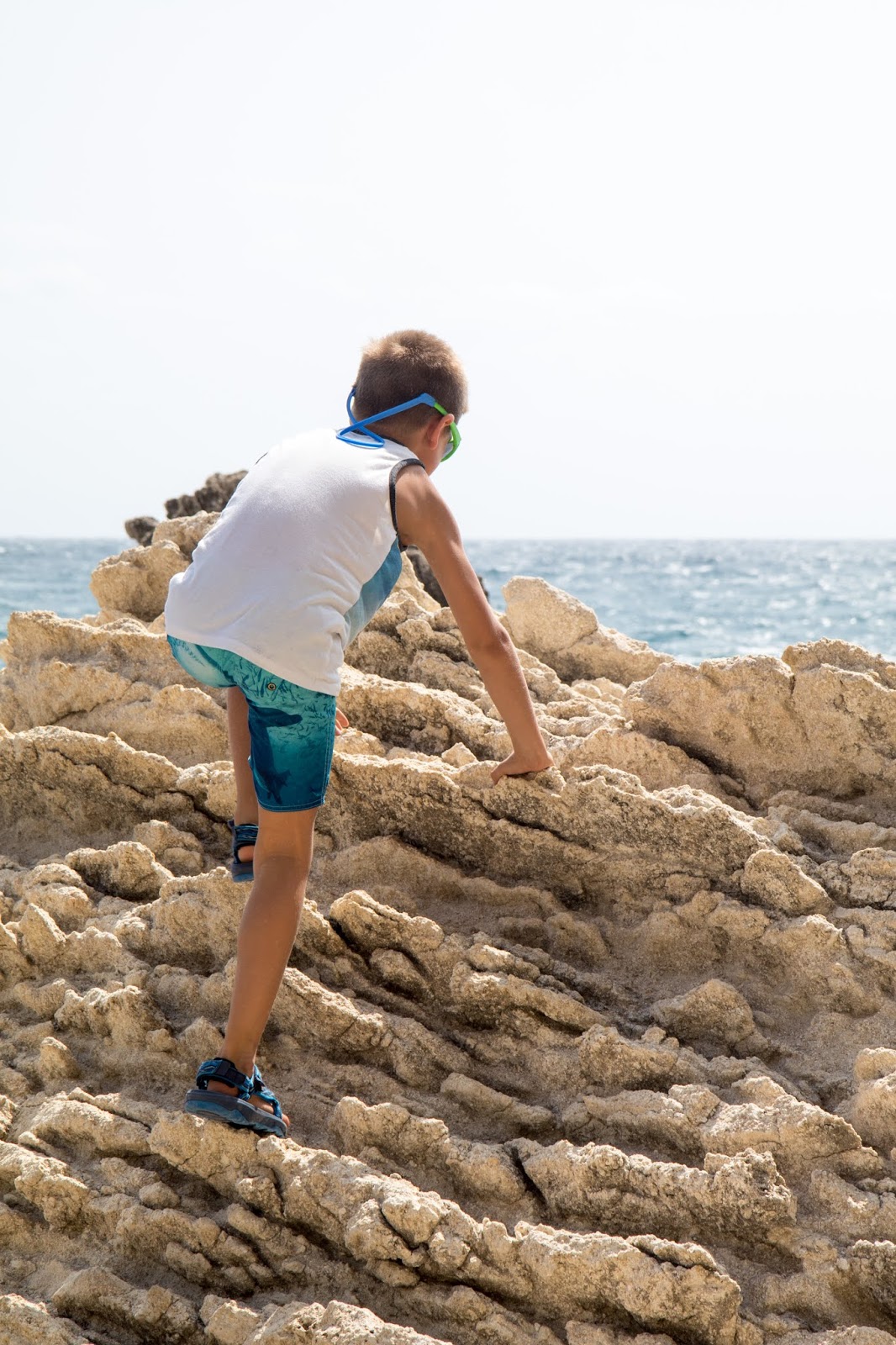
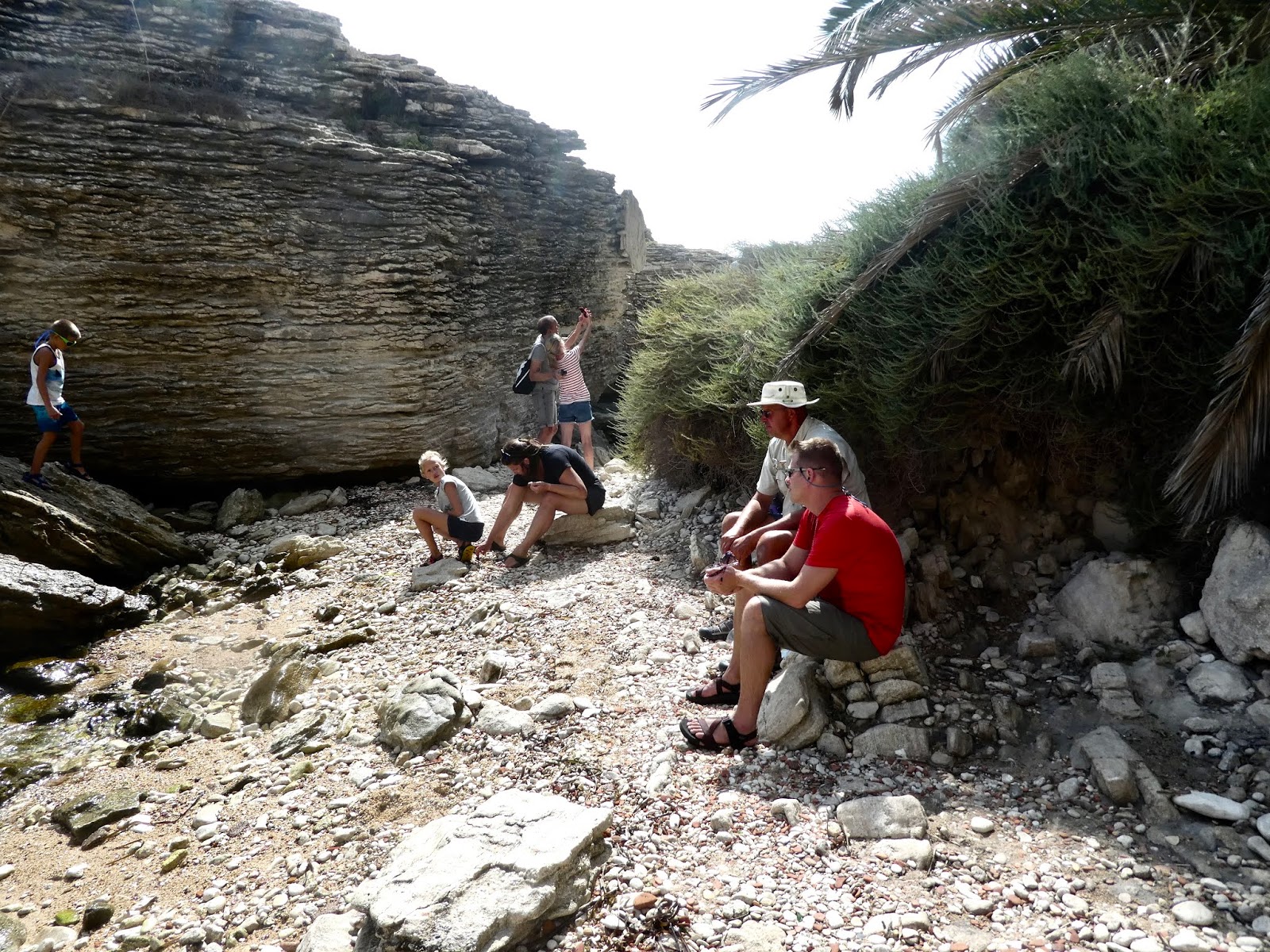
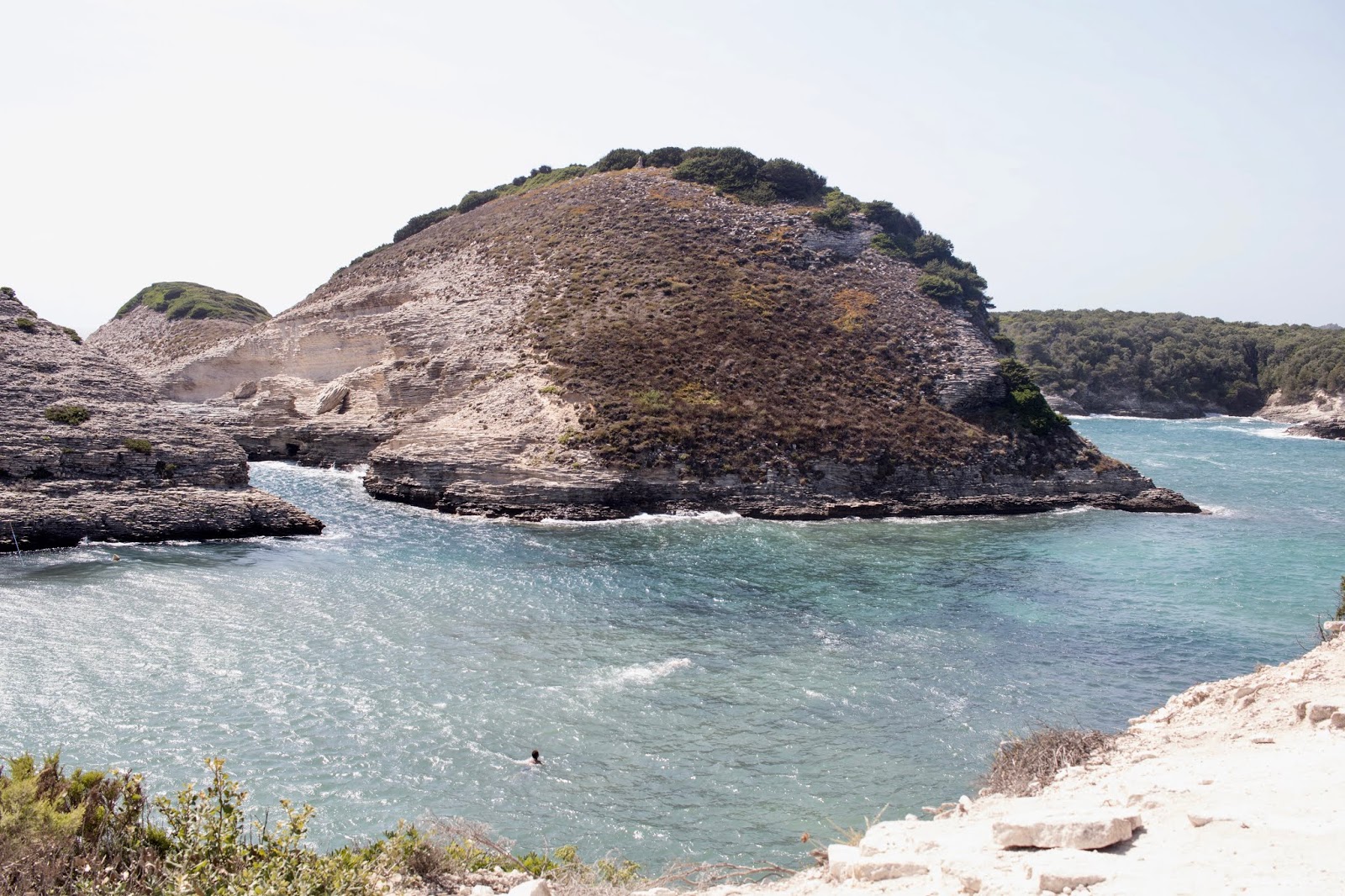
The water was rough from the mistral so no one swam but we spent a nice day climbing rocks, conversing, and searching for sea glass.

Wine bottles make great beach glass

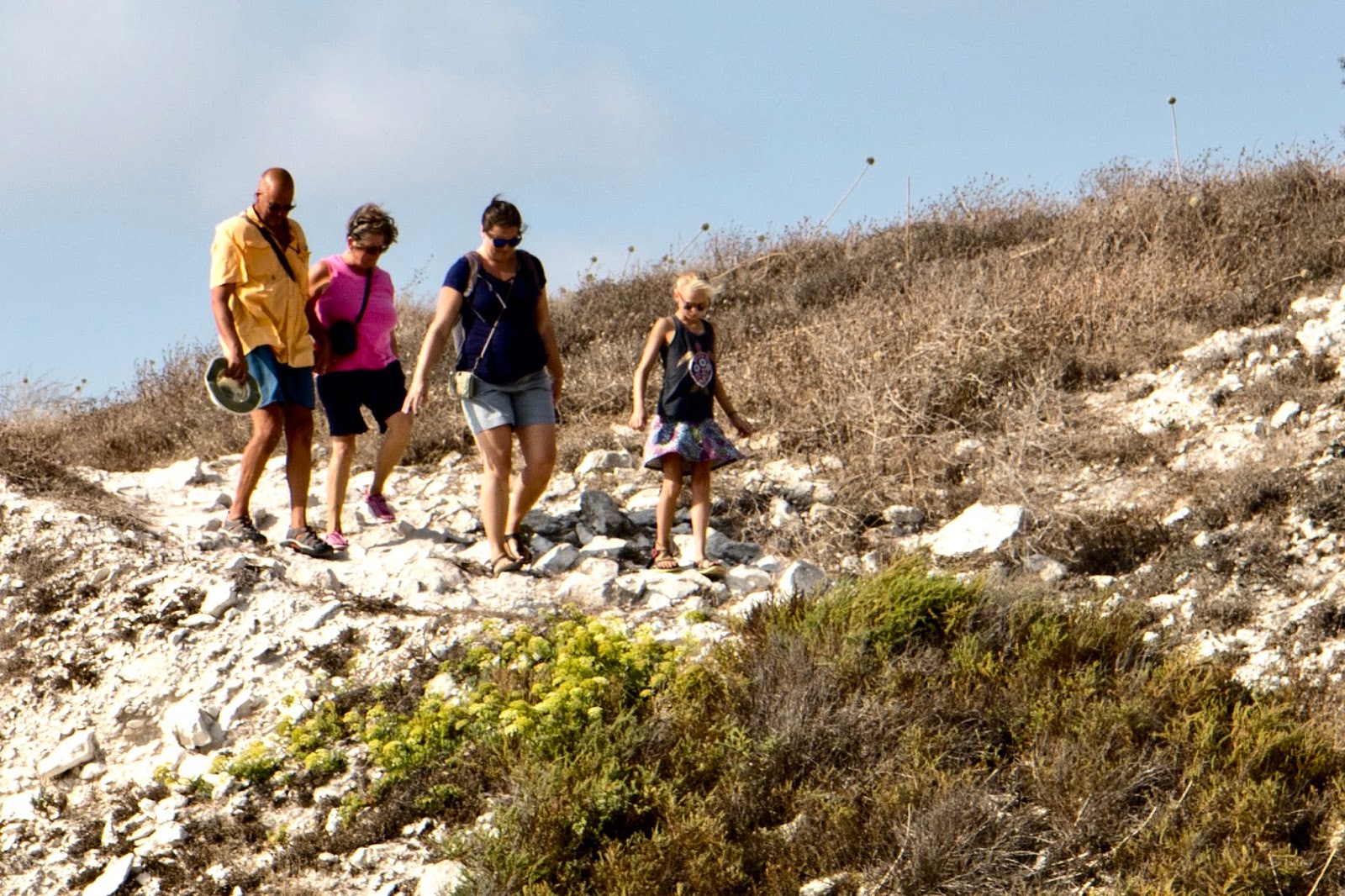
The following morning Allison, Mike, Riley and Tristan were still in search of a beach where they could swim.  They set off on a hike that lasted a good part of the day.

They climbed up one tall hill and down into another valley over and over again.  Their fit-bit estimated they climbed the equivalent of 137 flights of stairs and walked 9-10 miles.

They had encountered a number of beautiful beaches along the way but never could decide which one to swim at.

May your lives and ours be filled with many more days like these.

Riley is missing because she took this great picture

Monet’s Gardens

Our visit to Monet’s Gardens in Giverny, France

Preface – by Susan on Ice FloeOur visit to Monet’s gardens was prompted by my sister Margaret (a newly graduated Master Gardener).  Margaret and her husband Burt joined us for a visit that began with a sail enjoying the Mediterranean towns and cities along the French Riviera and ended with a whirlwind tour of the most well known sites in Paris.  Margaret asked that, if possible, we include a visit to Monet’s gardens, at Giverny and we are so glad we did.

Margaret is guest author of today’s post.

Monet’s Gardens by Margaret on Ice Floe

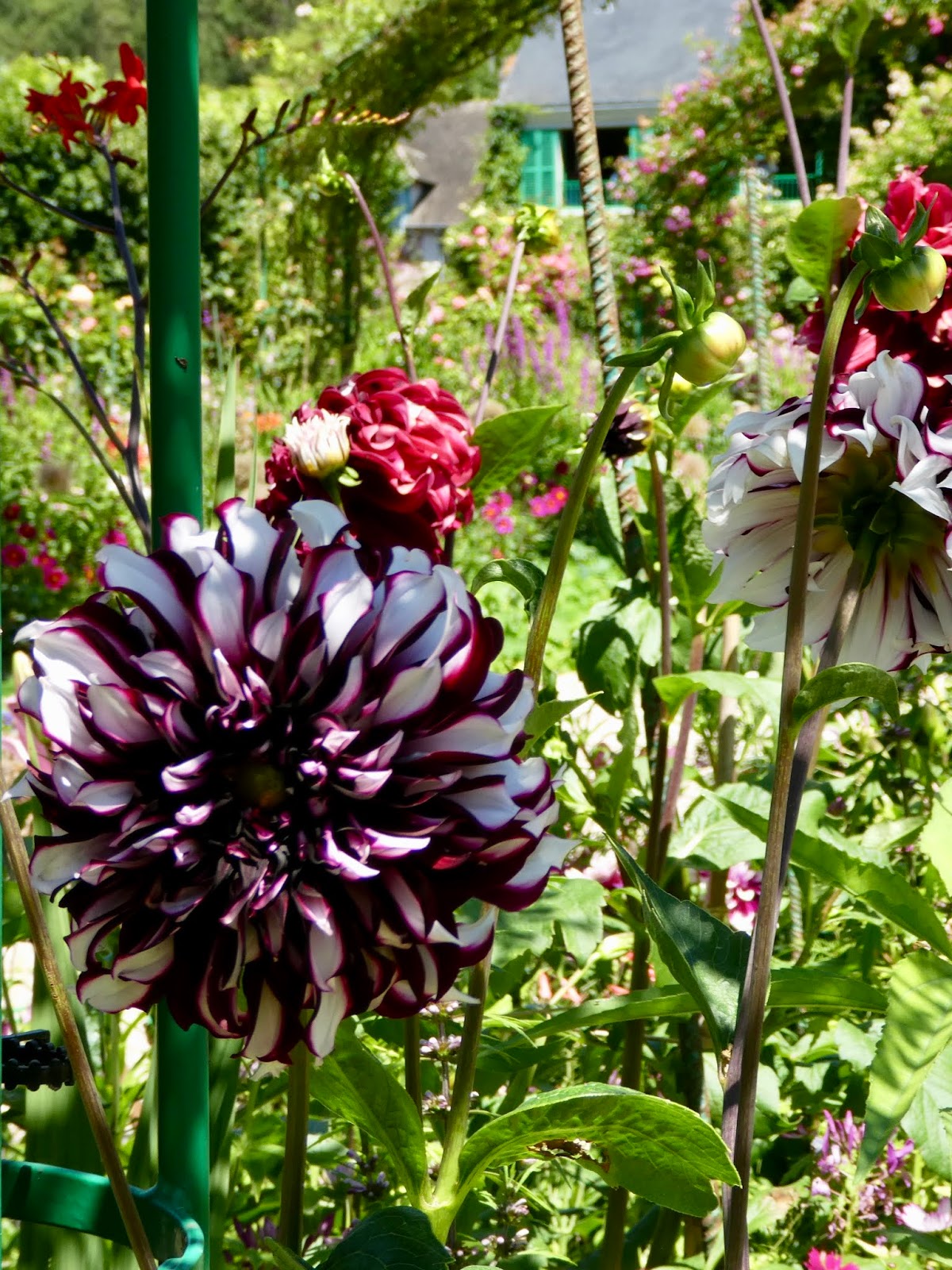
“Claude Monet’s gardens at Giverny are like his paintings – brightly colored patches that are messy but balanced. Flowers were his brushstrokes, a bit untamed and slapdash, but part of a carefully composed design” (Rick Steves, Gene Openshaw, and Steve Smith).

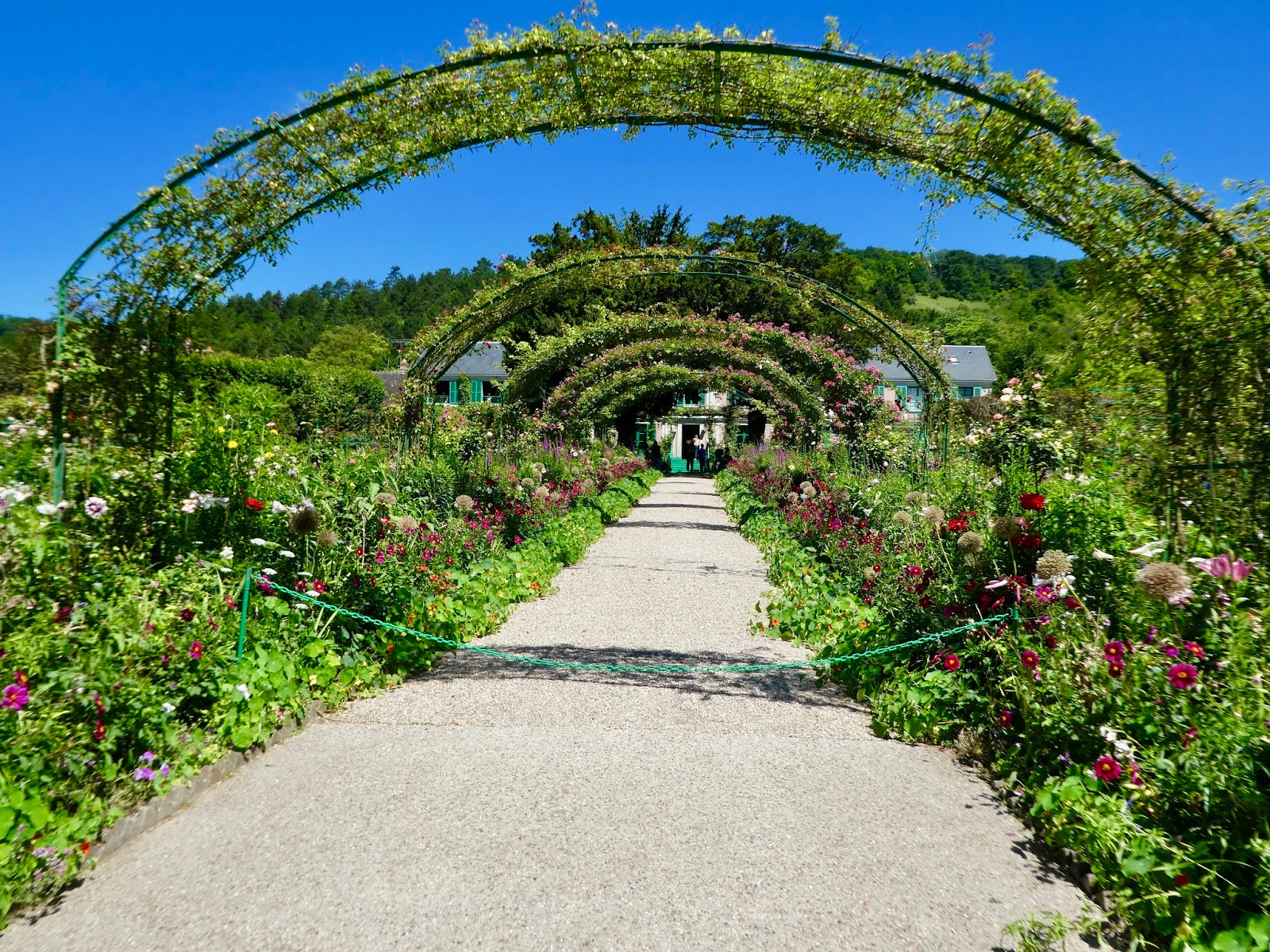
View from the far end of Monet’s flower garden to his home

I first learned of Monet’s Gardens when I attended a presentation at our local library as part of the Master Gardener “Cabin Fever” lecture series. The presenter was a local watercolor artist, Celia Knapp. Celia has made numerous visits to the gardens and is very well versed in the history of Claude Monet and the development of the gardens.

Claude Monet is considered the “leading light” of the Impressionist movement.  He pursued his art in defiance of his family, who were of very modest means, and practiced his art in the “open air”, in contrast to the accepted approach of painting in the “perfect lighting of a controlled studio setting”.

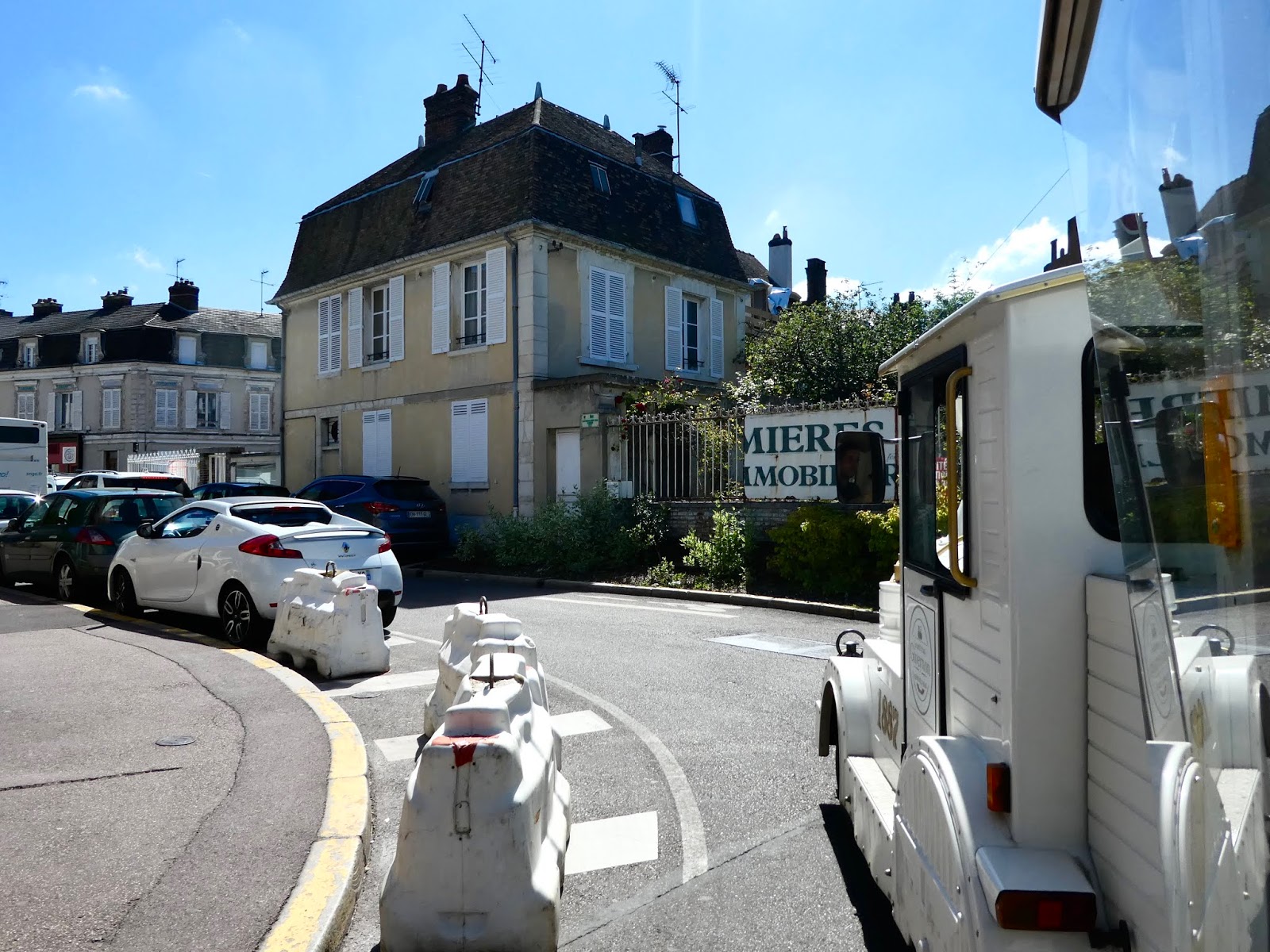
We arrived at Giverny from Paris by way of a high-speed train ride and, then, a “train-like” trolley that included an overhead recorded history of the village of Giverny, whose claim to fame is primarily its connection to Claude Monet. Giverny sits on the right bank of the river Seine.

Entering Giverny by “train”
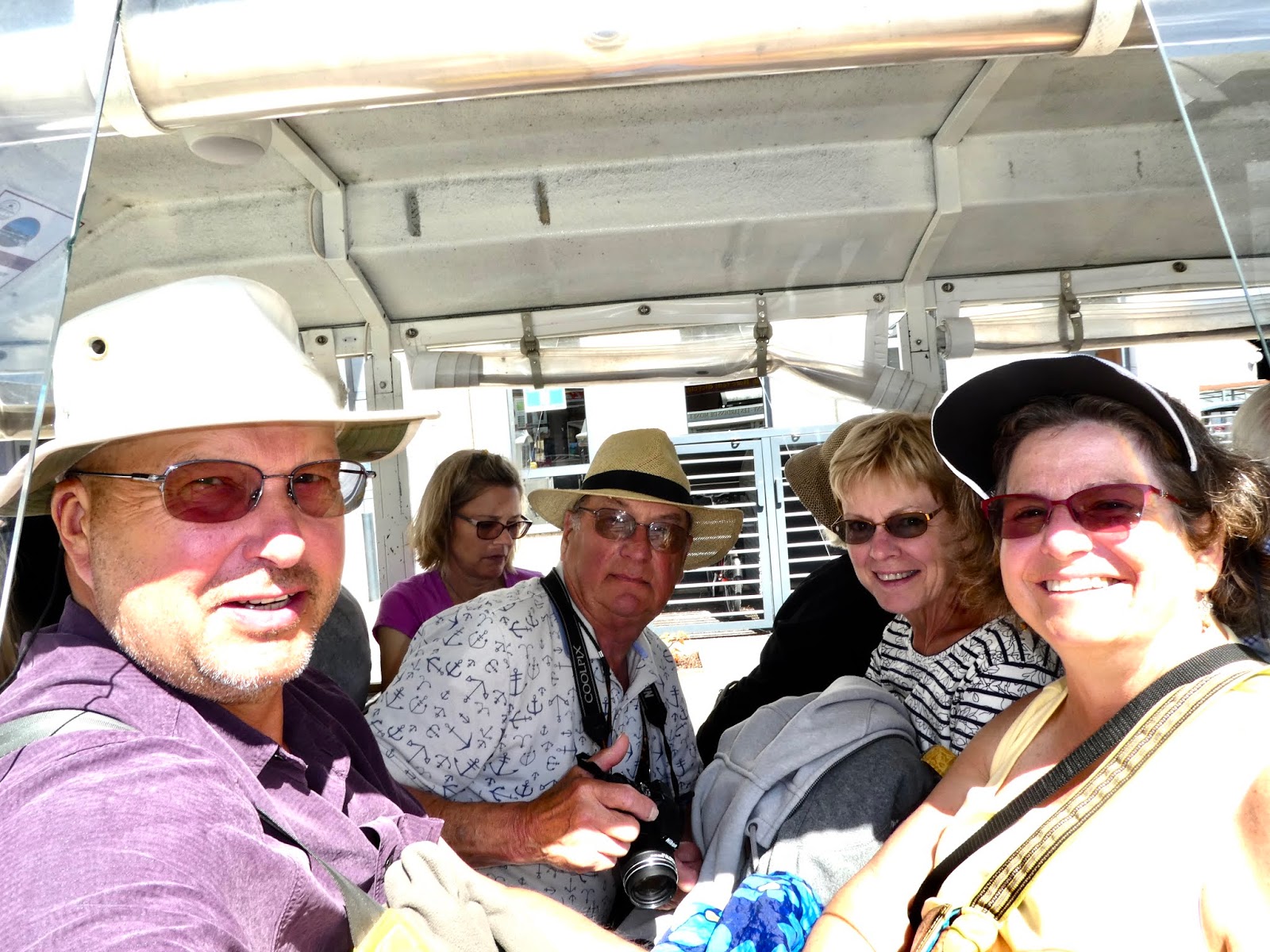
Left to right, George, Burt, Margaret, Susan
On the little train
    

From there, we approached the gardens on foot.

Giverny (Zhee-vair-nee or, as George likes to pronounce it, Gib-er-nee) is in the Normandy region of France, about 50 miles north of Paris. Monet discovered Giverny while traveling on a train, and eventually purchased a farmhouse on an orchard, turning a barn on the propery into his studio. He settled into the farmhouse with his wife, Alice, and their eight children. The surrounding land would eventually evolve into one of the most inspirational settings of his art.

Claude Monet’s home  (photo downloaded from wikimedia.org.  Author Michal Osmenda from Brussels, Belgium)

My first impression is that it was a little confusing determining exactly when we reached the gardens. In retrospect, I think it may be because the town, itself, has identified itself so closely with the gardens that it’s difficult to determine where they actually begin, apart from the town. At a certain point, we reached the ticket window. From there, we entered the gift shop. WOW!! The town, and the entity that oversees the gardens, have definitely perfected the commercialization of the site. The gift shop was buzzing with visitors and consumers of books, prints, artwork and memorabilia. In order to enter or exit the gardens you were required to go through the gift shop – genius!
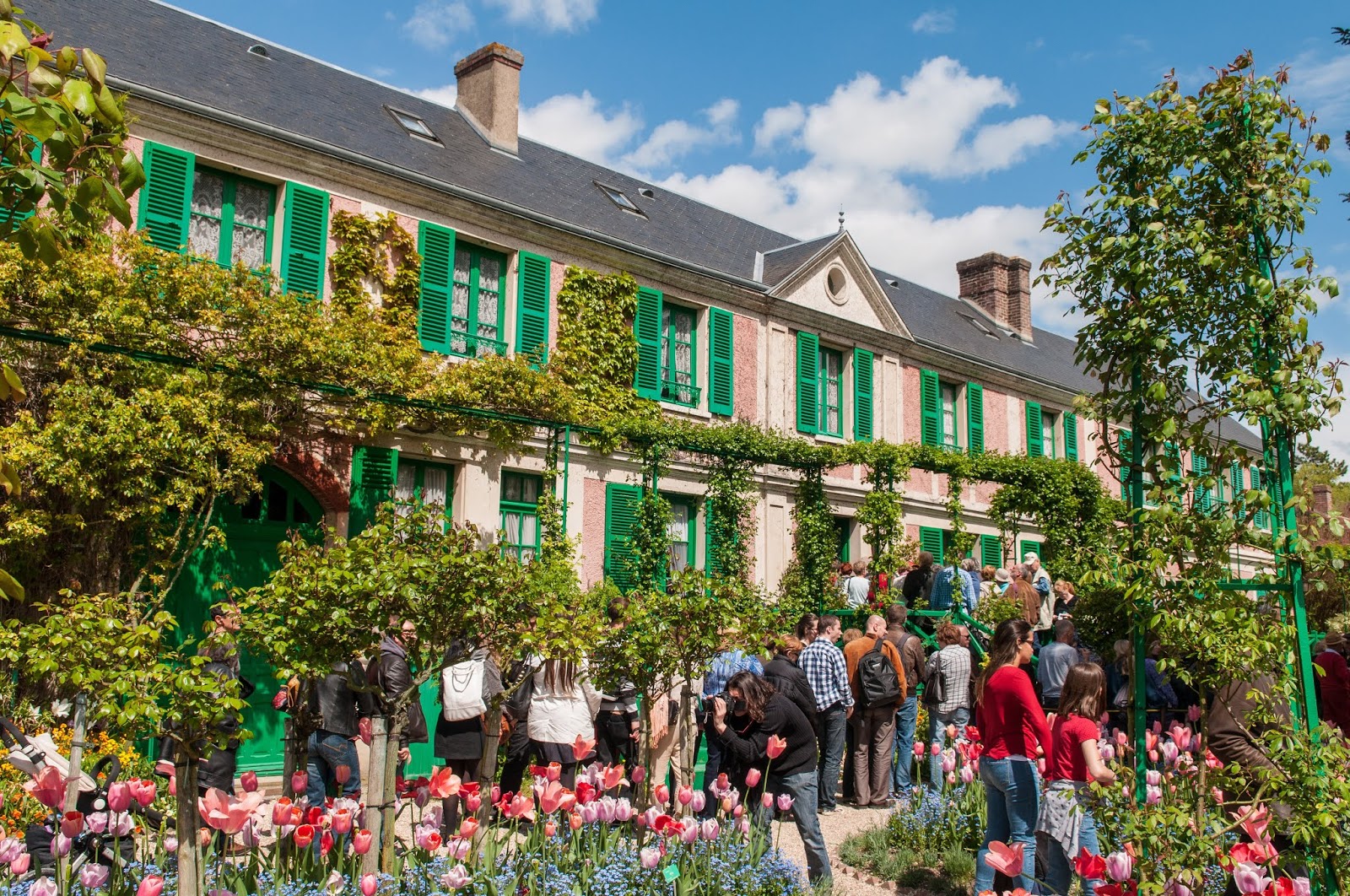
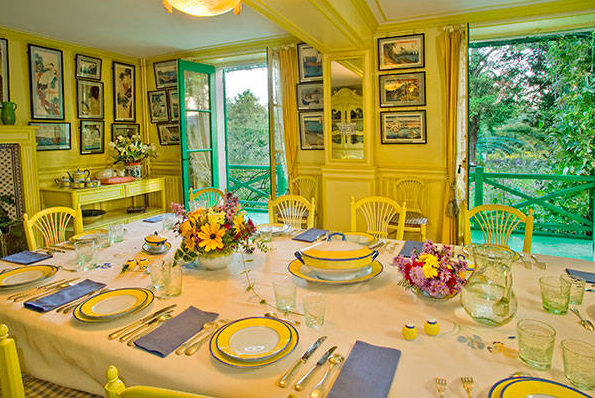
All of Monet’s gardens sit on approximately 5 acres, but there is hardly a square foot that isn’t in bloom in the month of June. The grounds are made up of two gardens – the Clos Normand and the water garden.  Monet’s house is located in the Clos Normand side of the propery.  It’s painted pink and “Monet green” – his favorite colors. The public is allowed to tour the interior of the house, which we did. The dining room is notable for its color scheme of bright yellow and blue – a favorite color combination of Monet.

Dining room in Claude Monet’s home in Giverny (photo from wikimedia.org)

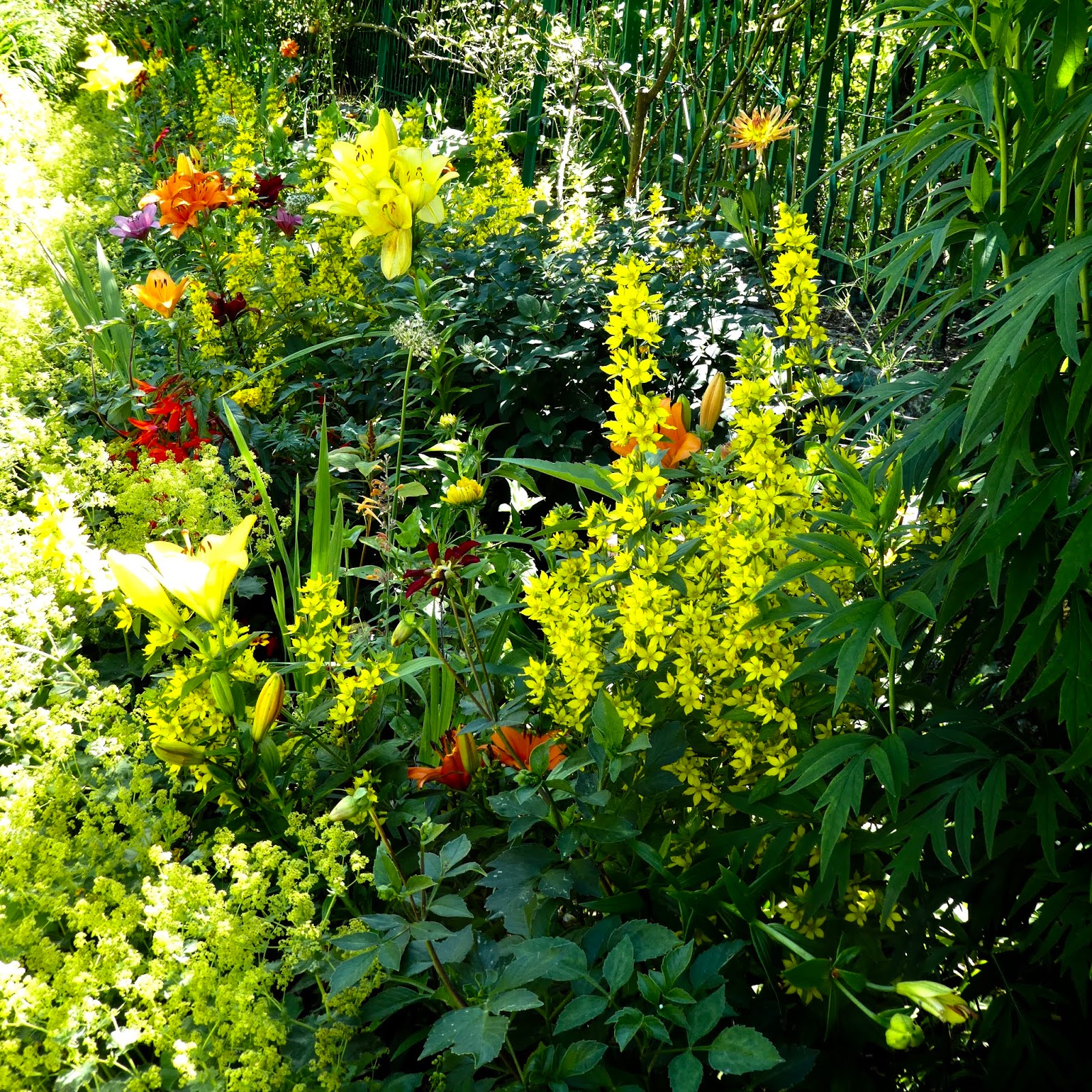
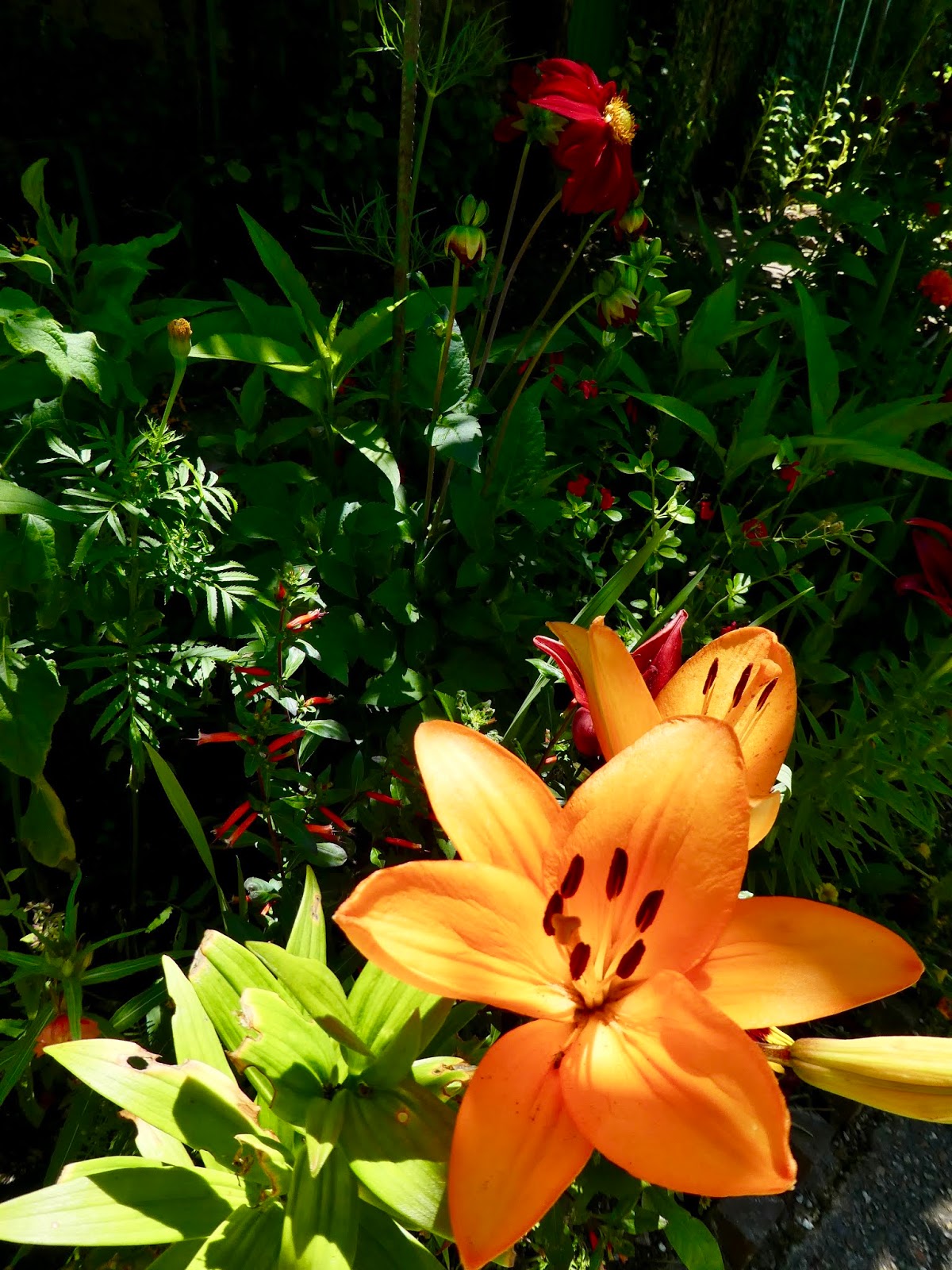
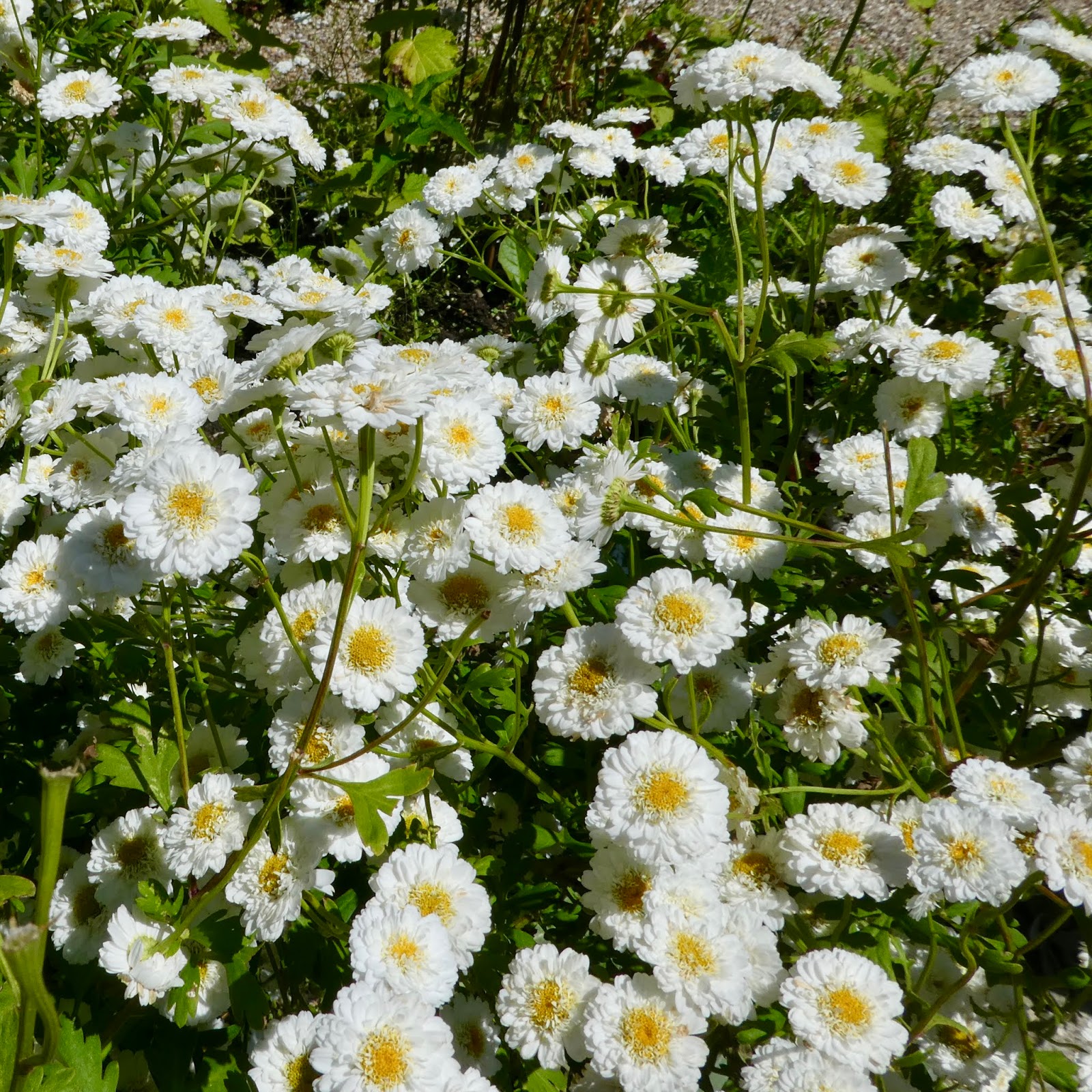
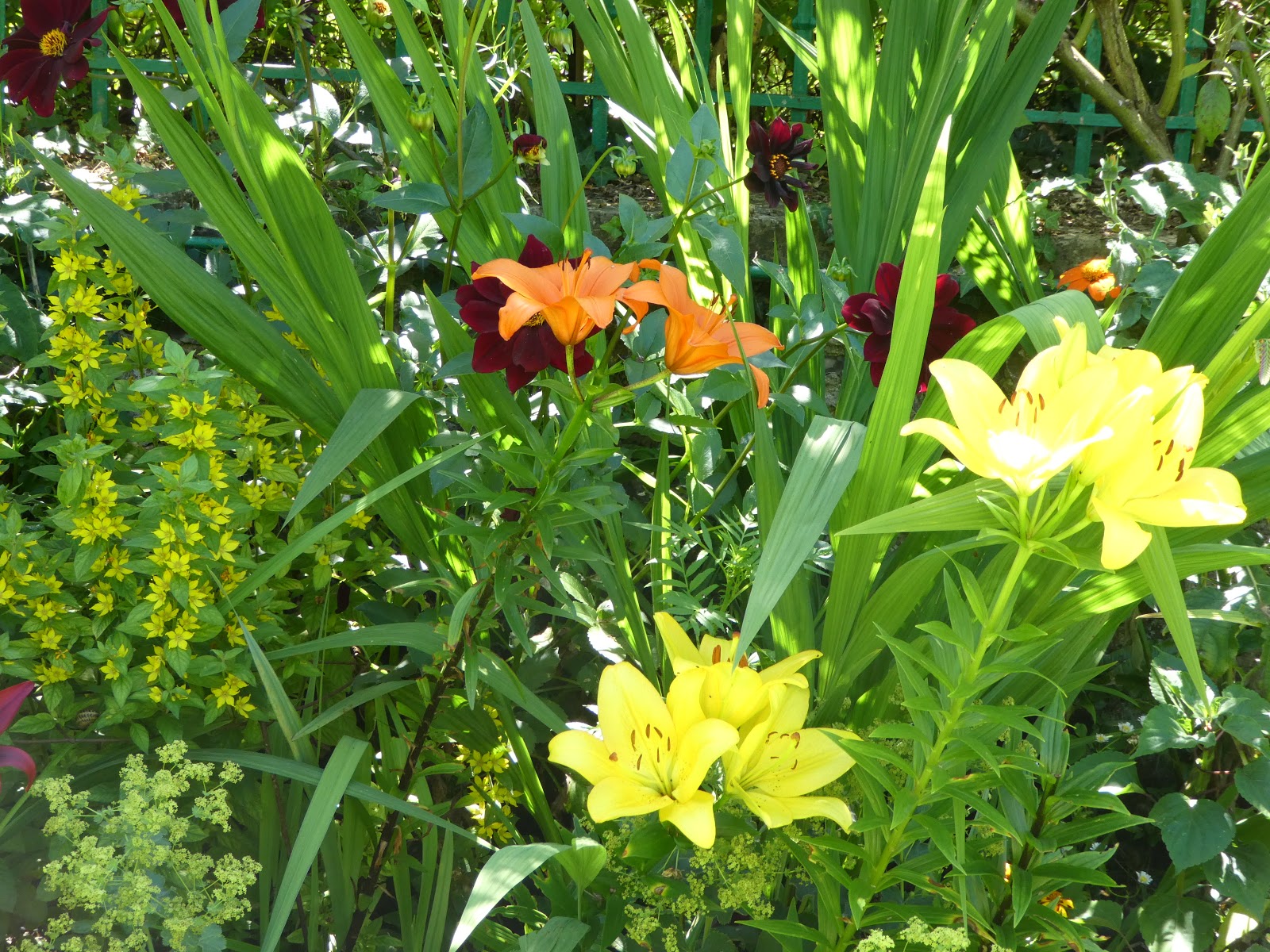
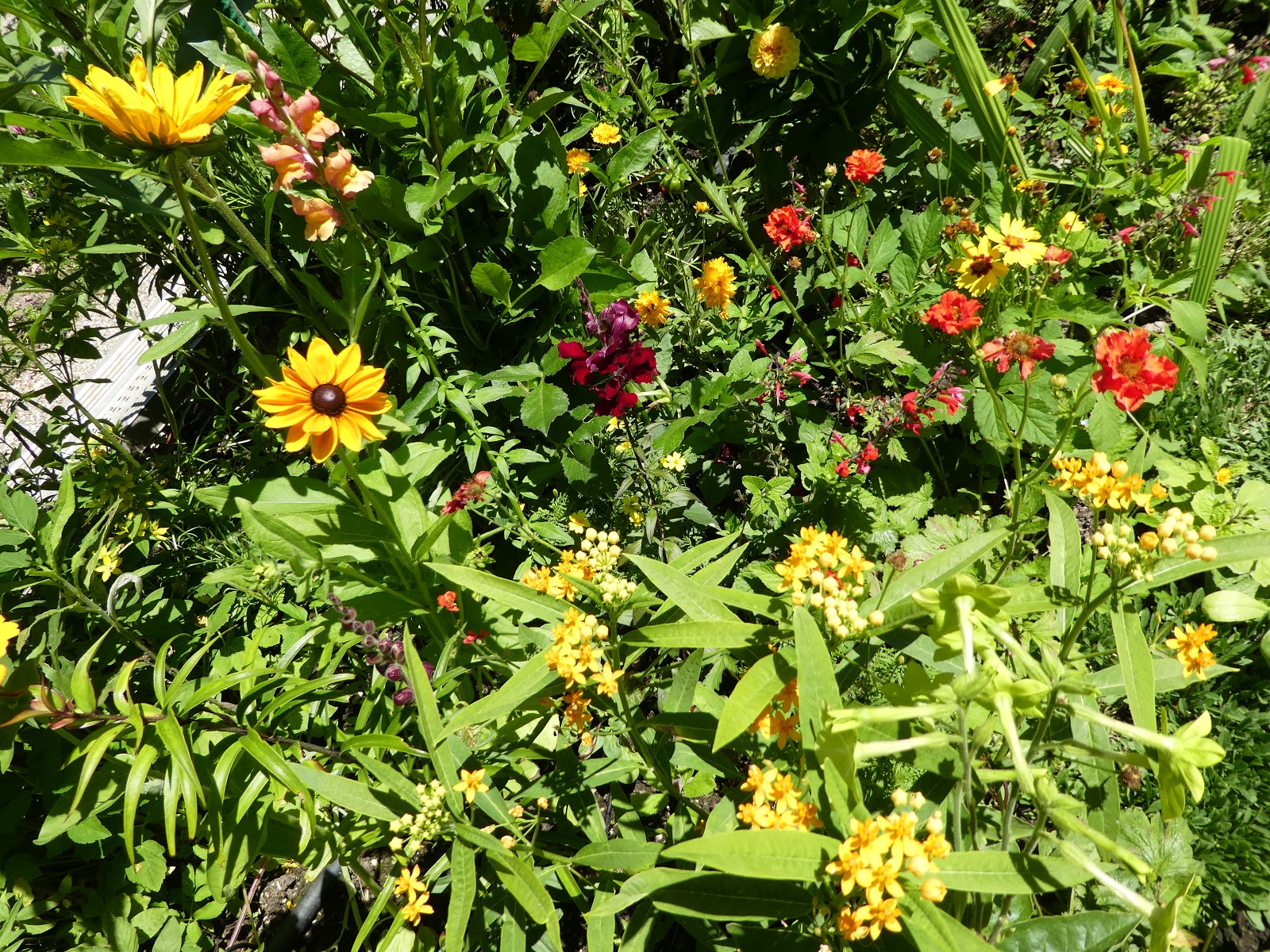
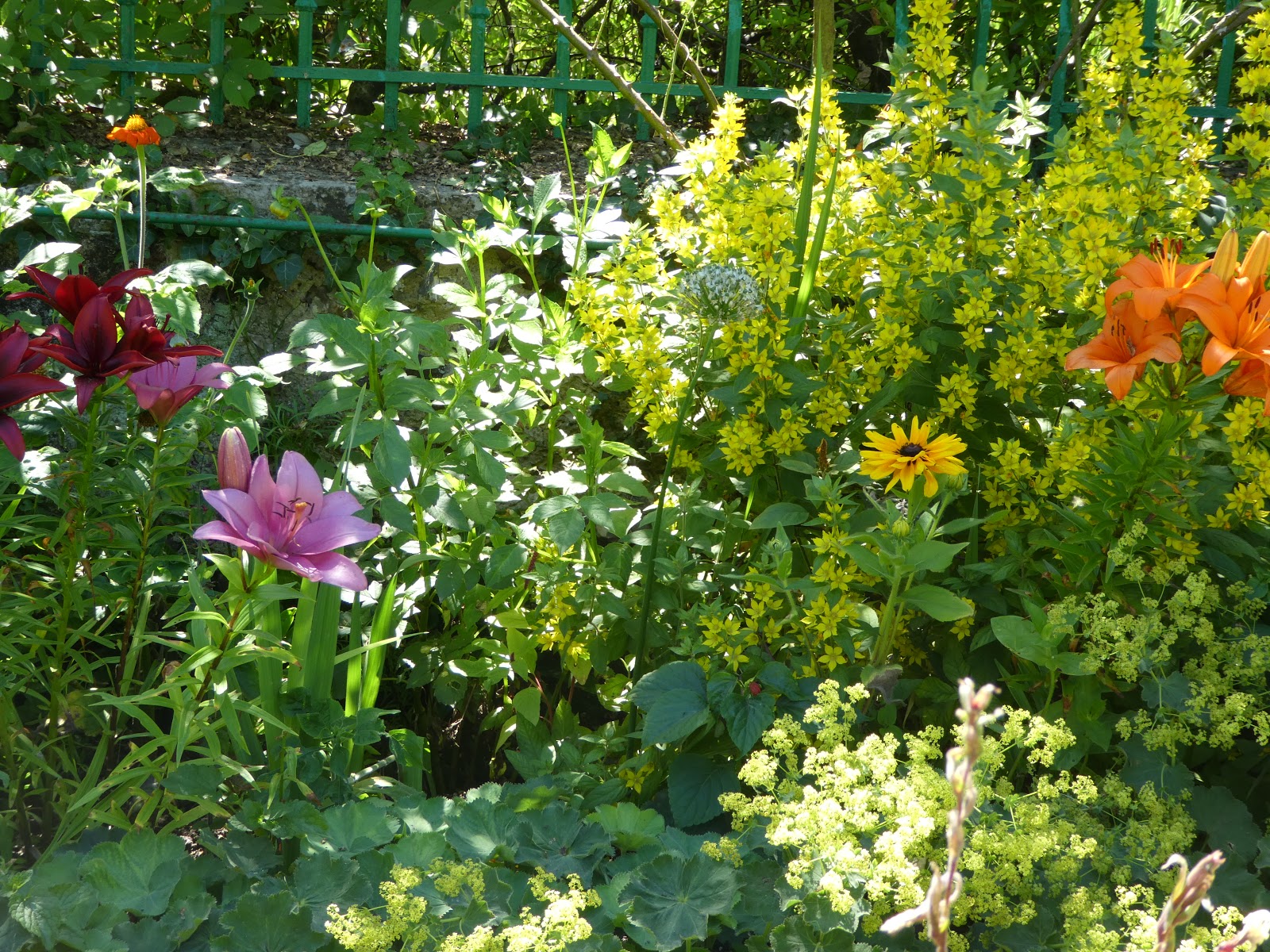
The Clos Normand gardens were designed to provide colorful blooms and/or foliage year-round. Just as one flower fades, another takes its place. You really have to see it to believe it (which you will with the pictures that Susan will share).

Editor’s note – I am quite certain a thousand pictures cannot substitute for seeing these gardens yourself.  We are so glad Margaret suggested we visit.  Below are some of my favorite pictures.


Monet’s Water Gardens

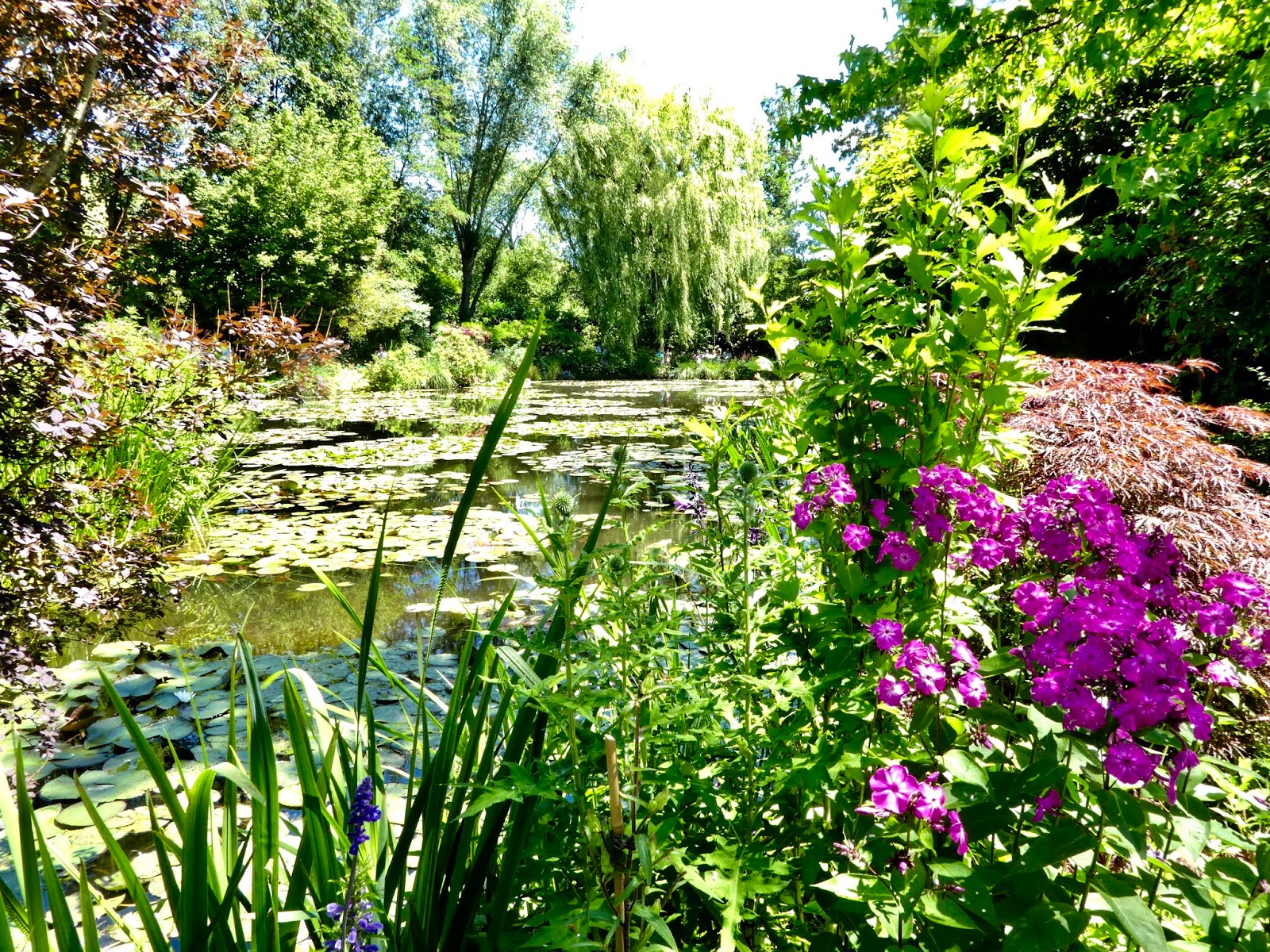
This pond is the destination of the path through the water gardens and the inspiration of many of
Monet’s most famous paintings
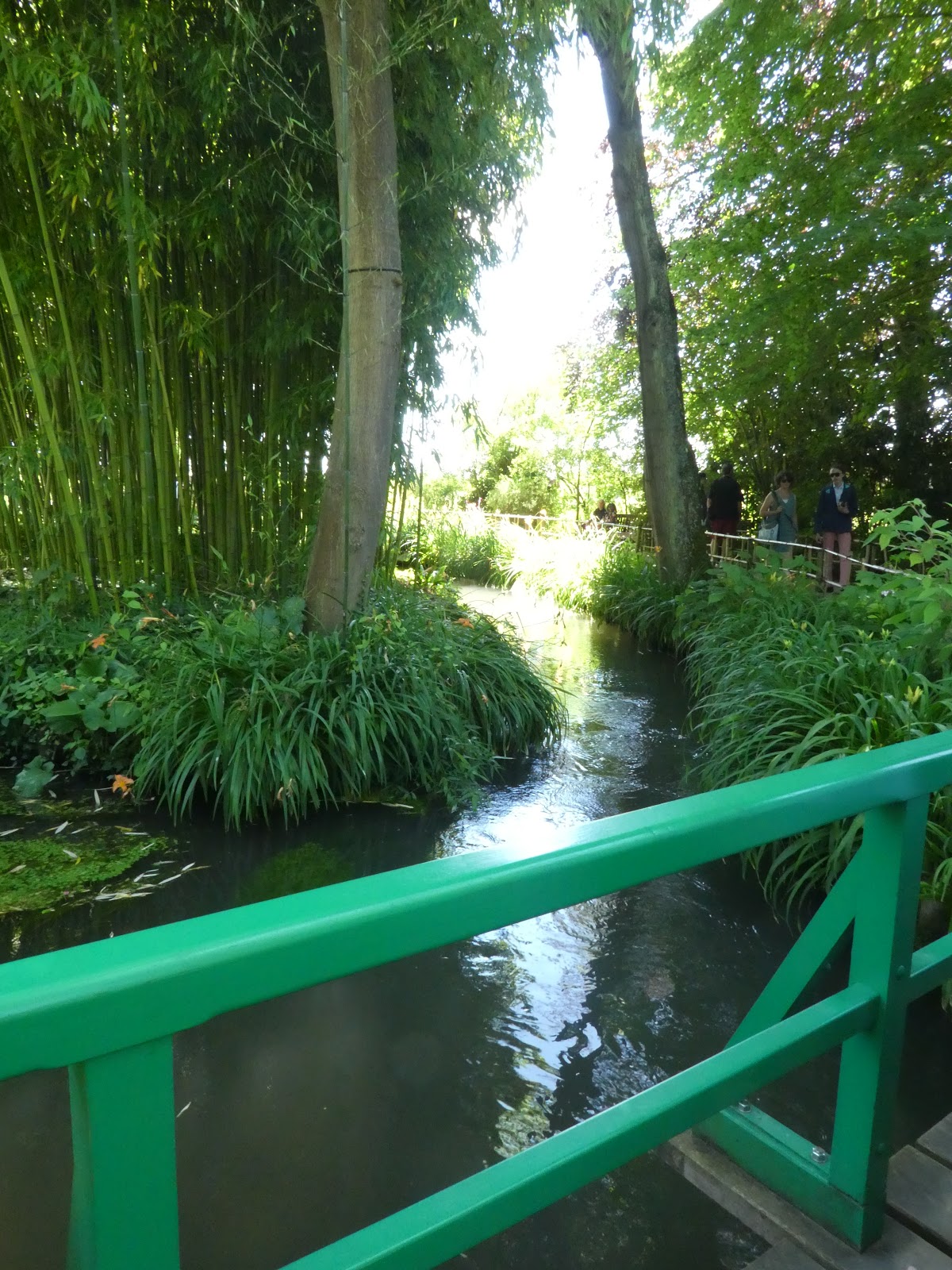
Bridges and walkways allow you to meander through
the extensive water gardens
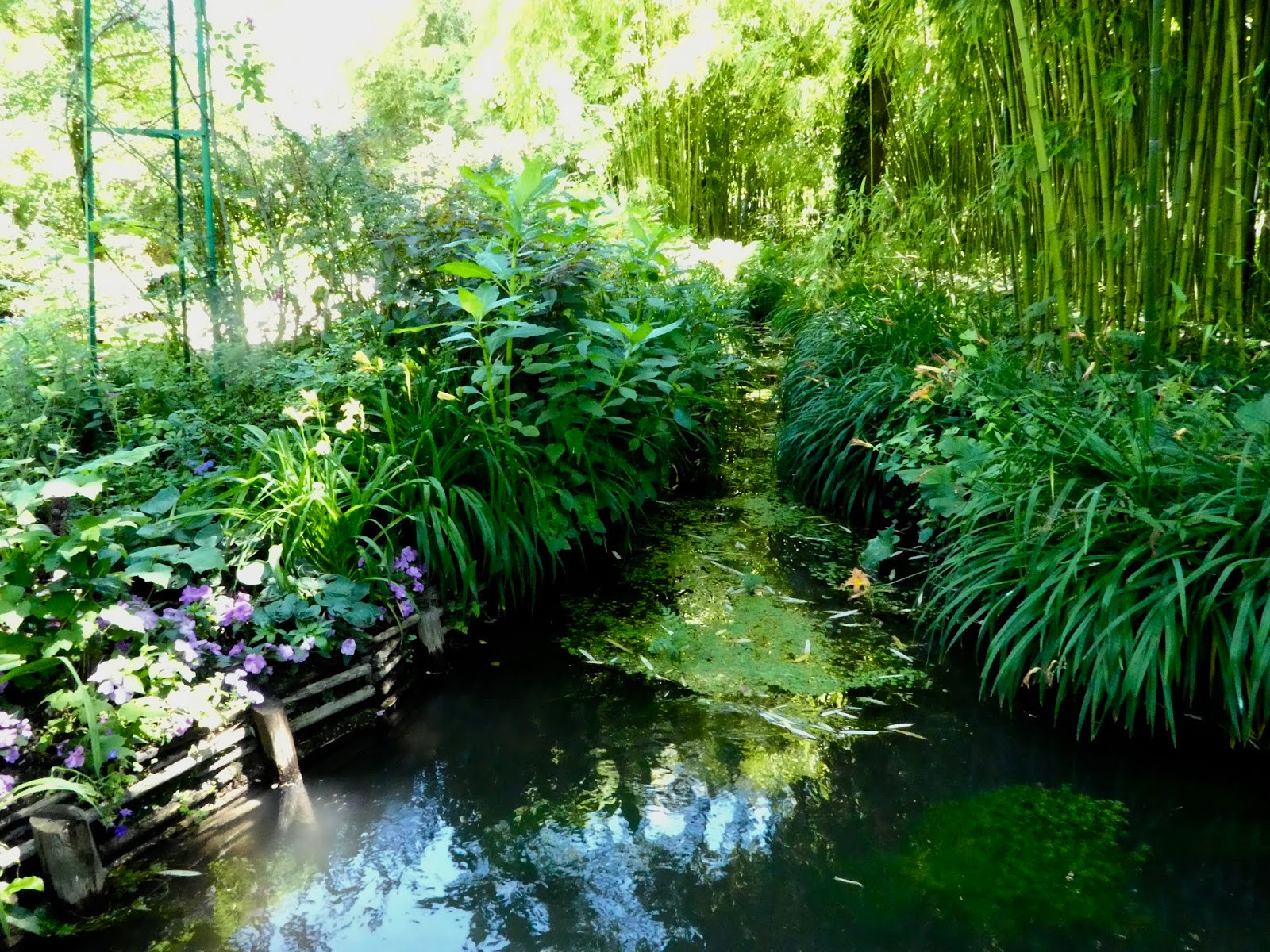
Across the road and accessible by way of an underground tunnel are the water gardens. Monet diverted a river to form the pond and erected two Japanese bridges, painted Monet green, overlooking the pond full of water lilies. This would become the inspiration for 250 painted panels depicting the “serene surface of his water-lily pond”. In addition to the lilies, there are various breeds of irises, willows and bamboo.
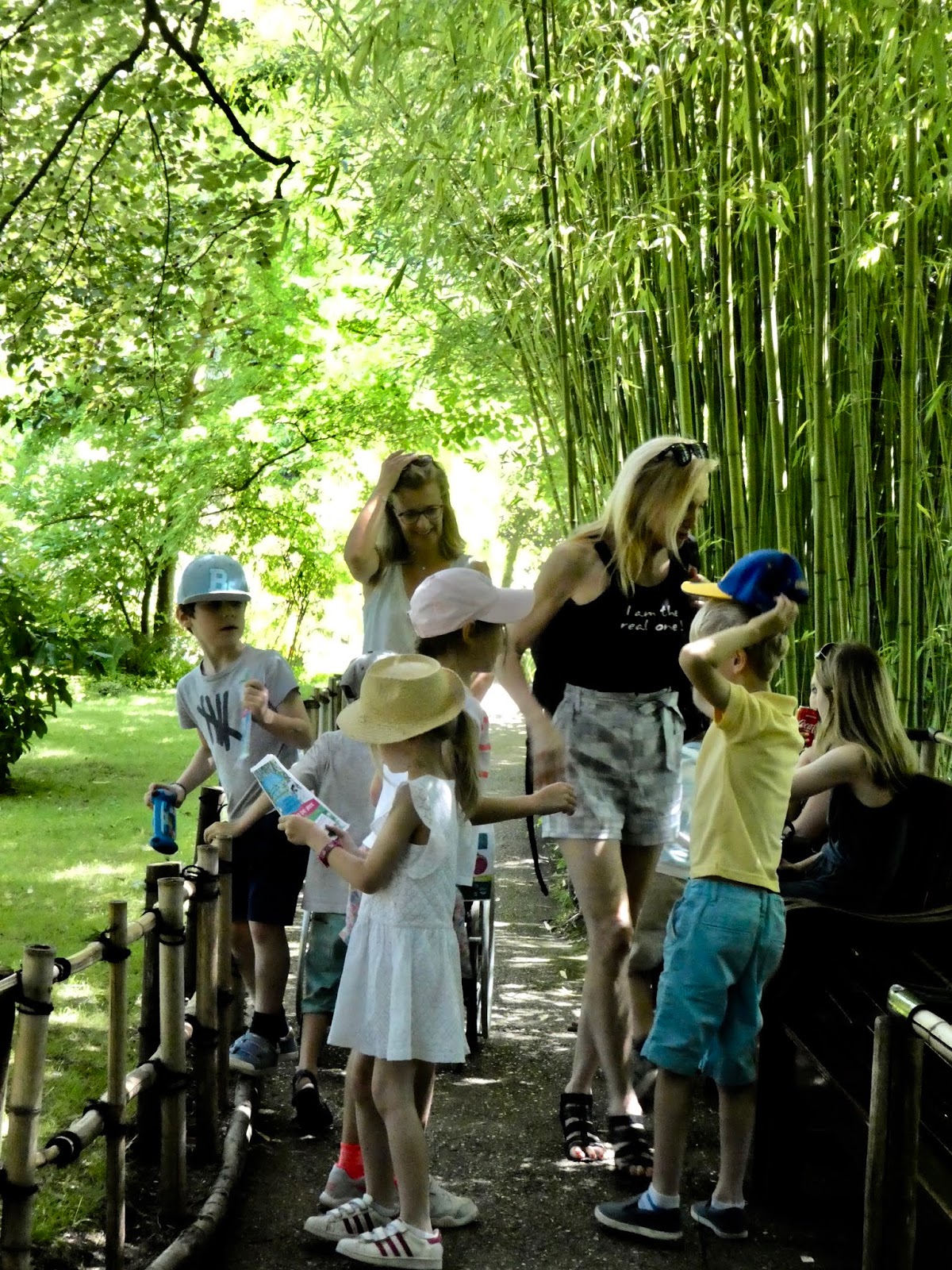
Many chaperoned groups of children visited the
gardens the day we were there.
In the last half of his life, Monet developed cataracts. “His canvases became larger and the painted details were fewer. Rather than focusing on the water lilies, he emphasized the changing reflections on the pond’s surface – the blue sky, white clouds, and green trees that line the shore” (Gene Openshaw and Steve Smith).
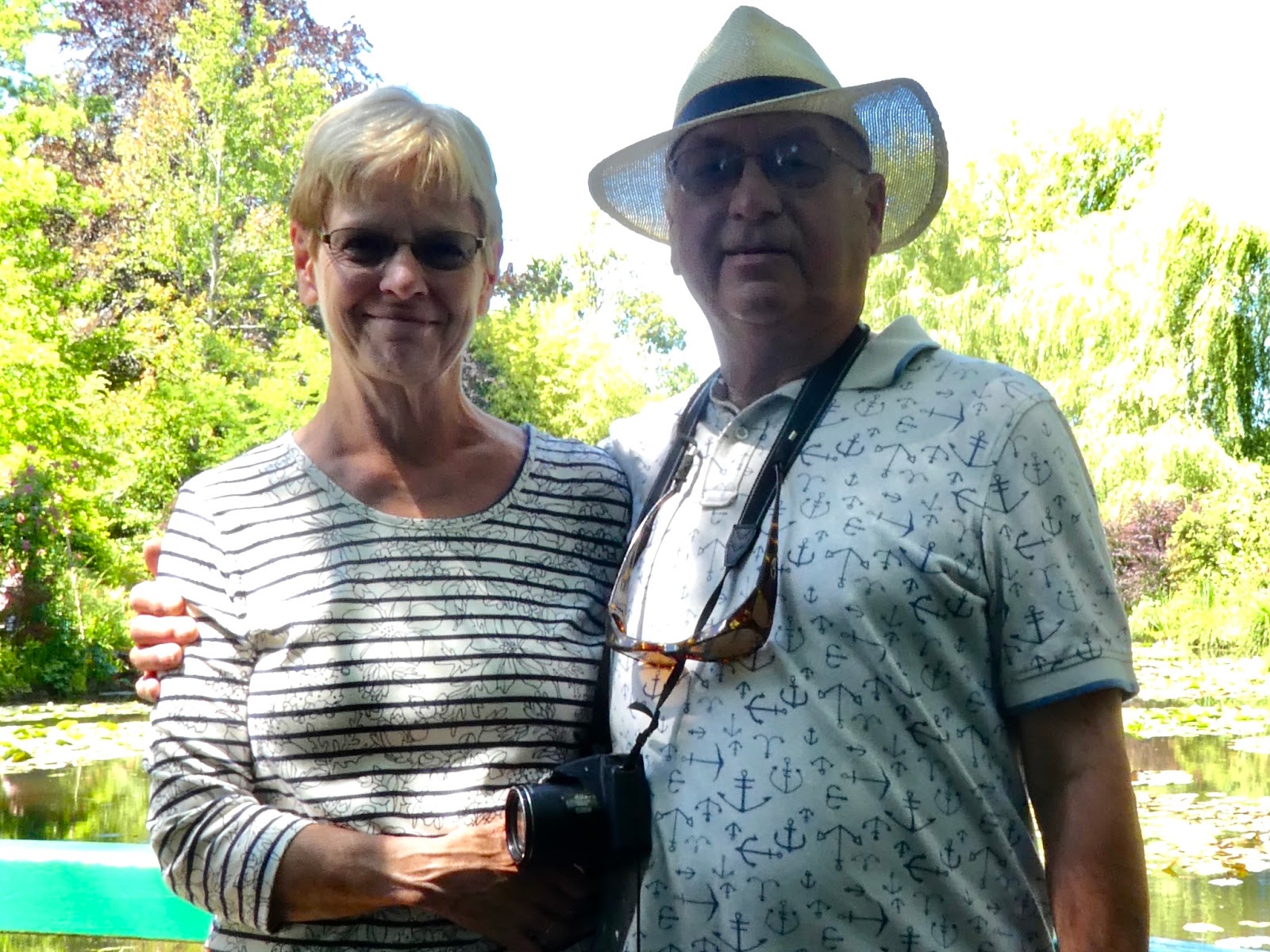
Margaret and Burt – Two of the most generous people we have ever known and while our lives and paths have taken us very different places, two kindred spirits we treasure spending time with.

As with our entire 2 weeks in France, George and Susan went out of their way to ensure that we experienced as much of the French culture and “experience” as is humanly possible in that length of time. I particularly wanted to visit Monet’s Gardens and, true to form, they made it happen. If you have the opportunity to visit France, you could not find better tour guides than George and Susan. The most generous couple we have ever known.

Sailing in the Mediterranean – Corsica and Sardinia Stone Figures

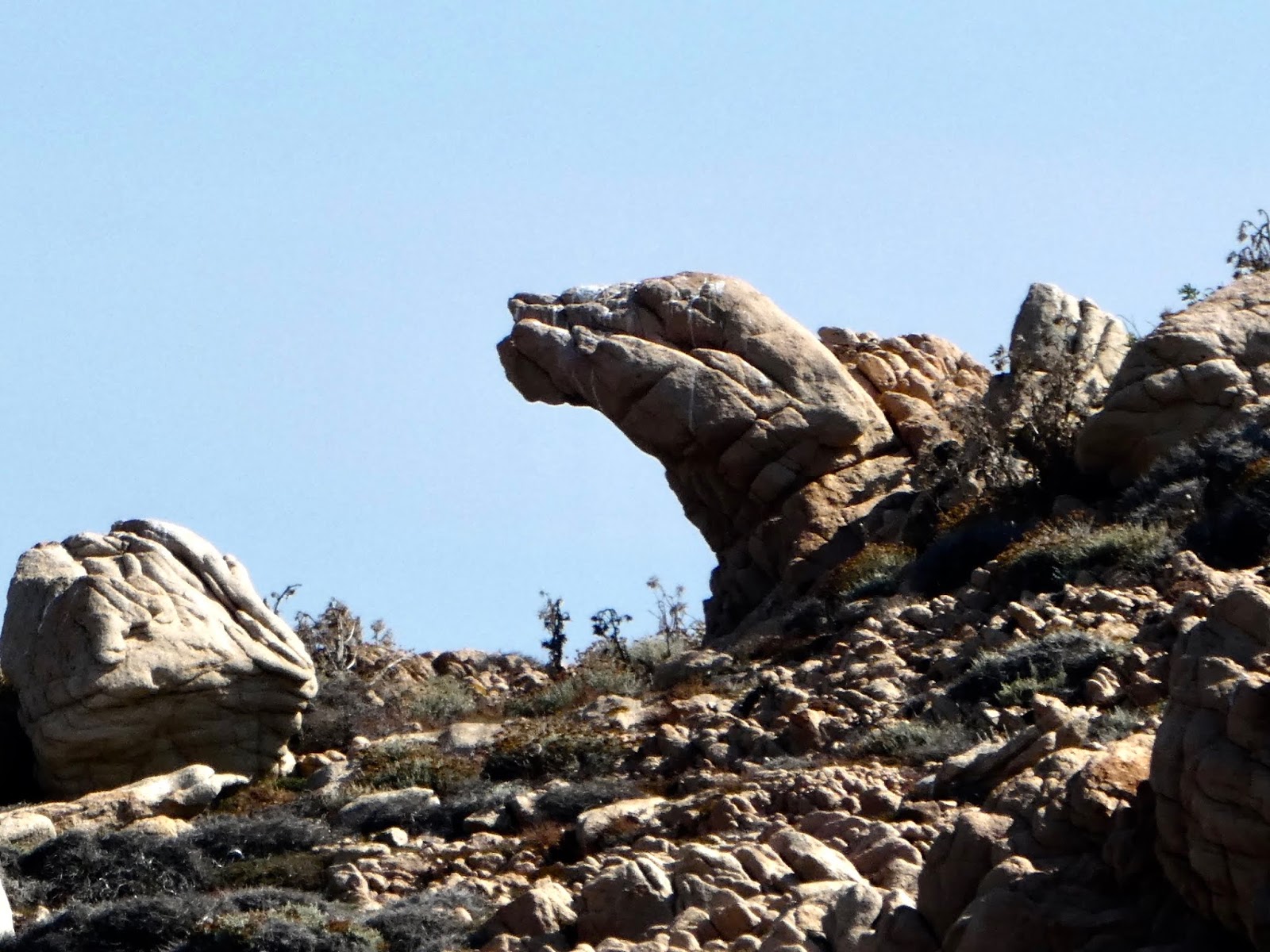
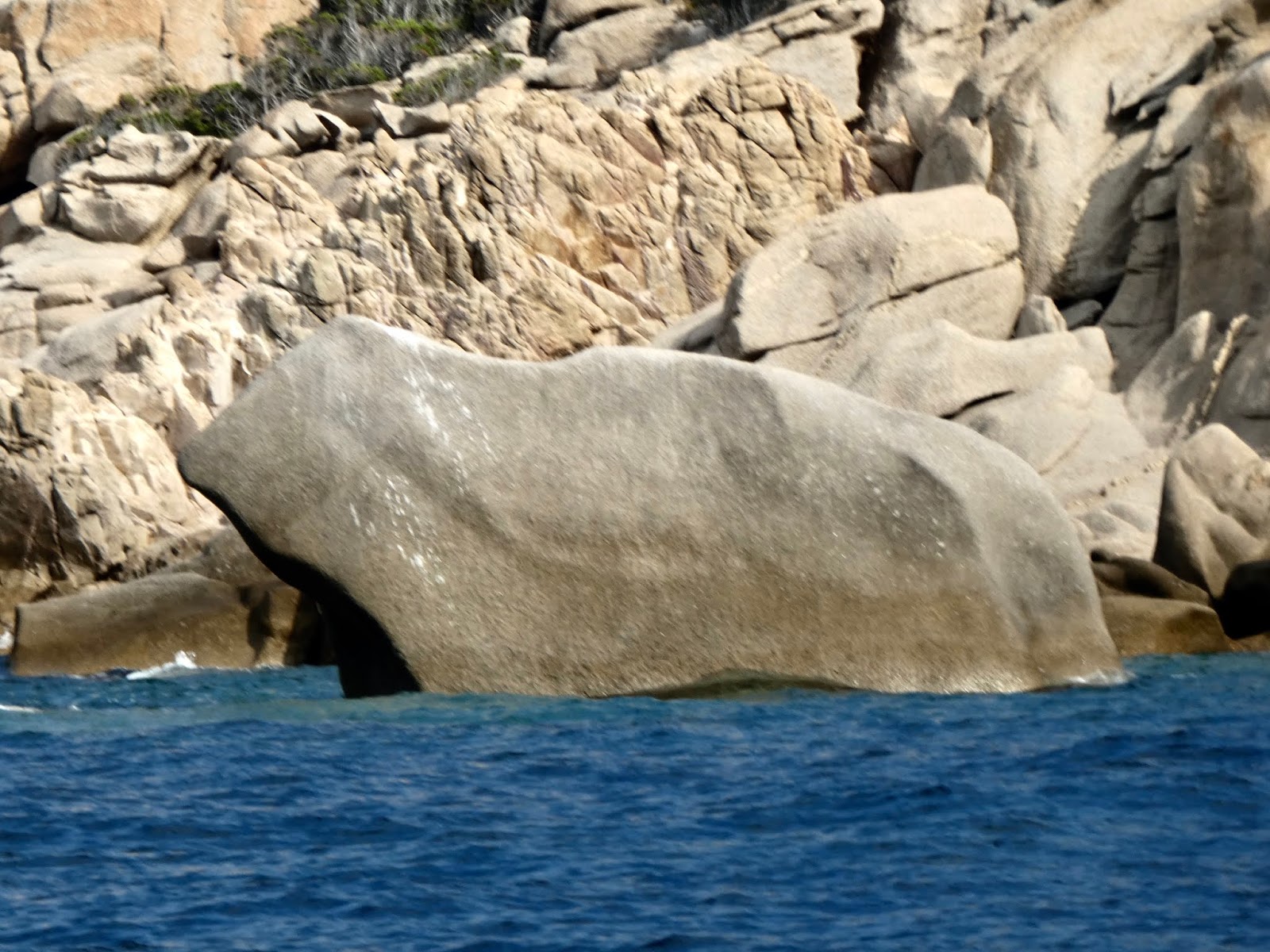
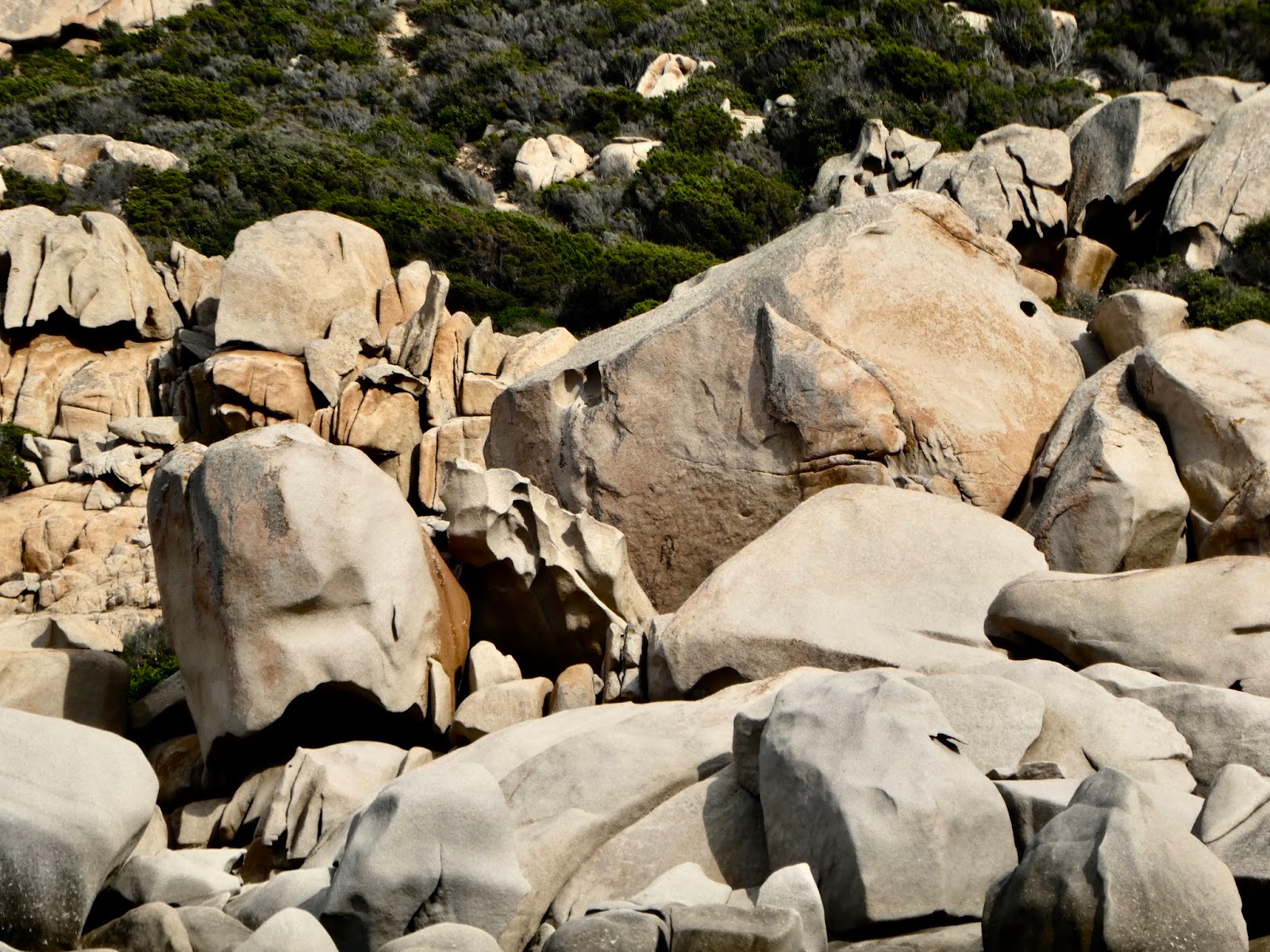
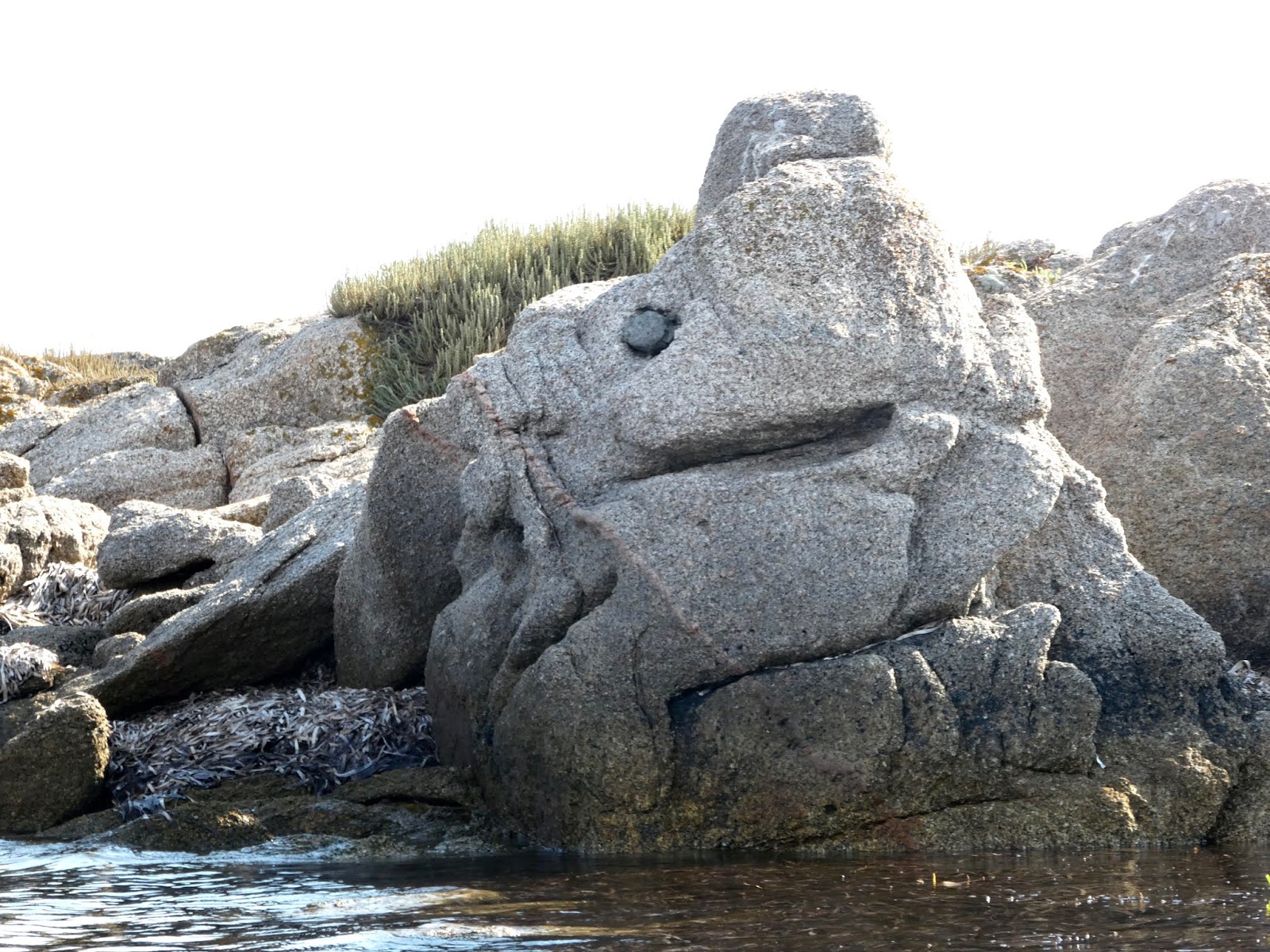
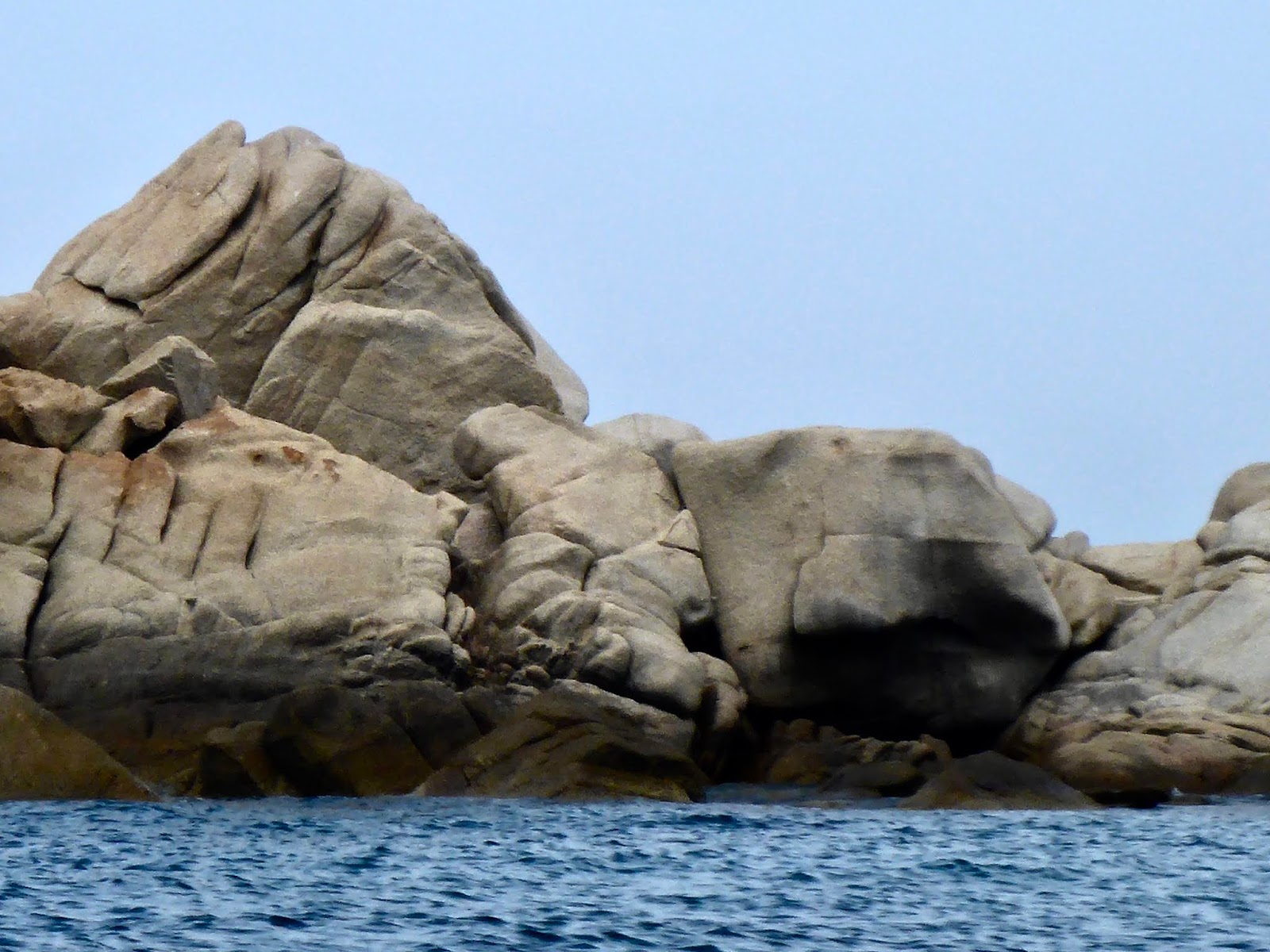
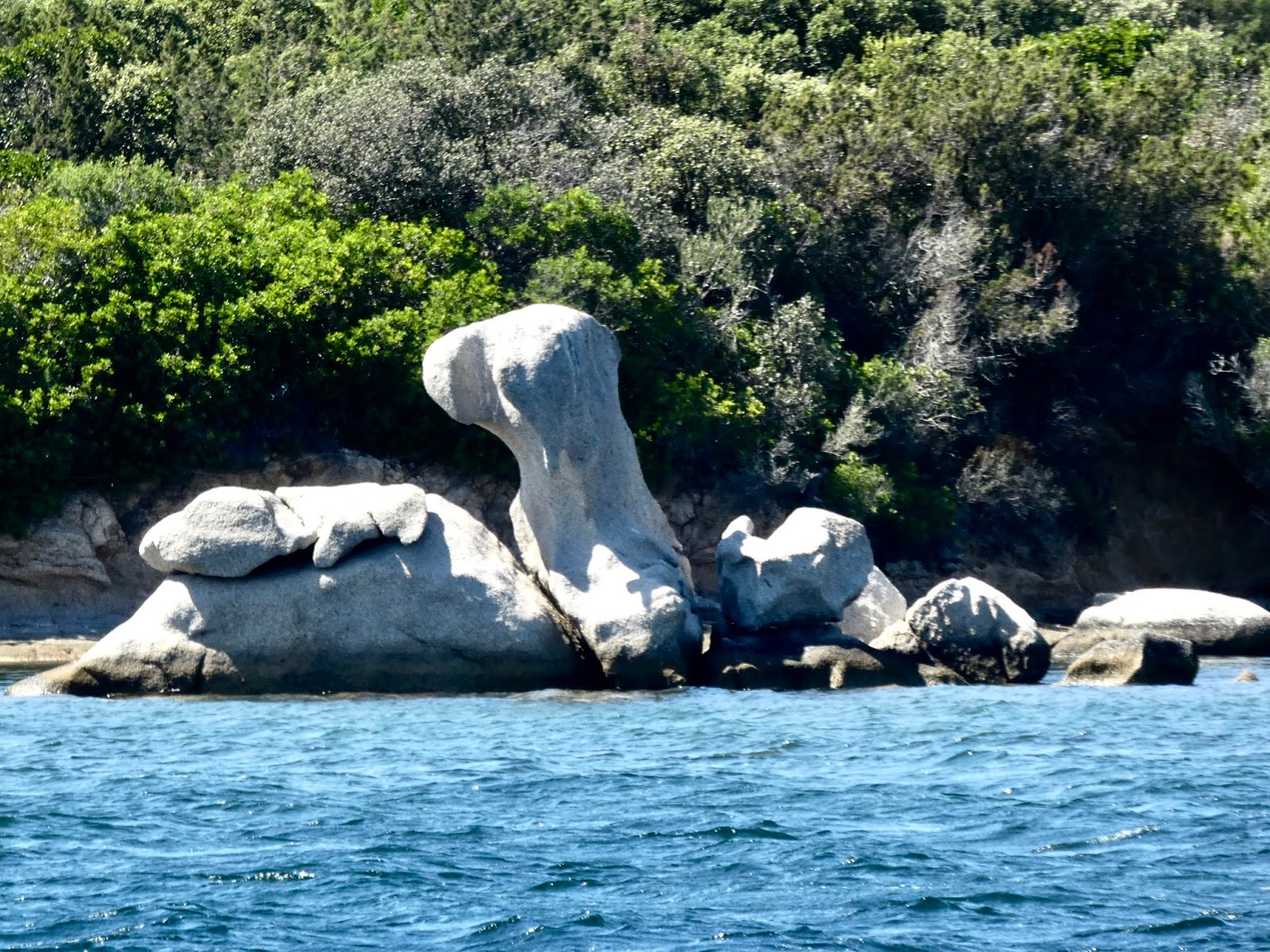
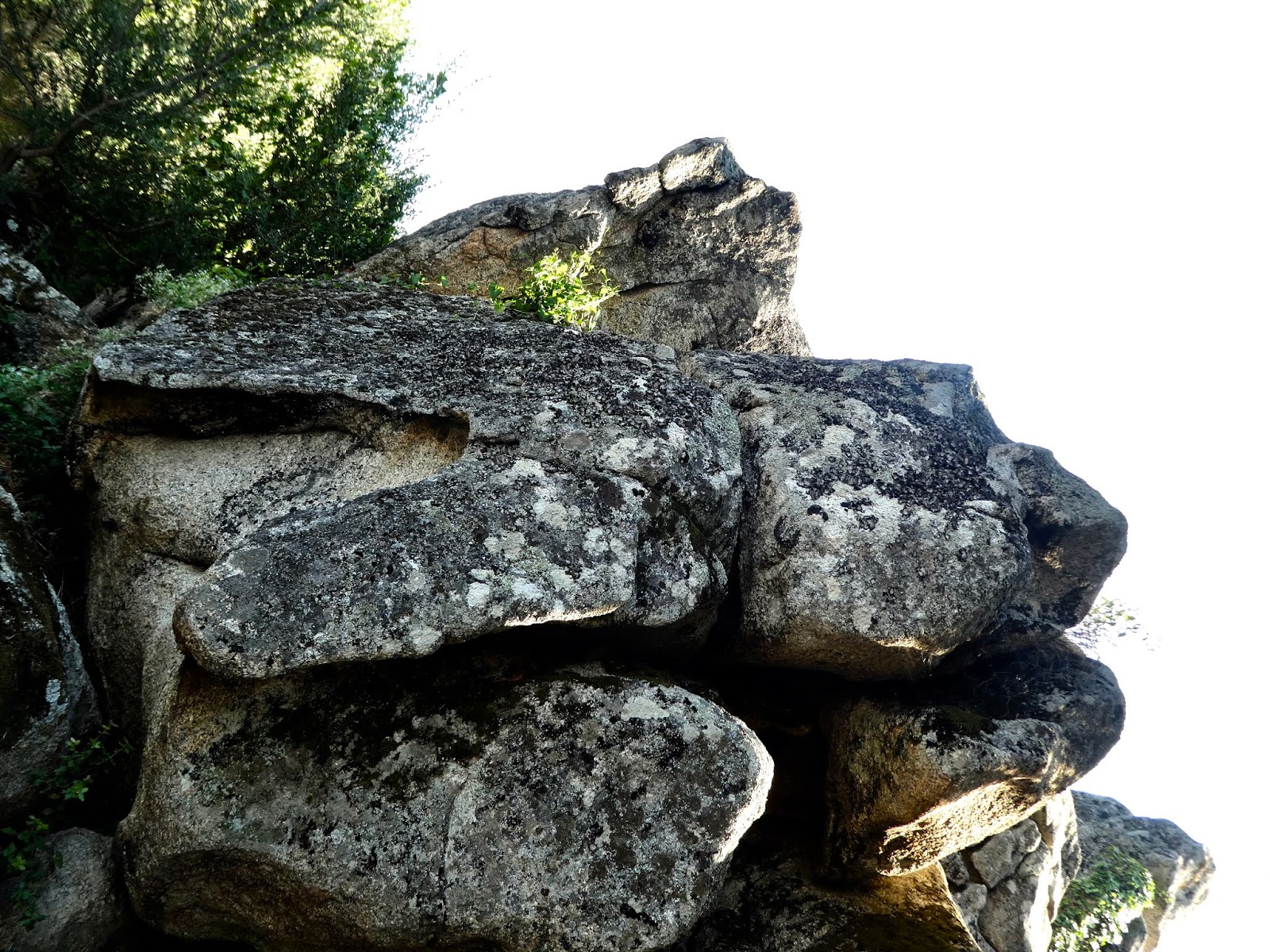
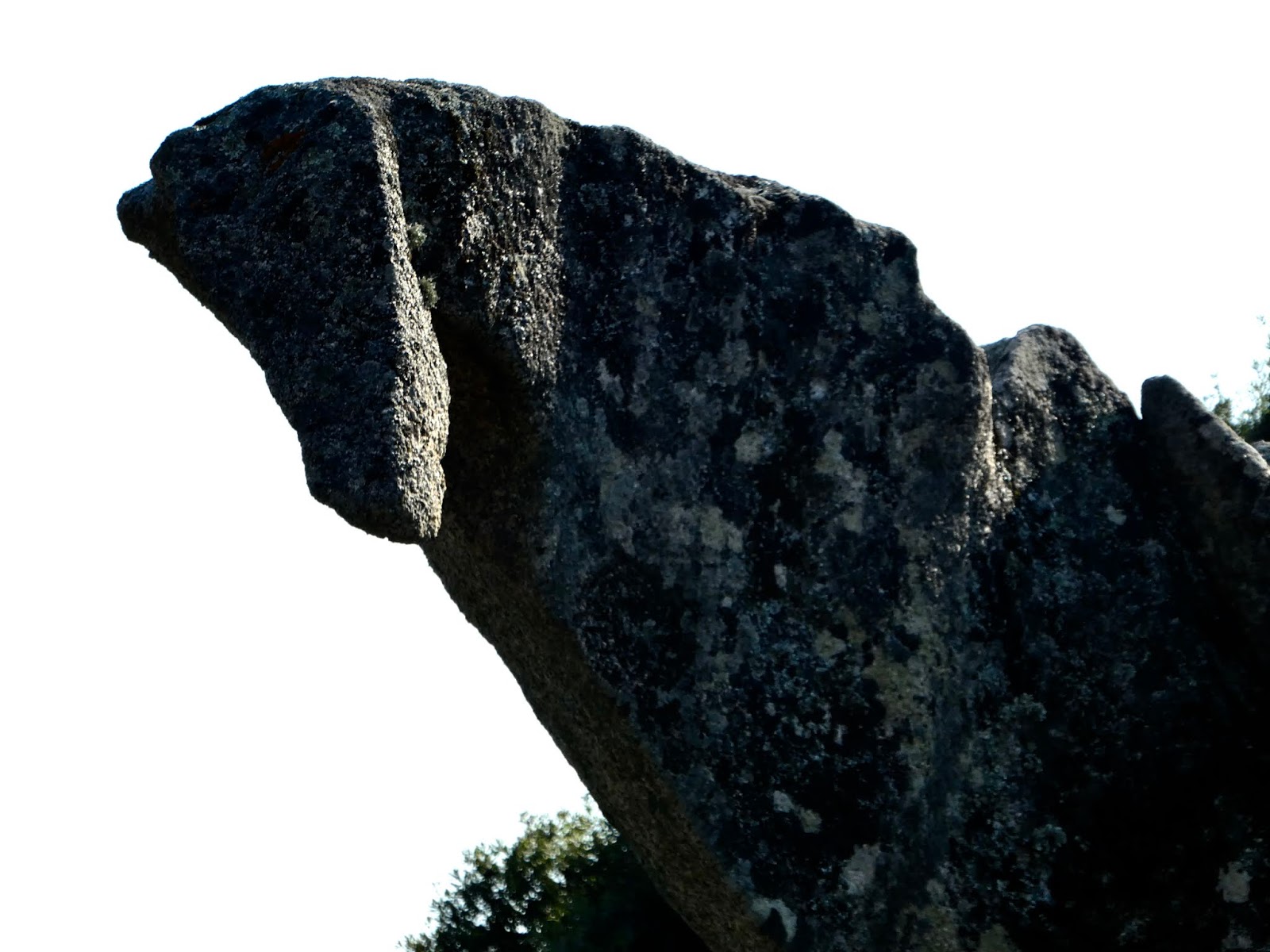
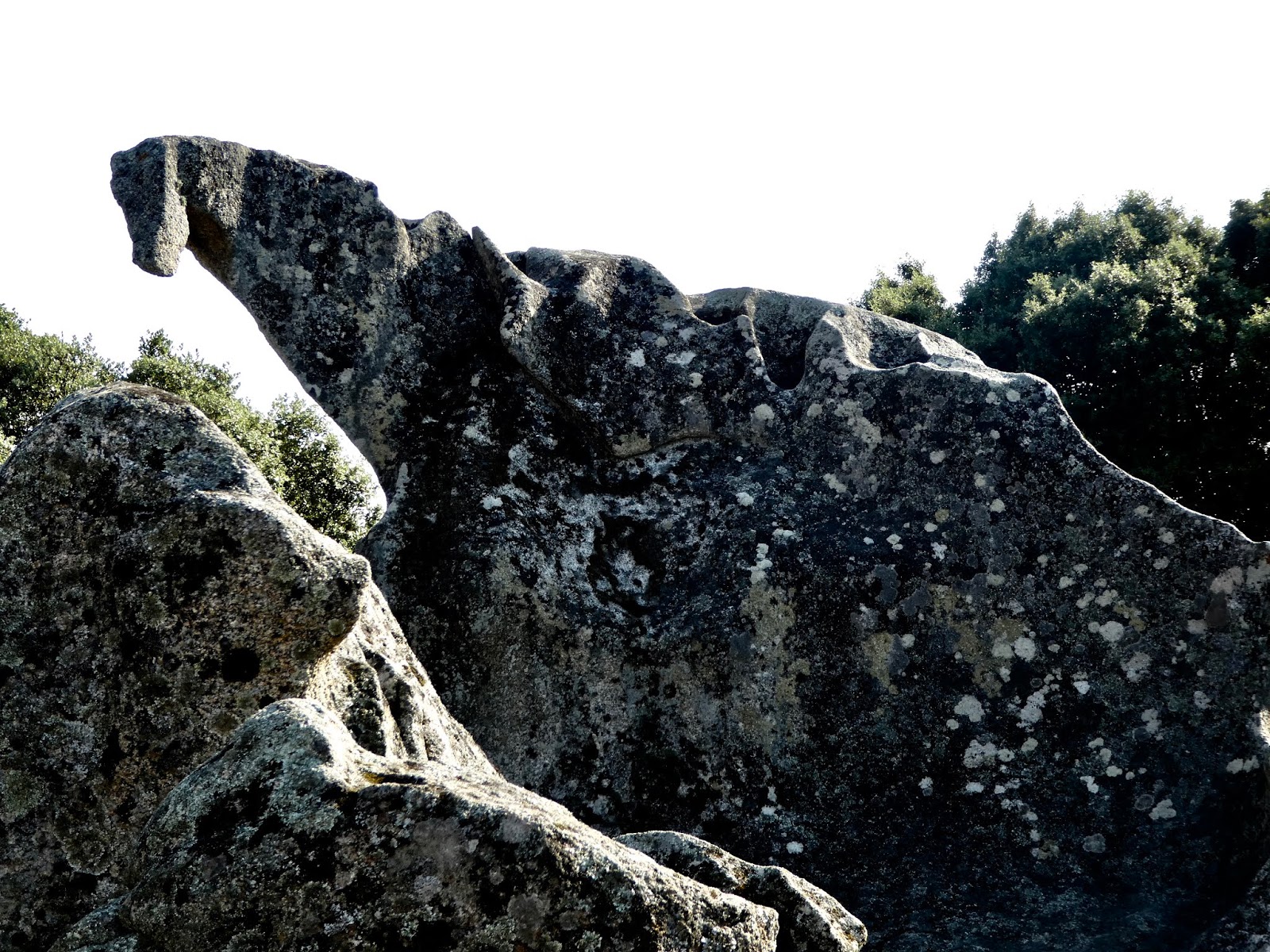
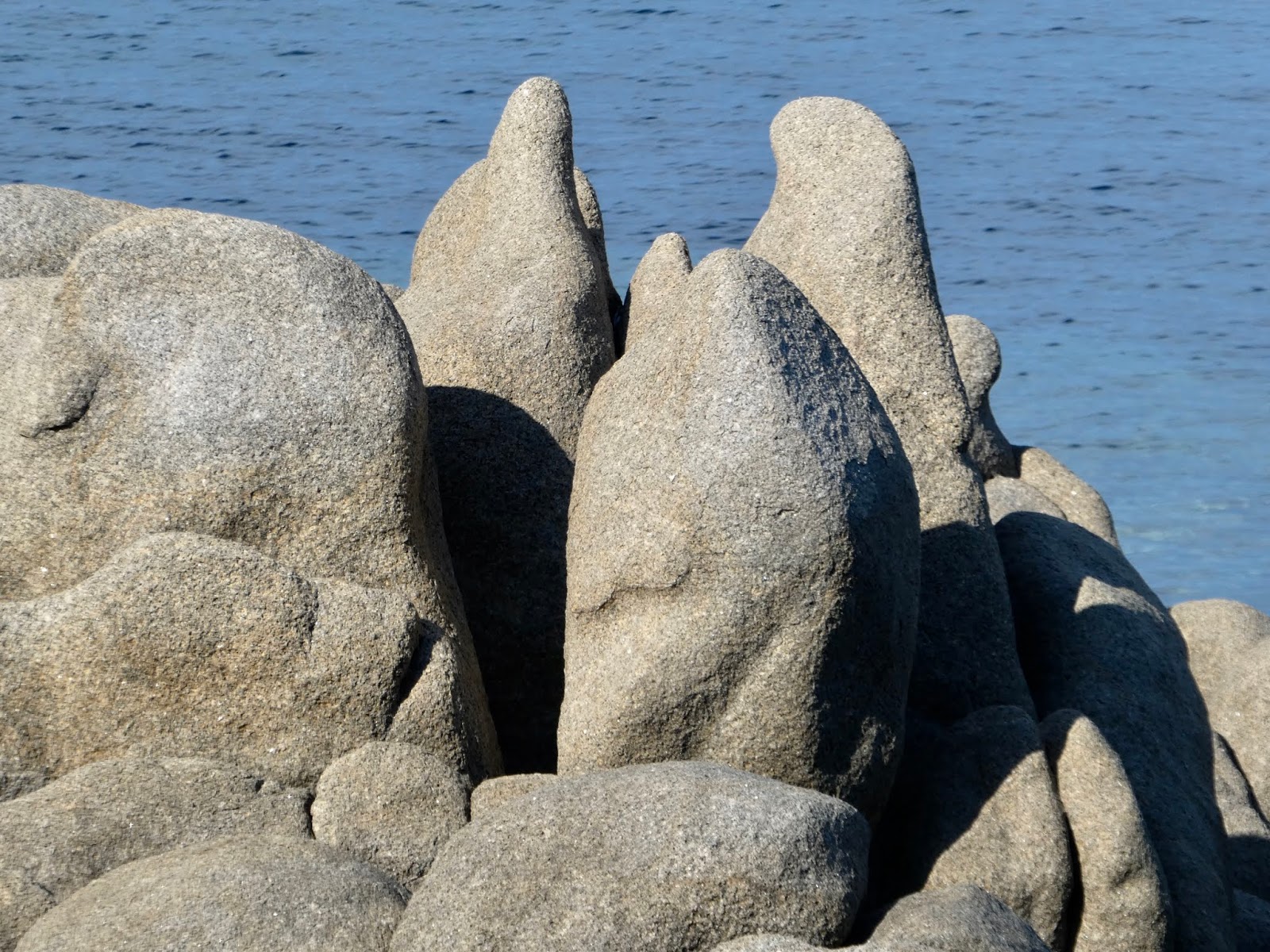
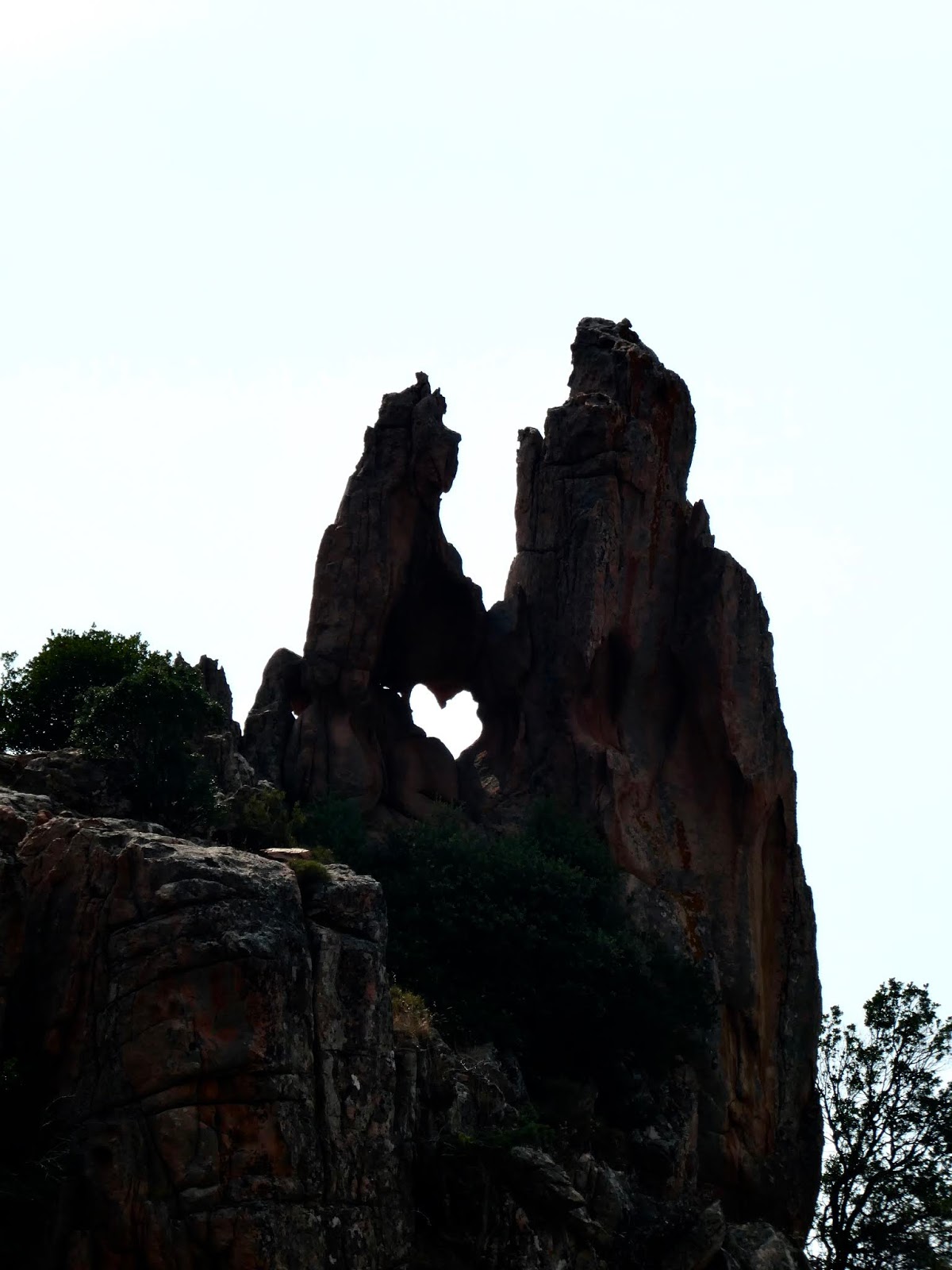
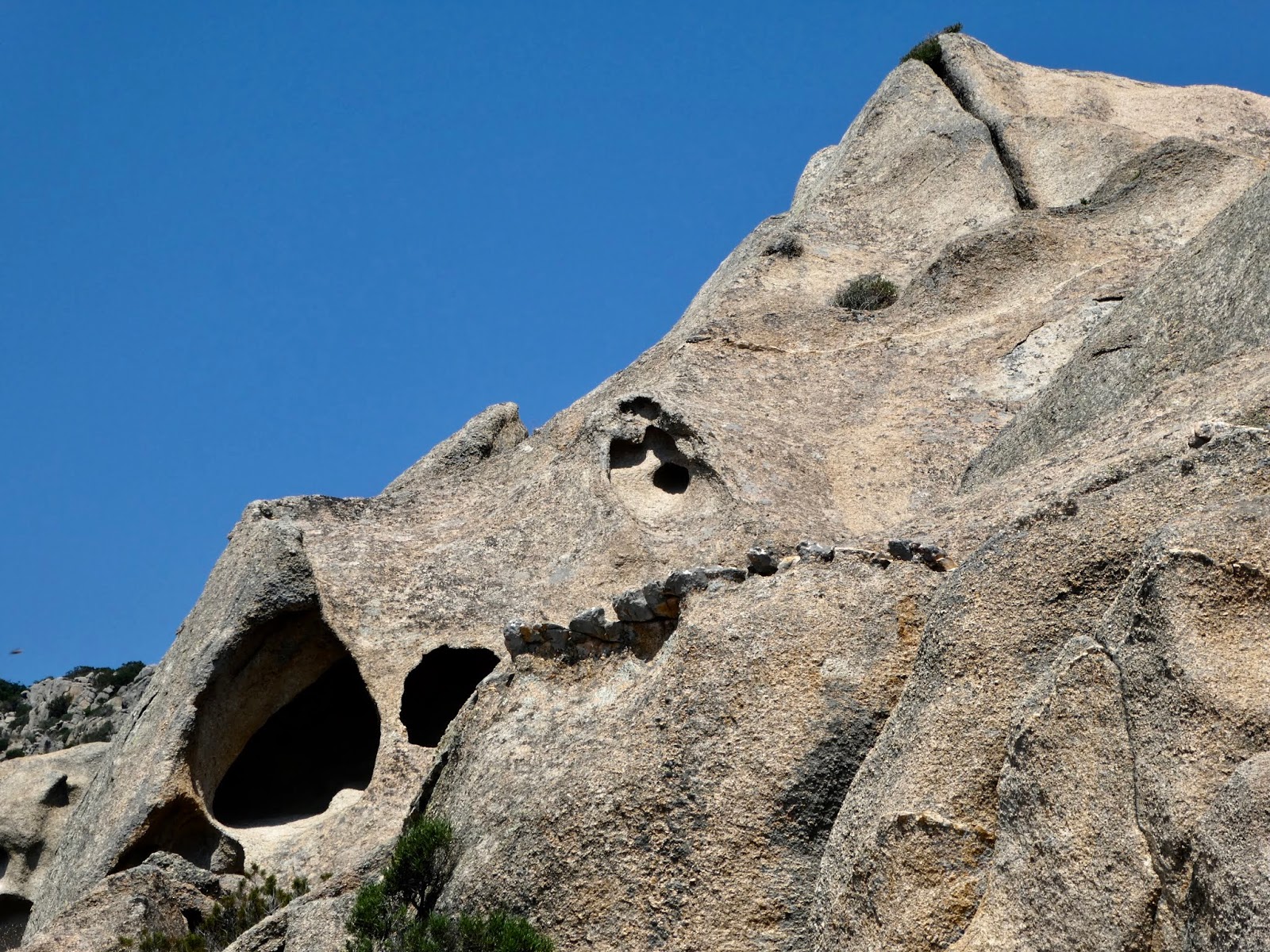
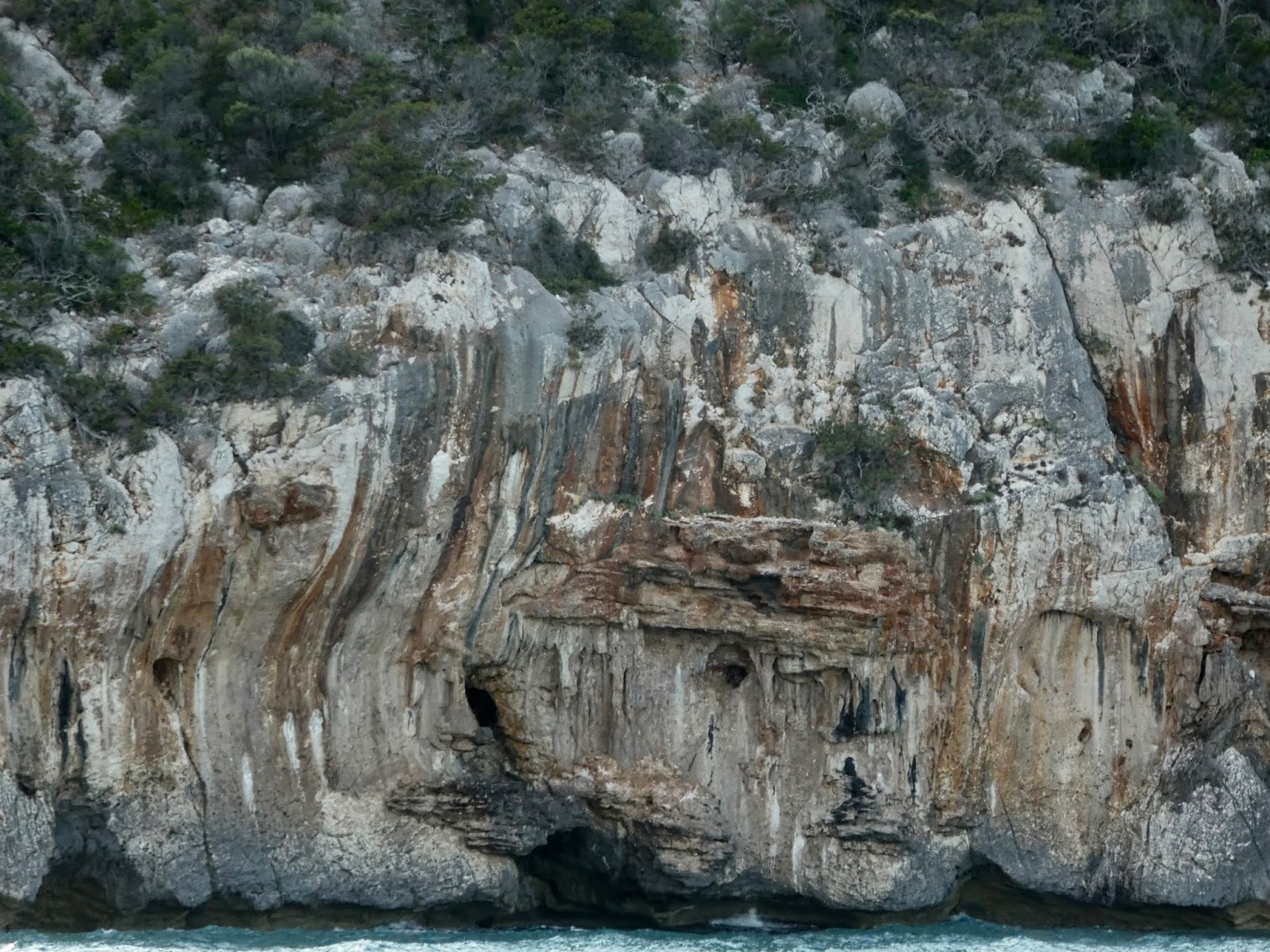
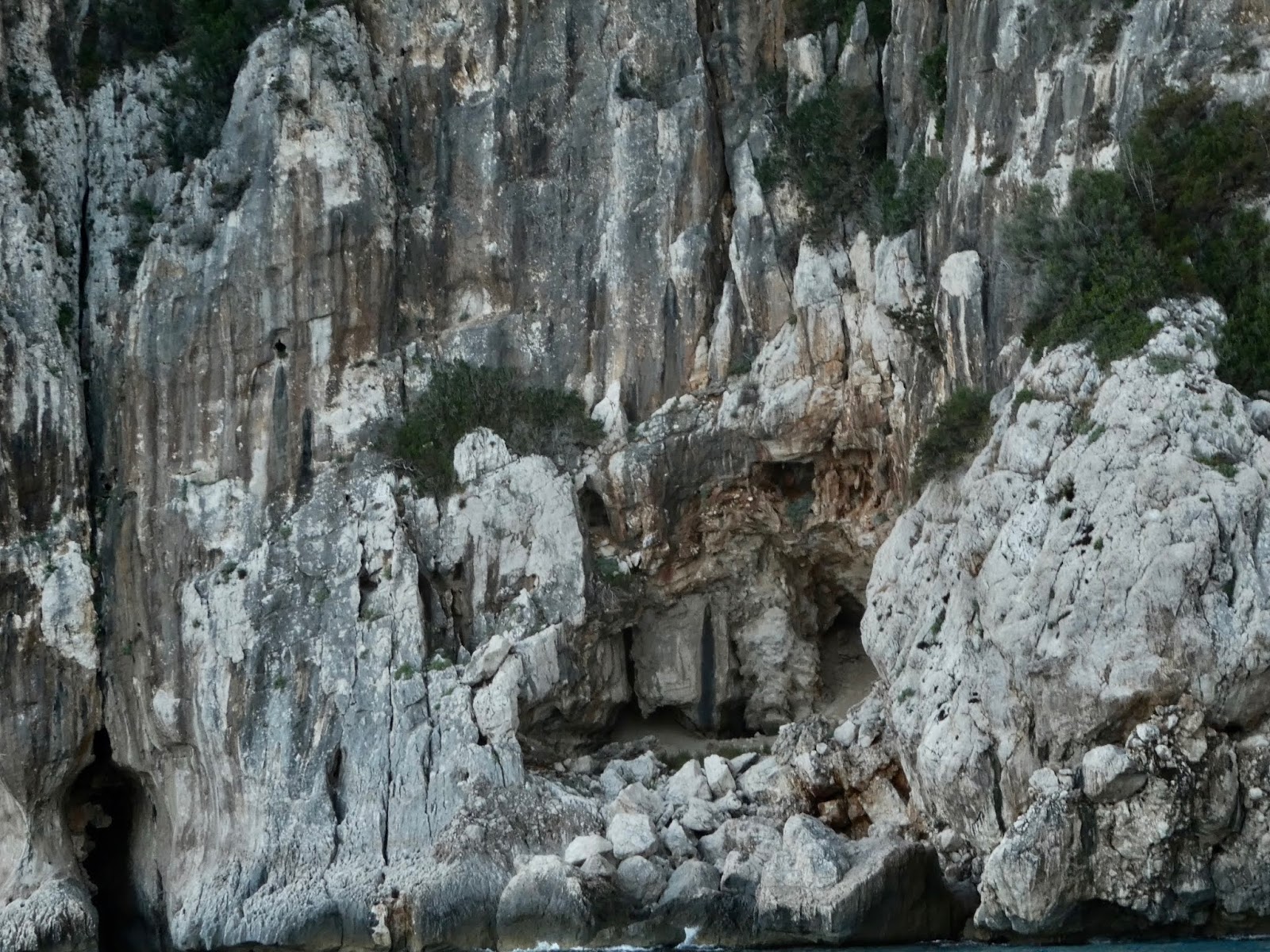
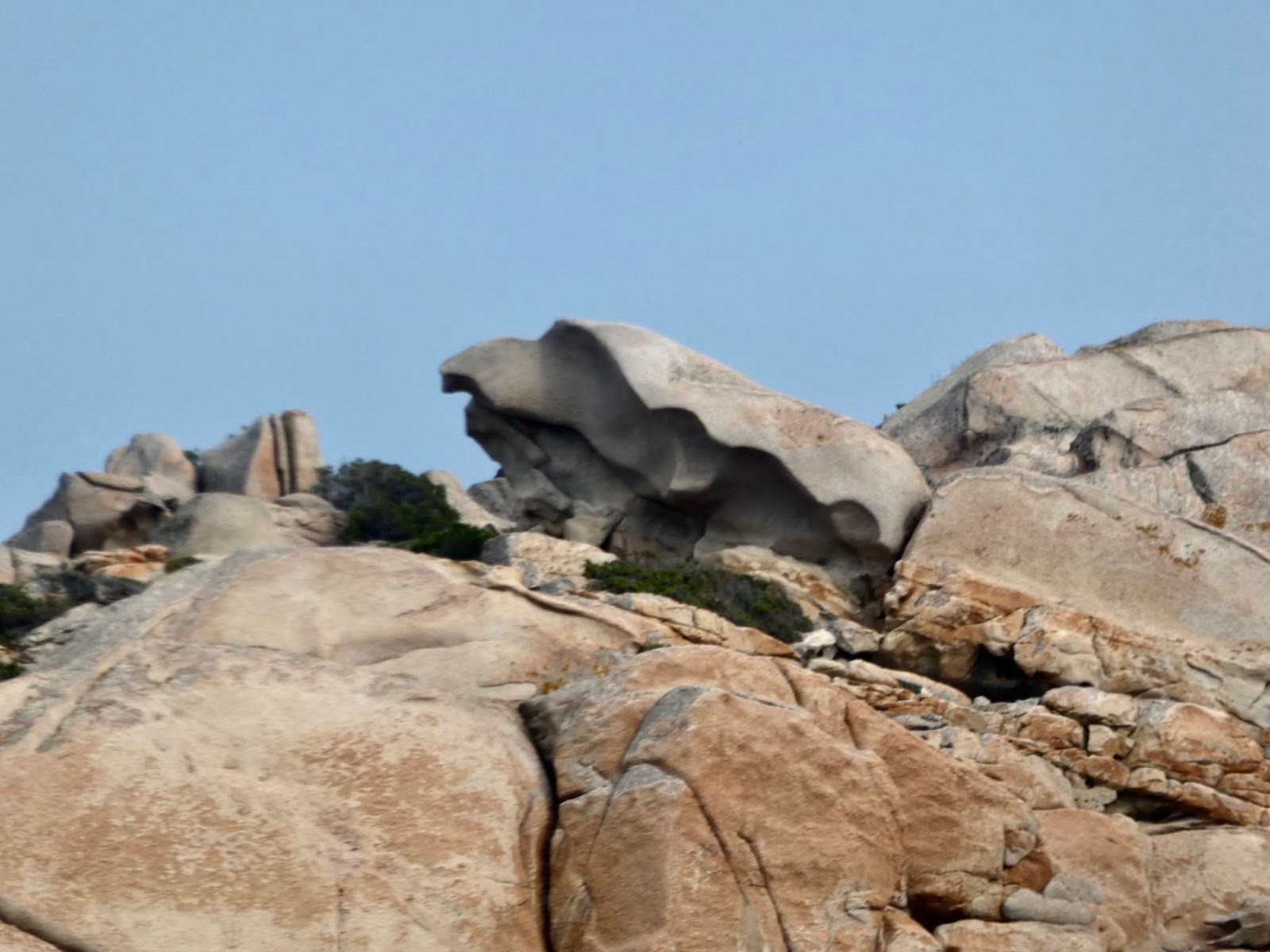
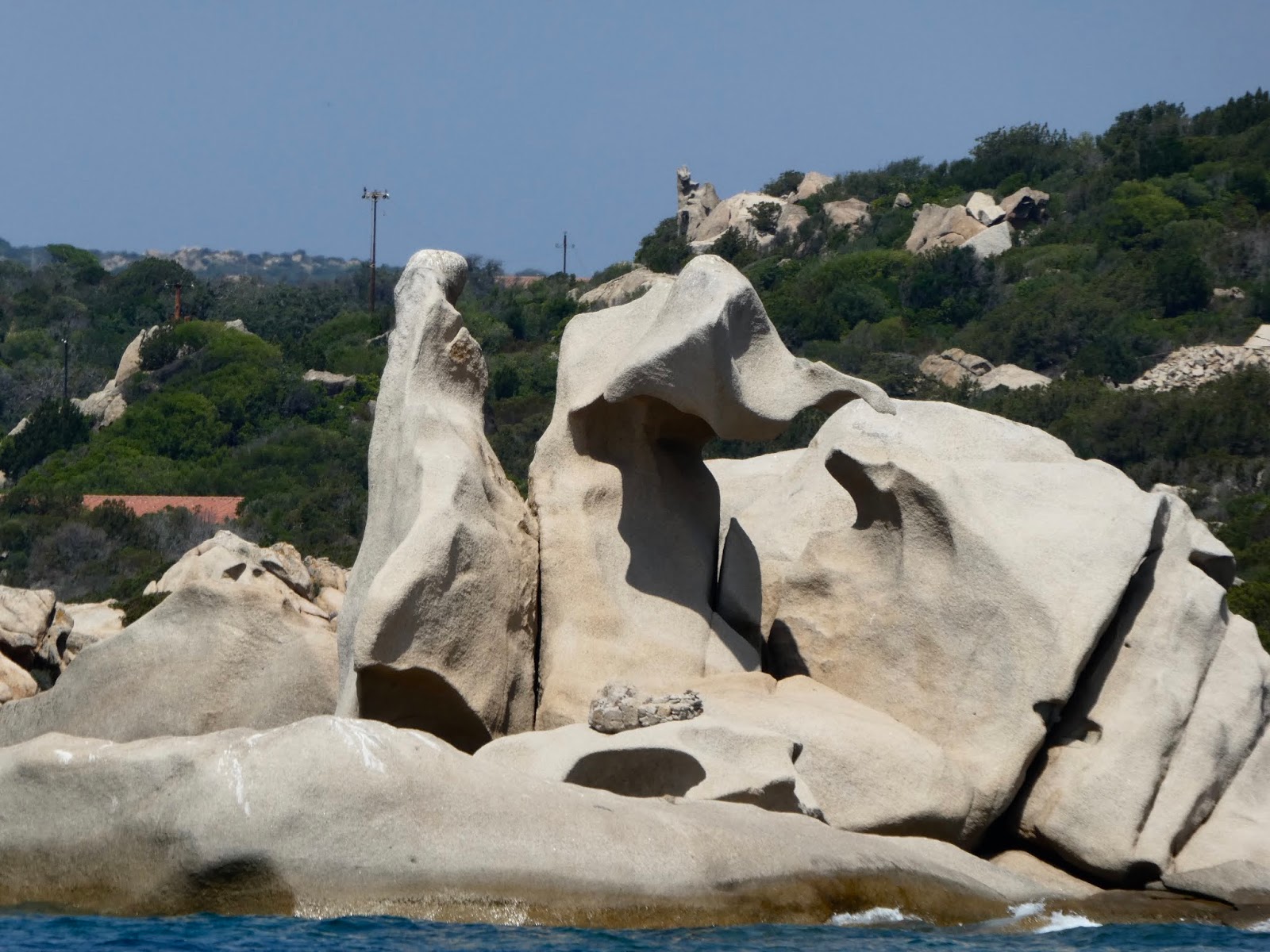
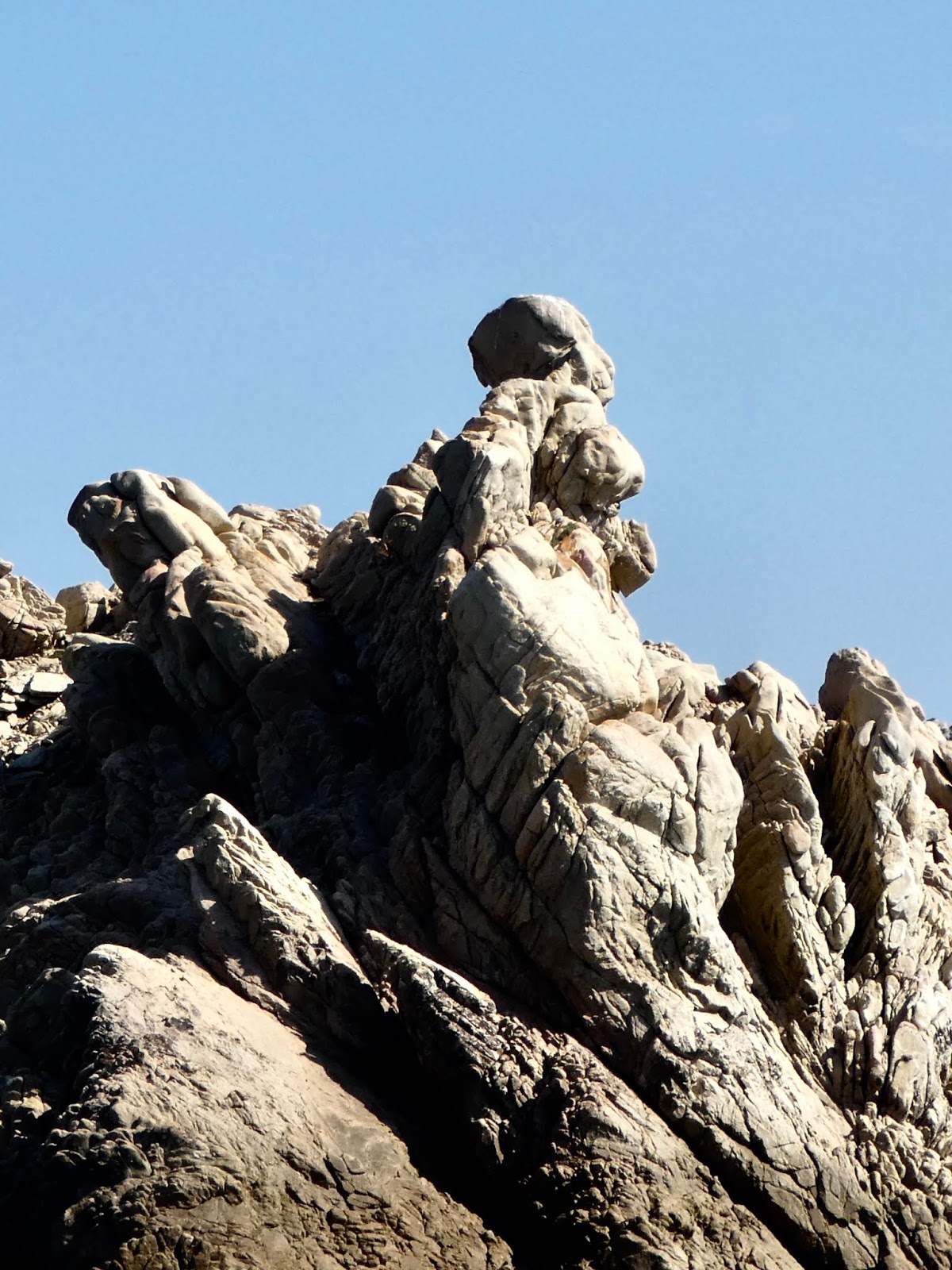
What do you see?

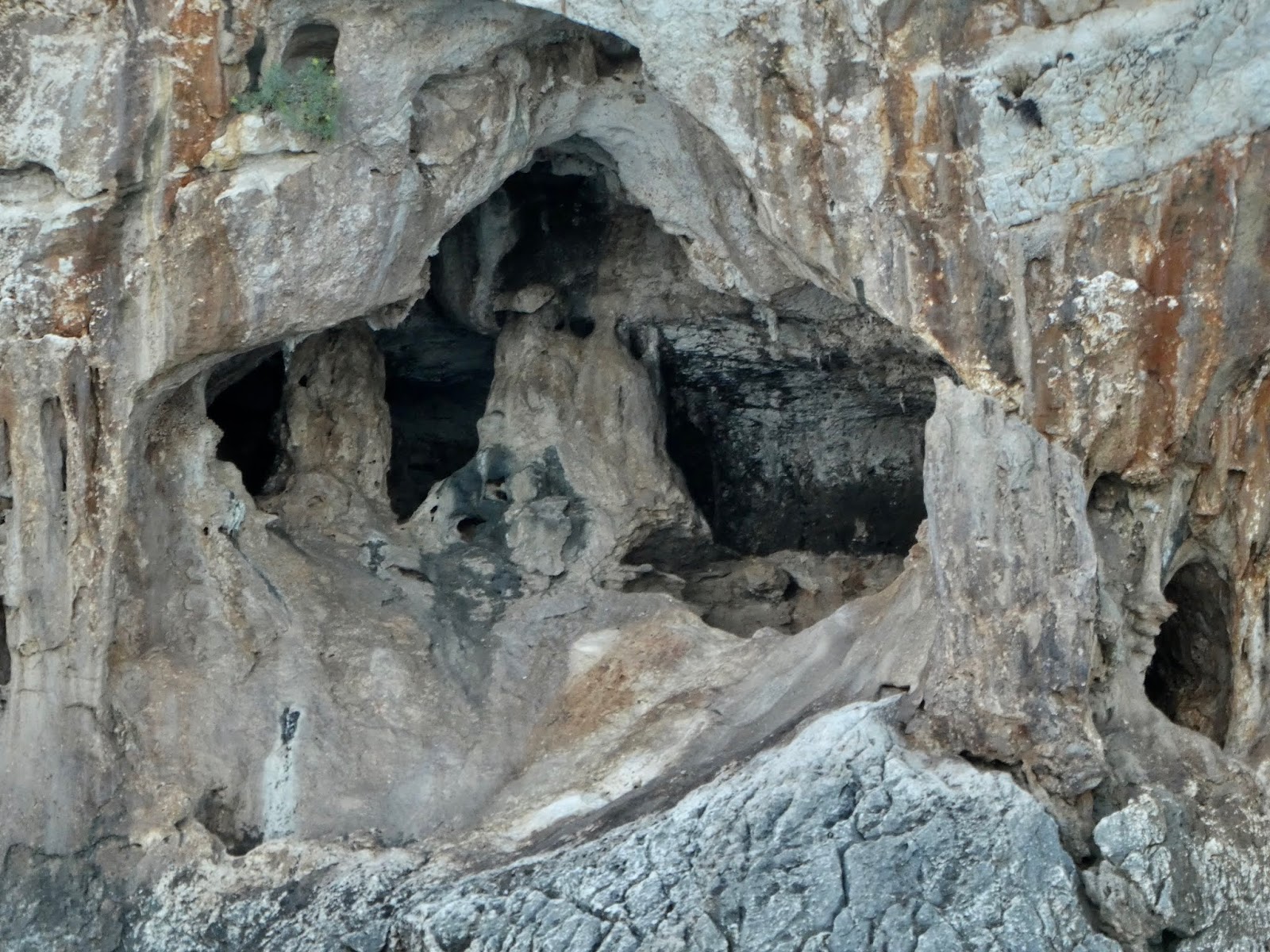
The following photos of stone figures were collected while we sailed and explored the coastlines of Corsica and Sardinia and drove through the interior of Corsica.  The mountains are ever-present and magnificent.  Along the coast, and for a surprising distance inland, salt from the Mediterranean has contributed to a unique kind of stone erosion that creates endless variations in shape.  The air carries with it salt that deposits itself on the rock surfaces.  The salt forms crystals in fissures within the rock that expand and, over centuries, carve out portions of the rock.  Some of the stone figures I have photographed were created in this manner.  Others, via various ways stones form and erode.
Take a look at some of the more fanciful ones I have photographed and let me know what you see.

Sailing around Corsica – Pianottoli-Caldarello and the Figari Airport

Pianotolli-Caldarello

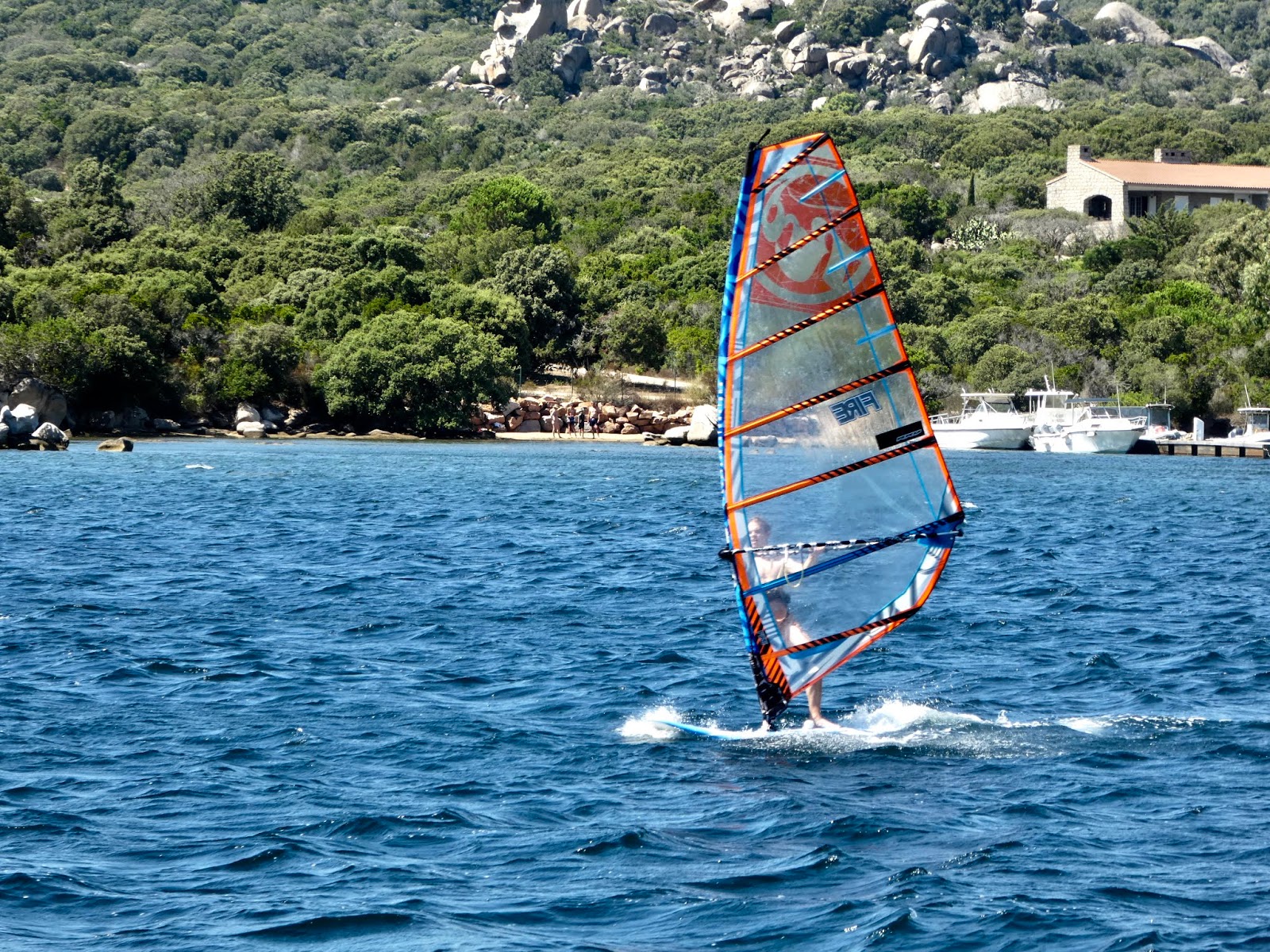
As we approached the Pianotolli-Caldarello marina, we needed to dodge dozens of wind surfers and kite boarders that were zigging and zagging across the marina entrance.

We were too busy keeping out of
the way of the wind surfers and
kite boarders to take a photo of the
whole crazy scene but this wind surfer
off the port side almost ran into us.
Pianotolli-Caldera marina Captainarie office

Just beyond the gauntlet we were met by a young woman who provided detailed directions as to how we would be docking.  Subsequently, she was very helpful, particularly when translation from English to Corsican French and vice versa was needed.

The Pianottoli-Caldarello marina is a relatively small marina with few amenities.  Water and electricity are provided.  Showers are available, but require some kind of key that we were not given.  A shuttle is available to take you to town for provisioning, laundry, or any other of your particular needs.  The shuttle costs 2.5 euros and runs every hour.

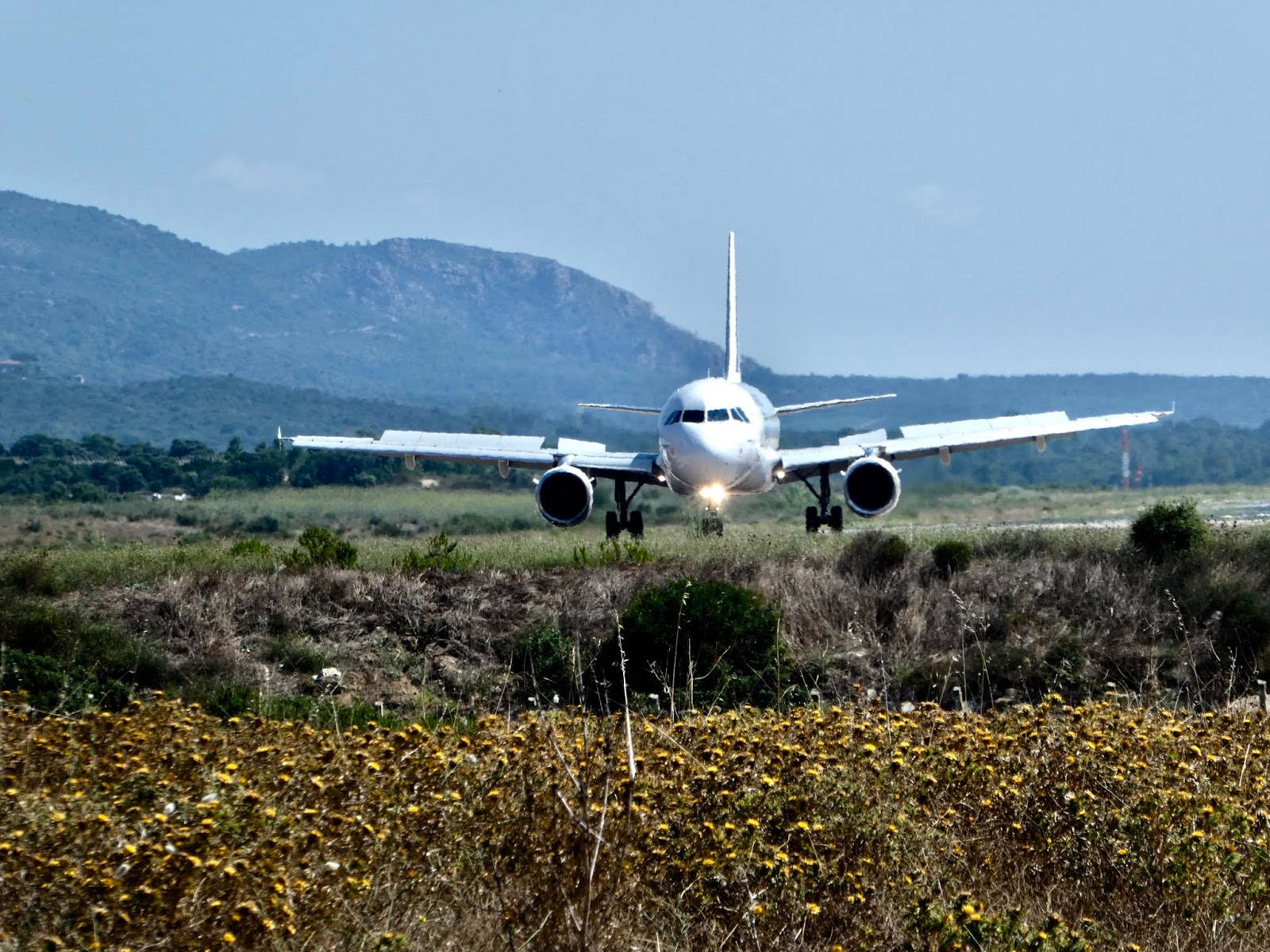
Our plan was to leave Ice Floe at the marina while we spent the next day and a half seeing what we could of the interior of Corsica.  We were informed at check-in that the only way to get to the airport was by taxi and we were provided with a list of 8 phone numbers for local taxis.  It was around 15 km (~9 miles) from the marina to the airport terminal, even though you could almost see the end of the runway from the marina.

That evening I made several calls to the taxi services and left messages.  The following morning, after calling all the numbers, some more than once, we reached 2 live.  One gentleman indicated it would not be possible and one woman indicated that we should call the airport taxi – she said the local cabbies, as a courtesy, defer to them for rides to the airport.  I called the airport taxi line and left several messages with increasing urgency.  None of my messages were ever returned.  On top of everything, my cell phone signal was not very good and some conversations were cut off and calls dropped.

I spoke to an individual in the Captainarie office and asked for assistance but she indicated she could not help me and was decidedly not friendly.  This was the first instance in the many months we have spent in France that I was treated rudely and to say I was getting discouraged does not begin to cover it.  We decided we would take the shuttle that was on its way to town as we expected we would have better reception and luck from there.

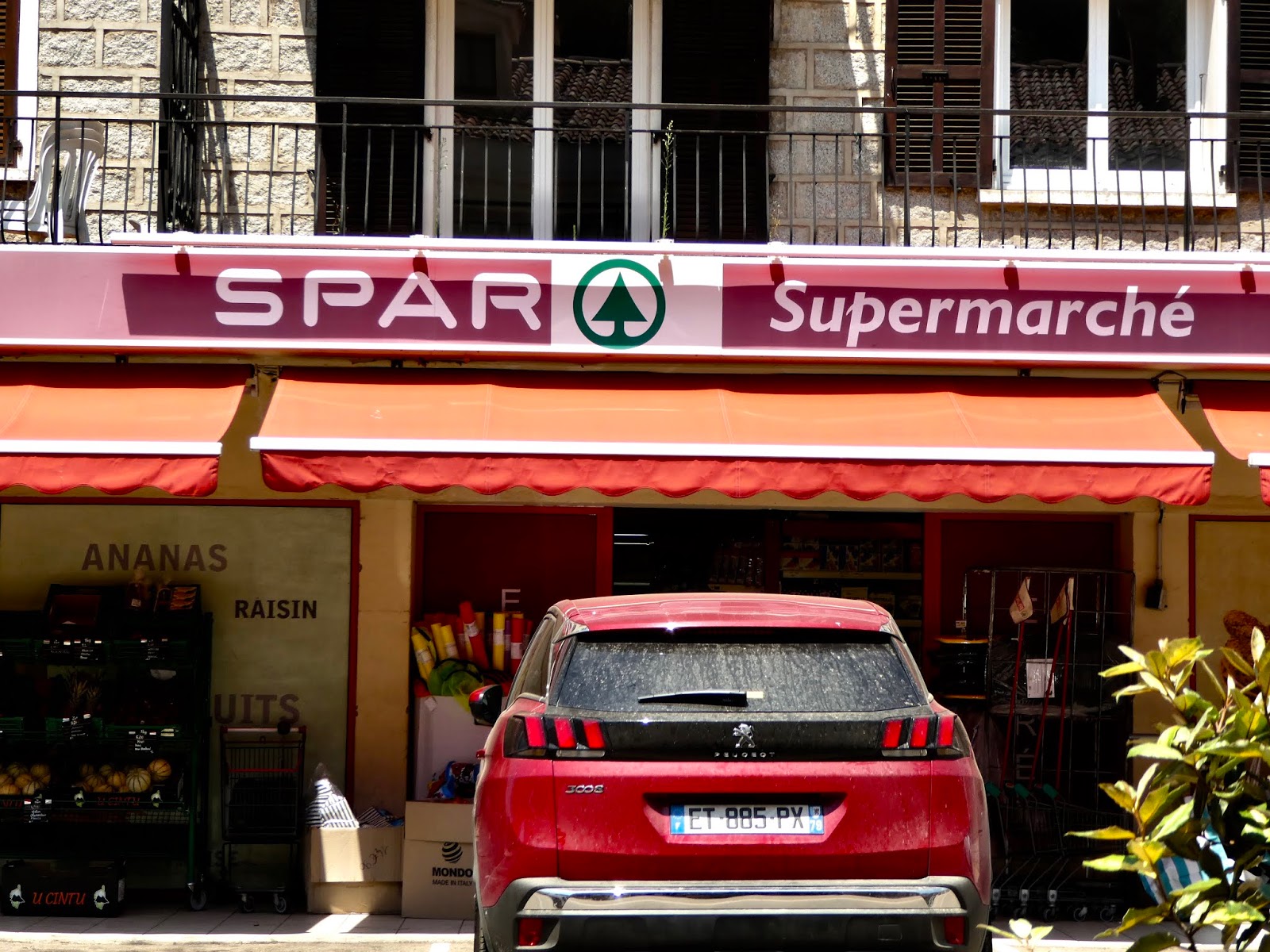
Well… we did not.  If we were fortunate to connect with a live person, the moment they learned we needed to be picked up from Pianottoli-Caldarello, the answer was “It is not possible”.  Following one conversation it became clear that the cab driver could / would pick us up from the Figari Spar Supermarché, but could / would not pick us up from the Pianottoli-Caldarello Spar Supermarché.

George consulted two map apps to see how far it was from the Pianottoli-Caldarello Spar Supermarché to the Figari Spar Supermarché and said there was one route that was 2.1 miles and another that was considerably longer.  The difference was the short route showed a small road that the other didn’t.  It was in the 90s, but we had full hot cups of tea so we set off on foot.

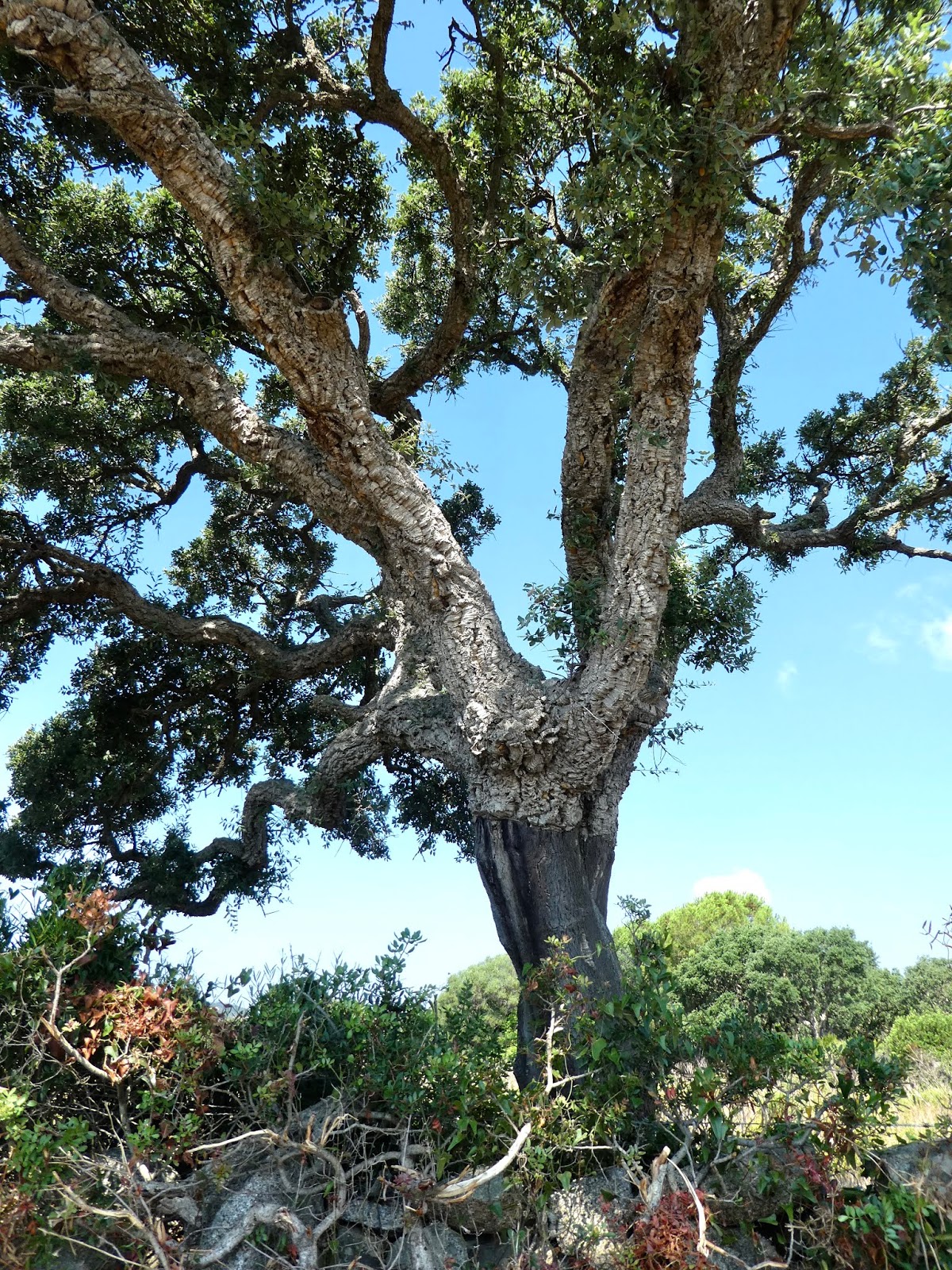
These occasions, when we have the chance to see more of a country than the coast, are often a great opportunity to broaden our knowledge of a region.  This walk was no exception.  Our first discovery was a Cork Oak tree.  Of course, George immediately recognized it and knew quite a bit about cork  (doesn’t everyone?).  Well now I do, too.  First of all, all cork comes from these trees.  Corsica has many, many orchards of Cork Oak trees, as well as Cork Oaks in forests and in people’s yards.  On this walk, and our subsequent drive through Corsica, we never saw a large Cork Oak that had not had its bark harvested.  The cork bark protects the tree in fires.

Cork tree – note the bark, which is cork, is stripped from the trunk
of the tree up to the first limbs
Cork Oaks are cultivated in Spain, Portugal, Algeria, France, Italy, and Tunisia.  The trees can live to over 200 years.  The first harvest of cork is typically when a tree is 25 years old and then every decade, or so, afterward.  The cork bark regrows.  All cork harvesting is done by hand.
The best cork is used to make wine stoppers.  A high quality cork wine stopper is made from a single plug cut from the outer to inner portion of the bark.  Some cork stoppers are made of cork pieces glued together with a “food-quality” polyurethane – often a slice of cork “veneer”  is glued to the end that comes in contact with the wine.  Many other cork products are also made from pieces of cork or ground cork.  George found a really interesting article on cork if you have interest to learn more.  http://www.wineanorak.com/corks/howcorkismade.htm
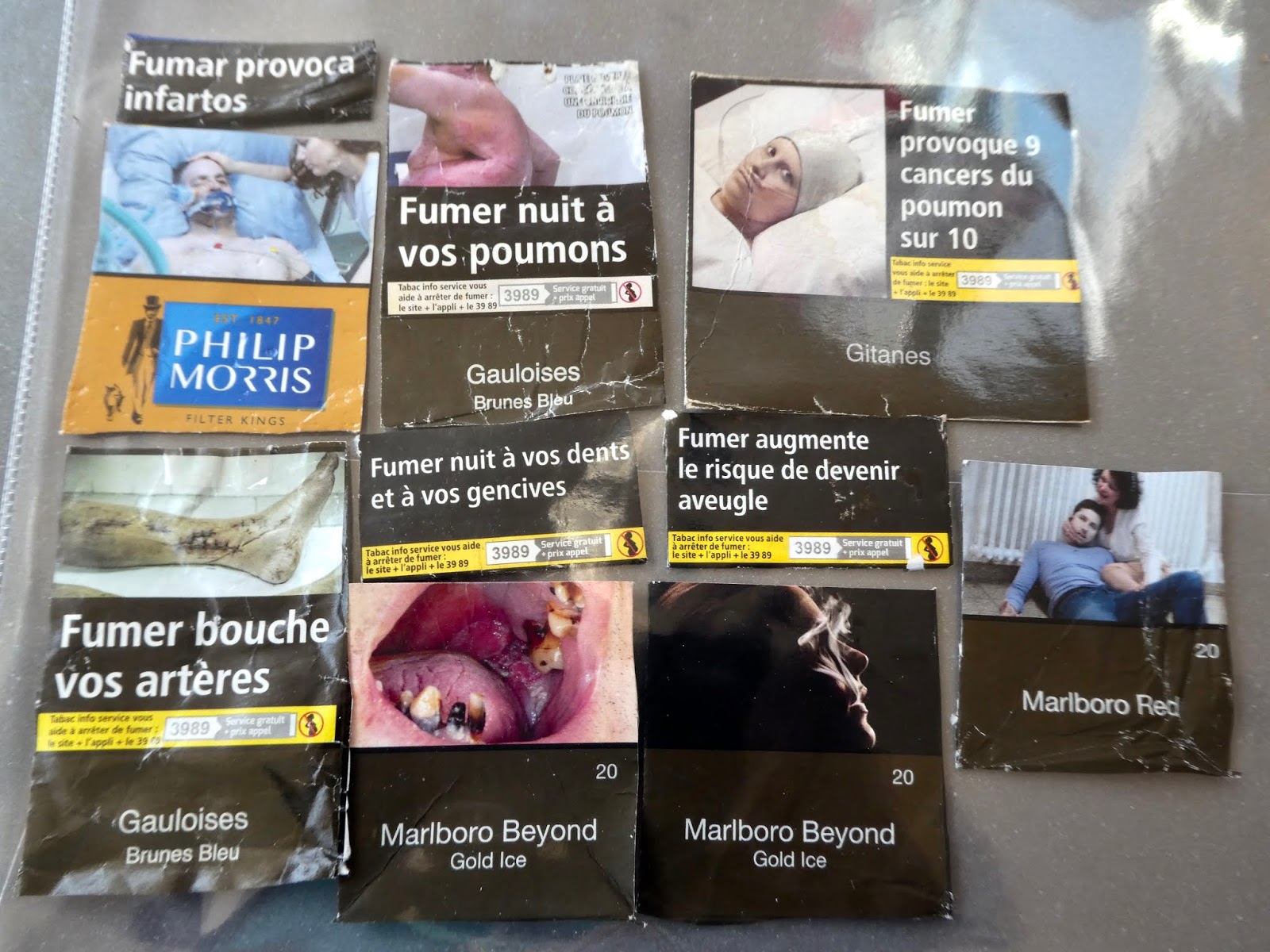
Another observation is that the roads had quite a lot of litter strewn about.  In particular, cigarette butts and cartons.  It is so dry and hot in this region from May through September it is a wonder that it has not all burned to the ground.  None-the-less, there was a bright side to this discovery.  I have wanted to fill you in on the types of health warnings found on French cigarettes for some time.  When Margaret and Burt were visiting, I took Margaret into a Tabac shop to show her the cigarette packs.  I snapped a quick picture before a store employee stepped into view.  I tried to explain my interest by stammering “cigarette packages in the US don’t look anything like this.”  He responded dryly “You are in France.”  With that we took our leave.Smoking continues to be a prevalent habit in France, but it puts the US Surgeon General’s Warning that “cigarettes can be hazardous to your health” to shame.  Check out the health risks graphically displayed on cigarette packs in France below.

These are the entire front cover of each cigarette pack.  There are no other graphics – no advertisements – no logos.
There are lots more variations, but these are a good representation.

Back to our hike

The map app directions were simple to follow and matched road signs that were pointing us in the direction of the airport.  At around the 2 mile mark, our map app guide told us to turn right.  The problem was there was no road.  As we continued to walk, she said the now infamous “You have arrived at your destination”.  We knew we were close to the airport as we could see planes taking off and landing.  George was certain he could see the airport terminal right about where we thought it would be if the road shown on the map app existed.  Hmmmm
You have arrived at your destination
Both George and I saw portions of a dirt road out in a field and began to wonder if this road once connected to the one we were on.  In the absence of this road, we were looking as another ~4 miles to get to the terminal and we were already hot, sweaty, and very late for picking up the car.  We decided to go with our hunch and bushwhack through a field to this dirt road.
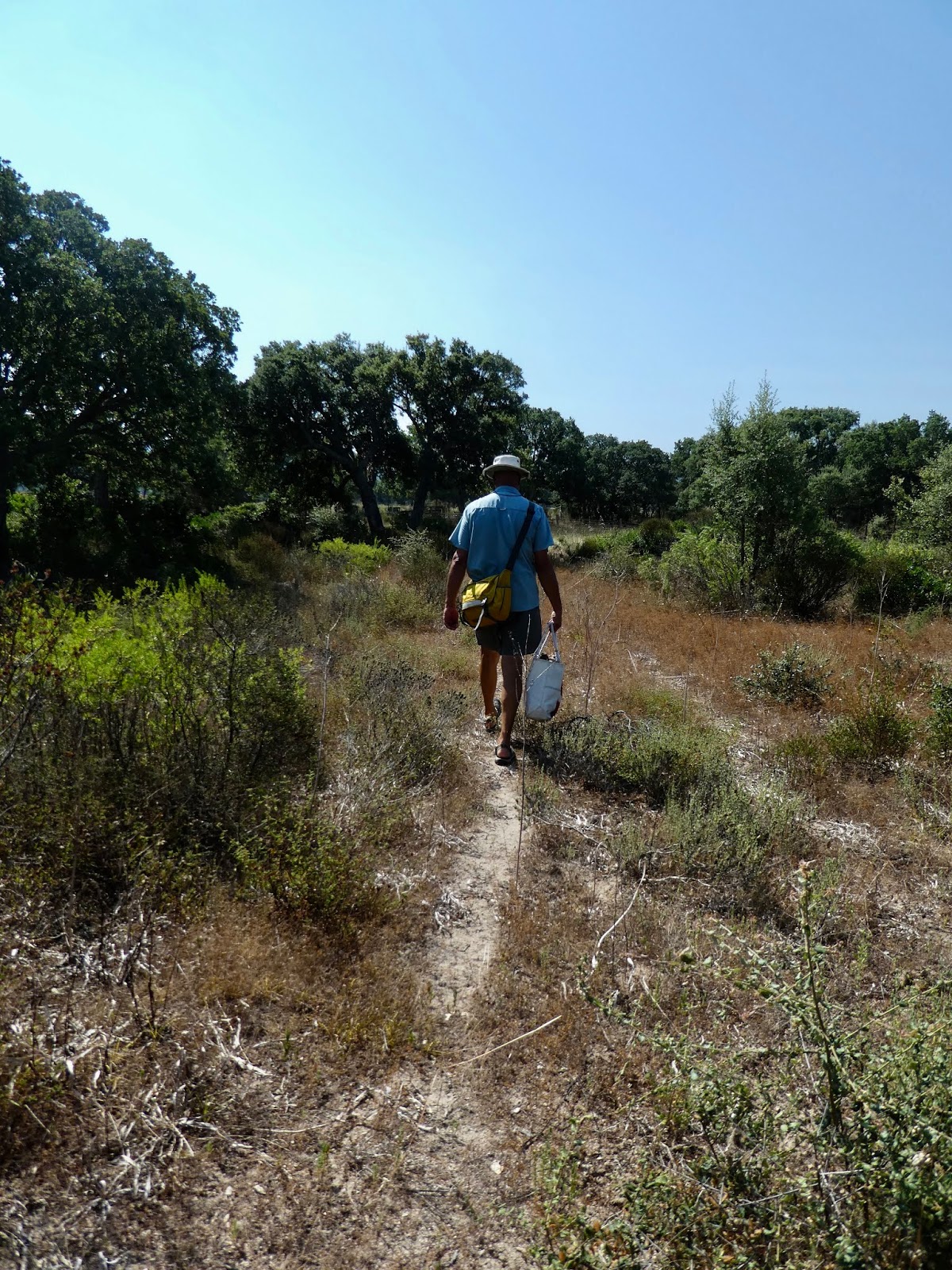
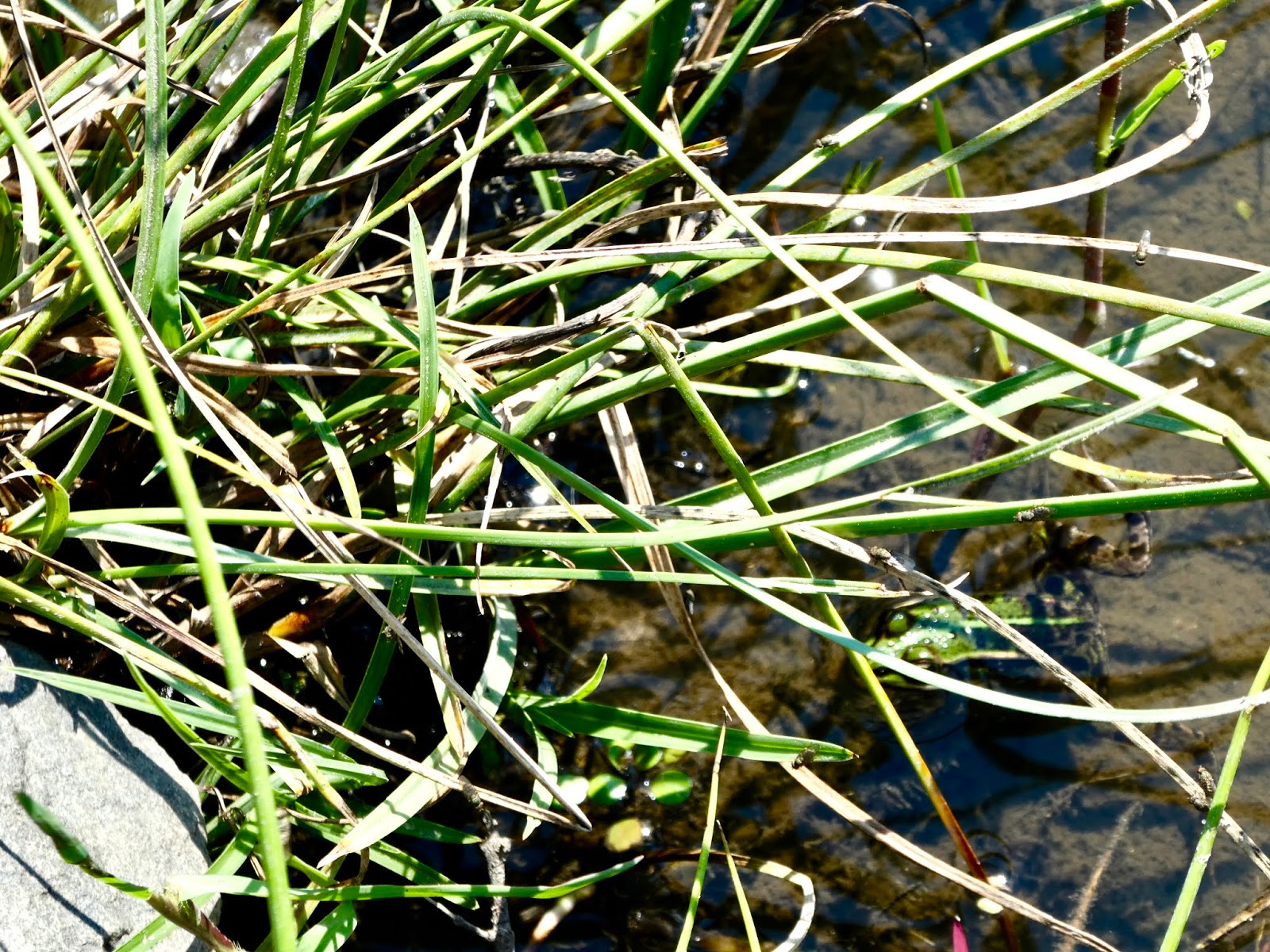
It is too late to say “to make a long story short”, so I will just continue to ramble on.  We bushwhacked through many subsequent fields – at times along dirt roads – more often on cow paths.  We climbed over 4 barbed wire fences and circumvented a wide swampy ditch (bright side is we saw froggies).  The sole of one of my shoes came loose – flapping from my toes to the heel (thank goodness for George and duck tape).  We were filthy from sweat and dust and seriously concerned about dehydration.  George contemplated turning back but I would not even consider the idea.
George forging ahead to scope out where we are
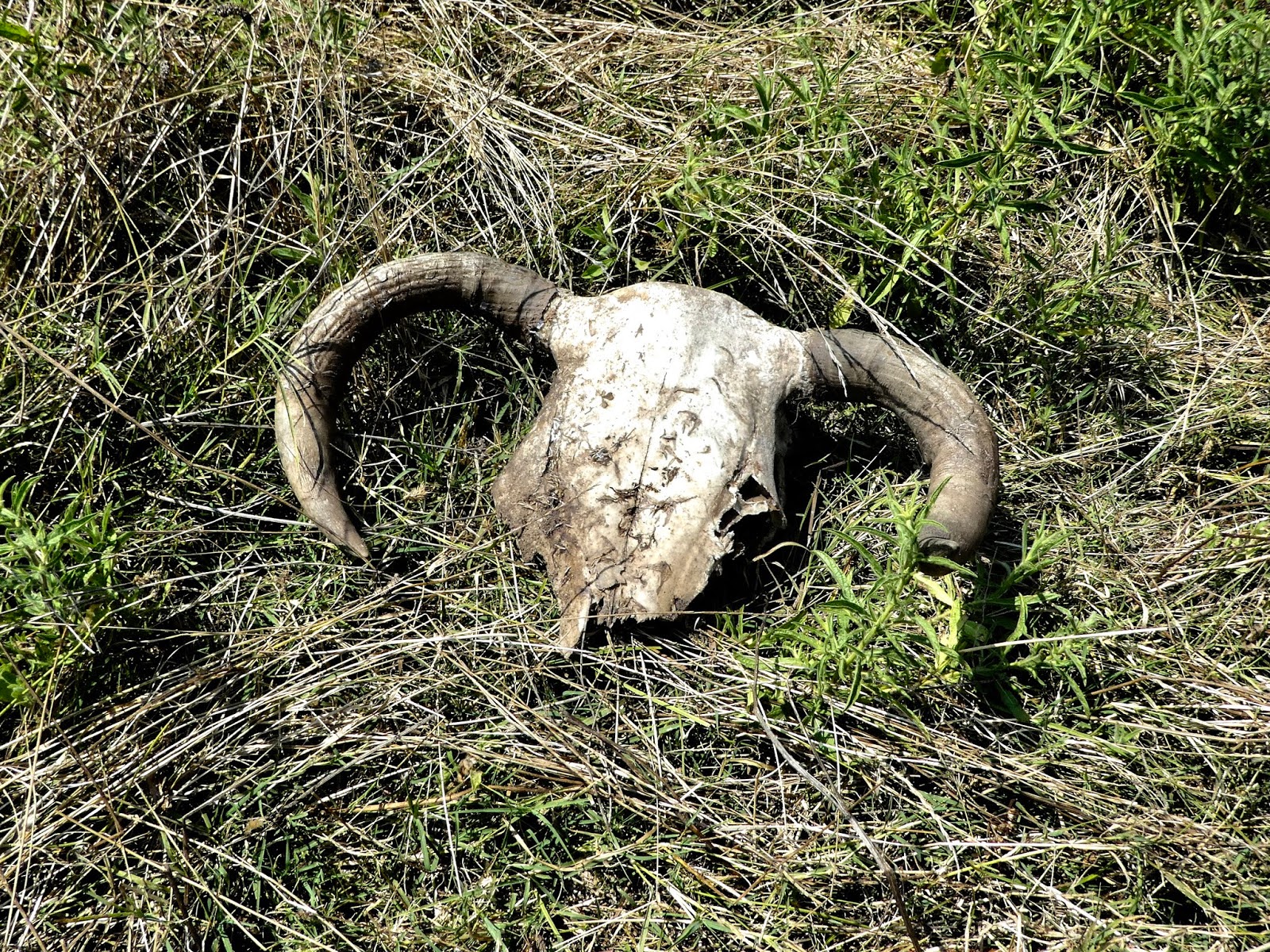
This cow did not make it to the airport
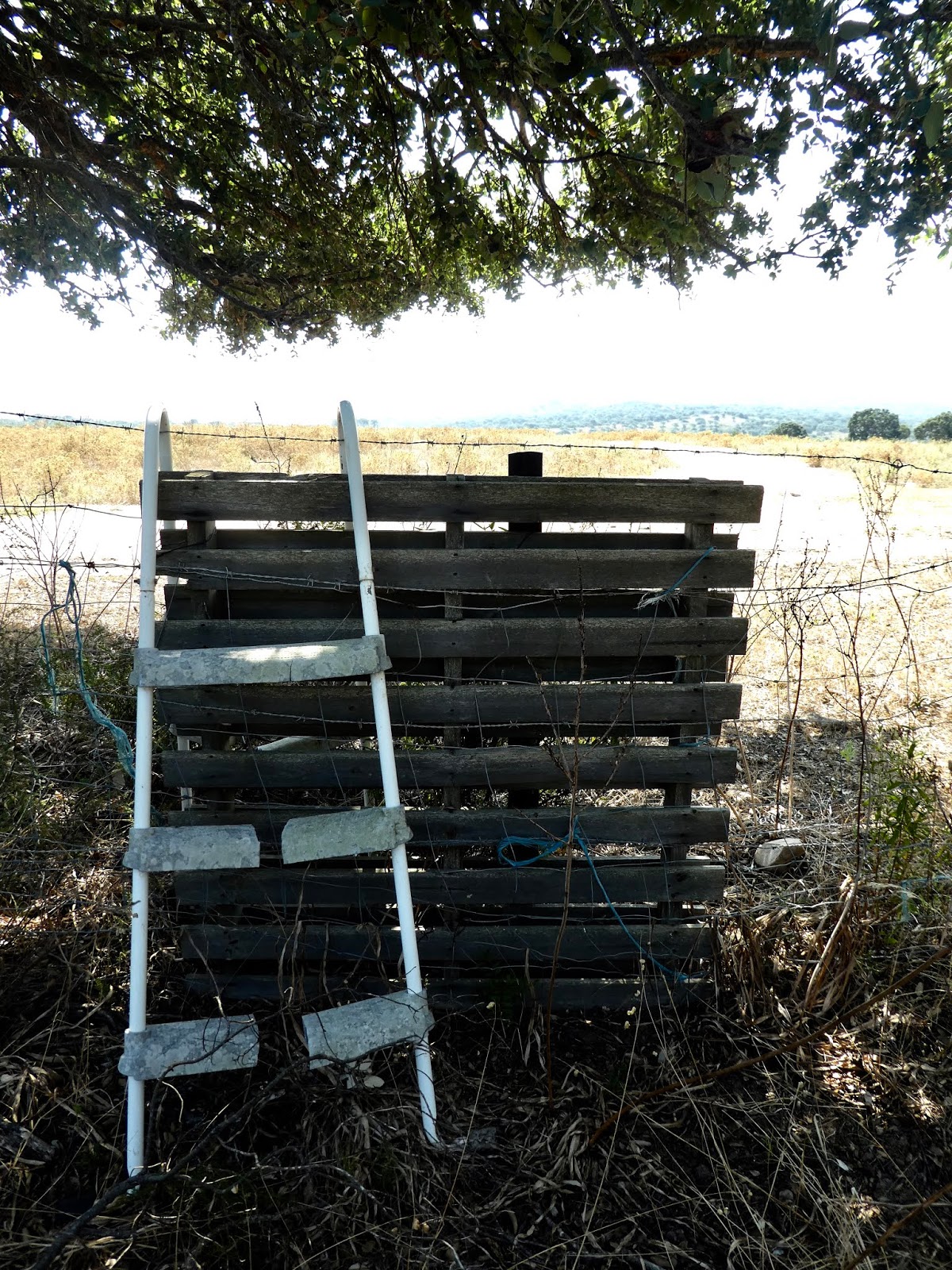
Not every barbed wire fence came with a
broken ladder.
Swampy ditch with hundreds of frogs
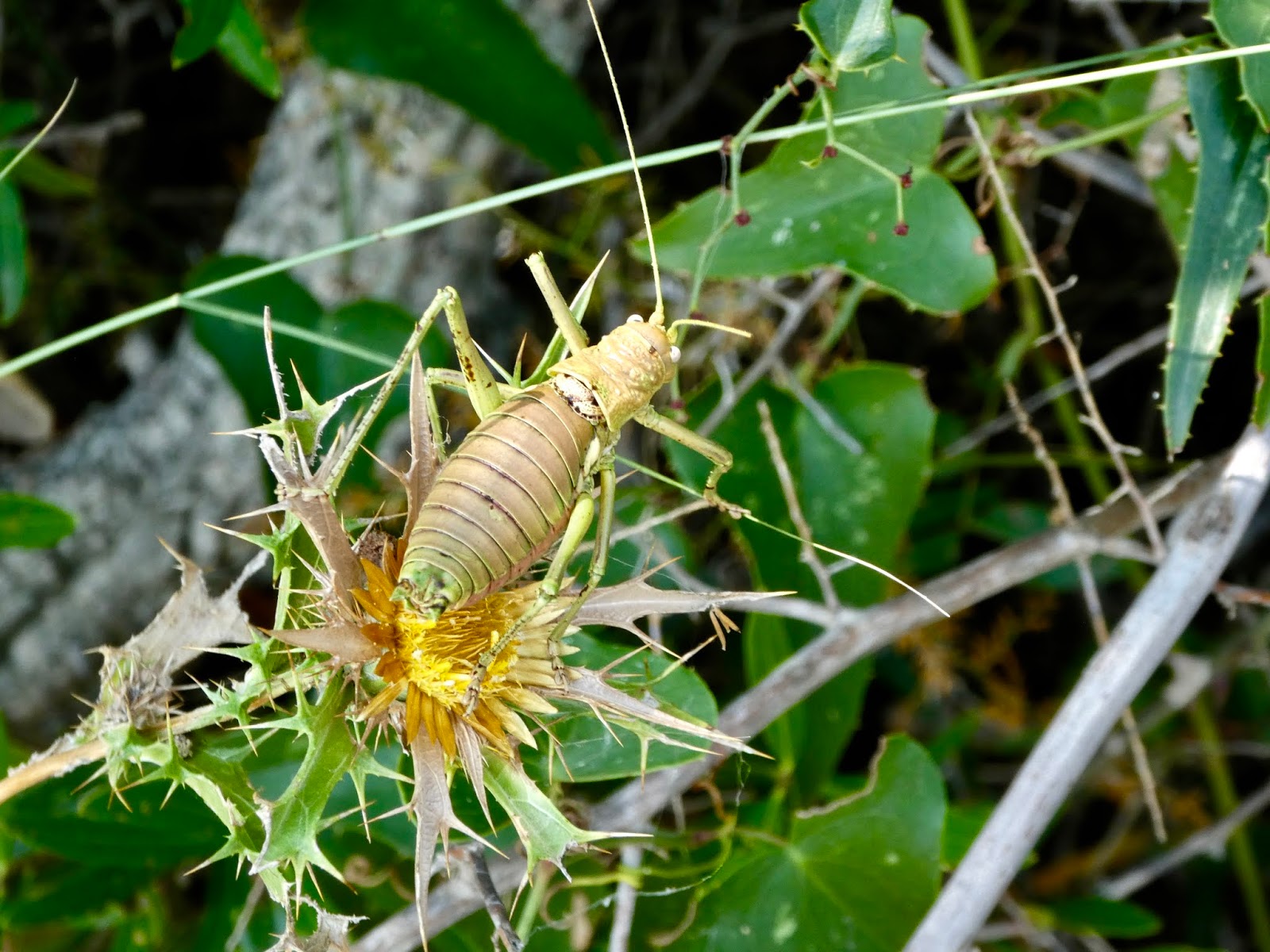
We got to see this really cool bug.  I was less excited when I found one on my shoulder.  It is as big as it looks.
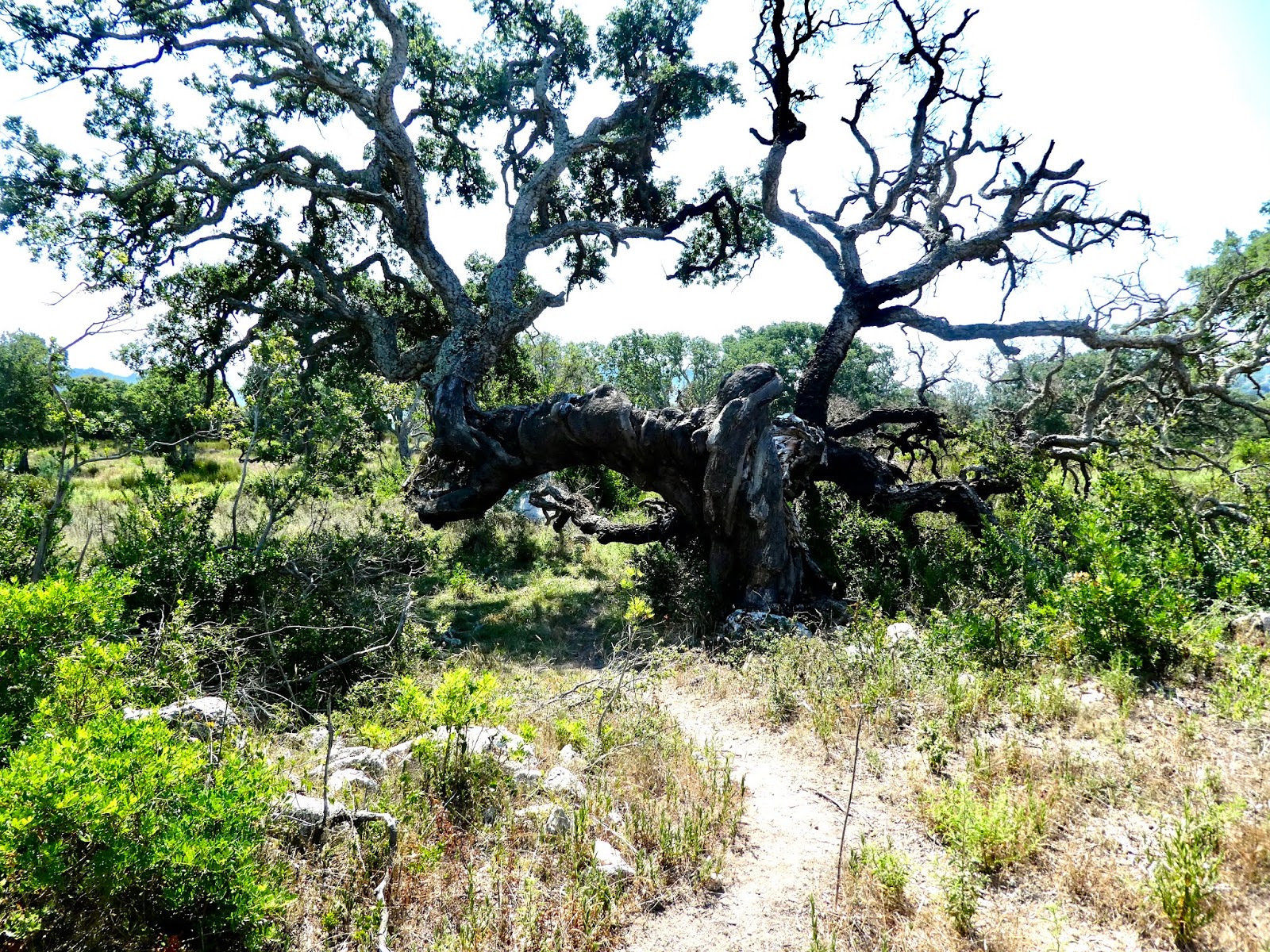
Trees never give up and we didn’t either
Finally, about 4 hours after we started, we got to the Figari Spar Supermarché.  We each drank a quart of water – ate a croissant, a peach, and a plum (first food of the day) and sat on a bench for about a half hour.  I then called a taxi to take us to the airport – I connected with one of the taxi drivers I had spoken with in the morning who had said “It is not possible” and he came and picked us up.
Spar Supermarché – Figari
On the way to the airport the cabbie confessed that he recognized my voice (most likely my French) from a request for a ride earlier in the day.  We let him know we had walked and I like to think he felt a little bit bad.  He let us know that none of the cabbies want to go out to Pianottoli-Caldarello and that we should not expect it to be easy to get a ride back when we returned the car.
When we did return the car, several cabbies turned us down – had it not been that someone else was having the same trouble, and a cabbie agreed to take us all for double pay, we might still be there!!!
Marilla and Mitch will fly into the Figari airport in September.  It is a good thing they pack light.  Dad will draw them a map to save time in the event they can’t get a cab.

Sailing Around Corsica – Anchoring between Ajaccio and Pianottoli-Caldarello

Ajaccio to Pianottoli-Caldarello

We left Ajaccio with full tanks of diesel and water, all our laundry done, and food to last for quite a while.  We were headed to a marina in Pianottoli-Caldarello because it is close to the Figari airport and we were renting a car at the airport to spend a couple of days exploring the interior of Corsica.
We decided to anchor out each evening for this trip.  Between our solar panels and water conservation measures, we have become increasingly independent of the need to stay in marinas.  We had been enjoying a run of moderate winds that were ideal for sailing and we were enjoying these opportunities to “live off the grid”.Sailing by day and anchoring each evening is not as easy as it may sound.  The biggest barriers, as long as the sun shines, are the need for favorable winds and safe anchorages.  There is also the necessity to conserve water, store waste, plan and prepare meals – if this sounds like too much of a hassle, it may get old.  But consider, being surrounded by near silence, other than that from the wind and waves – the sense, however brief, of independence, self-sufficiency – the need for limited resources – the indulgence of relaxation and the slow pace of moving through landscapes of extraordinary beauty.  Top that off with sharing it with my life partner (who, by the way, is doing all the heavy lifting) – never gets old.

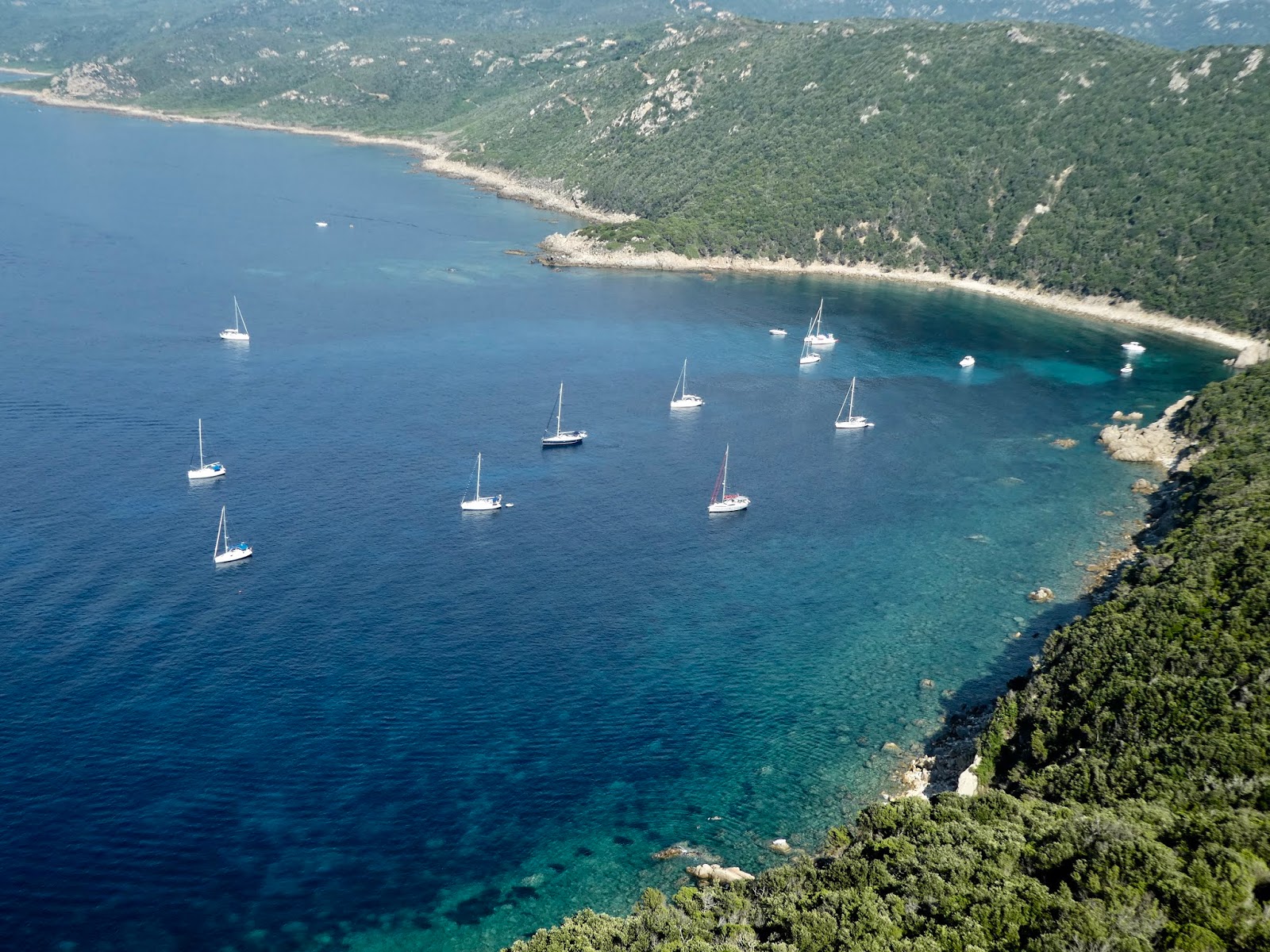
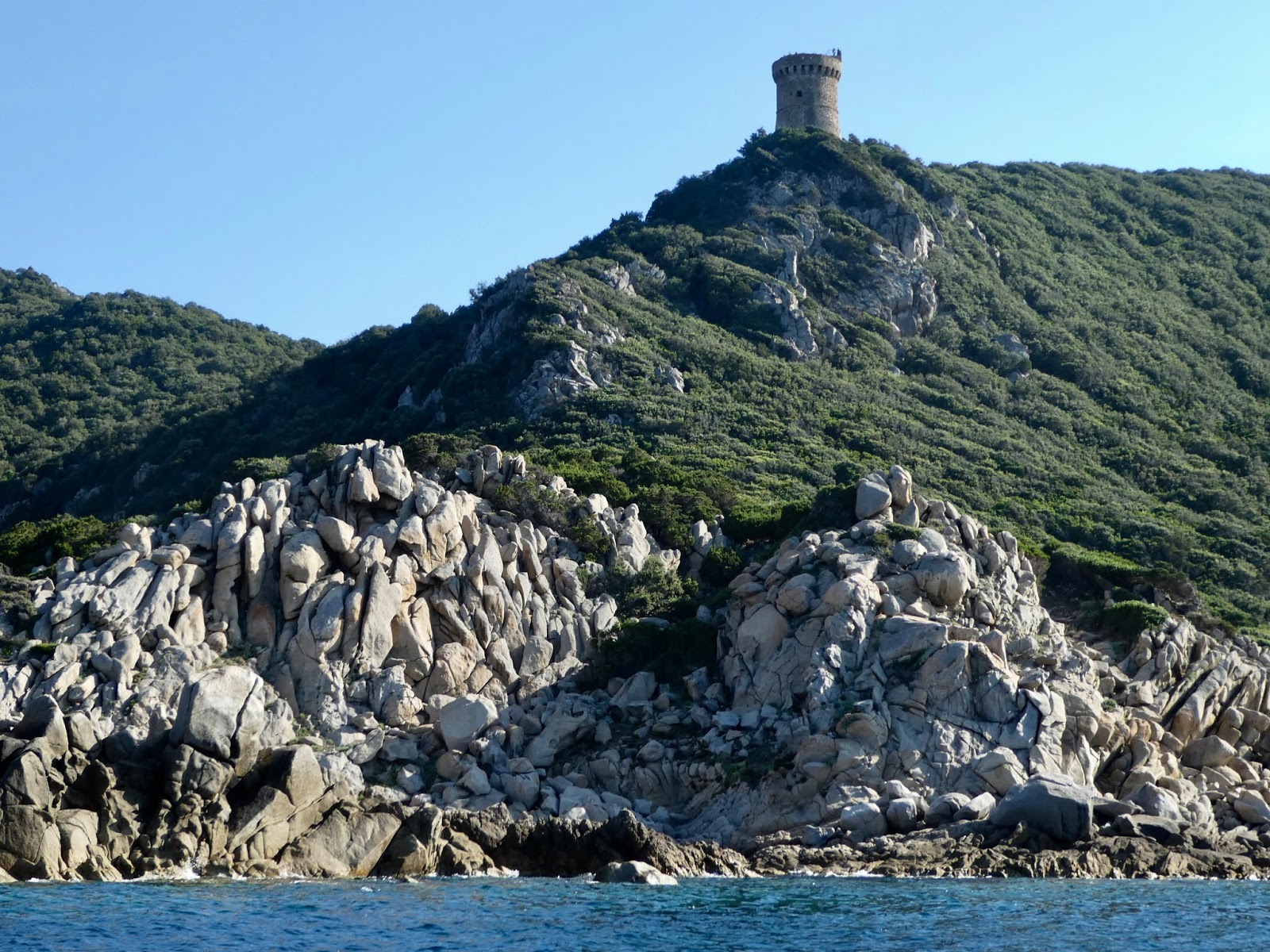
Our first anchorage (Anse de Cacalu) was in a large protected cove overlooked by a well preserved watchtower.  There was no obvious trail to the watchtower, but George had seen several people hiking up along a saddle so we decided to try it ourselves (in truth, I went along with George’s plan just because).

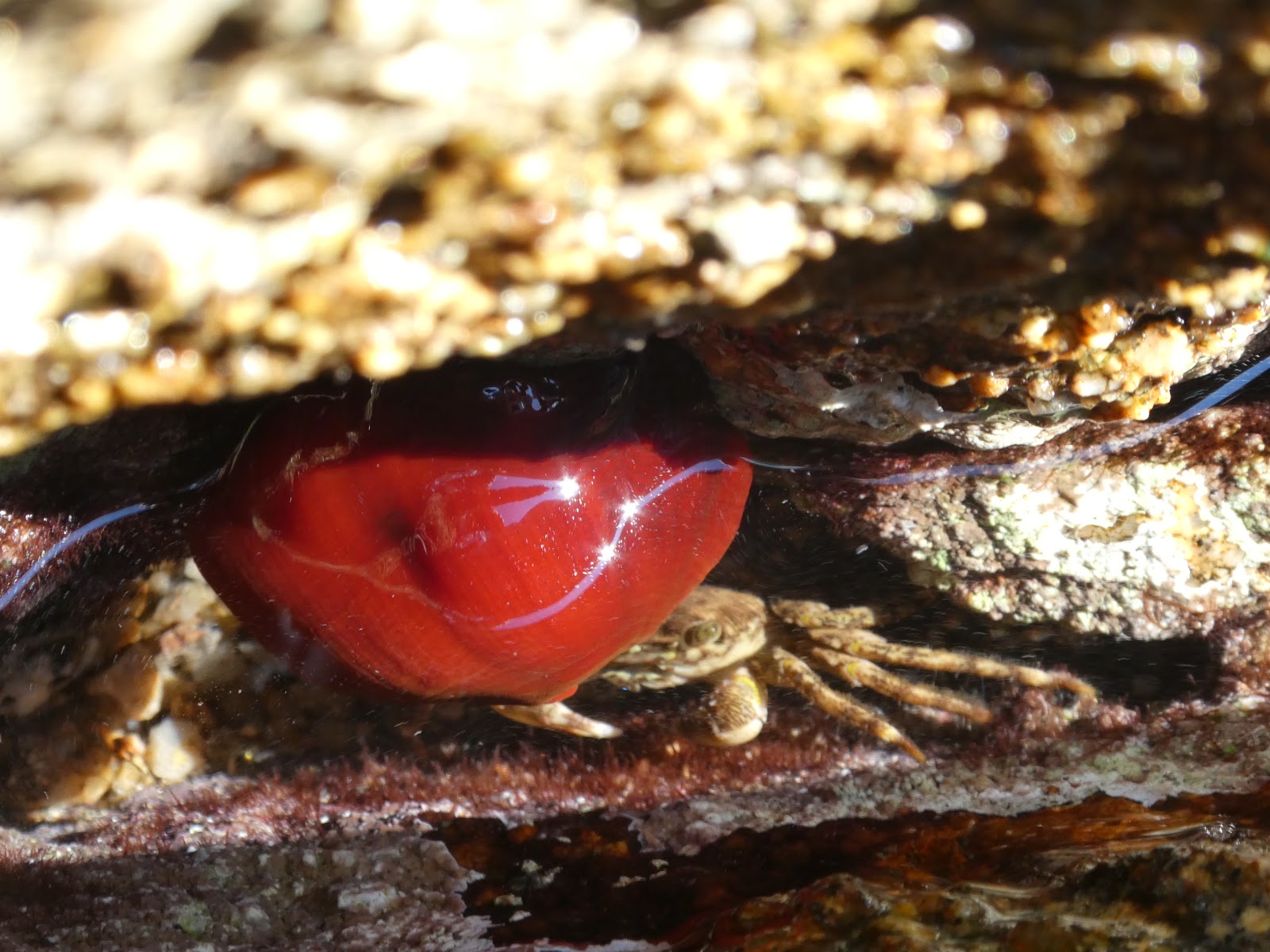
A crab and a beautiful critter we have seen on rocks close to the surface – Anse de Cacalu
Anse de Cacalu, Corsica

We used the stand-up-paddle boards (SUPs) to get ashore near a spot where George saw people making the trek up.  We did not see a path or a way up other than a steep craggy rock scramble which led us, after much exertion, to a position where we could see the path – the only problem was we needed to bushwhack our way down the other side of the hill (mountain) to get to it.

All’s well that ends well.  Once on the path it was a strenuous climb to the top but required no more bouldering or bushwhacking.

Ancient watchtower overlooking Anse de Cacalu
Atop the watchtower

The amusing part of this adventure is that when George went to retrieve the paddle boards, he found them about 100 feet away from the path we should have taken.  The jury may be out as to whether George pushes me to keep me from getting too old, too soon, or if his plan is to do me in before I get too old.  In either event, we both lived to see another day.

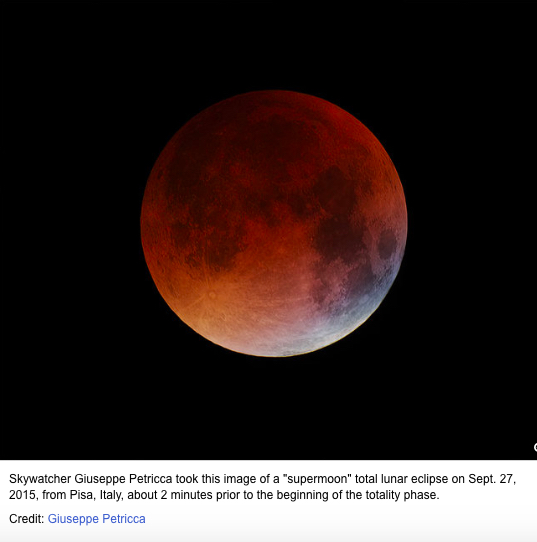
We spent two days in this beautiful anchorage enjoying some nice snorkeling in the wonderful warm water (80 plus degrees) and some decadent lounging.  The evening before we headed out was the evening the earth eclipsed the full moon.  When this occurs it is referred to as a Blood Moon because the moon turns a deep reddish brown when some of the Earth’s atmosphere and light from the sun is bent around the Earth and illuminates the moon.  The reddish brown color is due to the way Earth’s atmosphere scatters different wavelengths of light.  While we were unable to get a good photograph, I borrowed the one below and can testify that it looked just like this photo.  We were in the right place, at the right time as this eclipse was not visible from North America.

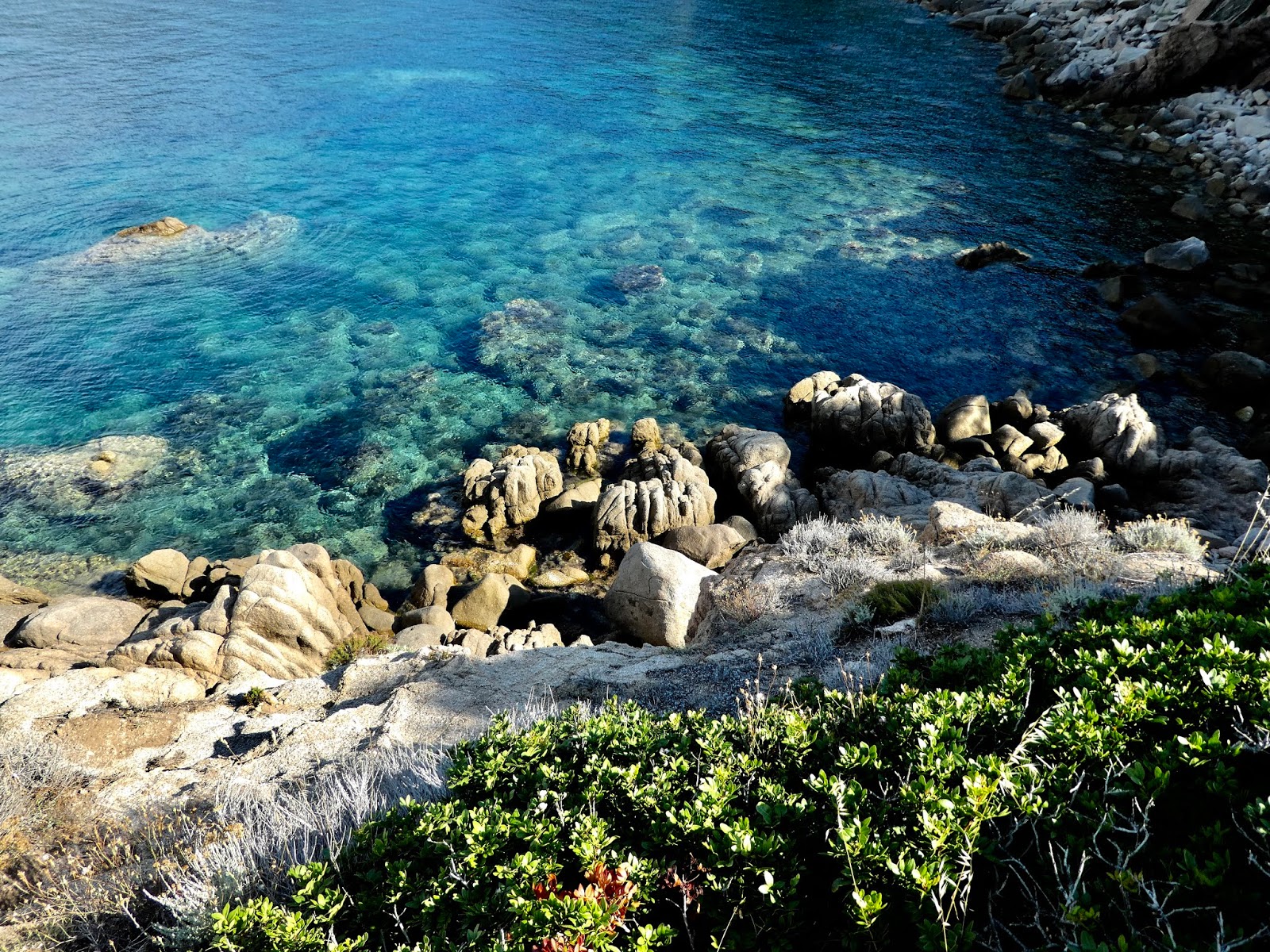
Nice snorkeling spot below the watchtower
Anse de Ferry, Corsica

We sailed the following day to our next anchorage – Anse de Ferry and spent the night.

The following morning we continued on to Pianottoli-Caldarello.

Sailing around Corsica – Ajaccio

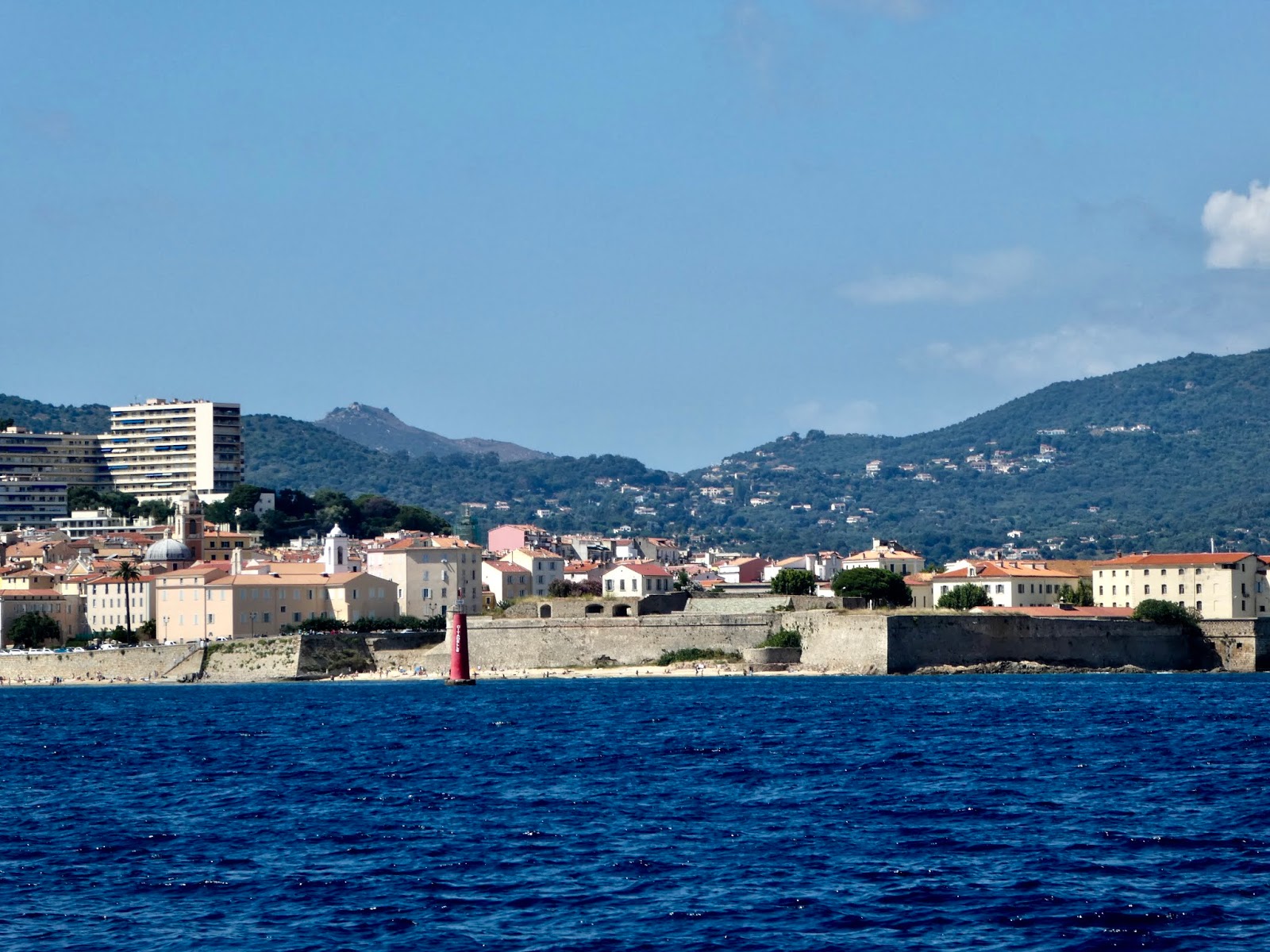
Ajaccio – Capital of Corsica

From Girolata we sailed to the Baie de Sagone, where we anchored for the night.  The following day we sailed to Ajaccio, the capital of Corsica and birthplace of Napoleon Bonaparte.Although Ajaccio is likely to have been established some time in the 2nd century AD, the majority of buildings present today were built after the end of World War II.  Notably, no Jewish person was either executed or deported from Corsica during the war and Ajaccio is distinguished in being the first French city to liberate itself from Germany.

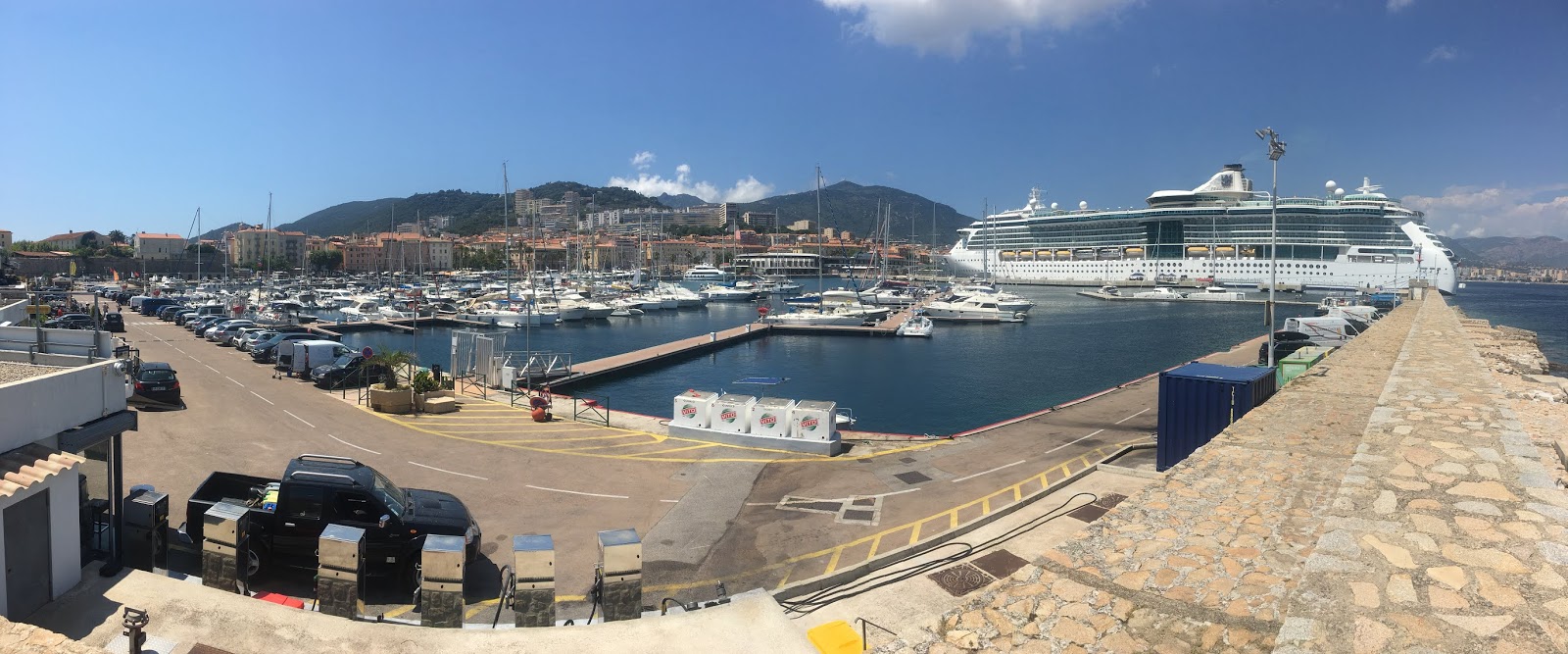
Ajaccio’s large port dominated in this photo by a cruise ship that appears even larger.
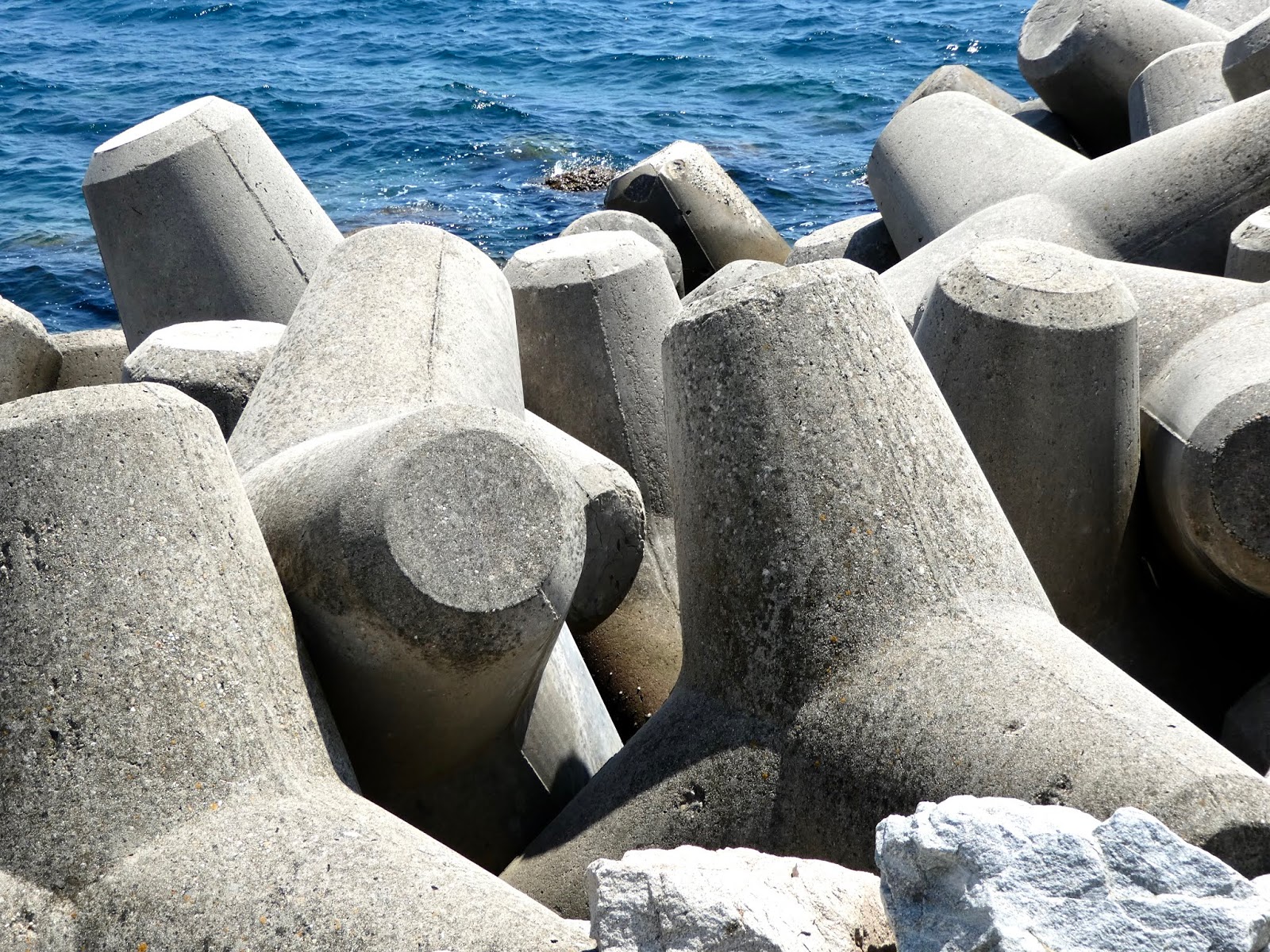
The jetty has been fortified by large concrete jacks that nestle together
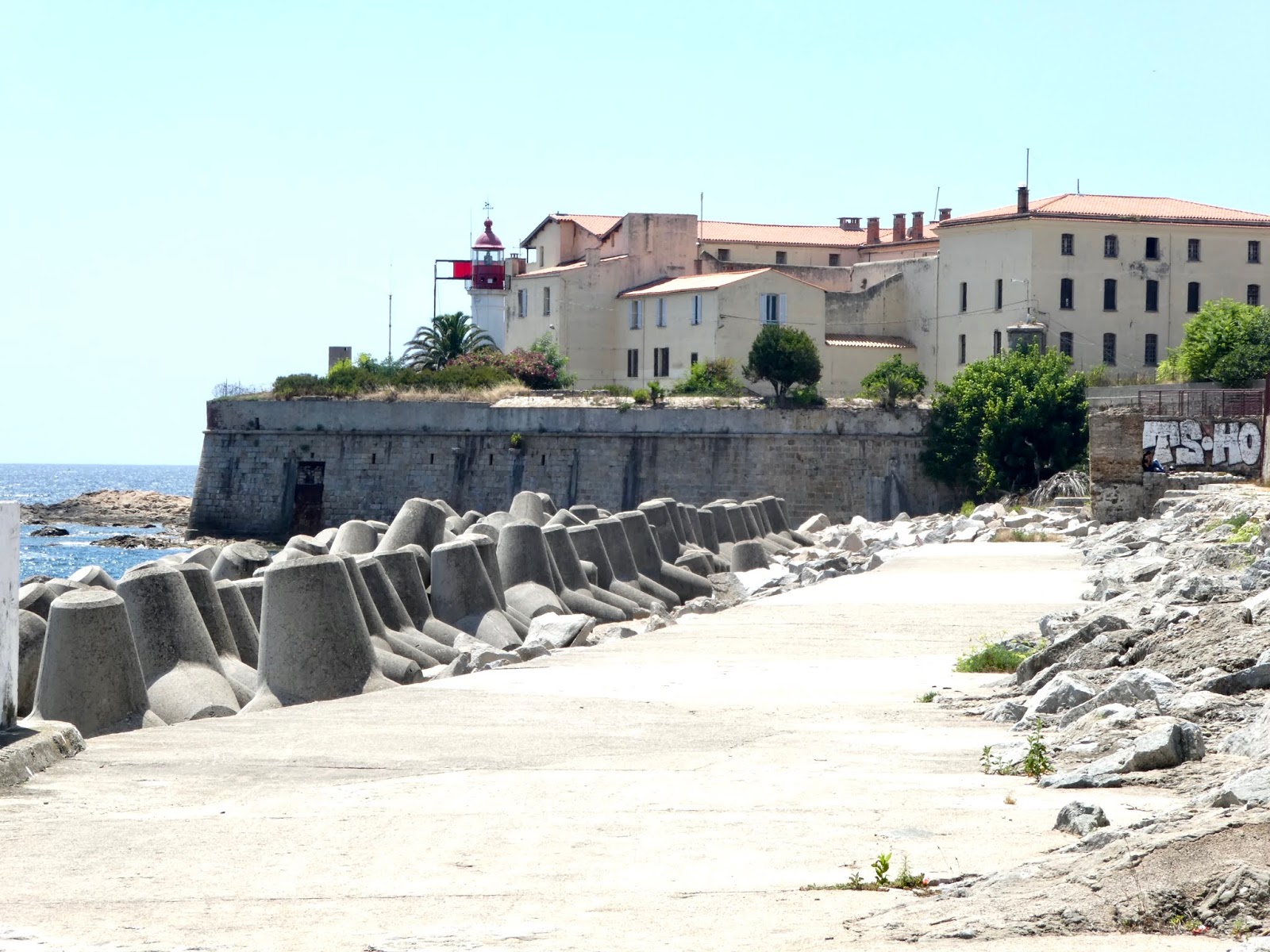
The marina jetty extends beyond the ancient wall that afforded protection to the Citadel.

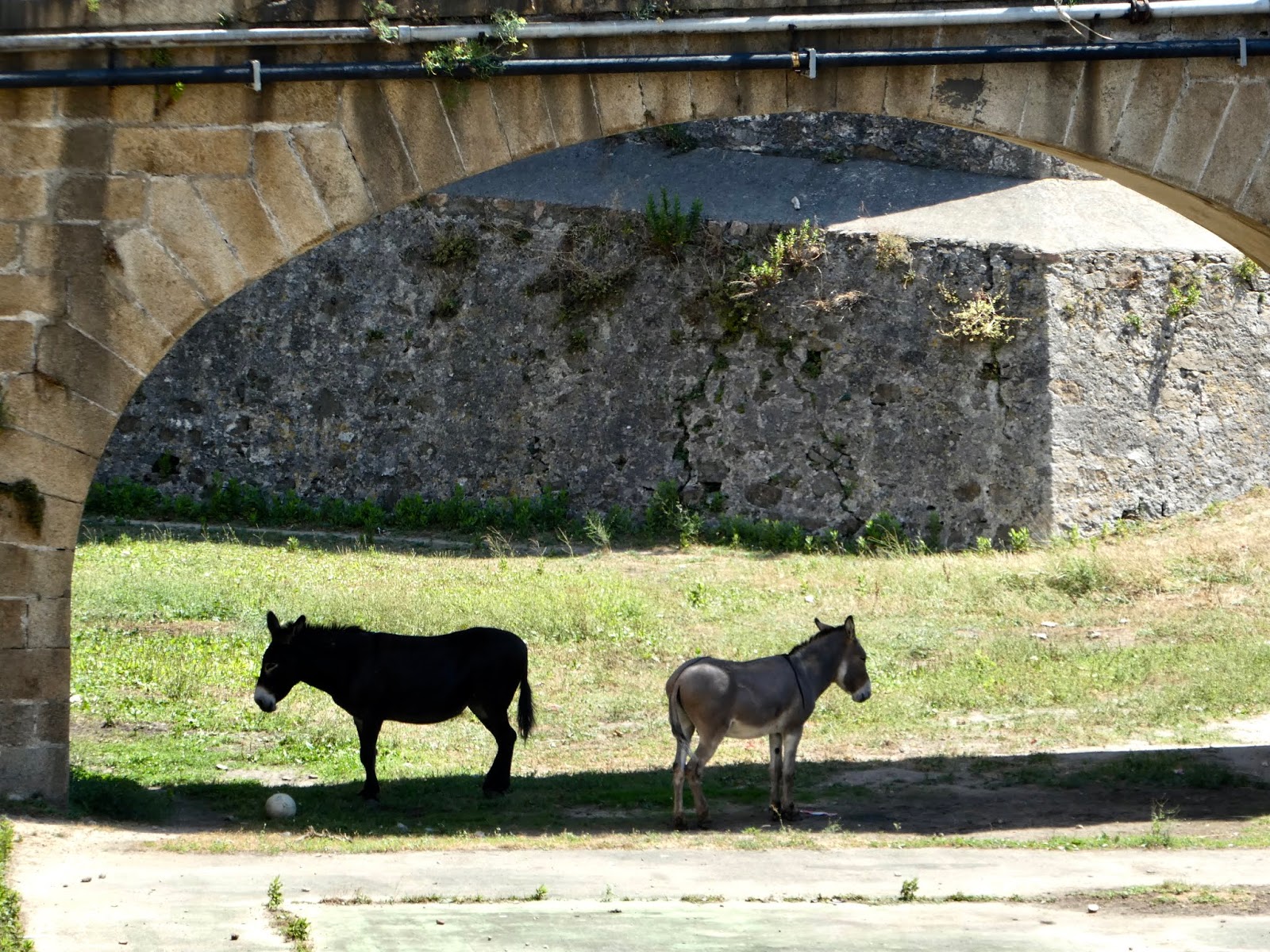
Donkeys now inhabit what was once a large moat surrounding the city castle
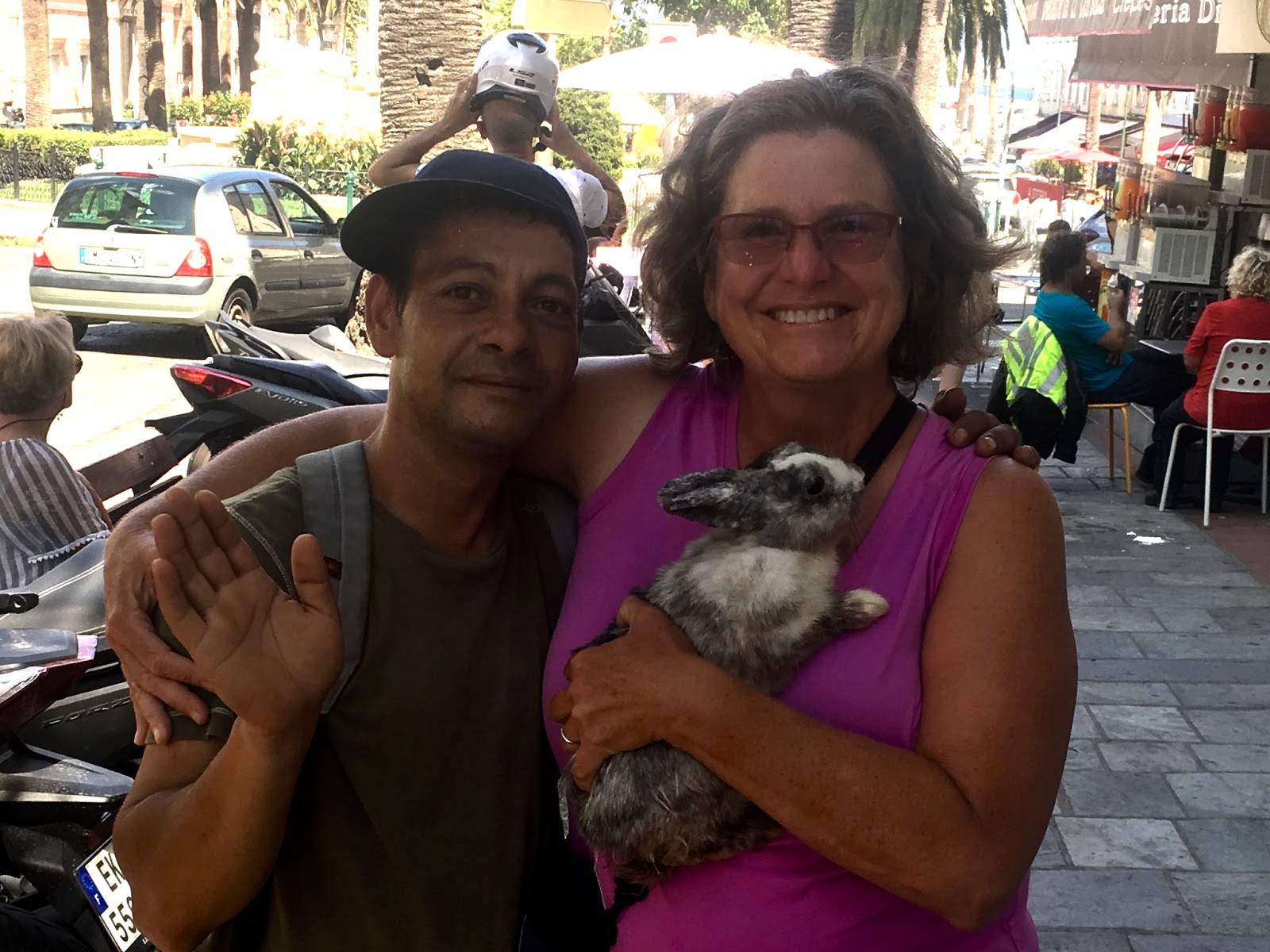
On our first evening in Ajaccio we strolled the street along the harbor where many vendors display their offerings.  George went one way and I the another where a met a gentleman with a rabbit.  He did not speak English or French that I could understand.  Corsica has a language distinct from French that is widely spoken locally – it may have been Corsican.  In any event, he let me pet his rabbit, Giovanni, with the expectation that I would offer him some payment.  I explained beforehand that I did not have any money at all, but unfortunately, it is clear he did not understand why I was not paying him.  I was troubled by the encounter as he did seem somewhat desperate.
On the following day, as we were heading to the market for provisioning, I saw “the rabbit man” walking along with Giovanni.  I cheerfully greeted him and he, me with kisses on each cheek.  I was so happy to have the opportunity to conclude our transaction – I holding Giovanni for a photo with the gentleman and George paying him several euros.
Afterward, this gentleman tried several times to tell me something, but I could not understand.  He perked up and twisted off some greenery from the celery we just purchased and placed it in Giovanni’s carrier and we parted ways.  It was only after I viewed the photo that I felt I saw a profound sadness in this man’s expression and I wish I understood what he was trying to tell me.
Giovanni, a kindred spirit, and me
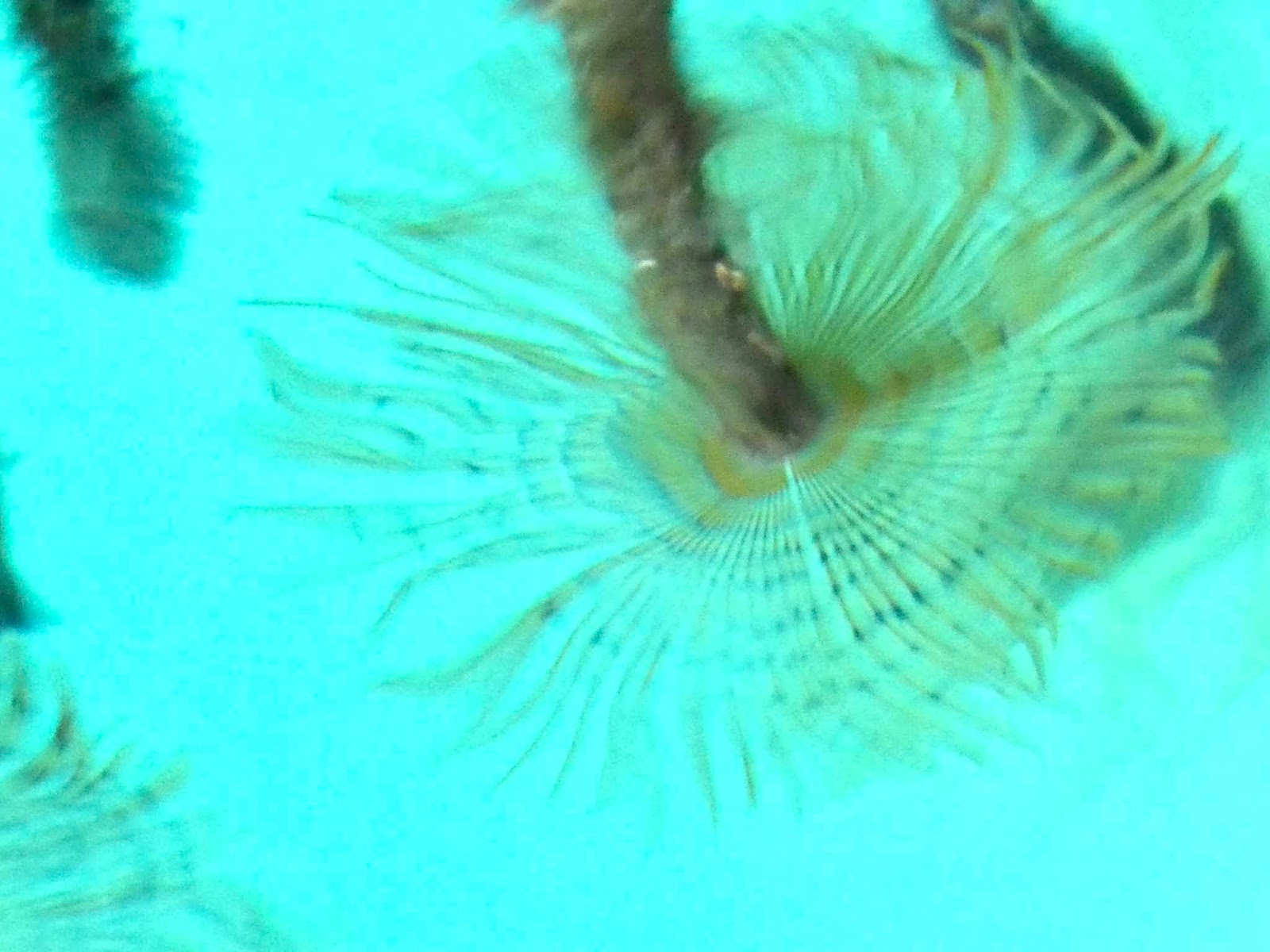
The docks in the marina were teaming with these tube worms.  We had never seen them before or since
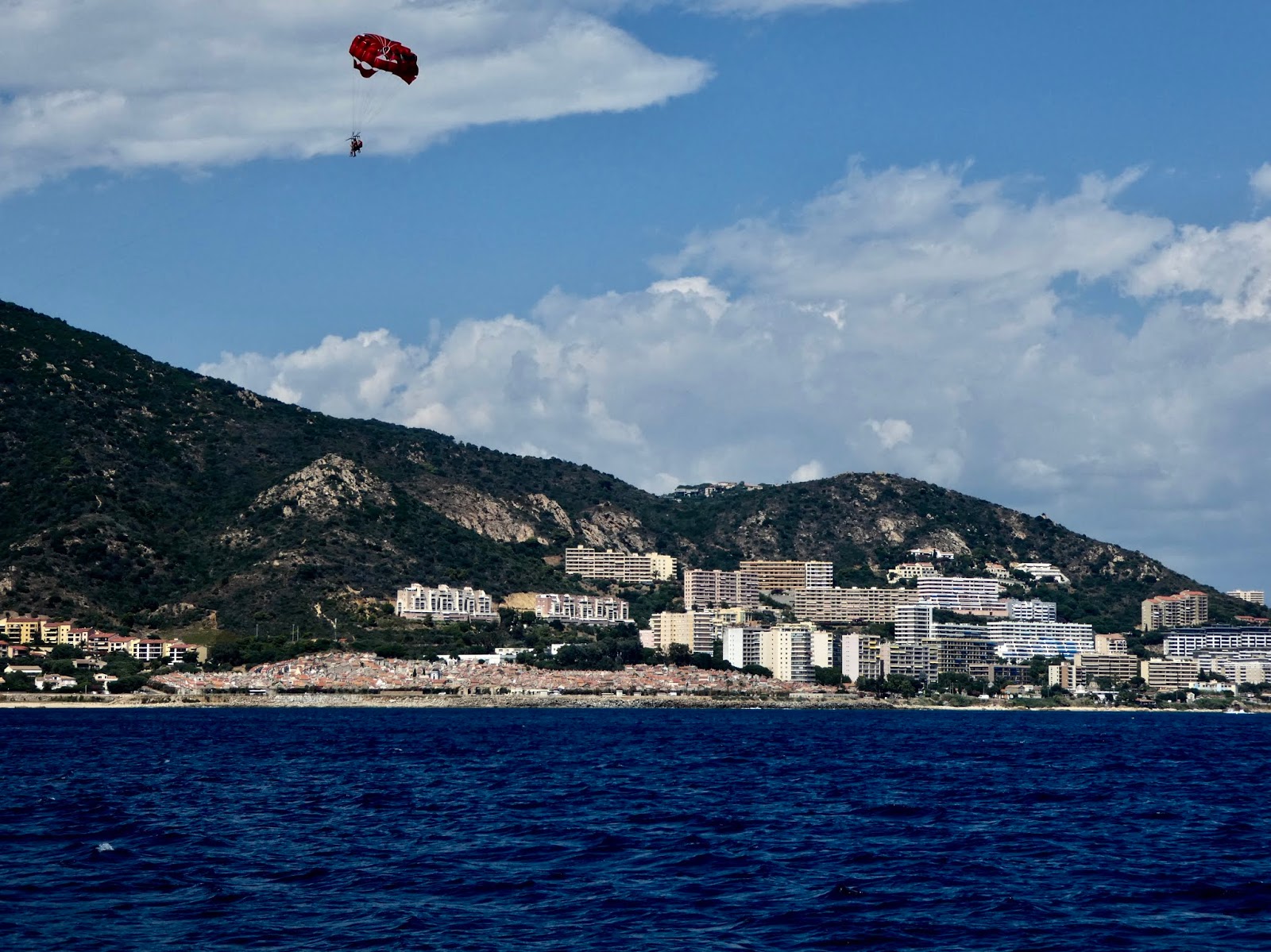
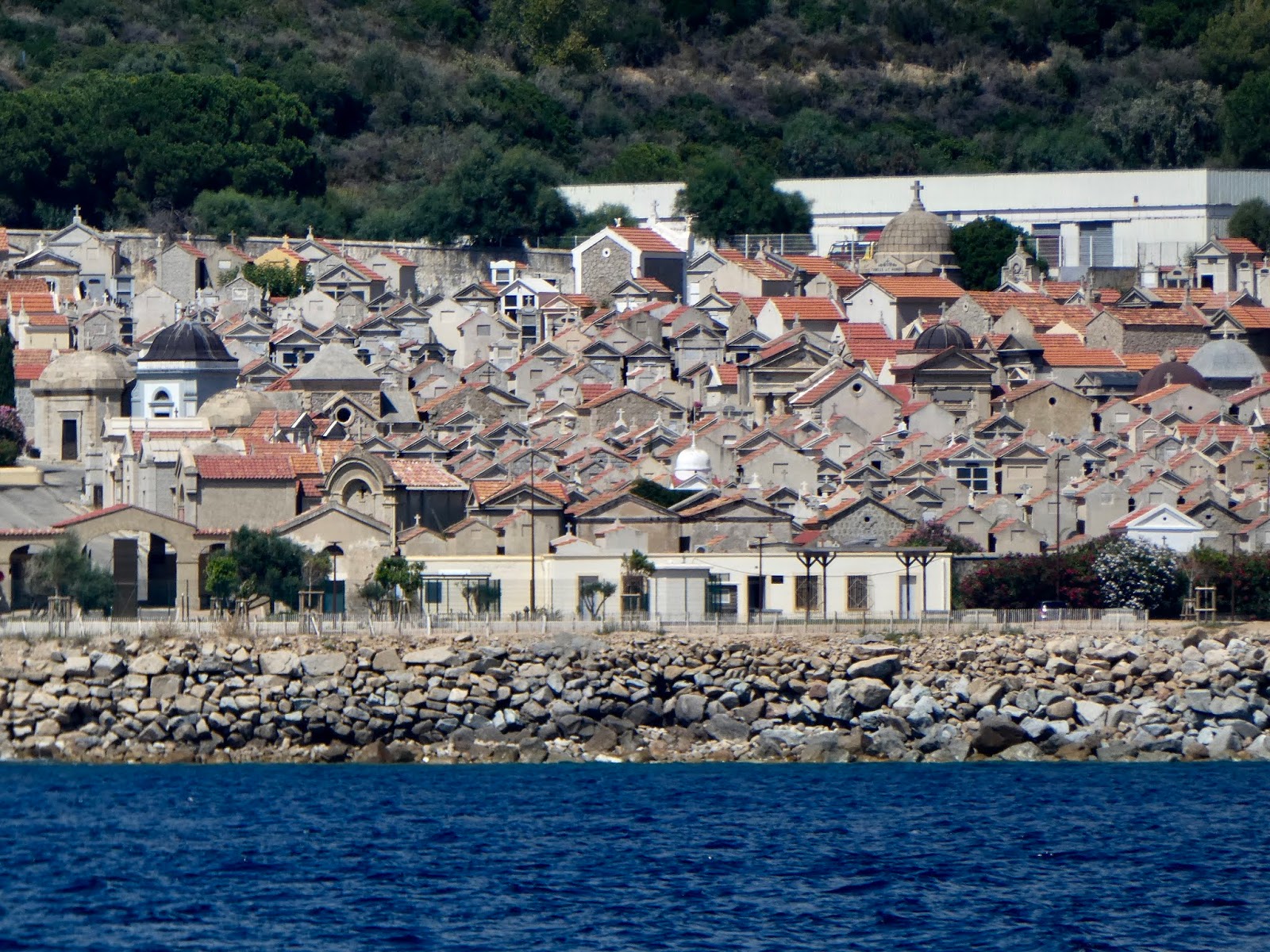
On the approach to Ajaccio we passed by someone behind a parachute boat who photo-bombed my shot of a large cemetery right off the water (seen in closeup, below).
All the cemeteries we have seen in Corsica have housed the departed in above ground mausoleums similar to this one (likely a consequence of the fact that Corsica is a gigantic pile of enormous rocks).  Some have a combination of very old and seemingly recent structures.
Ajaccio, just left of the entrance to the harbor
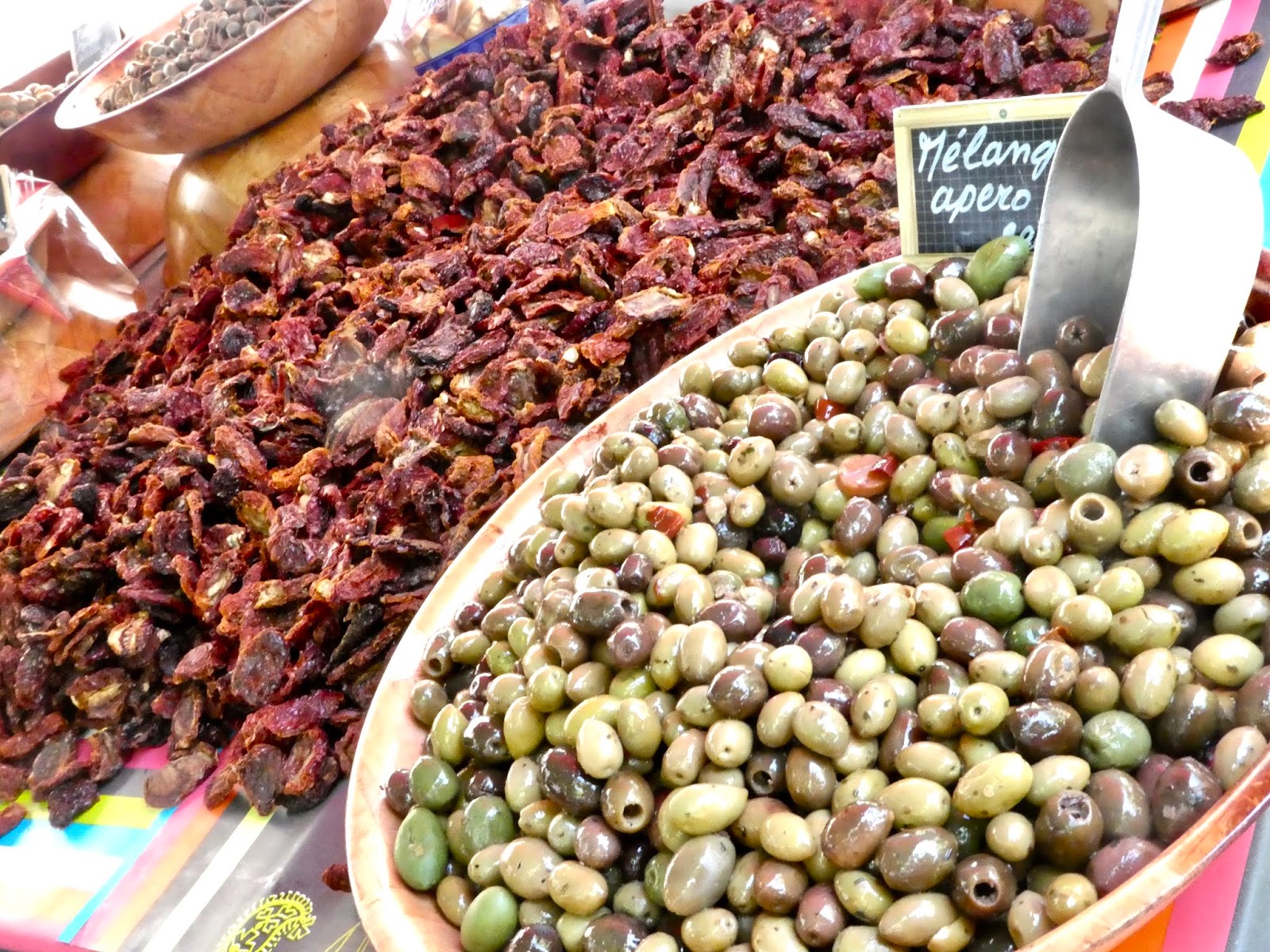
A principle reason we took a berth in Ajaccio was to provision at their market which is held every day.  We were rewarded with a large market full of vegetables, fruits, baked goods, spices, cheeses, meats – everything we could have hoped for.

Corsica – First Impressions

Fast Forward to the Present

We are skipping momentarily past some weeks of our travels to let you know what we are up to and where we are right now.   This is our 9th day in Corsica, July 23rd.

Happy Birthday Marilla !👼

We bade a bittersweet farewell to the French mainland;  sad as to the uncertainty of when or if we will return, but excited to move on to exploring Corsica.

Long passages (this passage was ~ 18 hours) are generally timed to make sure you arrive at your destination in the daytime.   We left around 5:00pm on Friday, the 13th and arrived the next day at 11:30am.  The waters and wind were calm so we had to motor.  We tried fishing in the daylight hours but had no luck.

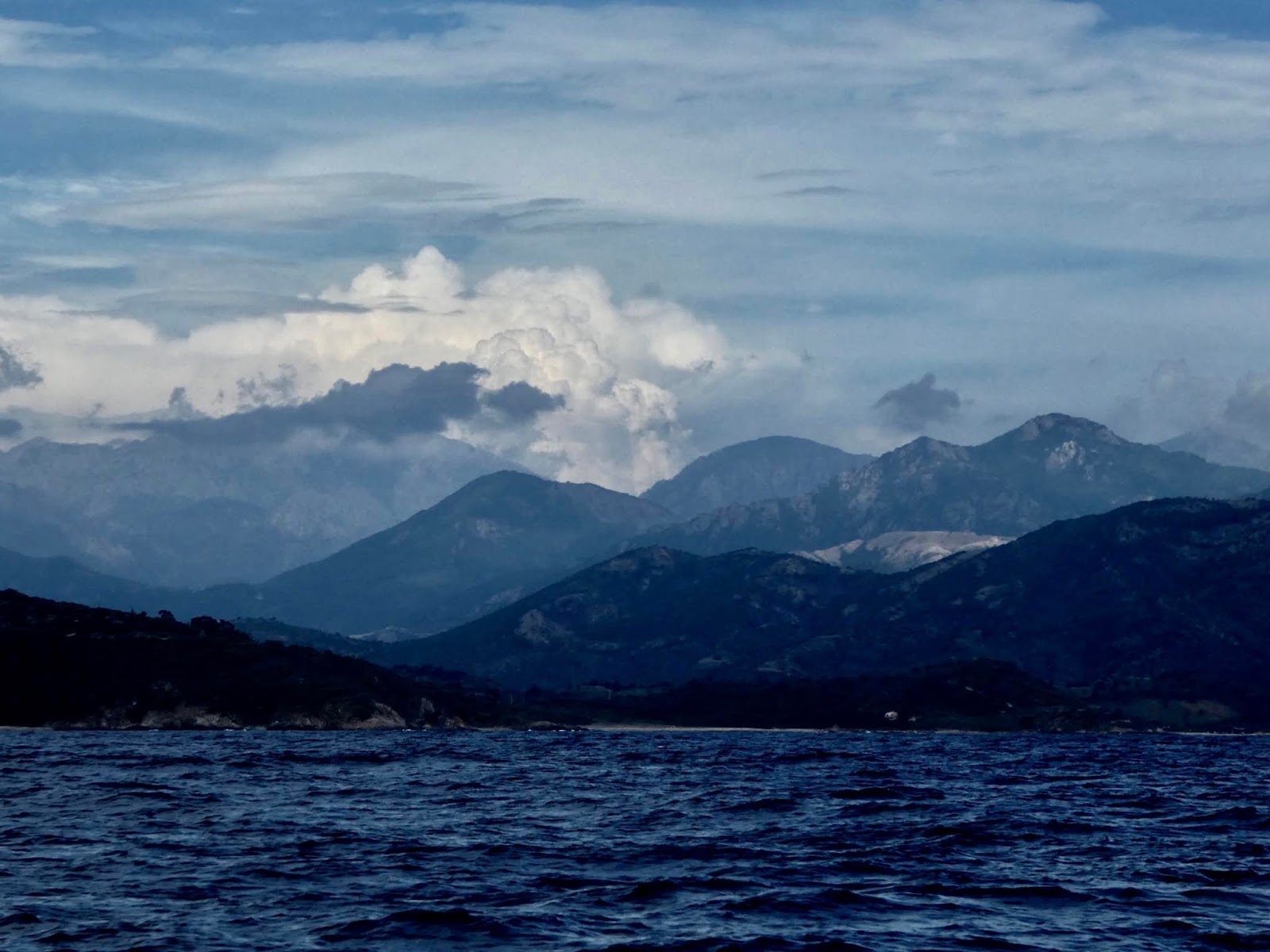
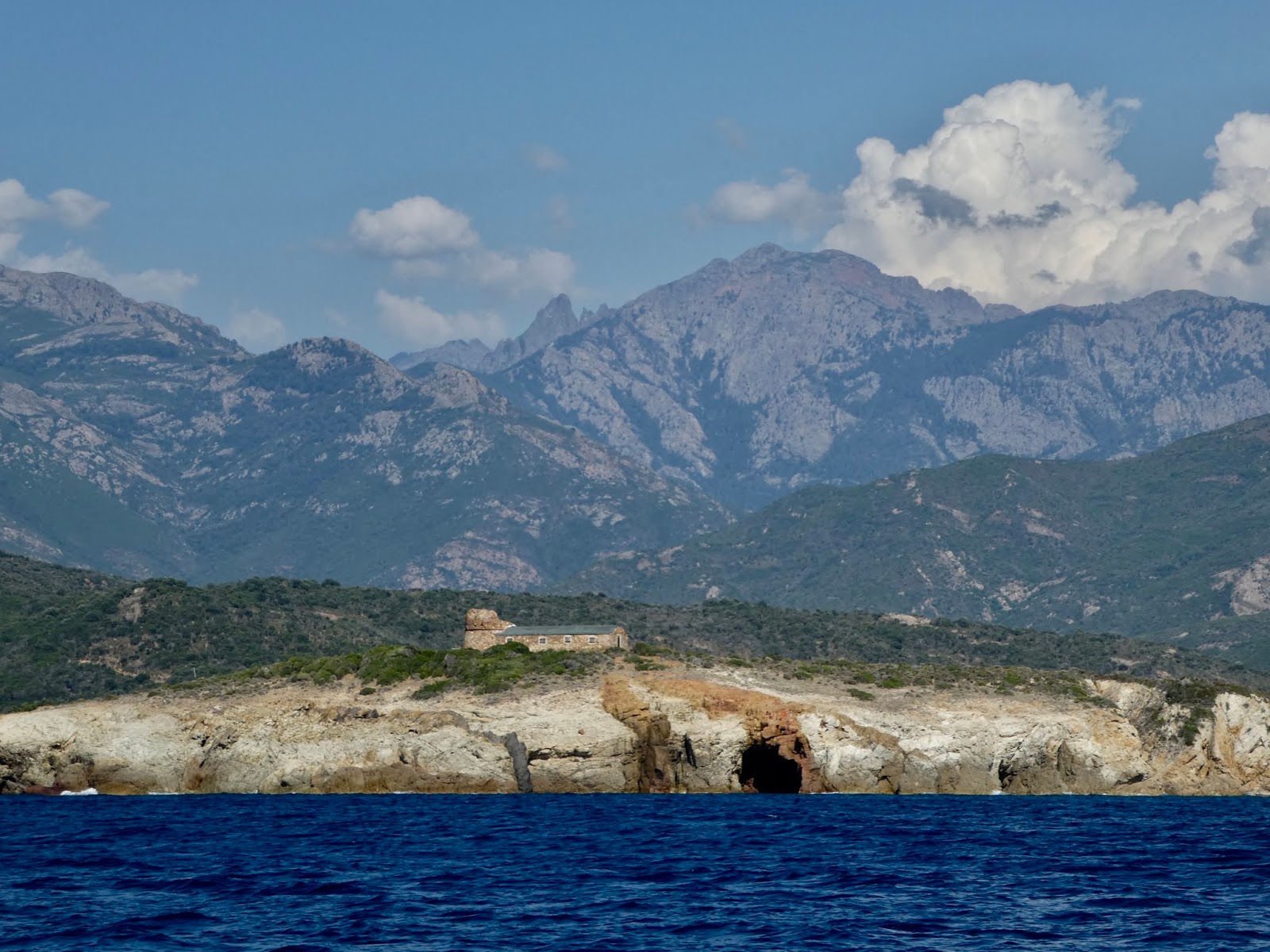
First impression – Corsica is a mass of mountains layered upon mountains – beautiful and largely untamed.

We initially chose an anchorage off Ile Rousse.  This anchorage is known to provide limited protection from prevailing winds.  We chose it none the less as all weather reports indicated winds would be mild and from a direction protected by the anchorage.

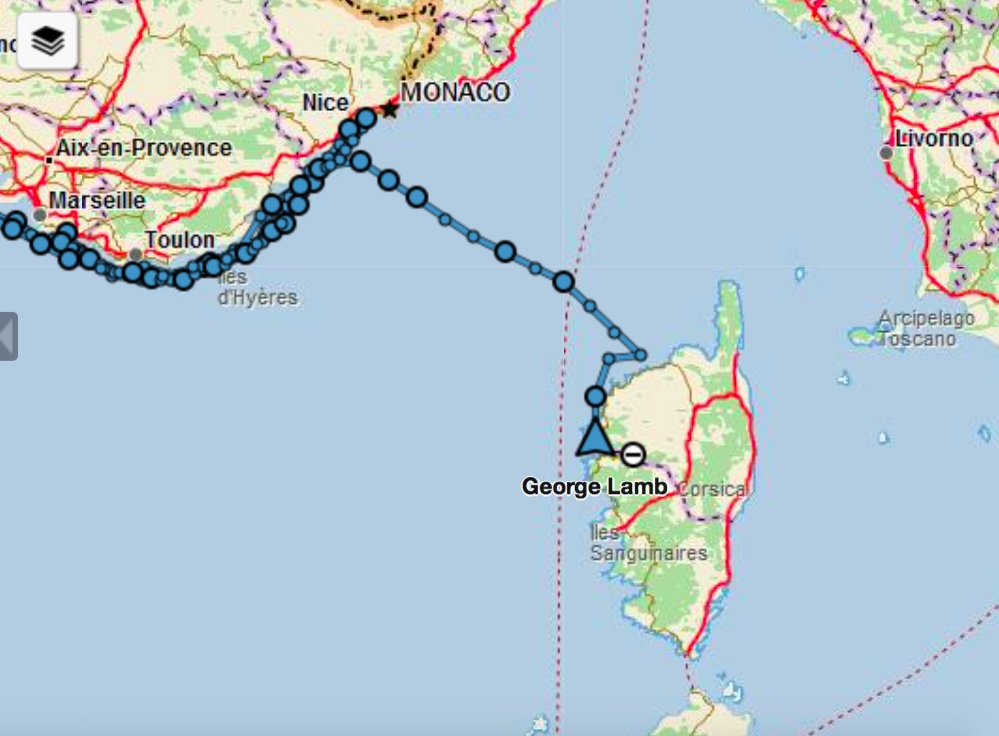
Crossing from Antibes to Corsica

We took a LONG nap and when we woke up we noticed the boat had swung around 180o – winds were still mild – for about 5 minutes.  Then suddenly, the winds picked up to 20+ knots and the boat was moving.  It is always a concern that the anchor will fail when you have strong winds dragging in the opposite direction from that which the anchor was set.  We quickly pulled anchor and headed for another (luckily nearby) anchorage.

Second first impression – winds and weather reports for Corsica are just as reliable as on the French coast.  Best to make decisions, when possible, based on the prevailing winds rather than the predicted winds.

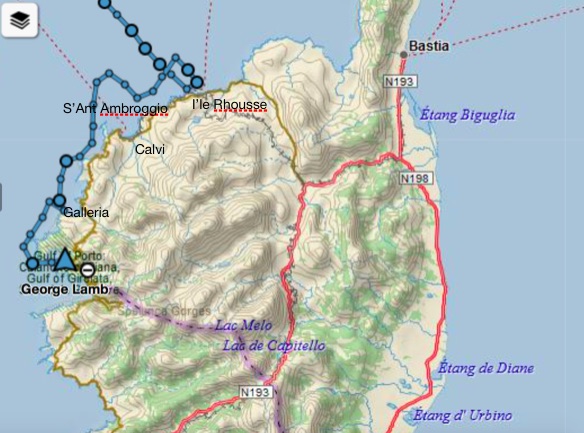
The west coast of Corsica we have visited thus-far

Sant’Ambroggio

The following morning we were on our way to a marina in Sant’Ambroggio so we could watch the final match for the World Cup – France vs Croatia.  We had seen the earlier two semi-final matches when Croatia beat England (significant jubilation all around) and when France beat Russia (town went mad for hours and hours).  For the final match we found seats at a restaurant that had a large screen TV setup outside.  We enjoyed pizza and beer while the French team won 4-2.  Sant’Ambroggio is a little town, with few year round inhabitants.  Consequently, the jubilation was not as loud as on the mainland, but it was a joy to see such national pride.  A wonderful fireworks display was put on after dark.
One of our favorite vacation rentals
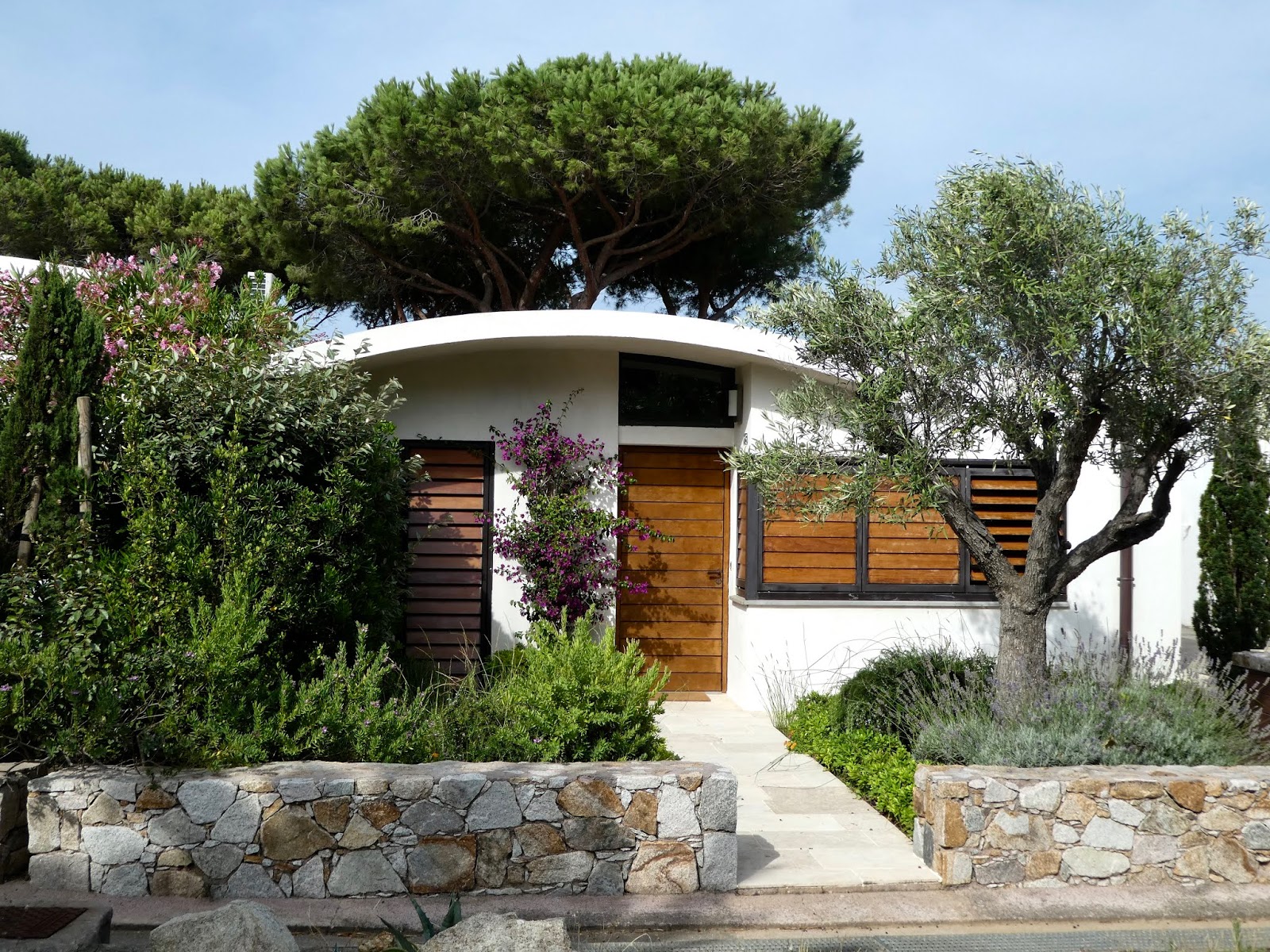
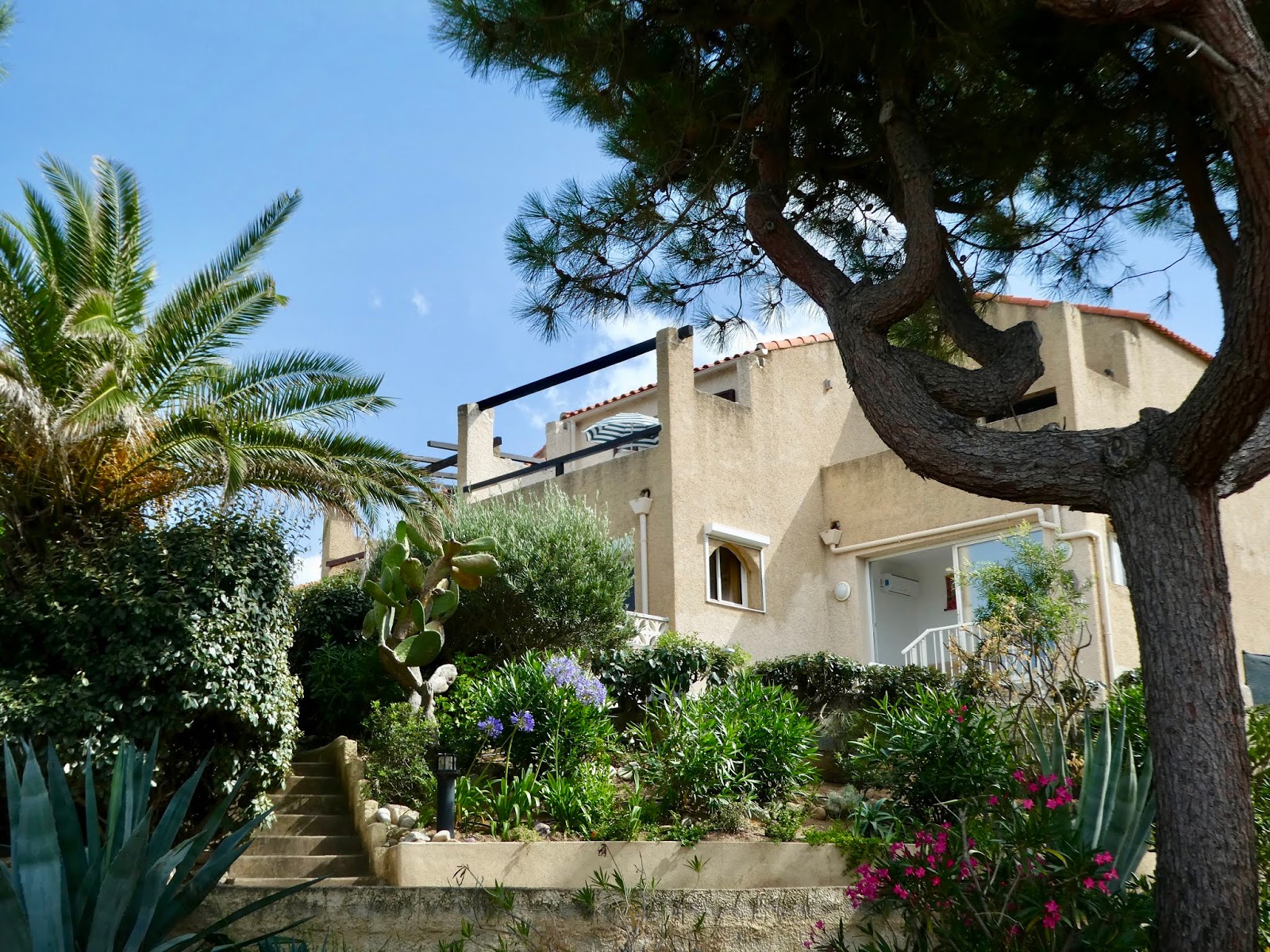
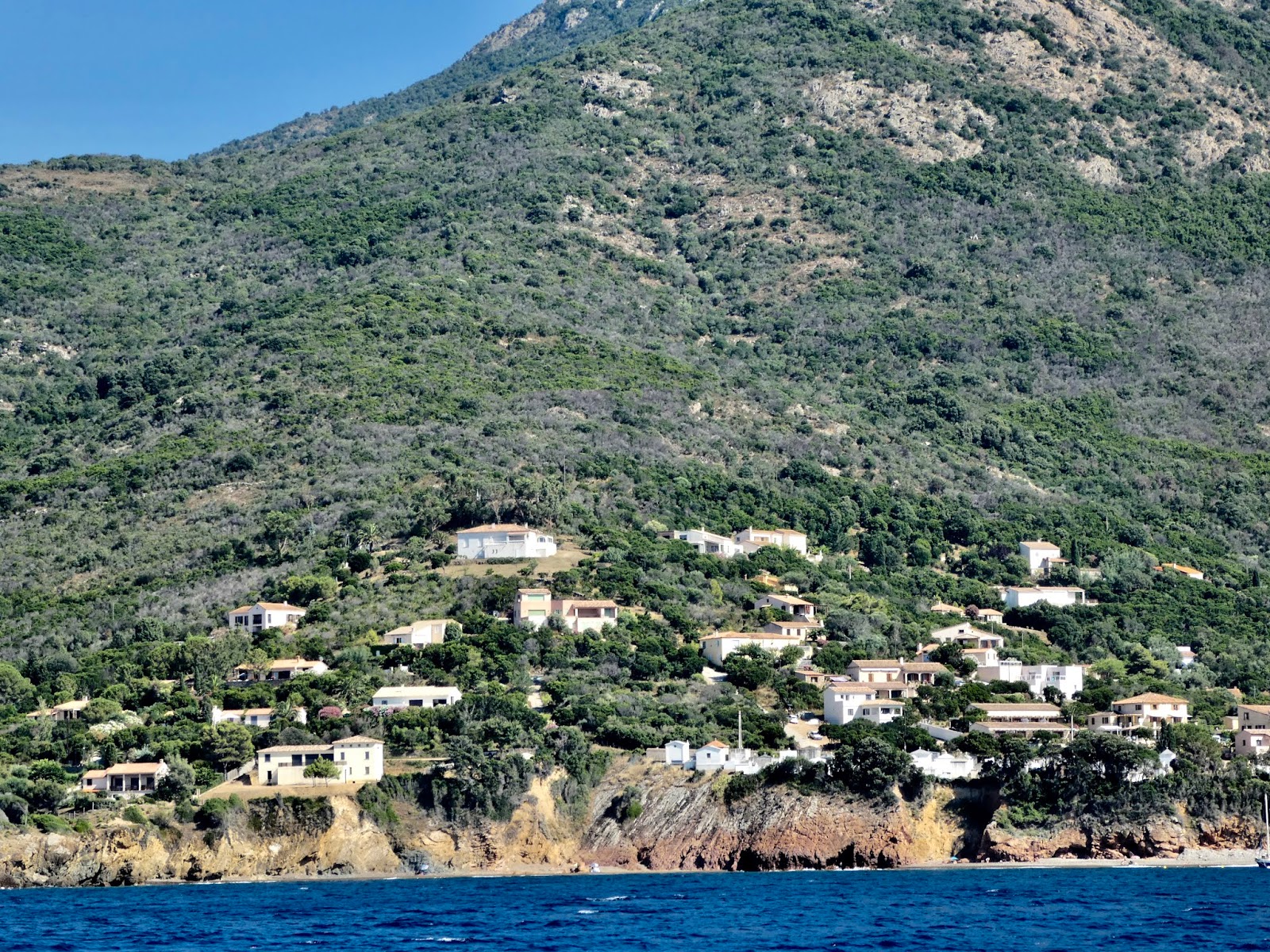
Sant’Ambroggio residences are largely vacation rental properties.  They are principally small, attractive, one or two story buildings – often a number of them are attached.

A common style of vacation rental
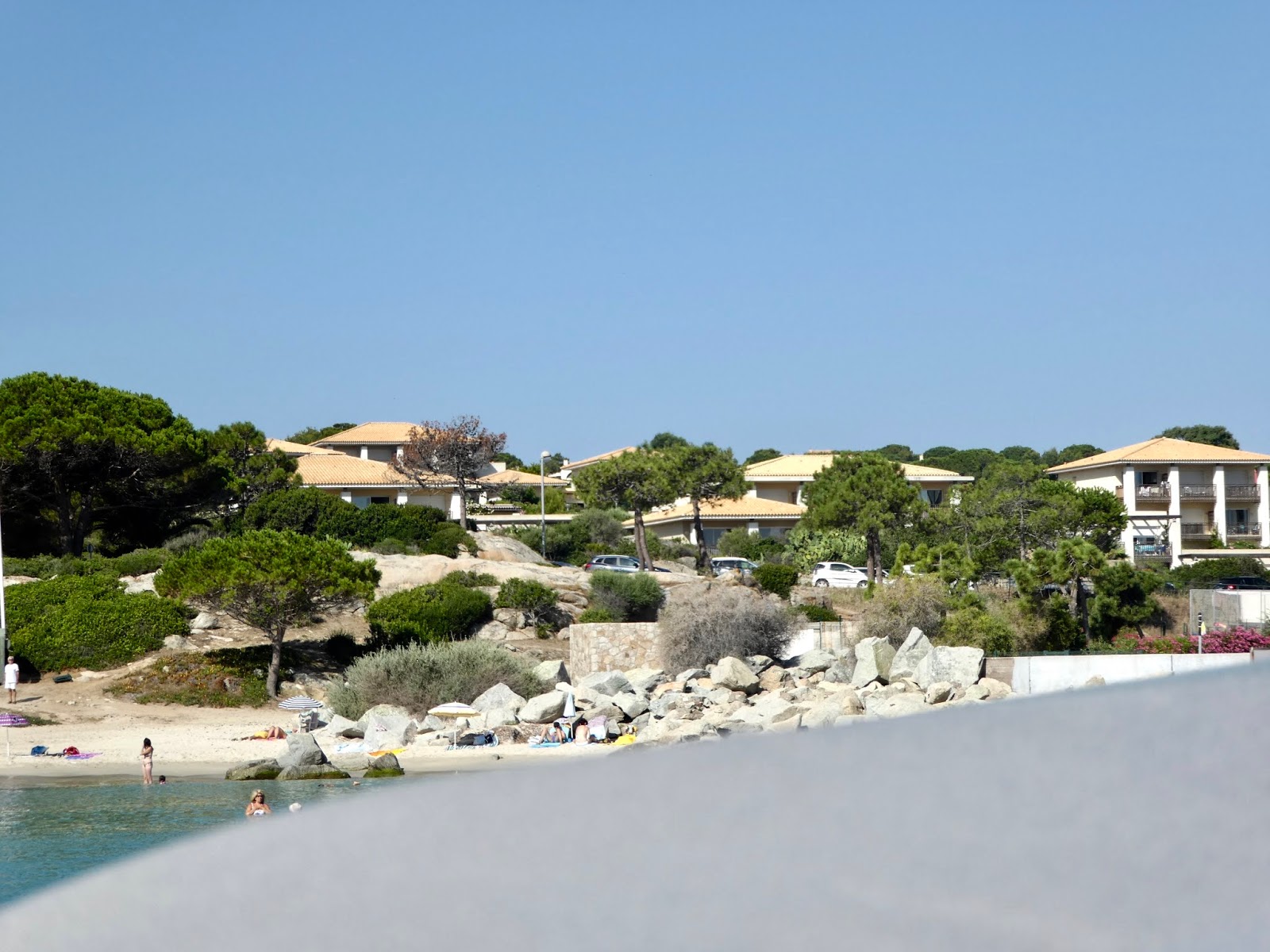
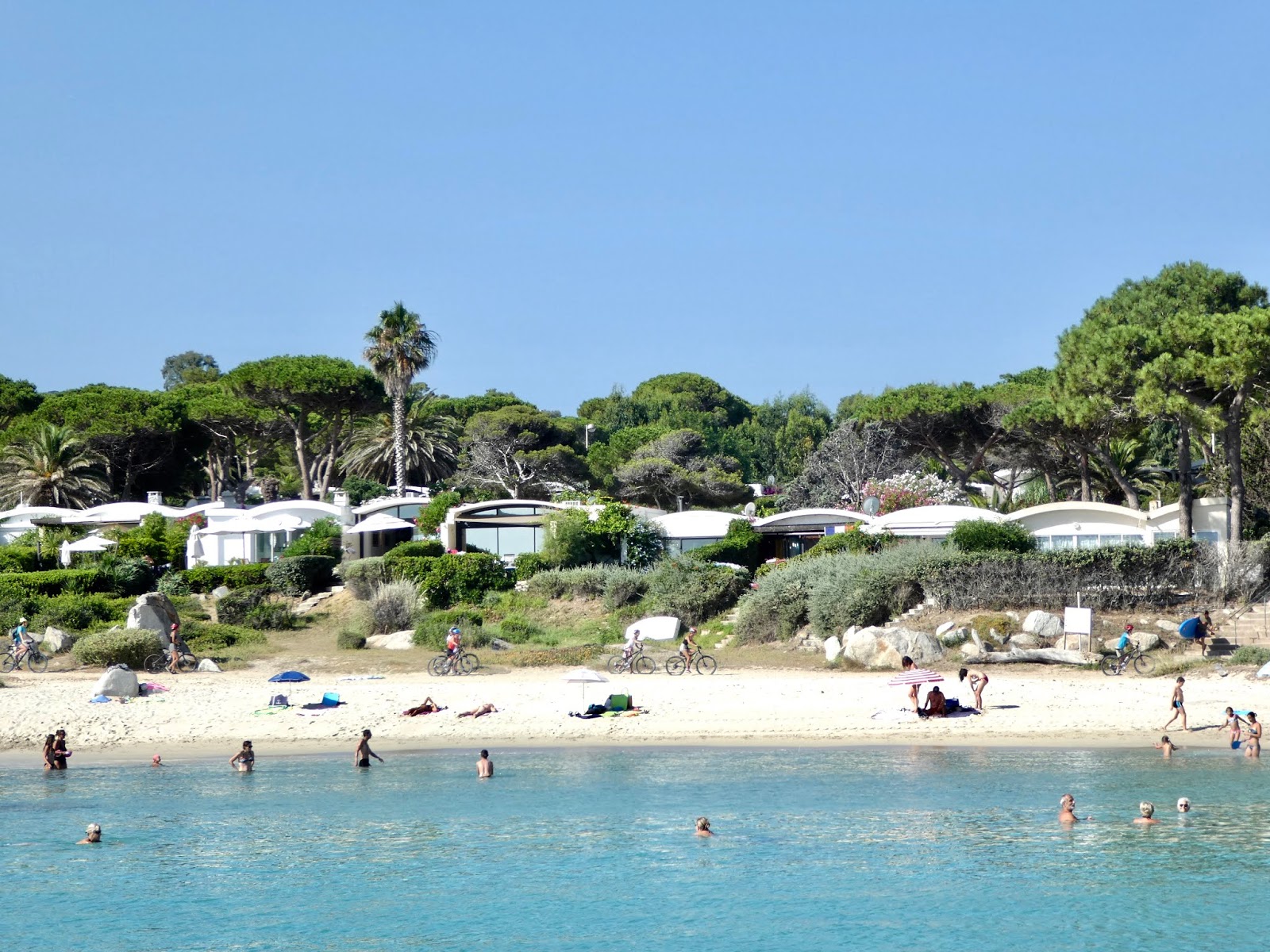
Sant’Ambroggio beach with vacation rentals behind

The seaside part of the town has a very nice sand beach, the marina, two restaurants, and a Club Med.  There is also a butcher shop (Boucherie), bakery with bread and pastries (Partisserie) and a small convenience store with limited fruits and vegetables, et. al

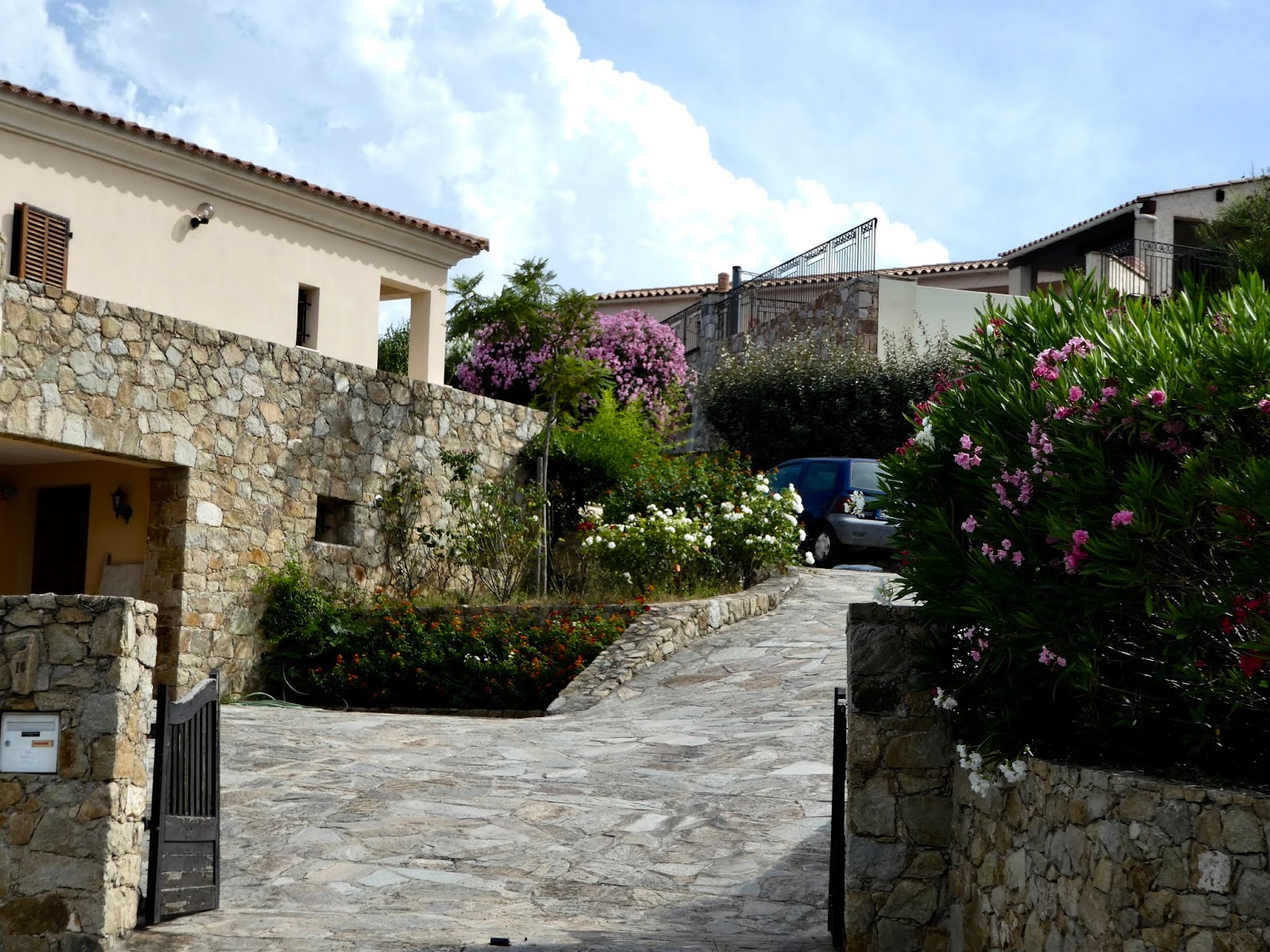
Entrance to private villa

Further inland and at a higher elevation there are some beautiful large homes, a small grocery store and the train stop where you flag down the train.  The train station was a 15 minute walk from the marina.  This provided us with transportation to visit Calvi one day and I’le Rousse the next.

Private home in Sant’Ambroggio

Calvi

Calvi, like many coastal towns with an enviable harbor, was subject to attack by vandals, as well as other governments.  In its very early history control passed between the Phoenicians, Greeks, and Romans, and later between England and France.

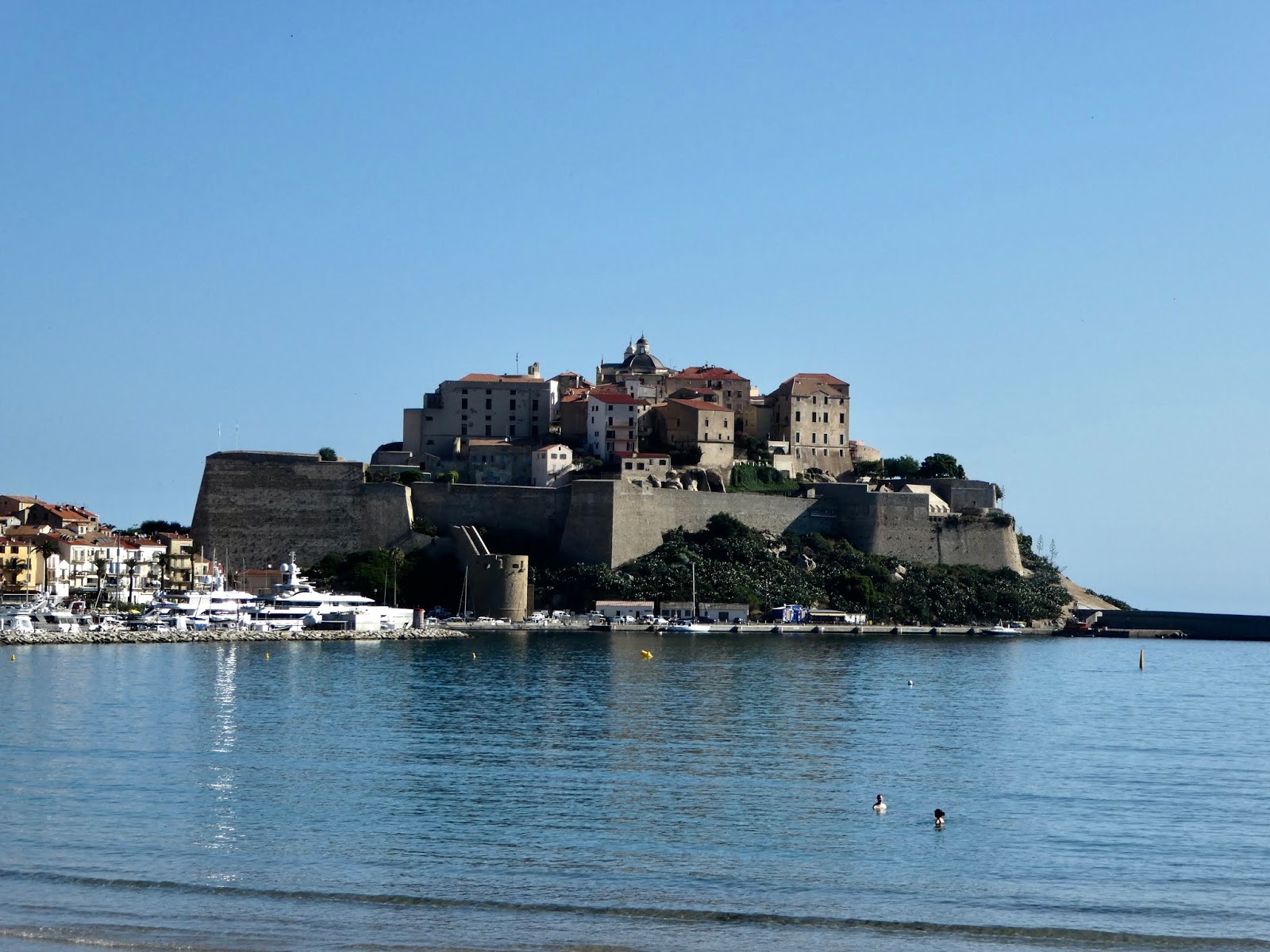
Calvi is a must see destination for anyone in the area.  It is justifiably renowned for its perfectly situated Citadel that sits high above the large town.  This fortress housed those providing governance for the city and shelter for its inhabitants in time of war or invasions.   The Citadel was built in the 13th Century and remains today, largely as it was then.

Whether you approach Calvi by boat or train, the Citadel can be seen for miles.  The fortress walls are incredibly high and the protection they afforded is evident.
Calvi Citadel

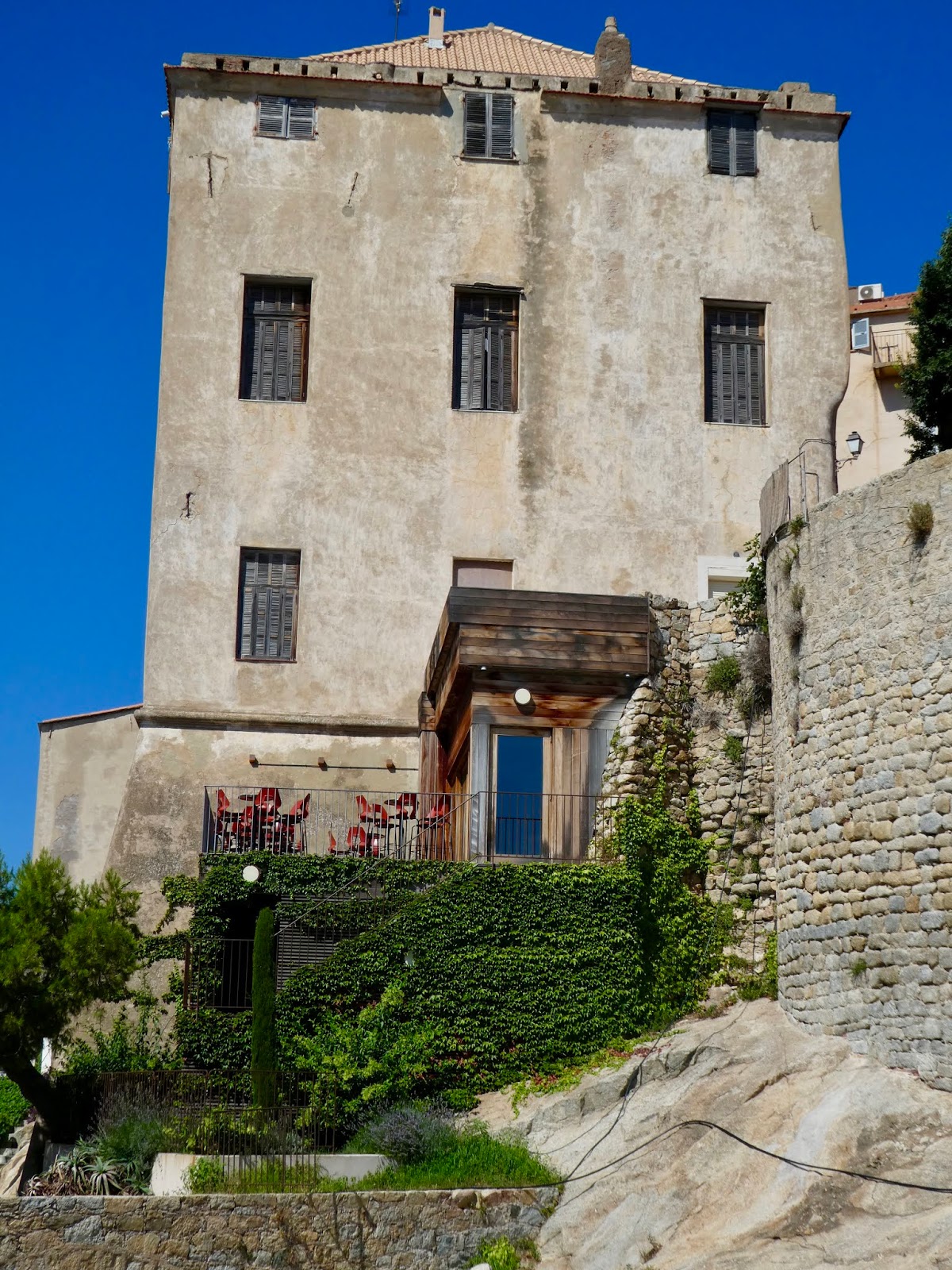
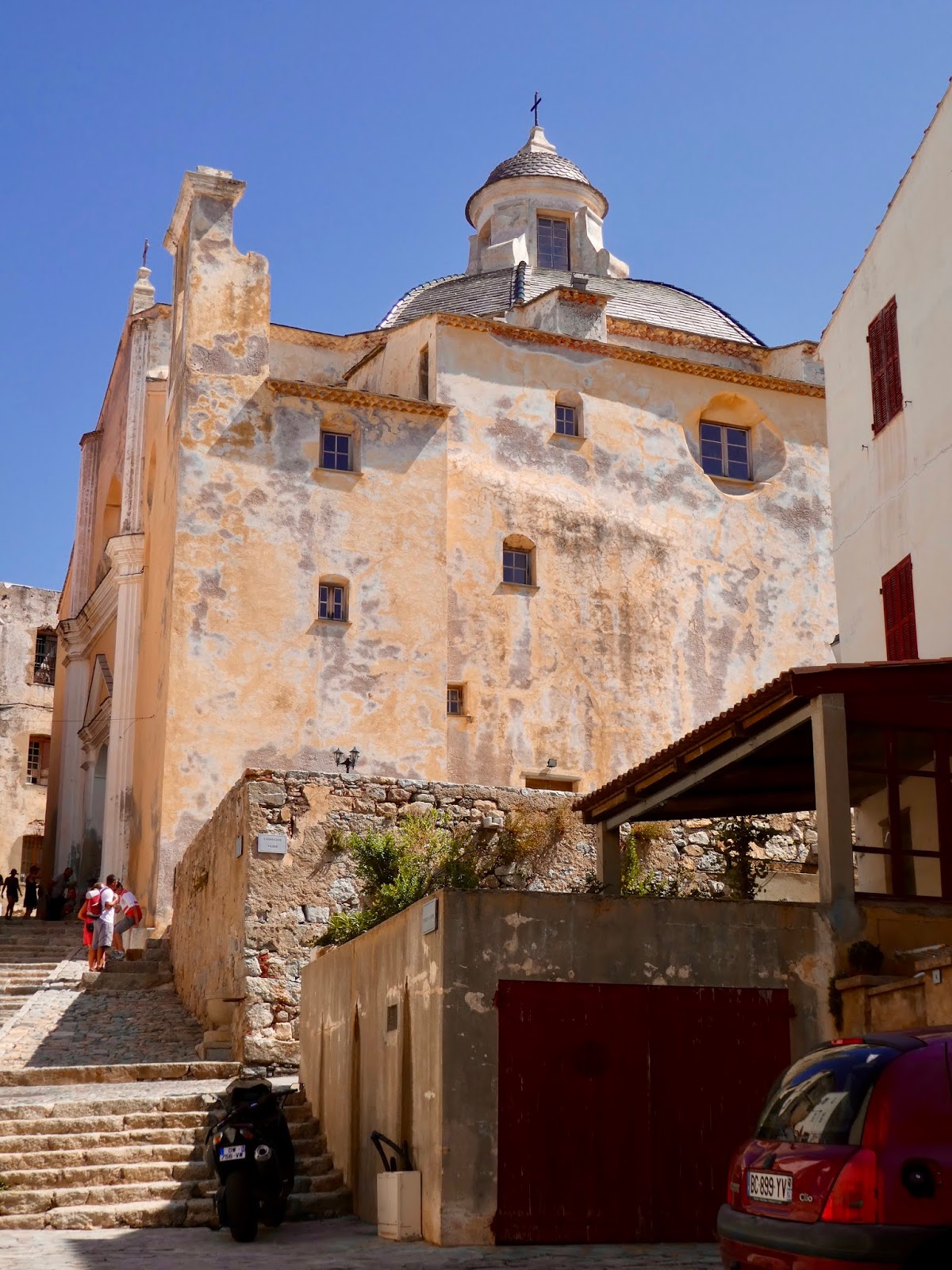
Within the walls of the Citadel, are tall buildings which we imagine once housed the more prosperous citizens, their servants, and shopkeepers.  Many of these remain residences and shops today.

There are many inviting restaurants tucked in here and there.

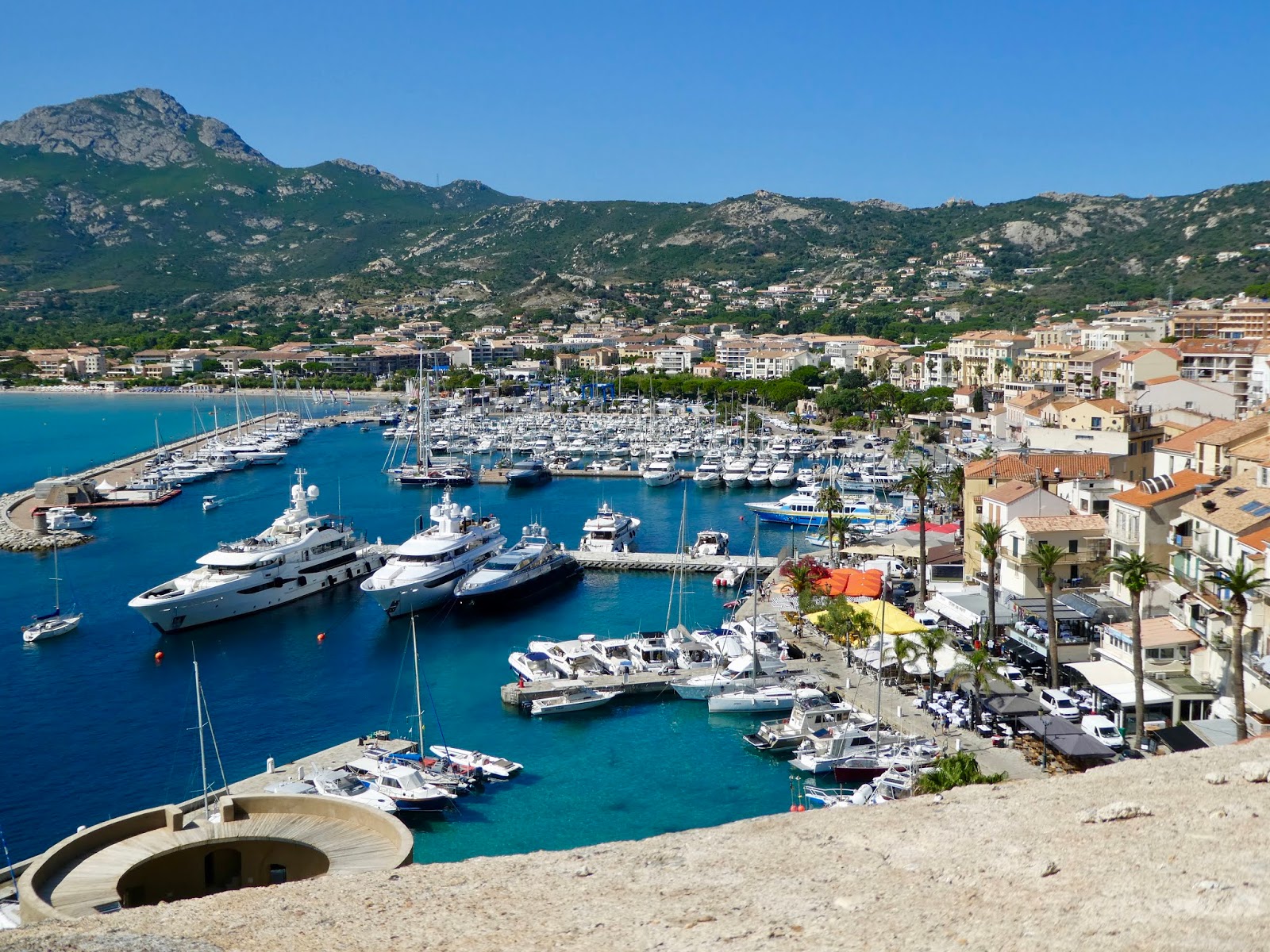
This view from within the Citadel, of the harbor and town below, provide perspective of the surrounding area the Citadel was built to protect.

View of marina and harbor from the Citadel
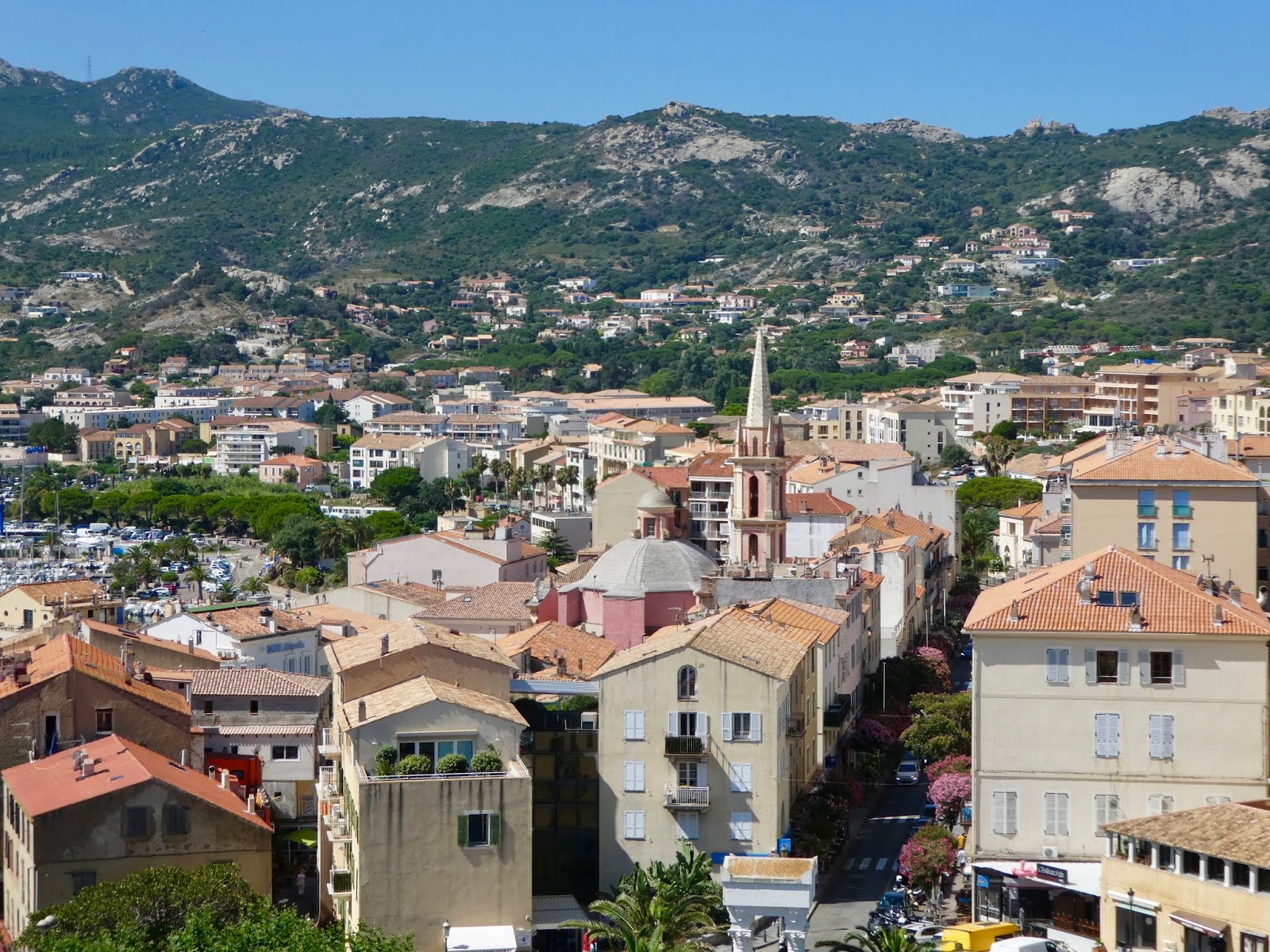
View of Calvi from the Citadel
Tribute to Christopher Columbus

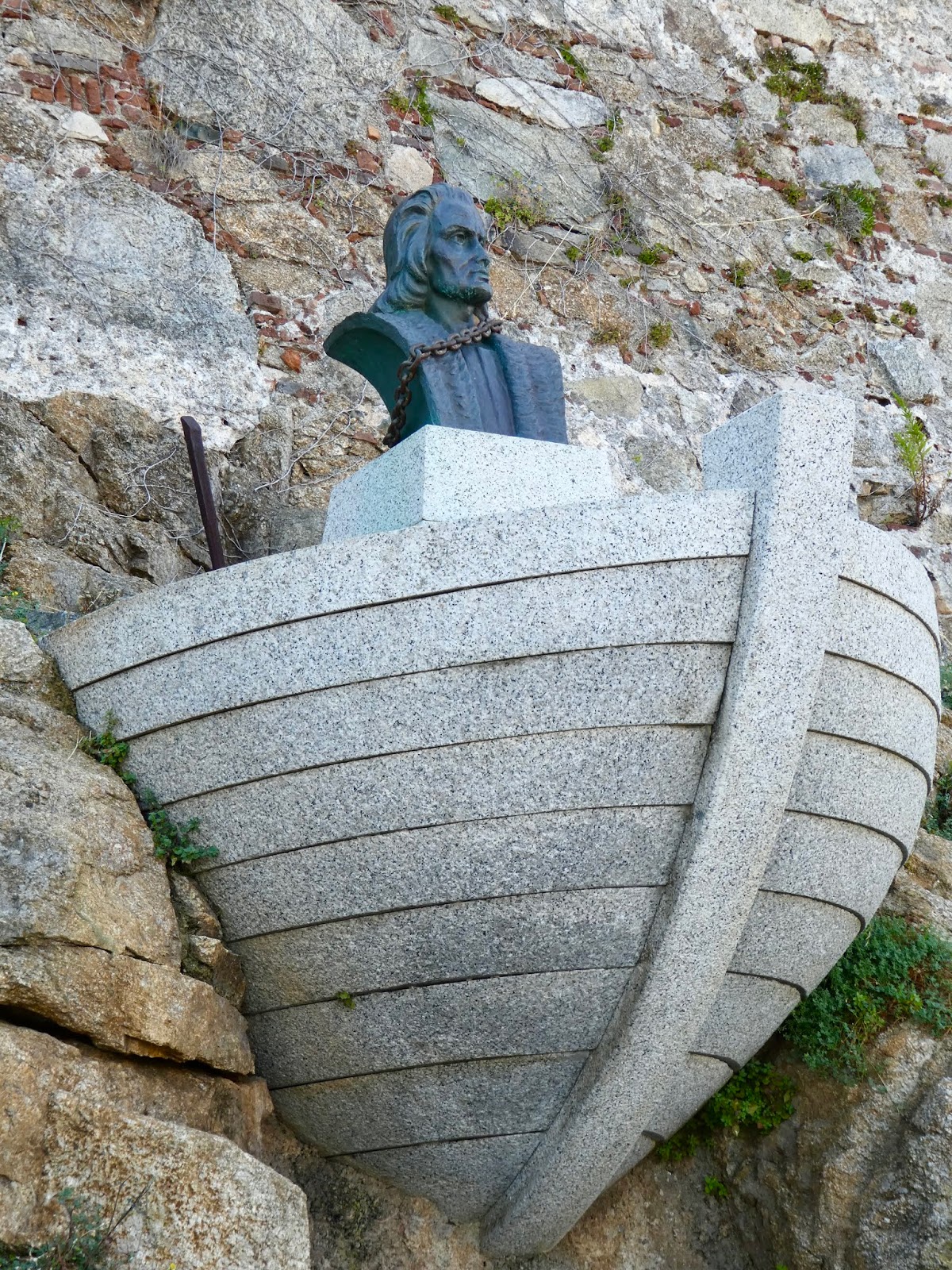
The town outside of the Citadel has much to offer in its beauty, history, and culture, as well.  There is argument to be made that Calvi was the birthplace of Christopher Columbus, although the academic consensus is he was Genoese.  If so, his birthplace was not on Corsica, but in an area that in turn became part of Italy as we know it today.

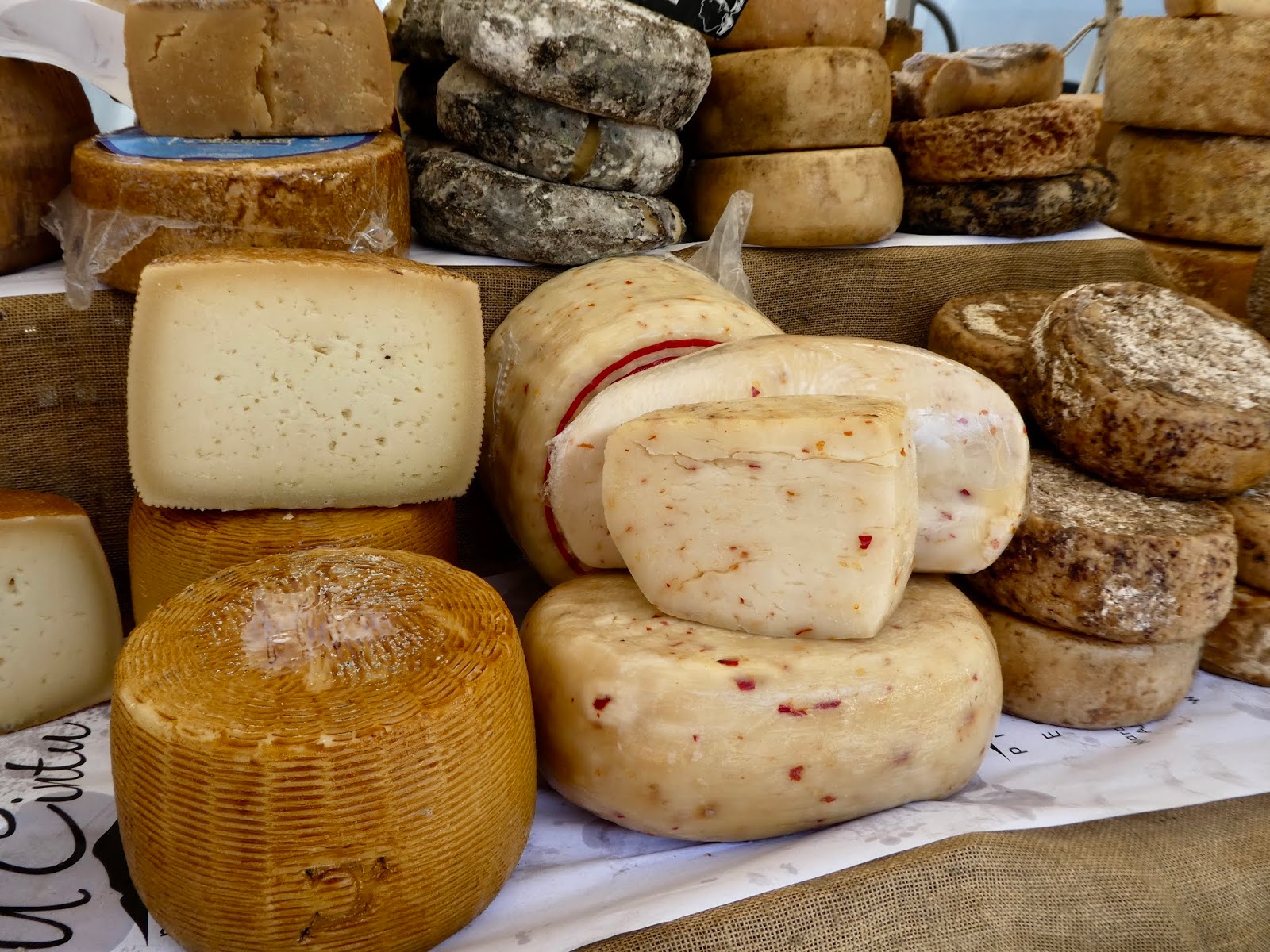
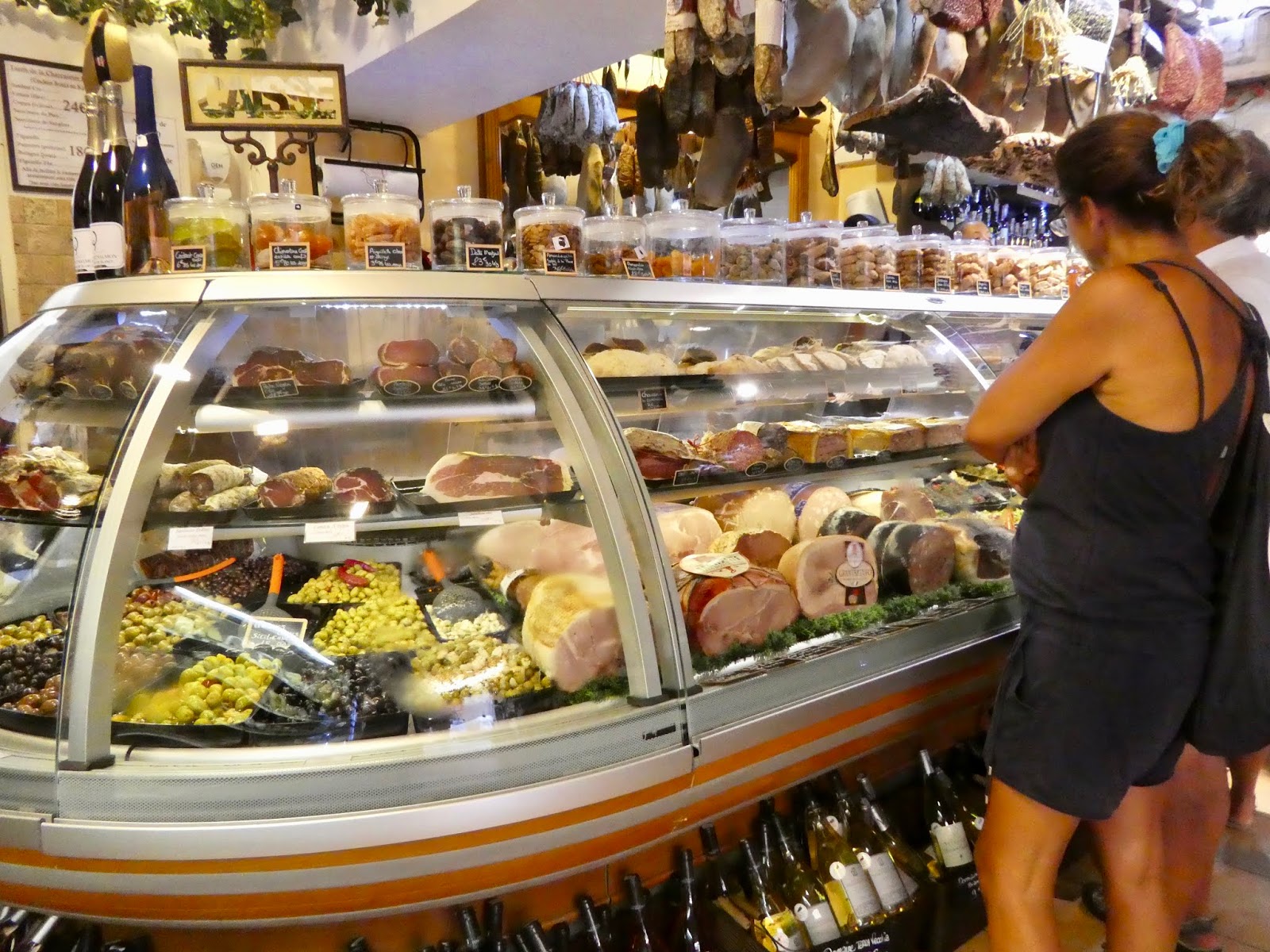
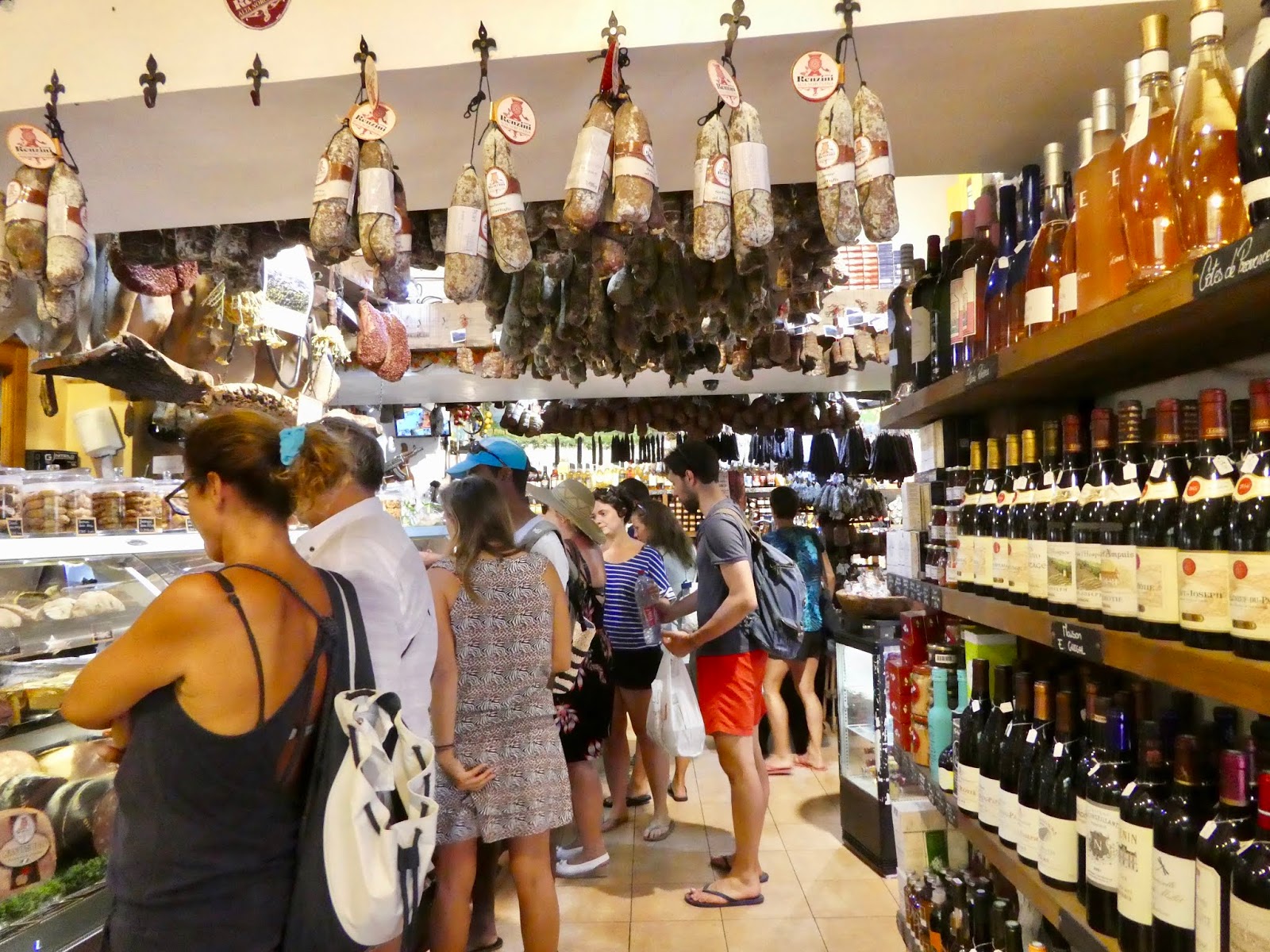
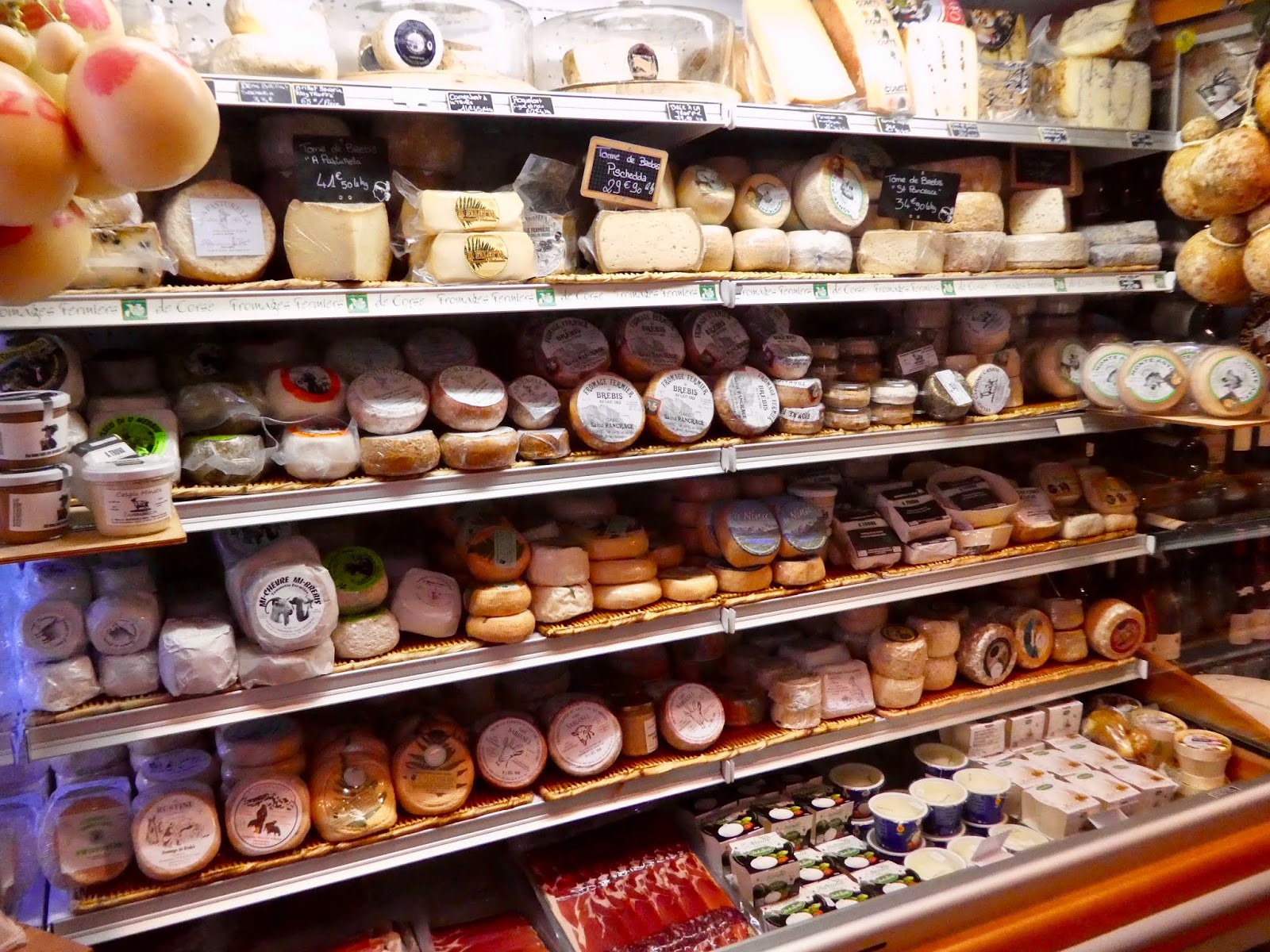
Our first serious introduction to the cuisine of Corsica was in Calvi.  It was love at first bite.  The cheeses and hams are unique to Corsica and reflect the diversity of cultures that coexist on this island.

Ile Rousse

Our train ride to Ile Rousse was timed to shop at their open market.  Once again, we found distinct differences between the market in Ile Rousse and those we had frequented on France’s mainland.
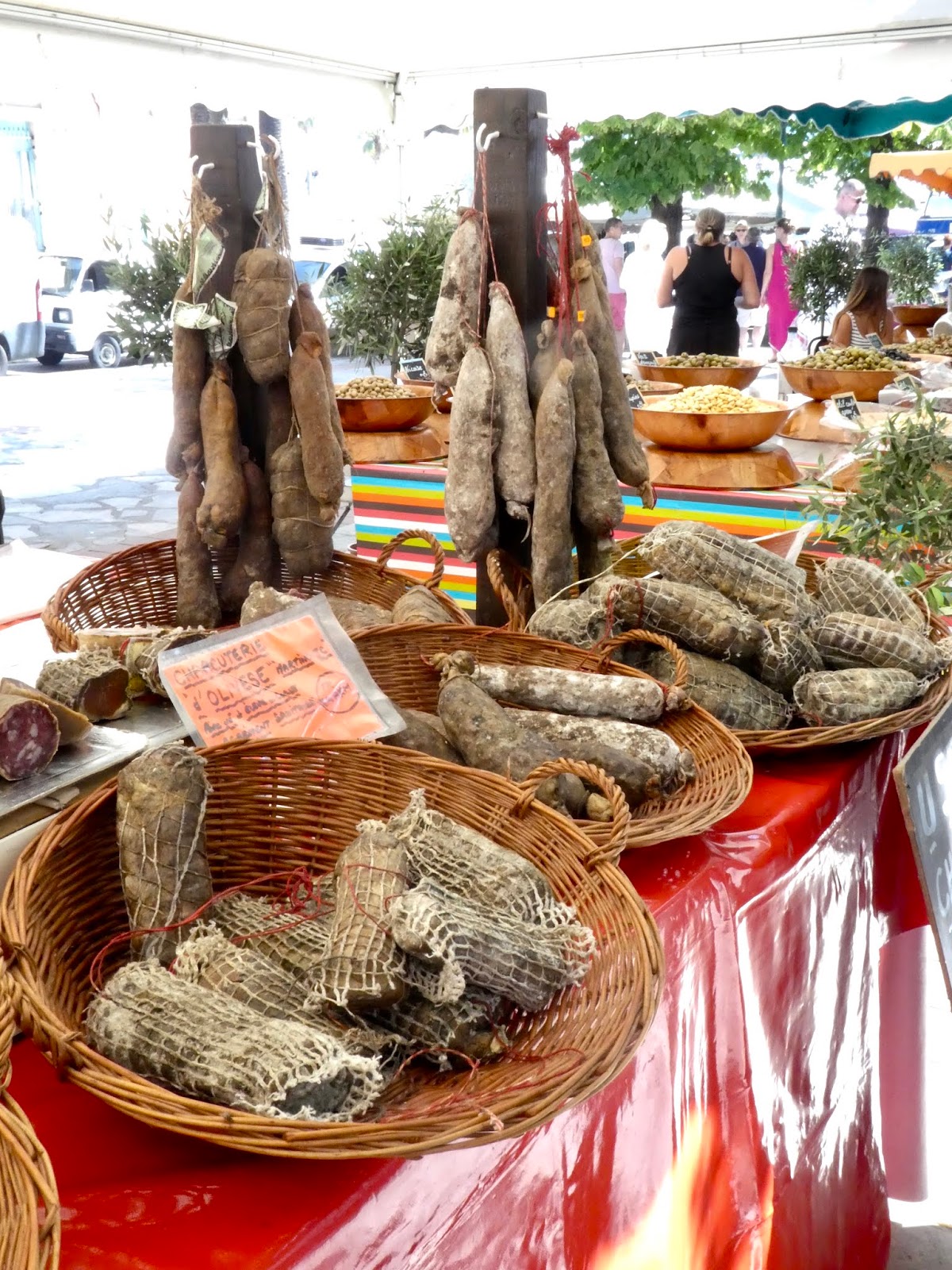
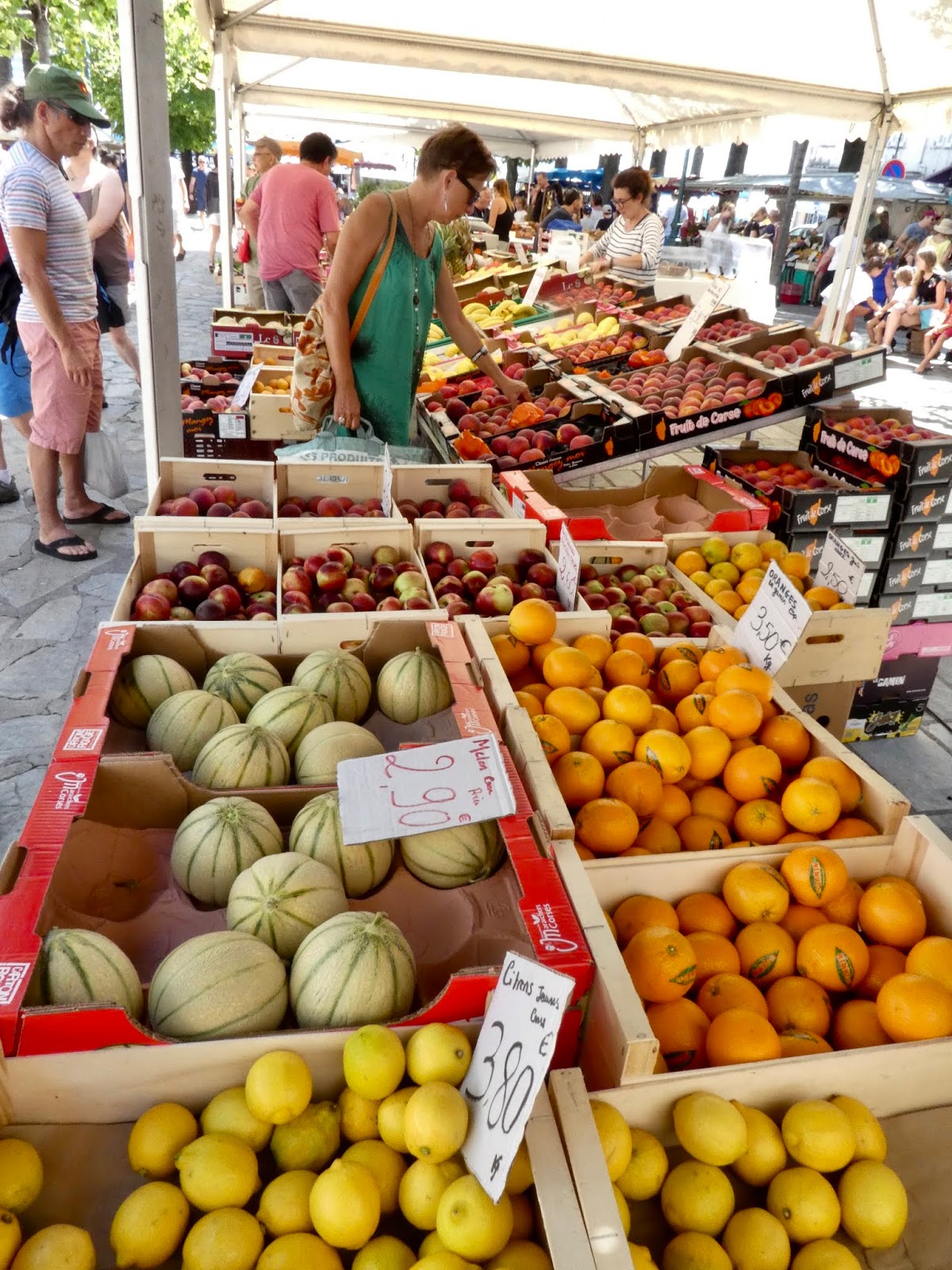
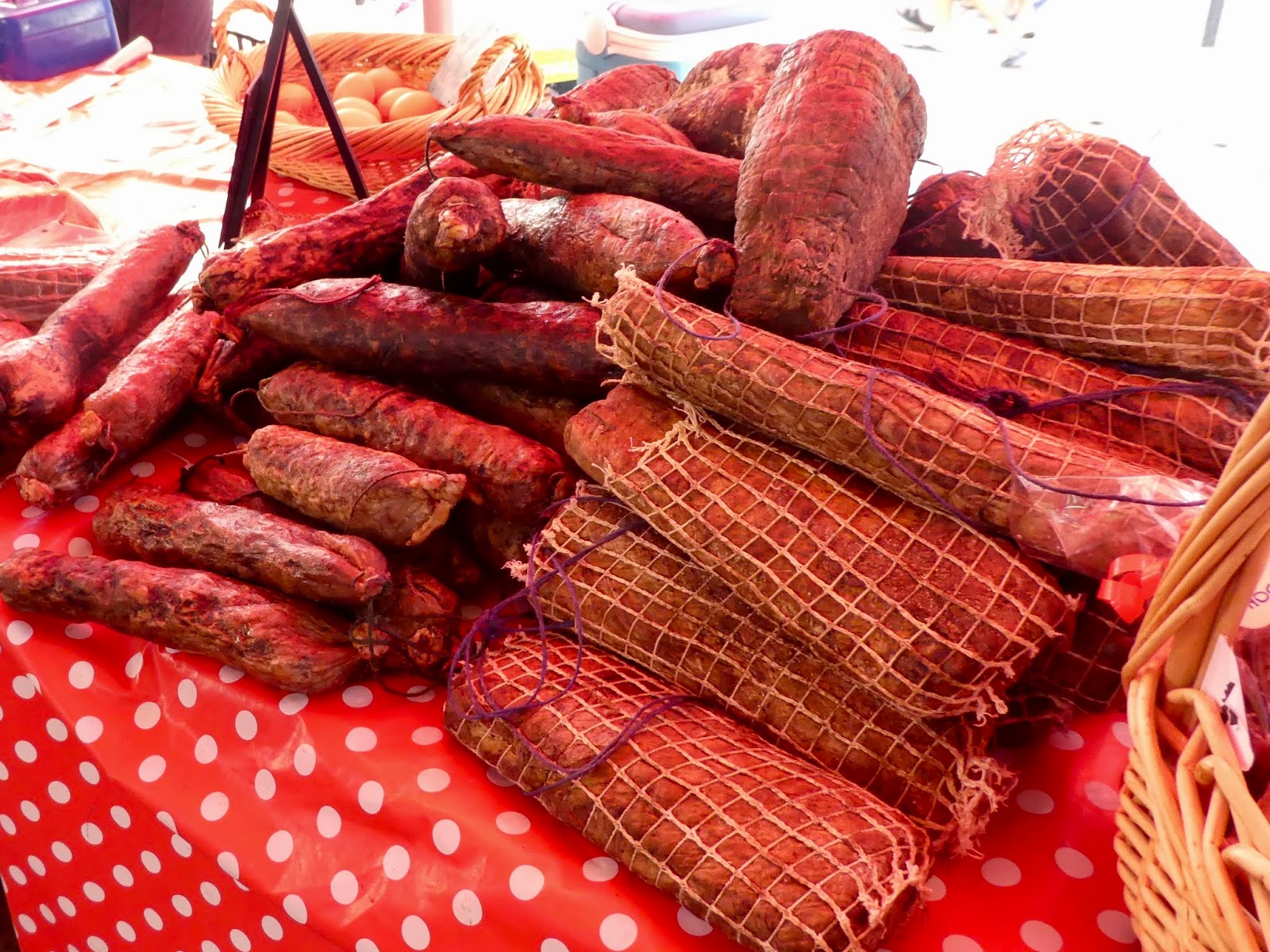
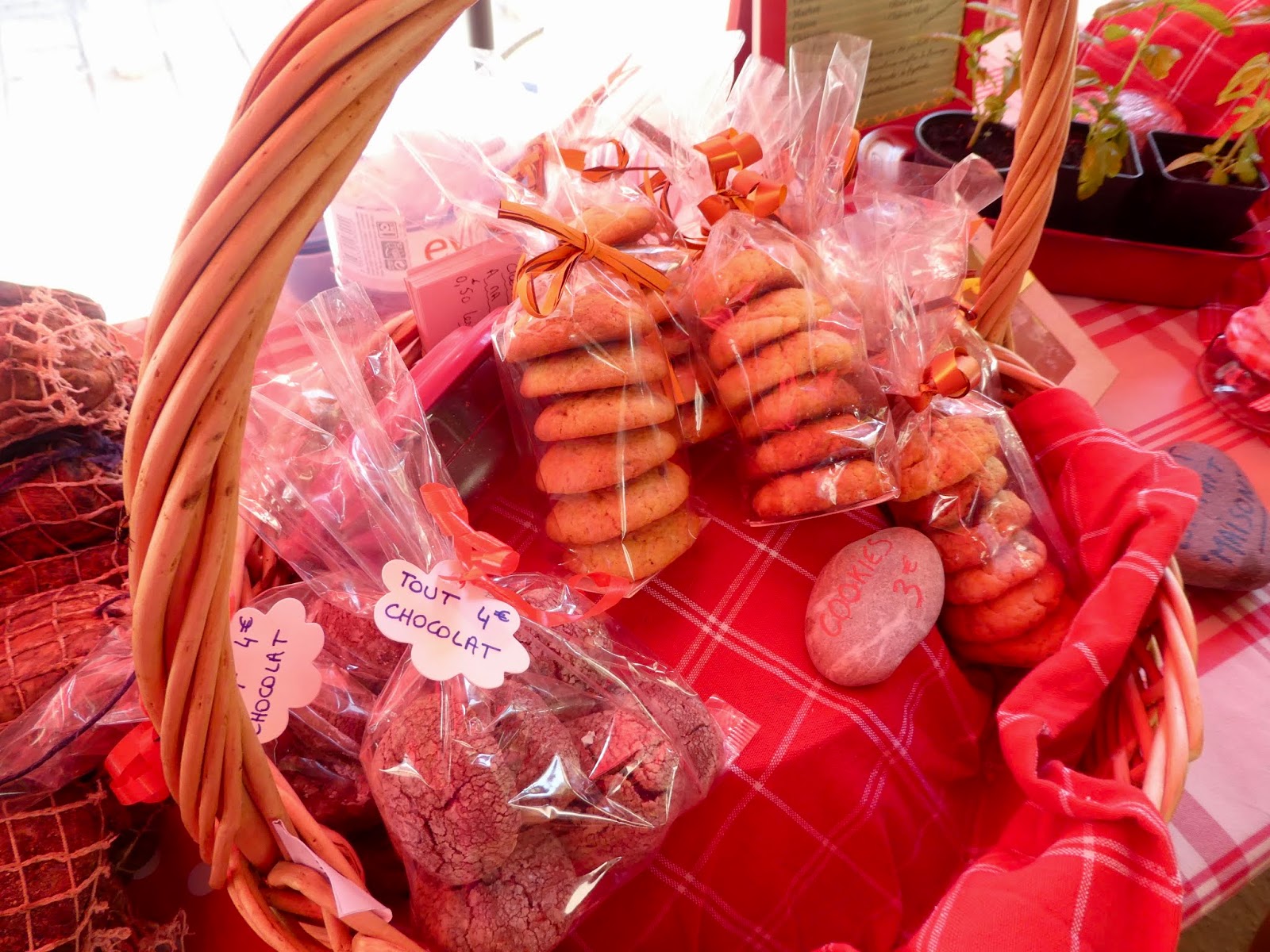
Most markets in France had an abundance of vendors selling local vegetables and fruits.  One very nice fruit and vegetable stand was in the market in I’le Rousse, but many more stands were devoted to sausages!!  In addition, there were many small cakes and cookies.  Fresh baked cakes and cookies are not prevalent in French supermarkets, bakeries, or markets.  We have not been deprived, mind you, as the supermarket packaged cookies, most of which feature chocolate, are none too shabby.
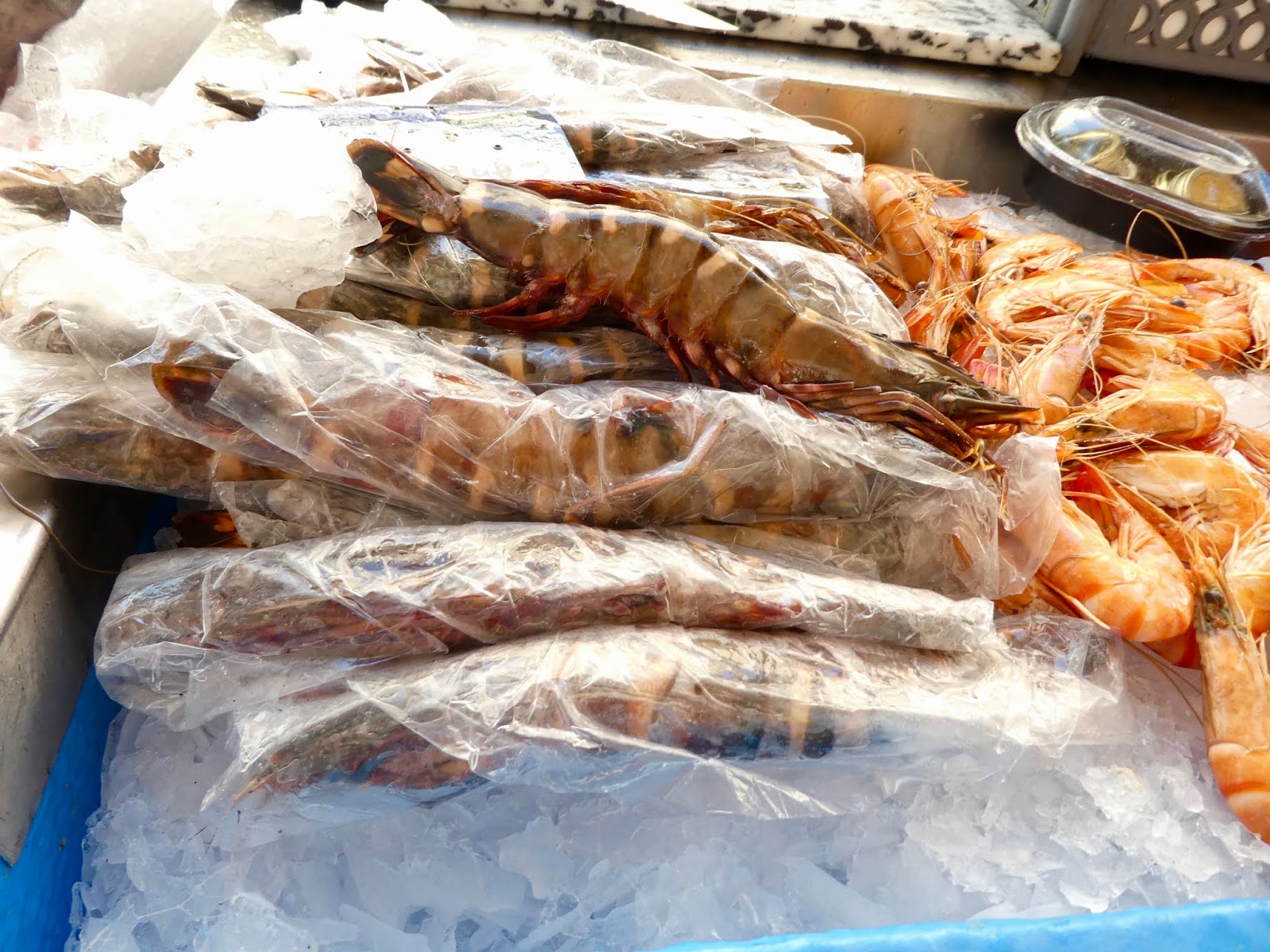
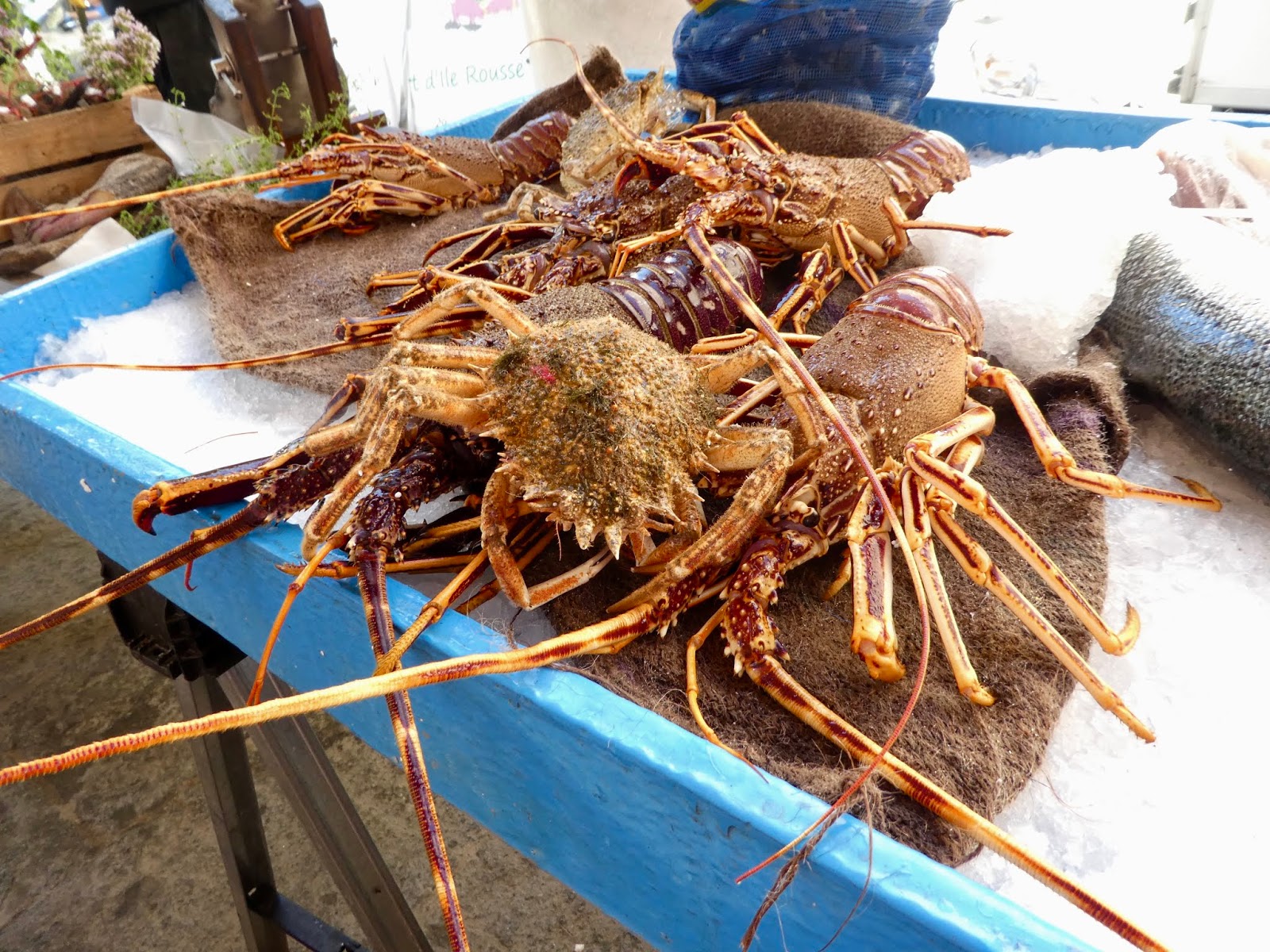
The seafood vendors at the Ile Rousse market also offered lobsters. crabs, and enormous shrimp – at exorbitant prices – items we had not seen in mainland, France markets.  To give you an idea of price – the lobsters were 60 euro per kg.  That is well over $30 (US) per lb.
Uniquely different and equally delicious dried sausages and hams
Cookies featuring orange, lemon, chocolate and fig (we chose fig – Yum)
We should have put a coin next to this huge shrimp – just figure the ones on the right were very large shrimp
George has a new job – snorkeling for lobster – he bagged a couple of beauties in the Bahamas so why not in Corsica??

Galleria

Our familiarity with Galleria is only from offshore as we anchored in a beautiful inlet there.

One of many stunning anchorages we have enjoyed (Galleria)
Galleria, Corsica

Girolata

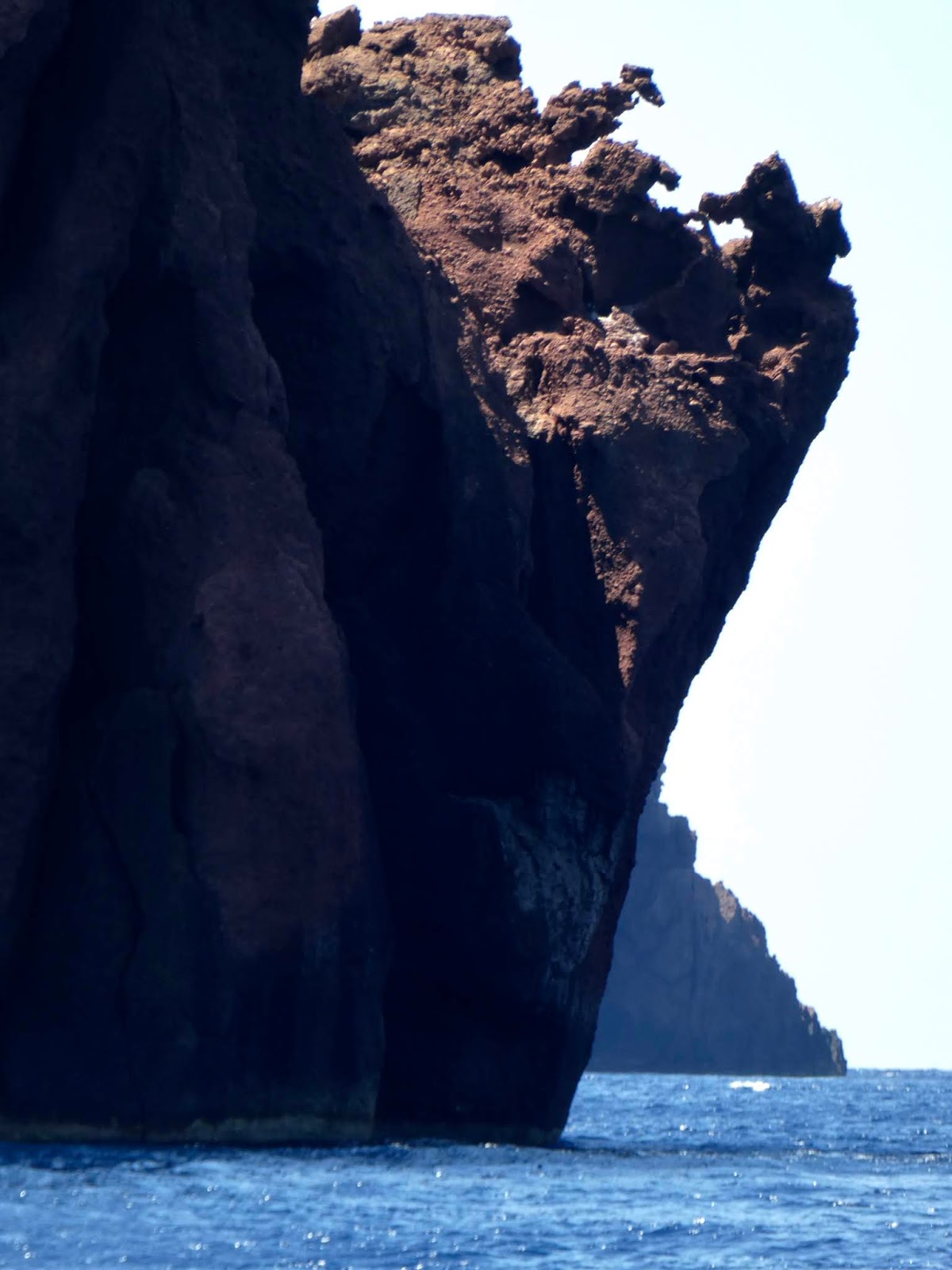
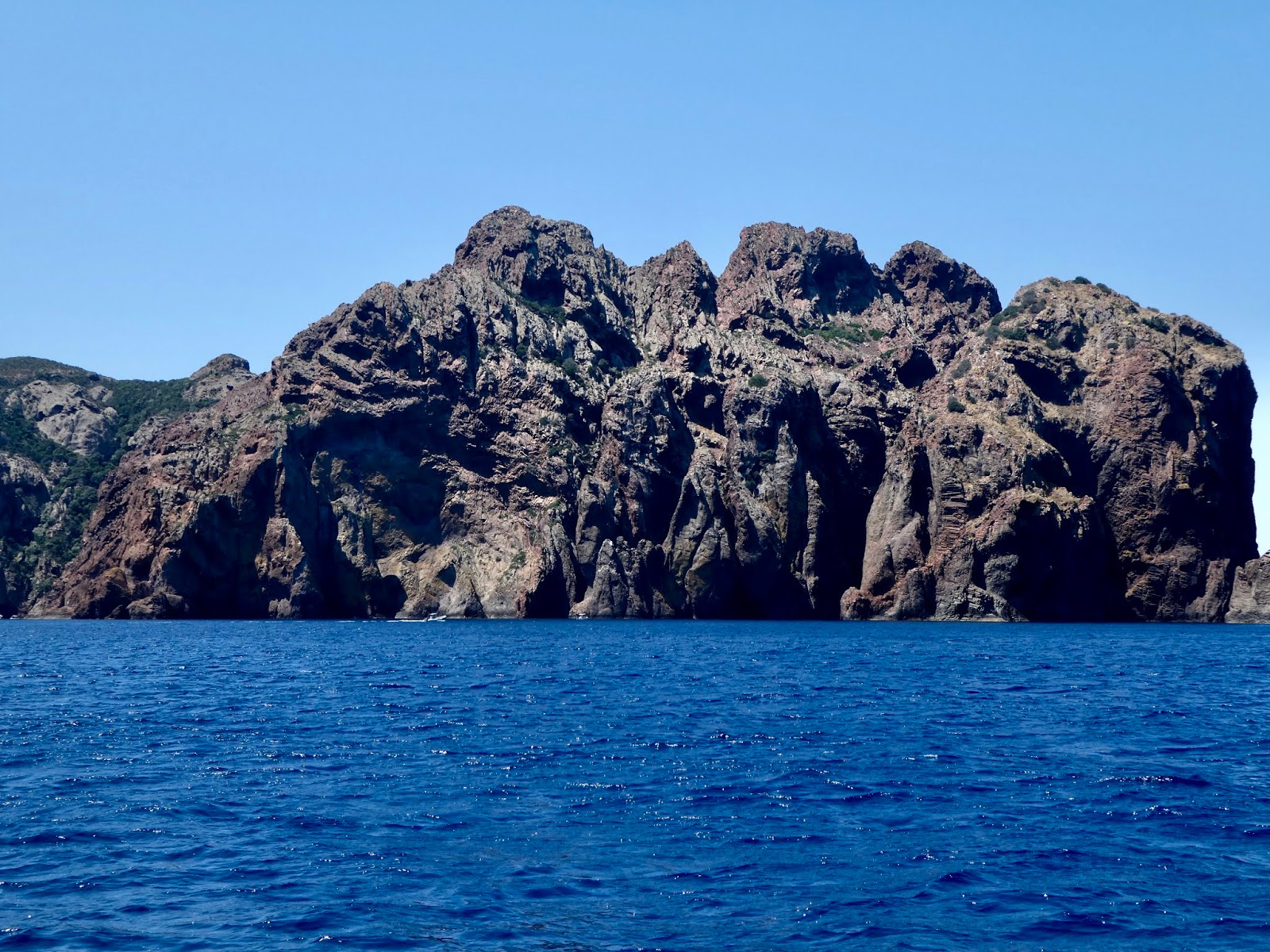
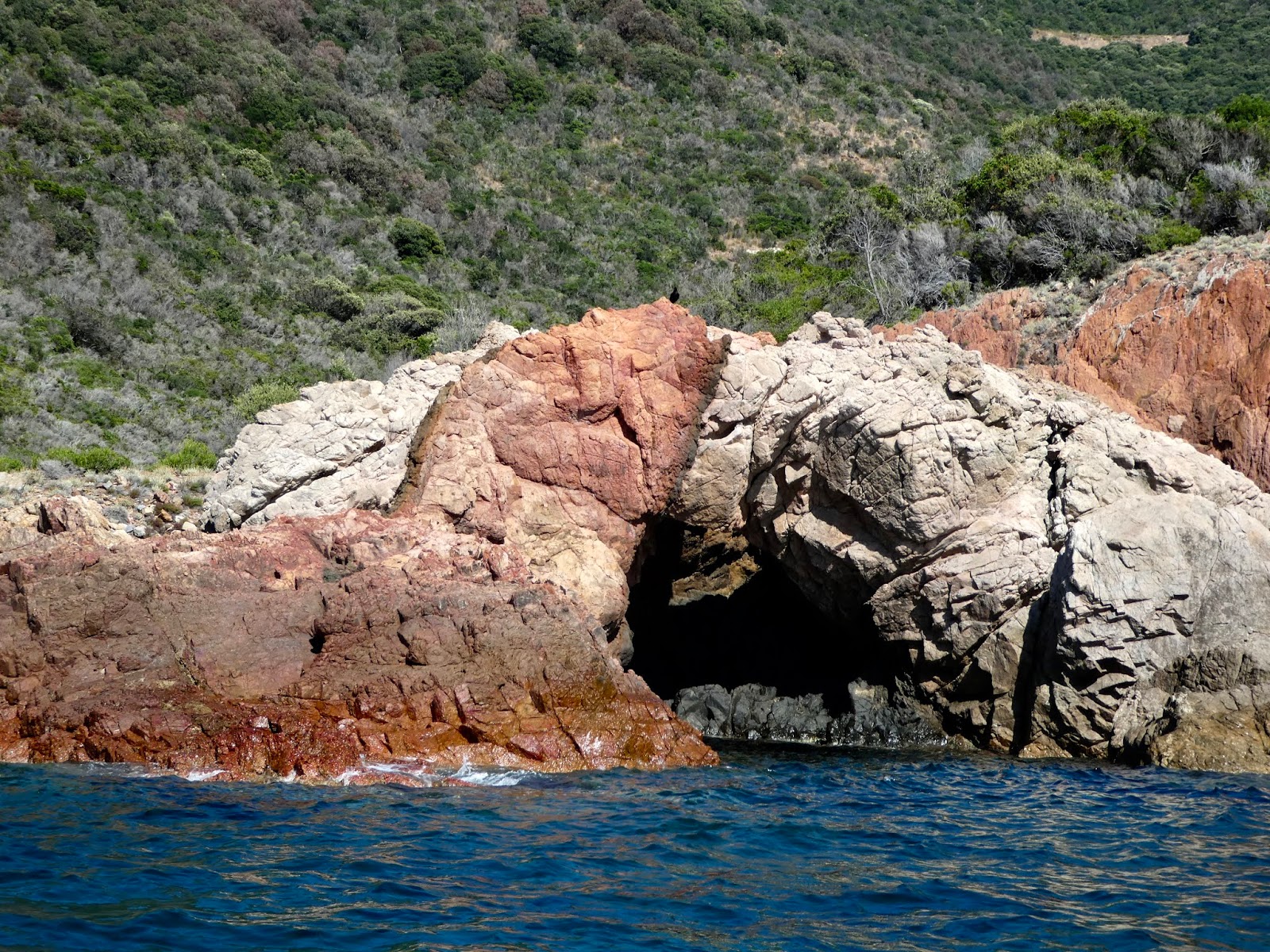
The rugged landscape changed by the hour as we sailed south along the west coast of Corsica to Girolata.

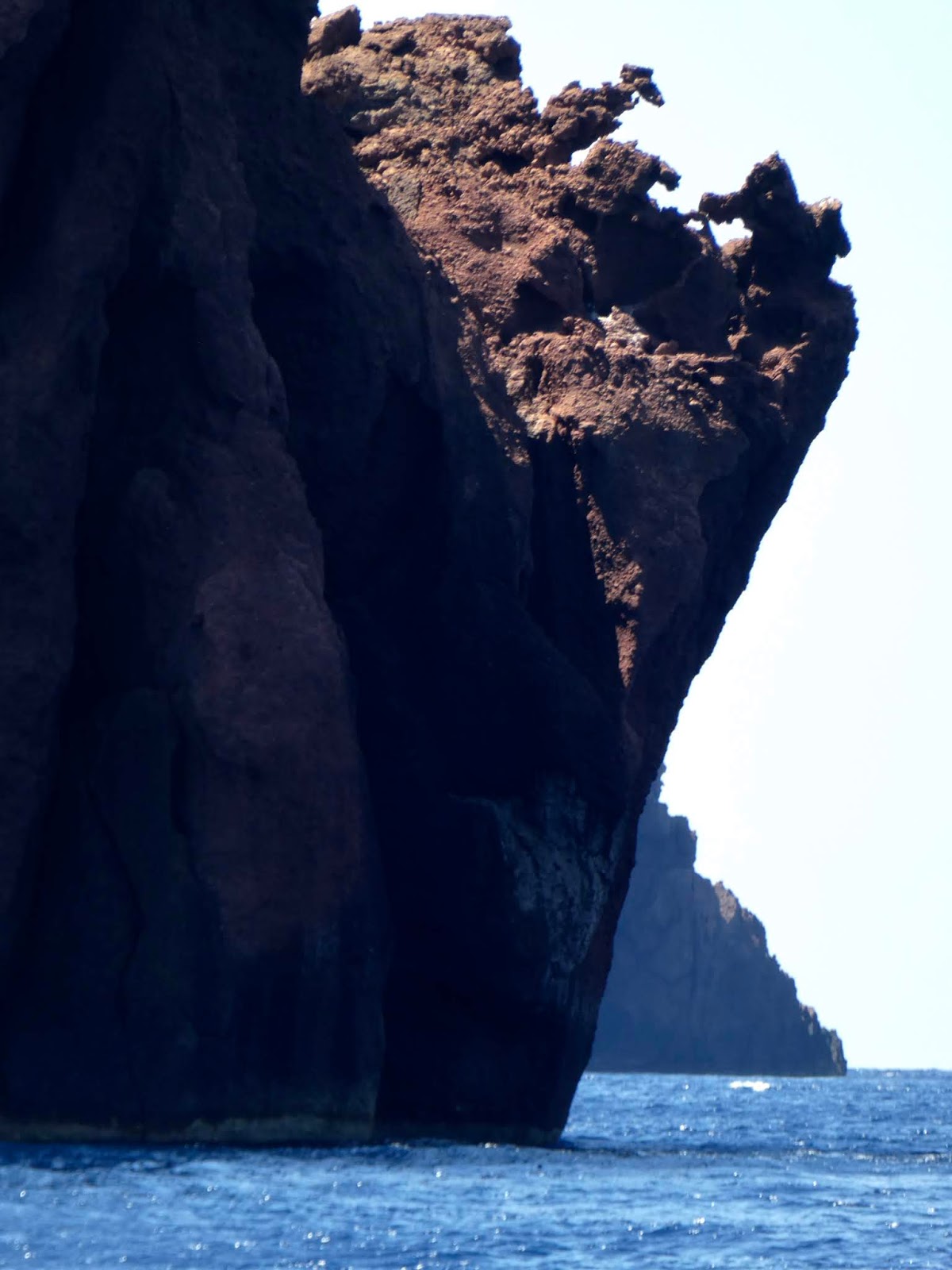
I see a dinosaur and a duck.  What do you see?

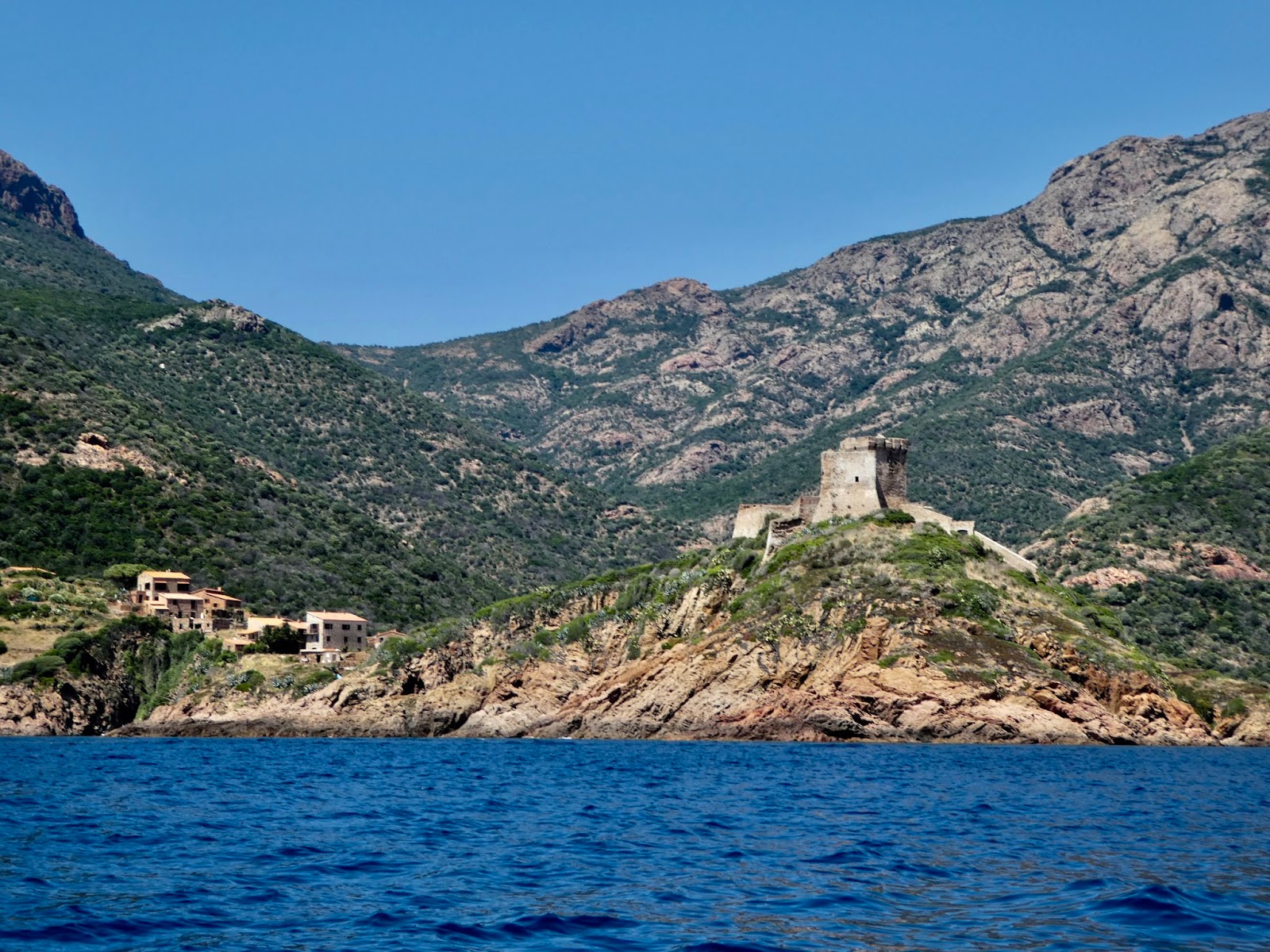
We arrived at the Gulf of Girolata towards the end of the day and anchored just south of the town, went for a swim, had dinner and headed to bed.  We rose the next morning to go and explore this truly unique village.  The village was estimated as having 108 residents in 2008 (most recent information I could find).  It has electricity but no road access.

The village of Girolata is nestled beside the Genoese Fortress

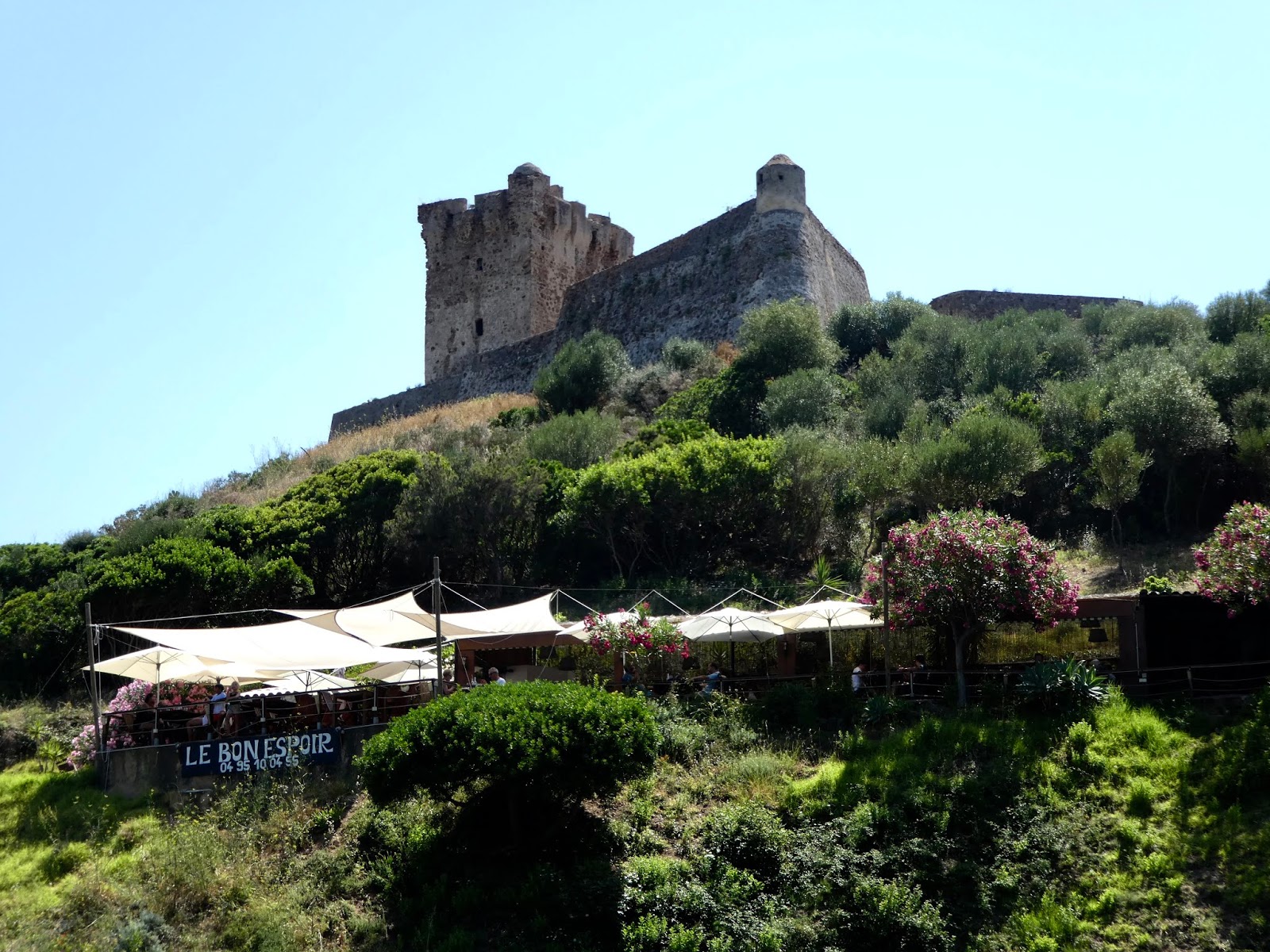
The Fortress was built between 1551 and 1552 to defend against Barbary pirates.

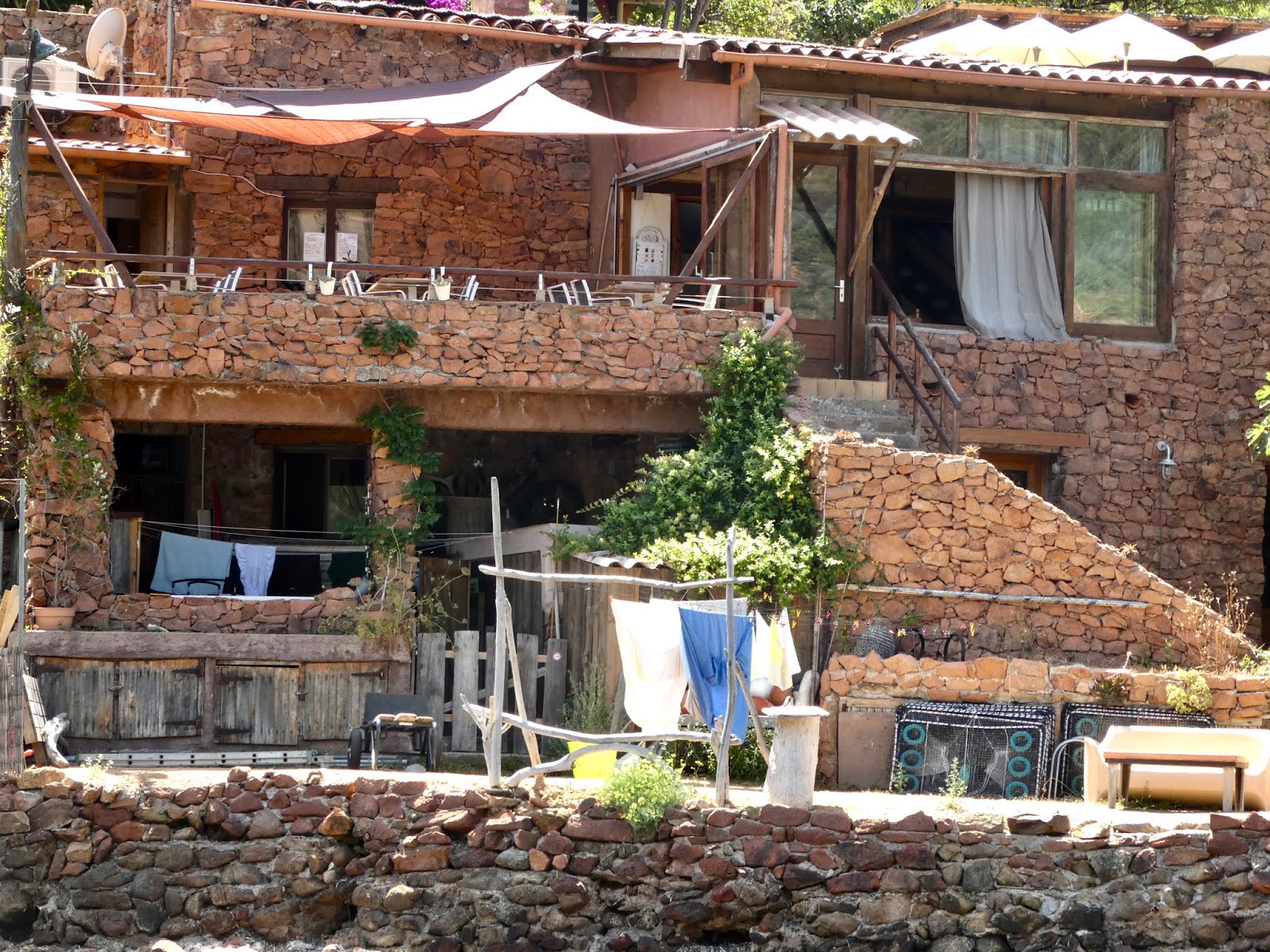
Restaurant in Girolata

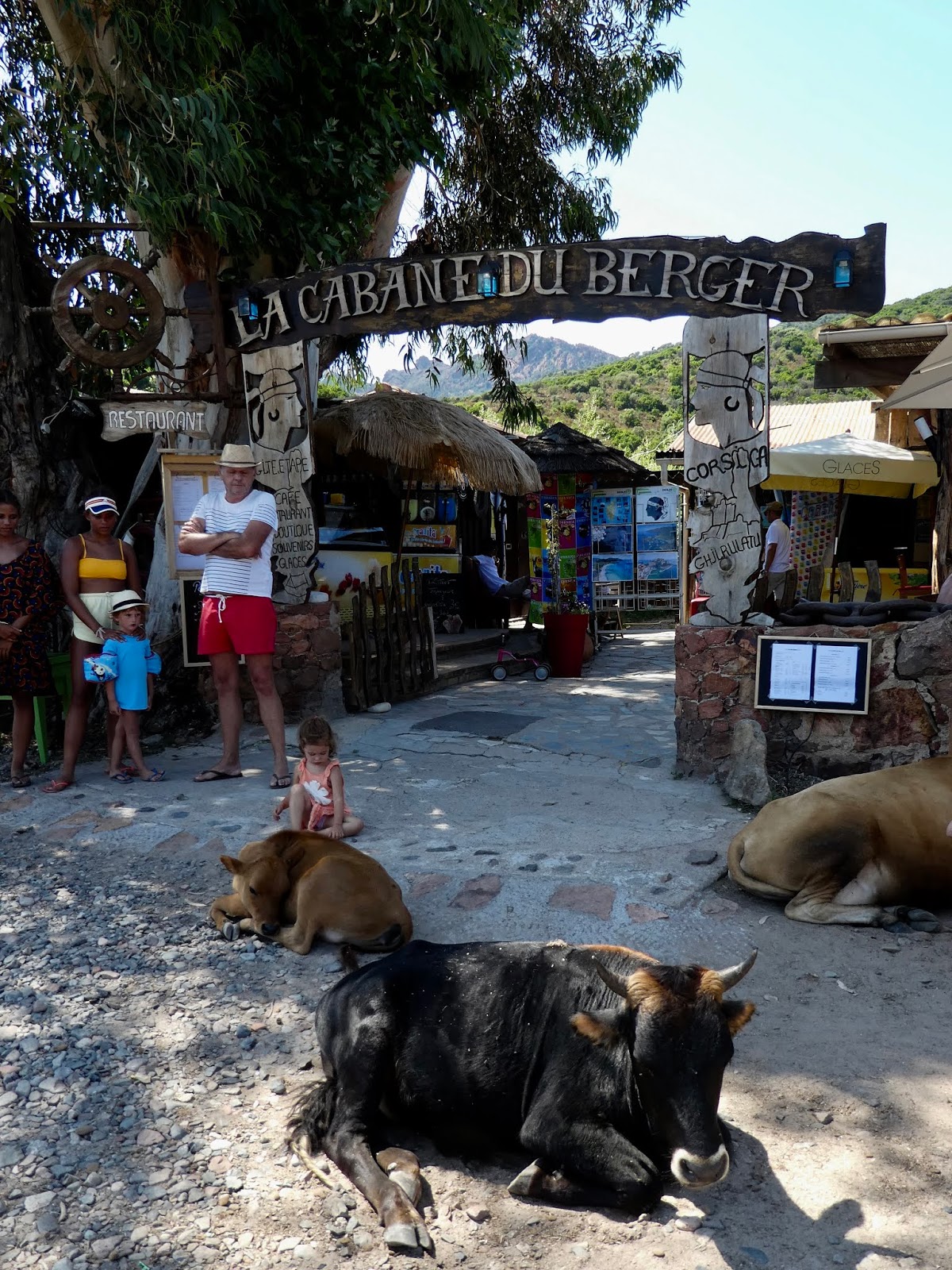
Other than during the brief months at the height of tourism, during which thousands of people visit Girolata, the town is a farming community.  Cows roam freely throughout the village.

Restaurant specializing in burgers guaranteed to be fresh.

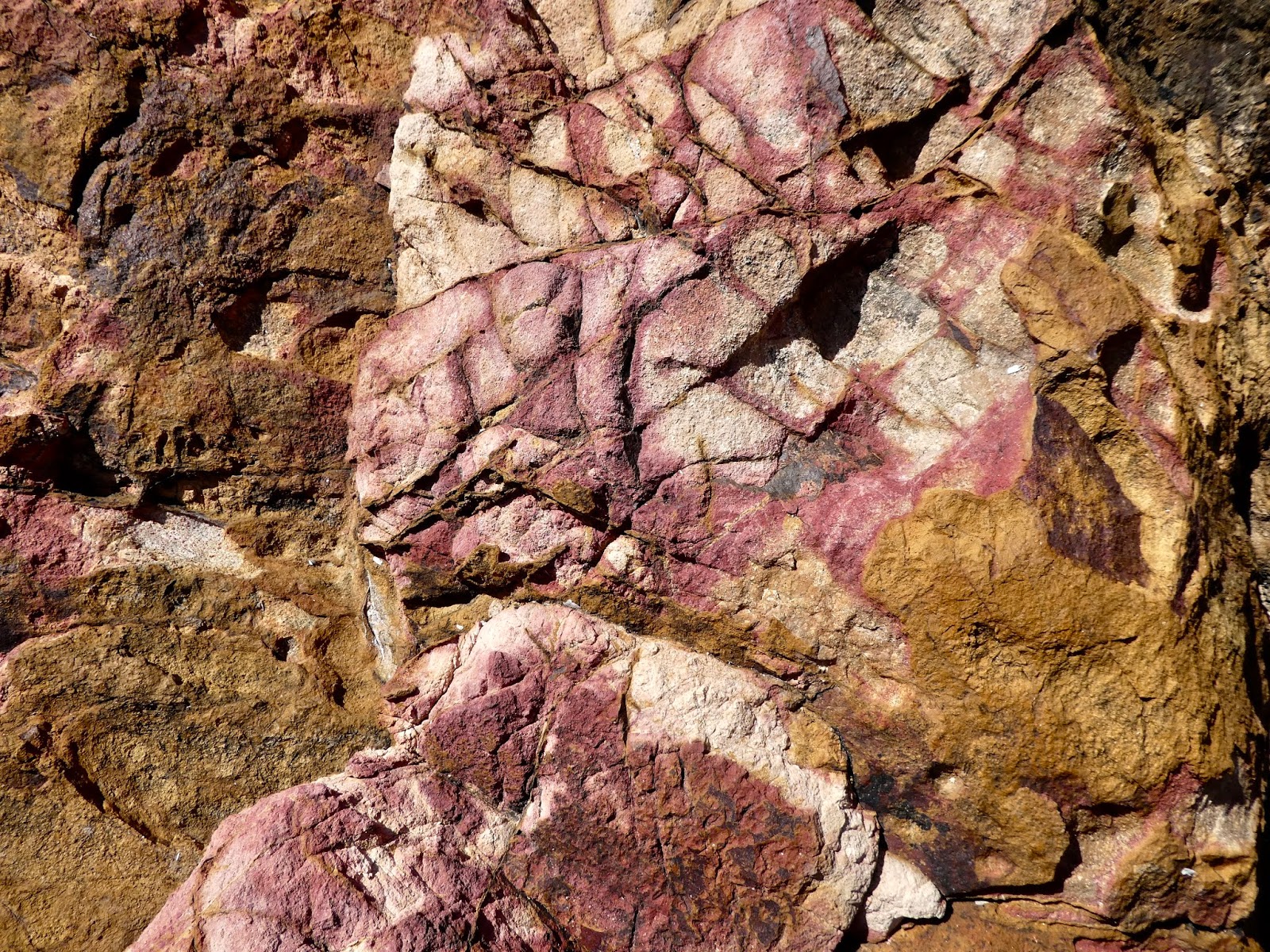
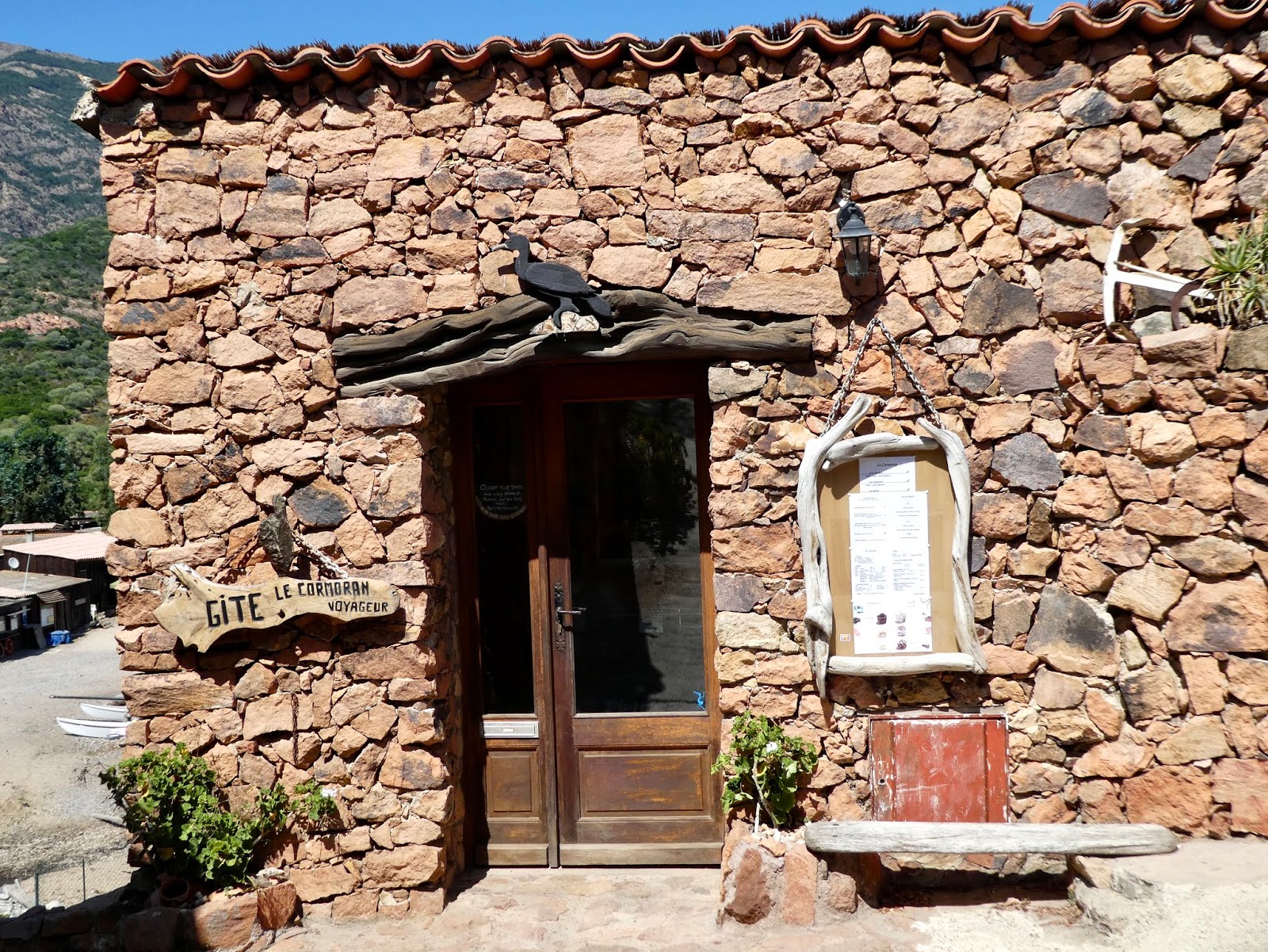
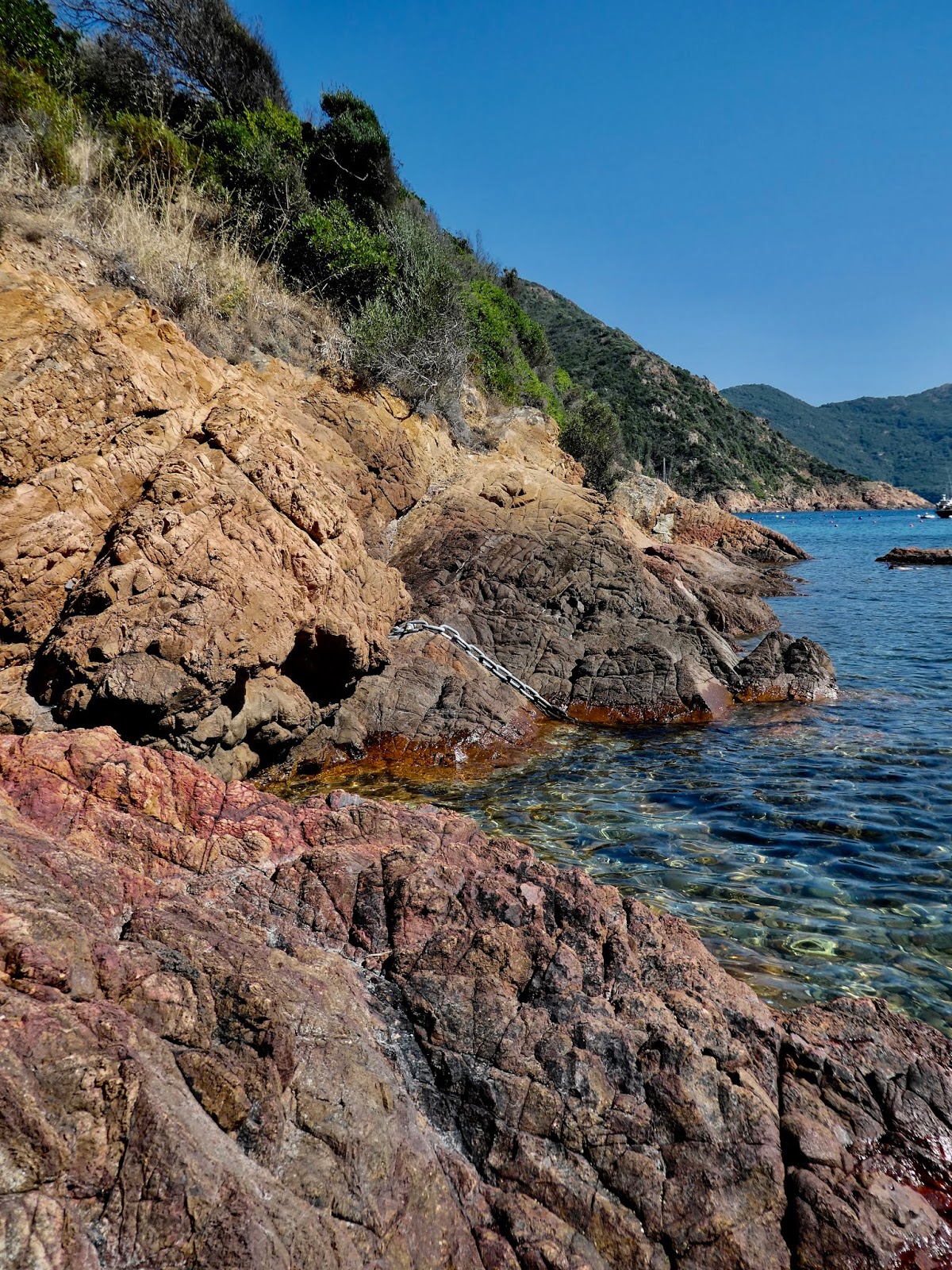
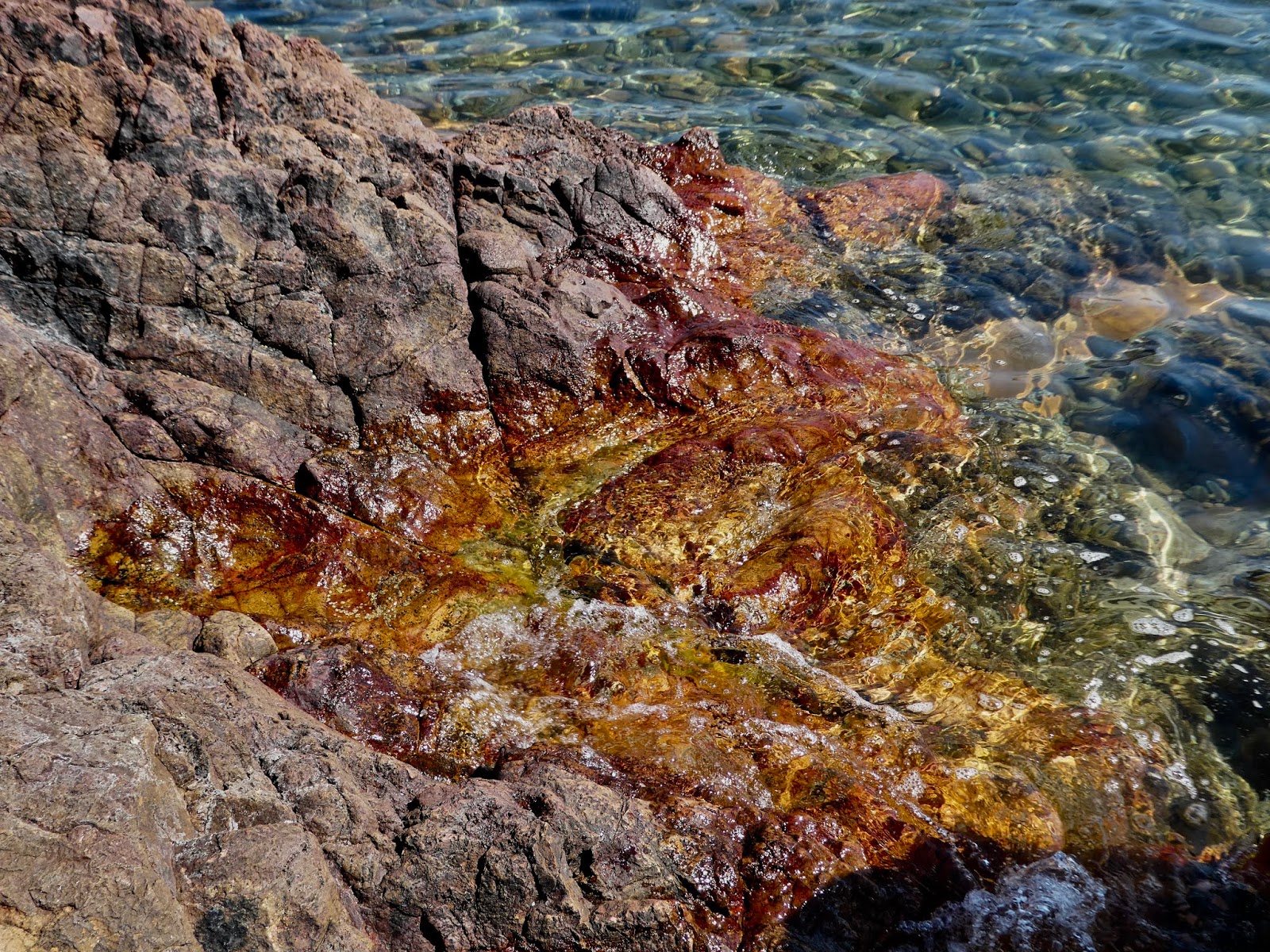
The rock throughout the region is an amalgam of minerals of many colors which contributes greatly to the beauty of the area and the buildings constructed from it.

Rock arch composed of three kinds of stone

George and I spent several hours snorkeling in this area.  We observed many species of small fish, invertebrates and plants.  It was, by far, the best snorkeling we have had in Europe.

The water temperature was a wonderful 82 degrees which only added to the enjoyment.

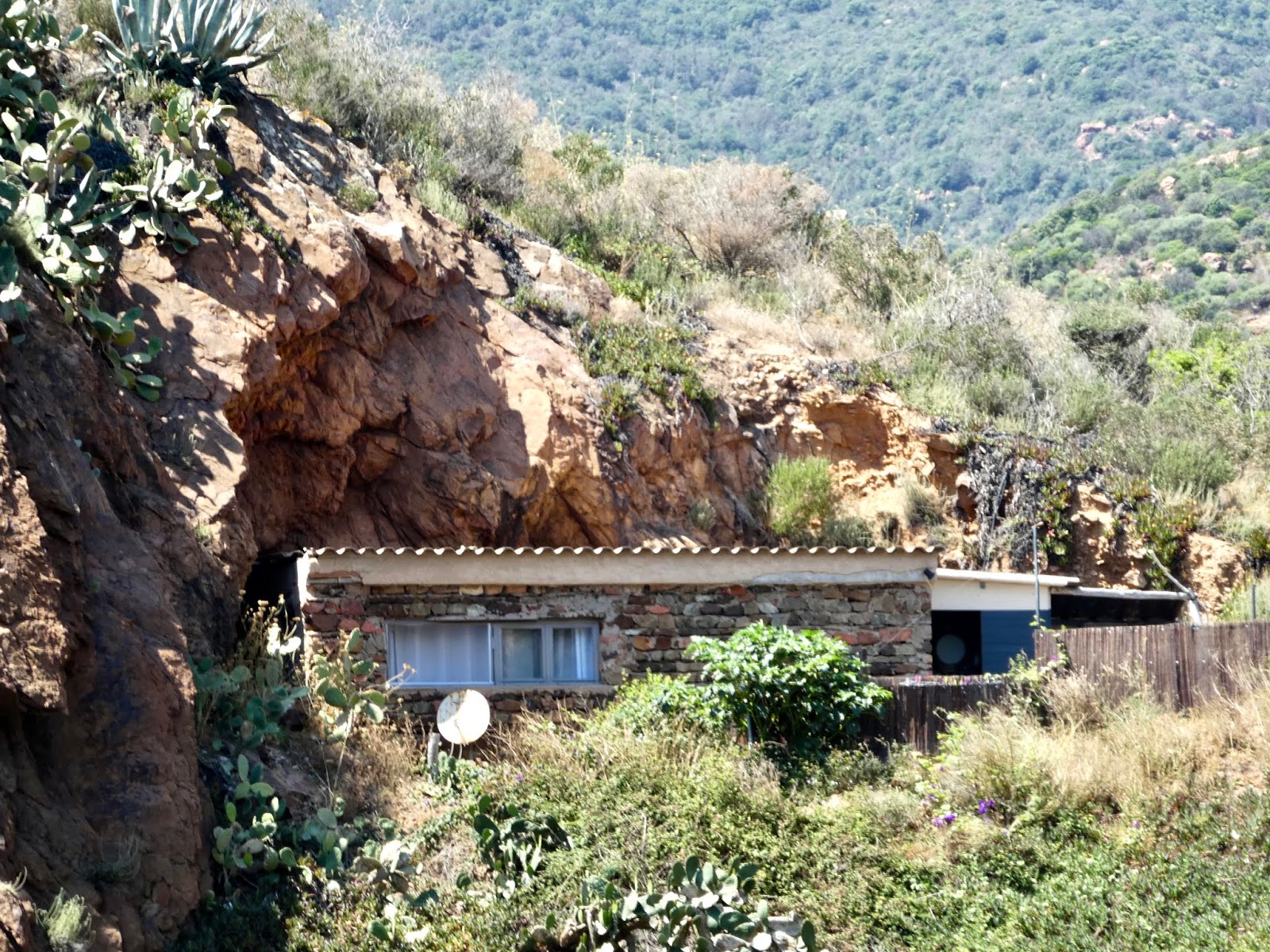
Home built into the side of a rocky hill in Girolat
Restaurant and private residence(s) in Girolata
Shop of some sort with inviting entrance  (unfortunately closed)

That’s all for now.  Corsica is not only beautiful, but every place we visit offers something unexpected and unique.  We are having a wonderful time.