History
In 1805 Napoleon Bonaparte decreed trees be planted along roadsides in France and other domains within his empire to provide shade to troops and other travelers. Many different species of trees were planted and large, tree-lined roads remain a characteristic feature in France to this day. Long rows of similar-sized Sycamores are one of the most prevalent species we see in our travels.
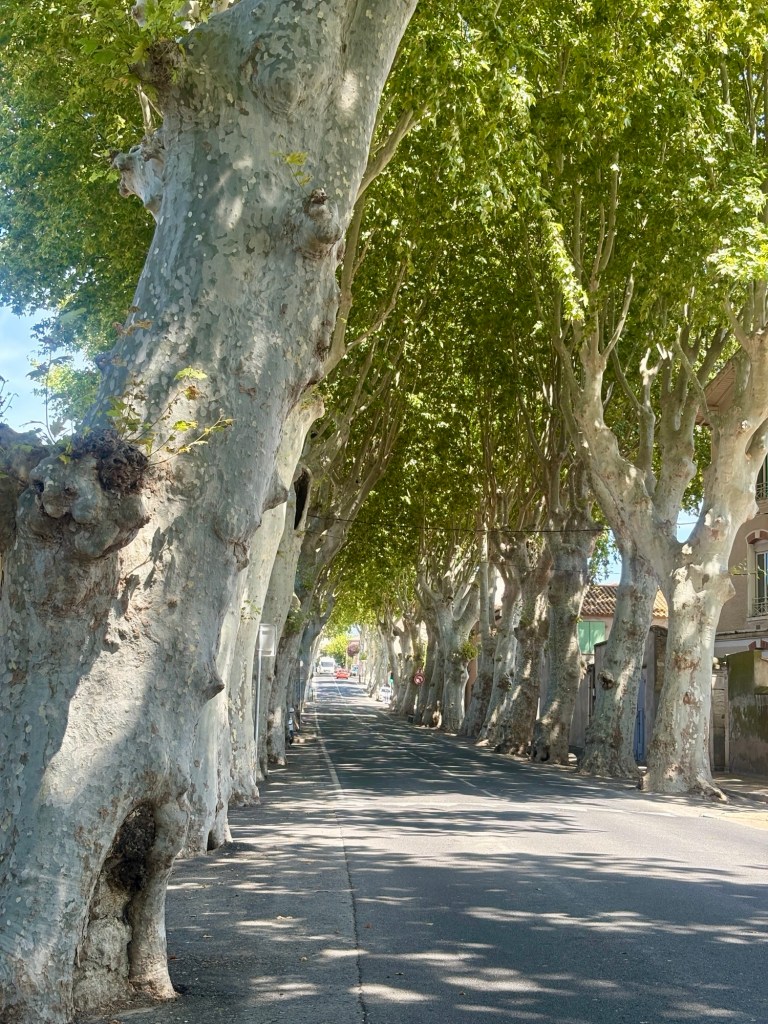
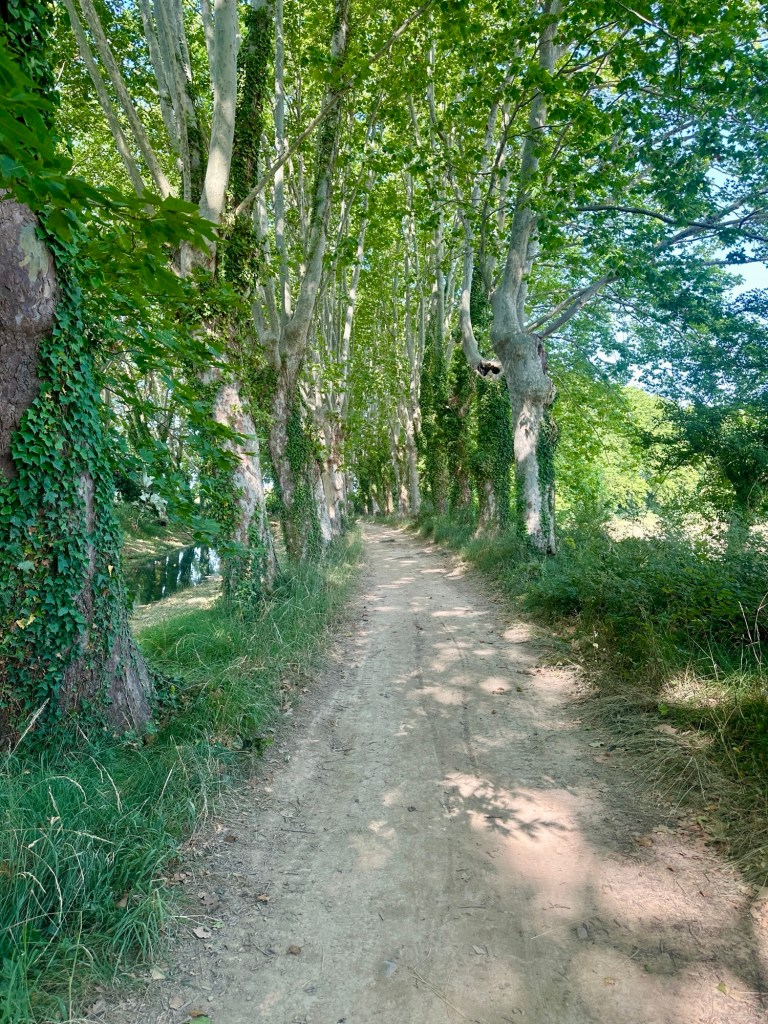
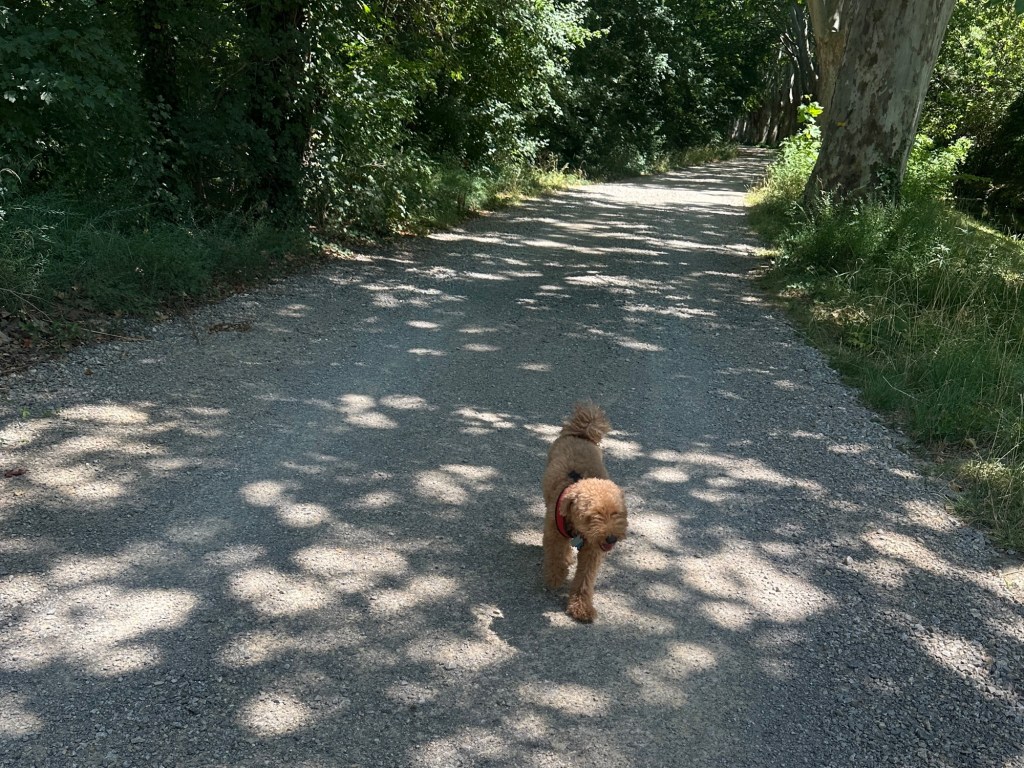
Sallèles-d’Aude where we enjoyed many walks with Duhkxy
Last year we witnessed the devastation that had befallen Sycamore trees caused by a universally lethal fungus. It was killing hundreds and hundreds and many miles of Sycamore trees. From the first evidence of some unhealthy leaves to the death of the tree took only two years. One by one these beautiful trees were succumbing.
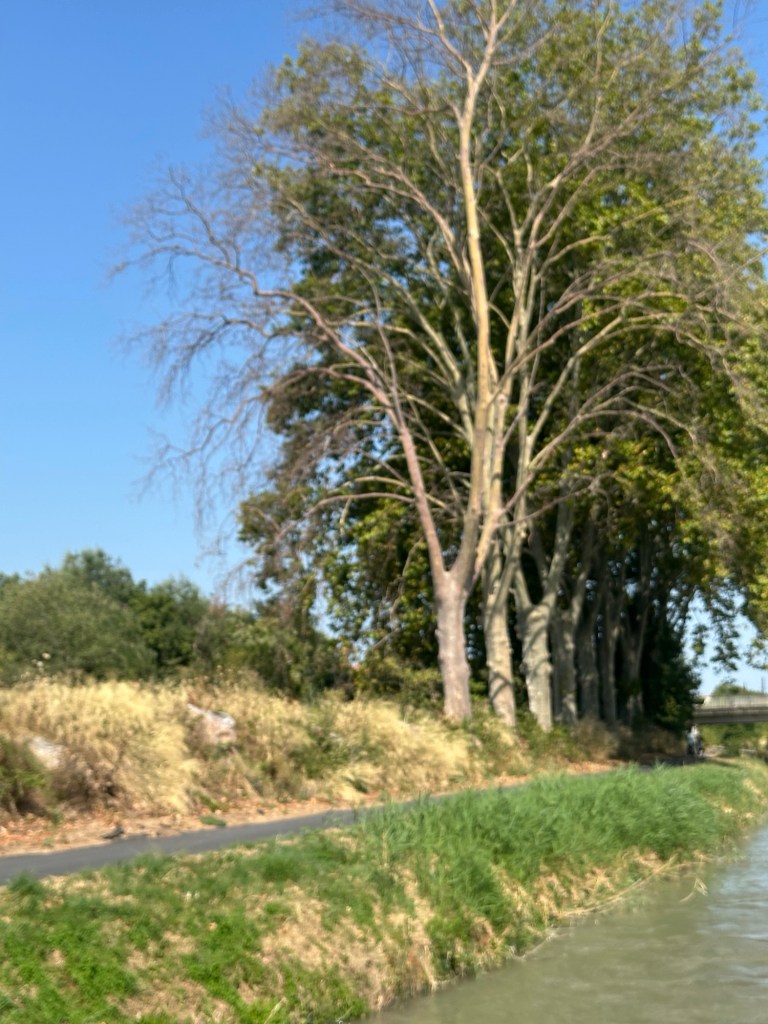
This season we were delighted to learn that a vaccine had been developed that is effective in arresting the disease and restoring health to them. It is not a cure, and must be administered every three years but these beautiful giants have been saved for now. A resistant plane tree is being used for replacement of lost trees and tree species diversification has been embraced.
Canal du Midi
Pierre-Paul Riquet devoted 15 years of his life to the research and development required to construct the Canal du Midi. He went on to oversee its construction which started in 1667 and ended in 1681, 7 months after his death. Such was his dedication, he also invested and lost his entire personal fortune, leaving his descendants in debt.
A part of the construction included the banks of the canal be planted with trees to help control errosion. The first trees were primarily willow trees.
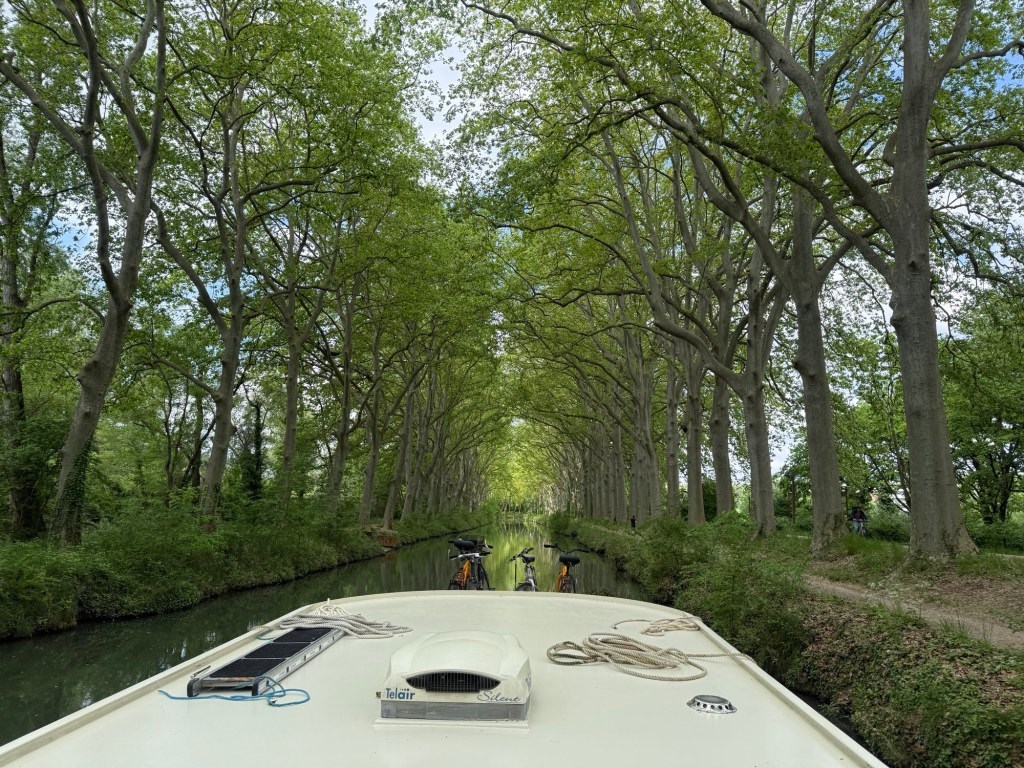
Today, the most prevalent tree is the Sycamore. We are currently canalling the Canal du Midi on “Detour”. In the summer months, the shade of the Sycamores are very welcomed. In their absence, it can be uncomfortably hot.
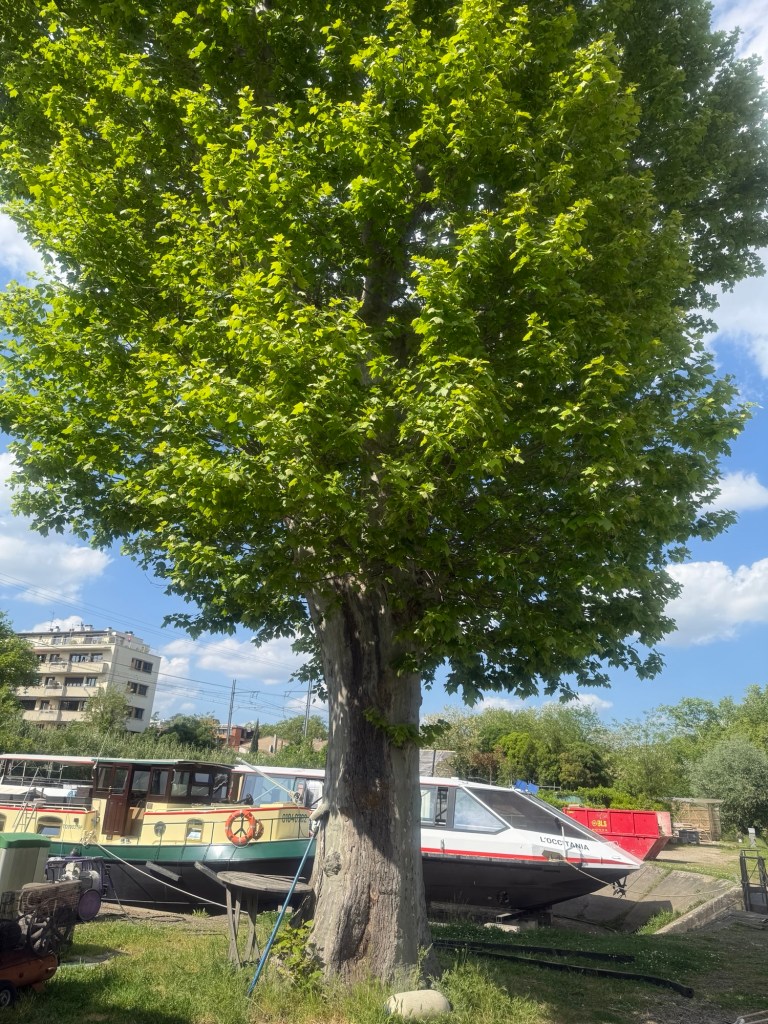
In various settings, Sycamores may grow with no pruning intervention, limbed and sometimes cropped at height of 20-30 feet, drastically pruned to conform to a restricted space, or sheared and almost bushy.
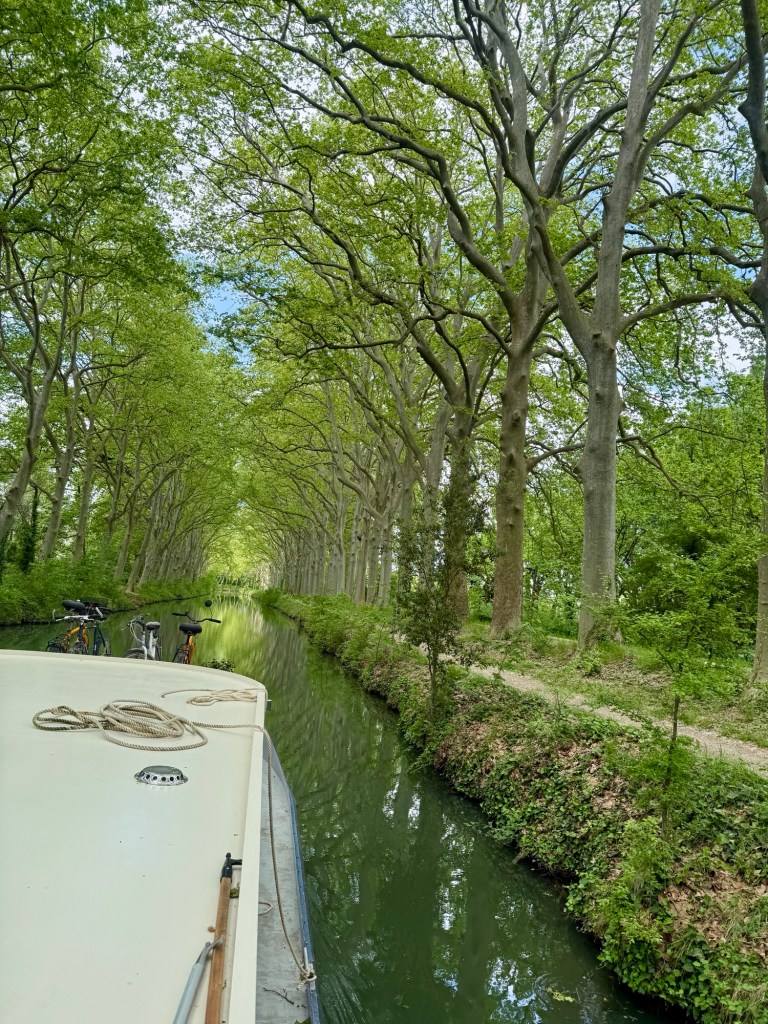
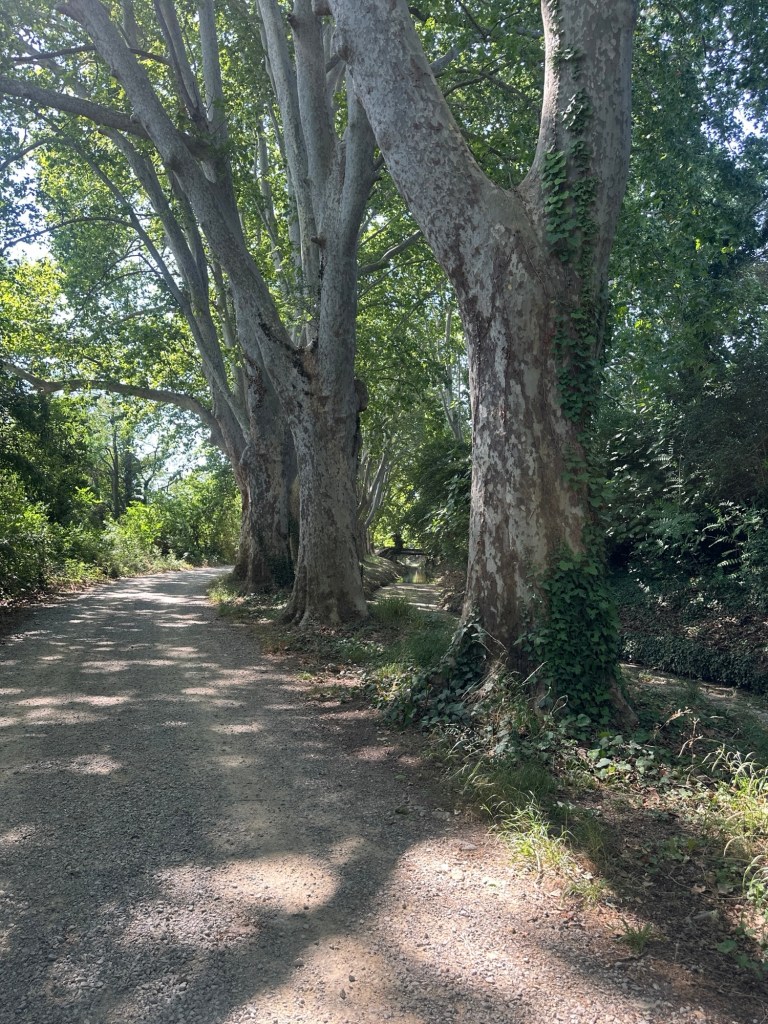
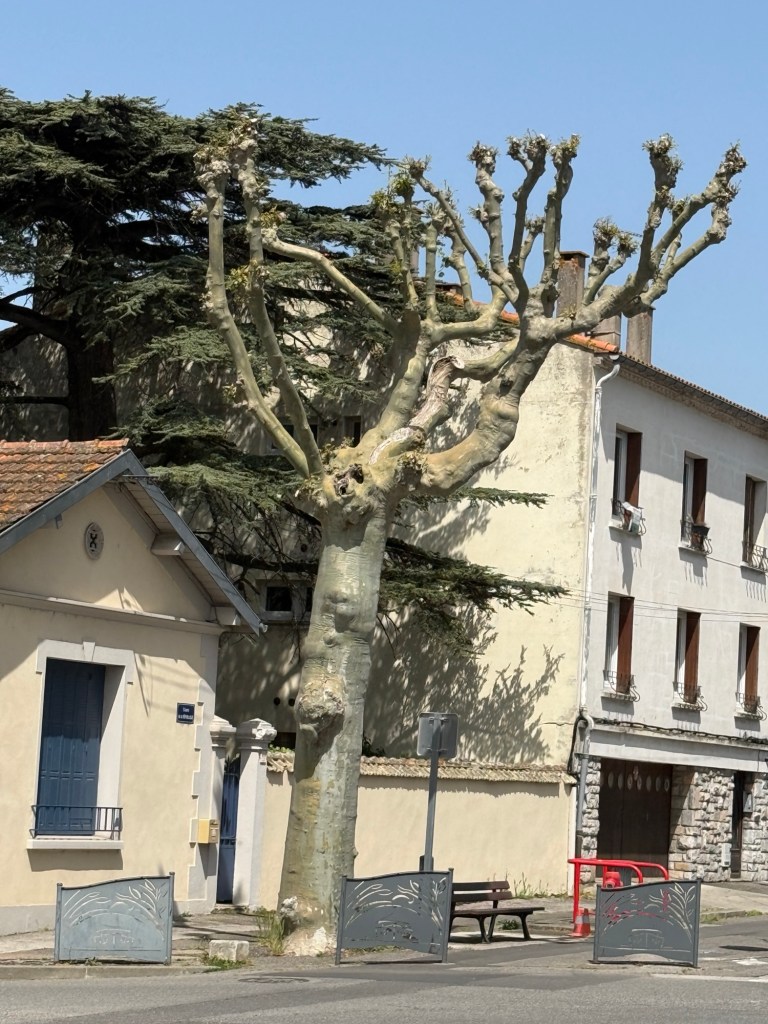
Long live the Sycamores.

 Go With The Floe