Unknown's avatar

About Sv Ice Floe

I sail on a vessel named Ice Floe

Lots of Locks

Day 18 through 35 13-May – 27-May-2017

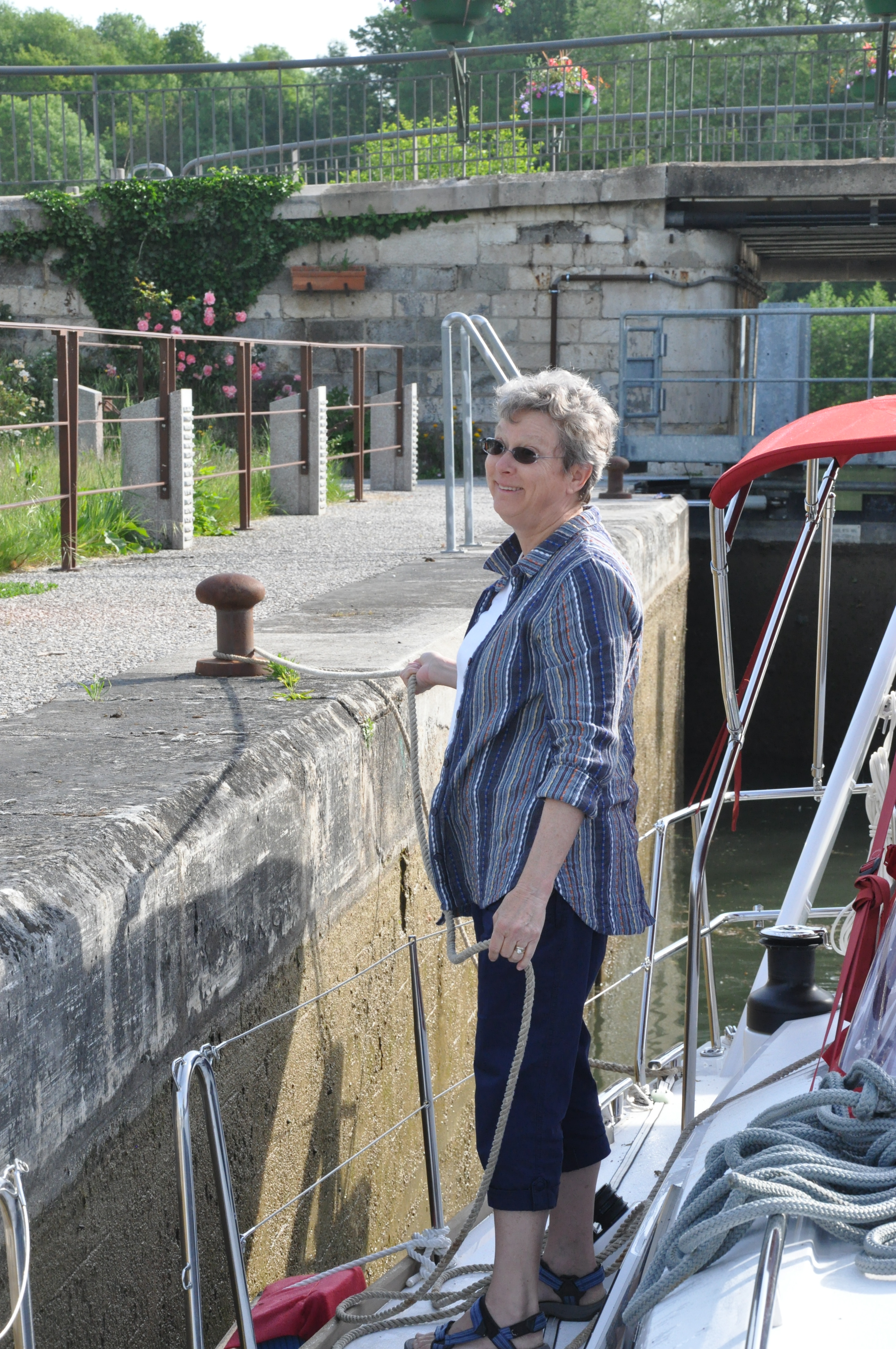
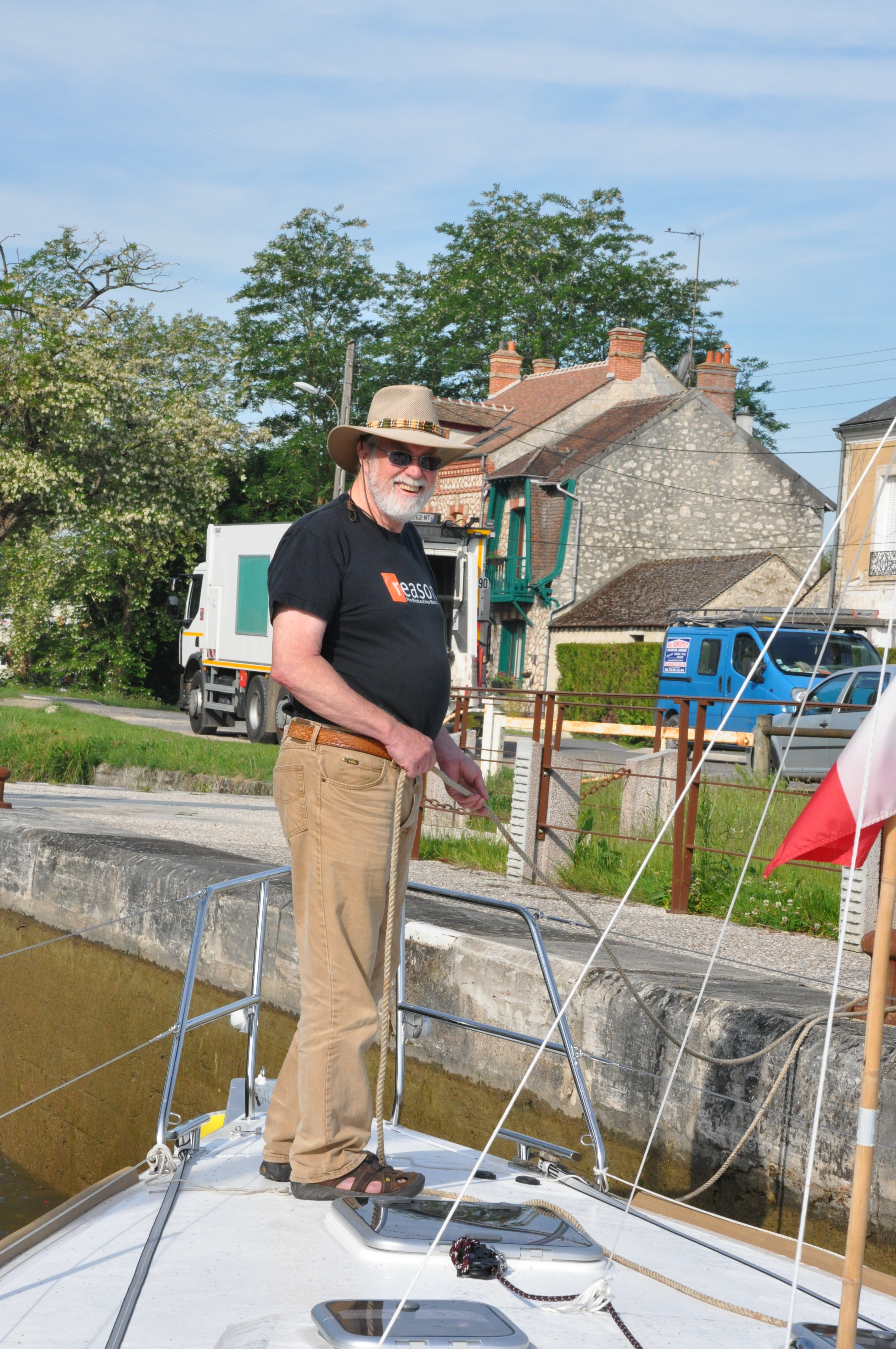
I feel it is necessary for you to understand locks if you are to understand this journey. Altogether there are 179 locks we will pass through.  On the canals, the locks can be very frequent with less than half a km between them.  Our record for a day was 19 locks (yesterday).  The change in height has been as low as 2 ft and as high as 28.

The canal system, locks, and aqueducts are several hundred years old.  We have passed through 65 locks, 56 of which collectively carried us up 541 feet in elevation, and the last 9 of which dropped us back down to 446 feet elevation in the Loire Valley.  Many locks have been modernized to be automatic, some still have a lock tender to assist you.  How the lock will operate is often a mystery – the availability of places to tie on, whether you will need a lock tender, whether you will need to call the lock tender.  In principal, all the locks accomplish the same thing.

Our current location

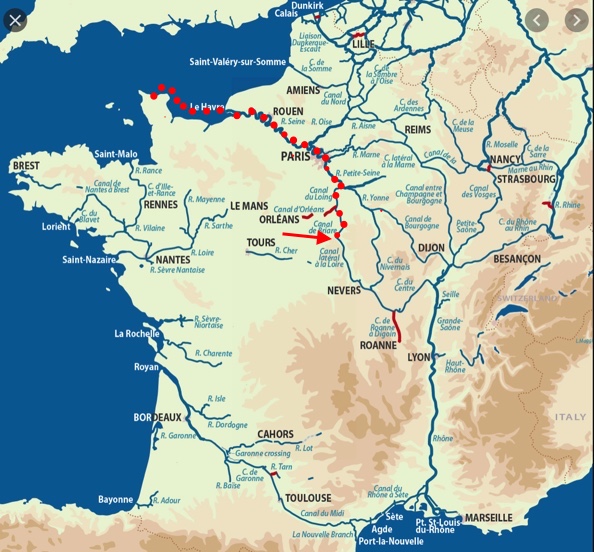
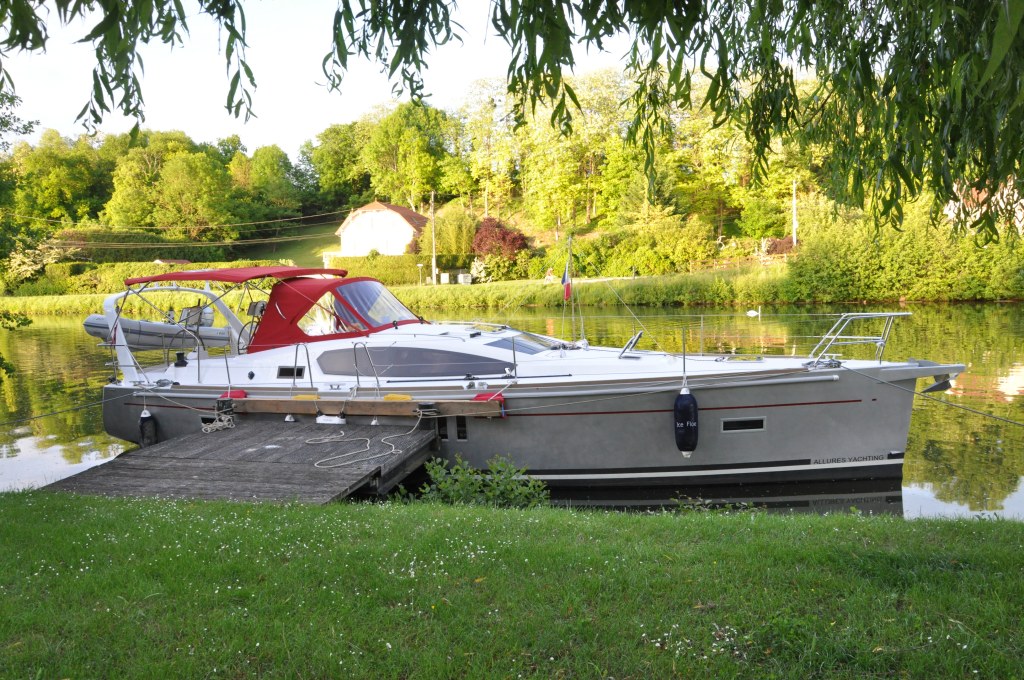
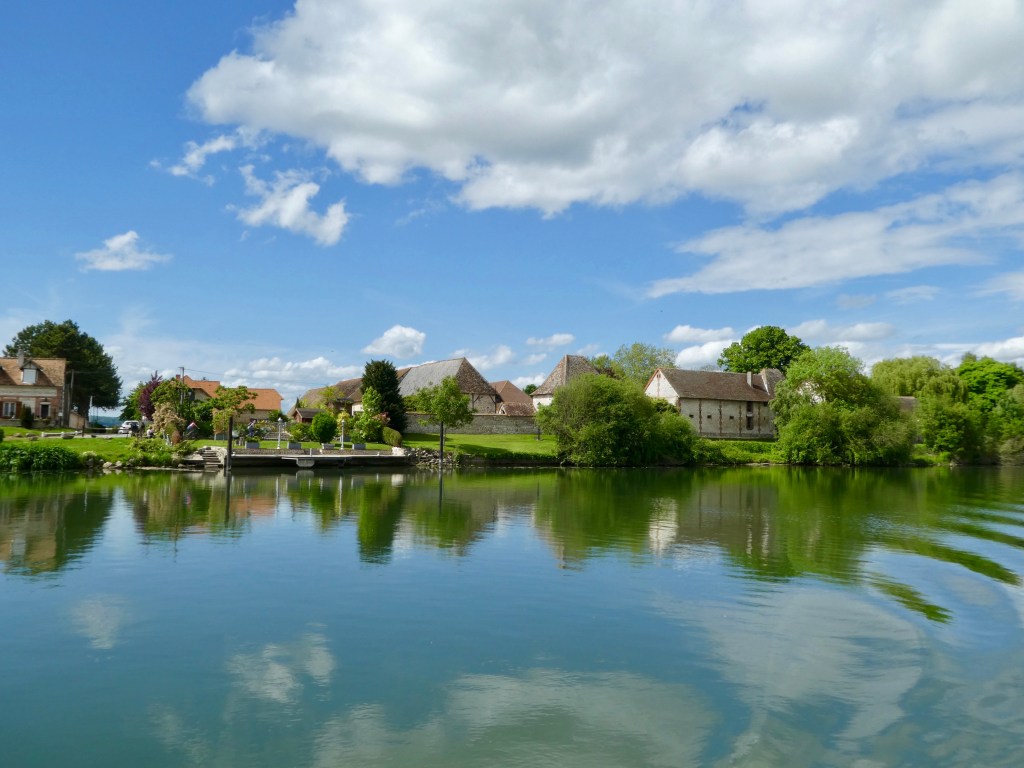
We are currently at Châtillon-Sur-Loire, about a third of the way through France’s Inland Waterway.  Châtillon is term used for a facility run by the most proximal municipality.  Châtillon-Sur-Loire means a facility to “park” your boat on the River Loire.  Technically, we are on the Loire Canal, but the river is close by. The cost per night is 9 euros, but many are completely free.  Some have water and power, bathrooms and showers, and one had WIFI.  Sometimes there are restrictions for length of stay or prohibitions against using potable water to wash your boat.  The individual rules are not always apparent.  Sometimes there is a sign, sometimes a policeman comes by your boat to collect a fee and check your papers.  Often, especially when there is just a tie up, no information is available.

At a Châtillon with facilities there are often other boaters from all over the World.  People often stop by to ask where you are from and where you are going and frequently invites are extended to “take a drink” on their or our boat.  George once invited 3 couples to join us and with luck I had humus, cheese, strawberries and olives to share.  We were rewarded with wonderful stories and practical advice on what to do and where to stay on the canals.

Lots about Locks

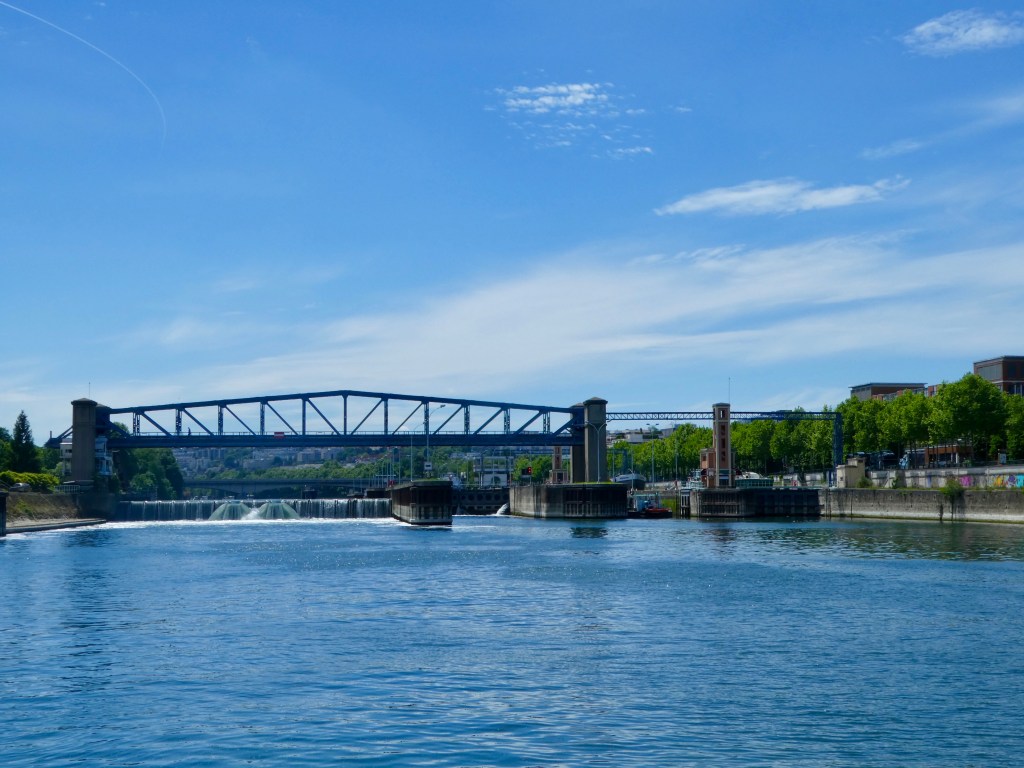
The locks on the Seine all had a lock tender who you called on a specified VHF frequency (different for each lock).  The following photos and their captions provide a description of how locks work and enabled us to sail up and down the foothills of the Alps en route to the Mediterranean. The first photo is of a large lock system on the Seine with three separate locks. 

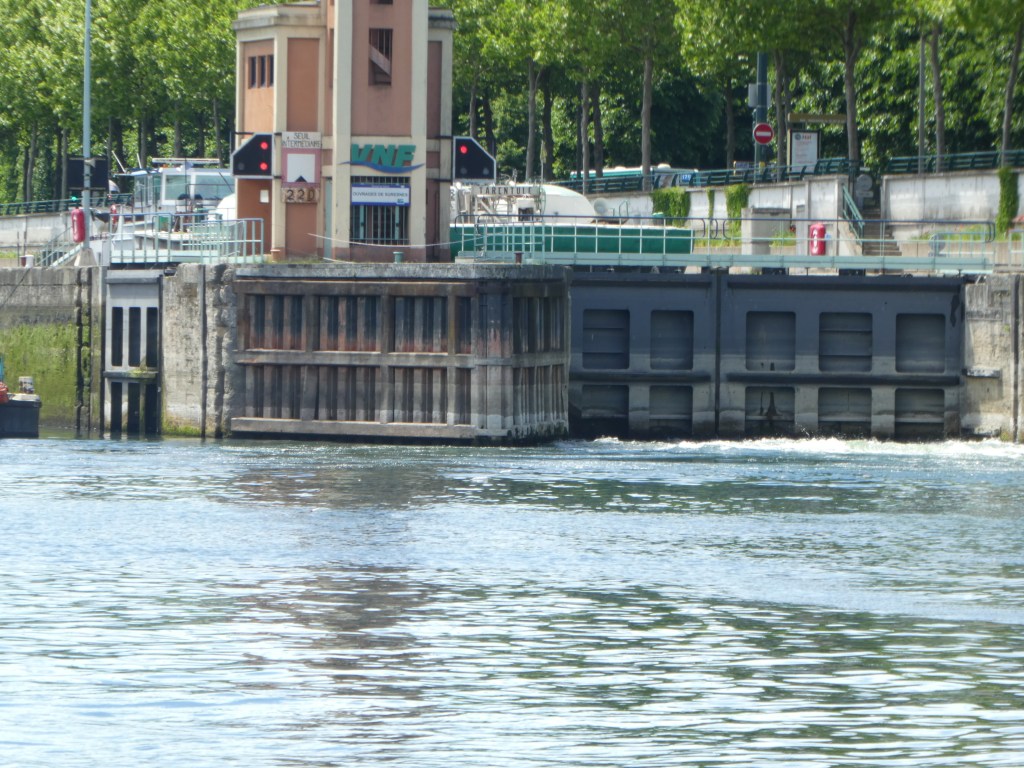
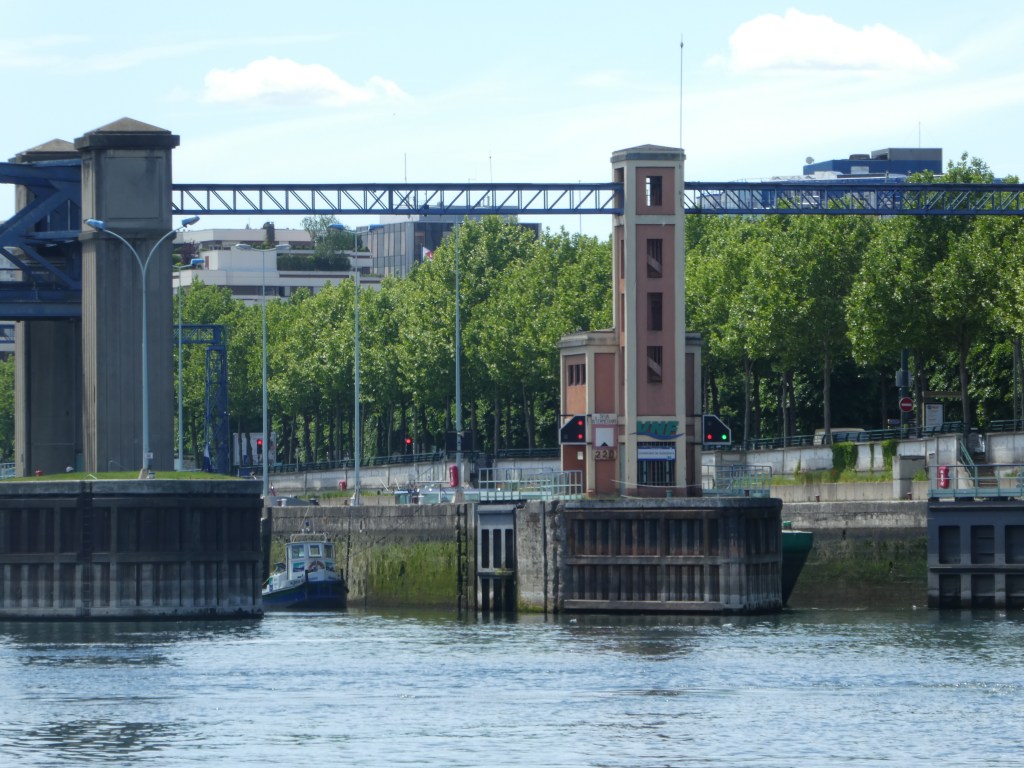
On the left is the spillway for the river. There are three separate locks to the right of the spillway, The first 2 locks were undergoing repairs so we will use the third lock (all the way to the right).
The lock on the right is closed as it is occupied by a boat that is headed downstream so we will have to wait. There is a red signal light indicating we should not approach the lock.
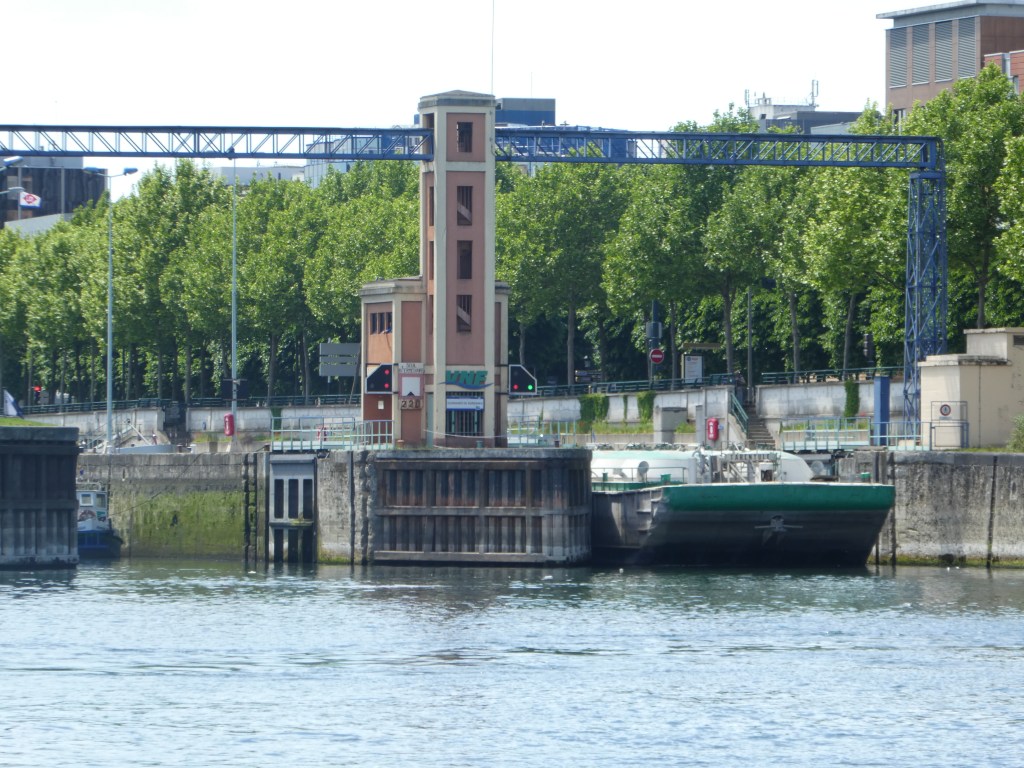
The water level has been adjusted and the doors opened so the boat is exiting the lock.
We get the green signal light that the lock is ready for us to enter.
We are entering the lock

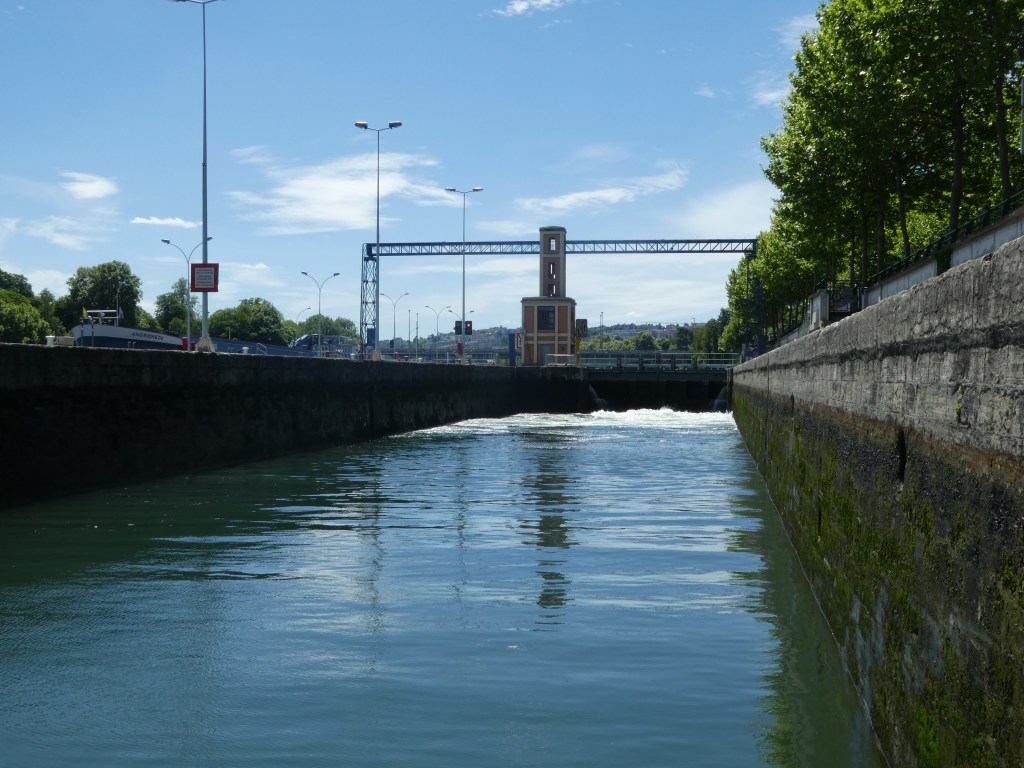
The next two photos are taken from the bow looking back towards the stern. 

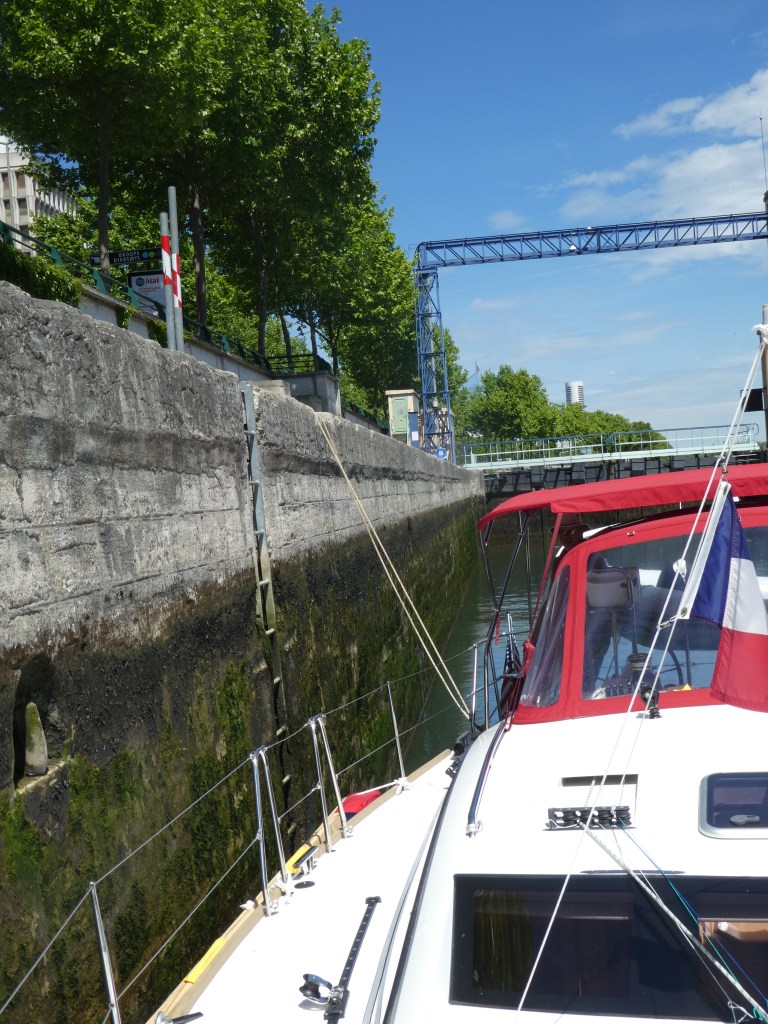
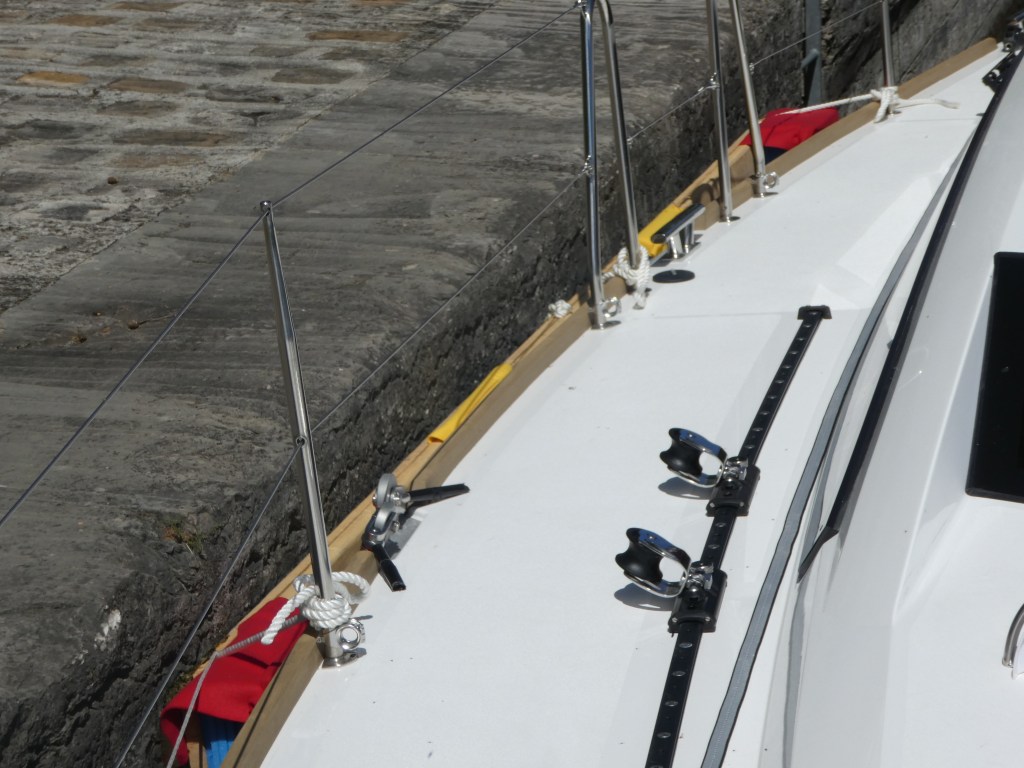
Once inside the lock, we secure lines from the bow and the stern to one side of the lock. These lines will be adjusted to keep Ice Floe in place as the water level is adjusted. The doors at our stern are closed and water begins to enter the lock. Note the position of Ice Floe on the concrete wall.
The water level has been raised so that it is the same as the water where we will exit the lock.

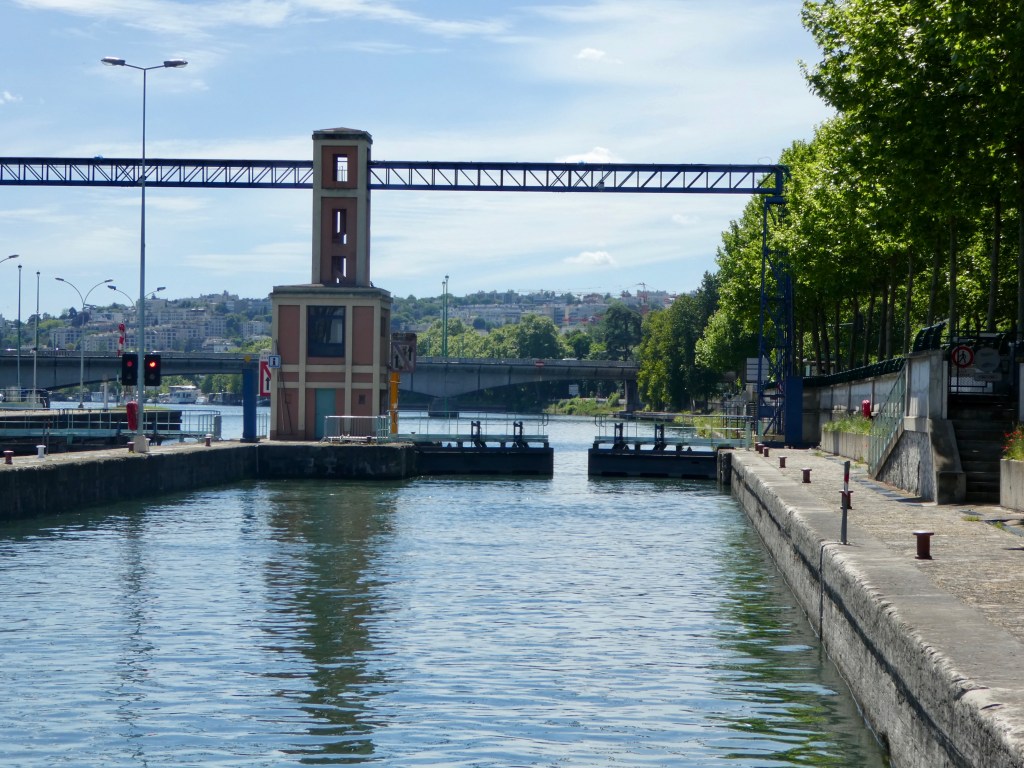
The next two photos are taken from the bow looking forward.

The lock doors begin to open.
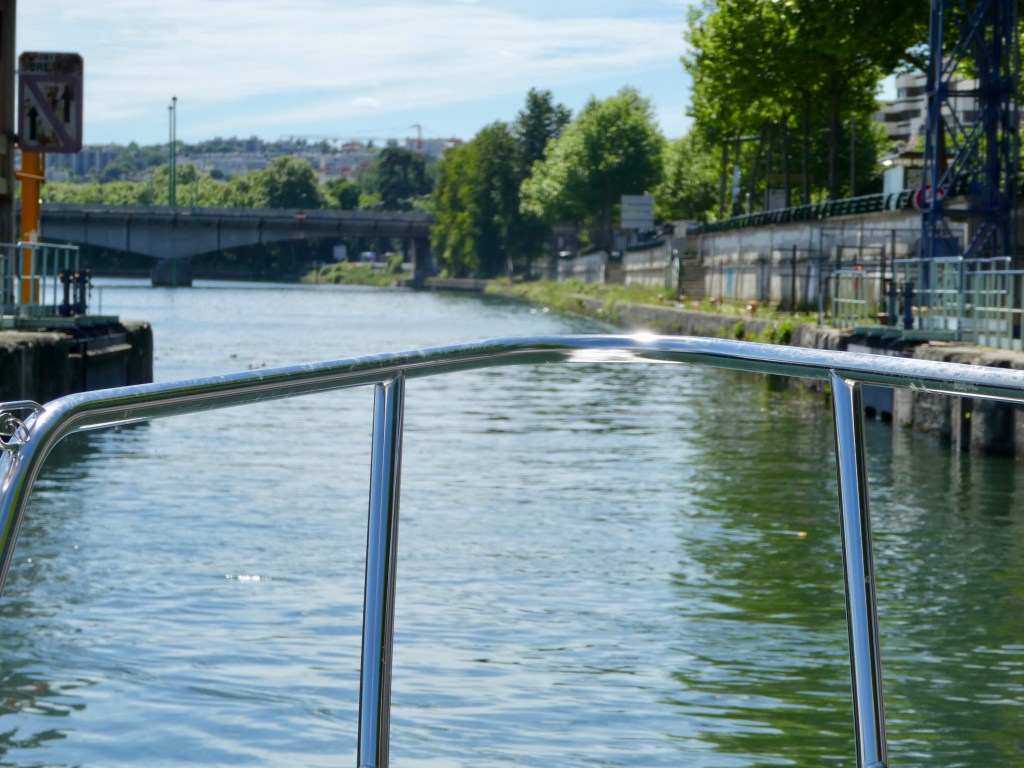
Ice Floe heads out of the lock.

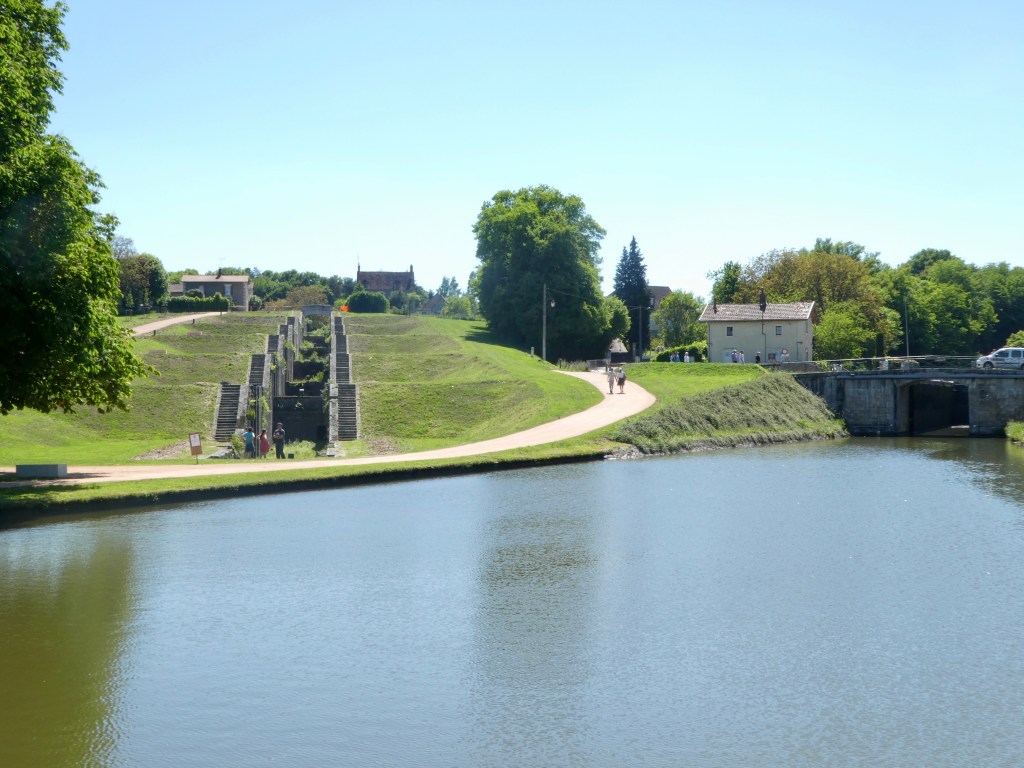
This next photos is of an ancient flight of locks (left in photo) that was replaced centuries later with 6 separate  locks, each only 0.4 km apart.

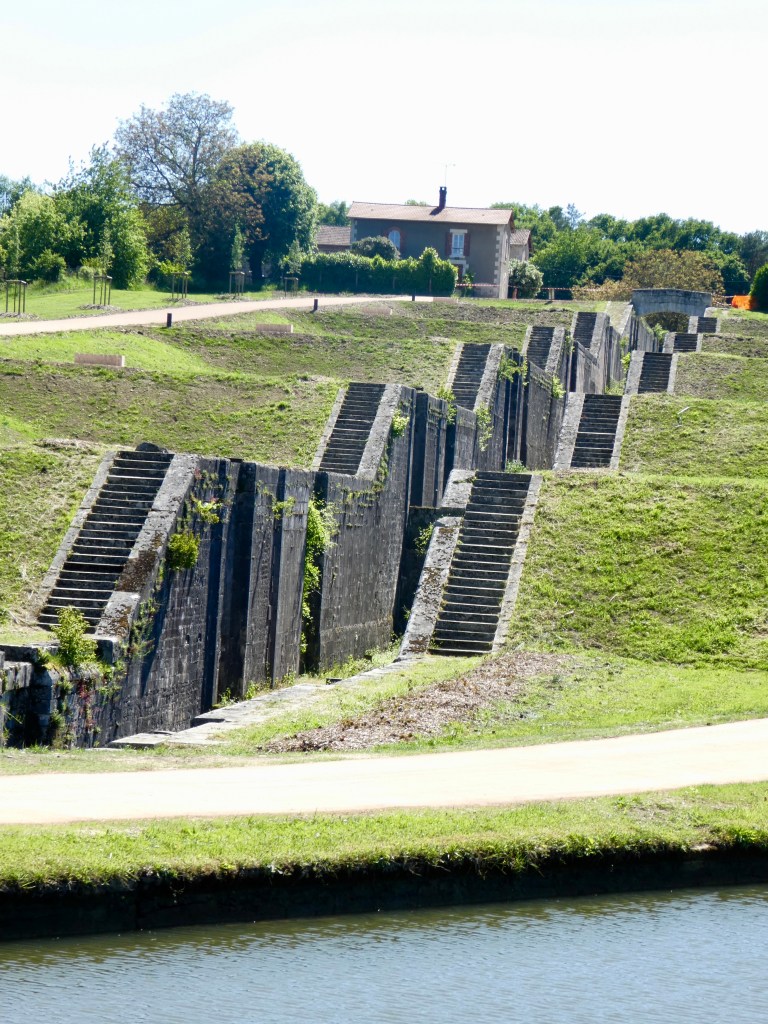
On the left, you are looking at an ancient “flight of locks. It could only accommodate a single boat. If a boat was moving up this flight of locks, a boat needing to move down the locks would need to wait until the other boat had completed all 6 locks in the continuous series. On the right you see the doors to the first of 6 separate locks that replaced the original lock. Each can accommodate boats heading either up or down.
Closer view of ancient lock system

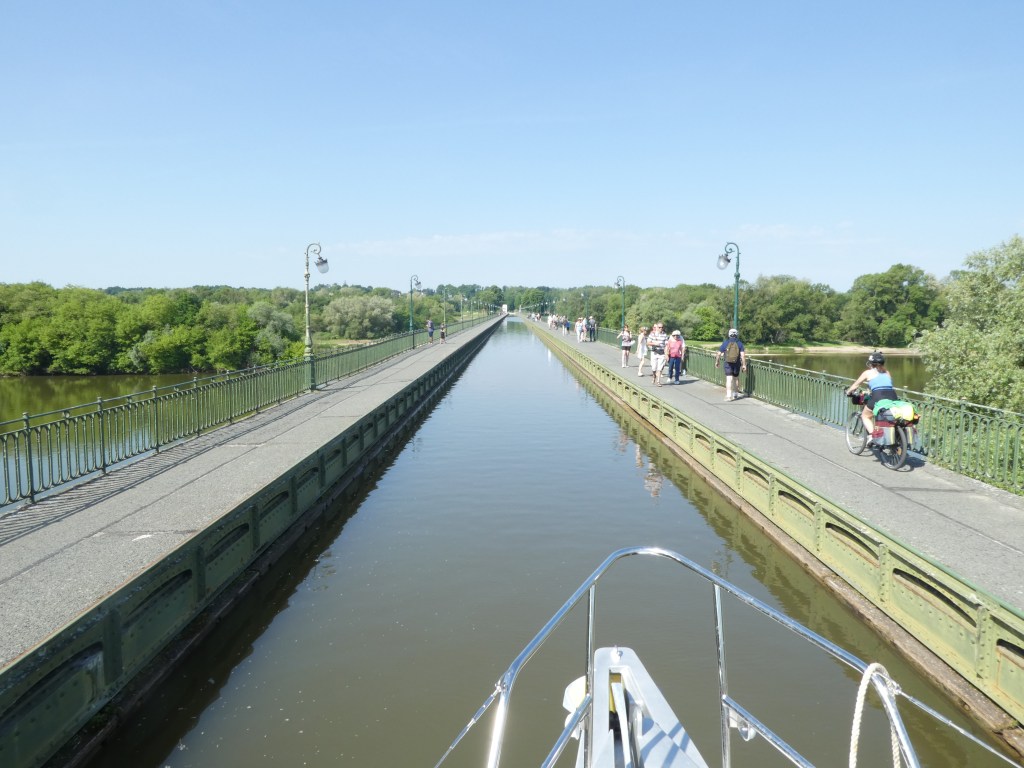
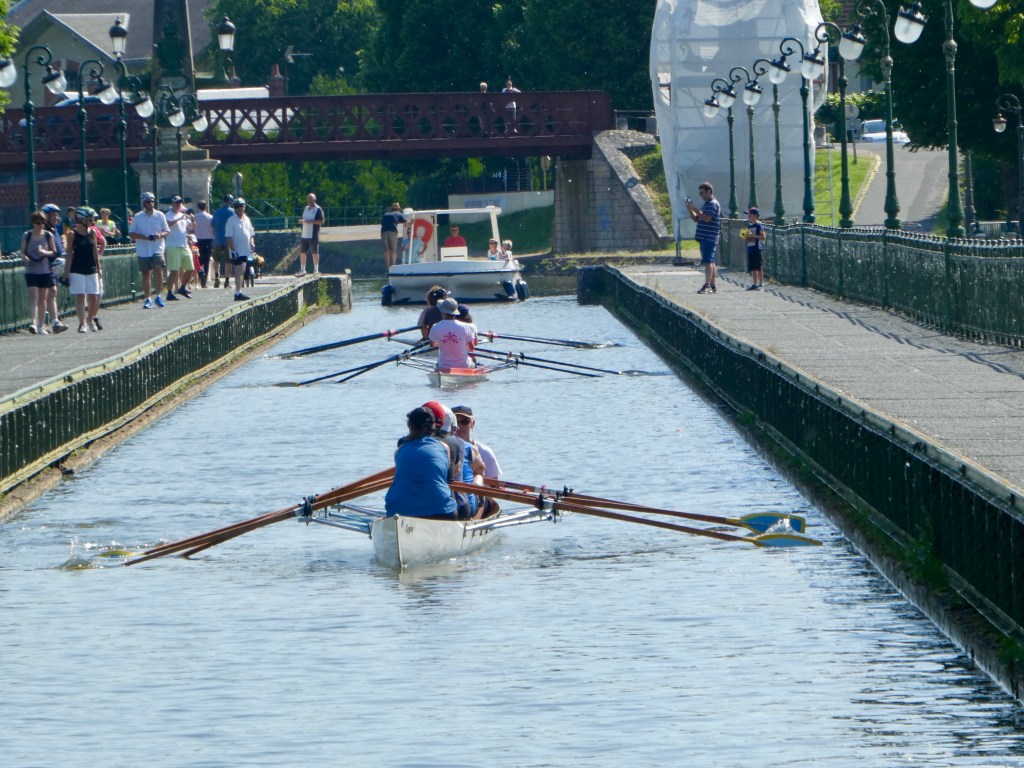
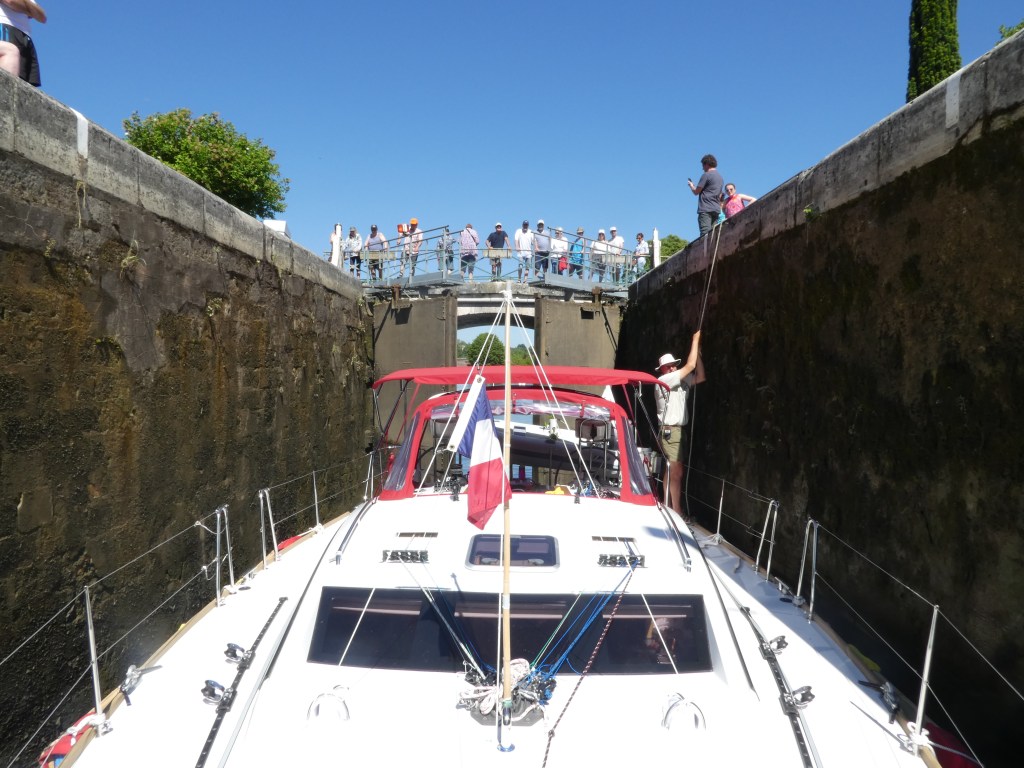
As the tourist season warms up we have more and more people watching as we move  through locks.  Even for many people for whom the locks are an integral part of their lives, many stop to watch, particularly those with small children who are often bicycling along the path beside the locks with their parents.

I am certain you now know more than you ever thought you needed to know about locks and are wondering what else we have been up to these past several weeks.

Paris and Sailing with Nancy and Bruce

18-May – 22-May-2017

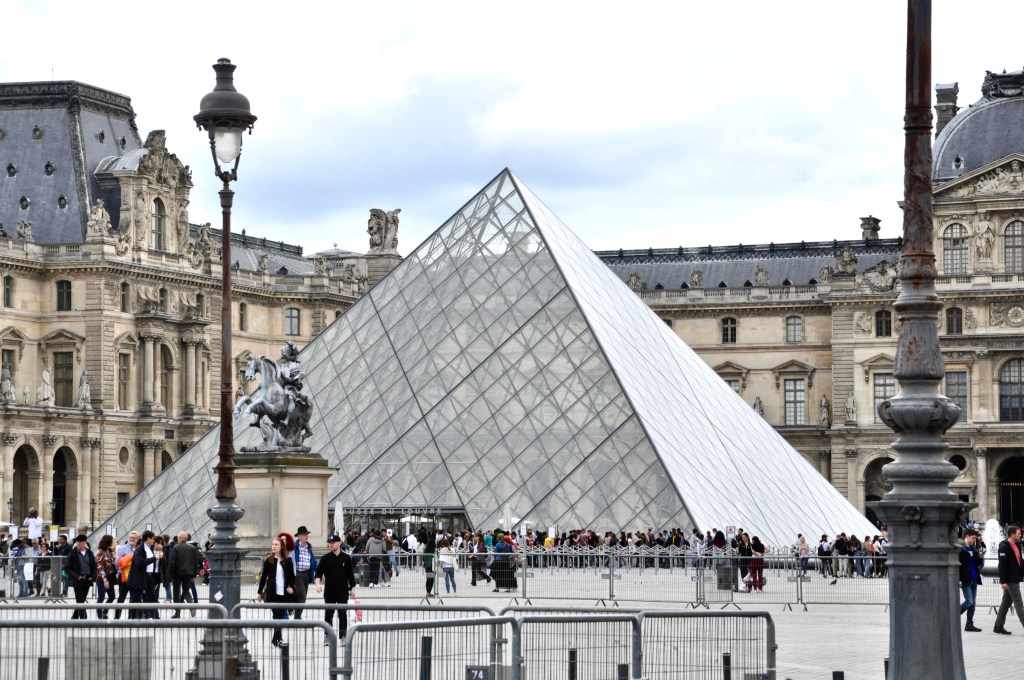
After meeting up with Nancy and Bruce we spent a couple of days in Paris. They visited the Louvre Museum and had the forethought to purchase tickets in advance that permitted them to slip right by the very long line of people seeking entrance. With a reported 38,000 objects of art, it would be disappointing to spend half of your day in line.

Le Louvre, with its prominent entrance through the glass pyramid building, is the world’s largest art museum. The artwork is housed in the massive Louvre Palace, originally a castle built in the late 12th to 13th centuries.

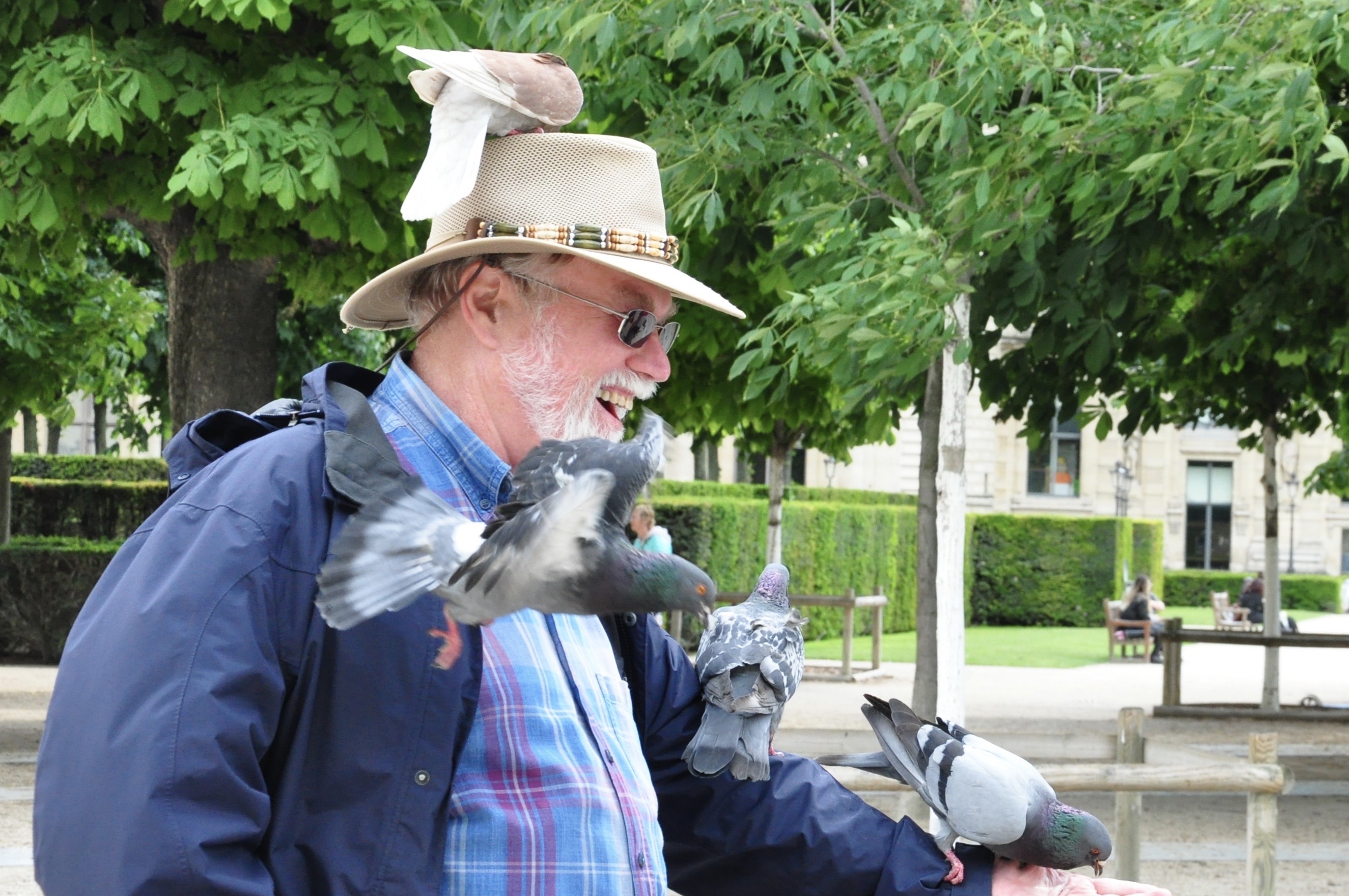
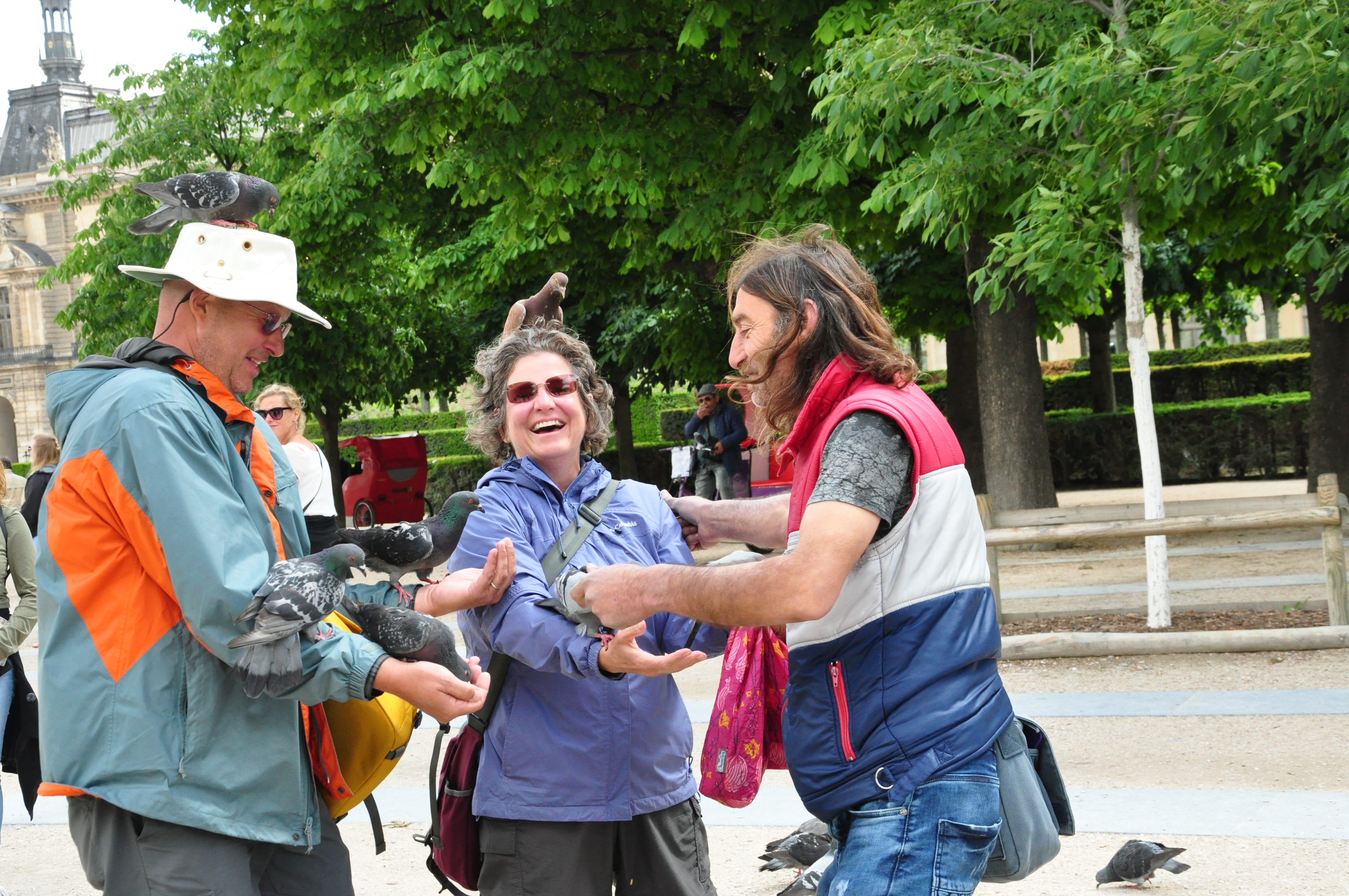
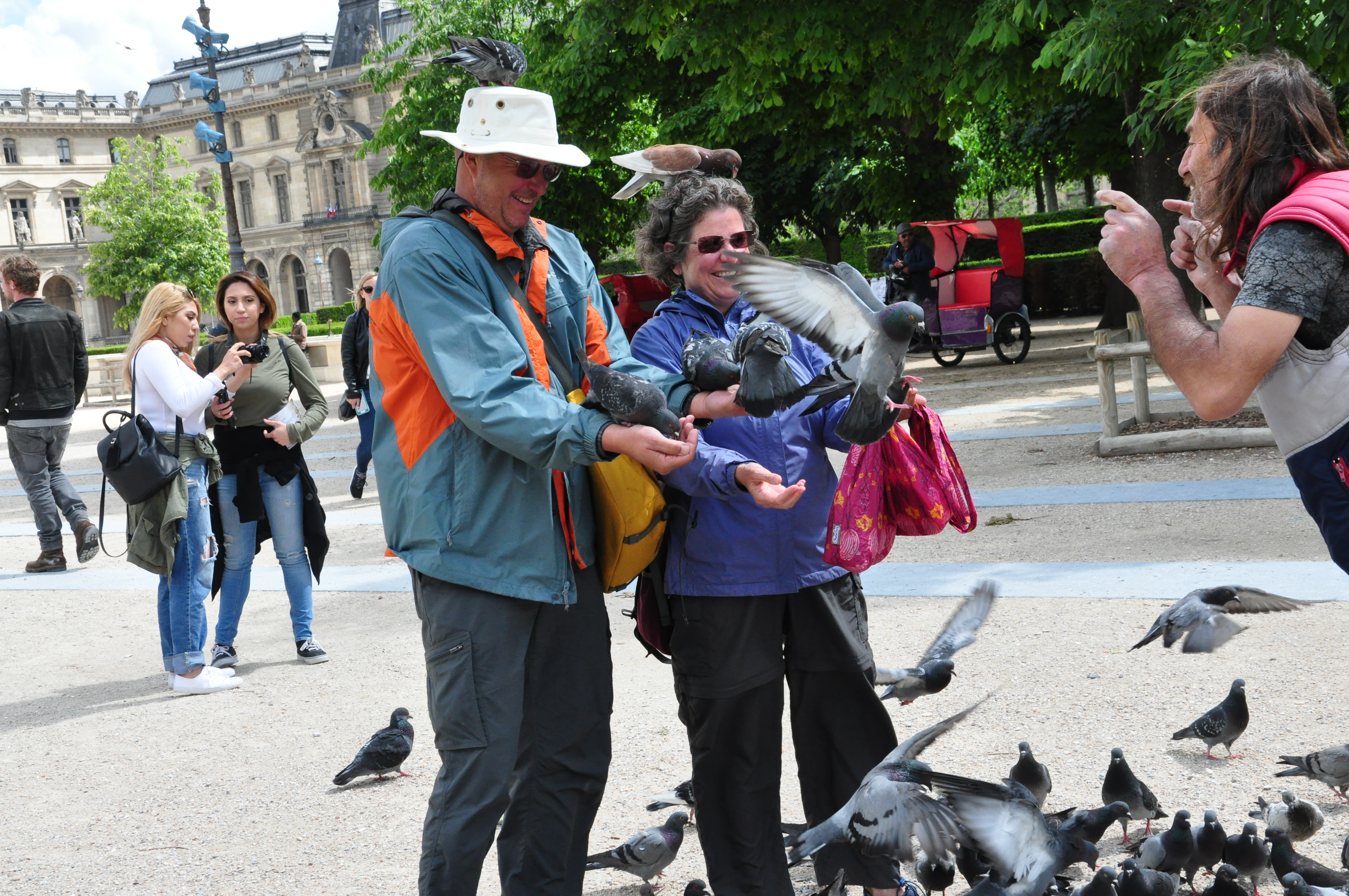
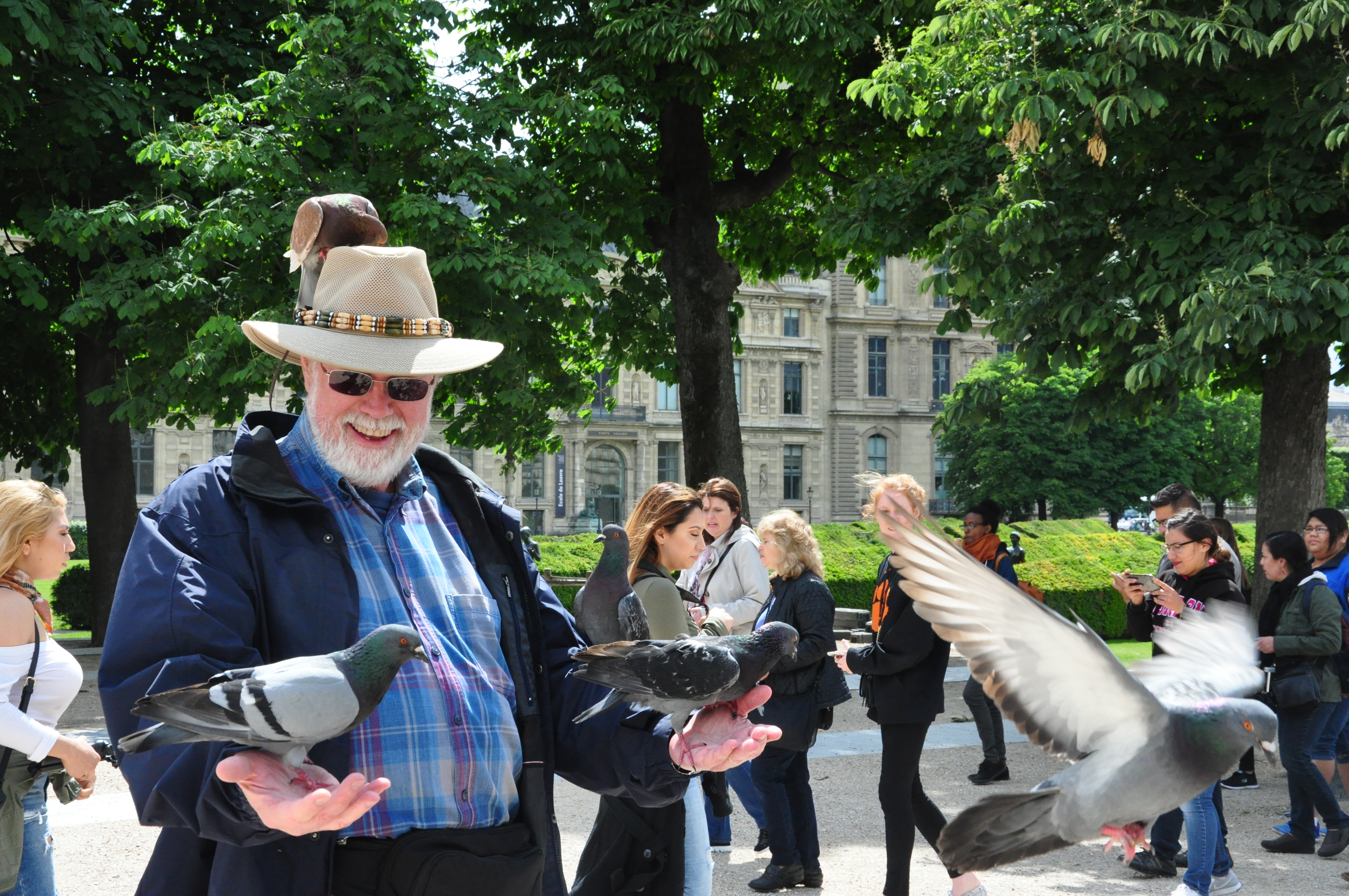
Later in the day, Nancy and Bruce joined us for some entertainment by nearby street performers. One memorable street performance was “Pigeon Man” (our name for him). He delighted us with his ability to get the pigeons to perform as he directed them with bits of bird seed. Nancy took photos as we enjoyed having the birds perch on and around us.

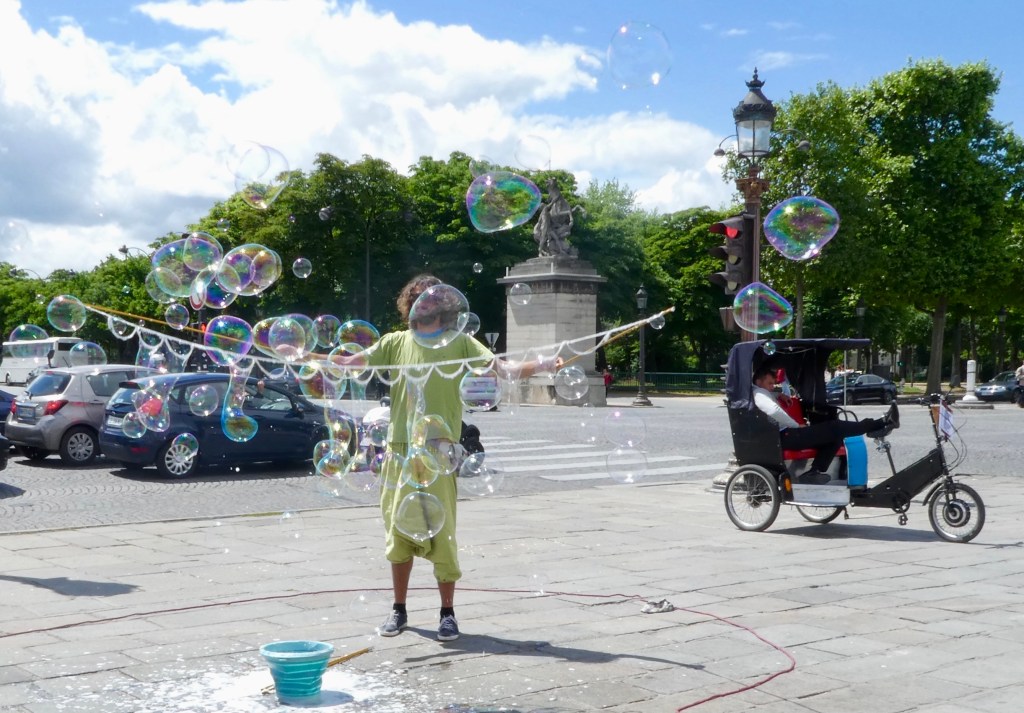
“Bubble Man” (also our clever name) had perfected a unique way of creating many large bubbles at once. The children delighted in chasing, catching, and popping the bubbles. George stood carefully studying the man’s wand as he anticipated making one for himself.

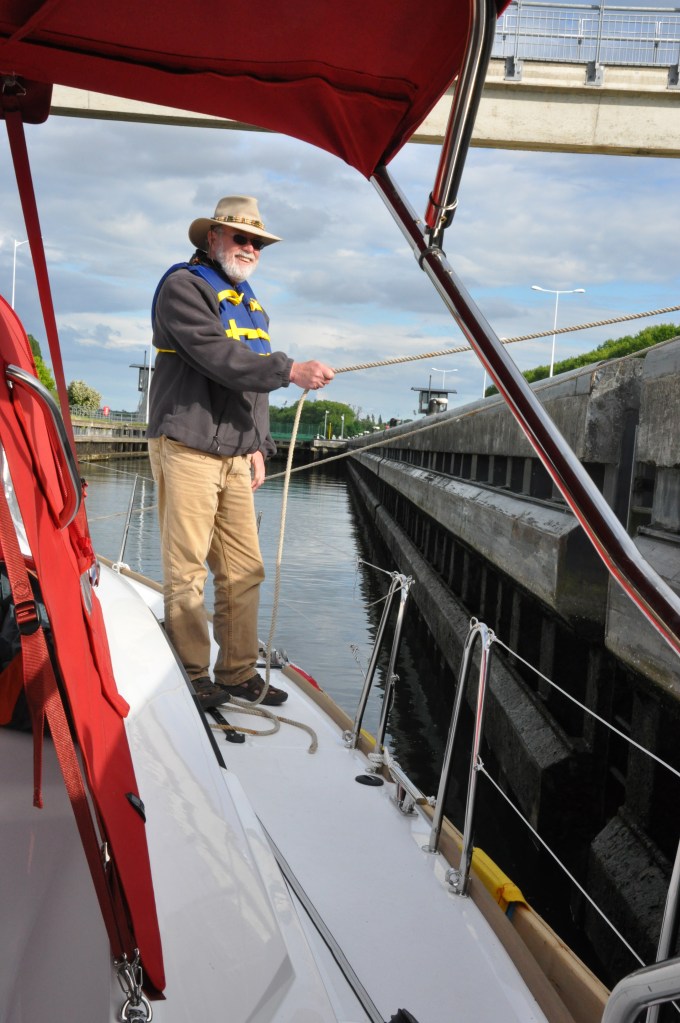
It was now time to leave Paris and continue on towards the Mediterranean. The entrance to and from Port de l’Arsenal includes a lock to transition between the difference in water levels. Bruce manned a line as the water rose to the the level of the Seine.

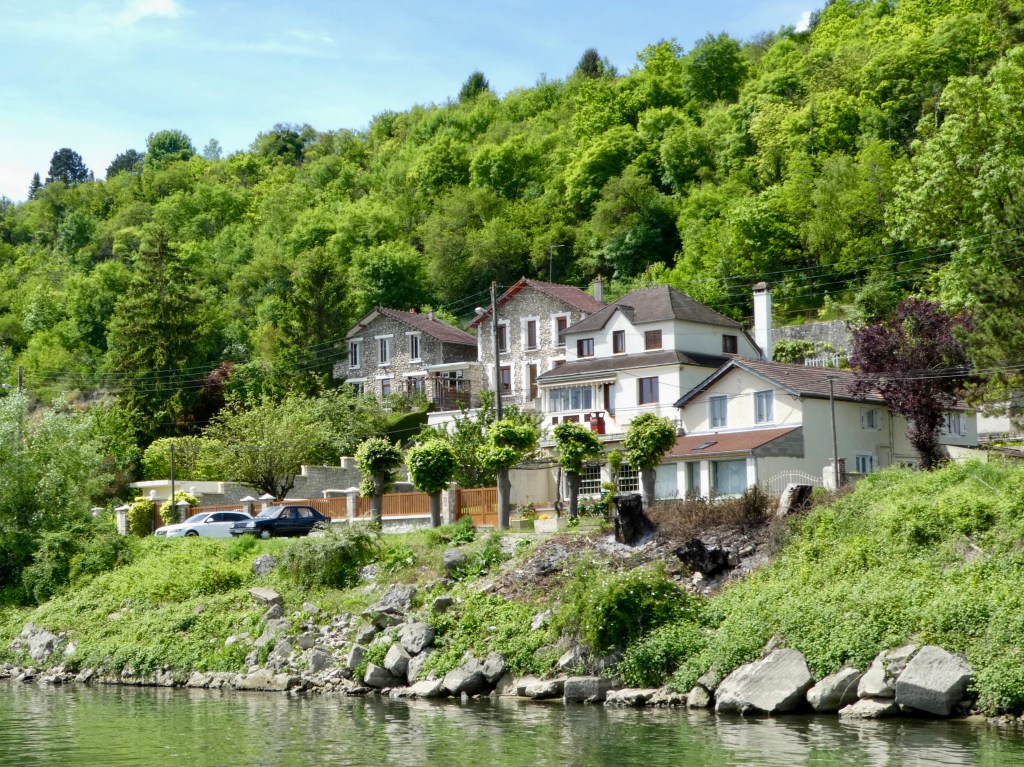
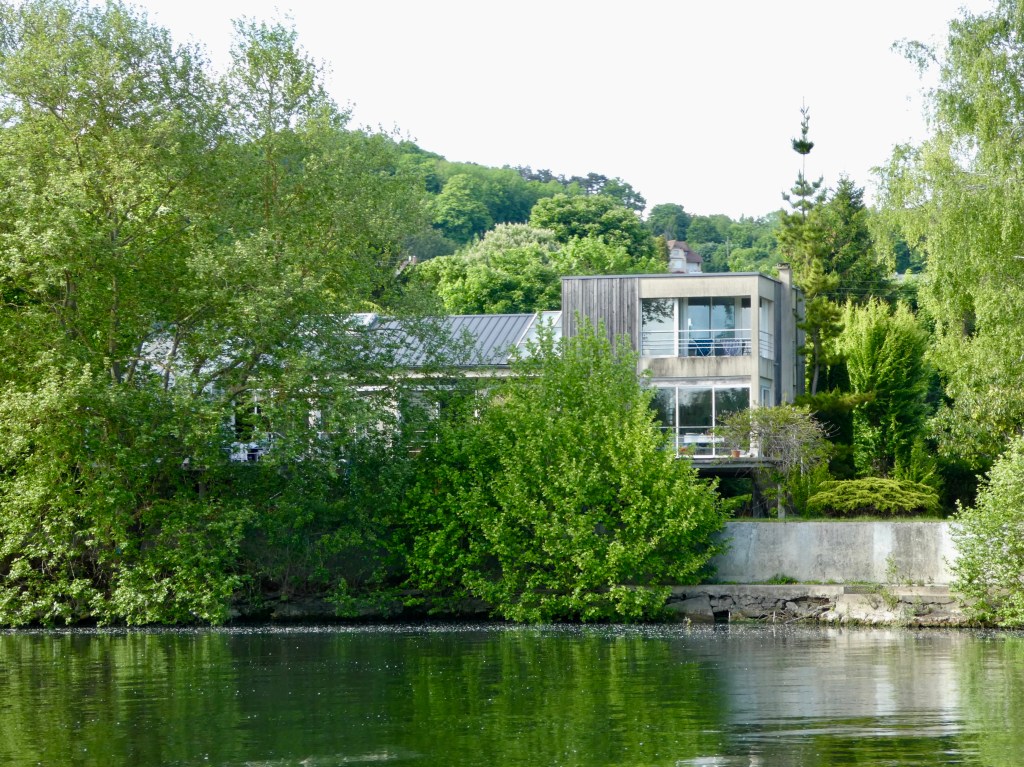
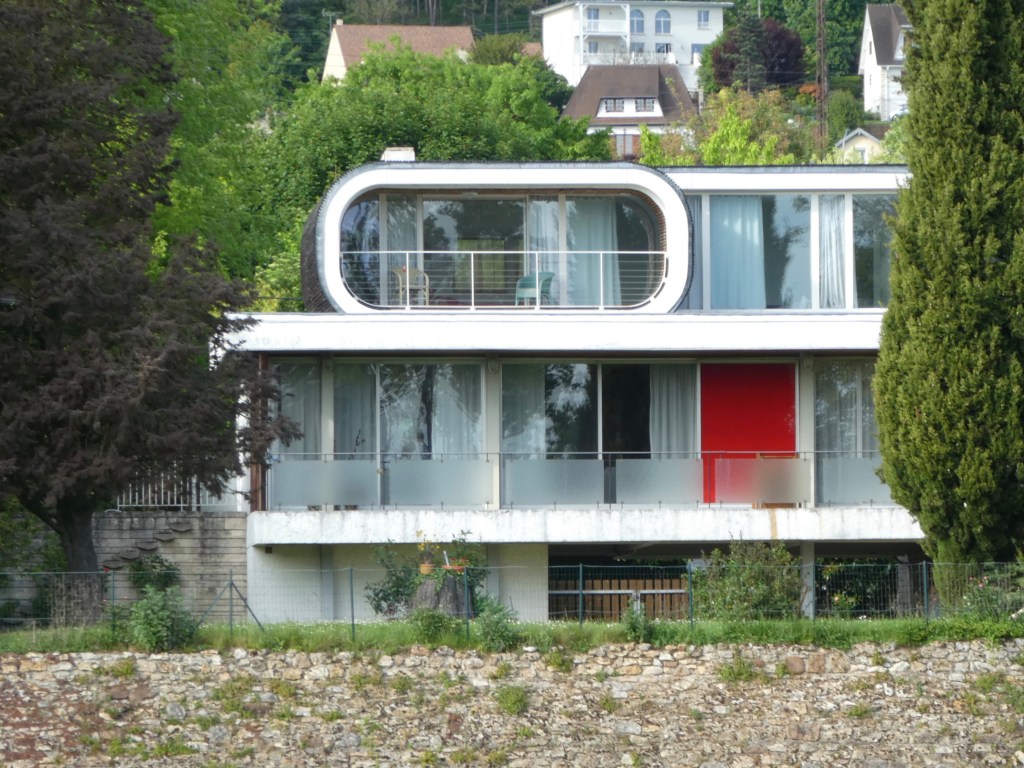
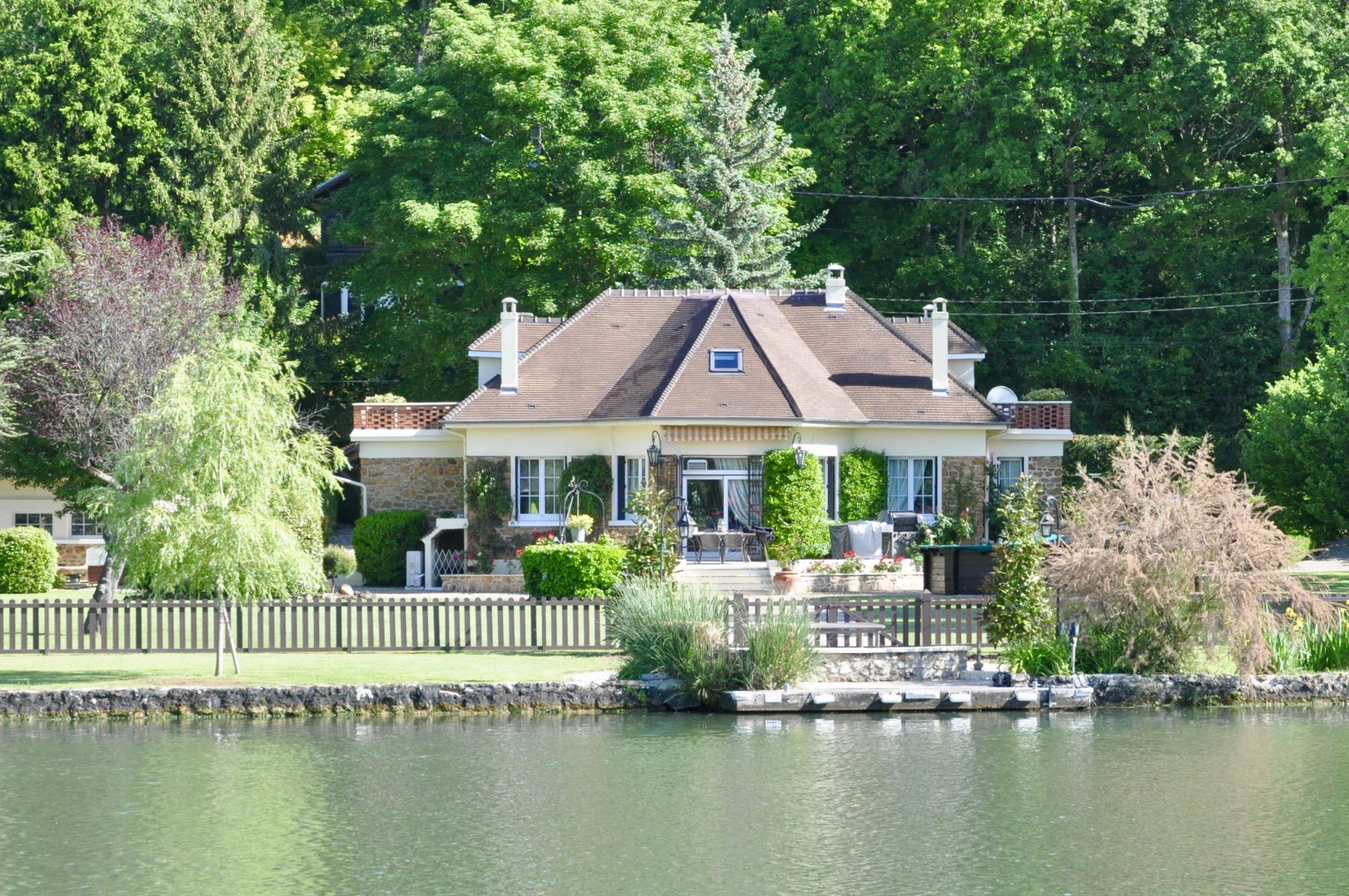
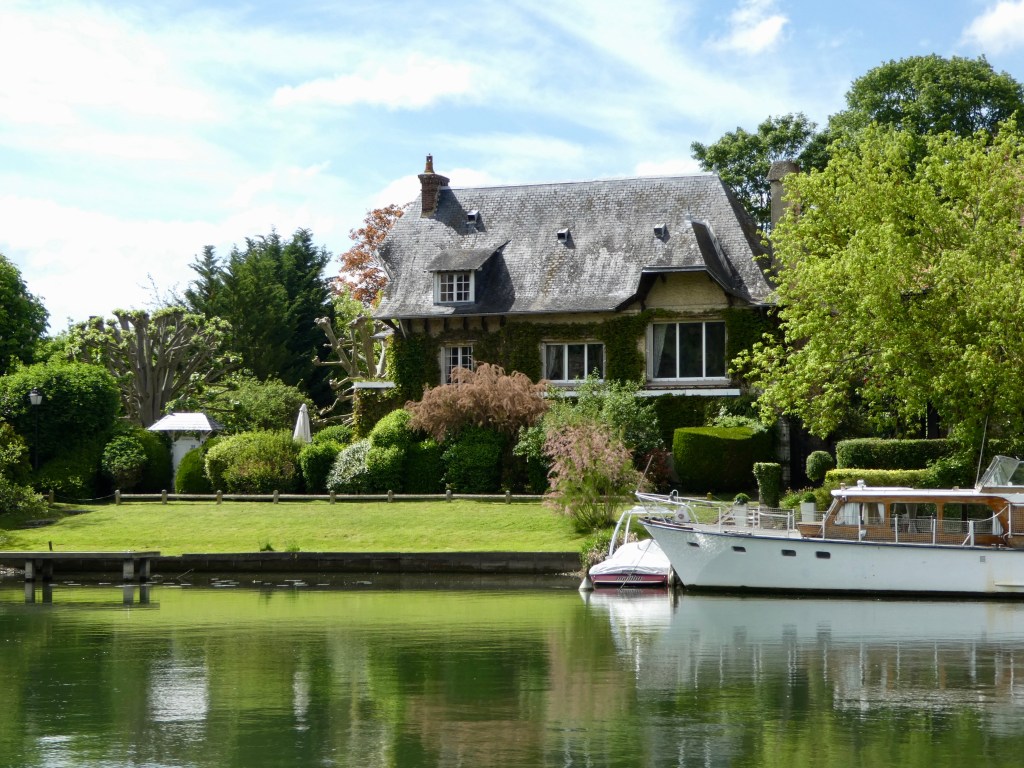
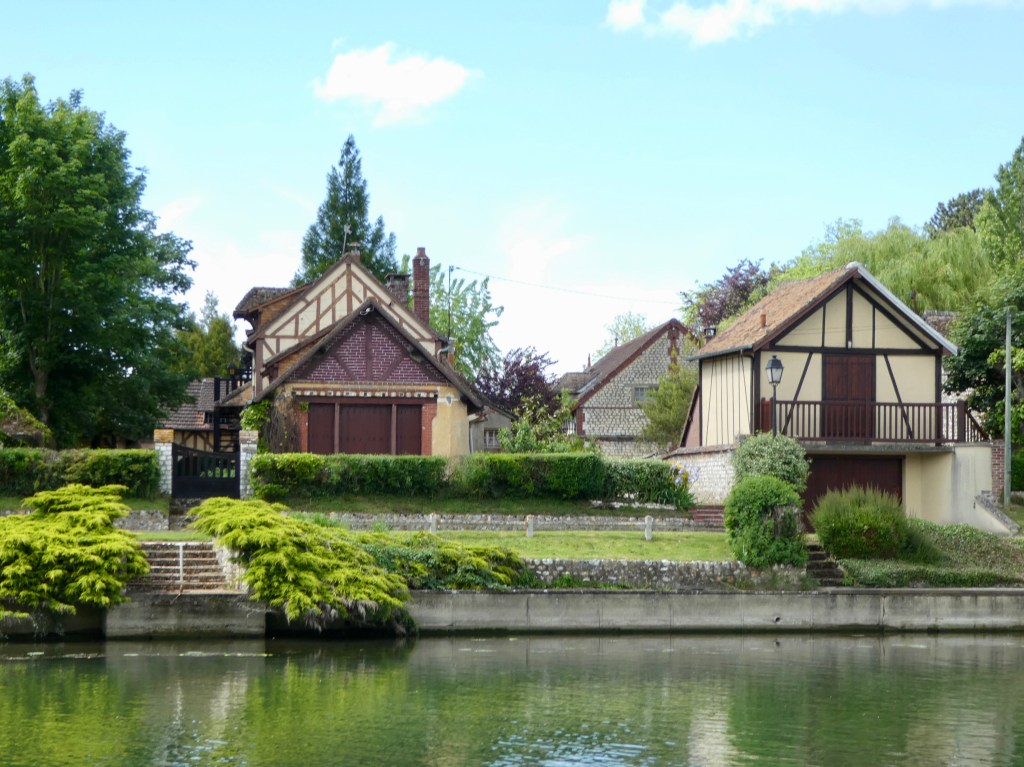
As we continued up the Seine, many beautiful homes, often large and of relatively new construction, lined the riverbanks.

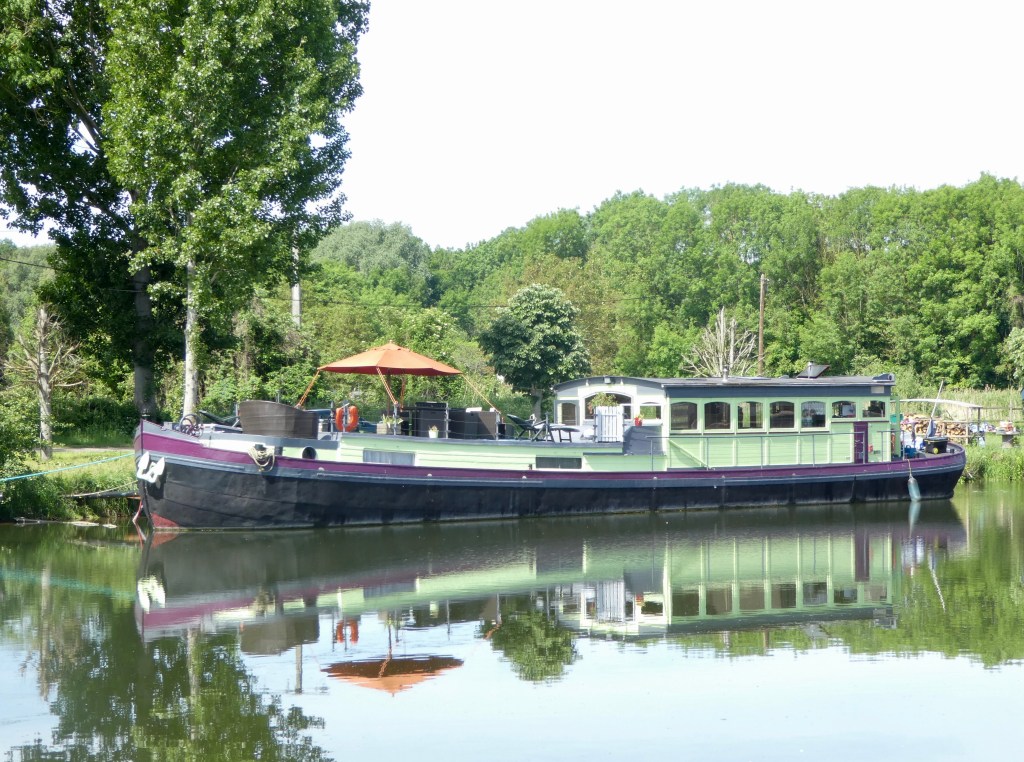
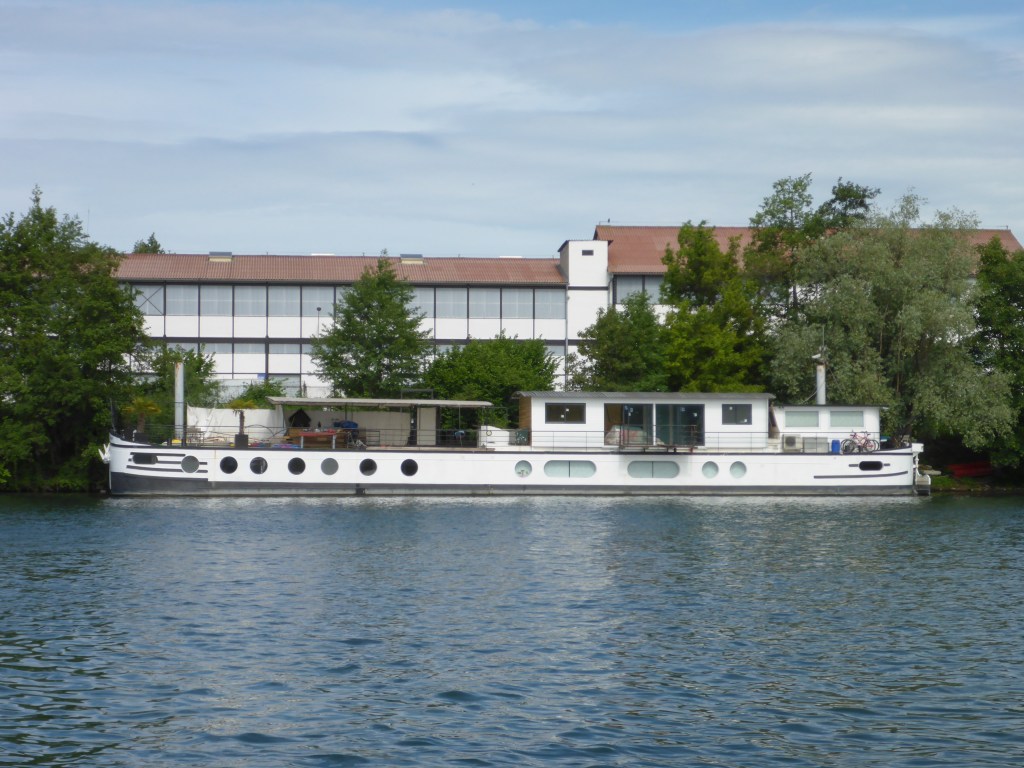
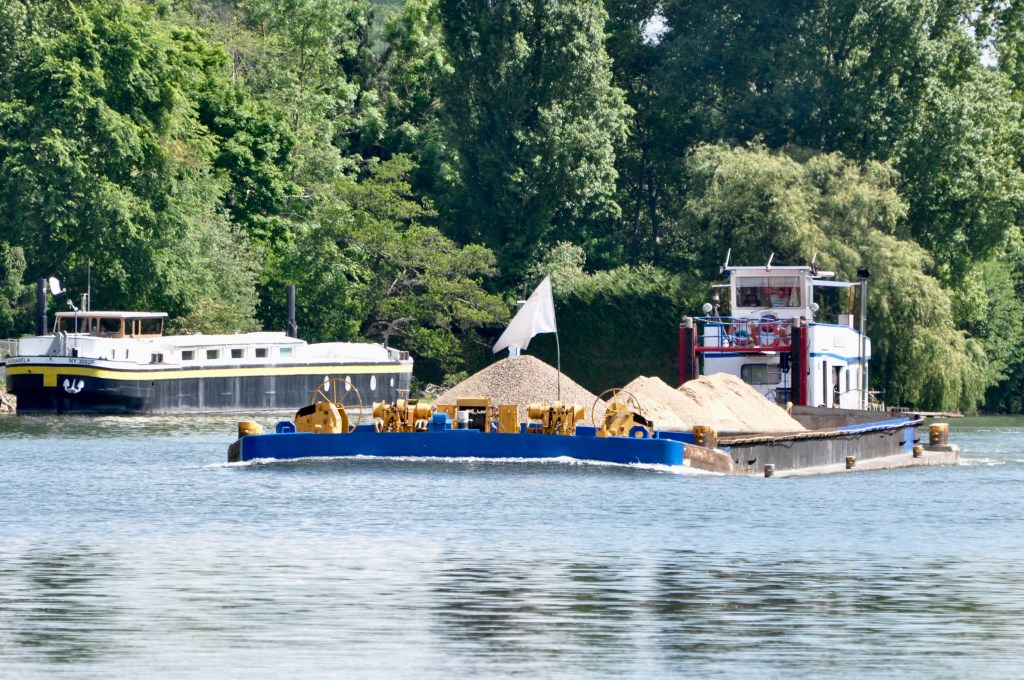
Canal boats, refurbished to the nines lined parts of the riverbanks representing many interesting architectural themes.

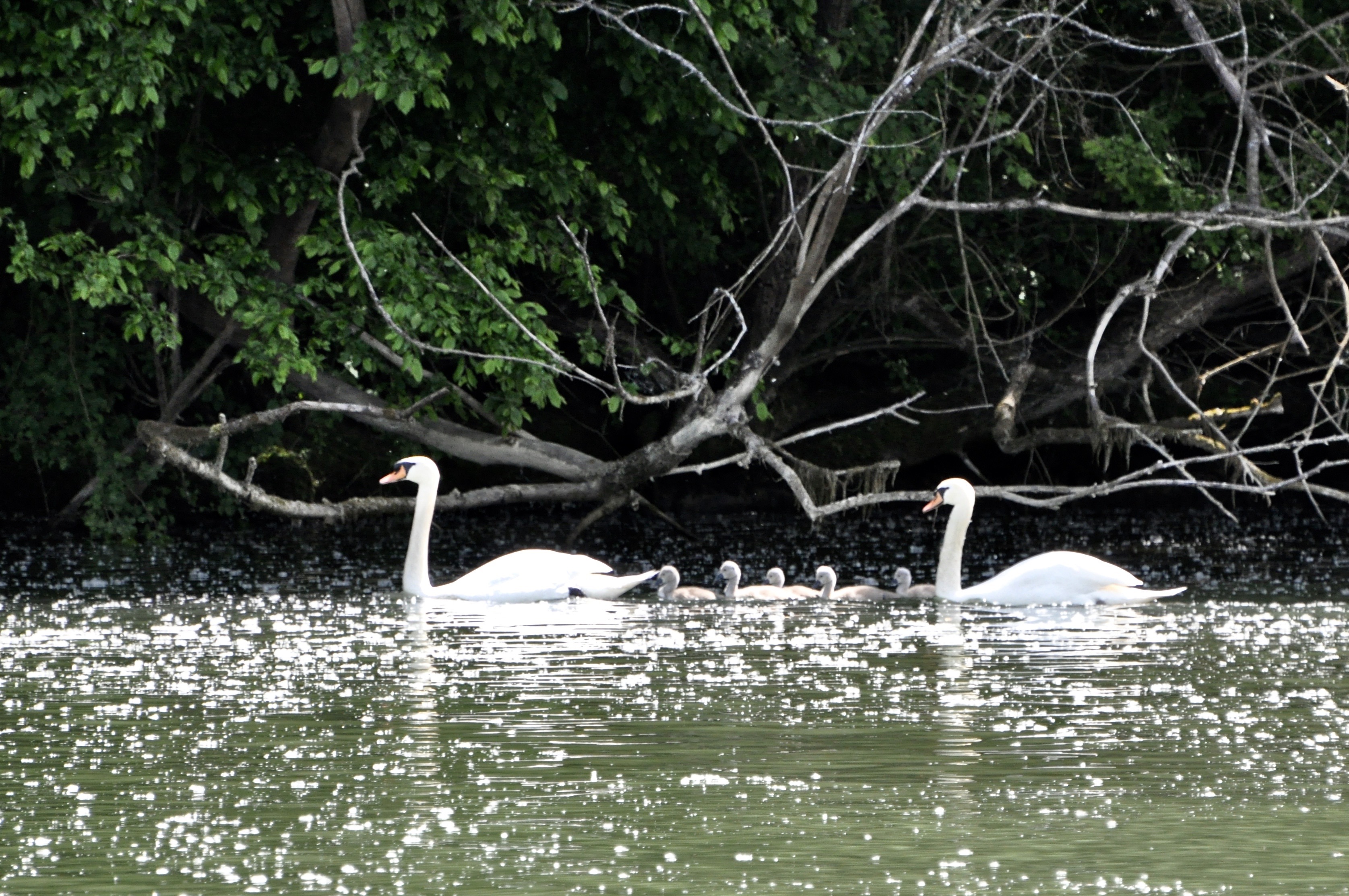
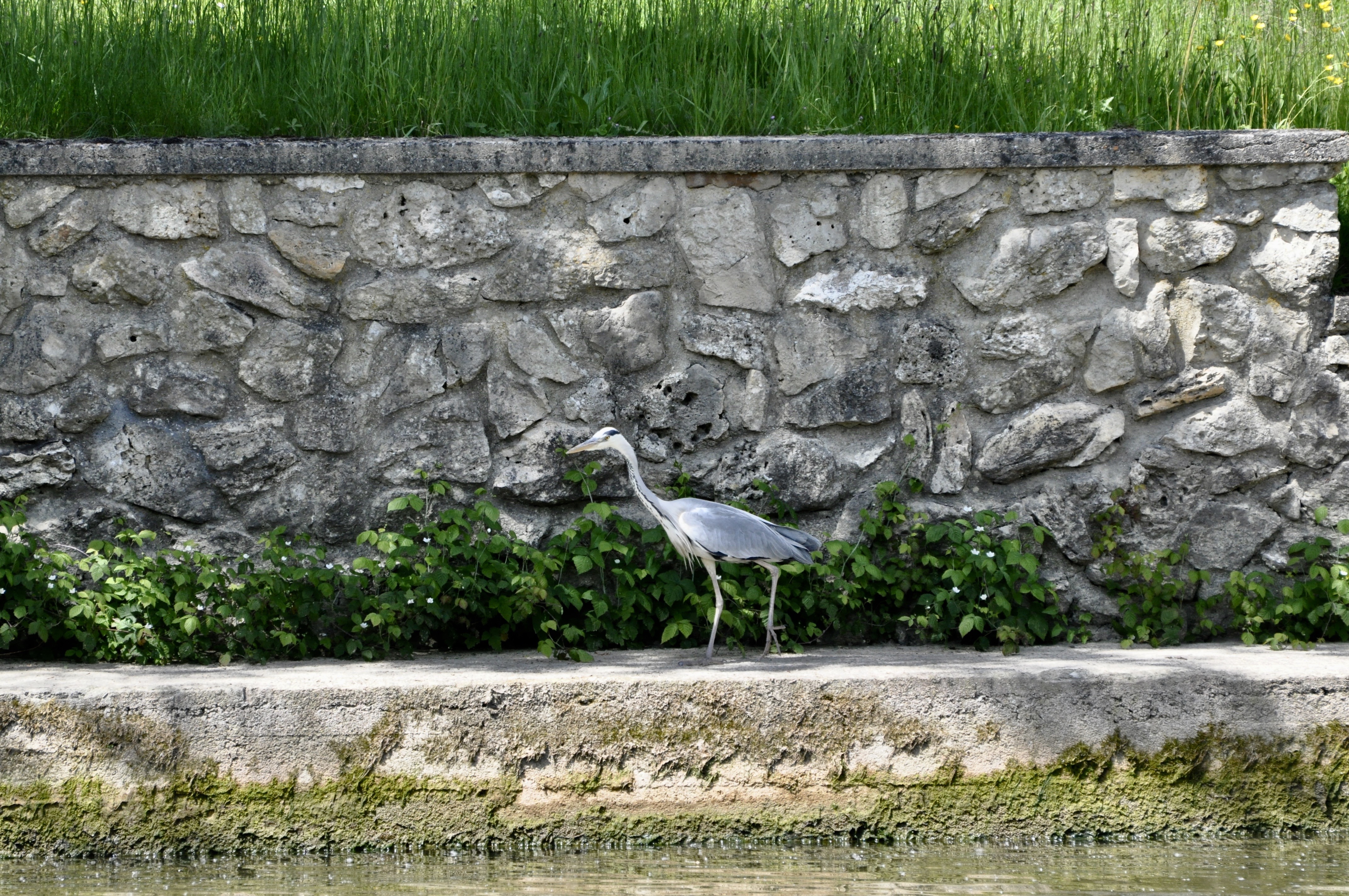
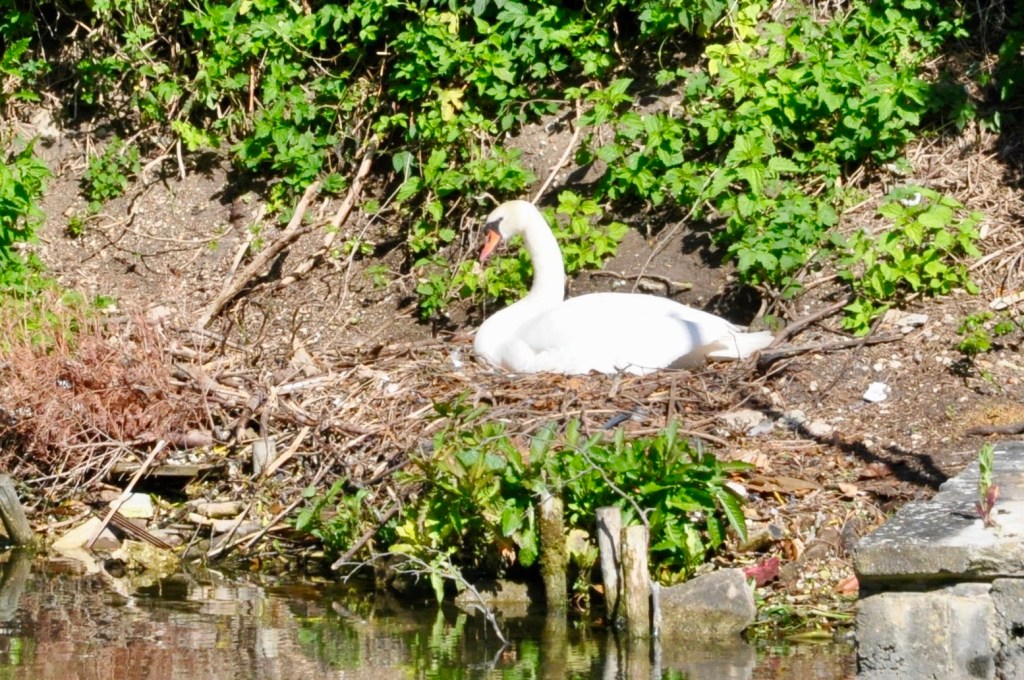
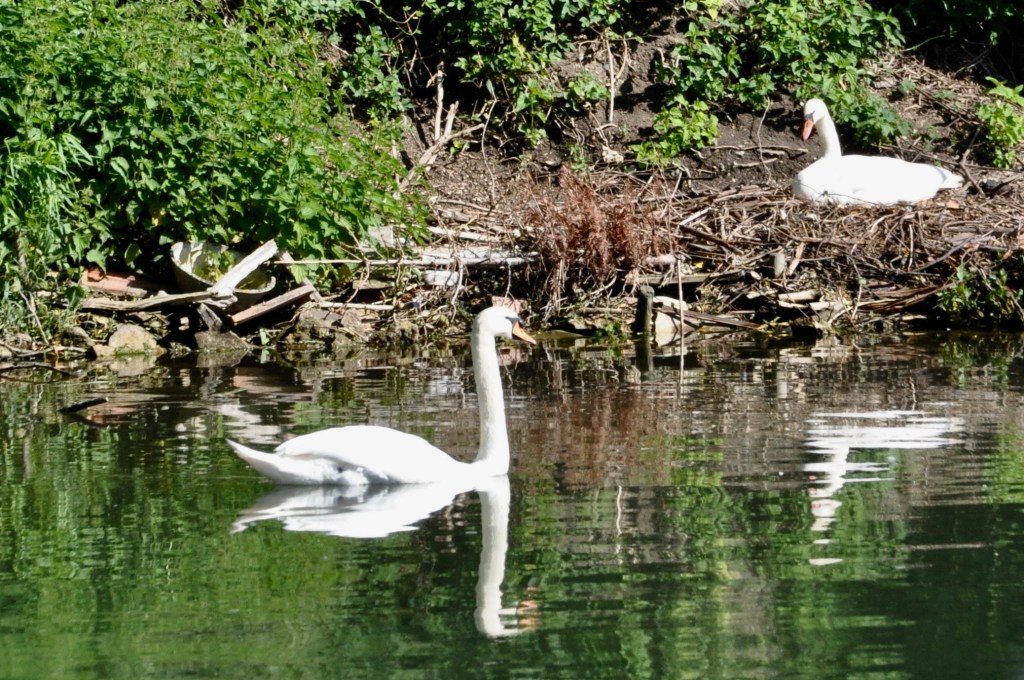
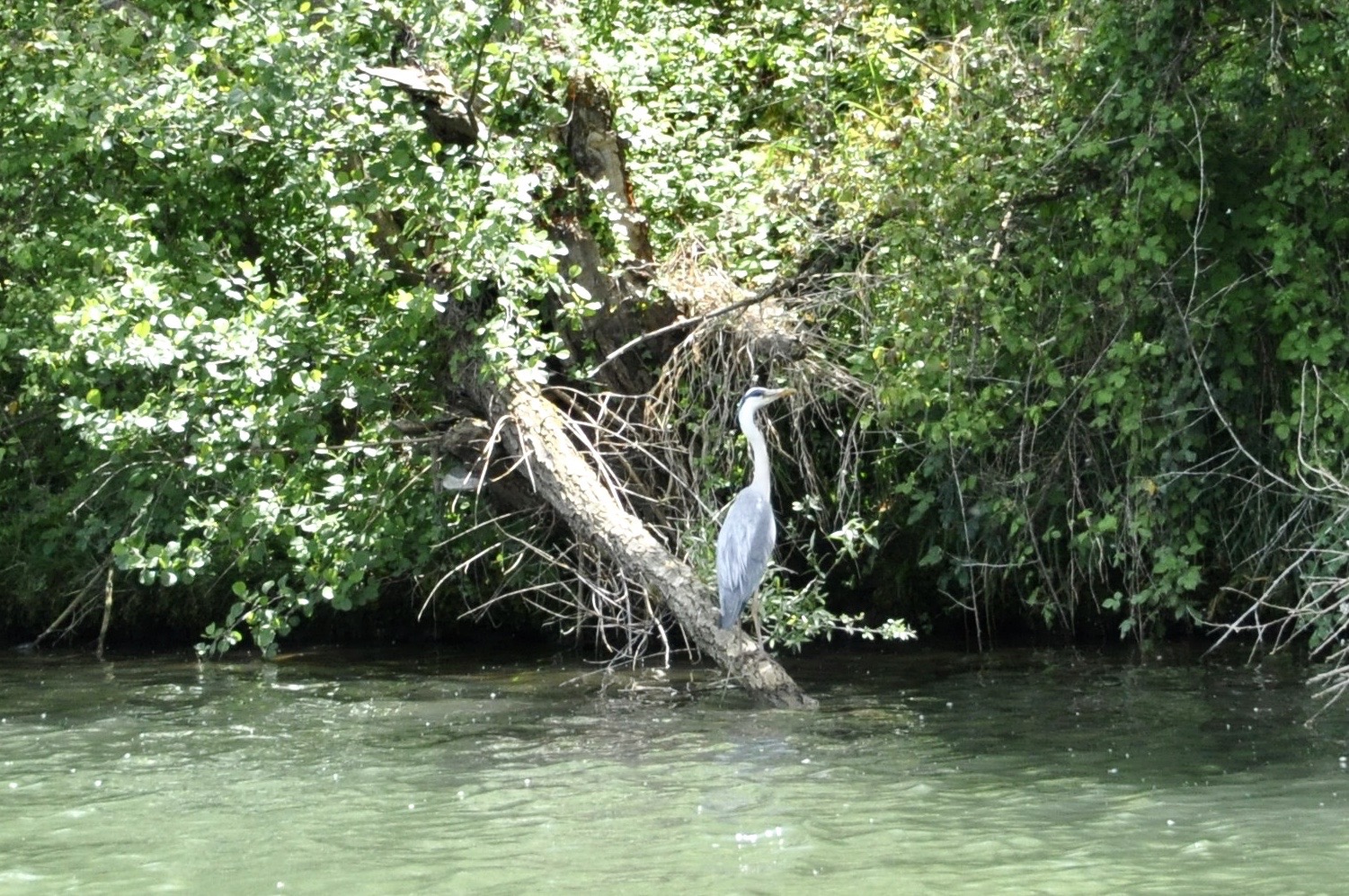
Water birds of a wider variety were present, and often accompanied by hatchlings.

Swan sitting on nest
Male swan made his presence when it seemed we were too interested or too close to the nesting female.
Small River Barge

All seemed to enjoy the slow pace and interesting sites.

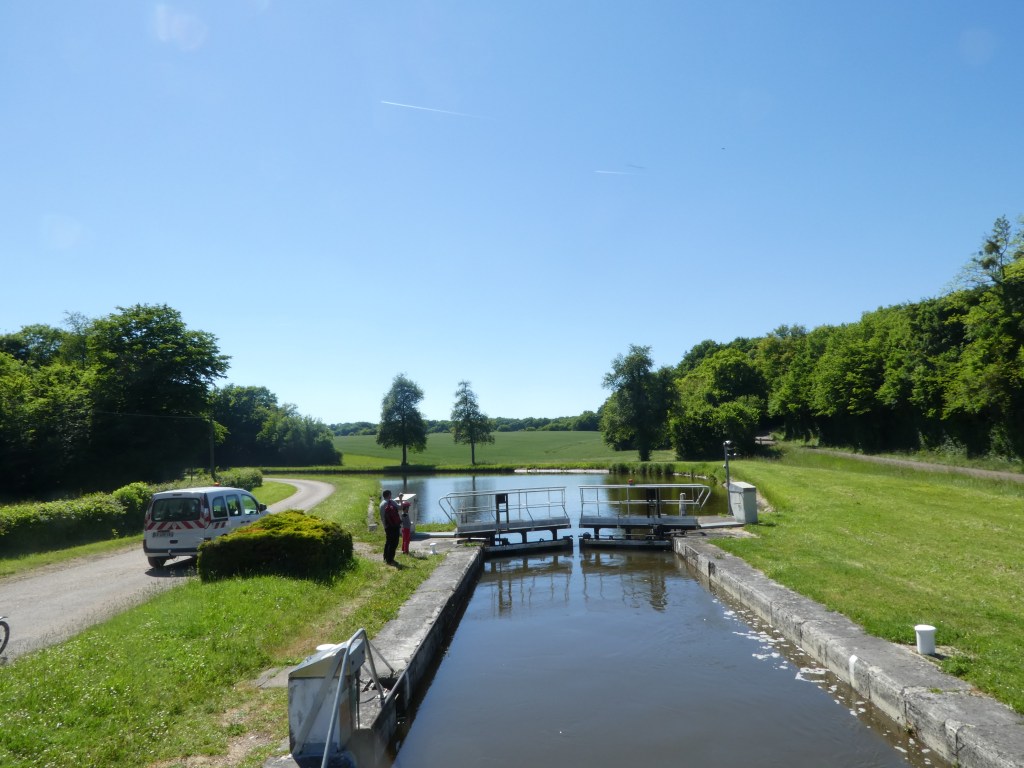
From the Seine, we transferred to Canal Loing, the first canal on our voyage, and soon after, we approached the first lock in the canal. We had read that many of the canal locks do not have lock tenders. They have been reconfigured with electric eyes to open the doors and means for the boater to signal the doors behind the boat to close, after which the exchange of water begins, and finally when the level of water matches the next leg of the canal, to open the forward doors.

The canals work for both directions.of travel and red or green lights indicate if the lock is being readied for you or if you will need to wait for traffic in the opposite direction.

As we approached the lock we saw no evidence that we had been detected. We approached very closely in the in the hope of triggering the electric eye, but with no better luck. We had read that some locks required the boaters to manually open the lock gates so George backed up to a place on the canal where I could get off and inspect the lock itself. I found no solution to open the lock until I approached a small building with a button to push in the event the lock was not working. After a number of tries a person responded and I communicated our situation. She indicated someone would come to assist us but it might take some time.

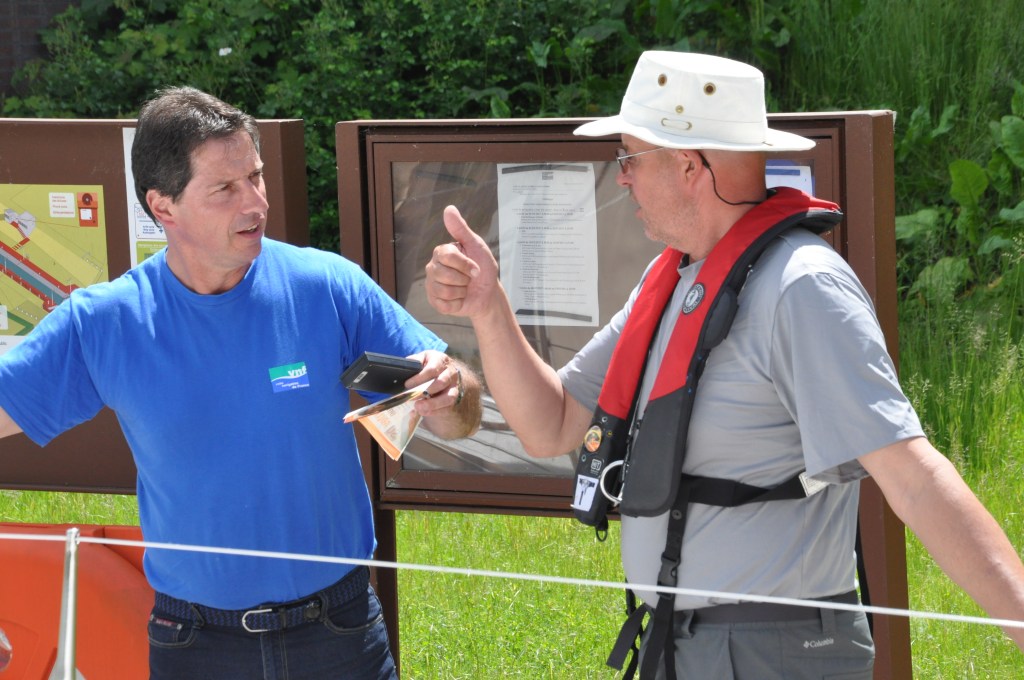
A gentleman arrived and in George’s mysterious capacity to decipher instructions without speaking or understanding a word of French, learned that we should have received a signaling device to alert the lock, and would be able to get one at the next lock. As for much of our journey, small problems were sorted out and we carried on that much more prepared.

It seems this lock had not finished messing with us, however. The water level rose to a height nearly at the top of the lock. As such, the fender guards George had built to protect Ice Floe from the concrete walls, were out of the water. While departing, Ice Floe glanced the edge of the exit and got her first significant scrape. It was a sad moment, but we knew it was bound to happen.

A short way on it was time for Nancy and Bruce to leave us and we said farewell. They were our first guests on Ice Floe and joined us for a number of first experiences along with us, (mostly good ones).

Sailing Into Paris

16-May – 17-May-2017

We sailed into Paris in the early evening on May 16th.  Our guide book had George prepared for the worst with descriptions of where boats must pass under a myriad number of bridges, traffic lights that regulate the right of way, and a waterway full of cruisers, sight-seeing tour boats and working barges.  All this, and being sure not to miss the sights of Paris from your own boat, seemed a bit intimidating.  In actuality, we arrived at the marina we would stay at, unscathed and pleasantly surprised that the trip  went so smoothly.

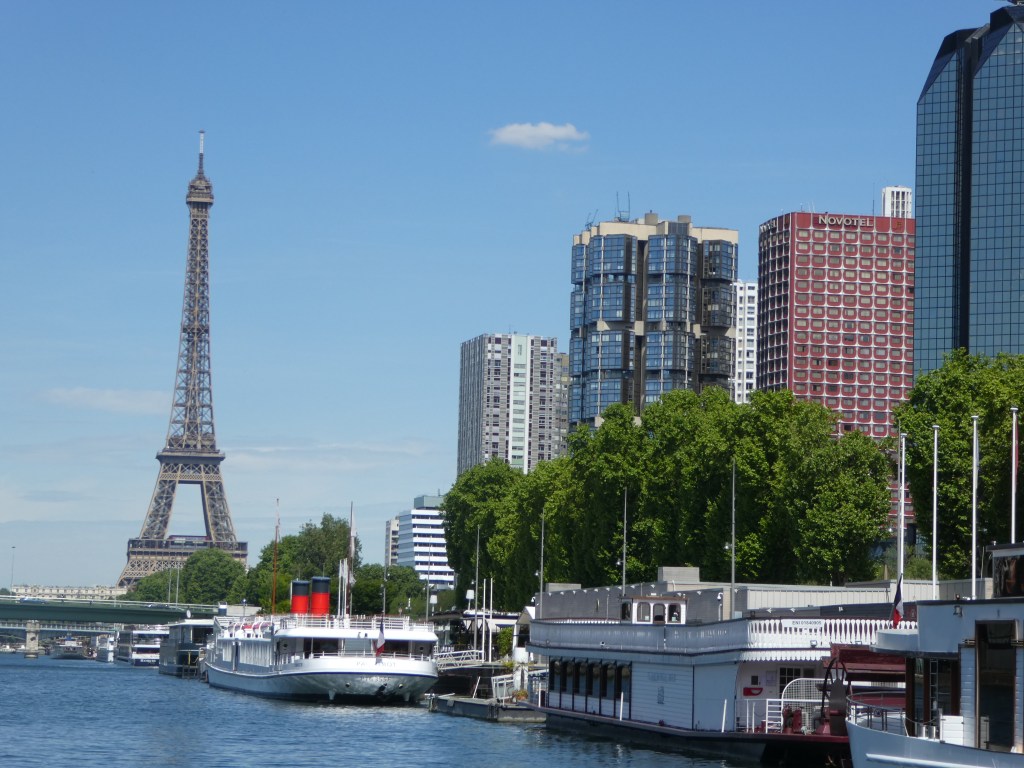
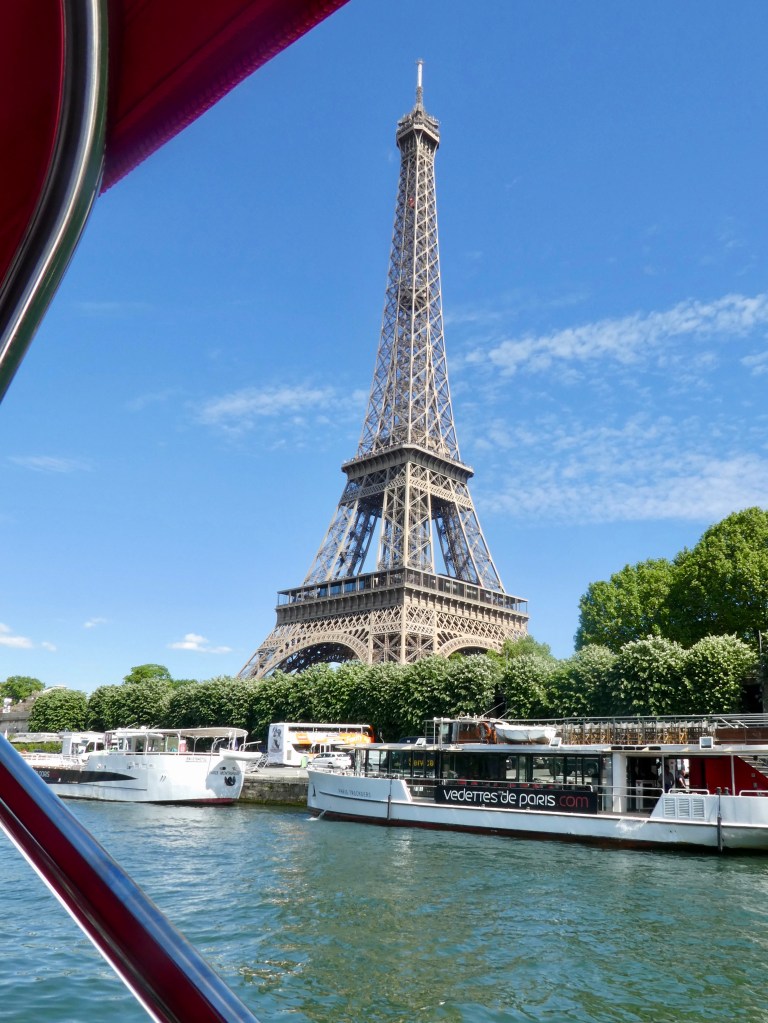
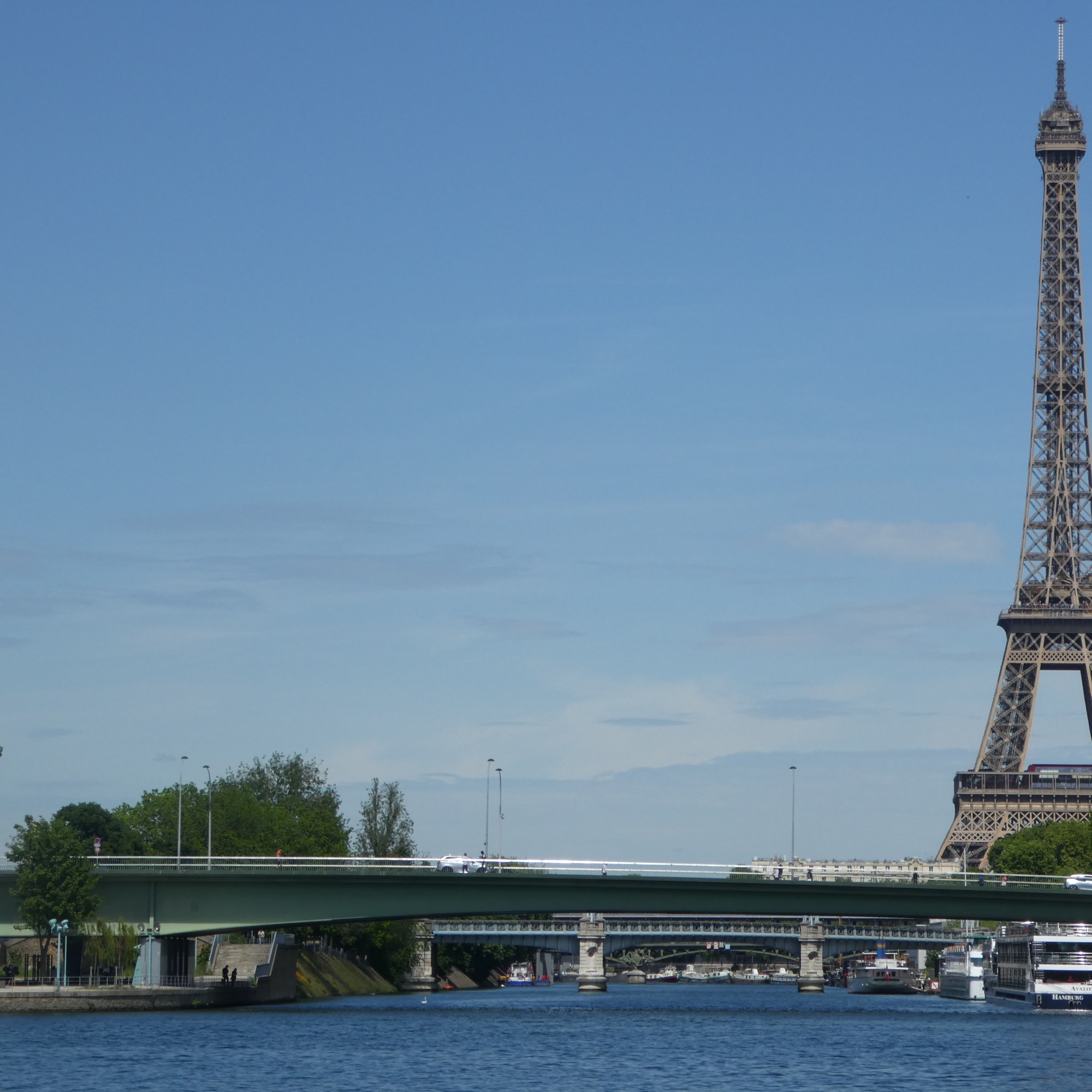
The Seine passes right through the heart of Paris.  Right past the Eiffel Tour.   

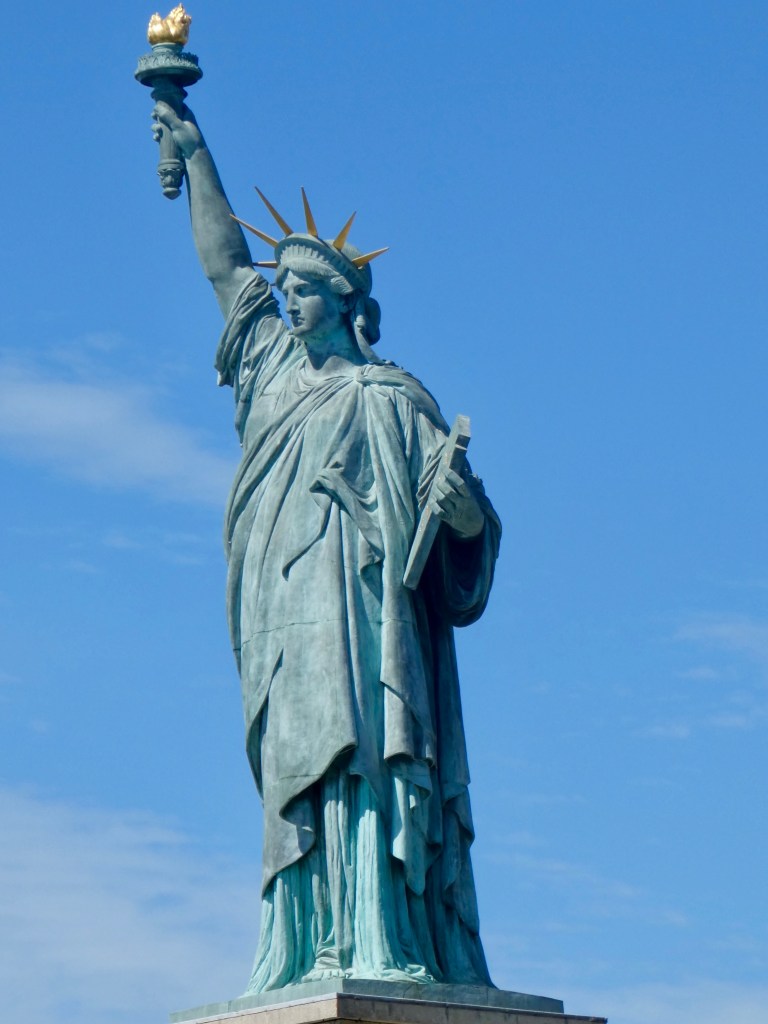
Right past France’s Statue of Liberty.  You may recall that France gave the U.S. our Statue of Liberty in 1883.  The U.S. gave France a smaller version of the statue in 1886.

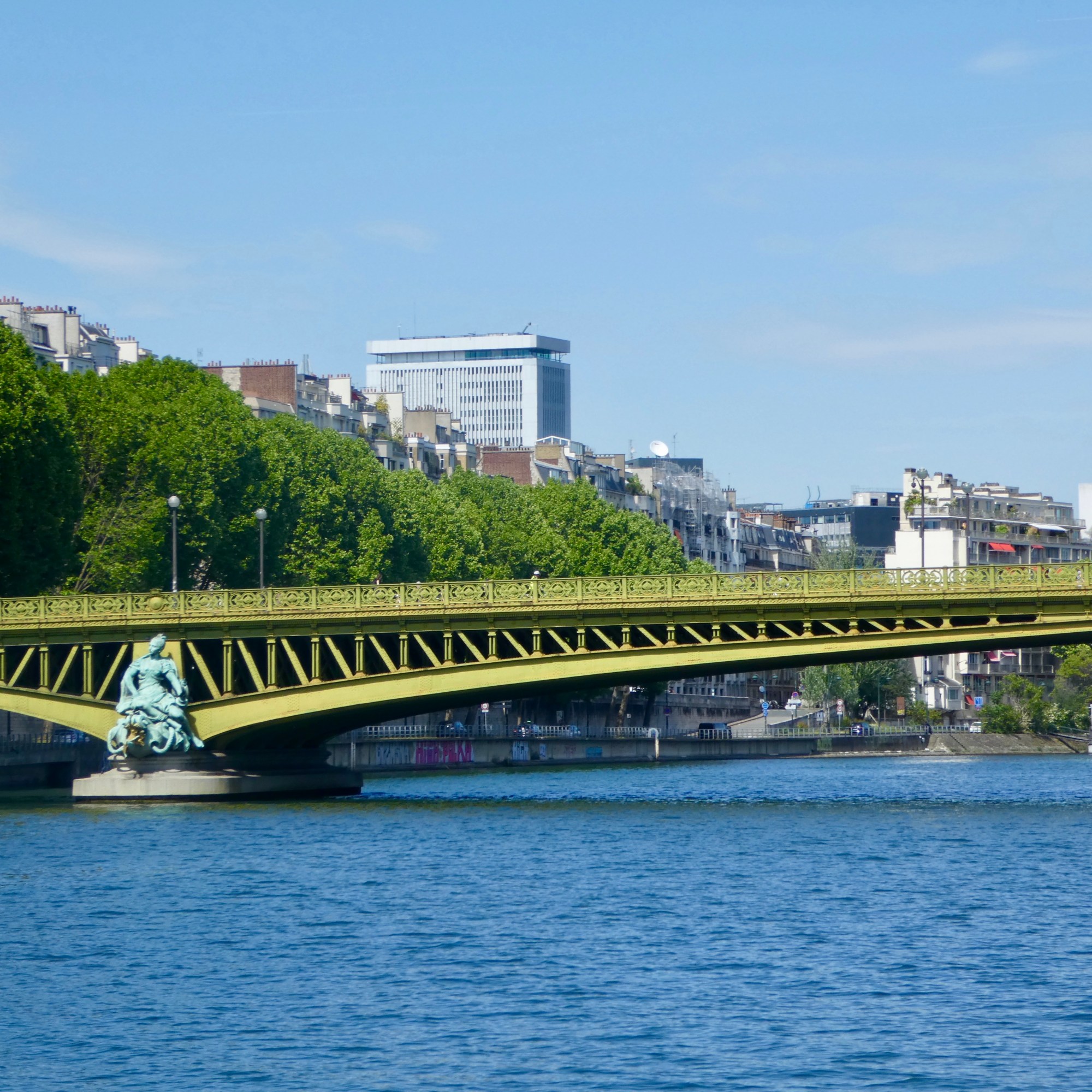
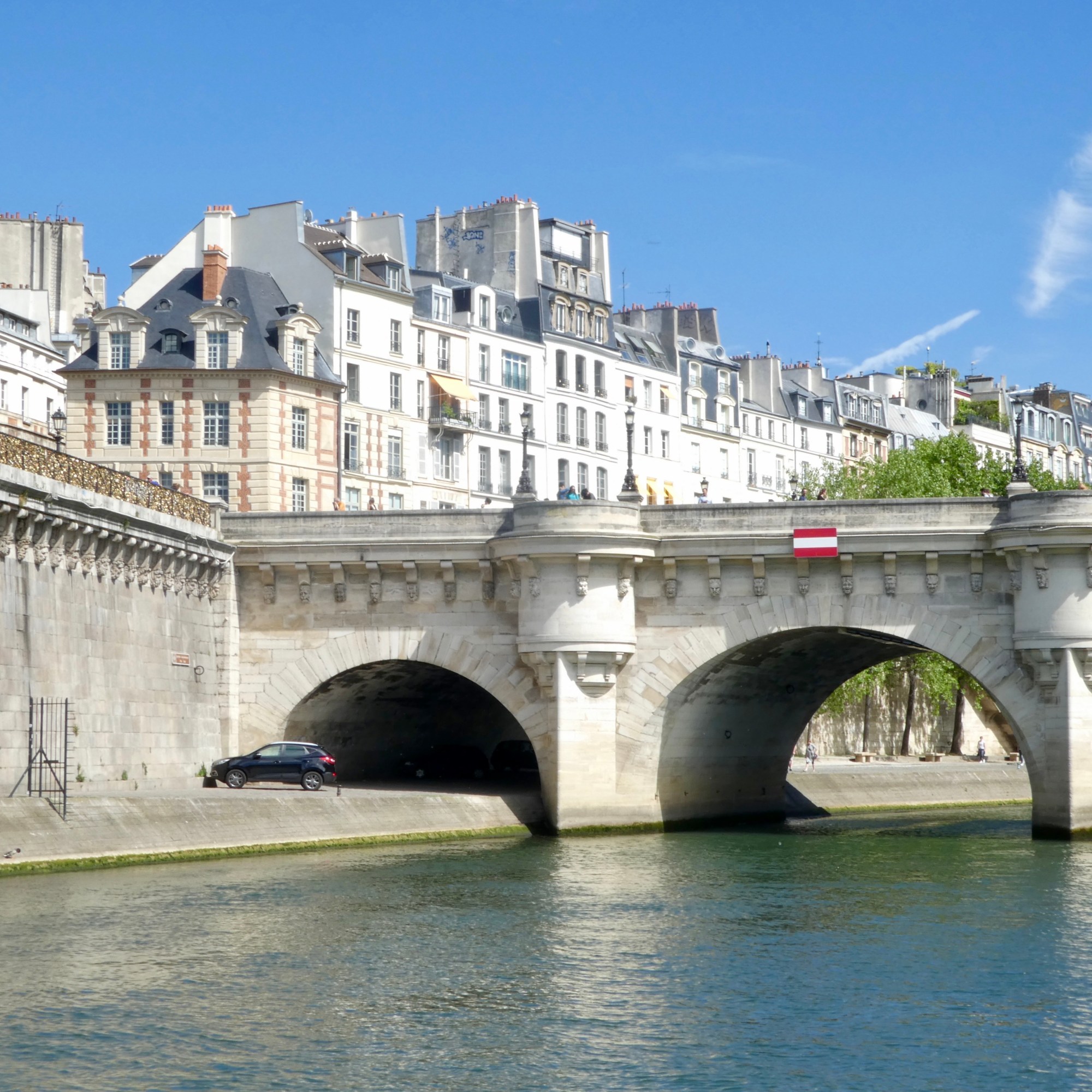
We did pass under a myriad number of bridges (38 in fact).     

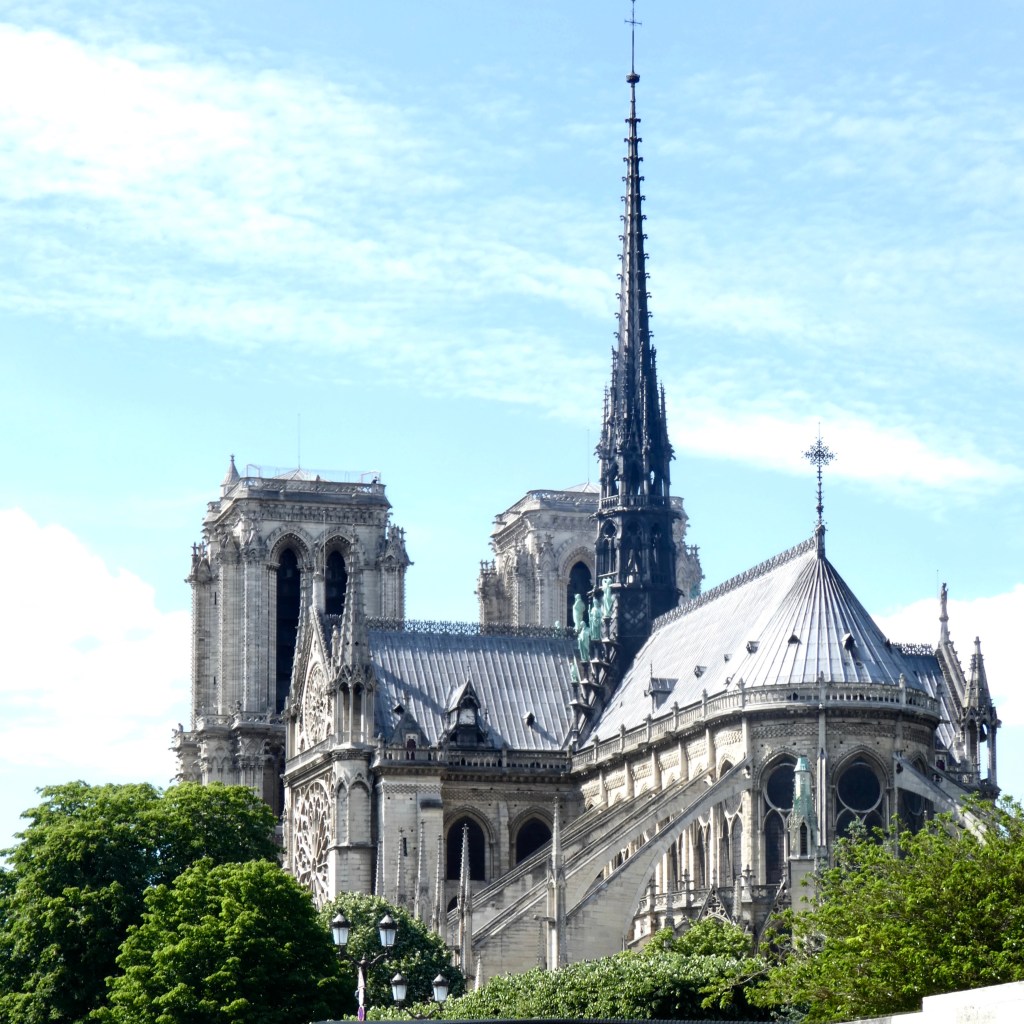
And right past Notre Dame Cathedral.  Did you know there are many Notre Dame Cathedrals?  Notre Dame translates to “Our Lady” and I am not exaggerating when I say, to date, we have visited more towns, villages, and cities in France that have a Notre Dame Cathedral.

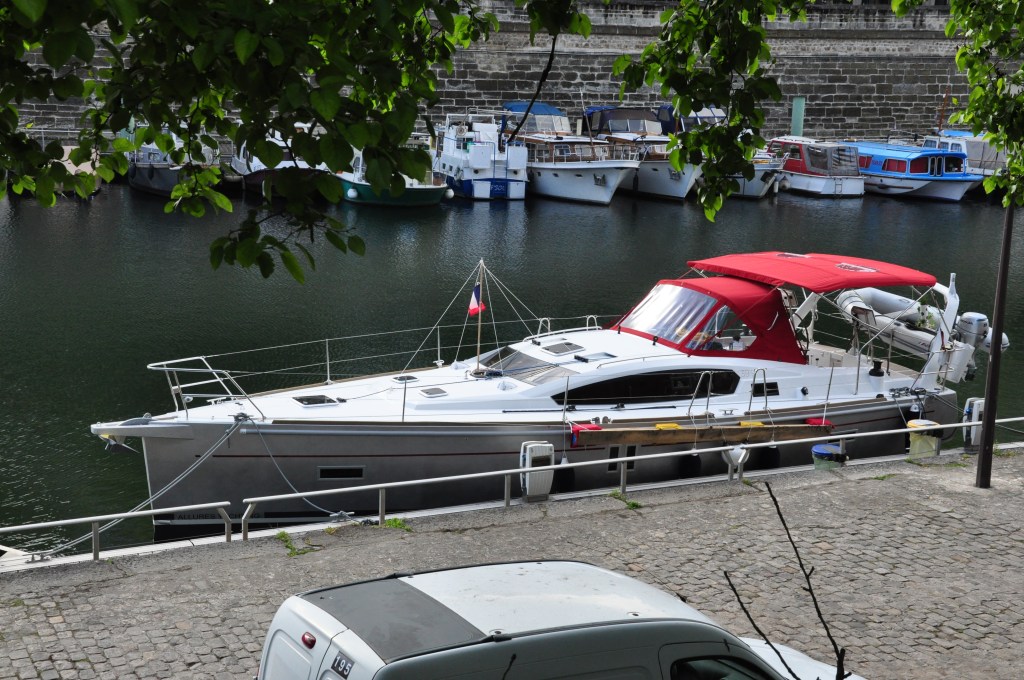
We stayed in Paris at the Port D’Arsenal de Paris marina for the incredible low price of 40 Euro per day including water, electricity, and showers.  We met the 2nd and 3rd couple who indicated they had set out on a 2 year cruise, 10+ years ago, and hadn’t yet finished.  These and other veteran sailors we have met, have been all over the world, some in the same boat, others in multiple boats they keep in different areas of the world.   Commonly, they have favorite spots they visit regularly and the Port D’Arsenal appears to be one such place.  This enables  these “nomads” to reconnect with friends they have met on the water and share years of past experiences with.

Ice Floe in Port D’Arsenal

Speaking of old friends with shared experience, we met up with Nancy and Bruce the day after we entered Paris (May 17th).  Nancy and Bruce were visiting Switzerland and took a train to Paris to spend a week with us.

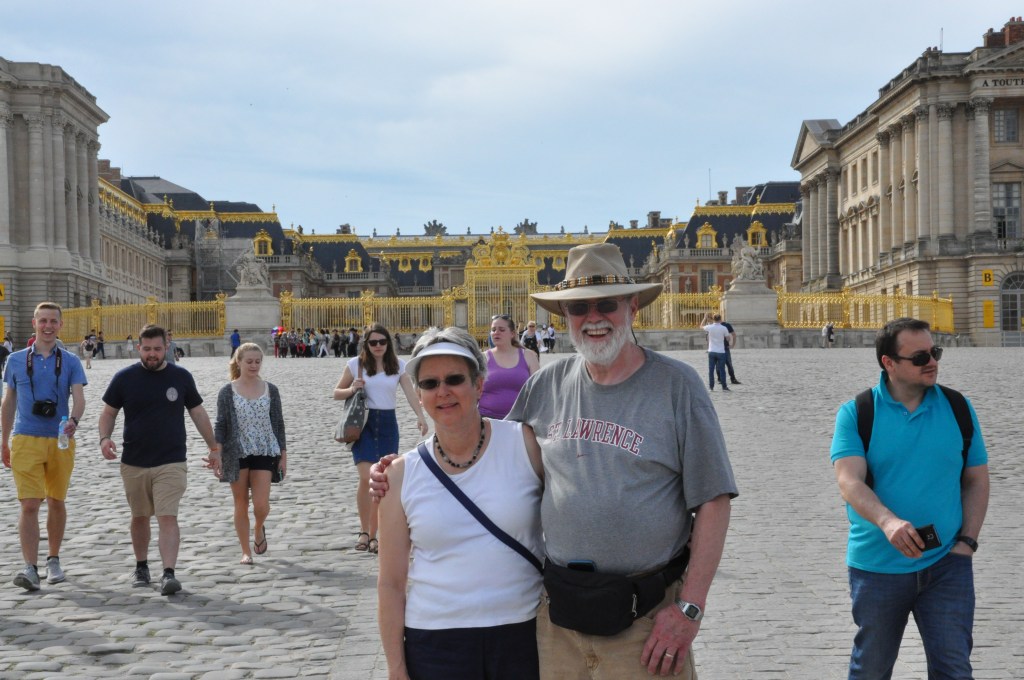
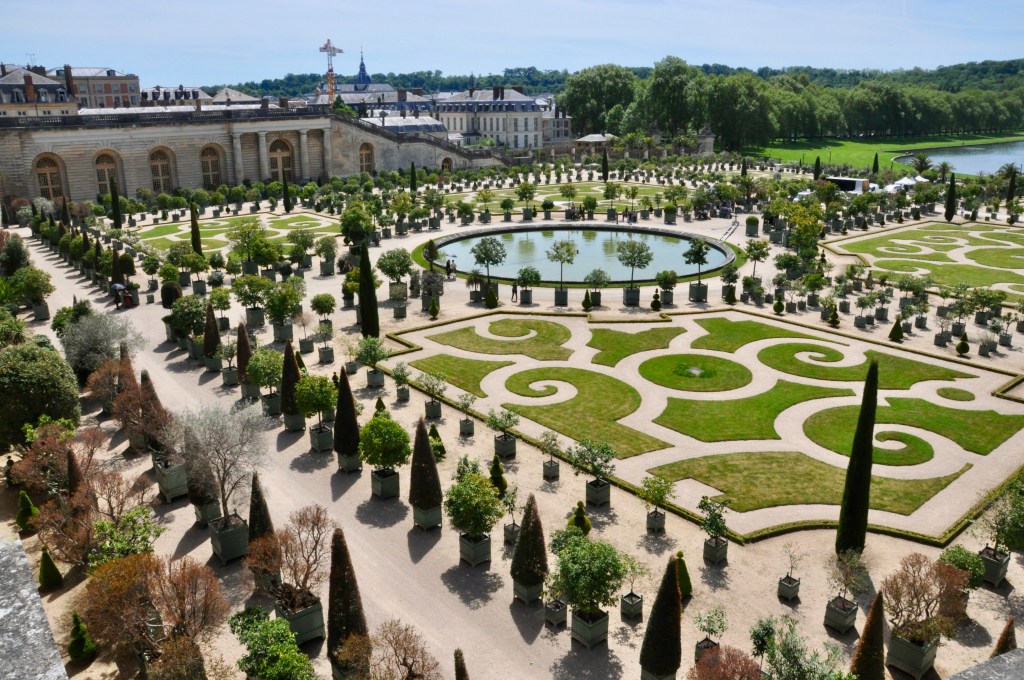
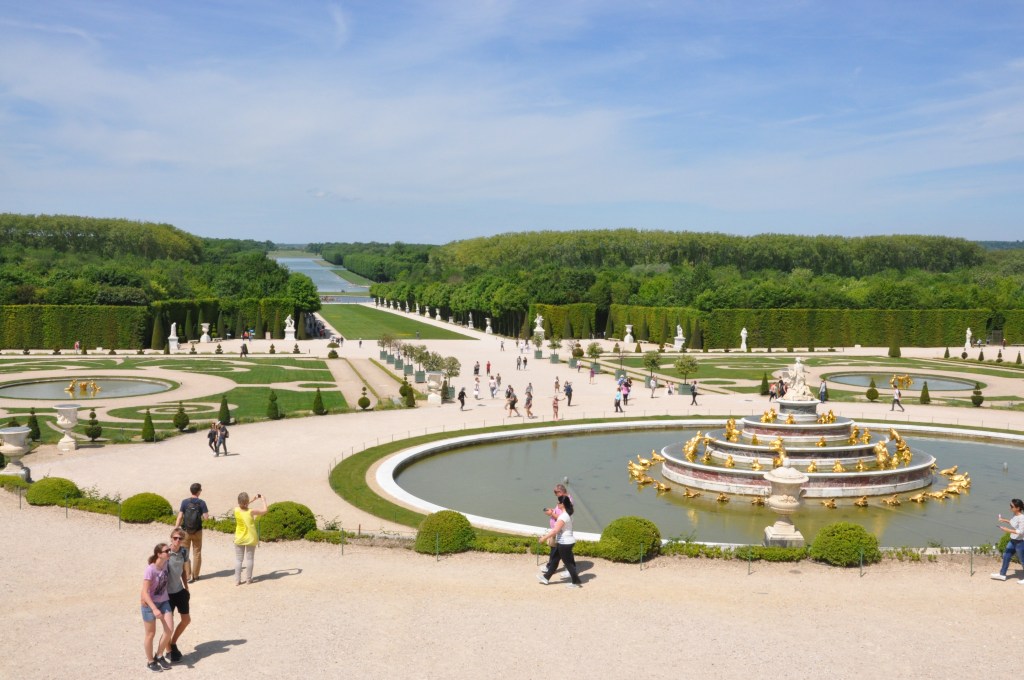
We visited Versailles on our first day together.  George and I spent the day within the Versailles gardens.  They were as spectacular  as when we visited them in January, but our imaginings of the gardens all abloom with flowers was a fantasy,  as the gardens remained flowerless.  The gardens year-round are an amazing display of shrubs and trees laid out in a strict geometric pattern with extensive topiary sculptures.  

Nancy and Bruce spent some time in the gardens and also toured the pallace.  When I asked Nancy to describe the interior of the palace I believe what she said was “disgusting”, referring to its opulence and inexcusable use of the country’s wealth in the midst of the squalor of the majority of citizens.   

The first structure of what encompasses the Palace of Versailles was initially built by King Louis VIII in the 1620s as a hunting lodge.  The grand expansion was undertaken by King Louis XIV later in the 17th century.  He subsequently moved the royal court from Paris to Versailles which remained there for the duration of his reign and that of Louis XV until shortly after the beginning of the French Revolution (1789) that resulted in the fall of the Monarchy.  Some of the castle’s splendor has been lost to history including a silver balustrade that contained a ton of silver.  This, along with all the silver in the castle was melted down to fund a war between France and a coalition of  European allies during Louis XIV’s reign.

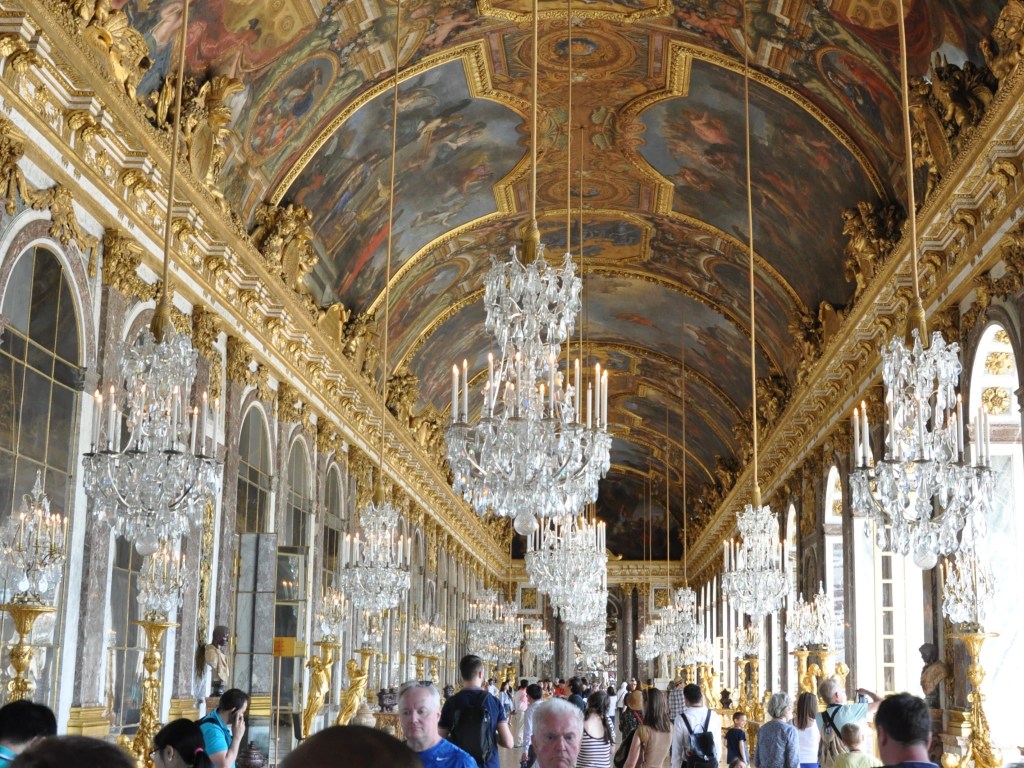
The picture on the left is a room within the Palace named the Hall of Mirrors. The mirrors were made by Venice artisans whose execution was ordered in consequence by the Venice authorities, as Venice, at the time, held the secrets to making mirrors.

The picture on the left is a room within the Palace named the Hall of Mirrors. The mirrors were made by Venice artisans whose execution was ordered in consequence by the Venice authorities, as Venice, at the time, held the secrets to making mirrors.

More of our adventures with Nancy and Bruce in our next update. 

Sailing up the Seine

Day 18 13-May -2017

From Honfleur, we entered the Seine an hour or so before the incoming tide began. The vestiges of the outgoing tide was sufficient to check our speed over ground to 3 knots. There was no mistaking the change in tide as boat speed increased swiftly and we sped up the Seine at nearly 10 knots with the tide in our favor.

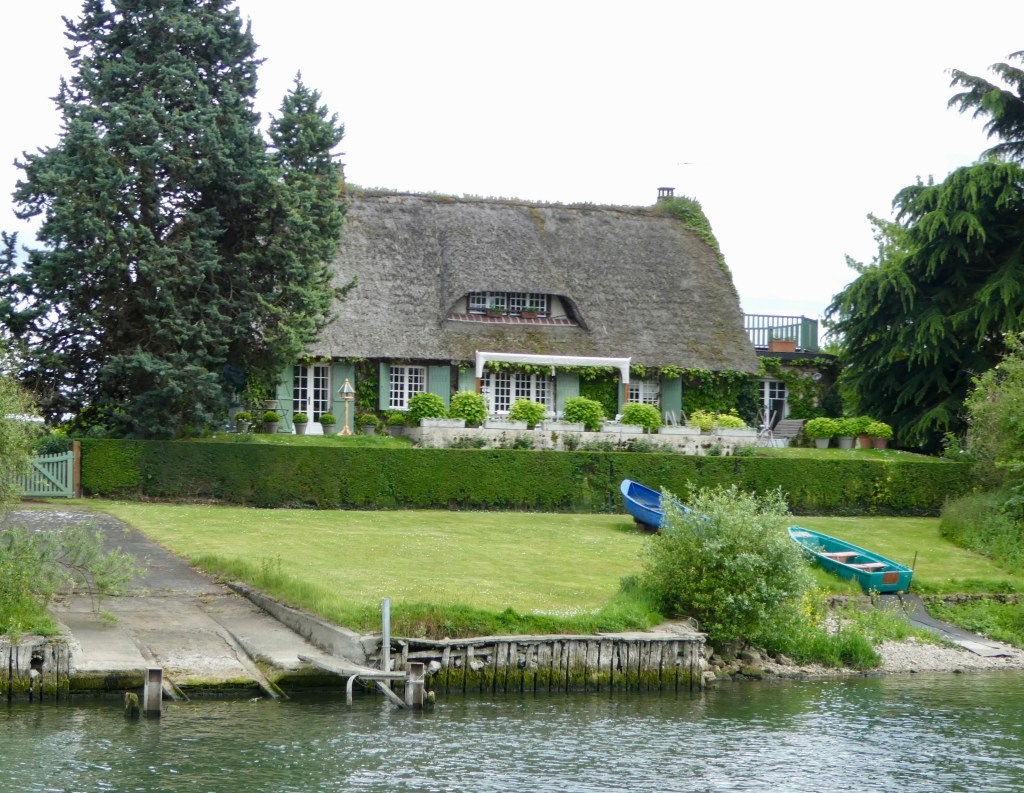
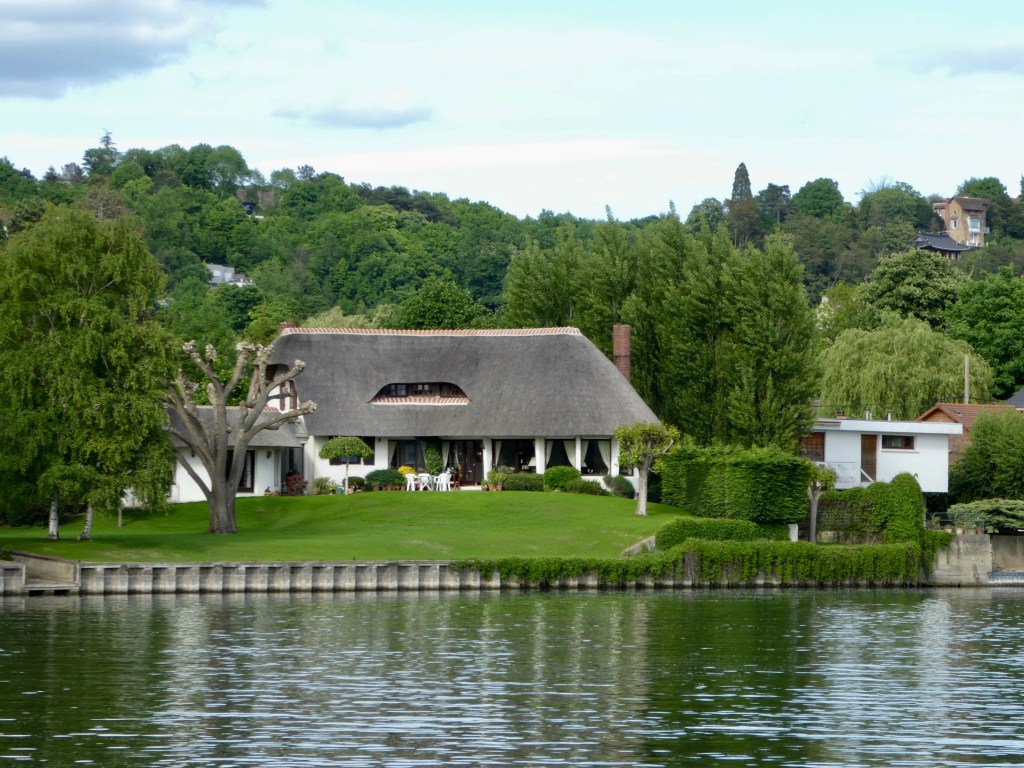
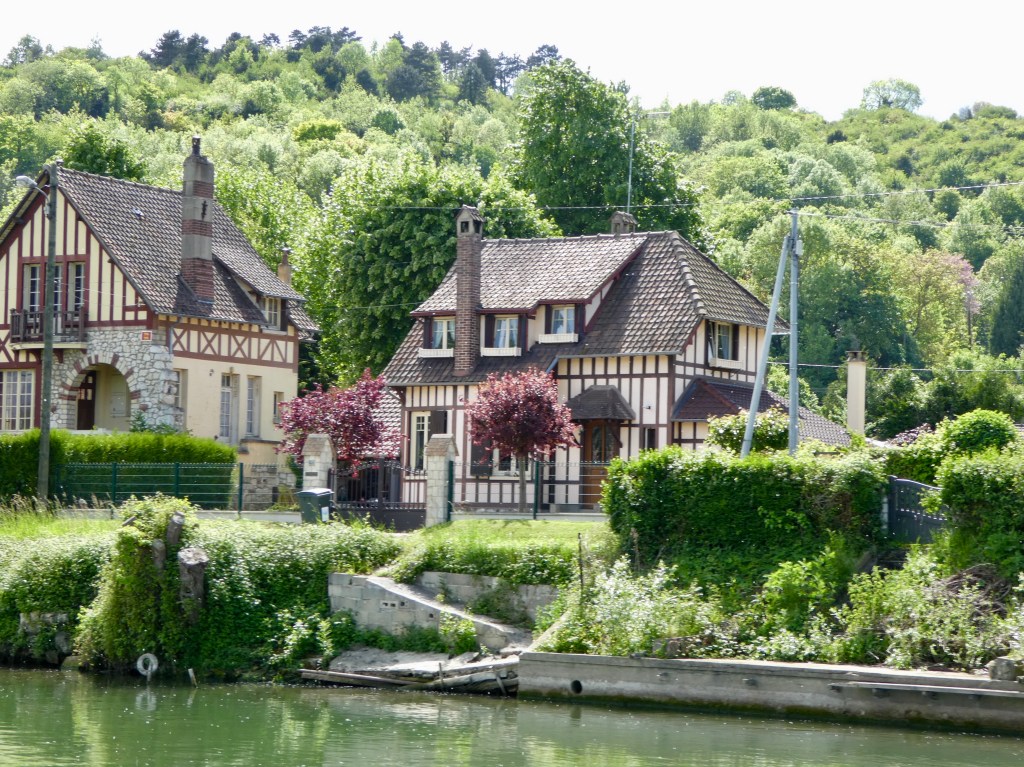
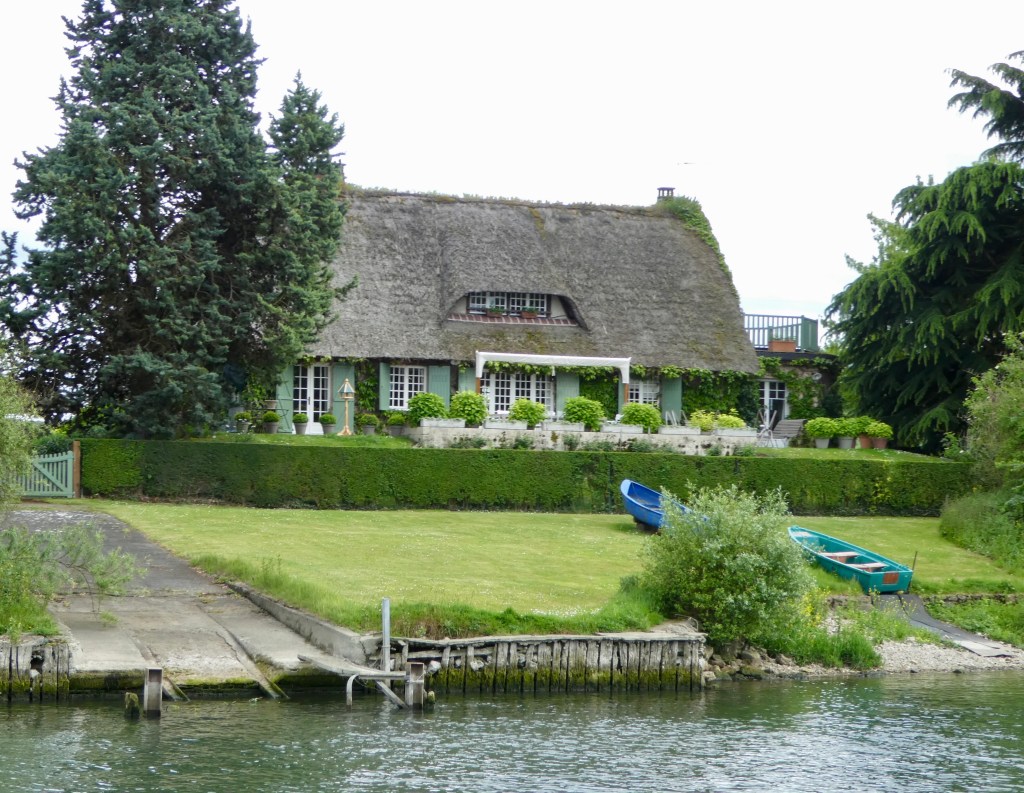
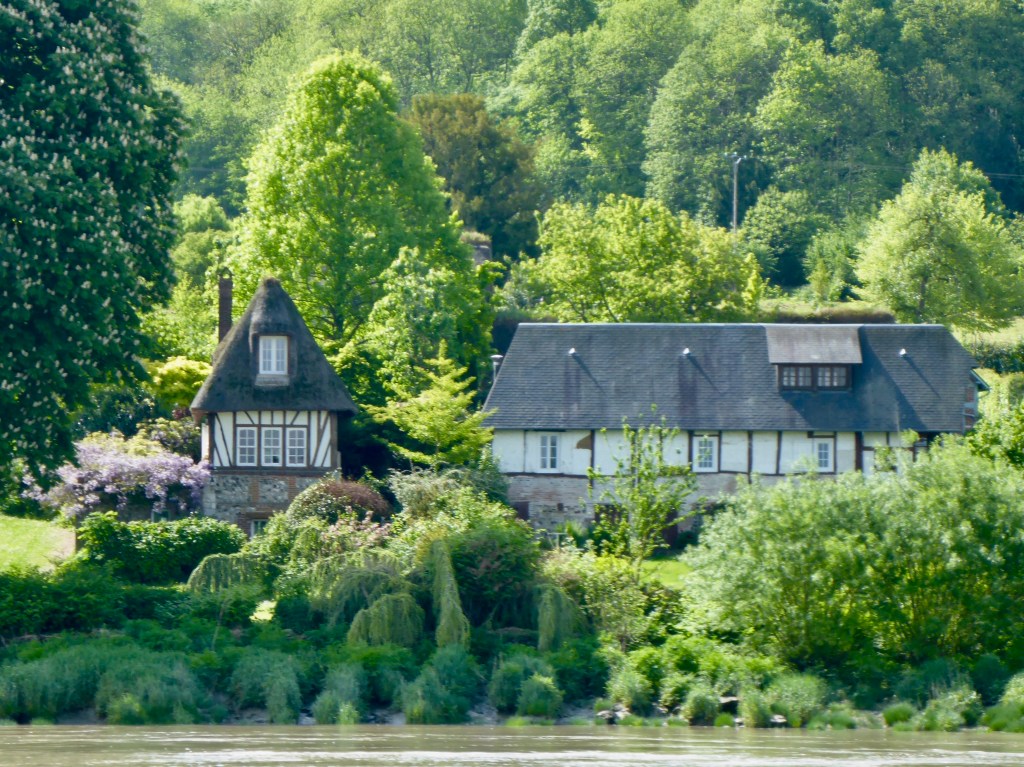
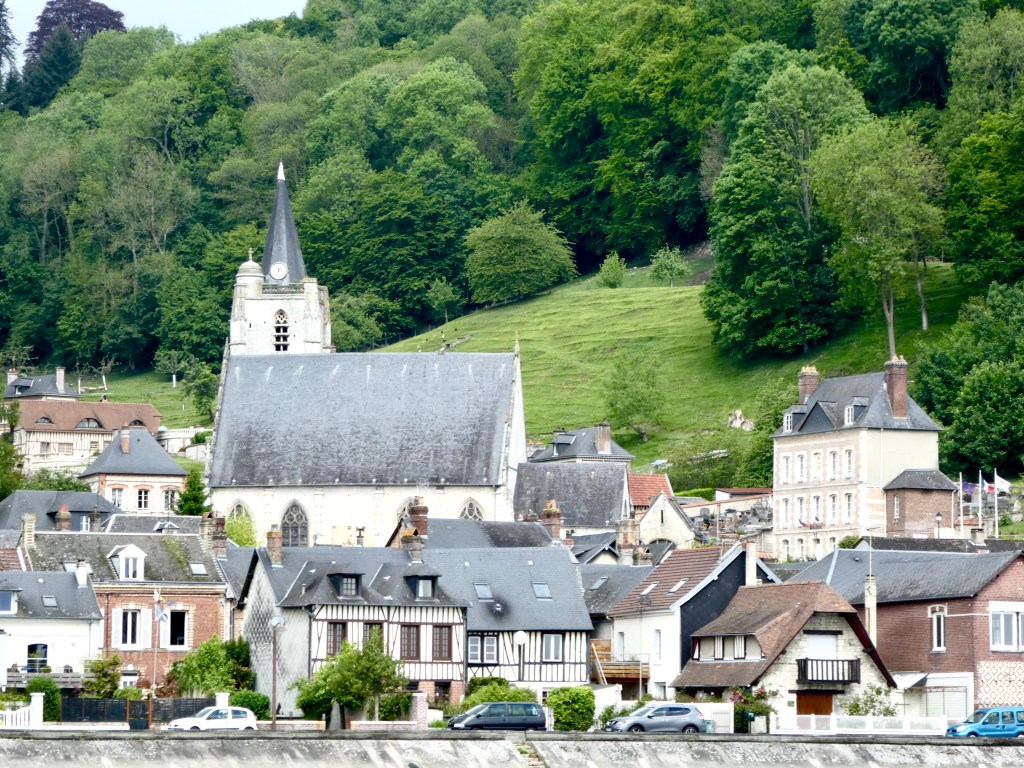
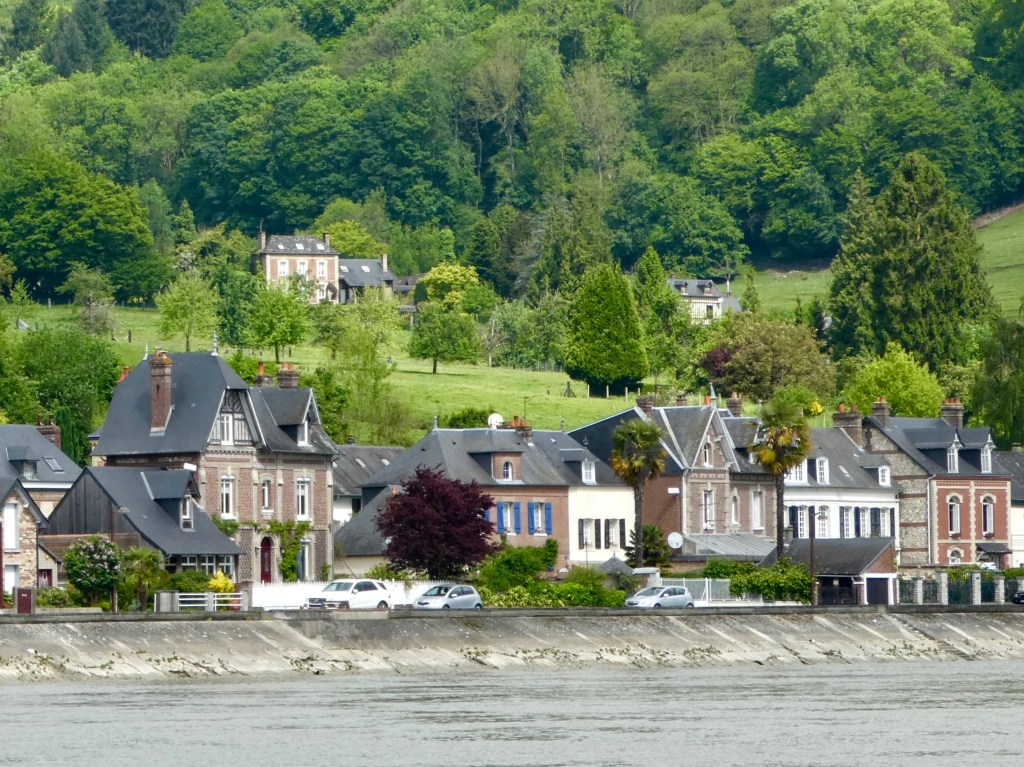
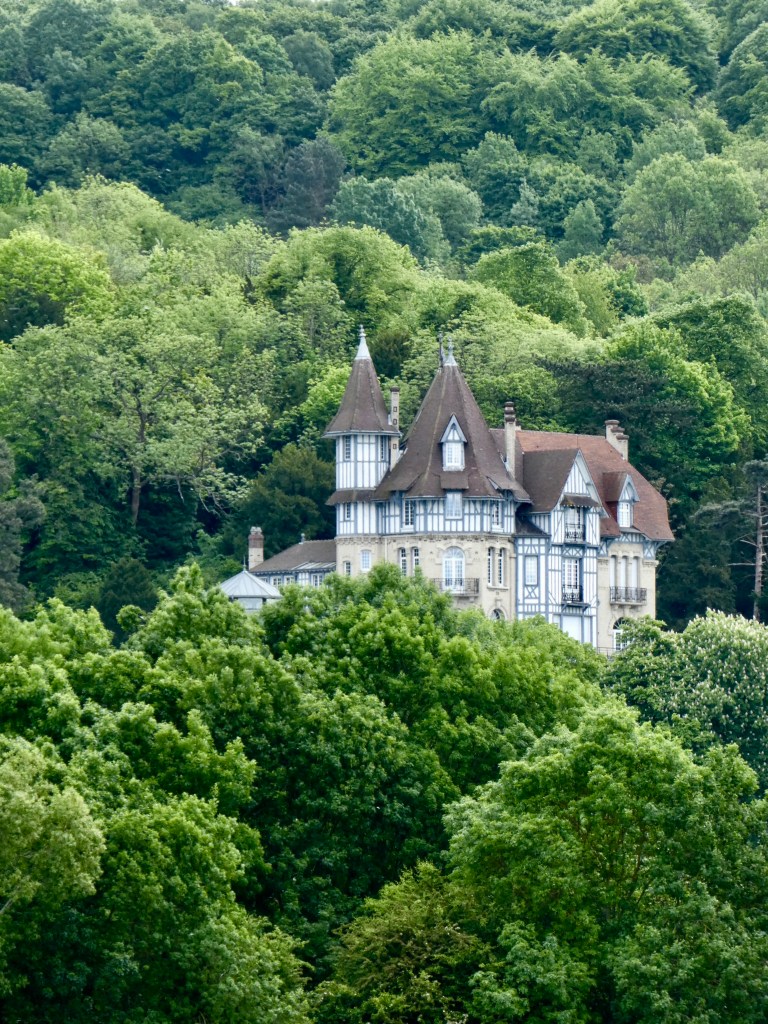
The riverbanks of the Seine offered view after view of meticulously maintained homes of exceptional grace and beauty; many protected with traditional thatch roofs.

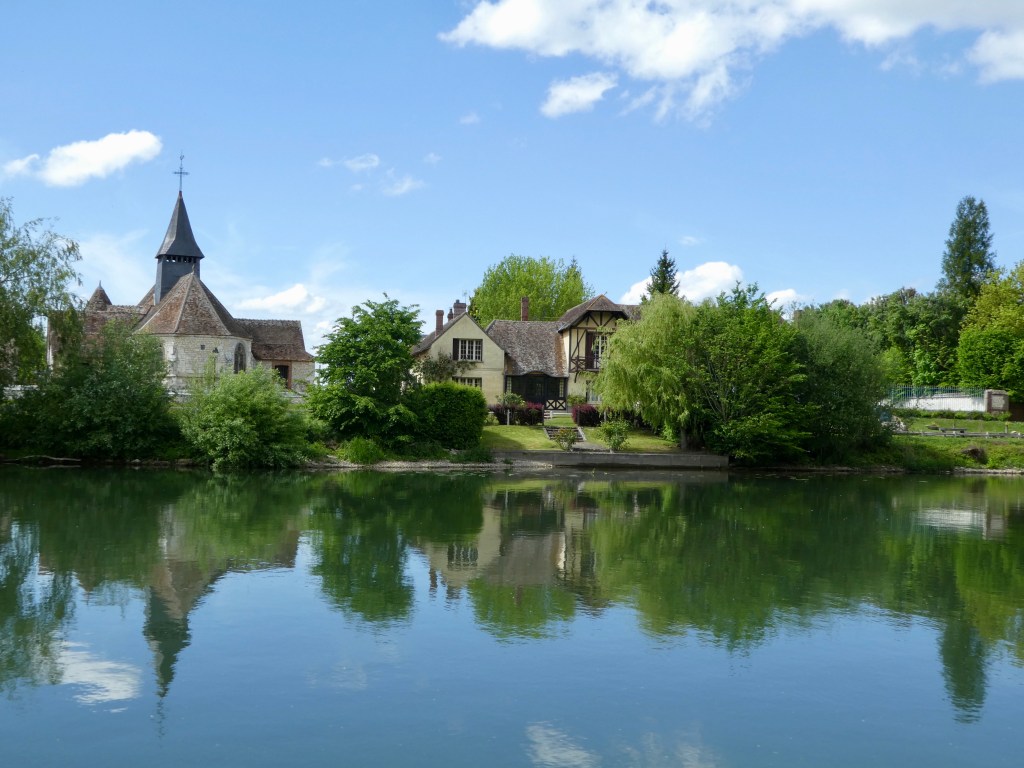
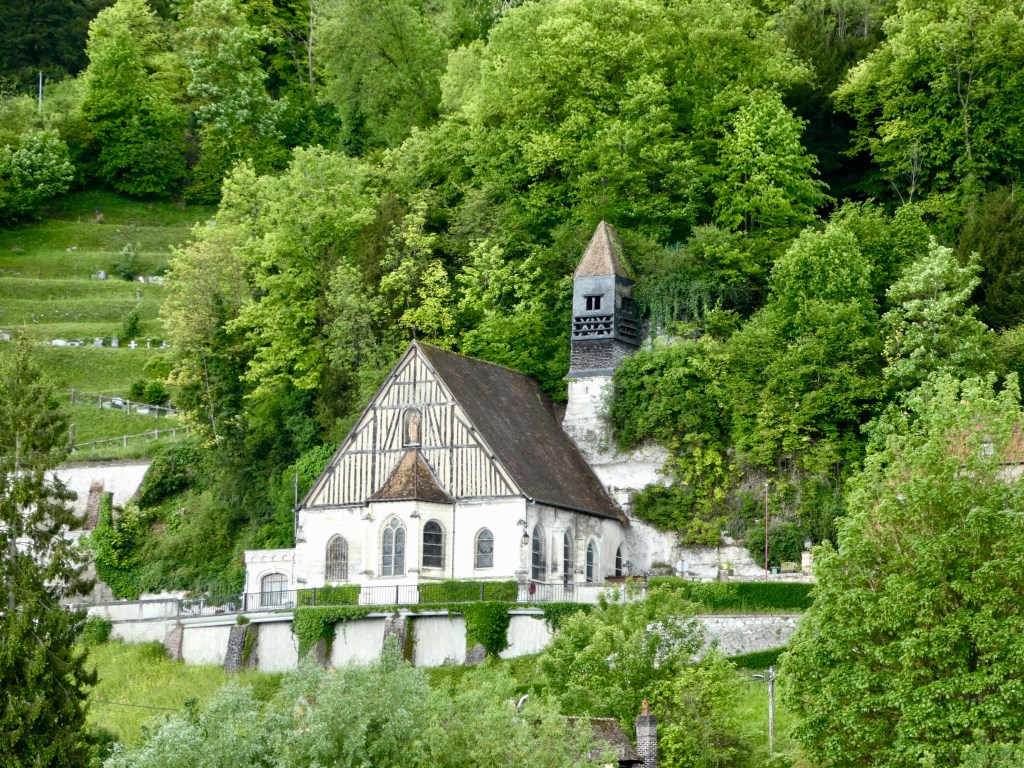
Small villages and churches were equally charming;

As were occasional farms.

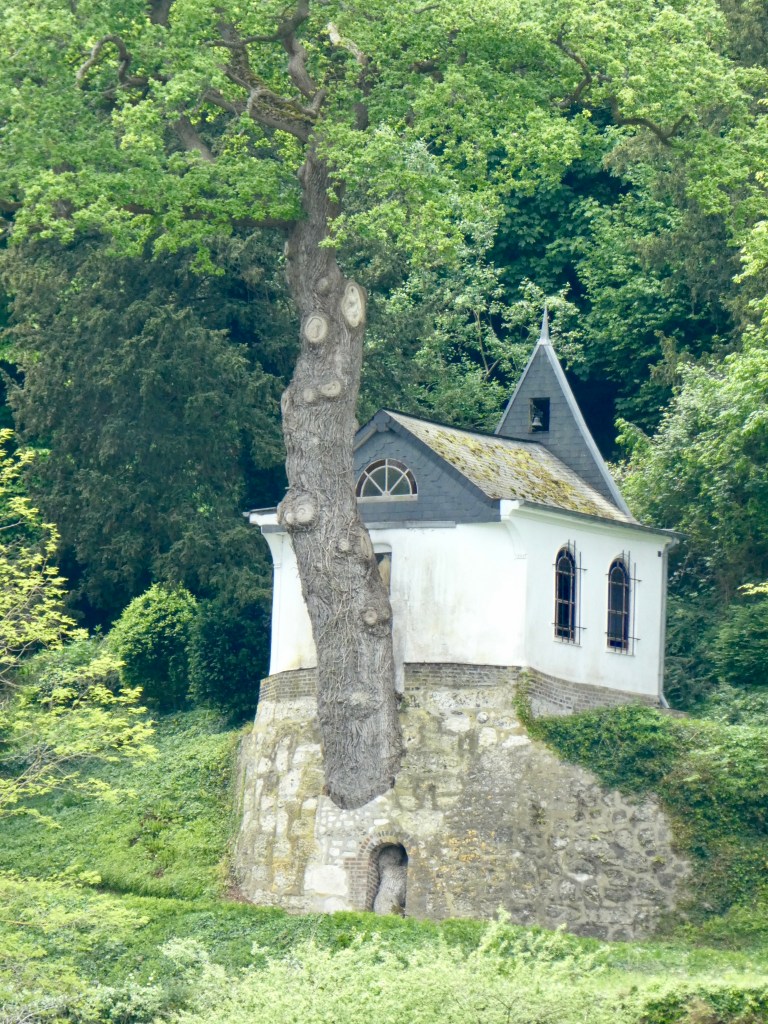
Ancient castles and grandiose mansions fit seamlessly into the landscape.

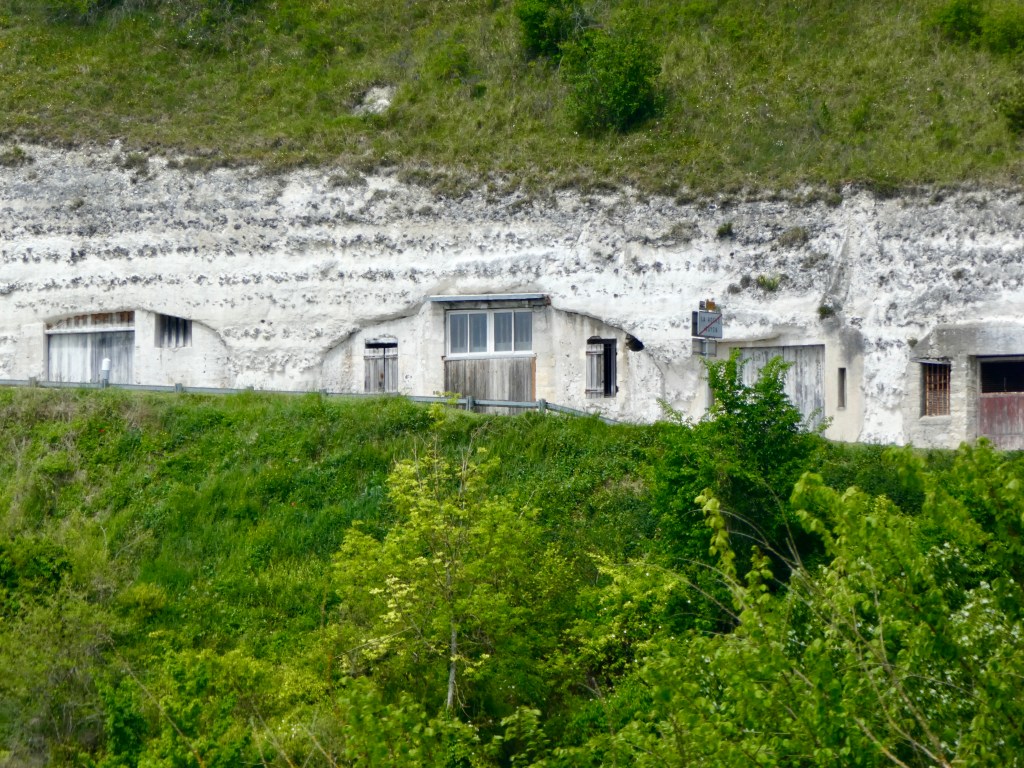
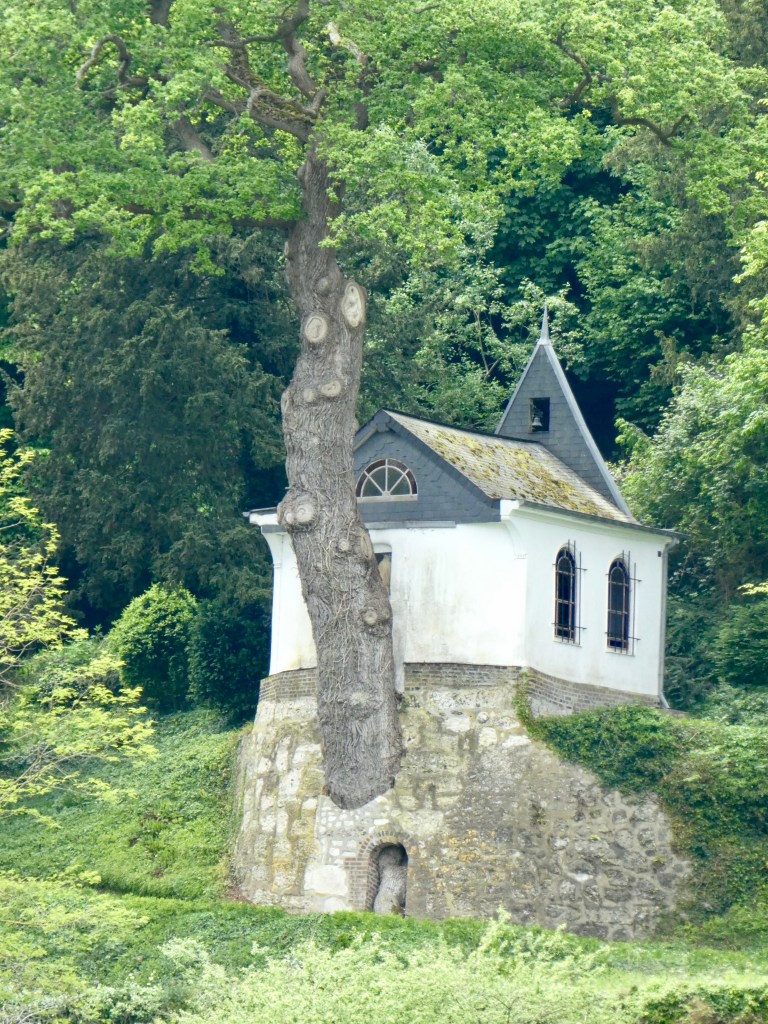
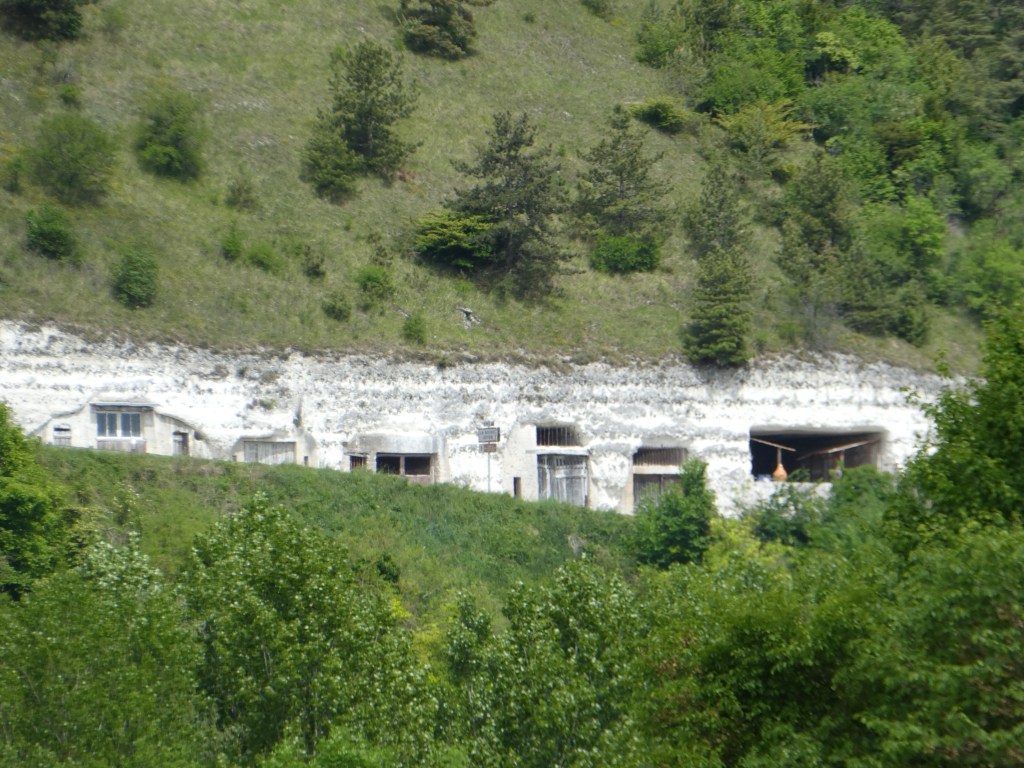
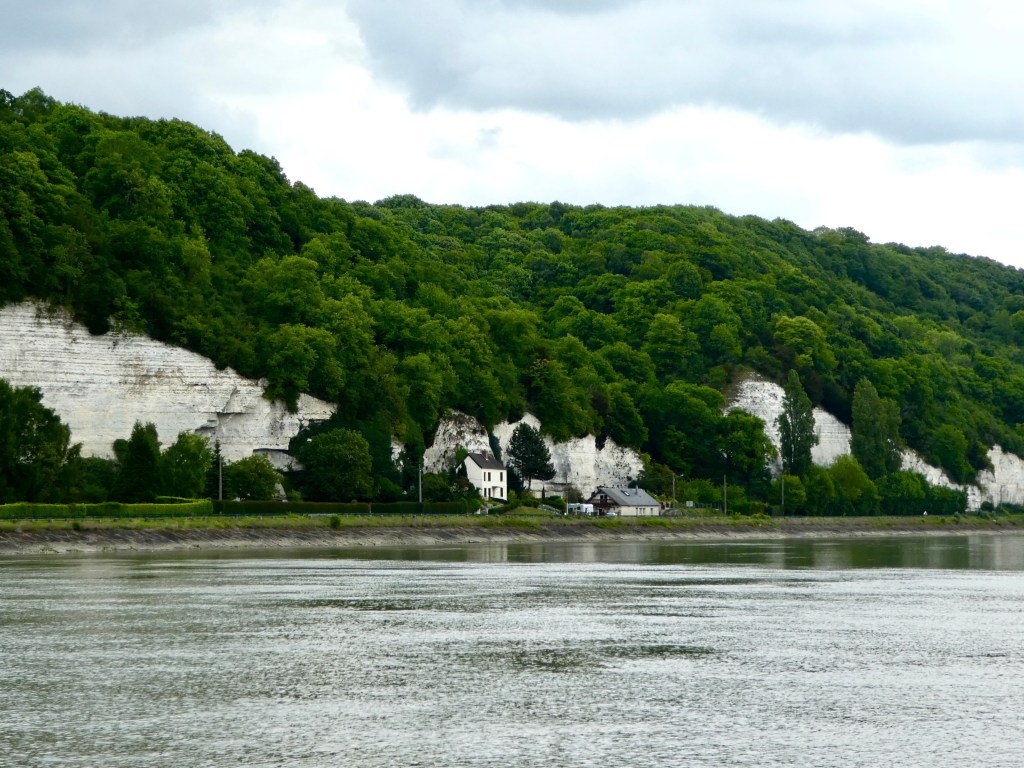
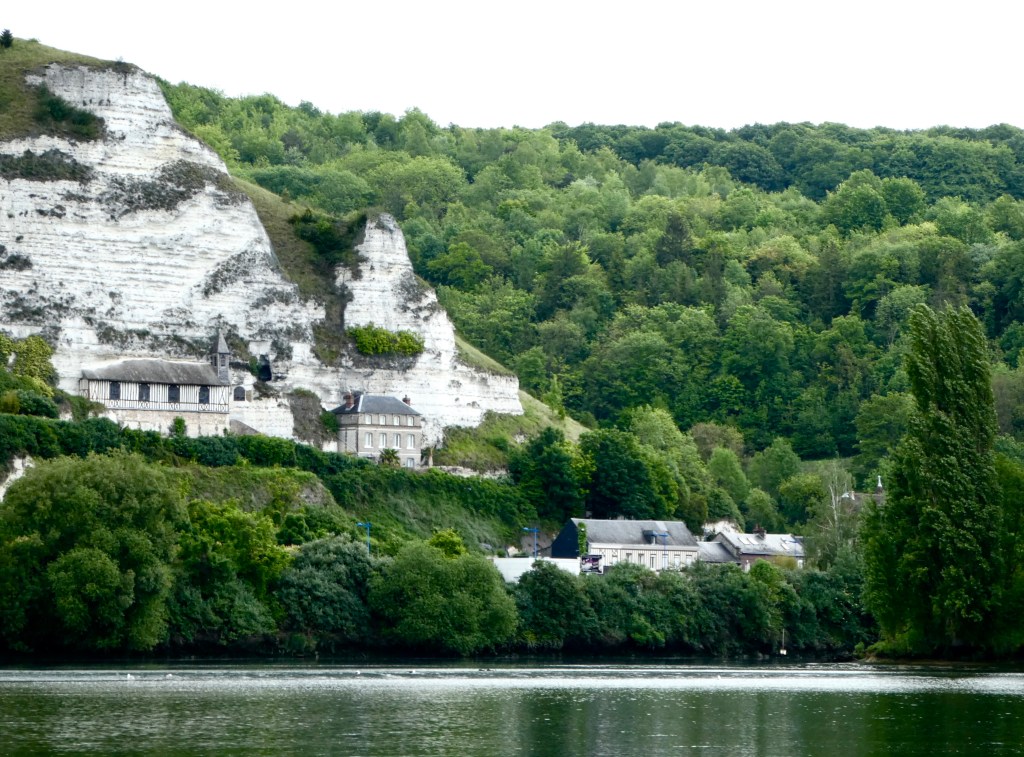
Lastly, we encountered a number of unusual buildings and homes built into limestone cliffs. Sometimes it was an entire home; others, a garage or shed or just the back face of the building. We understand some of these structures are still inhabited today.

Our Journey Begins – The English Channel and Honfleur

Day 18 through 21 12-May – 13-May-2017

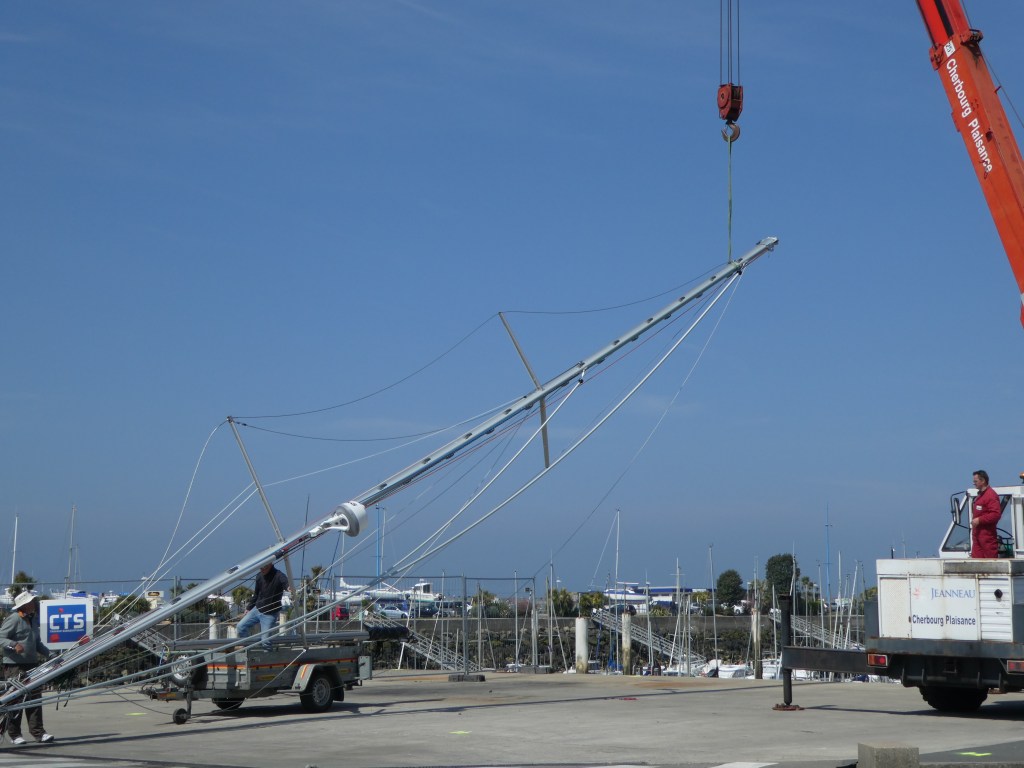
ICE FLOE’s mast was taken down on Wednesday in preparation for a Friday departure  from Cherbourg.

We passed on leaving Thursday as the forecast was for unfavorable winds and rain.  Friday’s weather forecast was for moderate southwest winds and clear skies.  As we were headed northeast and the current in the channel heads east for most of the trip, we were ensured a relatively smooth ride.

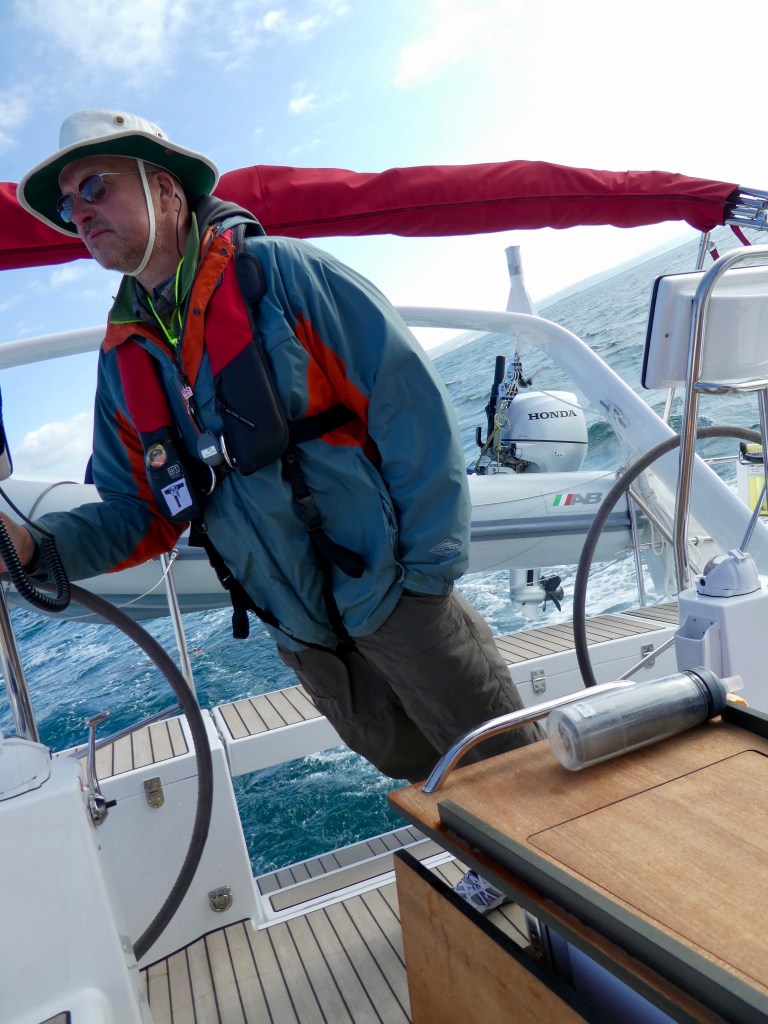
We headed out Friday, but as it turned out the winds never shifted to southwest and it rained off and on.  Our first sail in the English Channel was with moderate wind and waves (3-4 feet), However, there was no pattern to the waves and they assailed us from multiple directions.  As such, waves periodically merged with one or more waves and we had an exceedingly topsy turvy ride about 12 hours long.  I recently boasted that I never get seasick, but after one trip to the cabin brought on an unpleasant queasiness, we remained topside for the balance of the day, with short exceptions for a quick trip to the head and to retrieve a baguette and butter for lunch.

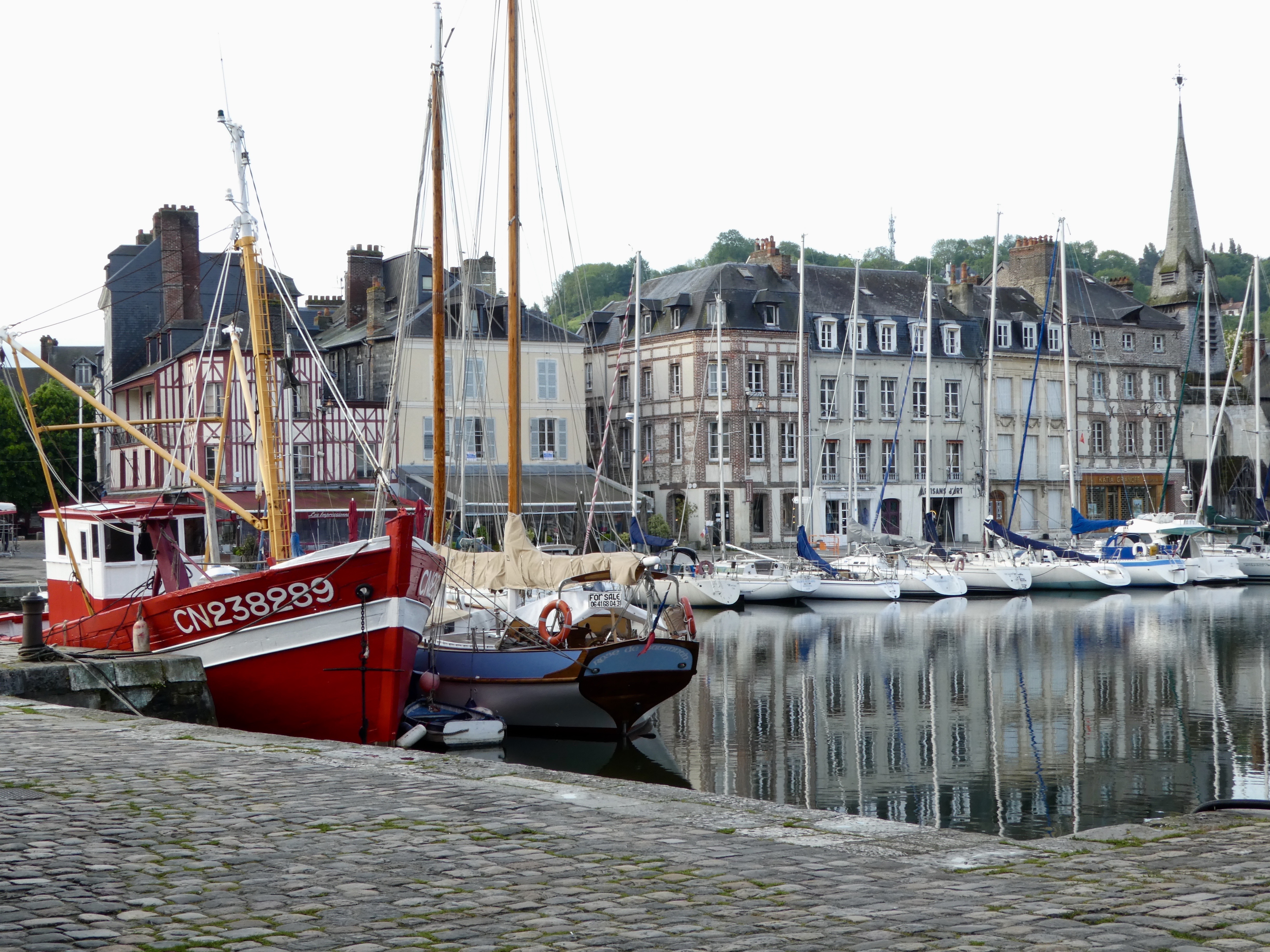
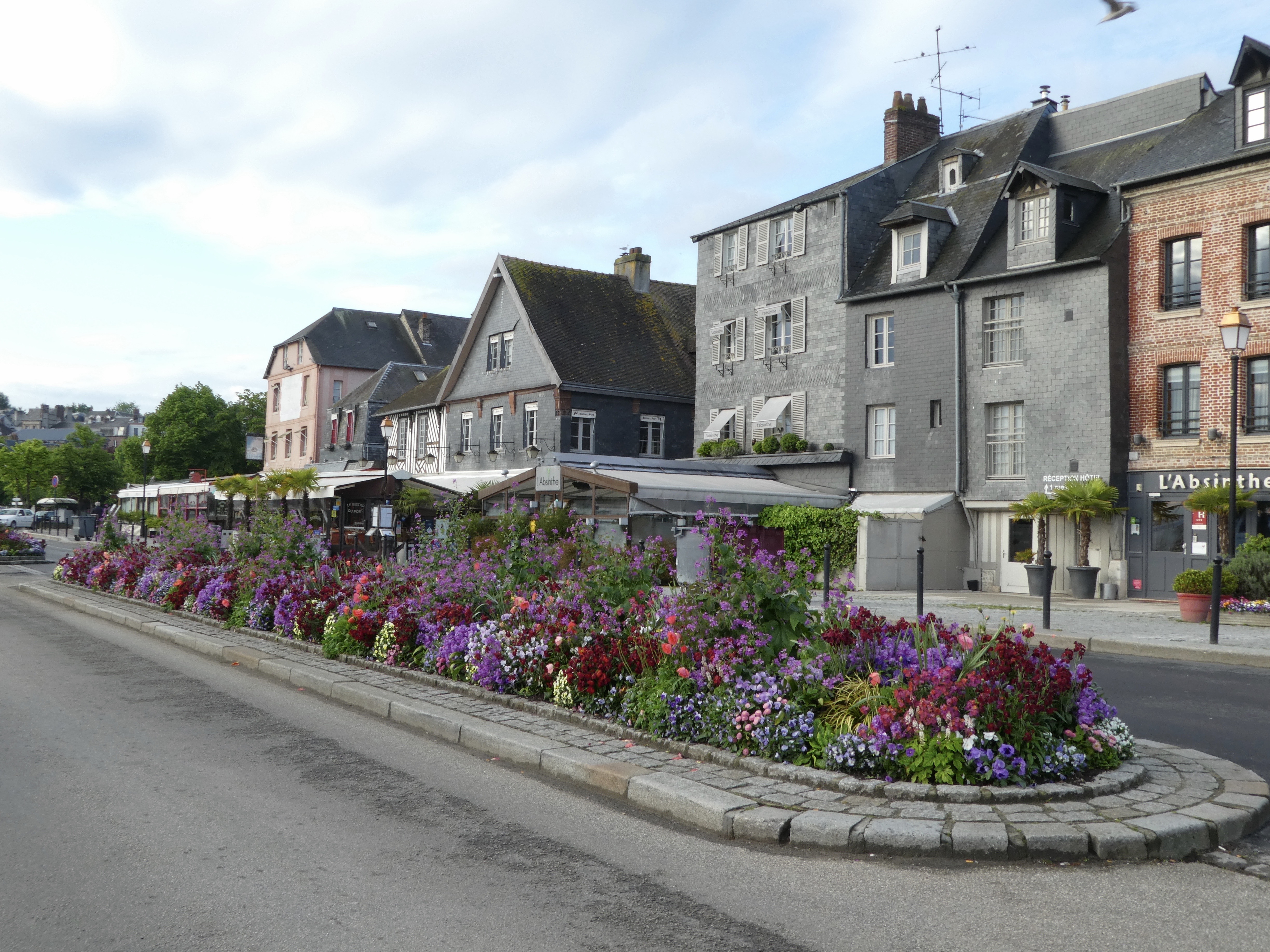
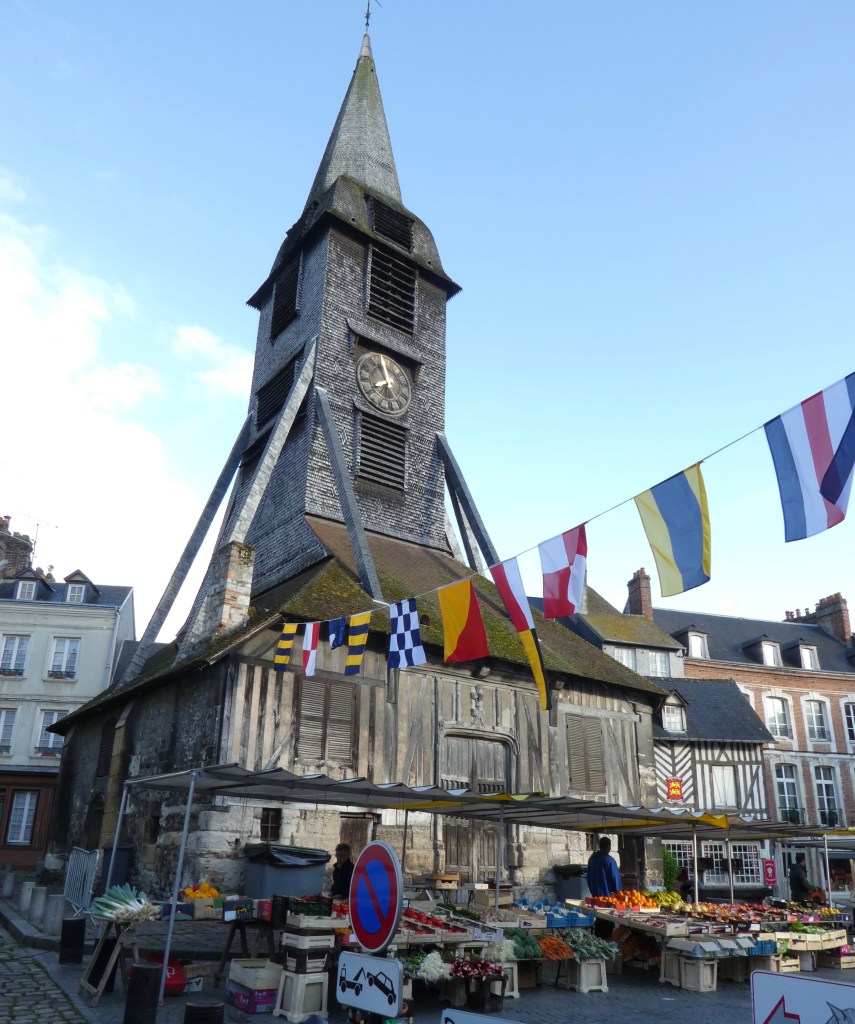
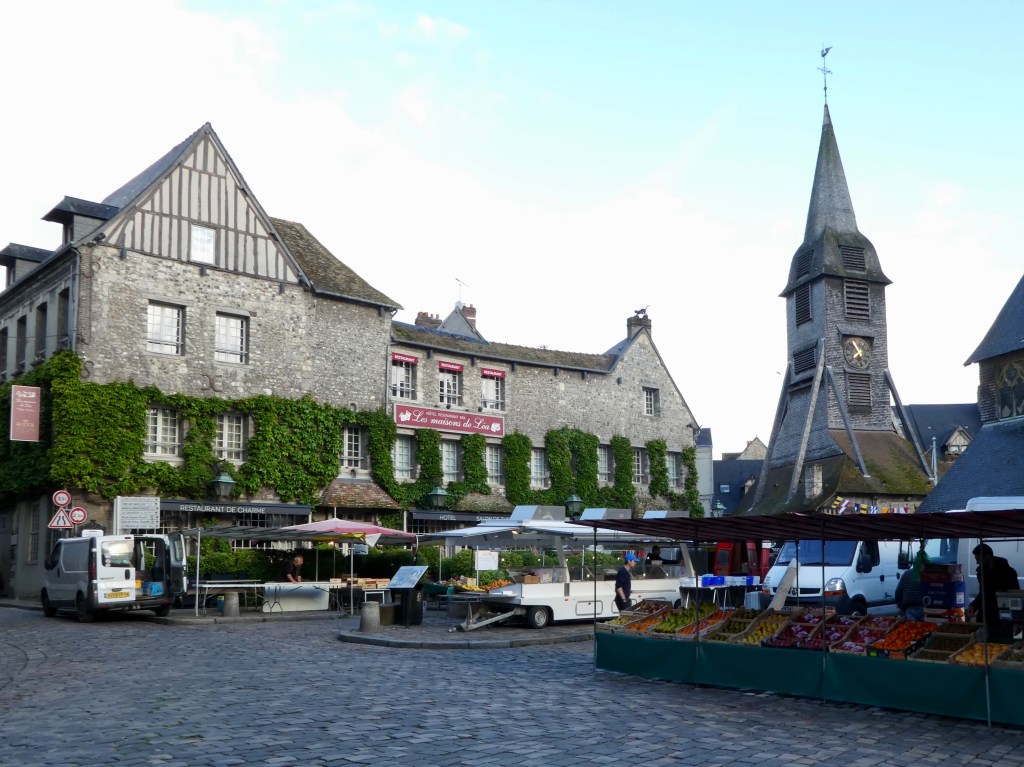
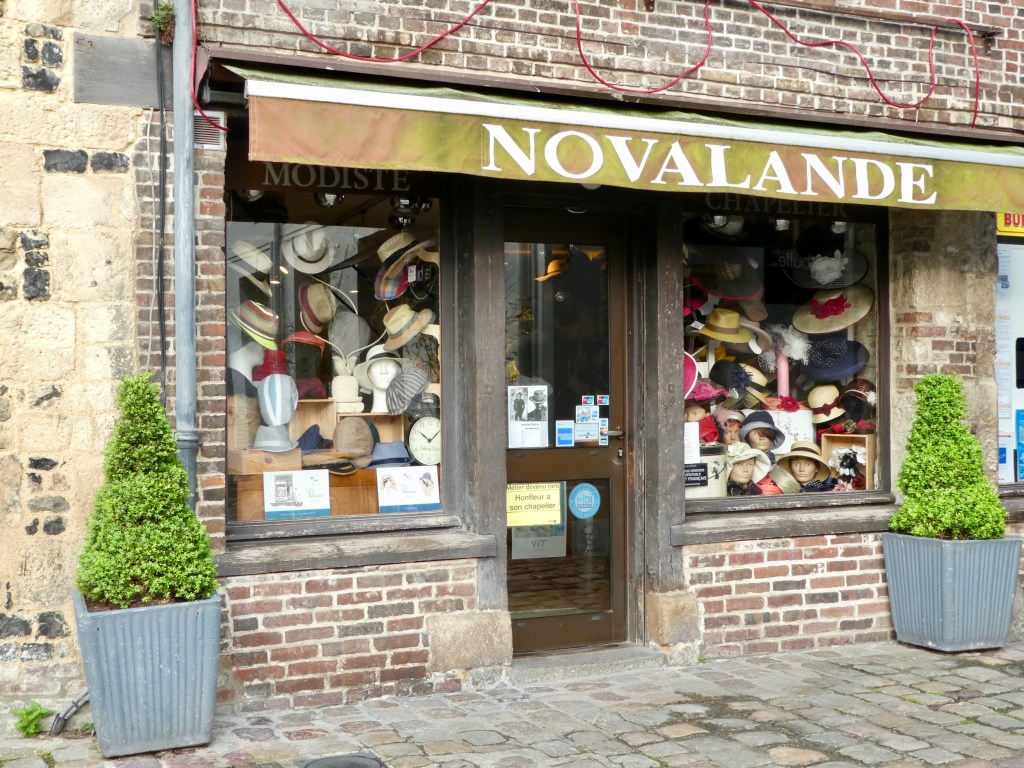
A kind gentleman in Cherbourg suggested we enter the Seine through the port of the ancient town of Honfleur.  It is difficult to describe how such a town seems to welcome you with its beauty, vitality and feeling of peace.  We tore ourselves away after a short memorable visit on Saturday morning as the village woke up in preparation for market day.

Our departure could not be delayed as the 24+ foot tide in the channel was near low and current created as the tide turns at the mouth of the Seine can either swiftly speed you on your journey to Rouen or reject you to wait for a more favorable tide.

Barfleur and Cité de la Mer (aka the Cherbourg Titanic Museum)

 Day 12 through 17 6-May – 11-May-2017

The weekend was devoted primarily to sailing and completing  the last tasks we needed a car for.  We enjoyed some of the best weather and sailing conditions and wished for more time to sail before we had to move on.

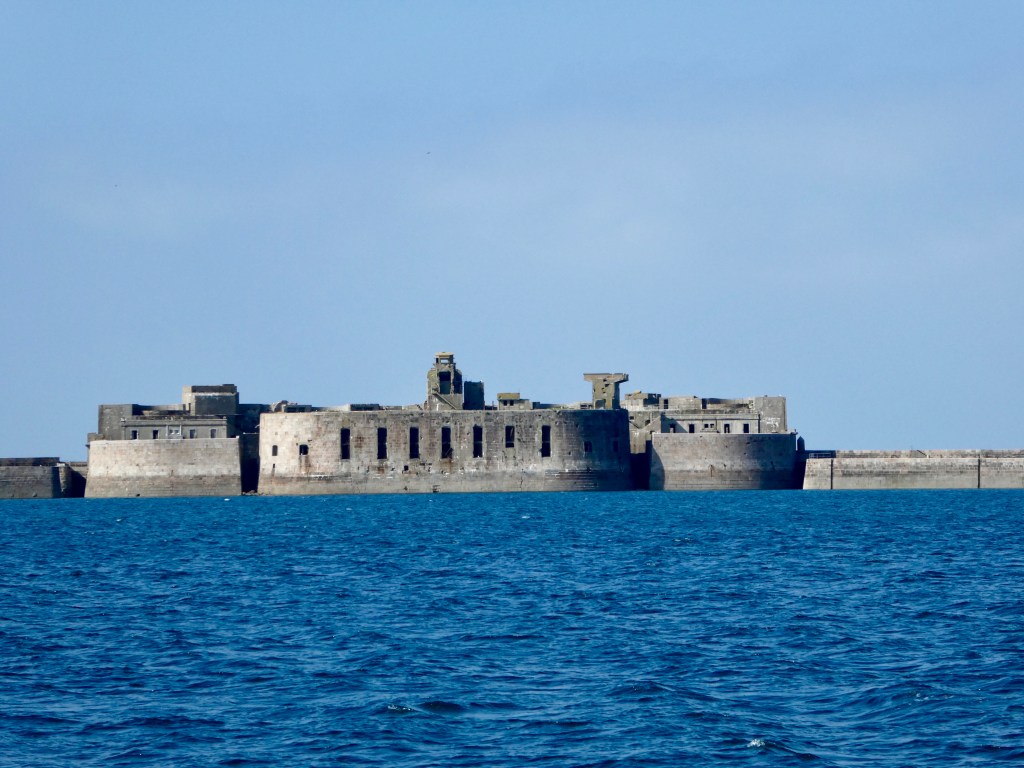
Fort in Cherbourg Harbor built in 1858

I tried my hand at fishing with no luck.  The Channel is said to be quite fished out but you can’t catch a fish if you’re not fishing.

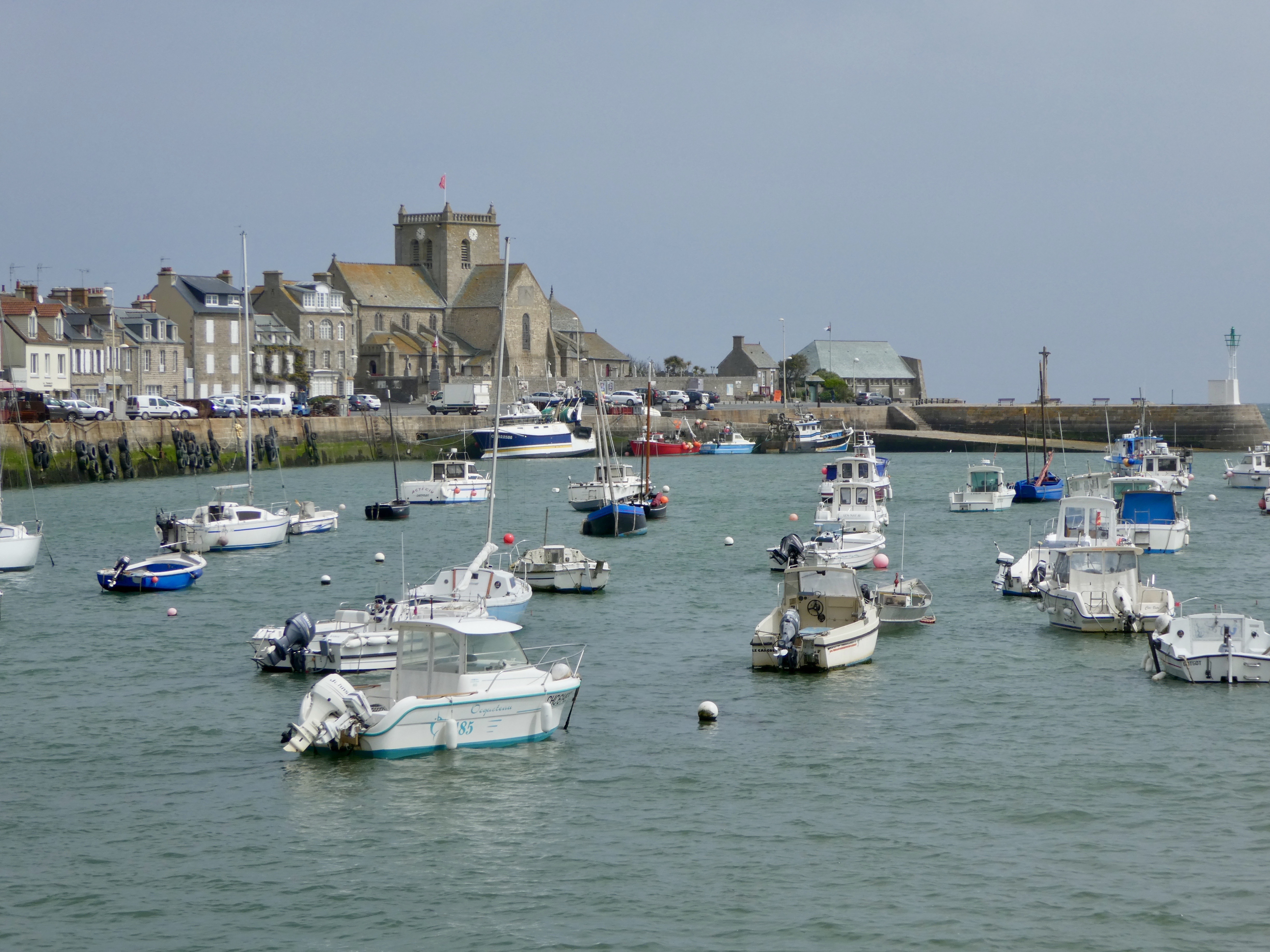
On Monday, just before we returned the car, we  visited Barfleur, a seaside town reputed to be one of the loveliest in the area.  It is absolutely charming, from the harbor, to the homes, and the village atmosphere. 

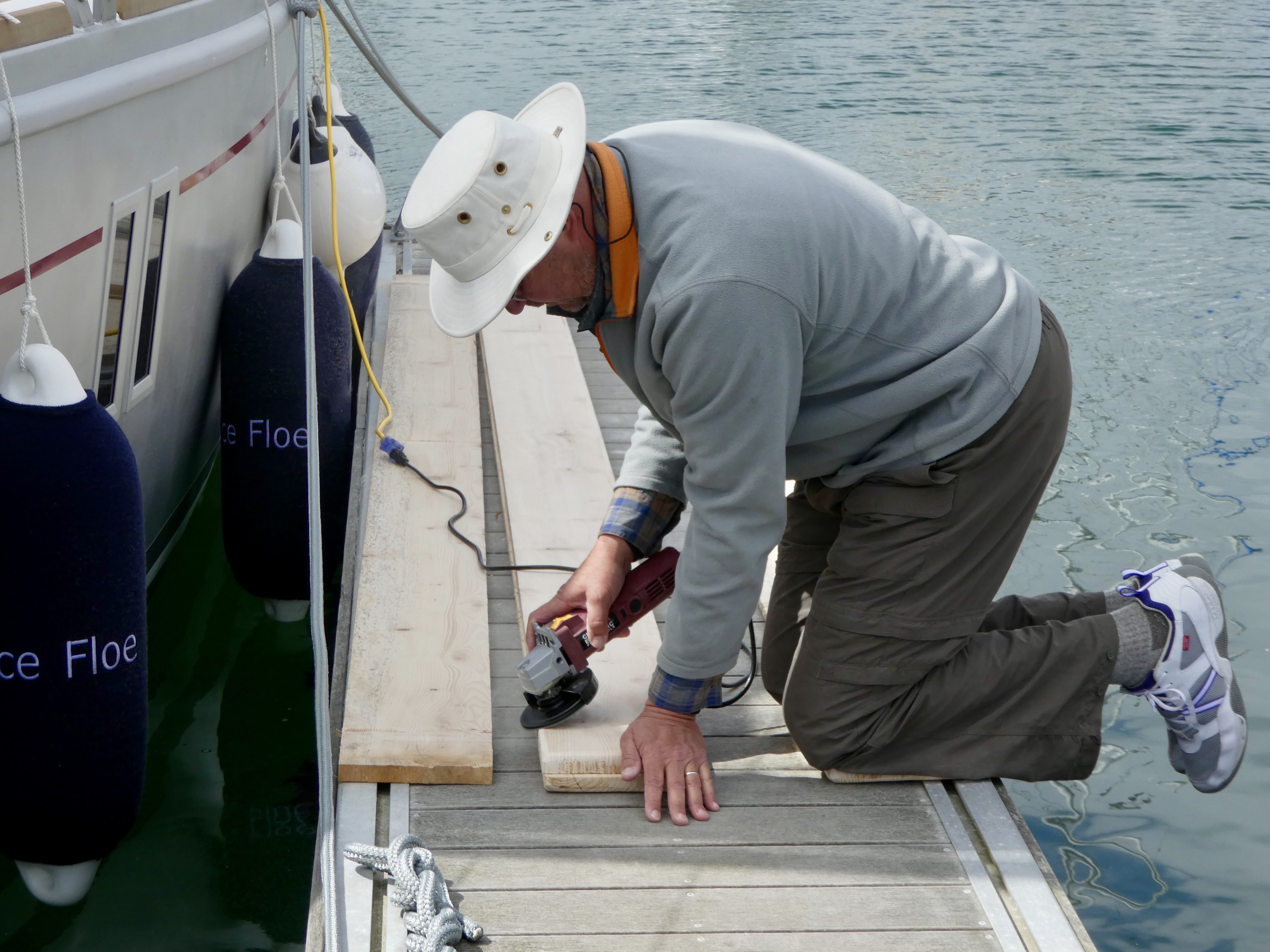
George assembled long fender boards to protect ICE FLOE from the many locks and   docks on the trip through France and a voice from the future is here to tell you we really needed them.

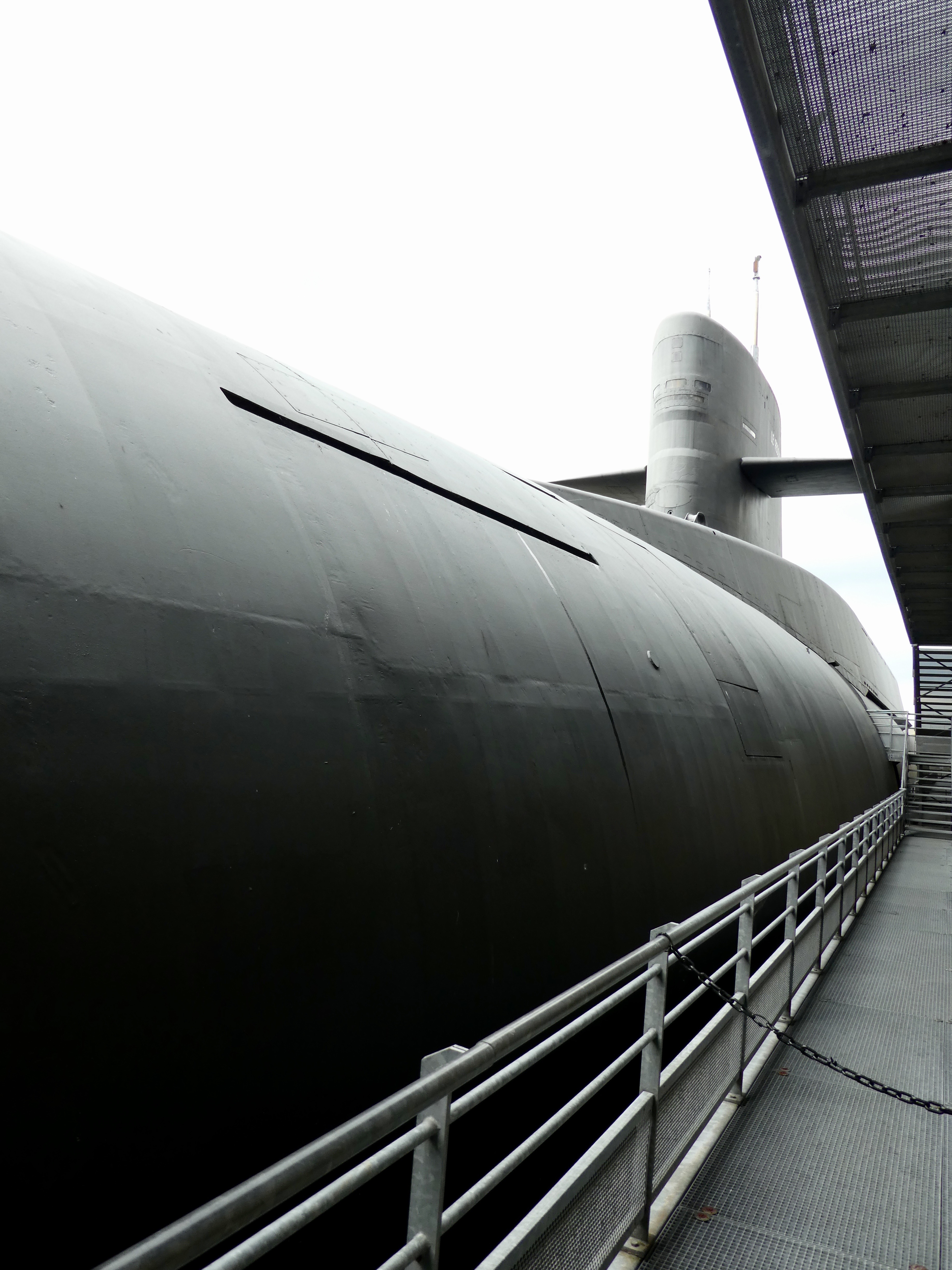
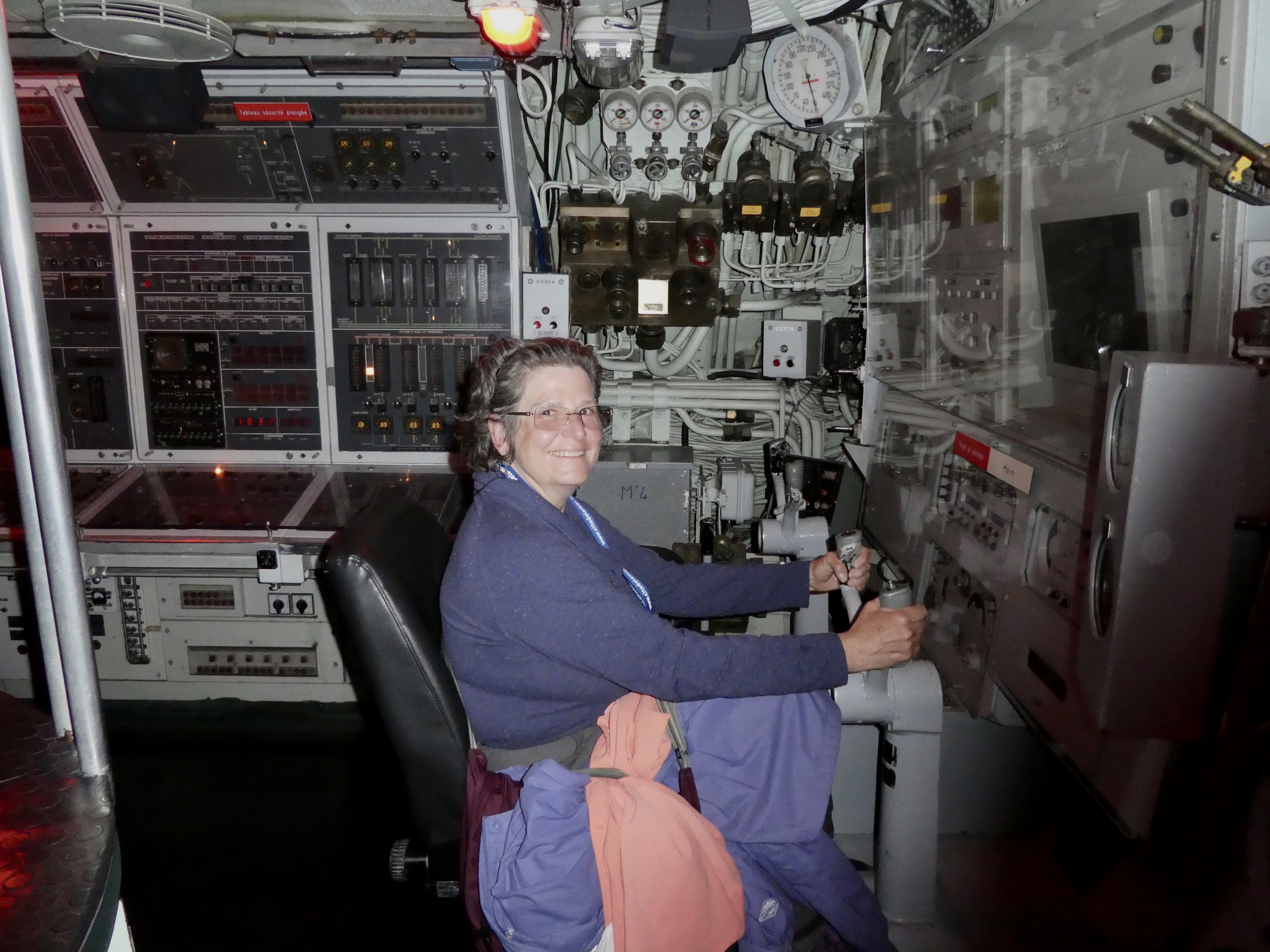
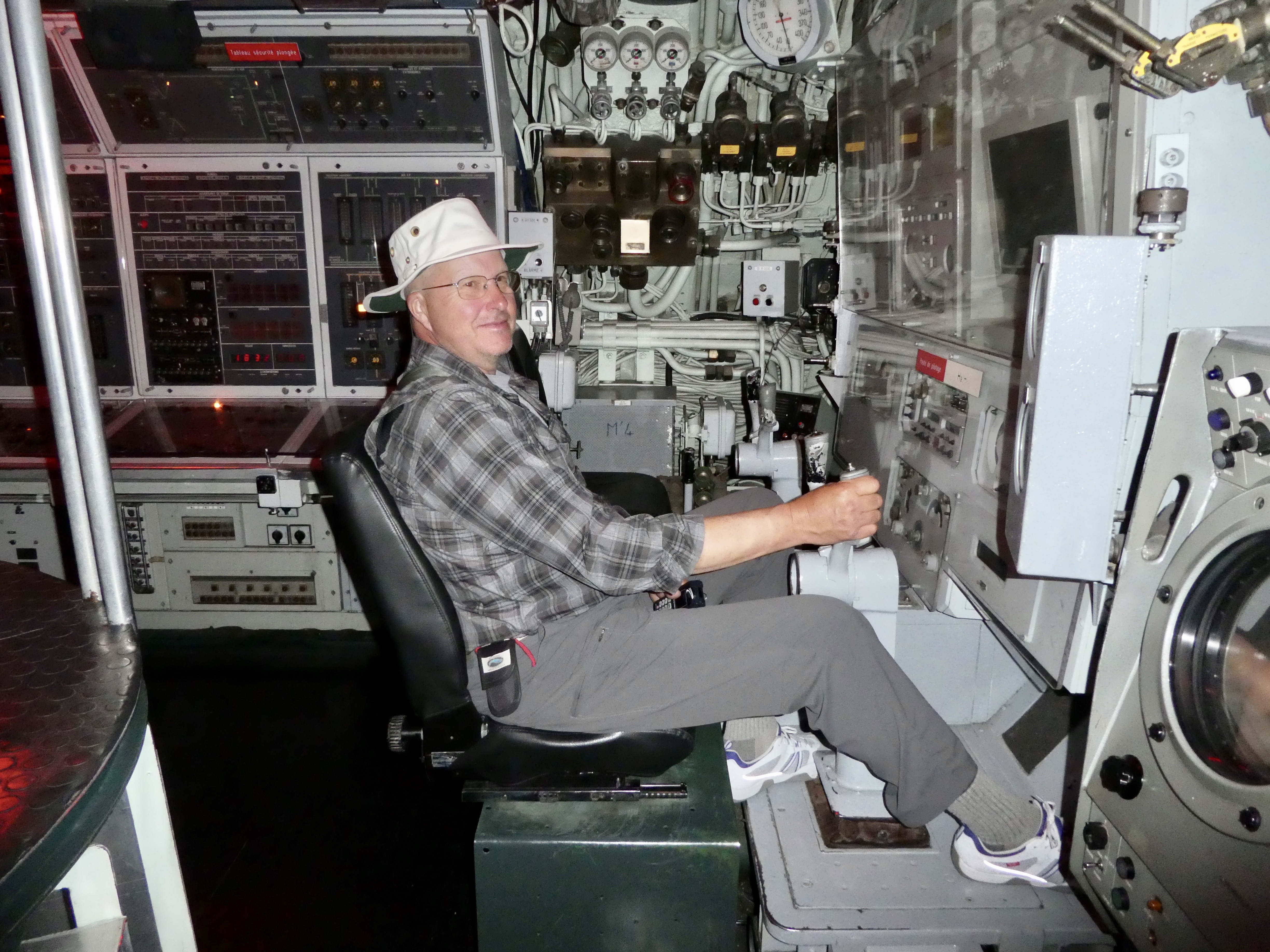
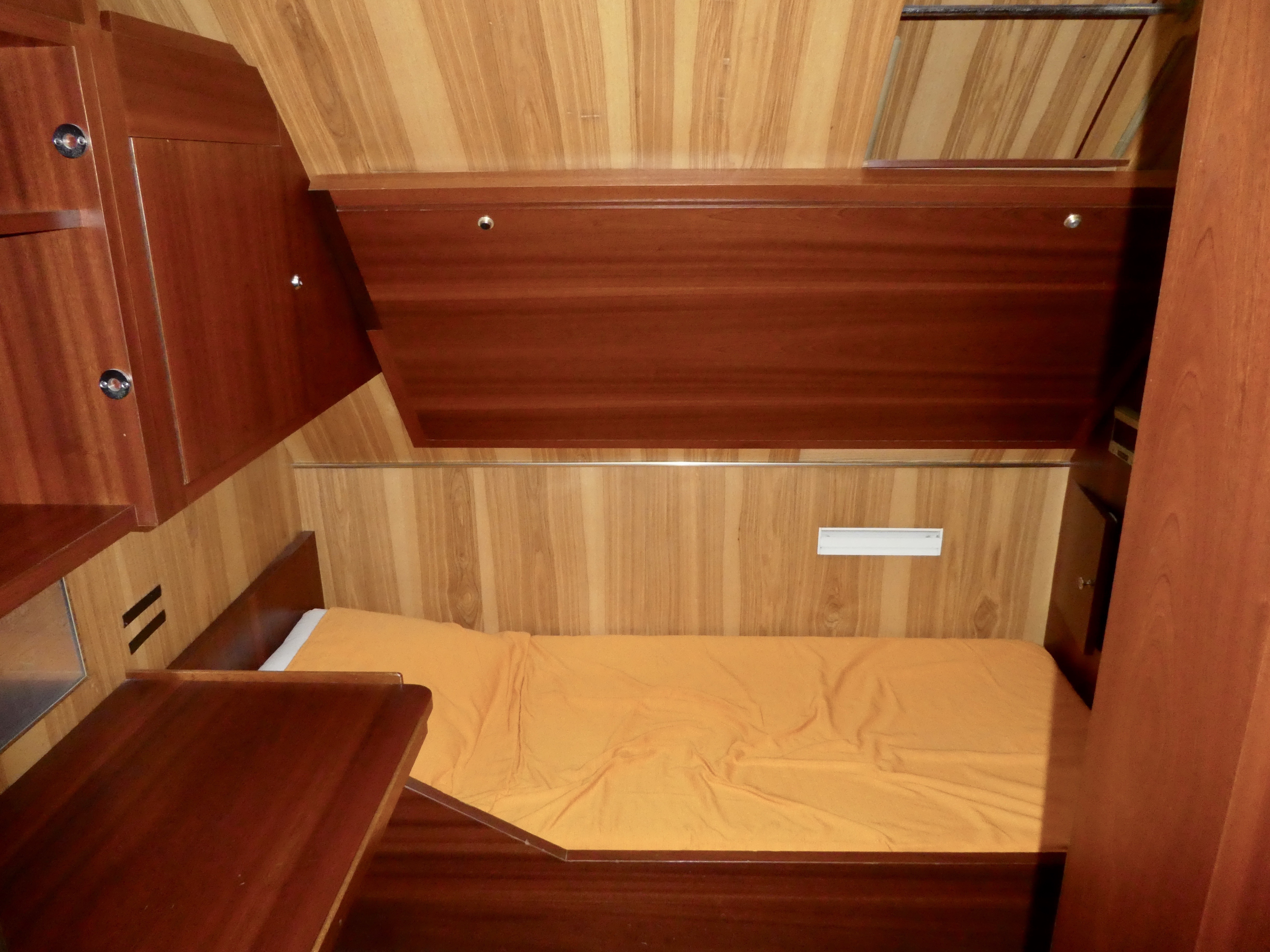
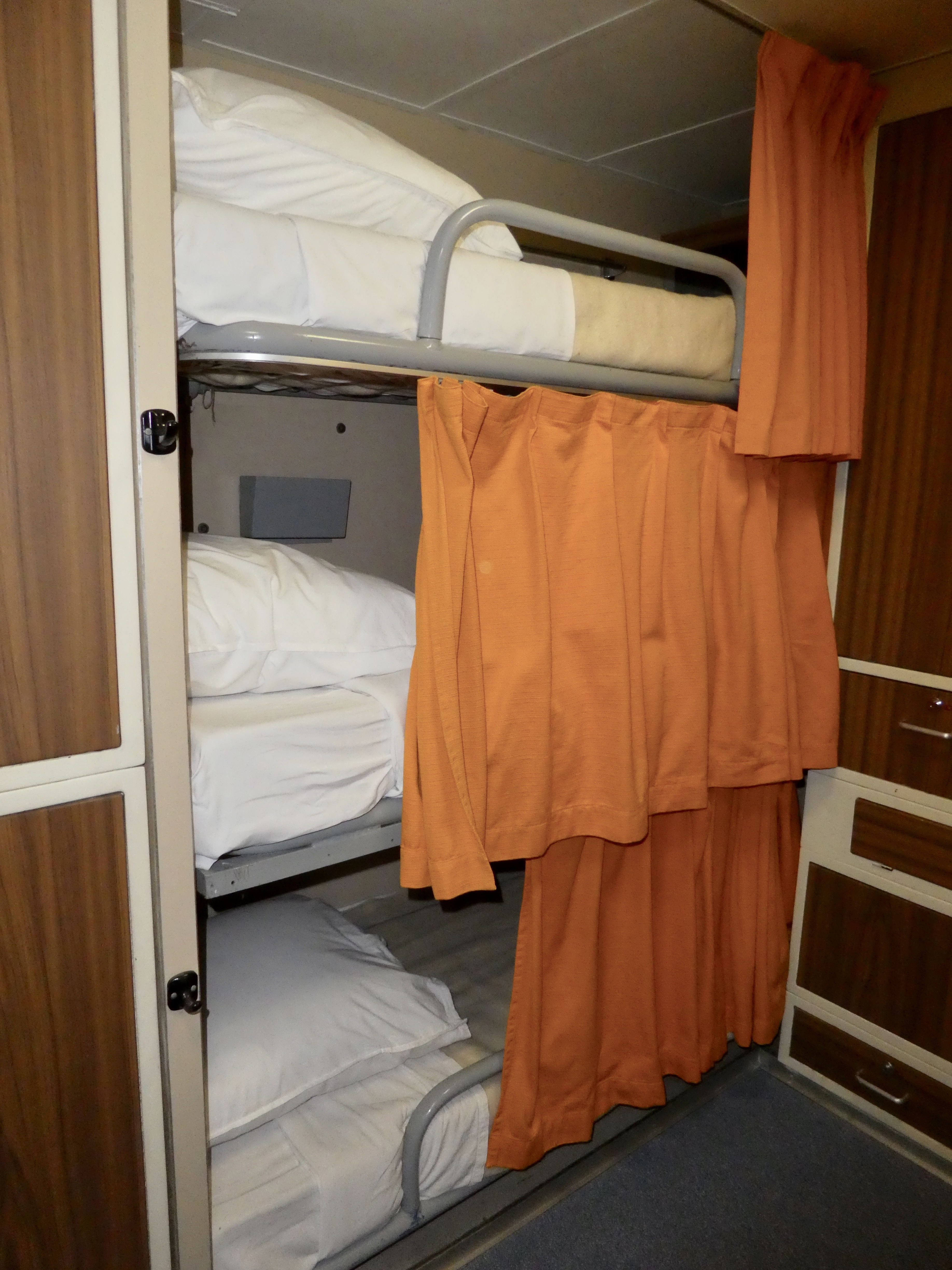
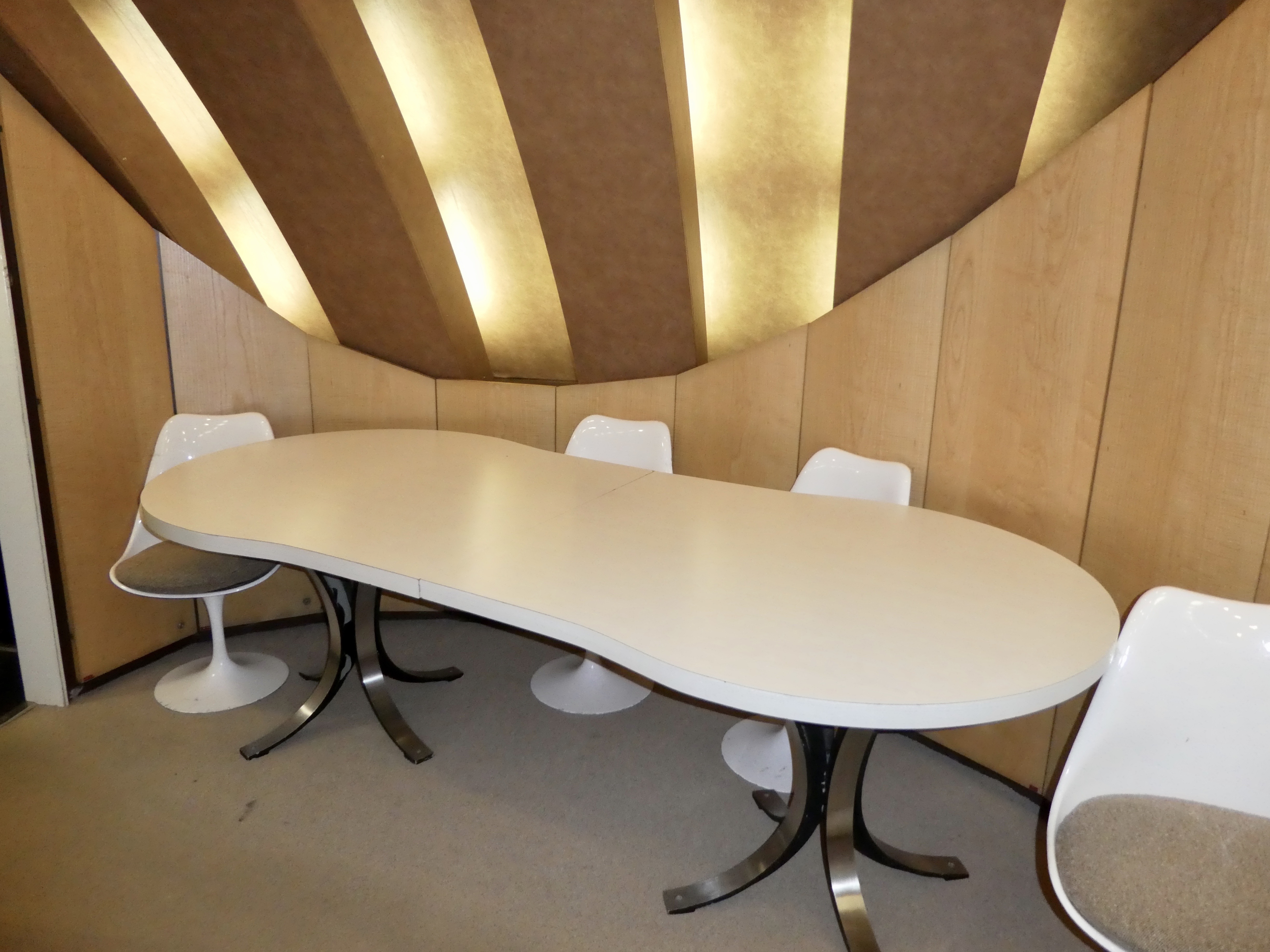
On Tuesday, we visited Cité de la Mer, a museum combining exhibits of historical events and artifacts relating to underwater exploration, the Titanic (Cherbourg was the last port visited by the Titanic before it sank), and sea life.  This included a tour through a submarine that was fascinating.

Top left moving clockwise: Submarine, me and George at the helm, Captain’s quarters, Captains Dining / Meeting area, enlisted men’s sleeping quarters.

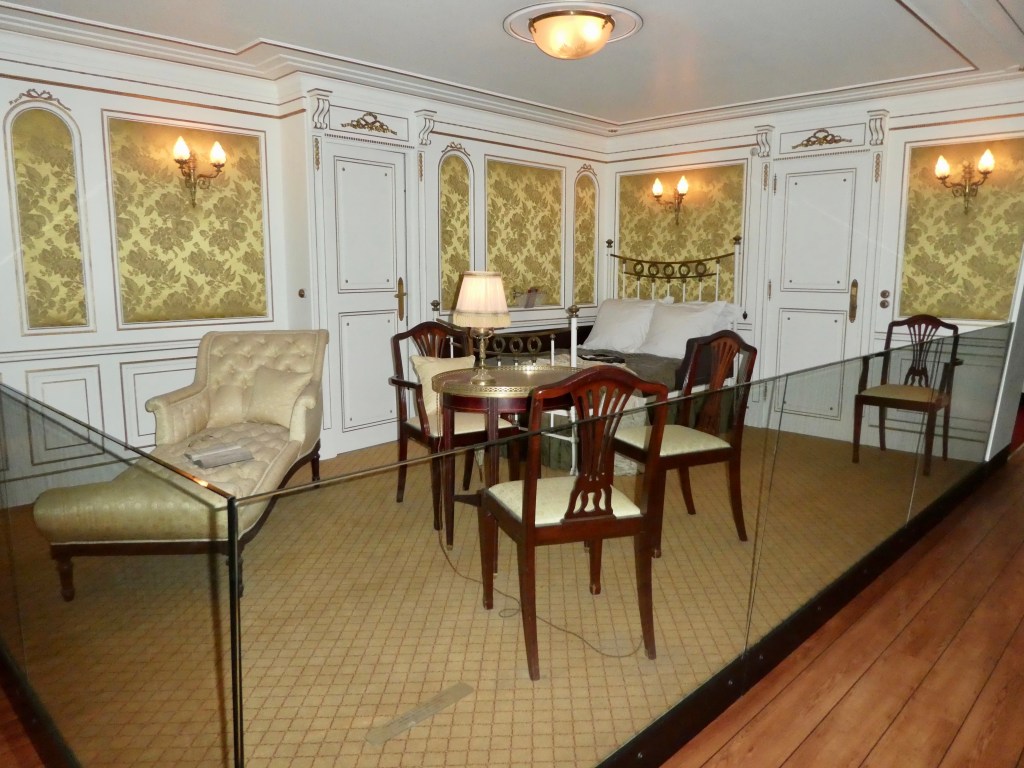
There are few artifacts from the Titanic, if any.  Much of the exhibit consisted of reproductions of portions of the ship.  Below, a reproduction of a first class cabin brings to light the luxury provided to those who could afford it.

We found it surprising that such a luxury cruise ship also provided accommodations for immigrants, as well. In addition, there were many photographs of passengers that were taken before the tragic sinking or were possessions of a survivor.

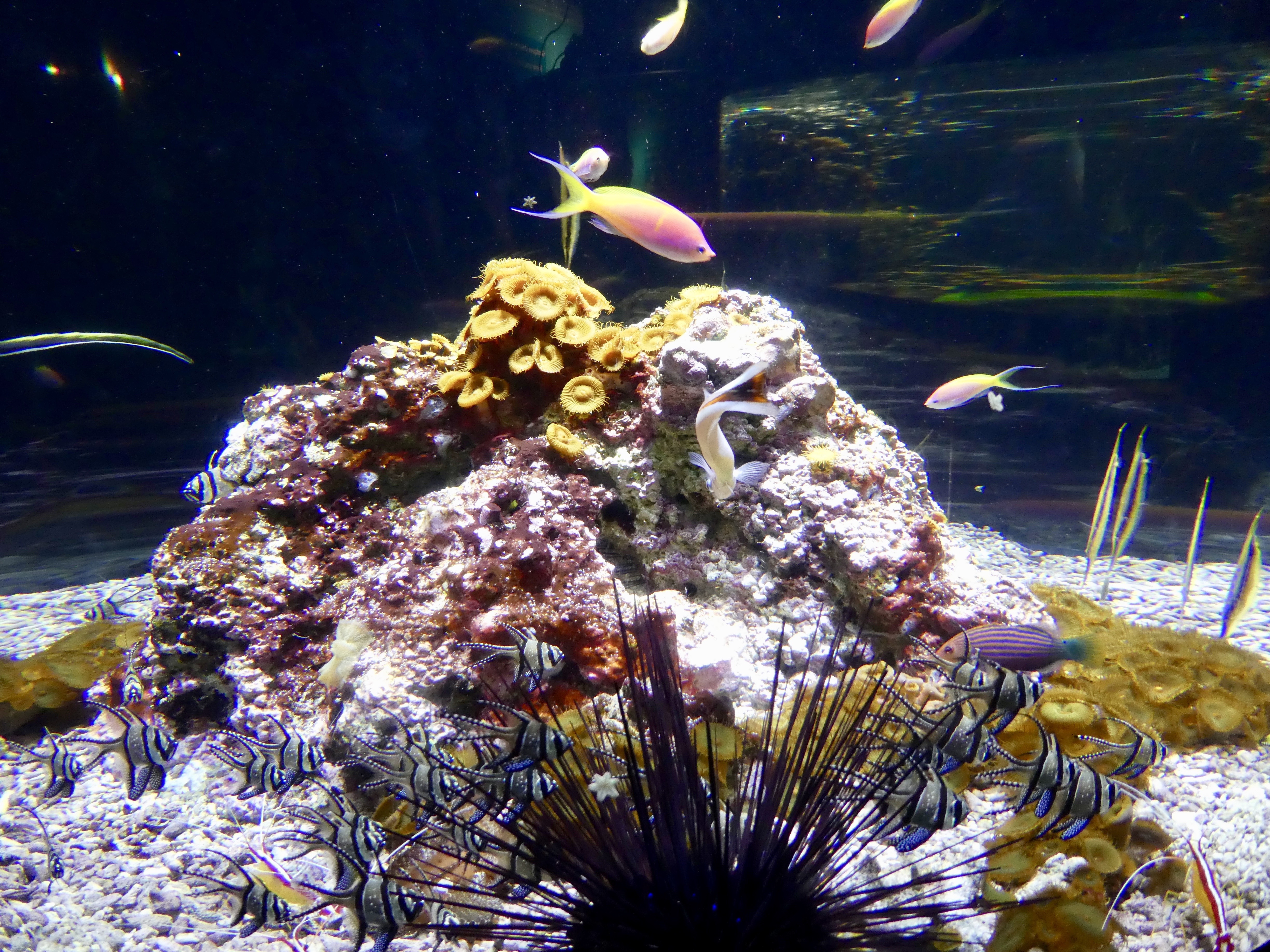
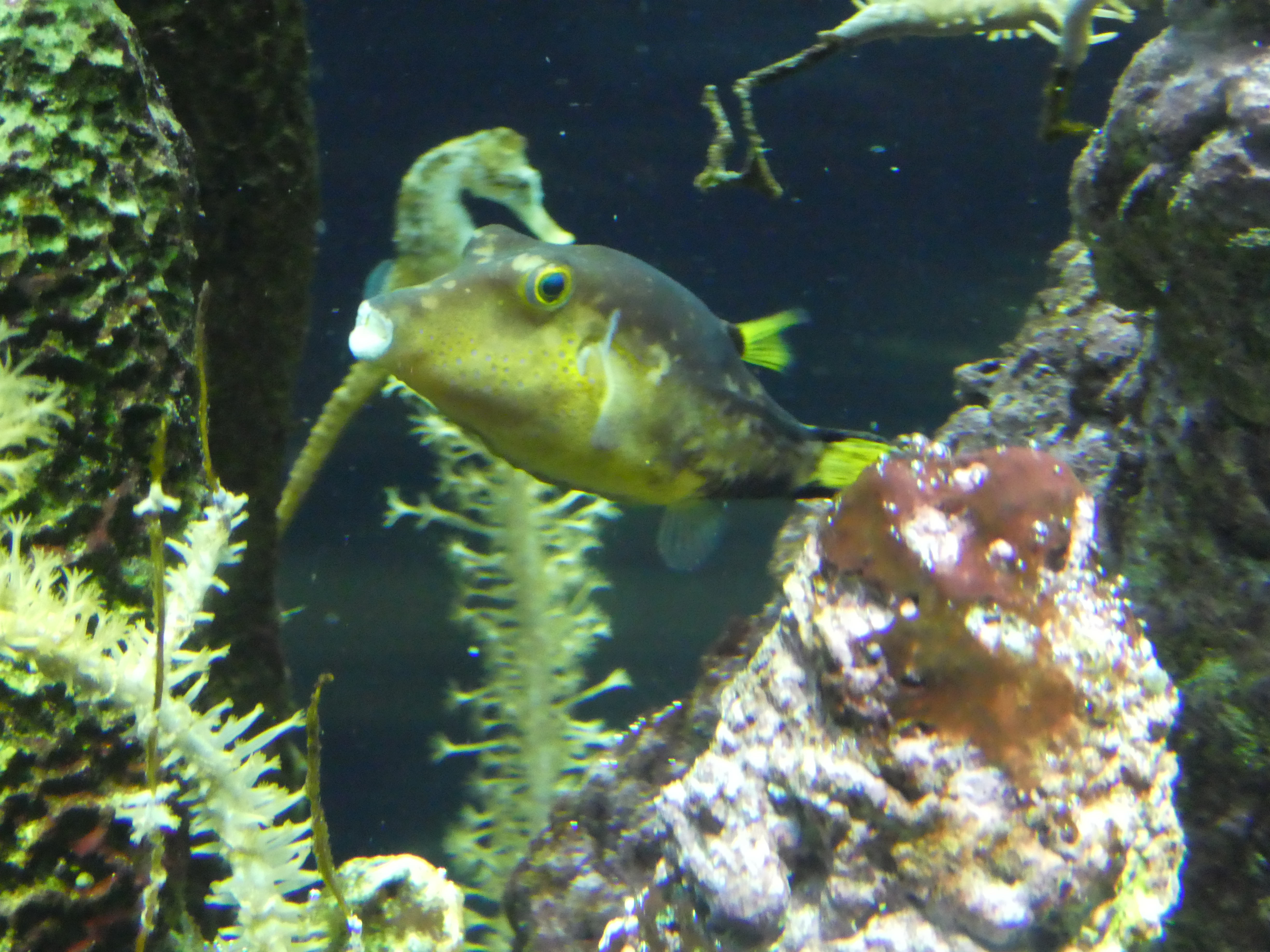
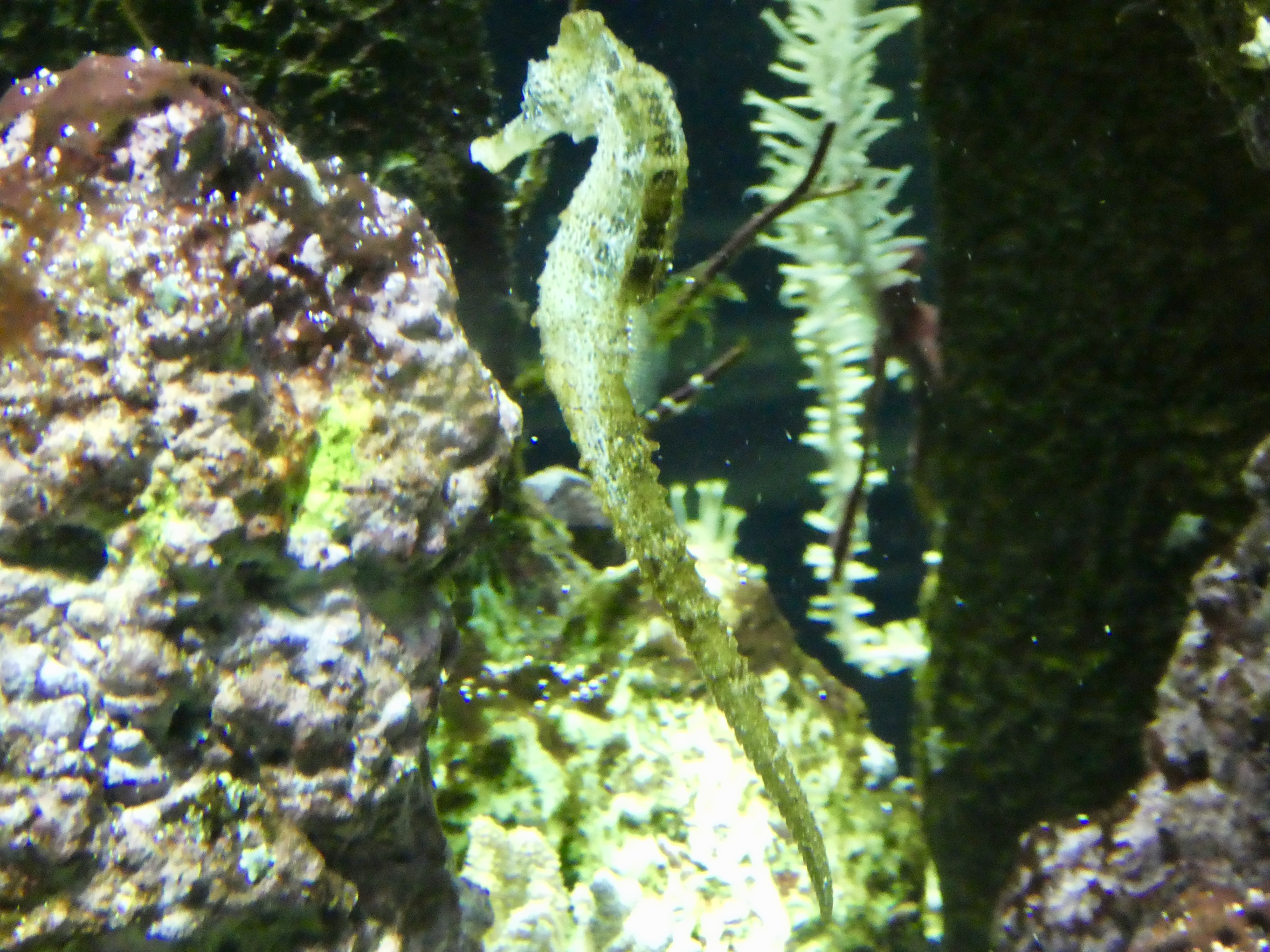
The displays of marine life wee individuals small habitats. Despite the many exceptional aquariums we have enjoyed, we found each habitat to be fascinating and unique.

Ice Floe Interior and the Beaches of Normandy

Day 10 through 15 8-May-2017

ICE FLOE is all but ready for the beginning of her journey.  Everything we brought to  France and many items we purchased here are all stowed and we are ready to show her off.

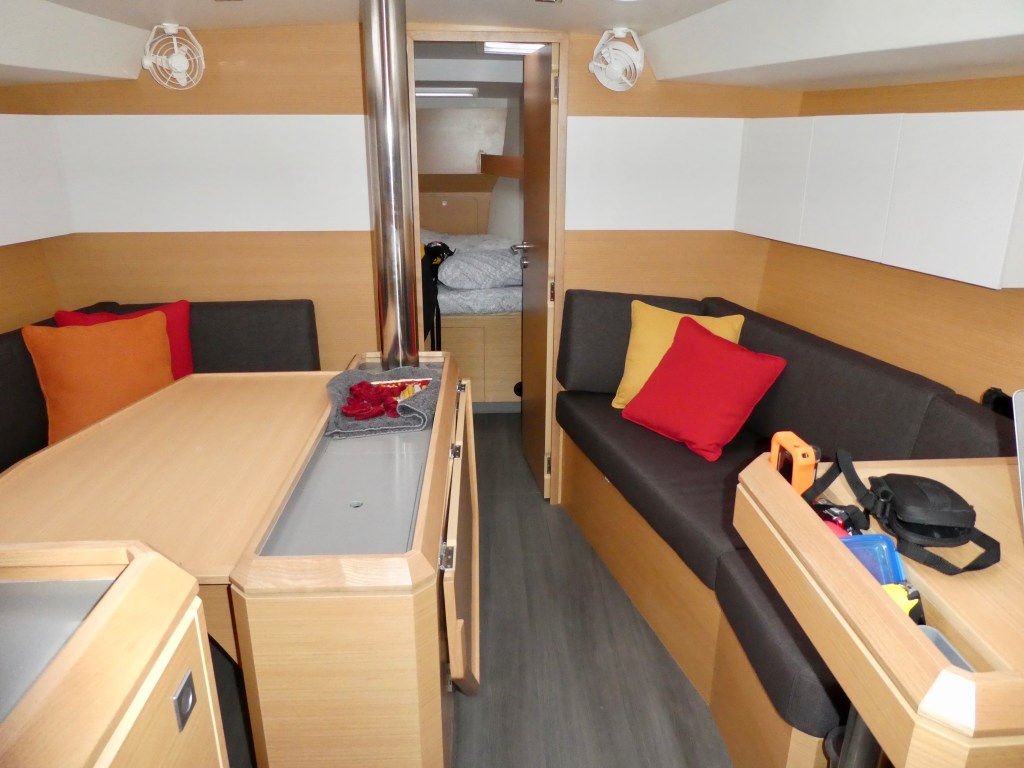
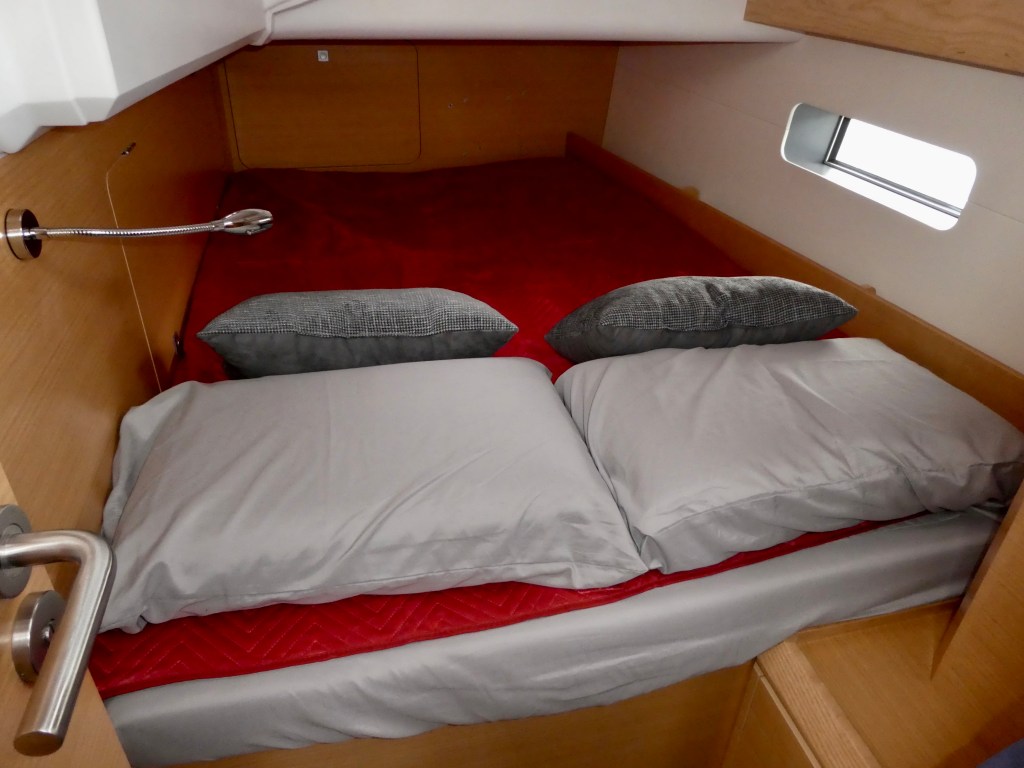
This photo on the left is the salon.  It will be converted to a third bedroom when Allison, Mike, Riley and Tristan and Marilla and Mitch join us in June. The doorway opens to the stateroom (George’s and my bedroom).

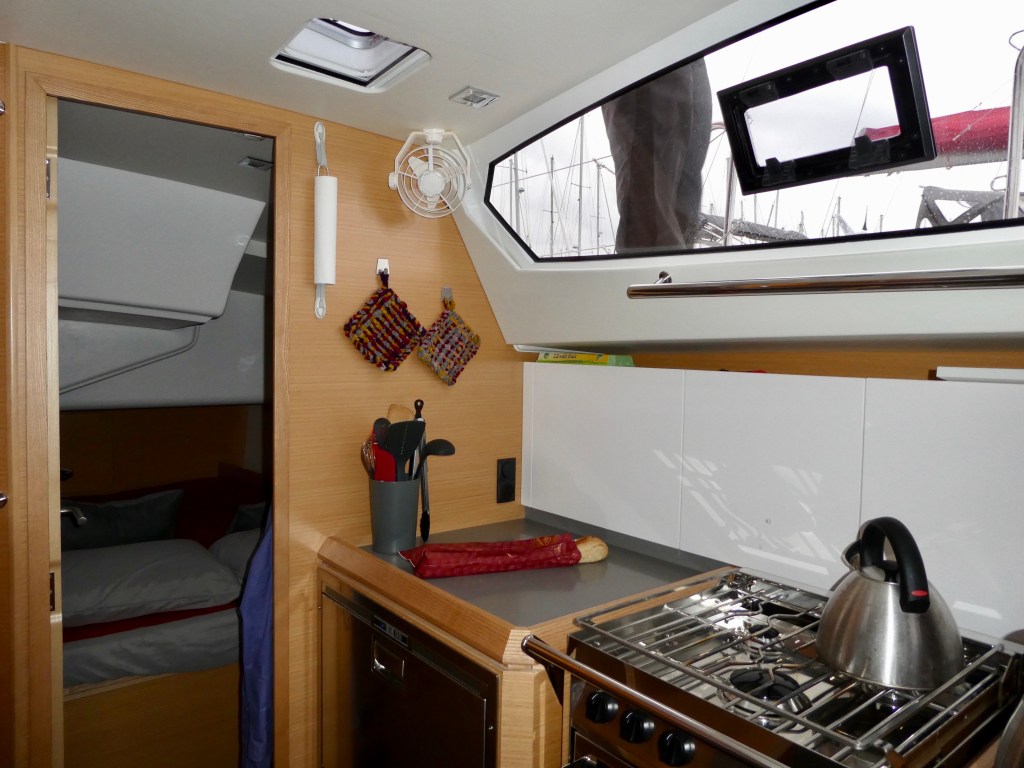
Below is a part of the galley and the doorway into the aft cabin (guest room –  on the left). 

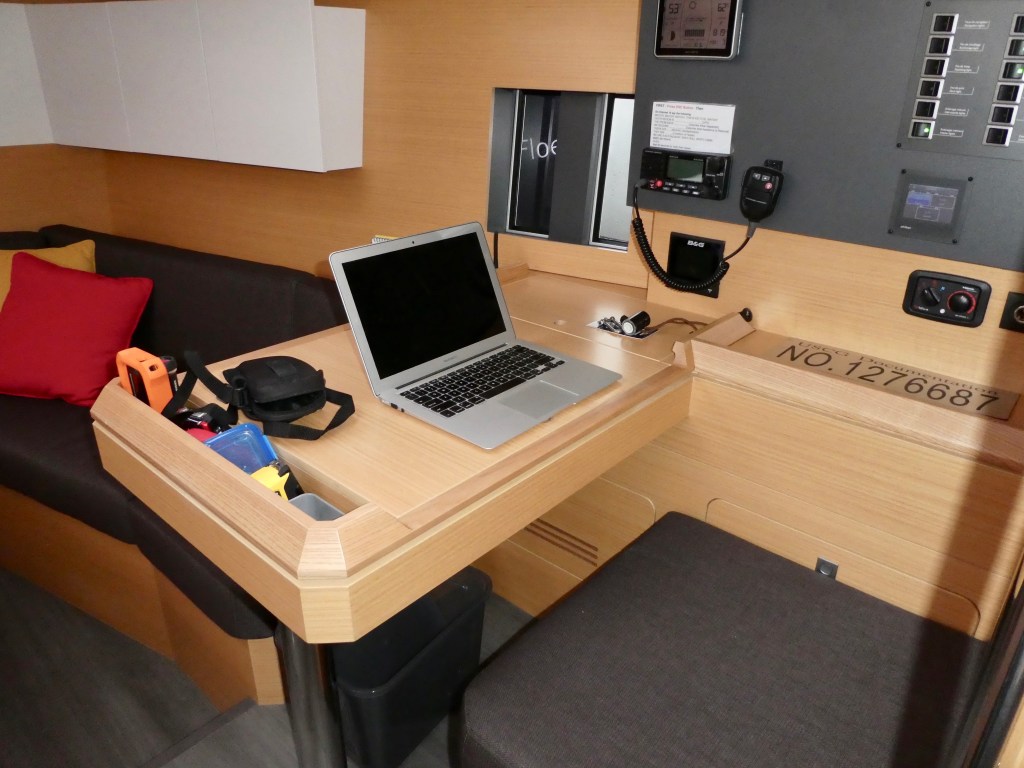
George’s (the Captain’s) Nav station, above and the stateroom (our cabin) below.

We are a bit behind schedule, having planned to stay in Cherbourg for only 2 weeks.  Modifications to ICE FLOE and weather caused the delay, but we are taking advantage of the extra few days to sail and see some of the local sights.

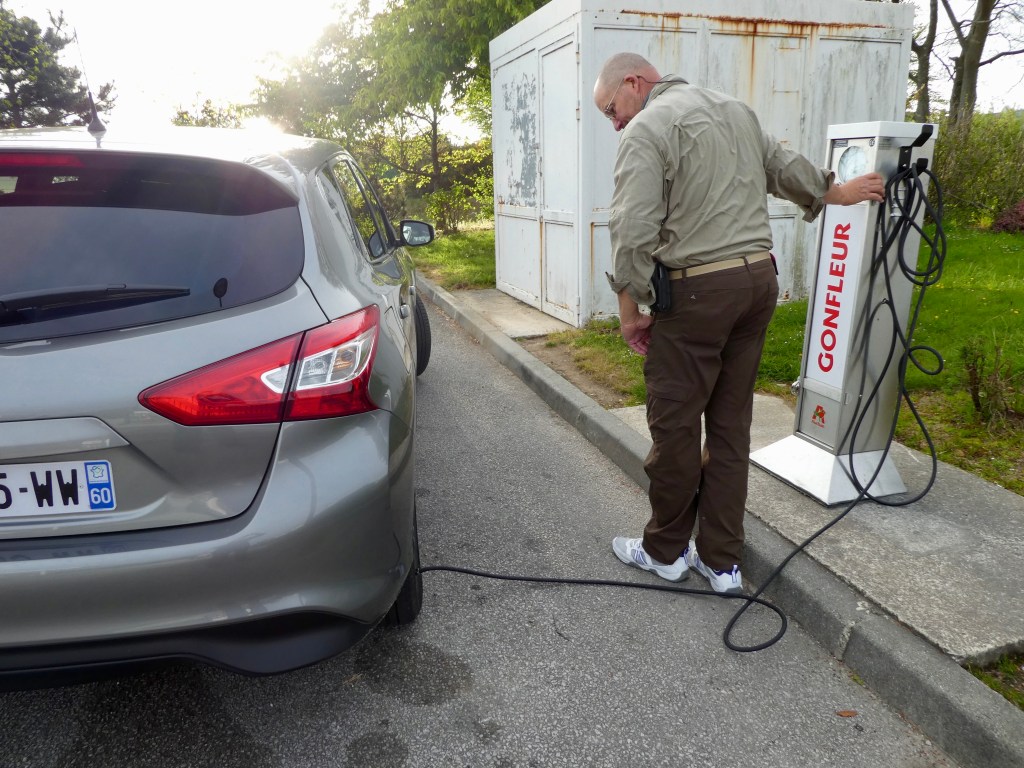
When you visit another country there are so many things you need to learn to do.  We get right into it.  Below, George has figured out where to get air for a very low tire, and subsequently to get it fixed.  Don’t return your rental without fixing it (~18 Euros) or the rental company will charge 850 Euros.

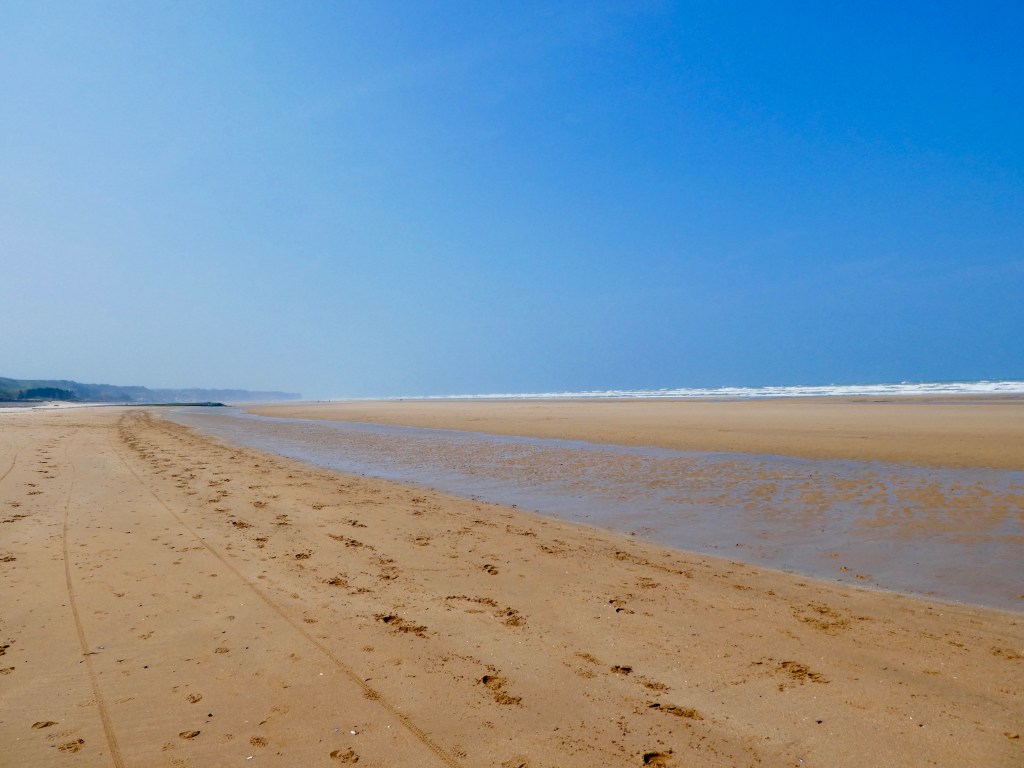
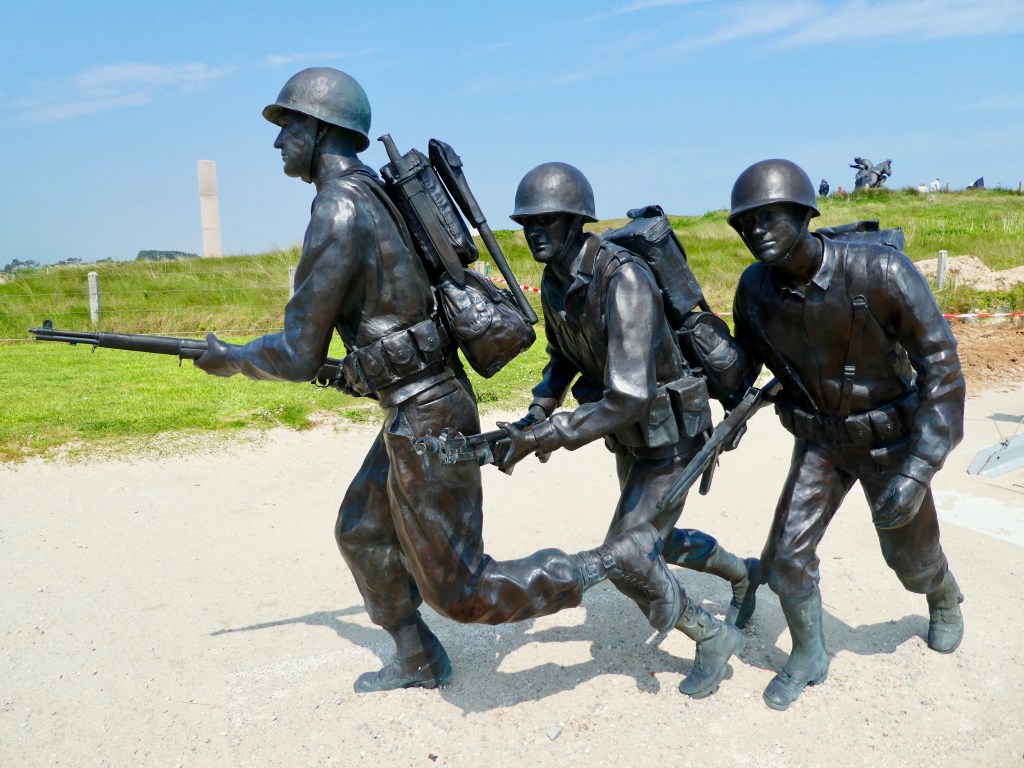
The beaches of Normandy are close by and we visited them on one of our “free” days.  Imagine being dropped off in waters beyond this long expanse of beach full of mines on D-day with absolutely no cover.  Then imagine that the planned pre-bombing campaign was unsuccessful and you were being attacked from machine gun nests firing rounds at you at 1200 bullets per minute.   That is what faced the American, British and Canadian soldiers who landed on Omaha Beach.

Omaha Beach

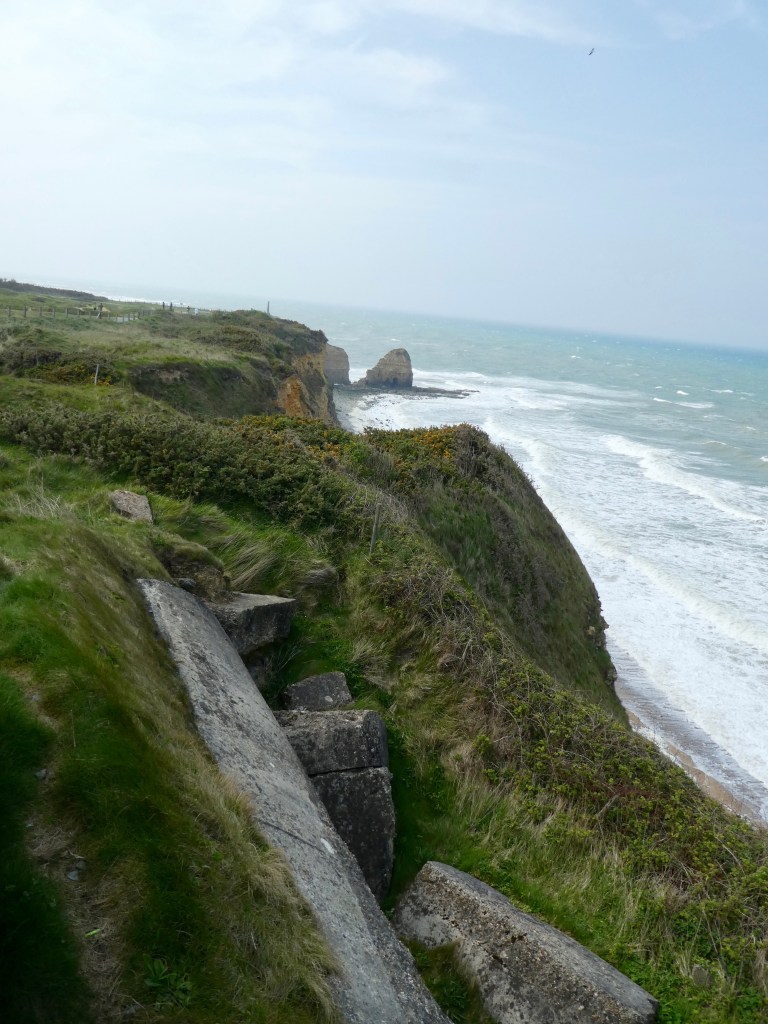
 On Point du Hoc, just west of Omaha Beach, less than 300 American rangers scaled sand cliffs to disable German defenses prior to the landing of soldiers  on the beach.  Nearly two thirds of these patriotic, young men lost their lives.  How can we ever repay such a debt?

Cliffs on Point du Hoc

While American forces fought on the beaches of Omaha and Utah, British and Canadian troops were advancing on Gold, Juno and Sword.

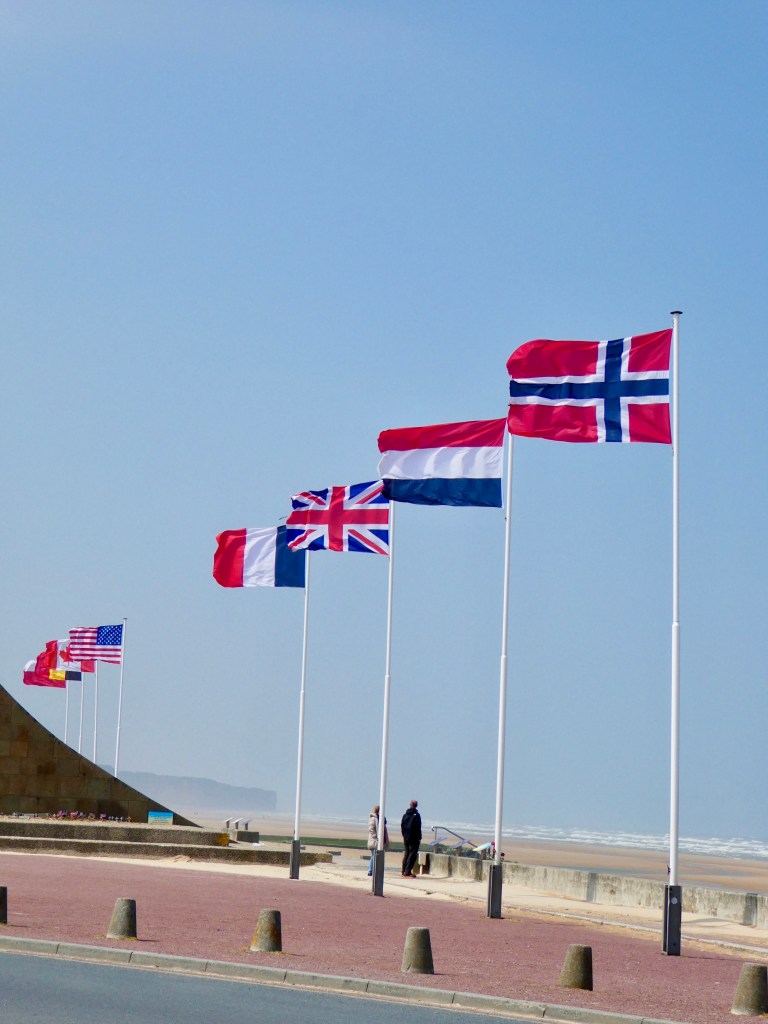
The cemeteries and memorials in Normandy that honor those who fought and those who died in this battle, elicit a multitude of emotions. The people who live there hold the allies who freed France in the highest esteem. French children visit this site on field trips to learn about World War II and this famous battle. Barbed wire fences built to defend this German-occupied land and craters from bombs dropped in the effort to take this coast are preserved.

Cherbourg

Day -8 and 9 2-May-2017

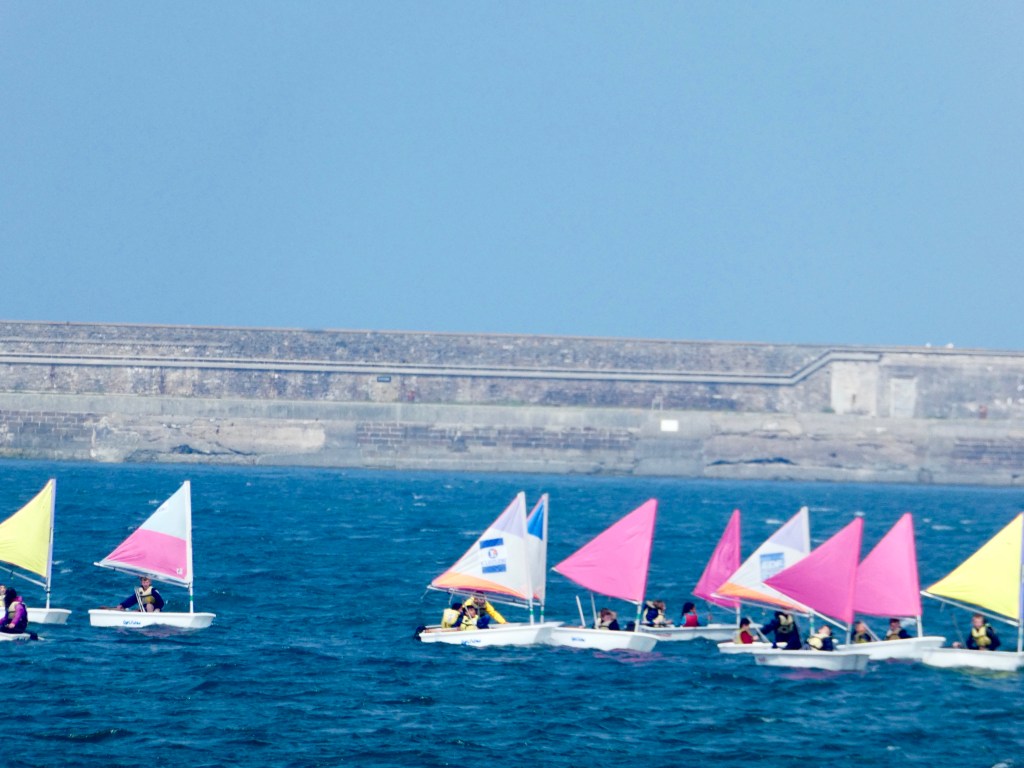
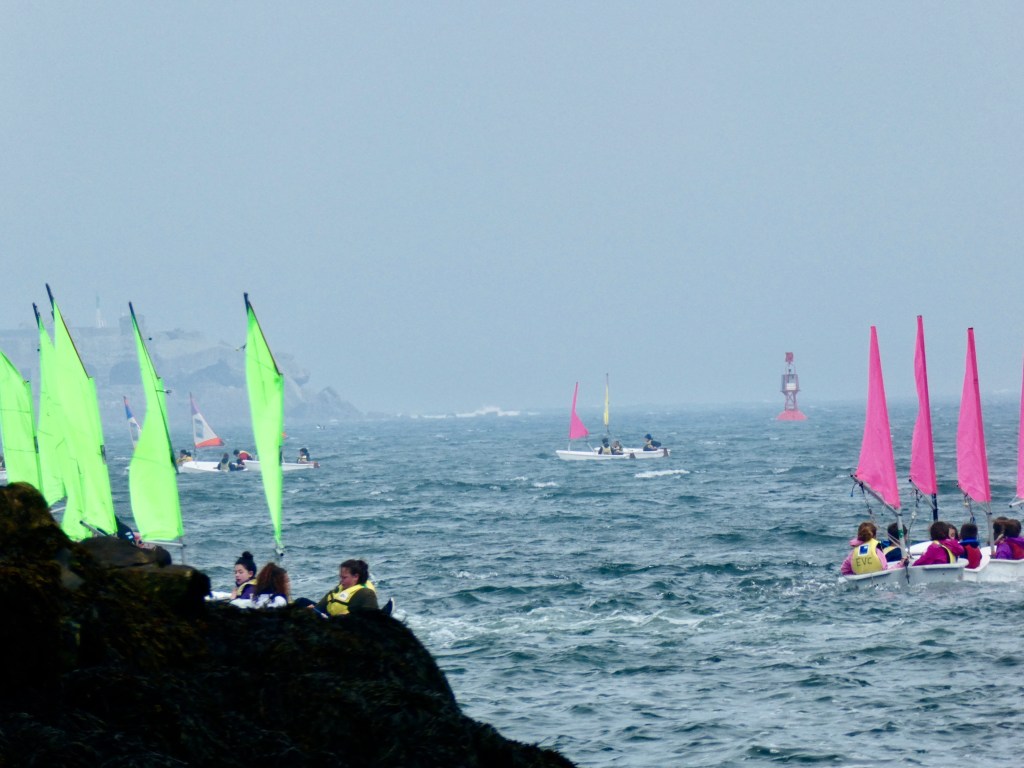
Cherbourg is a large town built around its Harbor.  Children learn to sail at a very young  age as part of their school curriculum and they are out there almost every day regardless of weather conditions.  As sound carries so well over water and the wind has typically been blowing inland, we enjoy hearing their continuous laughter and chatter.  Some of these young sailors will ensure France continues to dominate in international sailing competitions. 

Youngest sailing students in Optimus prams
As children grow older the boats grow, as well

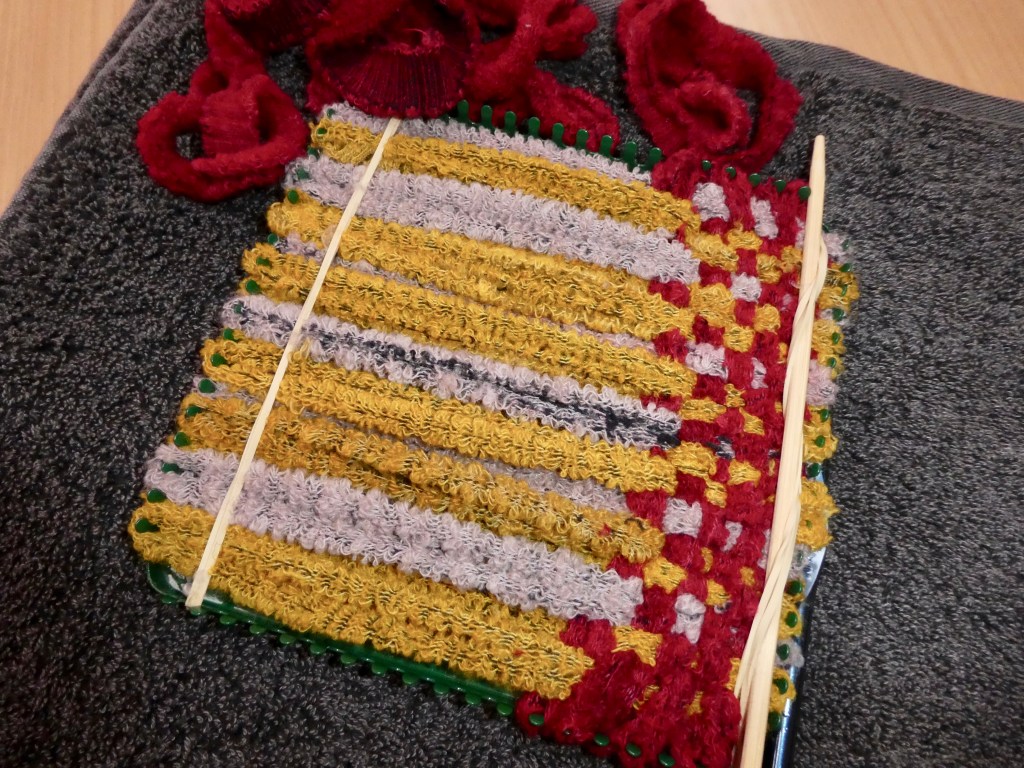
Mayday is a holiday in France and it rained all day.  This afforded us some much needed down time.  I weaved pot holders from George’s old socks, an invention of Marilla’s with a few additional tips from Nancy.  George read some of the many boat manuals.  It was delightful. 

The following day it is back to business.  George has been communicating all morning with Jean, an ALLURES workman who has come to fix the leak in the keel trunk and investigate what looks like a leak in the cabin top over the head (turned out to be condensation).  Jean does not speak a word of English, and George does not speak a word of French.  George appears to anticipate Jean’s needs (ie, a wrench, a hose, et al.,) and with a bit of charade- like gestures “Voila” there are nods of heads.  
Communicating does not always go so smoothly.  A few days later we set out to buy a 40cm X 55cm piece of plywood to build a mount for the dinghy outboard motor.  In a store that is a bit of a cross between a IKEA and a Home Depot we could only find plywood marked “Non-structural”.  I asked in my best French (a combination of words I know and words in english with my best French accent), “Je regard non-structural plywood.  Avez-vous structural plywood?”  Puzzled look.  My statement, I later discovered, translates to “I look non-structural plywood.  Have you got structural plywood?”  George goes over to the sign that says Non-structural and puts his hand over the Non.  A look of enlightenment comes over the employee and he runs off.  

Quite some time later he returns with another employee who speaks English very well and we let him know what we are looking for.  In the interim, we had found a small cut piece of plywood that was big enough and I show him a written notation of 40cm X 55cm.  He understands our request, but his expertise is in the gardening section of the store and responds that he does not know enough about building materials to advise us.  We are almost ready to give up and I see that about 20 feet to the right of the many stacks of non-structural plywood, a stack of (you have probably guessed) structural plywood.  The first employee then guides us through the store to an area where the 40cm X 55cm piece can be cut.
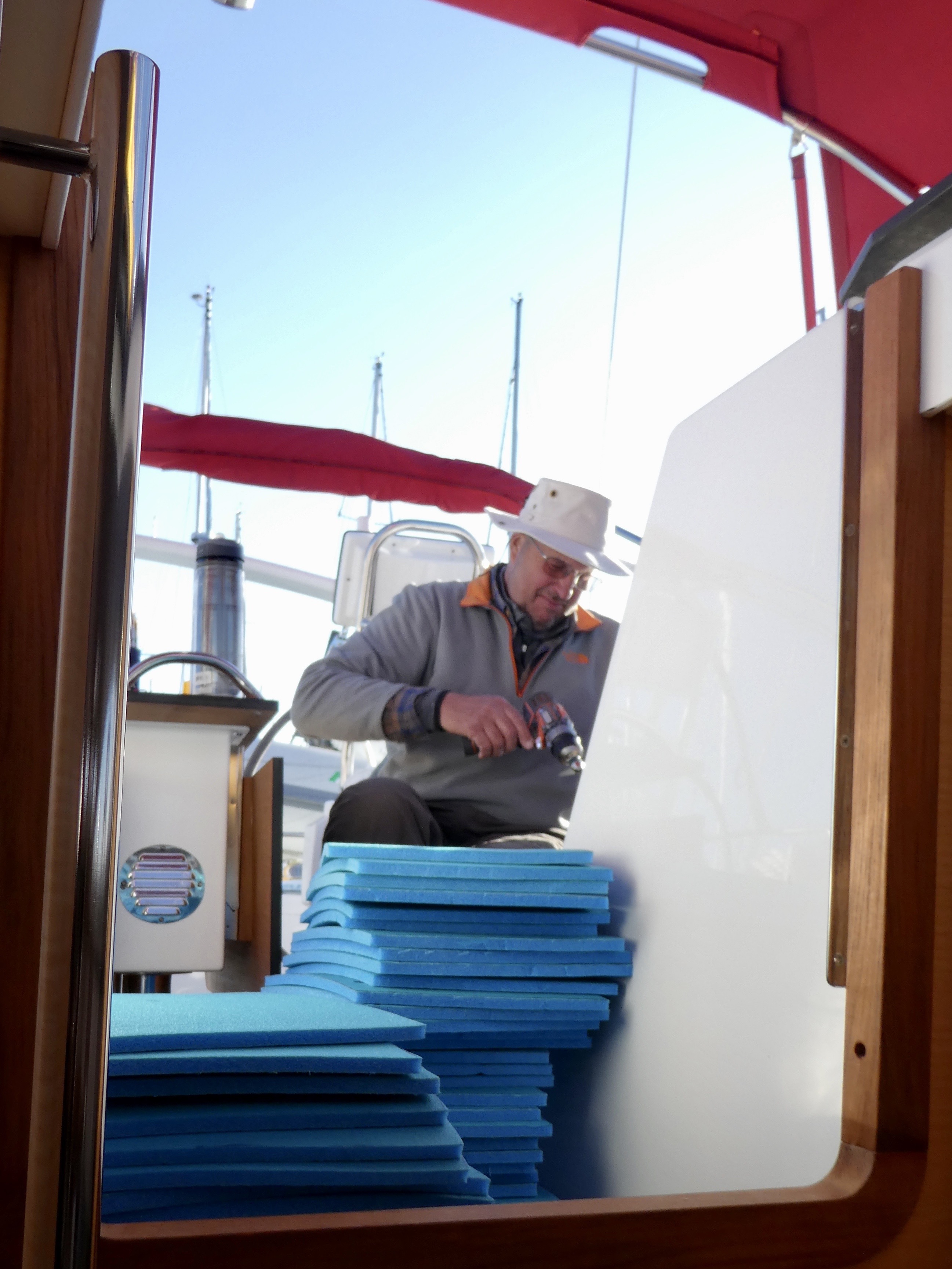
The piece we need and the remaining scrap and large piece of plywood are loaded back on the cart and we prepare to leave.  I get the bright idea to ask that the store keep the larger piece of plywood and explain in my Franglais that we are living on a boat.  That we will pay for the entire piece of plywood, but could the store please keep the large piece.  This third employee pulls up the Google translator on his phone and with several rounds of back and forth communication, he understands we only need the small cut piece.  He takes a few minutes calculating and then give us a bill for 2 Euros (just over 2 US dollars).  We surmise that we had thoroughly confused the man by simultaneously saying we will pay for the whole board, we can only take the small piece, can the store keep the large piece….. It took about two hours to purchase the plywood.  Everyone was so helpful and patient.

When George started to plan the installment he discovered the outboard engine is too large to fit in the locker.  Can’t wait to see how long it takes when we go to return the piece of plywood.

Love at First Site

Day 1 25-April-2017 

We arrived Tuesday morning in Paris after an overnight flight on British Airways.  We treated ourselves to Business Class seats using some of the miles accumulated during Susan’s working days.  It allowed us sufficient comfort to sleep for part of the trip and access to the airport lounge where we had a before-flight dinner and some very pleasant beer (that also helped us sleep for part of the trip).  We drove to Cherbourg, where our new sailboat was built and it was love at first sight.
The length of daylight is very long here (almost 15 hours).  Consequently, we have been fooled into staying up much too late on most evenings. Nonetheless, we adjusted to the time zone change with remarkable ease sleeping until our customary 7:00am time from the very first night. 

We are docked at an very large marina protected by two amazing barrier walls that were man-made in the 1800s. 

Entrance to marina
Port Chantereyne in Cherbourg

The picture above shows the steepness of the ramp to the floating docks – the daily tide change is 24 feet!  You can also see the popularity of sailing in France, even in this chilly Northwest harbor where temperatures are moderated by the sea ranging from the low 40s in mid winter to the low 60s in mid-summer.  We are experiencing typical weather for April and May with temperatures in the mid 50s with the best days seeing a penetrating sunshine in the afternoons.

Day 2-7 26-April-2017 – 31-Apr-2017

We spent the first week unpacking and stowing the 500 lbs of gear we carried over on our combined trips in January and this trip.  This was an arduous undertaking in parallel with getting an in depth overview of ICE FLOE deux’s (henceforth ICE FLOE) systems from Phillippe Hasne, an expert on the ALLURES  from Grand Large Services, and having every inch of ICE FLOE inspected by Brad Baker, a part owner of SwiftsureYachts, the US company we purchased ICE FLOE from.  Brad’s inspection raised a number of issues that were quickly attended to with a flurry of workmen working in the boat alongside us.

We took our first sail on April 29th.  It was a short sail in light wind.  We were accompanied by Brad, Francois (ALLURES salesman) and David (a British national living in New Zealand who came to Cherbourg to see the ALLURES 39.9).  The sail  gave us an opportunity to see ICE FLOE function admirably in low wind and to be tutored by Brad on many functionalities we had not enjoyed on our previous boat.  ICE FLOE deux is not “just” a bigger boat than her predecessor;  we have much to learn to take full advantage.

Our second sail was on April 30th in winds approaching 20 knots.  It was a beautiful sunny afternoon and an outstanding sail.  We sailed consistently over 8 knots. Unfortunately, the most memorable part of the sail was when we discovered a leak in the keel trunk.  This required nothing more than some additional silicone cauking, but it did take quite a bit of time to bail out the bilge and flush it repeatedly with fresh water – another late night!!   

Second sail

We’ve moved

Blogger to WordPress

Hello to all,
Our blog platform has switched from Blogger to WordPress.  In theory, this should not create any change in the manner in which you access this Blog and all the Posts that have been published will be there.
You will see some changes:

  1. If you want to continue or start receiving emails with new posts, you may need to sign up again.  On the home page you will find a column on the right that in the photo below with a big red circle.  Just add your email address and click the follow button.
  2. The Blog’s Homepage and Posts page have the posts organized by date (Archives) and “Destinations” on the right side of the page also identified with a red eclipse. If your interests lie mostly with a particular destination, you can select it and those are the blogs it will bring up.
    1. A new destination will be added soon – Sailing the French Canals
  3. The transfer of some of the photos introduced some distortion that I may or may not be able to fix in the future.
  4. A few past blogs are still missing – should be restored in the next several days.

To access the Blog directly, you can still use www.gowiththefloe.net

If anyone has any difficulty, please do let us know.