Unknown's avatar

About Sv Ice Floe

I sail on a vessel named Ice Floe

Self-Quarantined in Paradise

Sandy Island, Carriacou, Grenada

We celebrated the 2020 New Year while anchored off Sandy Island (Blogpost Sandy Island, Carriacou, Grenada).  The island and its surroundings are a treasure; rescued at one time from obliteration, it offers a quiet, protected and uncrowded anchorage, unspoiled beauty, a lovely beach with a back-drop of coconut palms, and a vibrant, shallow, reef to snorkel.  The water is a deep turquoise that reflects onto the undersides of the beautiful white terns that fly above us.  We knew we would visit again and again.
We arrived again on March 18th, under circumstances we could not have imagined.  The first confirmed case of the coronavirus infection (Covid-9) in the Caribbean Islands was reported March 1st, and by March 16th 90 cases were confirmed (https://buzz-caribbean.com/article/coronavirus-update-in-the-caribbean).
In the interim 2 weeks a swift series of actions were taken.  First, some islands turned away cruise ships with passengers who had recently been in countries reporting a high incidence of infection.  There was an uproar and strikes in Martinique when St. Lucia turned a cruise ship away that was subsequently accepted in Martinique.
Within days an increasing number of islands had instituted bans for all cruise ships.  By March 17th many islands had reduced the number of points of entry and instituted health checks and quarantines.  St. Lucia, Martinique, and the Trinidad and Tobago went further, banning all foreign cruising vessels.
We recognized that if we stayed in St. Lucia any longer we could wind up there indefinitely.  We had space reserved in Clarks Court Marina in Grenada for Ice Floe to be hauled for the summer months.  In Grenada we would have options.  We left St. Lucia mid-day on the 17th sailing through directly to Grenada, arriving March 18th late morning.  We learned that at midnight a 14 day quarantine would go into effect in Grenada – we dodged that small bullet.
We are checked into Grenada.  The process took several hours and before we were through the number of boats that had arrived to check in was over 50.  A Grenadian pulled his T-shirt over his mouth and nose as he passed the line.  We brought this here.
Everyone checking in had a story.  Some were desperate to get home before flights in and out of the islands were cancelled.  Families and friends who had chartered boats were being forced to cut their cruises short – a sad and costly end to a dream vacation.  Cruisers on their own boats were struggling with the choice between getting home and staying for the perceived safety of isolating themselves here on their boats.
Our lives have been turned upside down – not just ours – the whole of humanity.  By self-quarantining ourselves on our boat, we have chosen to relieve the islands and the United States of two “elderly” retirees who might otherwise add to the burden of dealing with the enormity of this tragedy.  We have been granted the gift of options and of idle time.  How often have I wished for more time with a smaller list of things to do.  How difficult it is to conceive of how I might find enjoyment in this twisted granting of this wish.
No Covid-9 infections have been confirmed in Grenada as of this writing.

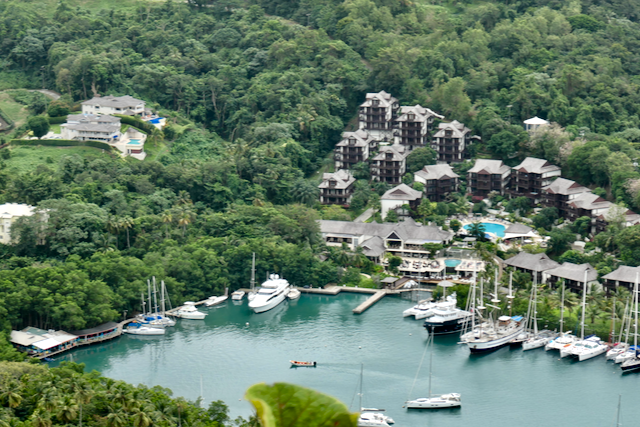
Marigot Bay Resort and Marina, St. Lucia with Family

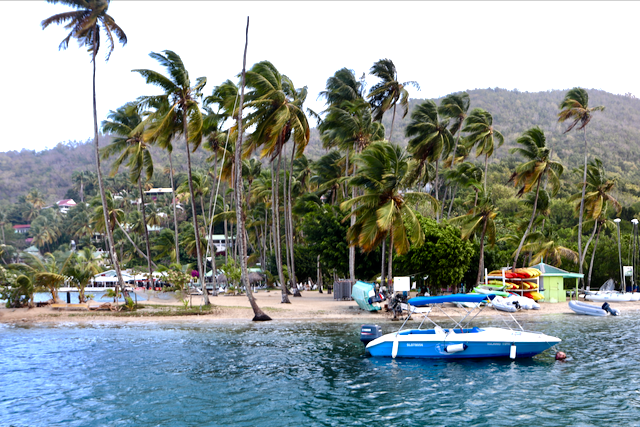
Vacationing in Marigot Bay

Allison, Michael, Riley and Tristan joined us in St. Lucia on February 12th and turned our lives upside down in the most pleasurable ways possible.  They arrived with a list of experiences and adventures they planned to have and no time to waste.
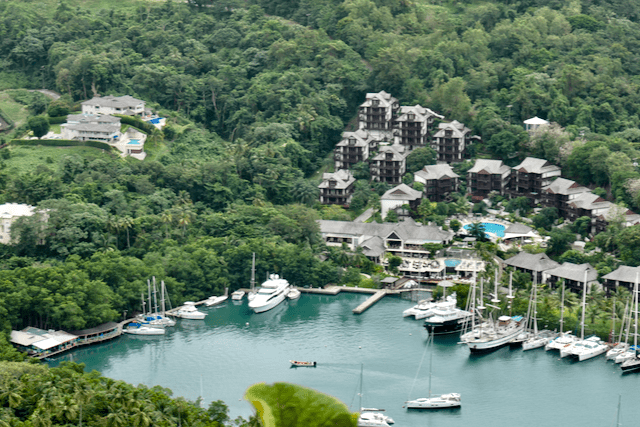
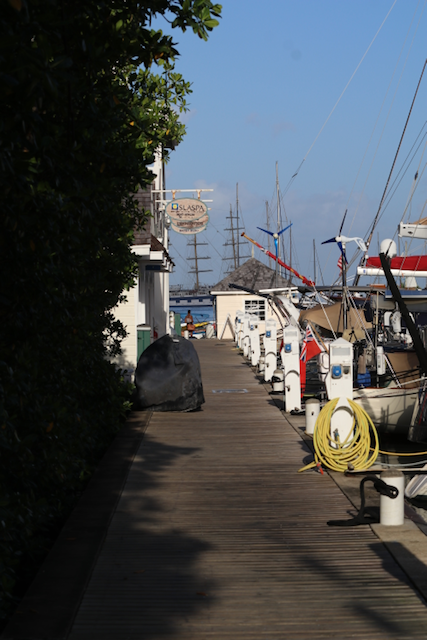
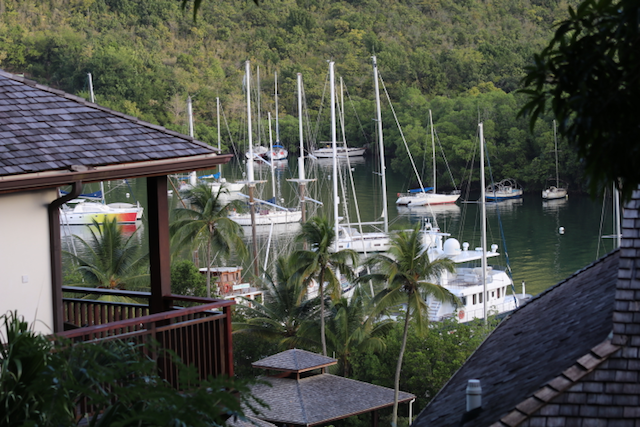
Marigot Bay Resort and Marina
 
Sadly, their flight was delayed and the pool was closed by the time we got to our temporary home at Marigot Bay Resort and Marina.

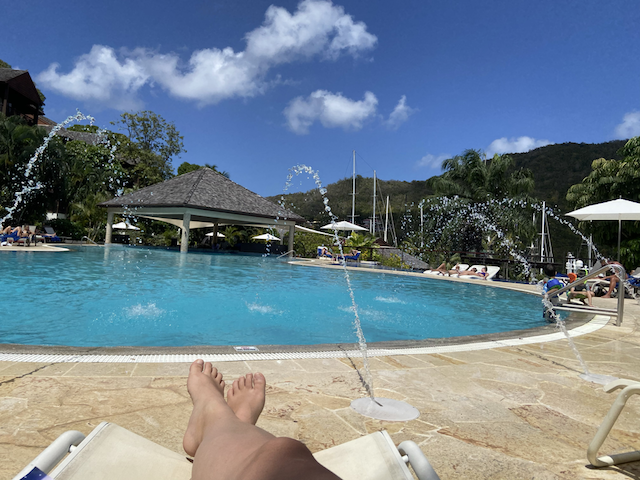
The pools figured heavily in everyone’s plans for keeping the children and adults happy.  They would have to wait for the morning.
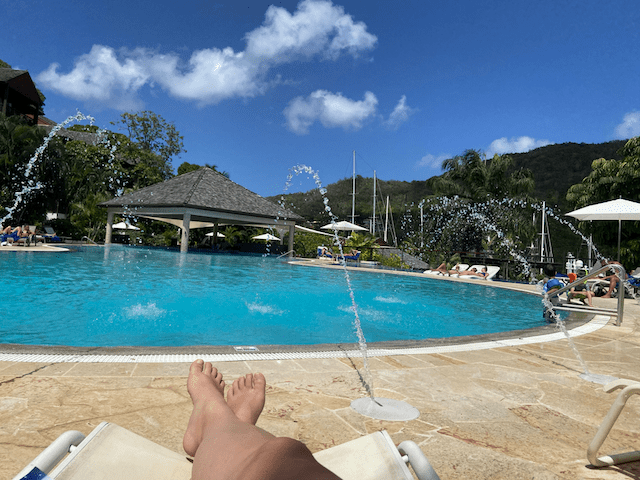
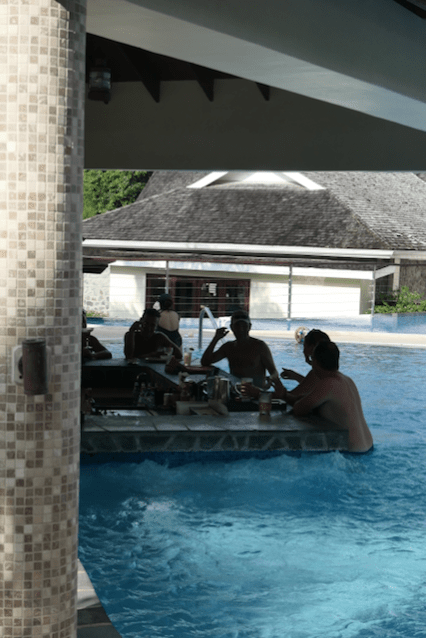
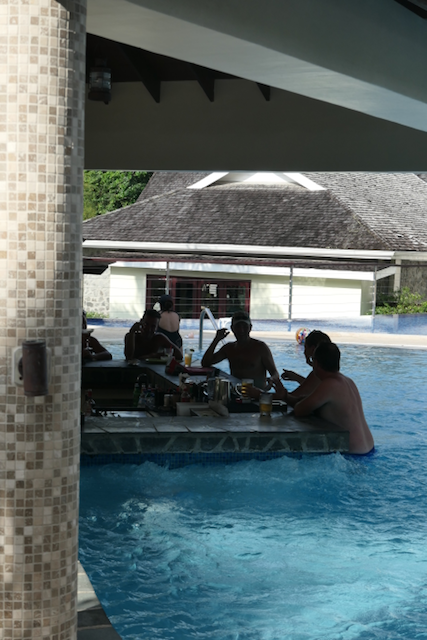
Upper story pool, Marigot Bay Resort and Marina, St. Lucia
Yes indeed, the pool features a swim up bar / restaurant.  Many a refreshing
rum punch and chocolate milkshake was enjoyed here.
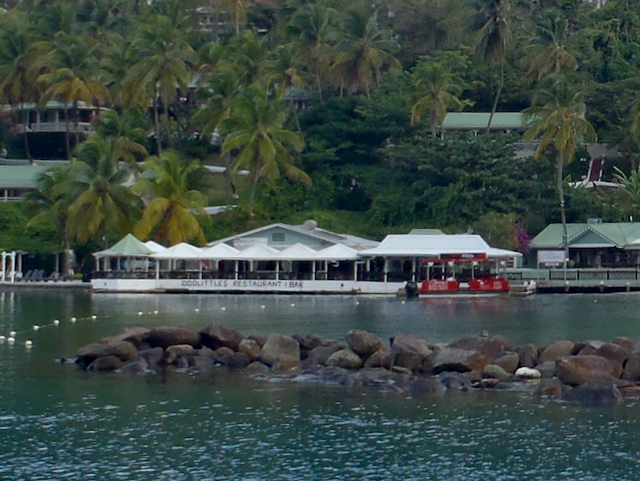
We rushed off to dinner at “Doolittles”, a casual, waterfront restaurant just a short ferry ride across the bay from the marina.  The flight delays resulted in our being late for our reservation, which, in turn, delayed our being seated and fed.  The very kind restaurant manager noted how fast Tristan was fading and did his utmost to to speed dinner up, but travel weary and past caring about eating, Allison took the ride back and put the kids to bed.  The rest of us joined her shortly afterward with her dinner and we enjoyed the balance of the evening in our cockpit.
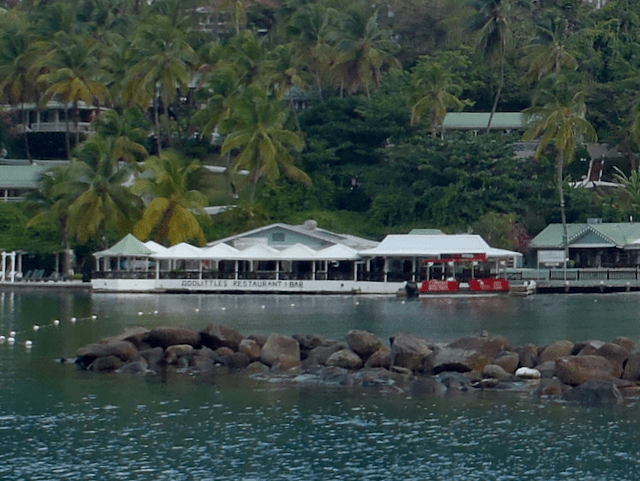
Doolittle’s offers an informal setting with a varied menu that should satisfy most, a Happy Hour (for beer, wine, and select cocktails) that starts at 5:00pm and lasts until closing.

The Itinerary

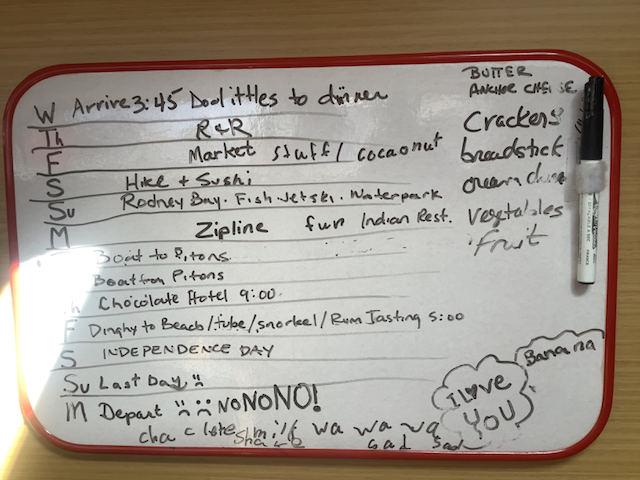
Our white board quickly became filled with plans for each day.

Allison, Mike, Riley and Tristan had plans!!  We sketched out this itinerary to make sure we got to all of them.
Day 2 was slated for R&R out of respect for the preceding, arduous, day of travel.  We spent much of the day swimming, planning, and strolling through the resort.  The winding paths are bordered by well-maintained flowering shrubs, water features, and trees including mango, starfruit, coconuts.  
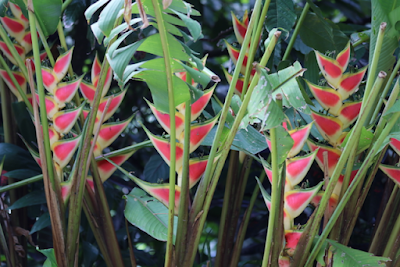
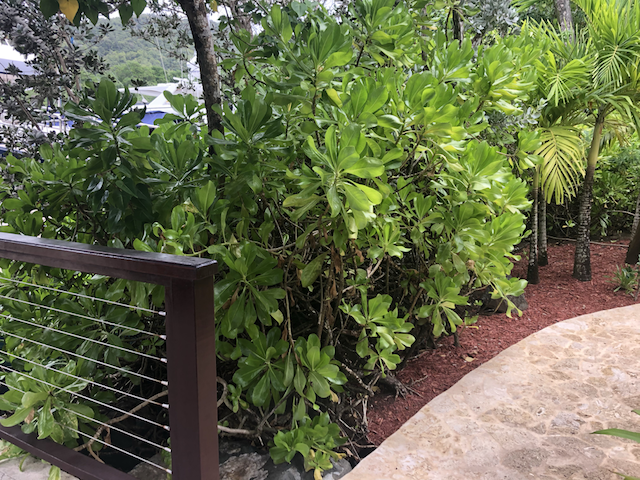
George gave Riley and Tristan a homework assignment to choose a bird and a plant and then find out their names.

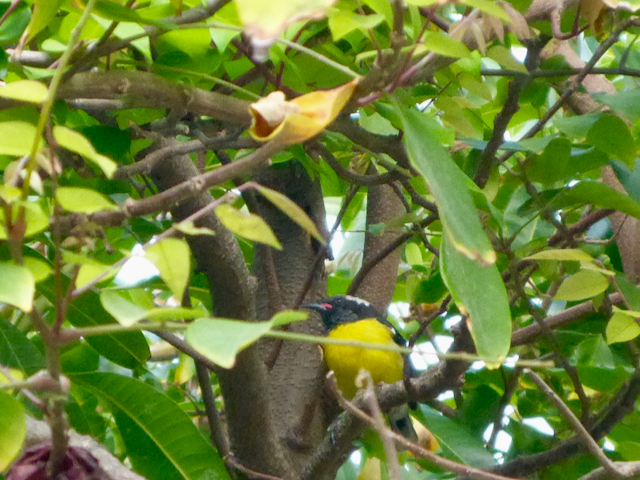
Tristan took little time in choosing the ever present bananaquit as his bird.  We hear the bananaquit’s characteristic high pitched chirp constantly.  However, I find it difficult to pick them out despite the bright yellow plumage on their breasts.  I was surprised Tristan had spotted one so quickly.
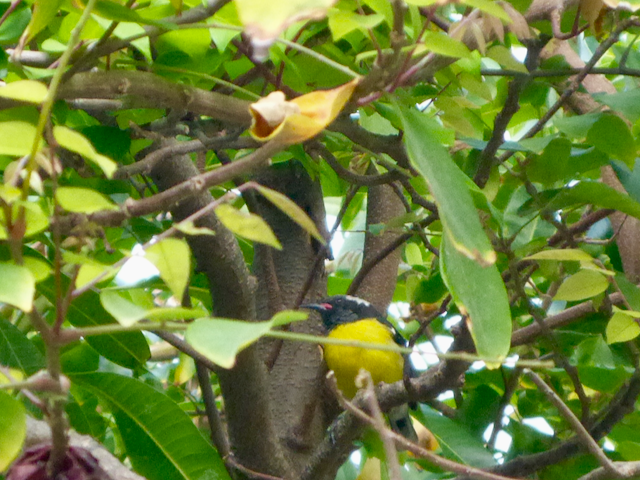
Bananaquit (Coereba flaveola) – feeds on fruit and nectar
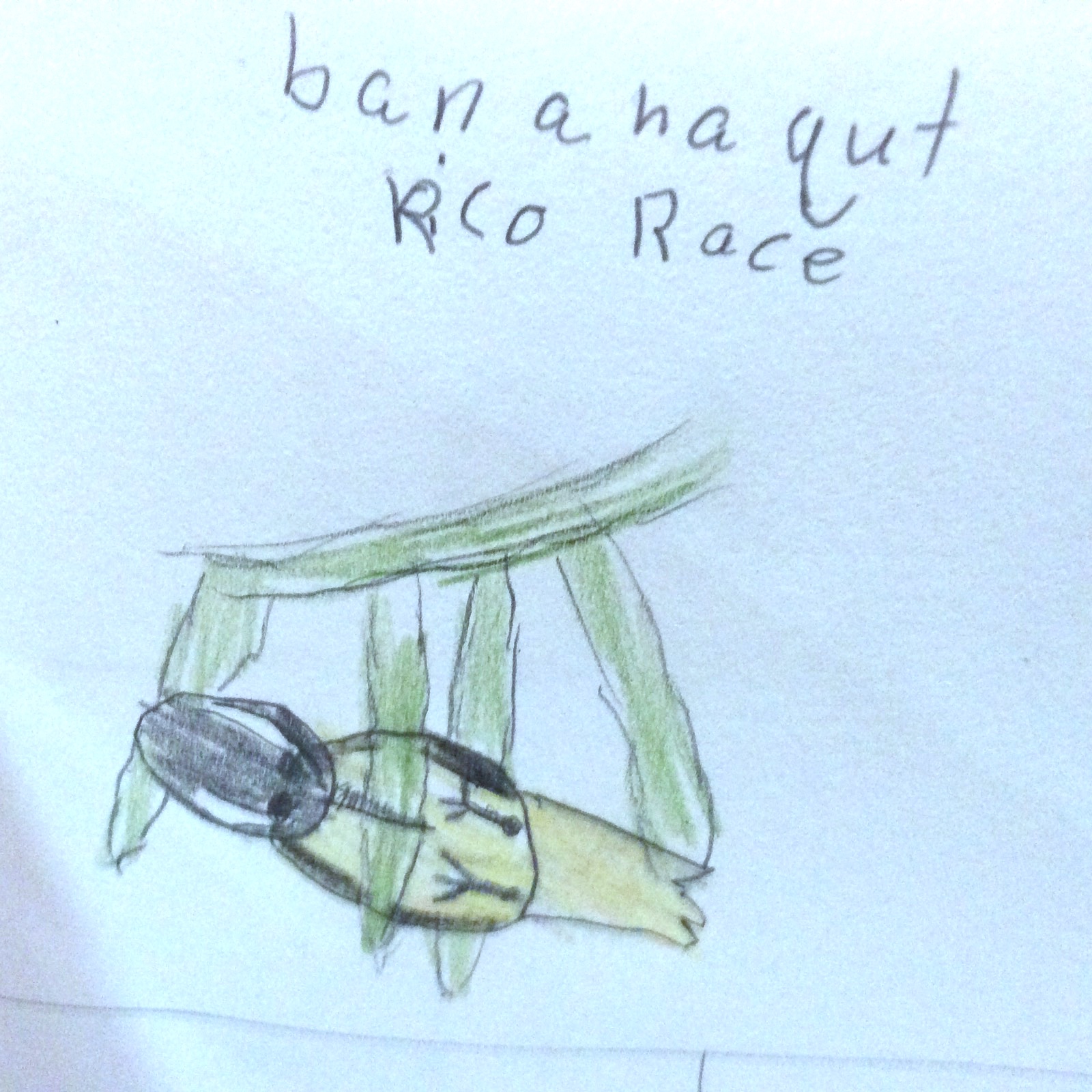
Tristan captured the Bananaquit’s distinguishing features very well in the drawing he made below.
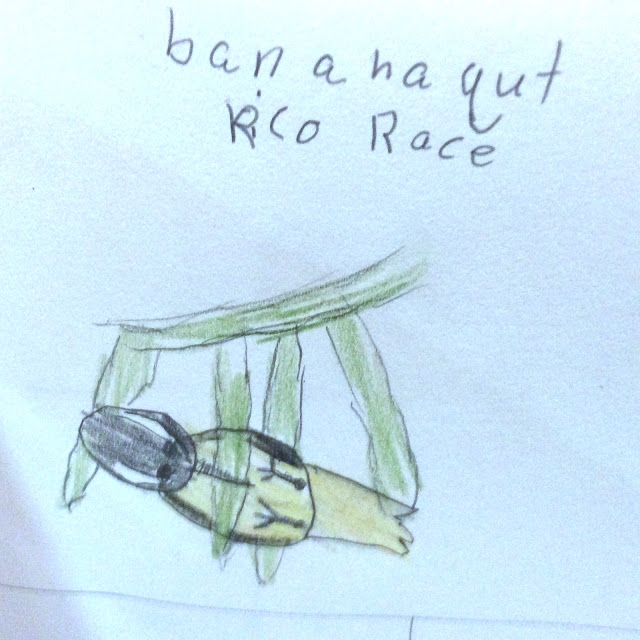
Tristan’s drawing of a bananaquit – St. Lucia
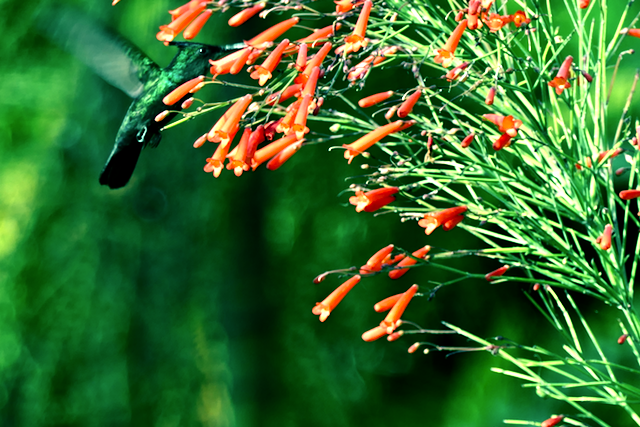
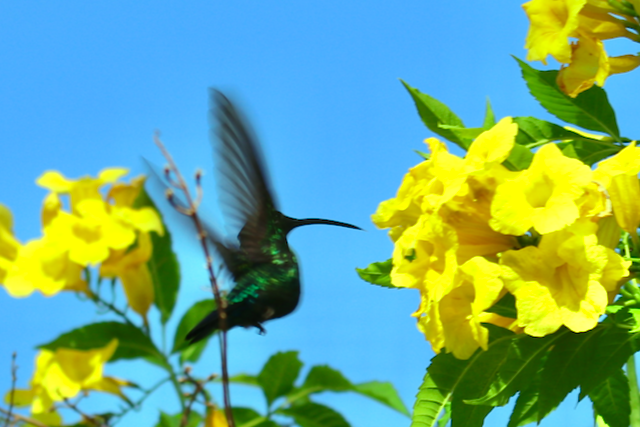
Riley took a bit more time to settle on her choice of bird.  The two of us enjoyed a long walk during which we explored every inch of the resort.  We followed our friend Beverly’s advice and were rewarded with many glimpses of hummingbirds sipping nectar and sometimes even taking a rest.
Riley chose the Antillean Crested Hummingbird.
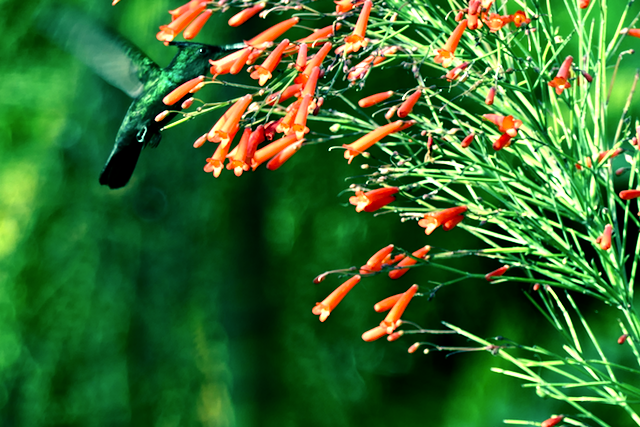
Antilean Crested Hummingbird (Orthorhyncus crostatas)
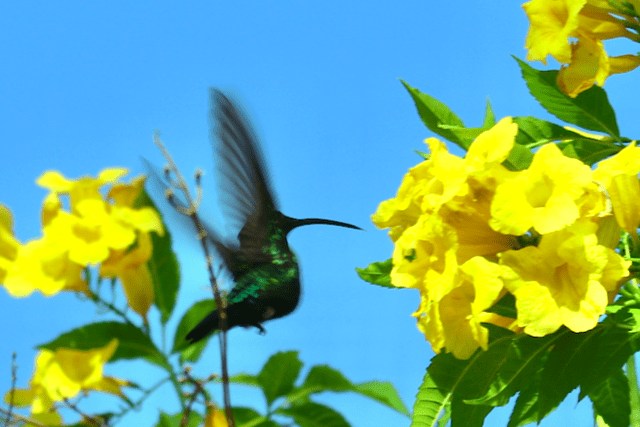
Mike captured this amazing photo of the beautiful Green Throated Carib Hummingbird (Eulampis holoseiceus)

For lunch we enjoyed grilled pastrami sandwiches courtesy of Mike and Allison who gifted us with a giant homemade pastrami they had cooked on their Egg.  The whole process of curing, smoking and cooking takes about 2 weeks.  It is so worth it!!  We plan to apprentice with them when we get back to the US – both are excellent cooks and the Egg figures heavily into their cooking repertoire.

We took the ferry over to the small beach near Doolittle’s and spent the afternoon swimming, shelling, and playing with Duhkxy.  This beach is shared by several resorts and has lounge chairs designated for guests of the Marigot Bay Resort / Marina.  You can peruse tabletop displays of shells and other memorabilia and there are a number of informal shops that sell souvenirs, beverages, and snacks.  For something more substantial, Doolitle’s is just a 2 minute walk away.

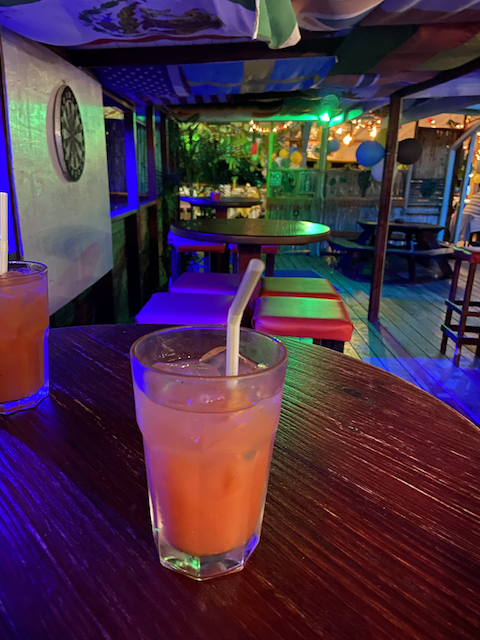
We had dinner back on the resort side of the ferry at Chateau Mygo.  Adults may have overindulged in rum punch, that in this establishment, certainly comes with a punch (they have a really nice passion fruit daiquiri, too).
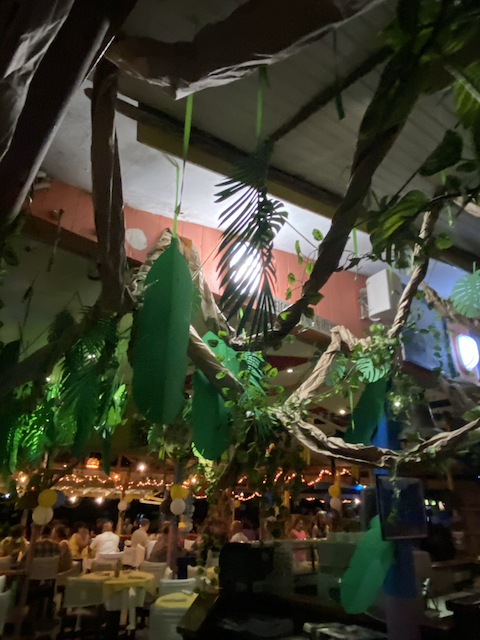
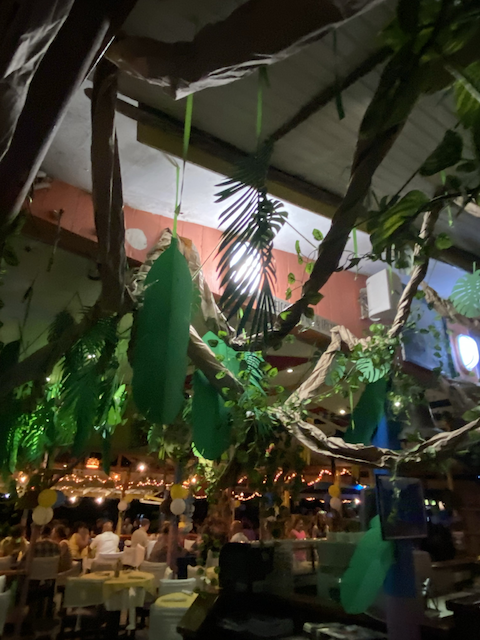
Chateau Mygo with its fanciful decorations and great food
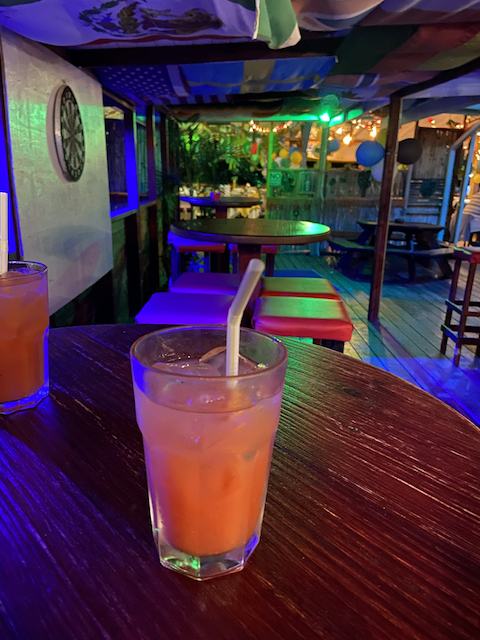
Chateau Mygo rum punch – be especially careful of Happy Hour when they are two for one.
BTW – Happy Hour is from 5:00 until closing!

It was time for early to bed as we would head out first thing in the morning for the market in Castries.

Market Day in Castries

The following day we were off to the market in Castries.  Fridays are reputed to be the best day for the market and early is always better as items in scarce quantities sell out quickly.

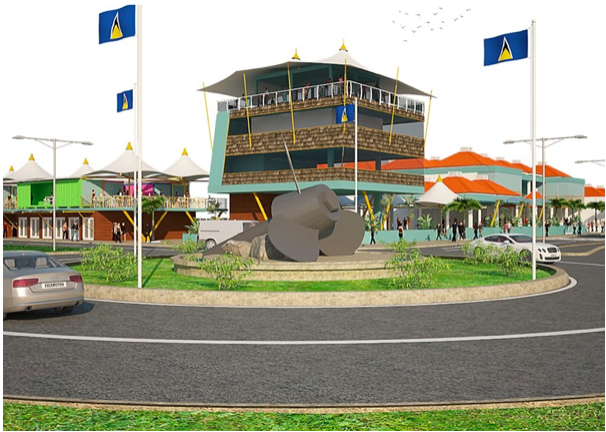
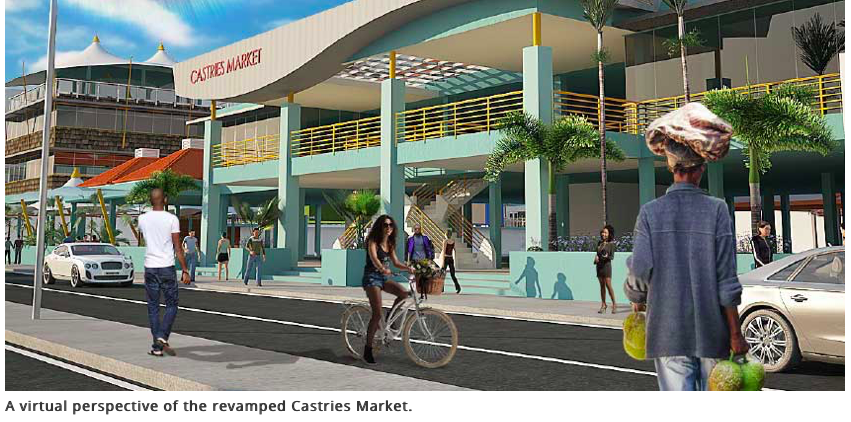
Castries is the Capital and largest city in the island nation of St. Lucia.  The market we have frequented in Castries is currently located in a temporary, makeshift, space.  A major undertaking to redesign and complete remodeling of the previous space is underway.  The following two views are renditions of what the new market will look like.  It will certainly be a magnet for the tourists disembarking from the cruise ships in the Castries harbor.
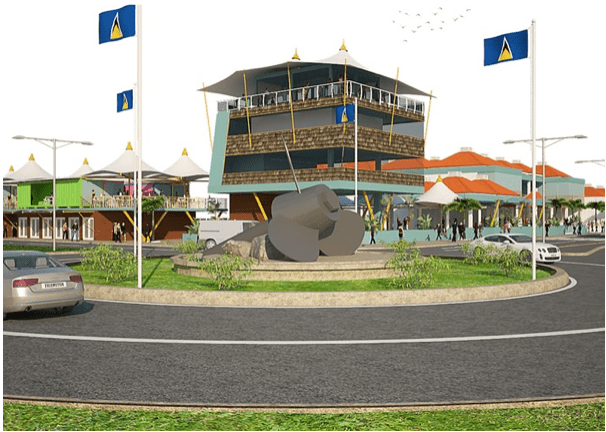
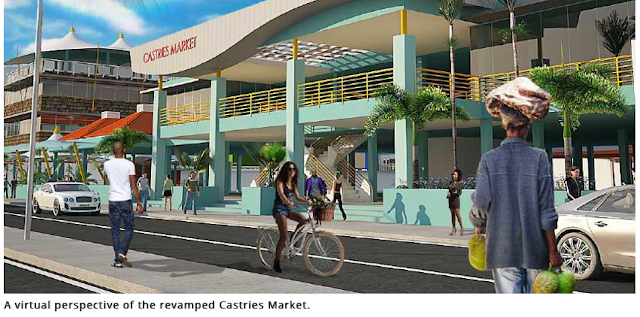
As described by Castries mayor Peterson D. Francis, the new market “will provide comfort and cater to all provisions market vendors in a uniformed and structured manner. No longer will the vendors require umbrellas or tents, as the entire provisions market facility will be covered.”

The other aspects of the Castries Market Redevelopment Project will include a state of the art food court, high-end air conditioned restaurants, a craft market, a box park, a viewing tower, an entertainment area, meat and fish depots, and duty-free shopping boutiques (per http://www.stluciabusinessonline.com/news/media-release-castries-market-redevelopment-underway/

Progress marches on and it does look lovely.  I just hope the provisions market vendors won’t be priced out of the space.

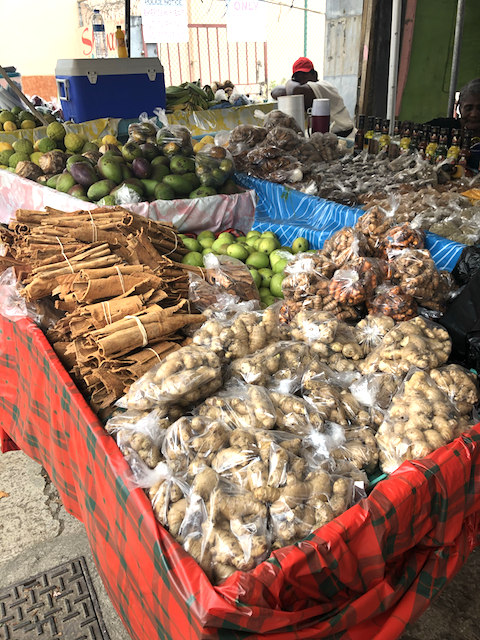
The current market that we visited had separate sections for fruit / vegetables and souvenirs / clothing / et al.  The produce vendors displayed virtually every edible plant in season.  As we observed in other Caribbean islands, as well as in Europe, produce was exclusively local.  People eat primarily in season here, although we do find imported produce like raspberries, apples, and pears in the larger supermarkets.

The season was right for a large assortment of produce.  We purchased, soursop, passion fruit, breadfruit, green onions, pumpkin, mangoes, tomatoes, cucumbers, ginger, lettuce, cashew apple, and eggplant, string beans, sweet bell peppers, and a bag of greens they call spinach (it is not spinach, but when cooked it tastes amazingly like spinach).  There are many types of root vegetables high in carbohydrates that I have never prepared myself.  They are generally referred to as “provision”, a staple in the Caribbean diet, but as long as breadfruit is available, I will be sticking with it as my “potato-like” vegetable.  Citrus is in season now and the grapefruit are delicious – they do have about 5 or 6 seeds per section.  I do sometimes feel we have sacrificed some qualities for the convenience of no seeds, or longer shelf-life…..

The previous week the market had a great deal of sorrel and basil.  There was none to be found this week.  Such is the way it goes.
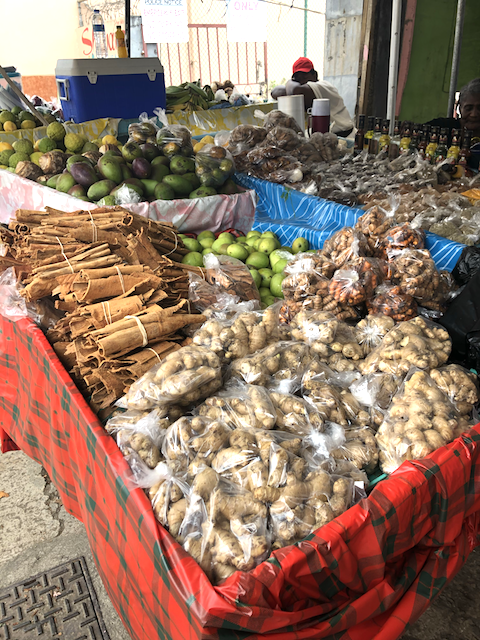
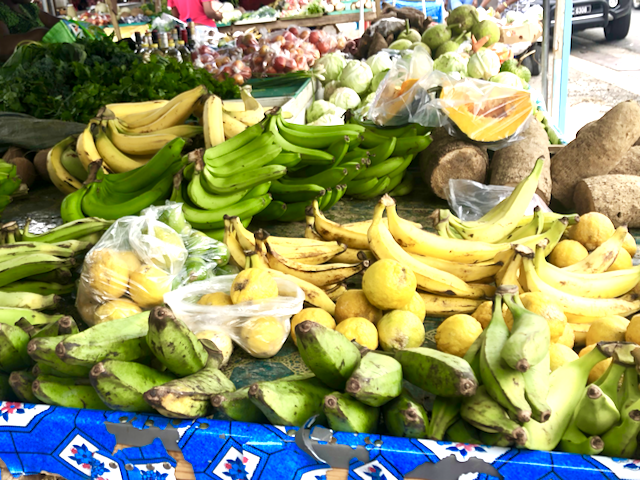
Front to back – ginger, cinnamon, turmeric, limes.  The next table is full of mangoes.
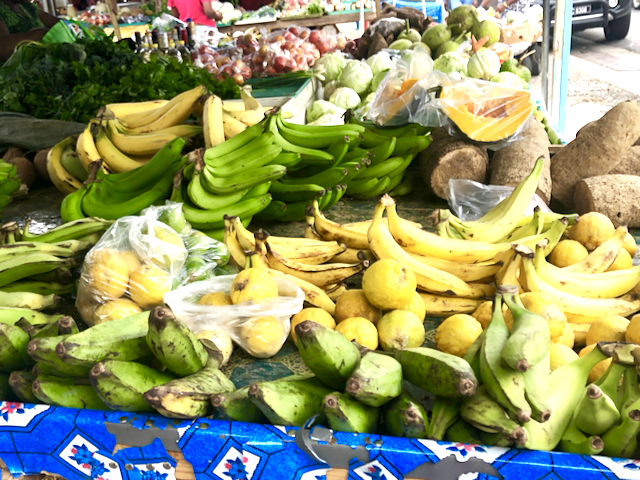
Both the green and yellow banana-like fruit are different types of plantains.  There are bags of oranges and in the back there is root-provision, a bagged section of a Caribbean pumpkin, and finally cabbages.
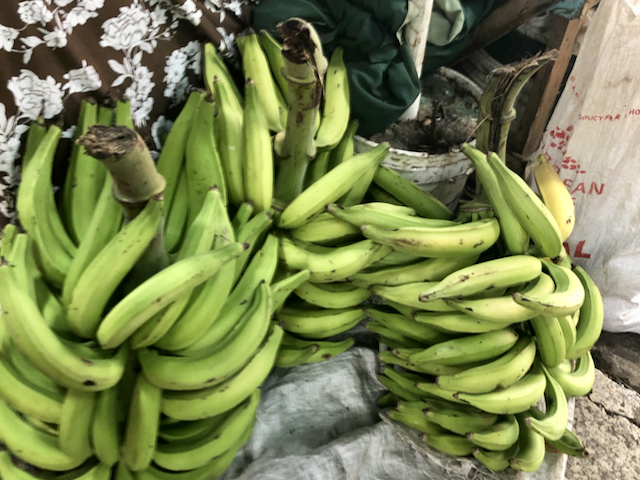
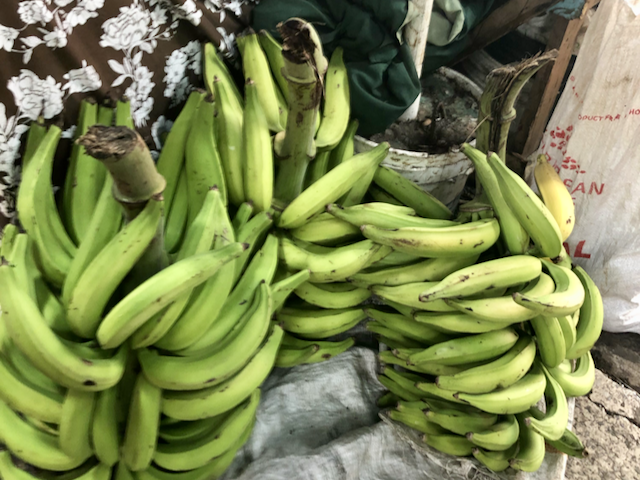
Hands of plantains still attached to the stem


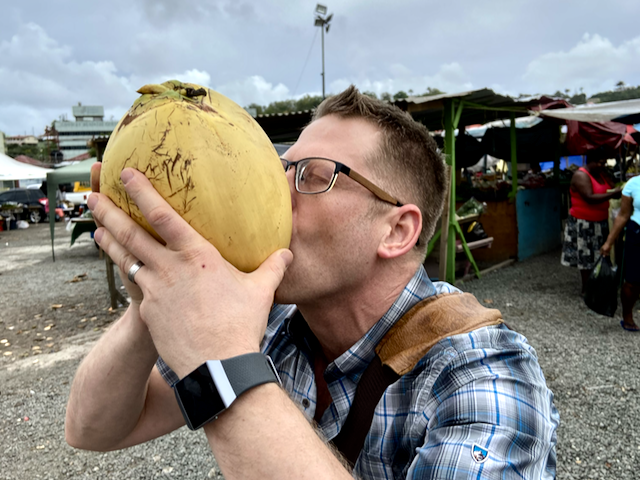
Tristan had a wish list of things he wanted to do in St. Lucia.  One was to drink from a coconut. He got his chance at the Castries market.  His Dad (below) shows him how!

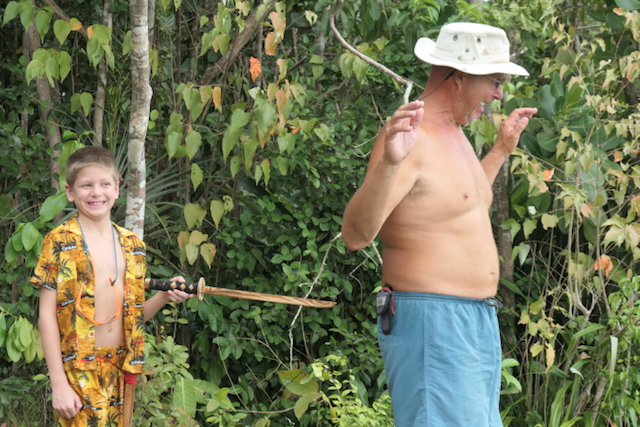
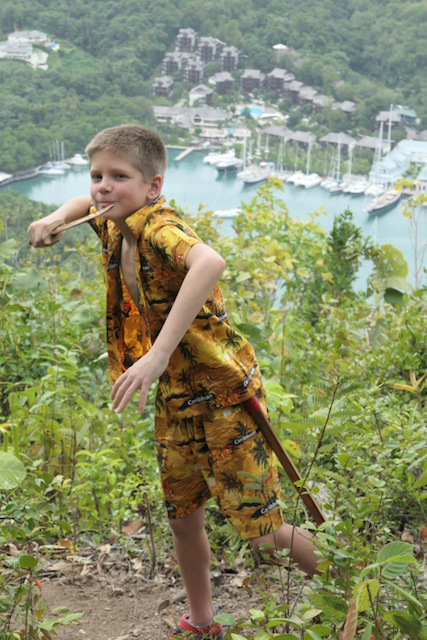
Tristan did some shopping at the market and got both the snazzy outfit he is wearing below AND a sword.  Don’t know what his Mom and Dad were thinking.

That’s all for now – Lots more on our family visit in Blogs to come
The Thin Blue Line

An Unlikely Event

The heroines of this story
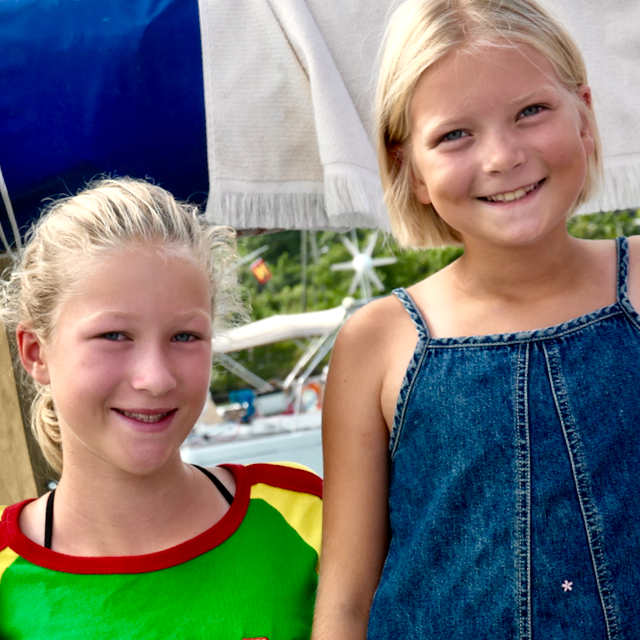
While docked in St George’s Marina, Grenada, two smart and clear-sighted young Swedish girls approached Ice Floe.  My first thought was they wanted to pet Duhkxy as this is a request we field many times each day.  As you know, he is the cutest dog on earth.  Settle down all you people with wonderful dogs you believe hold that title – we have objective evidence for this claim.
At last count, the number of adoring Grenadians who have testified that Duhkxy is the cutest dog in the world exceeds the tally of lies told by our incumbent president
But I digress, as Duhkxy plays no part in this story.
 
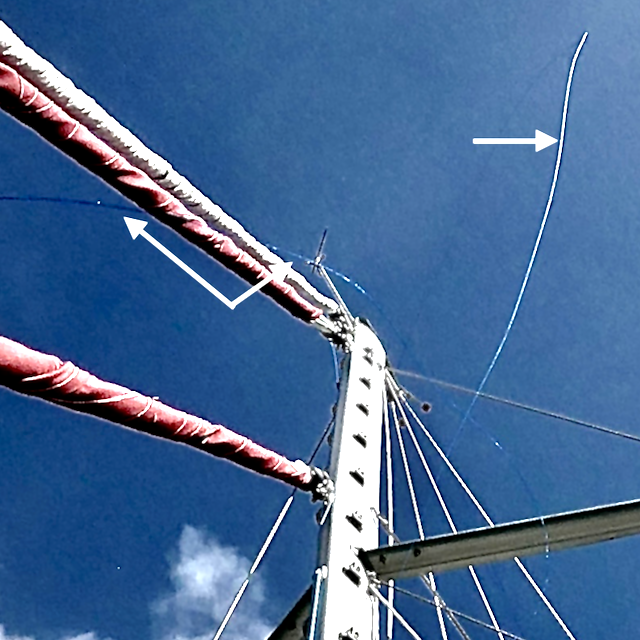
The younger of the two heroines in this story said “Do you know….” and pointed up to the sky.  I thought perhaps some interesting water birds were perching somewhere on the mast.  After taking a look, I was at a loss as to what they were trying to bring to our attention.  The older heroine chimed in that there was string – just as George spotted the thin blue line(s) of string that were attached to the top our mast.  It appeared that two lines of this string originated from the top of the mast of a catamaran on the opposite side of the dock from Ice Floe and then became tangled around the top of our mast.  
From our mast, these strings continued on all the way to the next dock.  Luckily they had not ensnared anything else. With the help of a gentleman on this dock, and another sailor with a dinghy in the water, this string was quickly retrieved and secured on Ice Floe.  We thanked the girls and others who had assisted us and retired for the evening, happy to know the instruments on the top of the mast were safe for the time being.
The string was thin, but made of nylon and extremely strong.  Any two boats attached to it would be in for a nasty surprise if one attempted to move away.
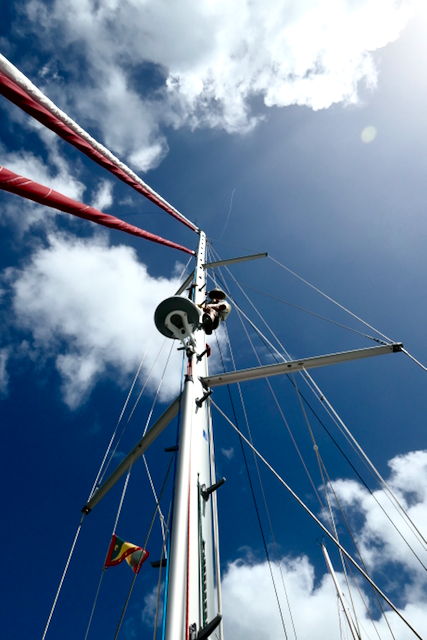
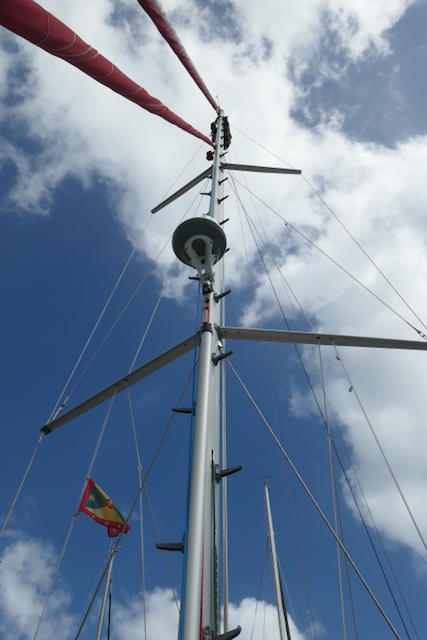
George on his way up the mast to untangle this thin blue line
An enlargement of the previous photo in case your eyesight is not quite as good as our two Swedish angels
George found the string to be extensively tangled around the wind instrument and it
took quite some time to  extricate it from this spiderweb. 

George was assisted in untangling the line by intermittent squalls of heavy rain and gusts of 20+ knots of wind.  This, in the protected marina.  The squalls and swell had kept us docked there for several more days than we had intended – turns out, that was fortunate indeed.  Unfortunately, one end of the thin blue line got loose and tied itself around still another mast, port side to the catamaran.  We alerted them to the problem, fortunately in time as they were leaving the following day.  The captain of this sailboat thanked us several times, remarking what a costly and inconvenient outcome would have resulted if he had not known.
The string was still tangled throughout the catamaran’s rigging.  This boat’s occupants had left a few days prior and would not be back for several months.  We left a note on their boat and alerted the marina staff.

A Happy Ending

We could not thank our heroines enough, but did our best over enormous portions of ice cream.  They turned a most certain disaster into a fun memory.

Petite Martinique

Grenada’s tiny island

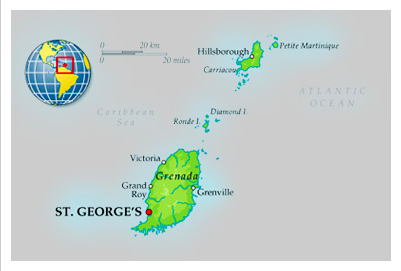
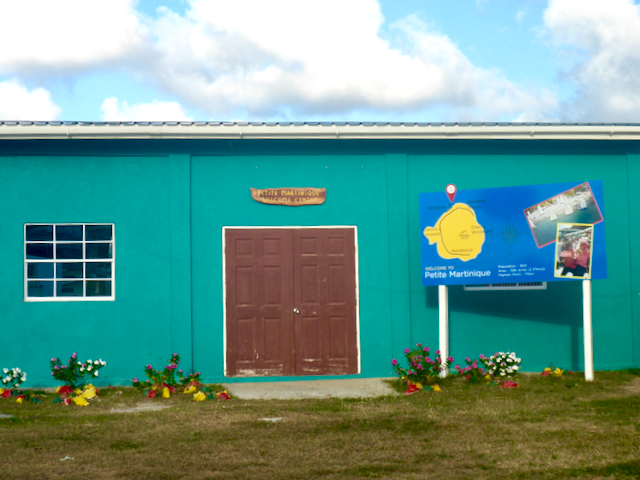
Petite Martinique is the smallest of the three islands that constitute Grenada (Grenada, Carriacou and Petite Martinique).  It has no affiliation with Martinique other than having been first inhabited by an individual originally from Martinique, who gave it its name.  This small island is a total of 486 acres and has one main road. It is unique, in more than its diminutive size.
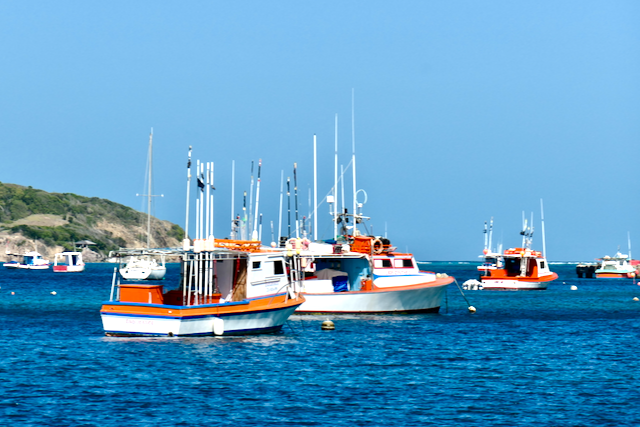
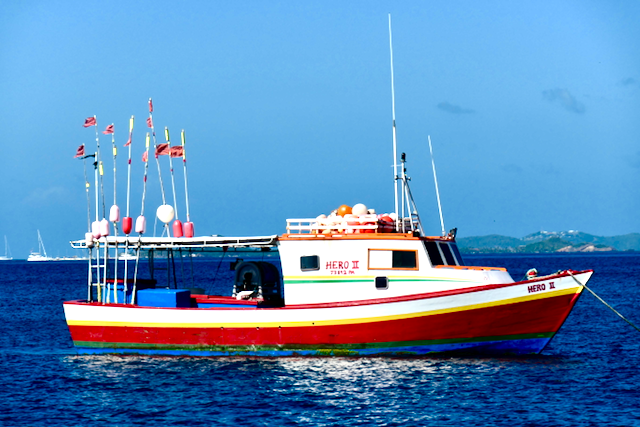
As we approached our anchorage for Petite Martinique, beautifully maintained, brightly colored, professional fishing vessels filled the harbor.  There were no sailboats.  A few joined us over the days we spent there, but the island is decidedly not a cruiser’s destination.  The Grenadine islands affiliated with St. Vincent are very close by and highly preferred by cruisers.  Sadly, St. Vincent requires a several month quarantine for any visiting dogs.  We and Duhkxy will not be visiting anytime soon.

Fishing and boat building constitute the most significant industries in Petite Martinique and by our observations, the island appears to be thriving.

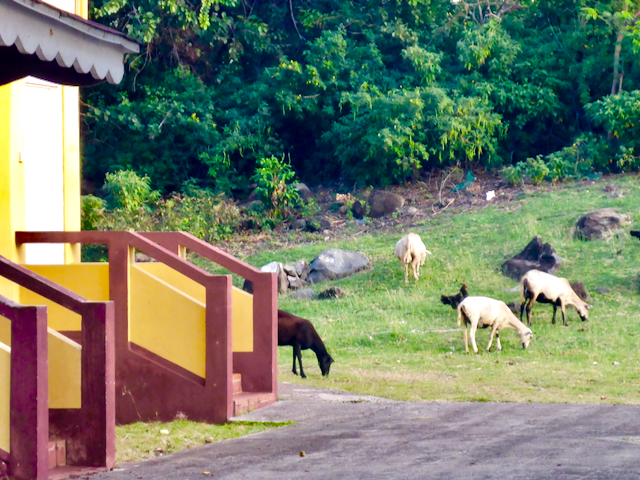
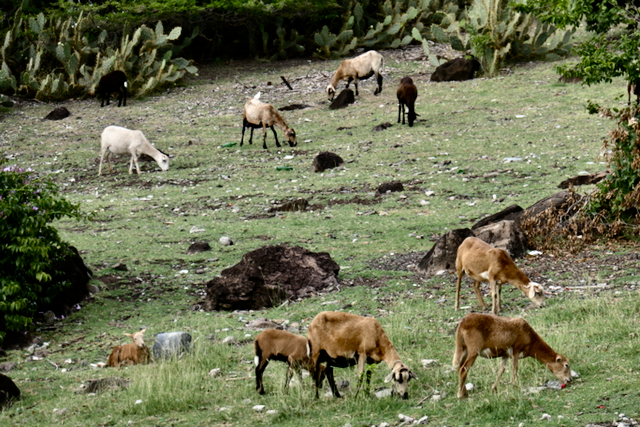
Petite Martinique is home to approximately 1000 human inhabitants, and notably, a large population of goats.
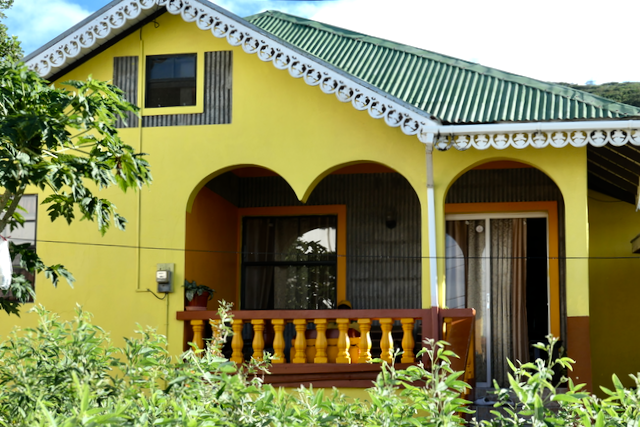
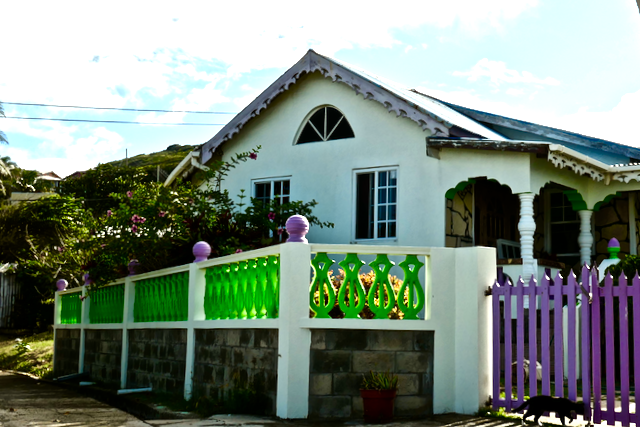
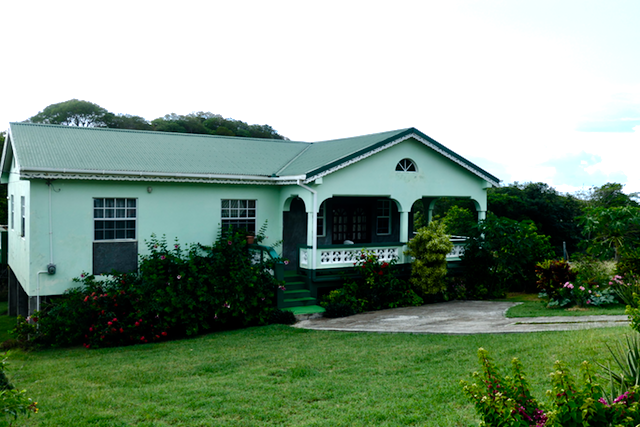
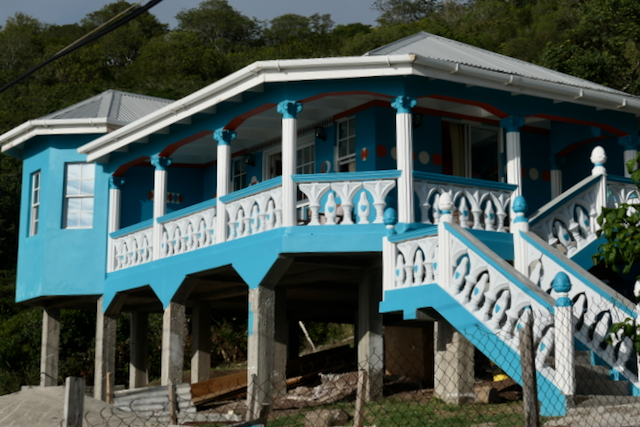
Homes are beautifully maintained and often landscaped, as well.

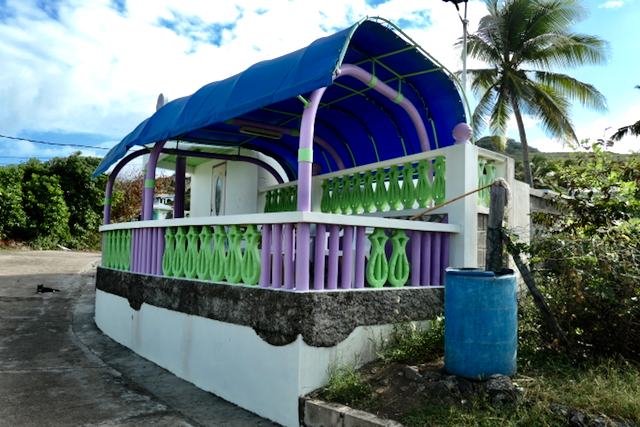
This inviting building, affiliated with the home shown above, is a bar, unfortunately not open when we passed by.
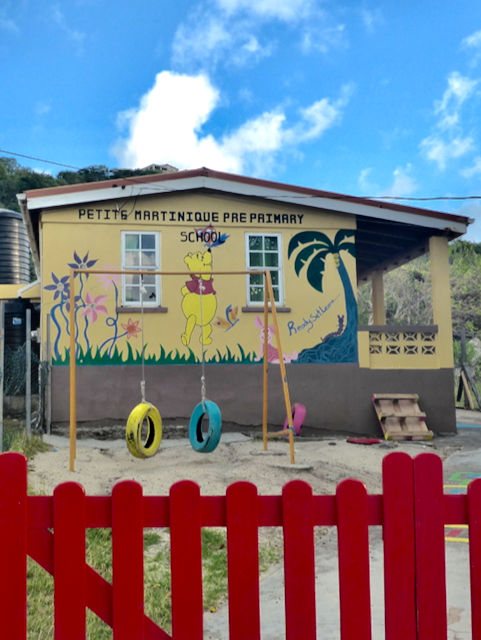
Educational facilities include pre-primary and one Roman Catholic secondary school.  Otherwise, children take a boat to school in the neighboring island, Carriacou.

A small strip of beach was home to a number of water birds, but unlike many of the islands we have visited, did not appear to be used by locals for socializing or bathing.  It was poorly maintained with respect to rubbish and litter affording a poor introduction to this otherwise charming island.

We walked the length of the island along its main road were rewarded with welcoming smiles and lovely views.

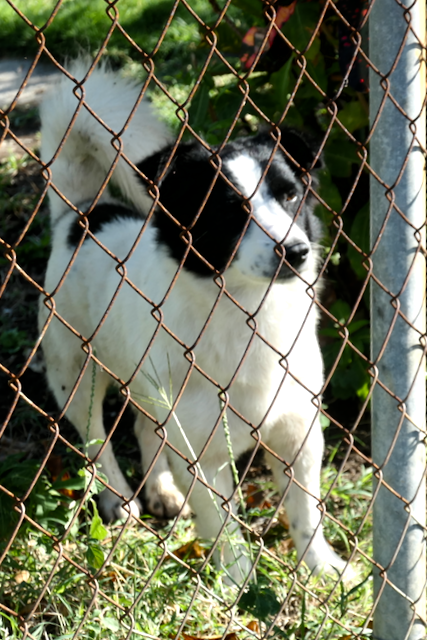
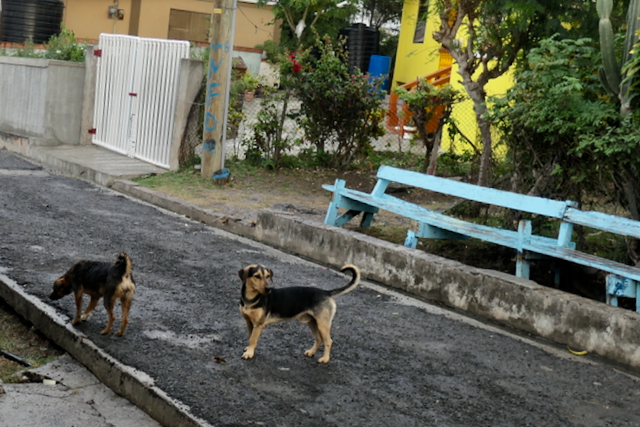
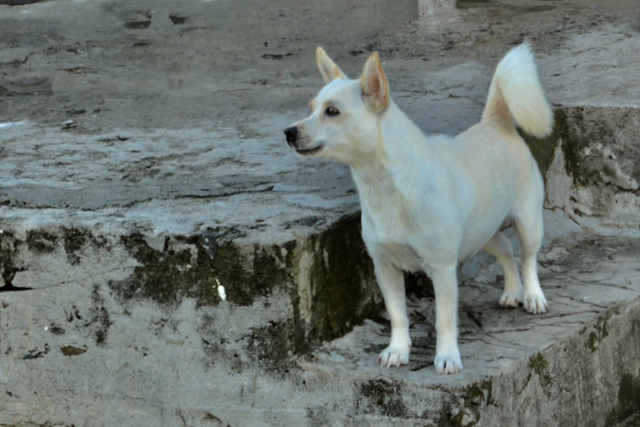
We were surprised to see the dogs in Petite Martinique to be both small, and diverse in breed.  On other islands we have visited, the dogs are often mid-size and uniformly handsome mutts.

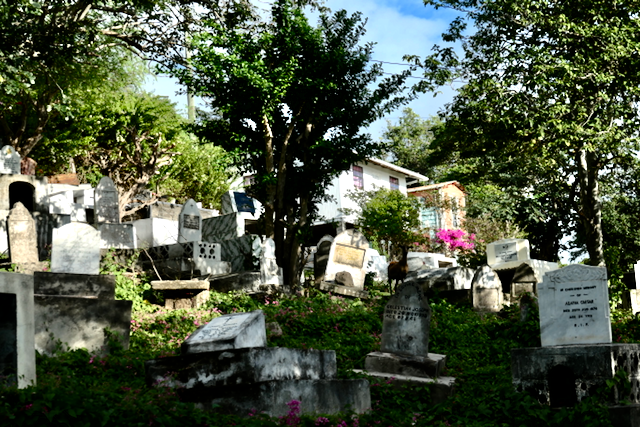
Graveyards in Petite Martinique, as well as other nearby islands we have visited, are small, informal, and interspersed with other private properties.

Petite Martinique was lovely to visit and interesting in its many unexpected differences relative to its sister islands.

From Petite Martinique we have headed back to the main island of Grenada to see what we can see, see, see.

Caribbean Cooking Class at Patrick’s, St. George’s, Grenada

How do you cook these strange Caribbean vegetables?

A great way to begin introducing yourself to edible Caribbean plants is to sample each wonderful fruit in season.  You still may need to make inquiries about what constitutes “ripe” and what part of the fruit is edible, but for this you need only inquire of the vendor.  You taste it in all its glory and you either like it or not.  We have been living on bananas, guavas, mangoes, jackfruit, sour sop, passion fruit, papaya, paw paw, starfruit, citrus, et al.  We have fresh fruit with nearly every meal and we enjoy rum smoothies with fruit we freeze in season.

But what of the many “strange” vegetables?  Cook them wrong and you may conclude that they are terrible and you will never try them again.  A case in point – at my dining table as a child, there was a rule that we would eat what was put in front of us until our plates were empty.  My siblings and I remember a single big exception.  At one dinner, for the first time, my mother prepared okra.  We had all had okra in Campbell’s gumbo soup and liked those little wagon wheels.  As dinner began, our father tried his first mouthful of okra and immediately conceded that no one needed to eat it.  From that day forward, okra was only ingested by members of my family in a gumbo.

Patrick’s Restaurant

We have had some success preparing several new vegetables after we have enjoyed them in a restaurant, but this has hardly made a dent in those we have seen.  Most recently, we enjoyed a sampling of 20 to 30 (we lost count) small portions of a wide variety of vegetable and meat preparations at Patrick’s Restaurant in St. George’s, Grenada.  After finishing our last course, we commented to our server, Milton, that we needed to take some cooking lessons.  Much to our surprise, he said, “We can arrange that.”

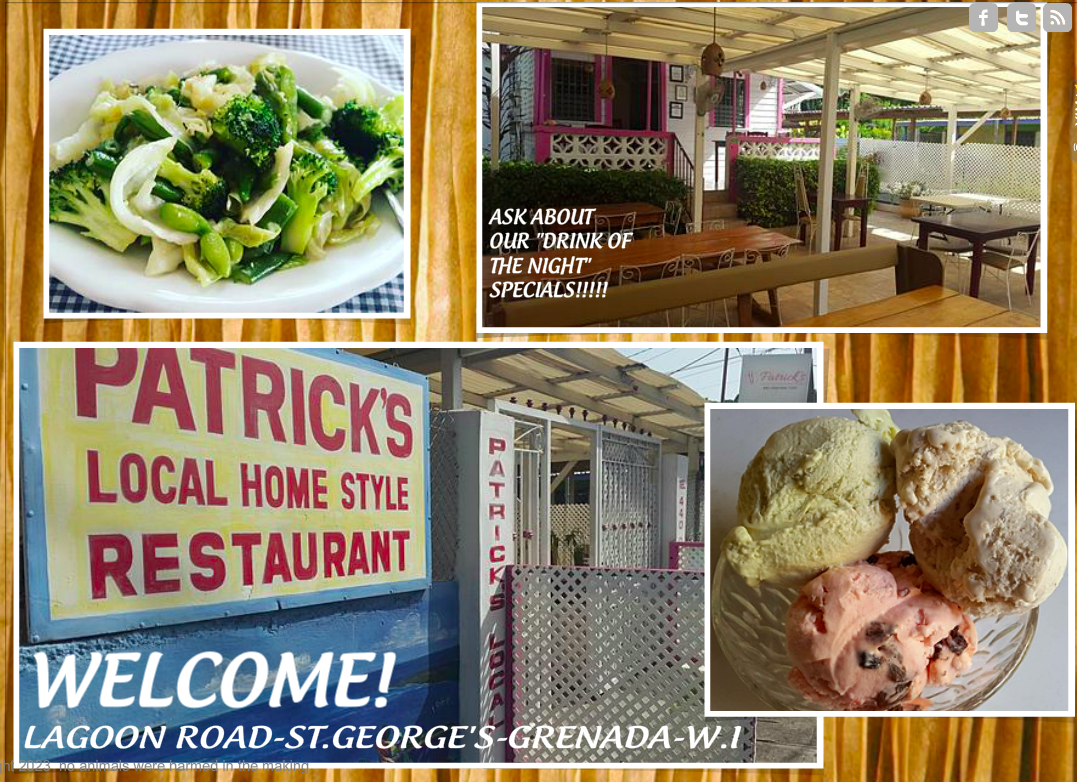
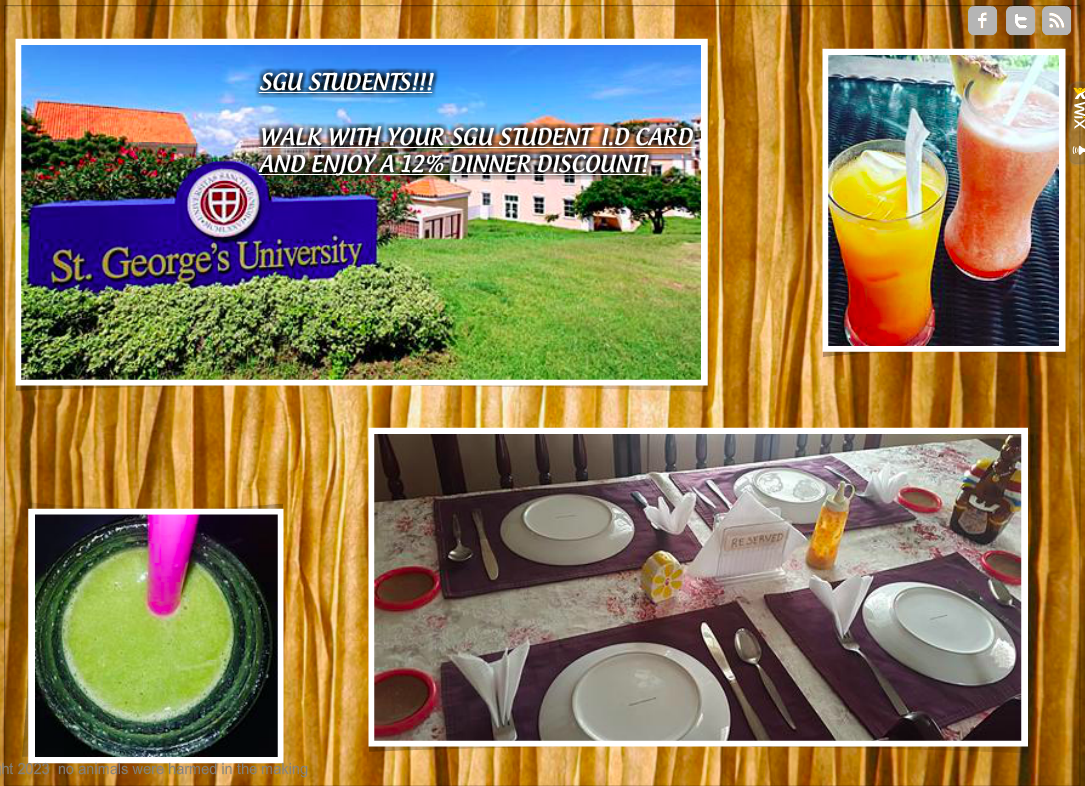
Photo from Patrick’s website http://patrickslocalgrenada.wix.com/eat#!
  
The following day, we set up a 2 hour lesson.
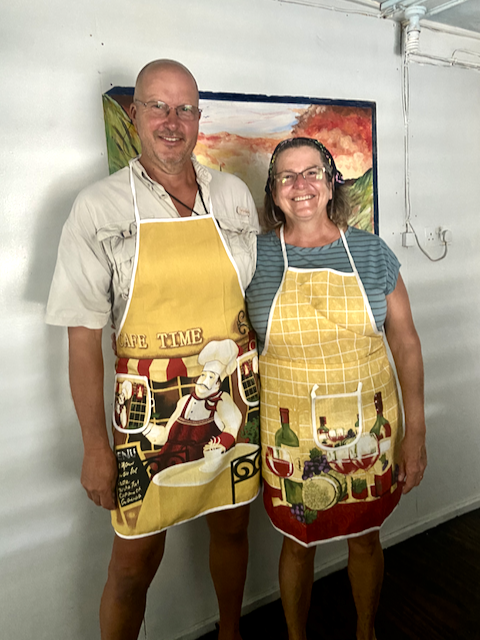
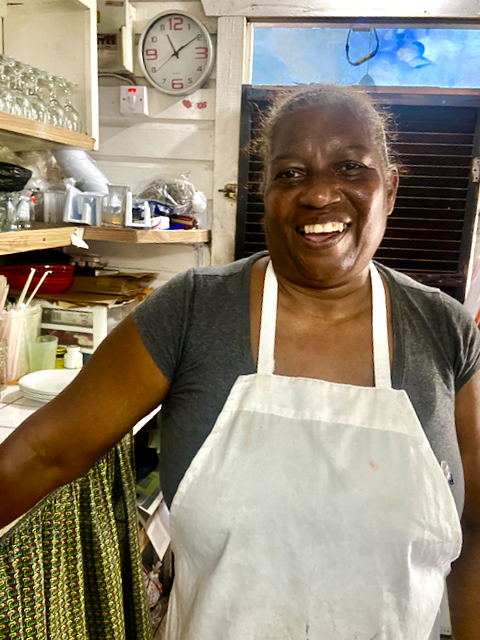
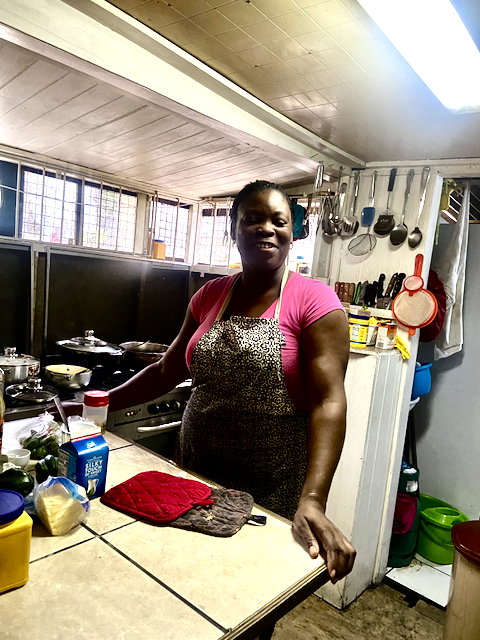
Karen, a longstanding friend of Patrick’s, who now owns the restaurant, greeted us when we arrived.  I had a great cup of coffee while we waited for our lessons to begin.  Our teachers were Sandra and Lisa. 
Sandra
Lisa
Karen speaking with patrons on a local cuisine tasting tour
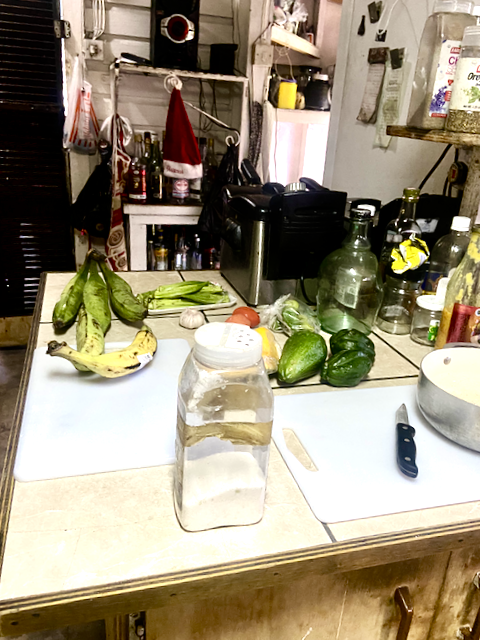
We would prepare a green banana salad, pumpkin, christophine (aka chayote) in a cheese sauce, and okra and tomatoes.  I thought “okra?” remembering my childhood experience, but with little concern as we had eaten it in the restaurant and it was delicious.  I asked Lisa and Sandra why the okra my mother prepared was so horribly slimy.  We learned that it must be cooked in the barest minimum of water (or battered and fried) to prevent this.  In addition, Sandra and Lisa answered questions about other vegetables and offered additional seasonings we should consider.

The preparation space was limited and we could only imagine what a challenge this would be when the restaurant was full.  Sandra and Lisa laughed and admitted it could get pretty chaotic.  They have two huge, many burner, stoves, but each dish we prepared was cooked in one pot.  This type of cooking is ideally suited to cooking on an average-sized sailing vessel.

All four dishes were cooked from scratch in not much more than an hour – just in time for lunch.  Included in the modest cost of our lesson ($25 US) were all the ingredients AND the four dishes we prepared.  We were also sent on our way with a bunch of green bananas to practice what we learned.

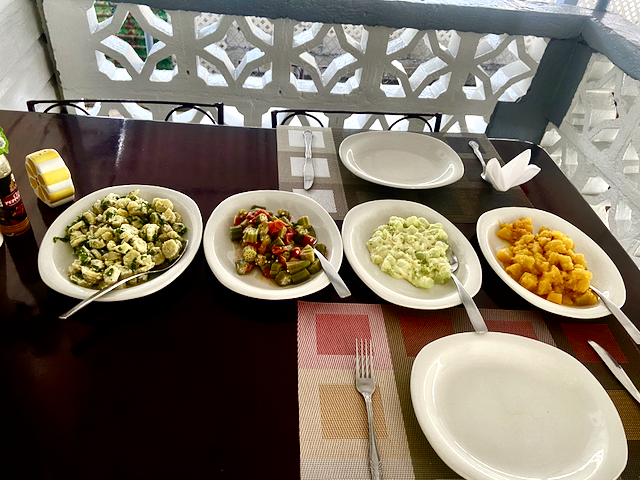
Left to right:  green banana salad, okra and tomatoes, christophine in a creamy cheese sauce, and pumpkin
We greatly enjoyed our time at Patrick’s having a wonderful dinner, taking cooking lessons, and meeting Milton, Karen, Sandra, and Lisa.  There will be a much greater variety of traditional Caribbean vegetables, prepared efficiently in our tiny boat kitchen, going forward.

Sandy Island, Carriacou, Grenada

New Year’s

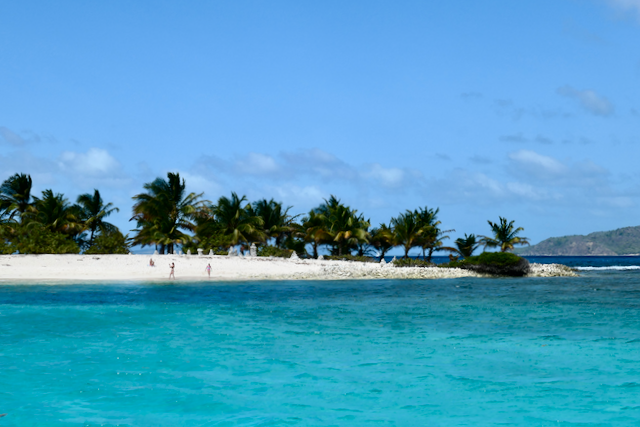
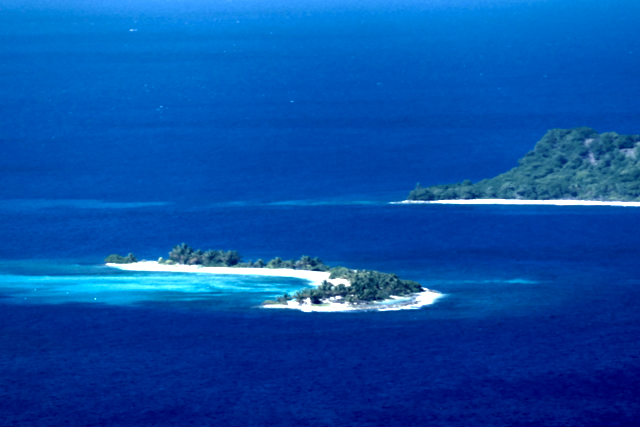
We celebrated the coming of the New Year anchored off Sandy Island, a small uninhabited island with extraordinary beauty.  This island is east of Carriacou, one of the several islands that are part of Grenada.  Some time ago, vegetation on Sandy Island was killed by seawater.  Were it not for a hurricane (uncommon in Grenada) that threw coral up on the sand strip, the island would likely have vanished.  Locals planted trees and undergrowth that, in combination with the more substantial coral base, stabilized this idyllic island surrounded by healthy coral reefs.
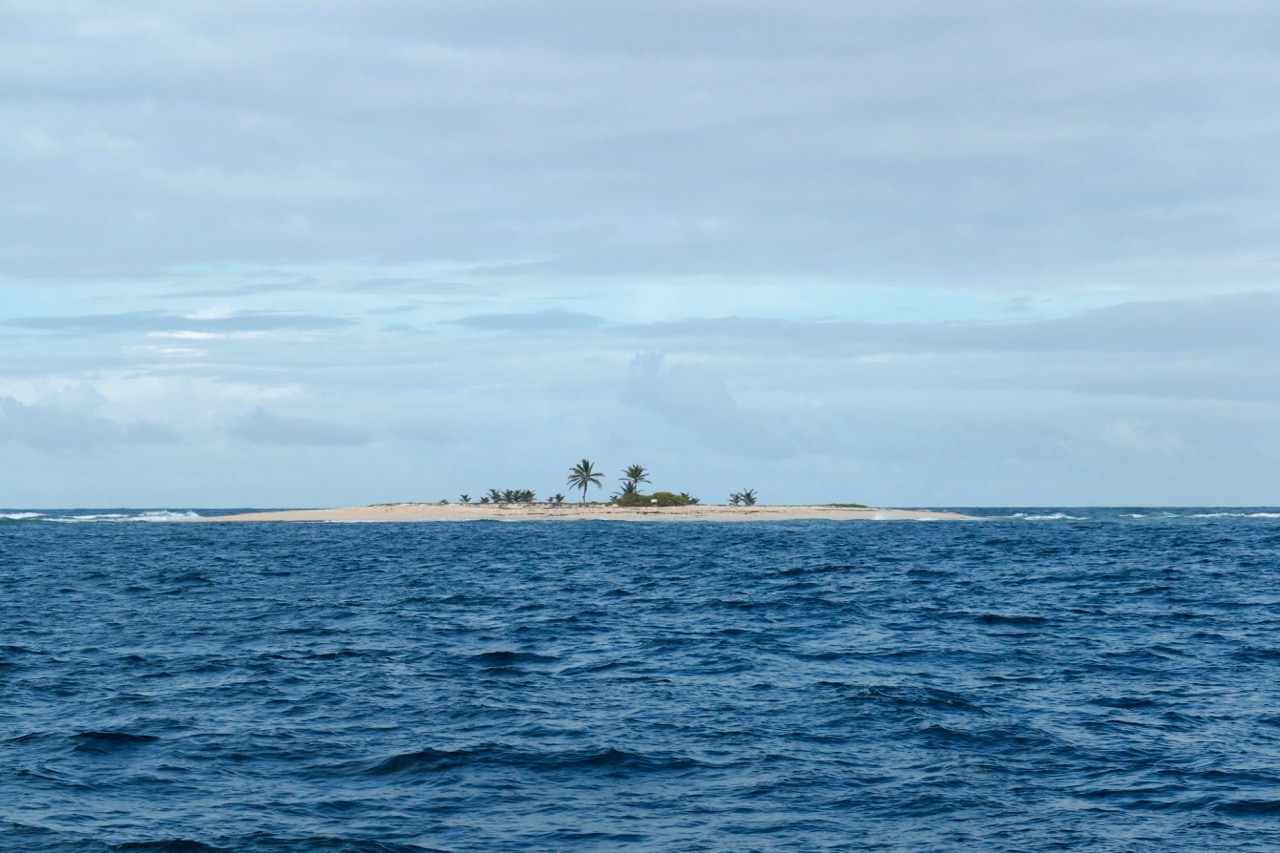
Sandy Island (center) off coast of Paradise Beach (right), one of the most beautiful beaches on Carriacou.

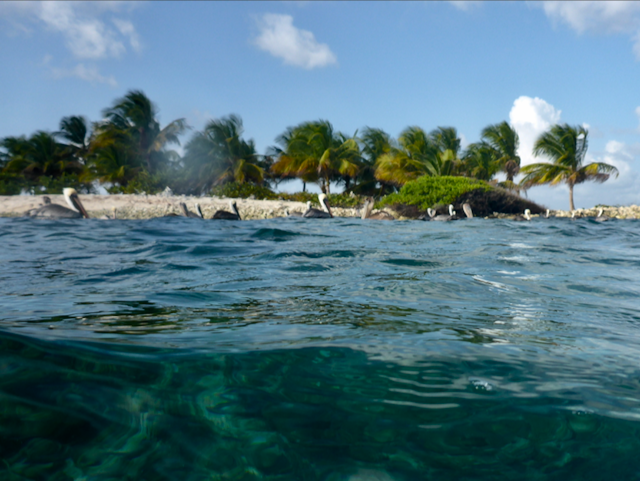
While we were snorkeling, a pelican feeding frenzy started up devouring some of the enormous schools of small fish on the reef. The pelicans are quieted down here, with full bellies.

We have seen more pelicans in Grenada than any of the other islands we have visited
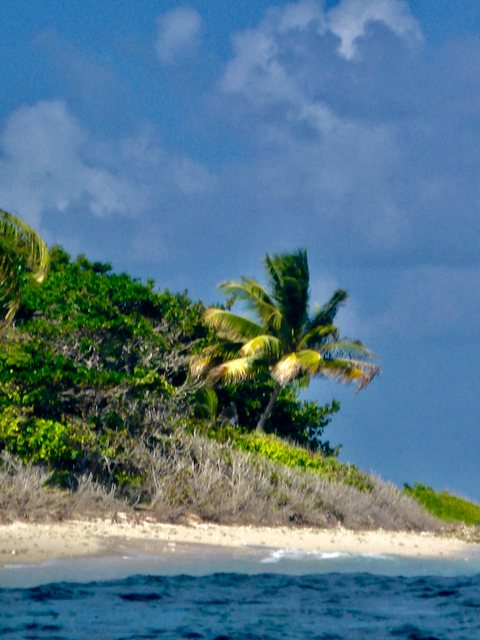
West end of Sandy Island – where we snorkeled
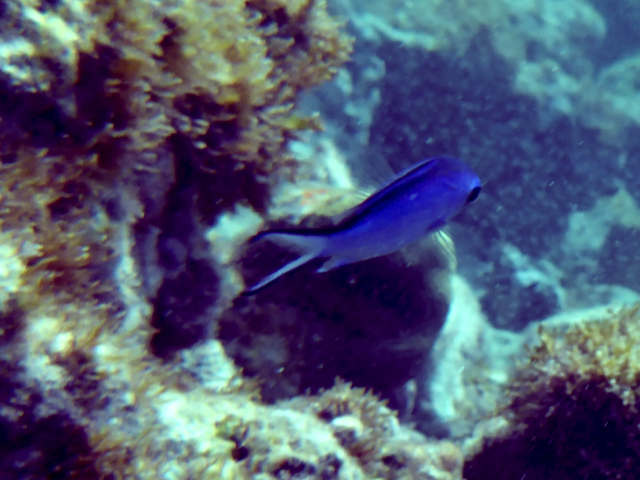
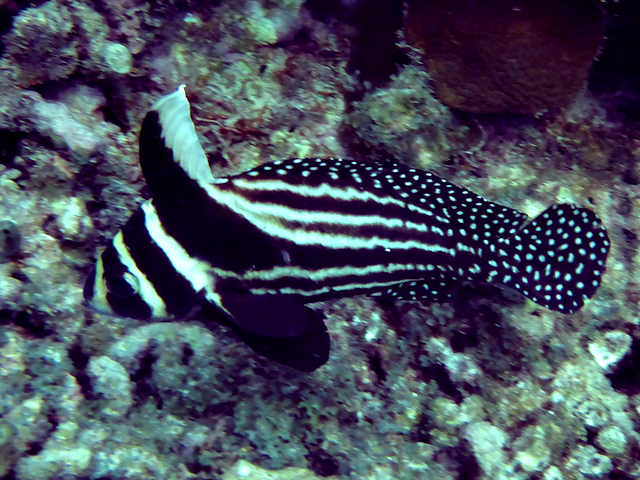
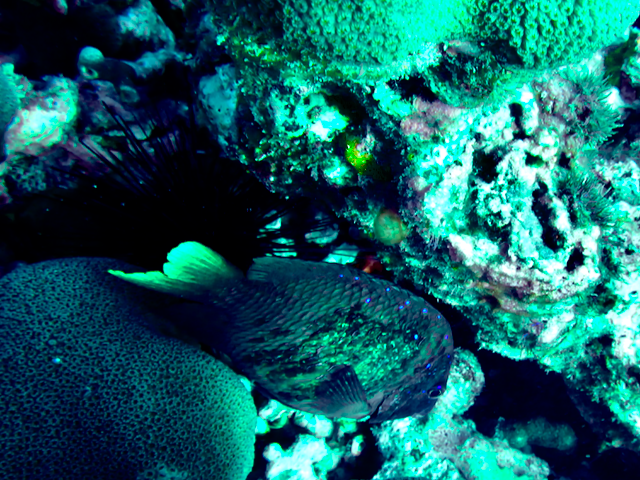
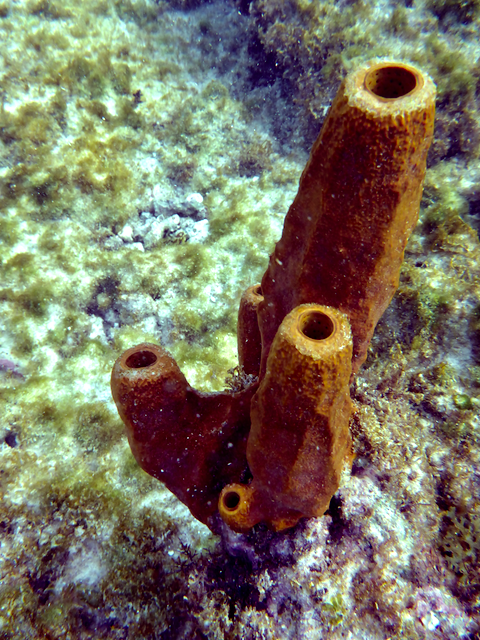
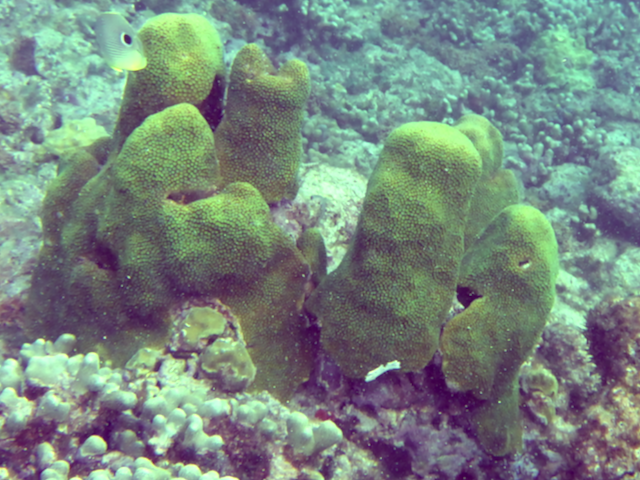
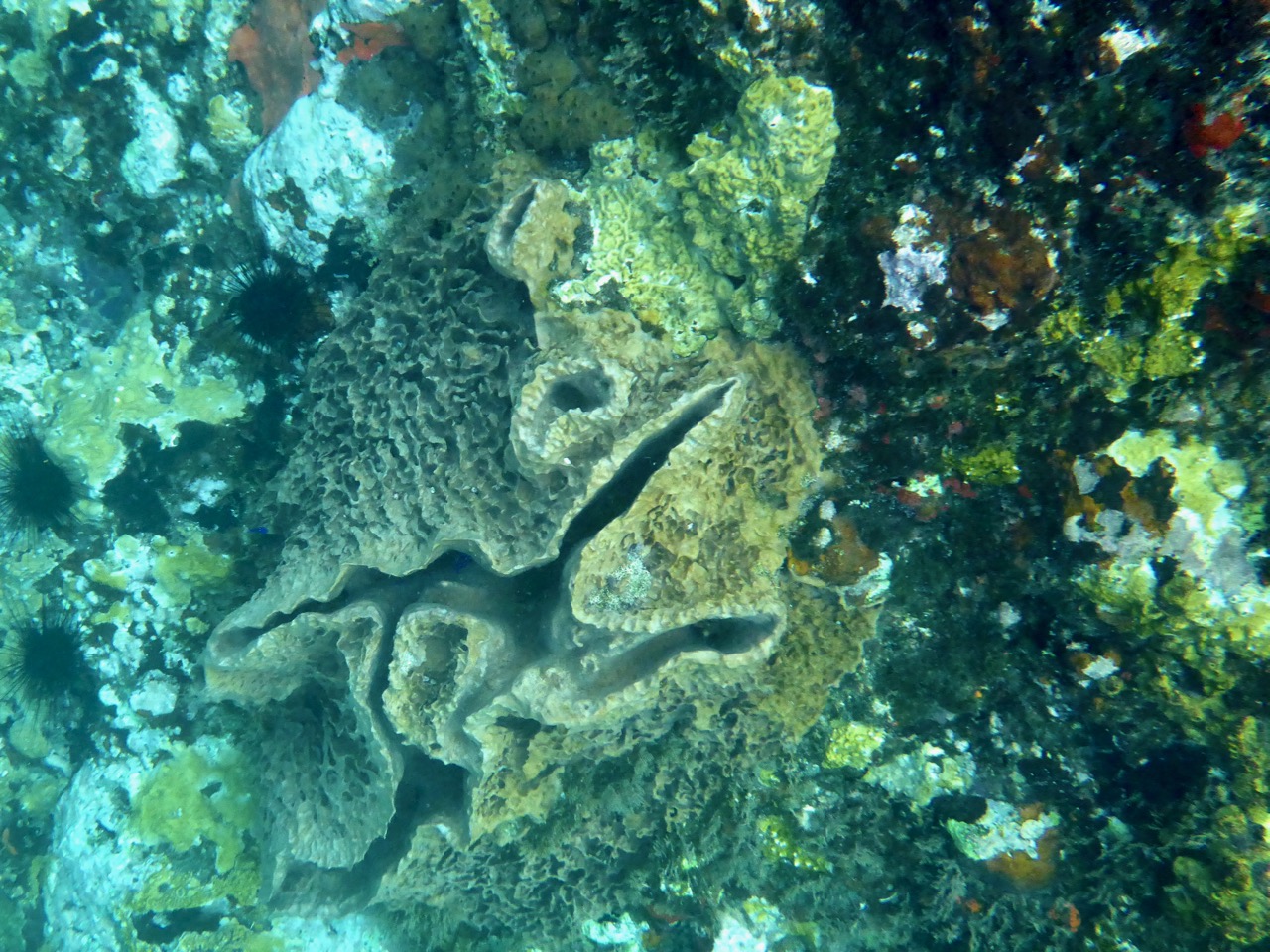
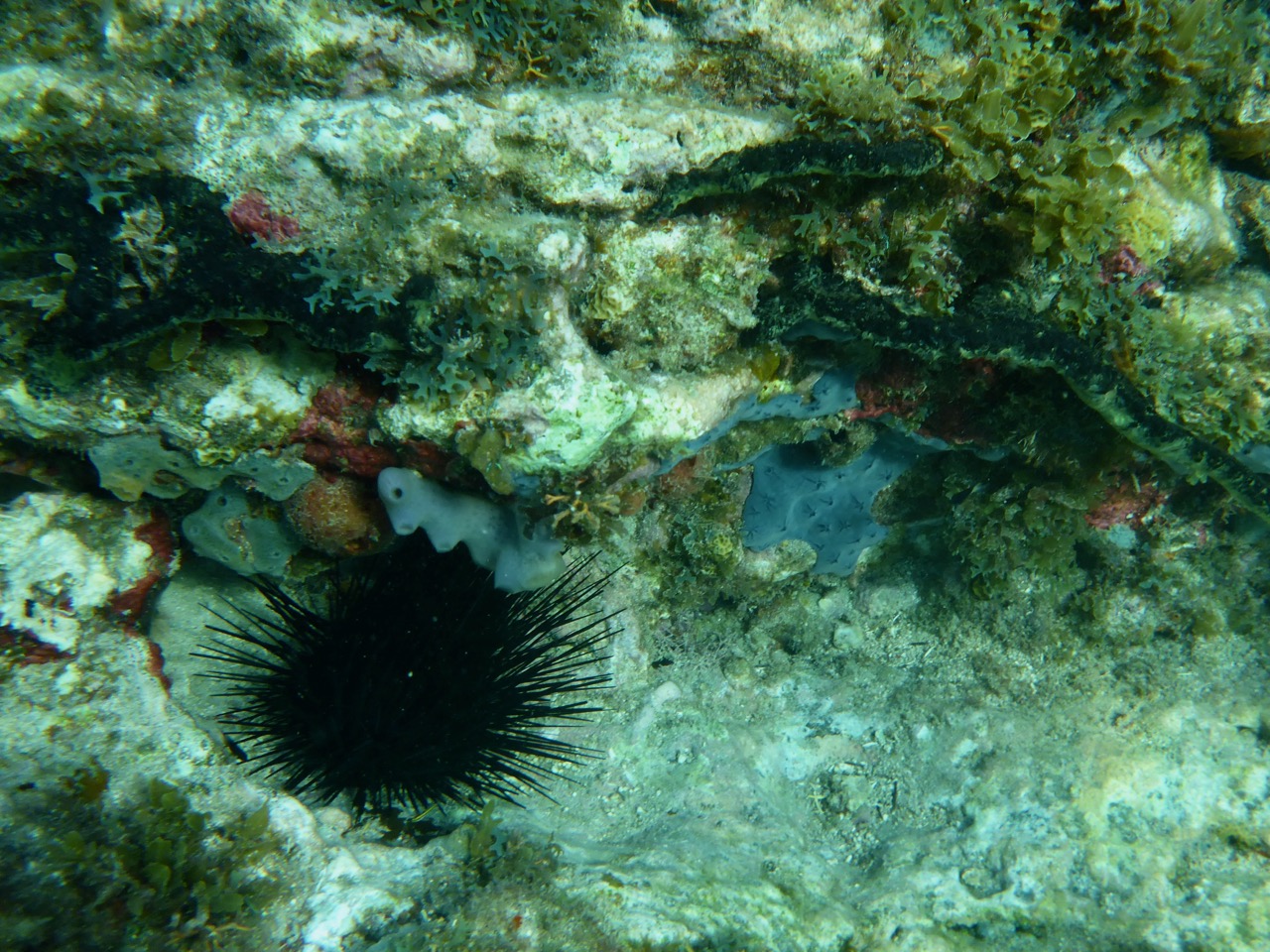
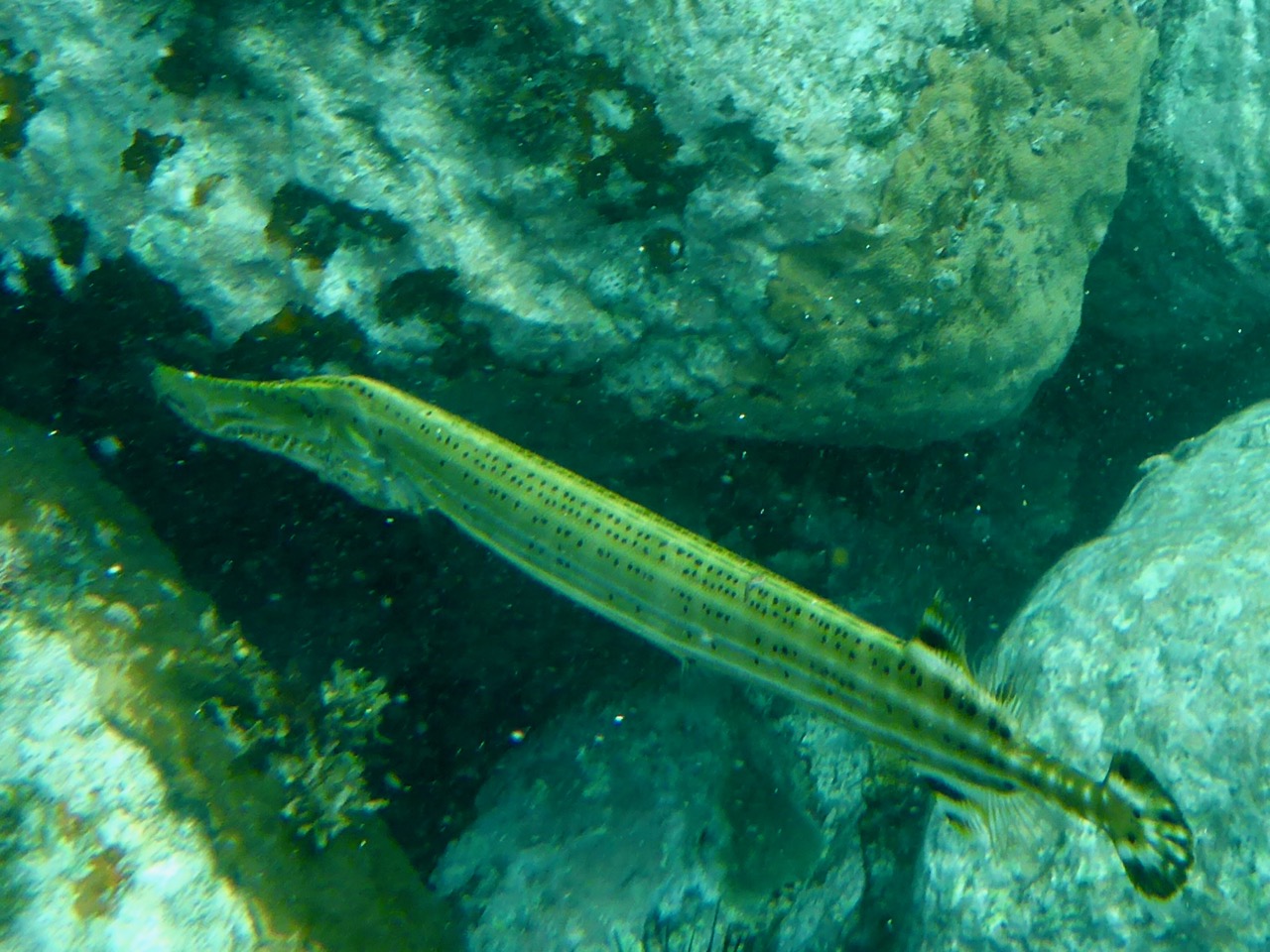
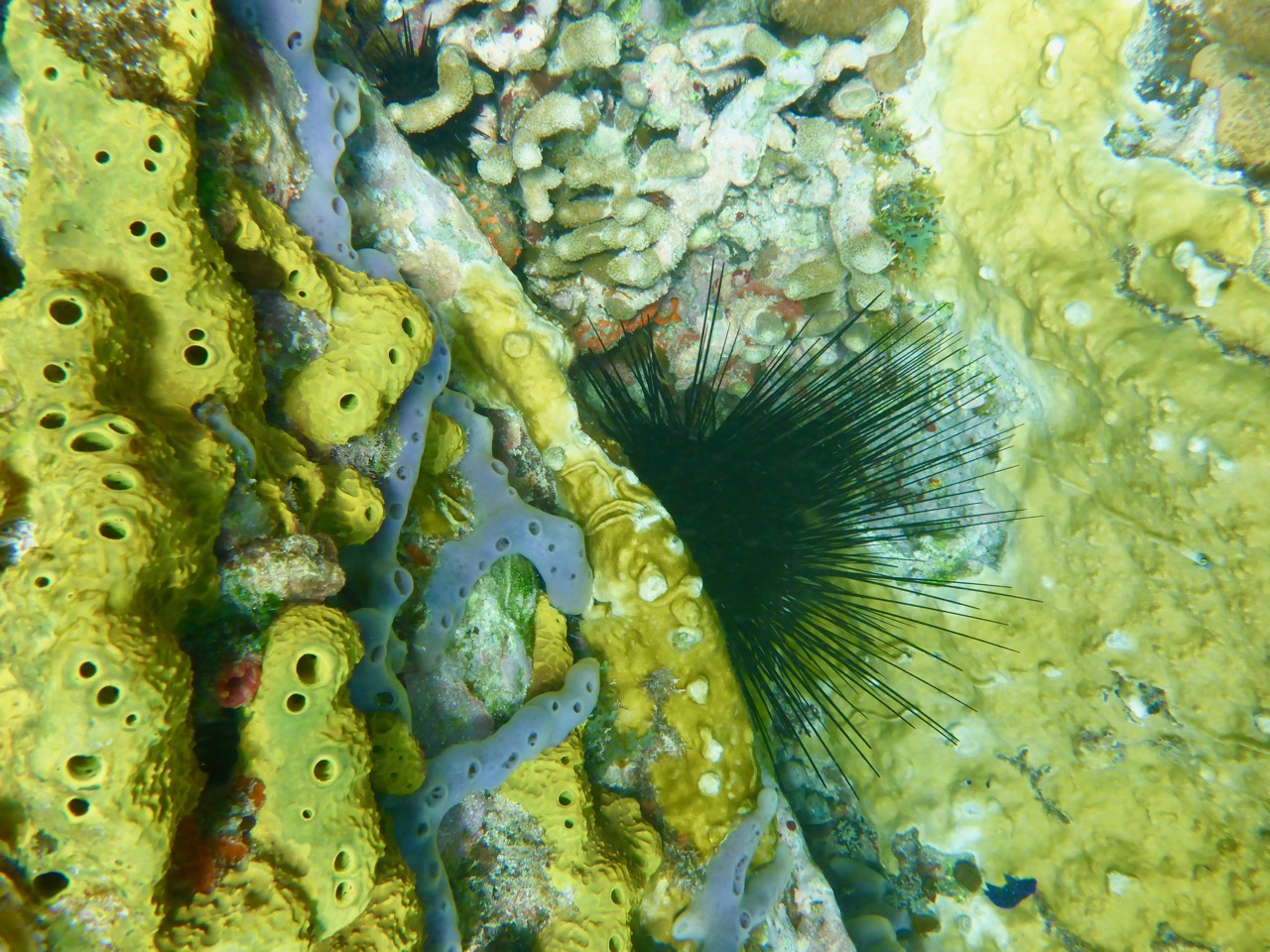
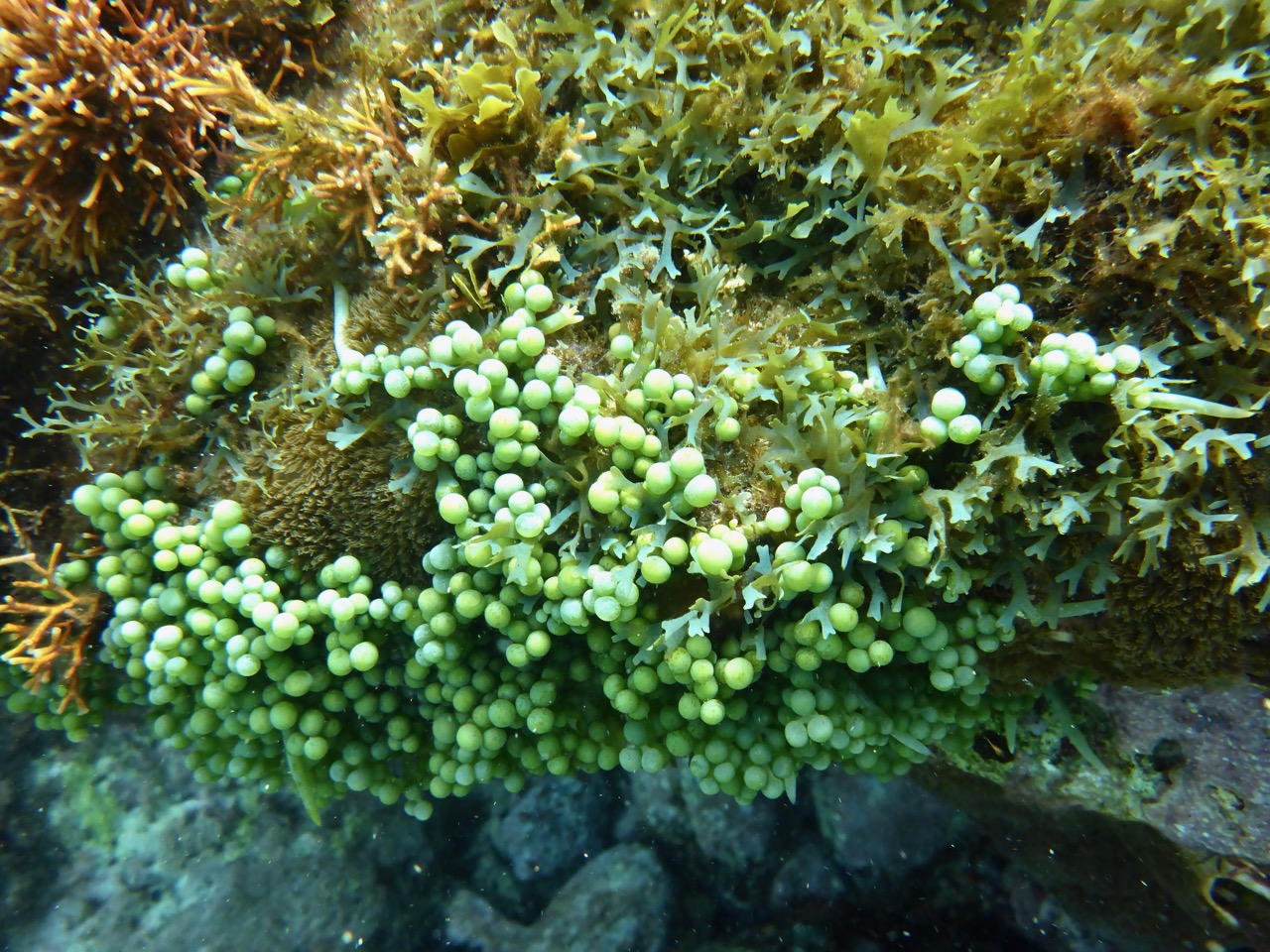
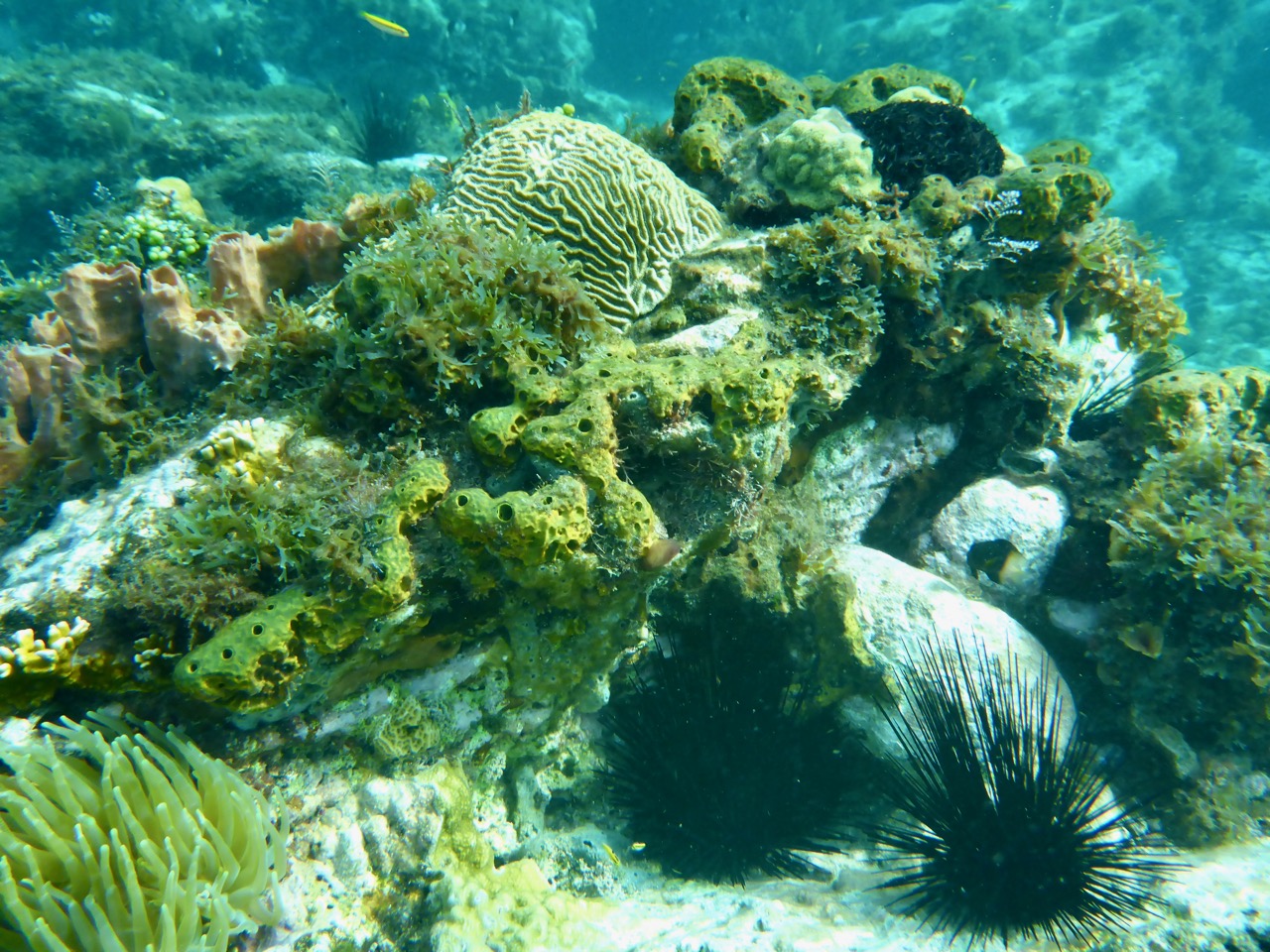
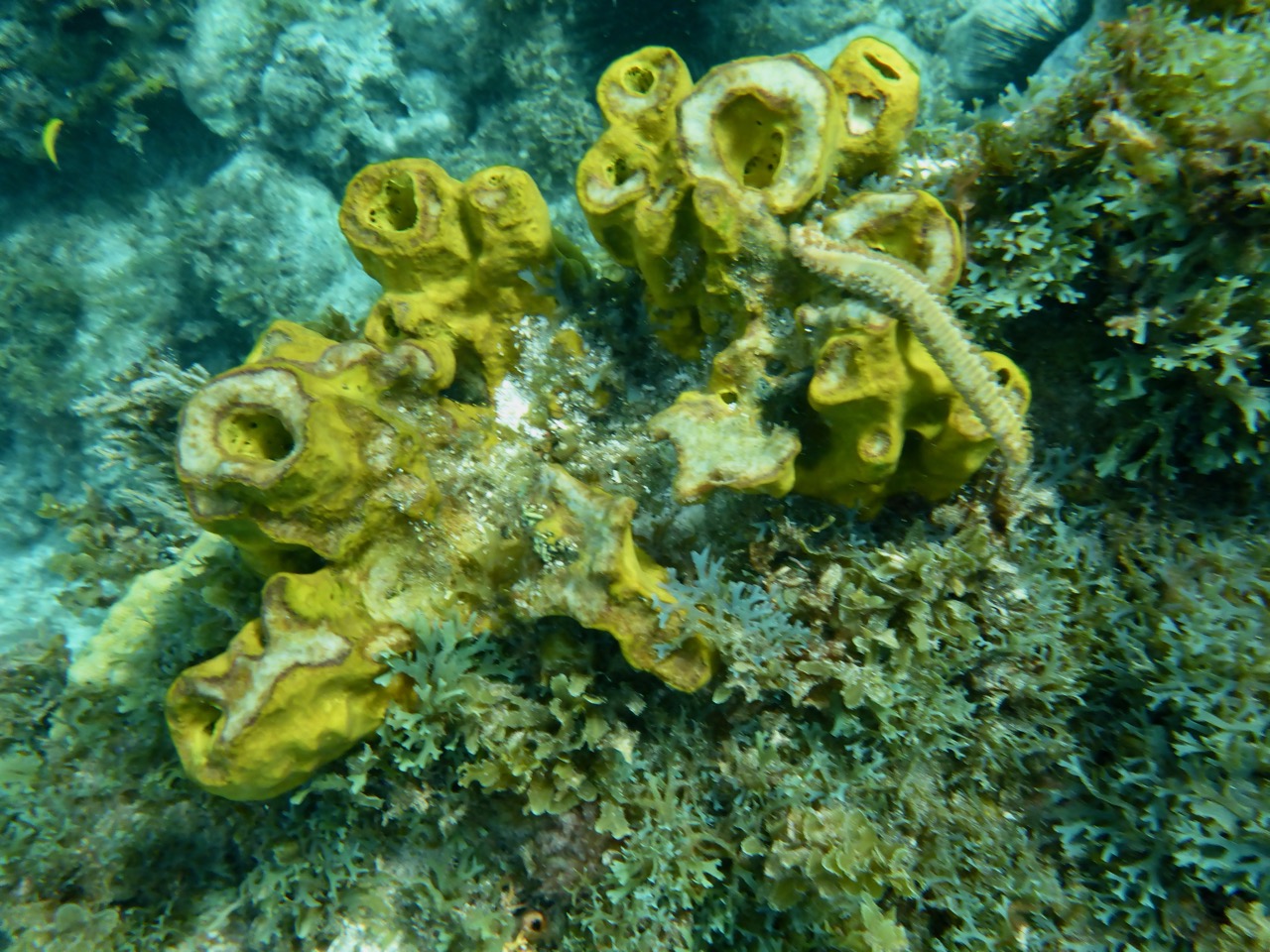
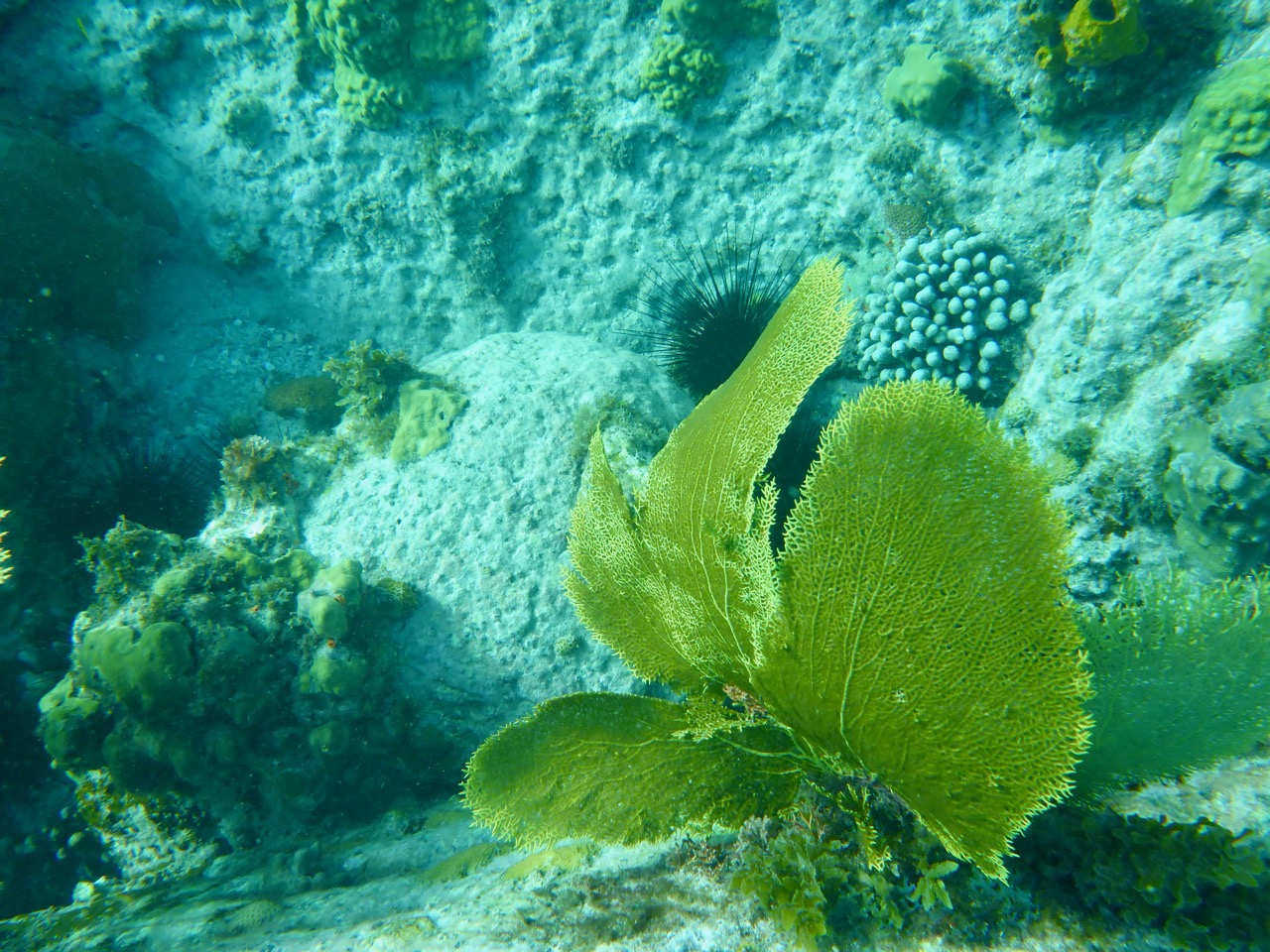
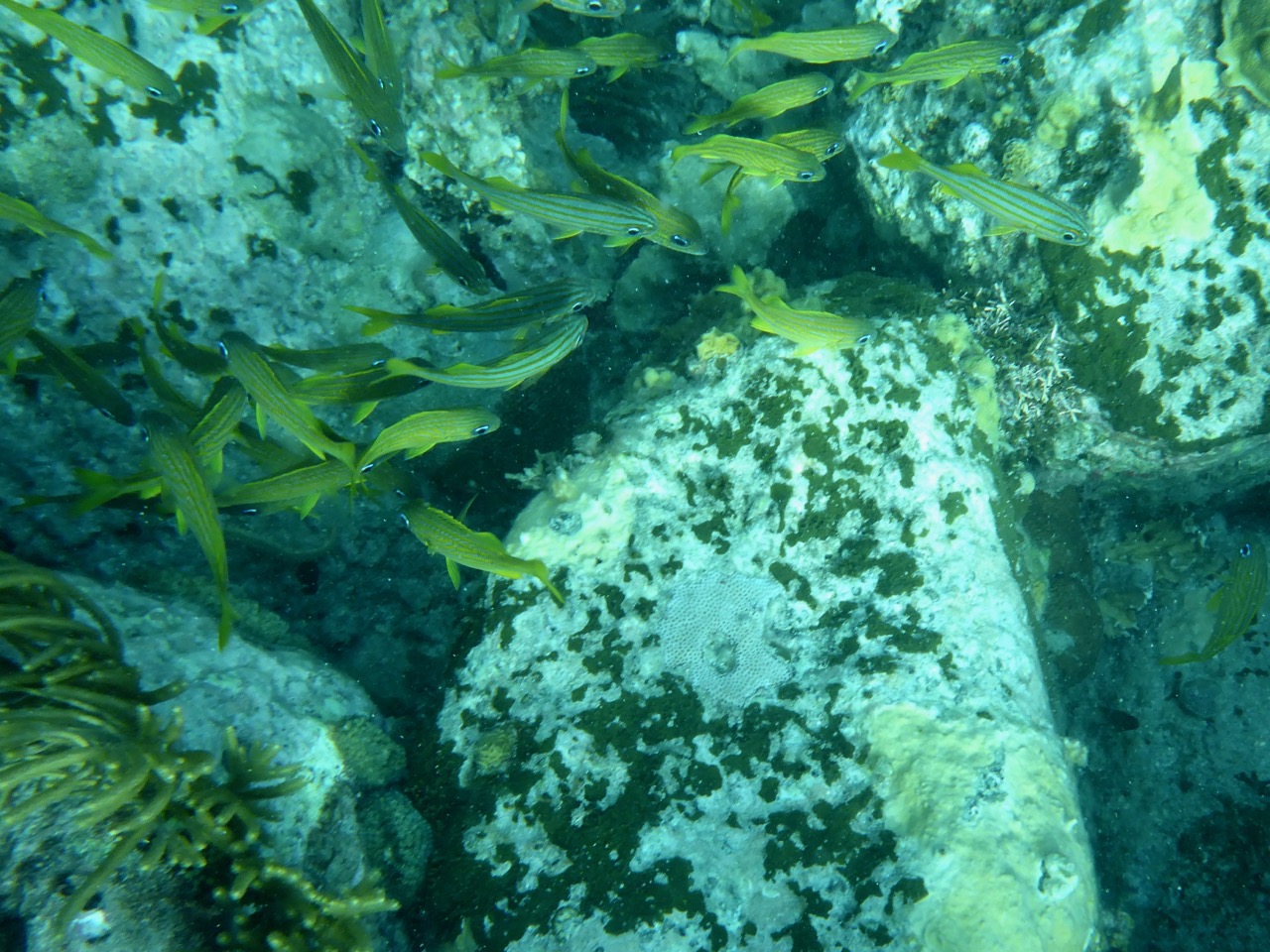
This island is part of a marine preserve (Sandy Island / Oyster Bay Marine Protected Area – SIOBMPA).  The waters are clear and shallow – a perfect snorkeling spot.  We spent many hours on the reef and the photos below are just a small sample of the beauty and diversity of fish, invertebrates, and vegetation there.

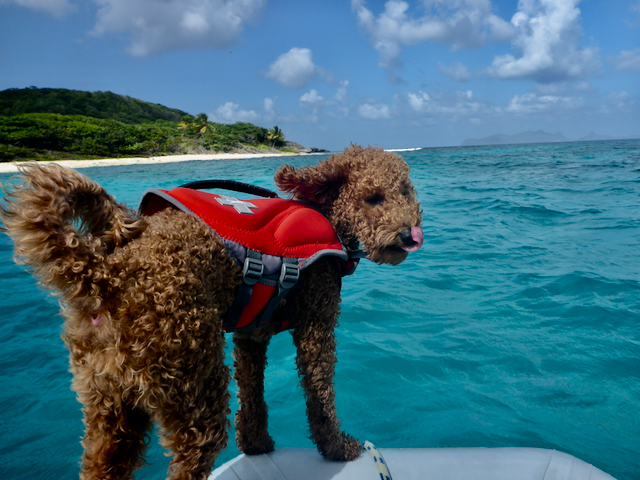
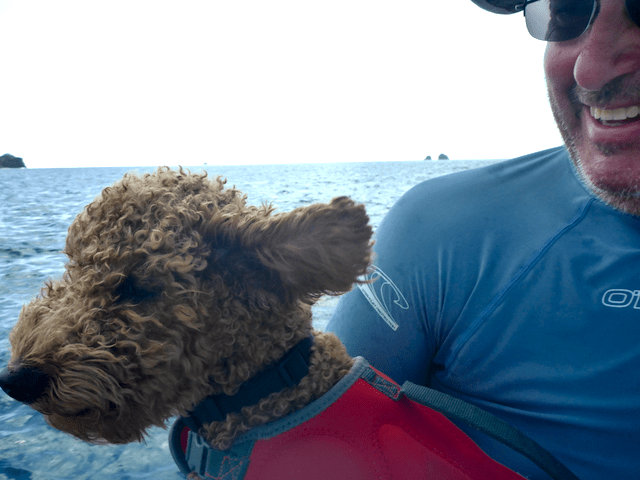
Duhkxy sits in George’s lap on most dinghy rides, but does get adventuresome at times.  When close to shore he will sometimes launch himself into the water unless we remember to tell him to stay.  He likes parading around the sides of the dinghy, but is quick to get back in George’s lap if he slips.

Best of all, he has learned to sit patiently in the dinghy when we snorkel.  Sometimes he needs one or two reminders.

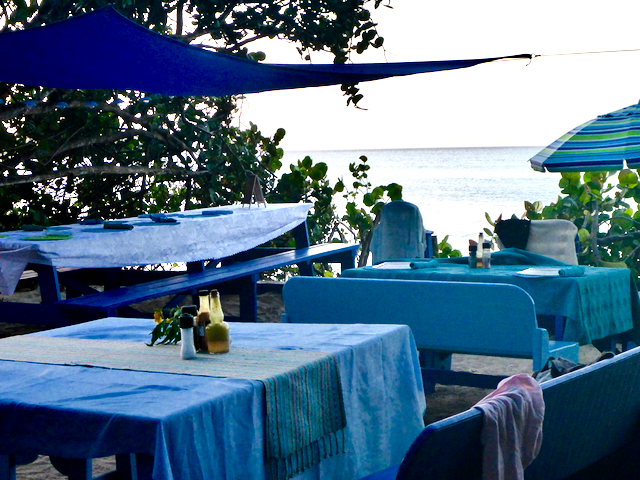
We had a delicious New Year’s Eve dinner at Paradise Beach Club on Carriacou.  This restaurant offers water rides from and to your boat (and you don’t need to jump off the dinghy in waist deep water).  I had ribs and George had tuna.  Both came with salad, potatoes, sweet plantains and caribbean rice;  all very delicious.
Paradise Beach Club, Carriacou
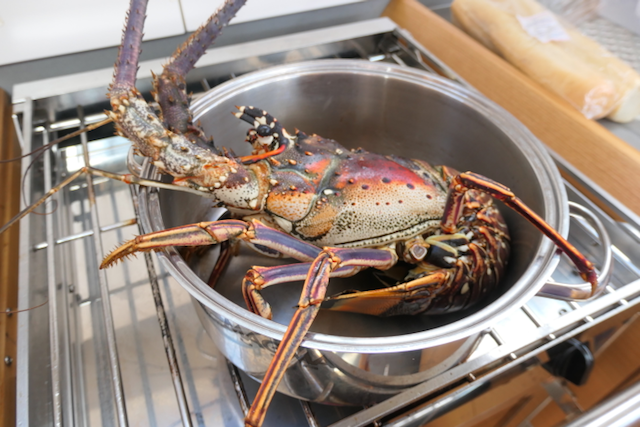
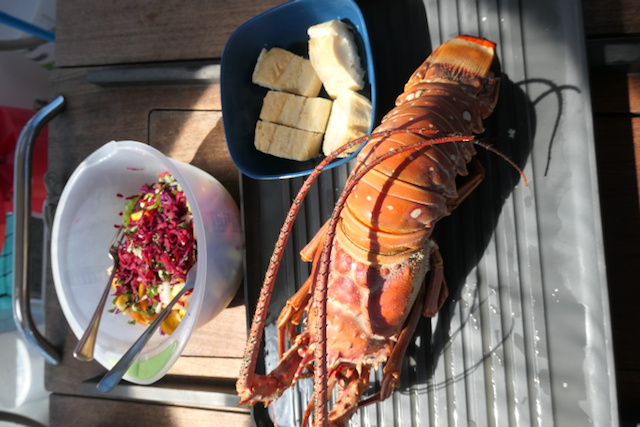
We are currently anchored off a pretty fishing village on Petite Martinique.  George just finished the laundry and I just finished the dishes from our decadent lunch of lobster and salad.
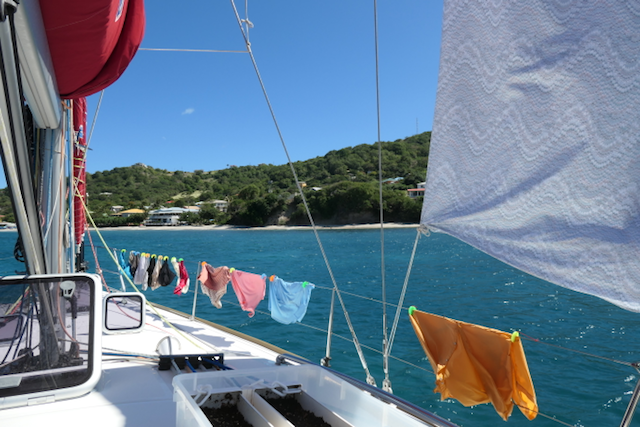
Ahhh  Fresh Sheets
Need a bigger pot

We are hopping in the dinghy to take Duhkxy to shore – boy does he love the beach.
Happy New Year to all!!

Landlubber Time is road trip time

Visiting Family and Friends

We would be home for a bit more than 5 months and one imperative was to visit with our family and friends.  It is a challenge as few live anywhere near us but George has an expression “Its on the way if we go that way”.

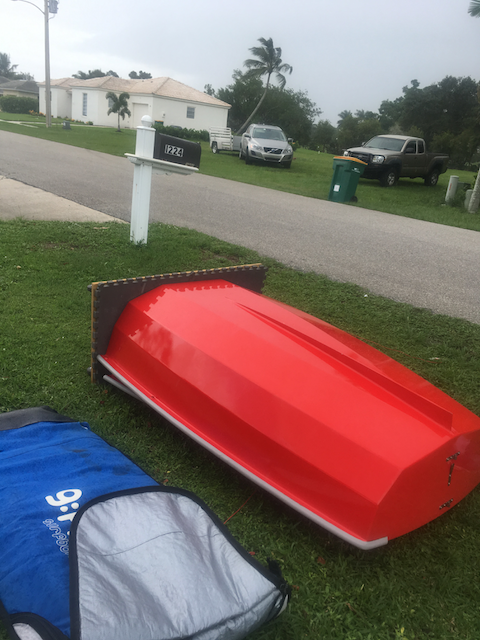
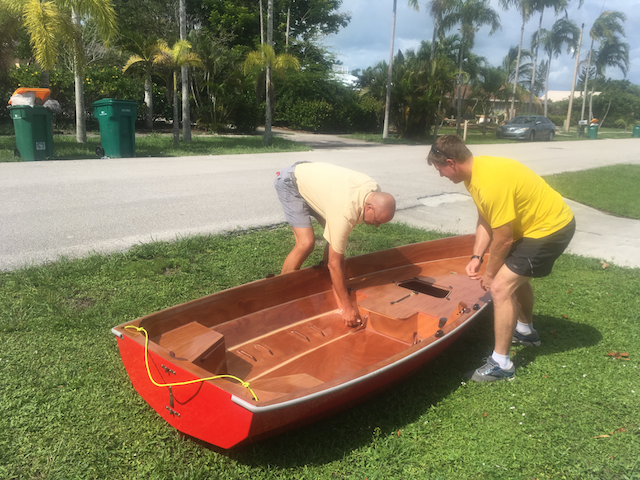
First things first, George was pining over the fact that his boat was oceans away.  I inquired whether he might be interested in purchasing a little boat.  That way we could participate more in the Blue Marsh Sailing Club that Nancy and Bruce belong to and perhaps sail a little on the Chesapeake.  Didn’t take much persuading and before the day was out George found, and purchased, a nesting sailboat that he had been planning to build.  This one was already built, and offered at not much more than the cost of the plans and materials.  Small catch – it was on Marco Island, FL.

Florida, Michigan, Pennsylvania road trip

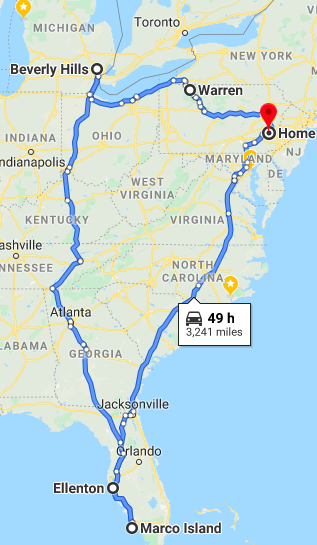
We headed out the following day with the plan to visit our Florida family members in conjunction with picking up the boat.  In retrospect, we should have planned more time in Florida as Michael, Brenna, and David had conflicts.  Marilyn put us up for the night and she and Brian and George and I had a nice dinner out where even Duhkxy could join (thanks Marilyn).  We were on to Marco Island the next day and then to Michigan.
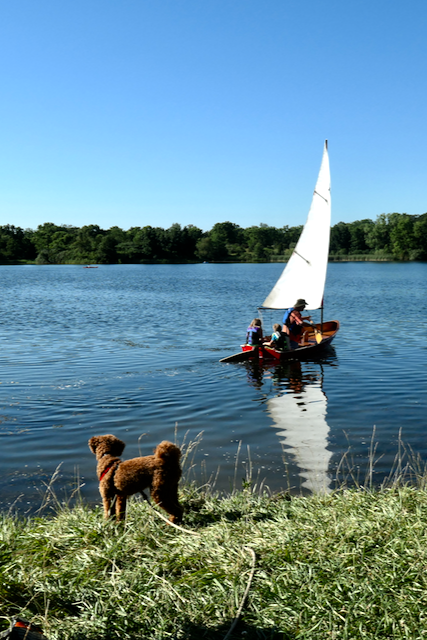
George’s first sail on our little red boat was with Riley and Tristan and he was pleased with how well the boat sailed in light wind.
Duhkxy is none too pleased to have been left behind

We invariably check in with Margaret and Burt when we travel between Pennsylvania and Michigan and we did so on this road trip.  It was the first time Duhkxy would meet Anna and the three dachshunds, Brody, Lucy, and Toby.  Duhkxy was still quite timid around most dogs, and both Lucy and Brody were decidedly unfriendly when they individually met with Duhxy.  Toby was more gentle and played chase with Duhkxy for a while.  Suddenly, when Duhkxy and Toby’s romping came close to the evil twins who were behind a gate in the kitchen, Toby turned and bit Duhkxy.  We saw first hand how the pack mentality brought out their aggressive behavior.  Anna’s excitement was a bit too much for Duhkxy, but they have since become good friends.
La Sagesse, St. David’s, Grenada

Back to Sailing the Caribbean

La Sagesse

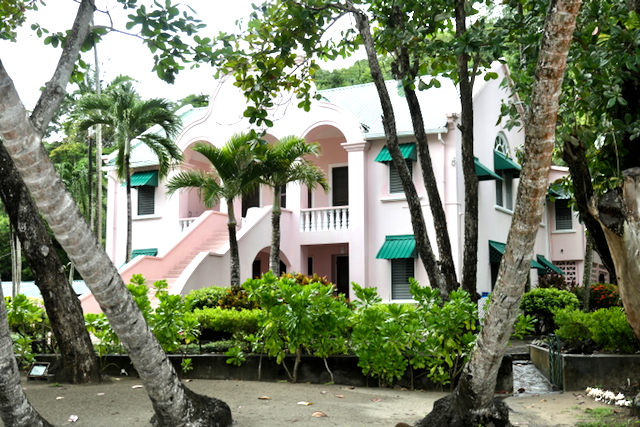
Ice Floe spent the summer and fall months (hurricane season) at Grenada Marine (St. David’s, Grenada) “On the Hard” (a boating expression for on land).  When we arrived on December 5th, we taxied to La Sagesse, a beautiful waterfront hotel just a few miles from the marina.  We stayed there a few days last May after Ice Floe was put on the hard and have fallen in love with the setting, the food, and the staff.  The hotel offers a big discount through Grenada Marine and free rides to and from the marina.

It is not uncommon for boaters to live aboard their boats when they are on the hard, but it is miserable.  Your boat will be hot and you will need to contend with biting insects.  If you have just arrived, you will probably have the interior in complete disarray as you have stuffed your sails, cockpit cushions, and lots of other stuff in the cabin.  You will need to climb a ladder to get in and out.  You won’t have running water.  The outside of the boat will be filthy.

La Sagesse means the wisdom, and I think it is apropos for those who choose wisely not to stay in their boat on the hard unless necessary.  Those of you who know us are thinking “You guys lived in an 8′ by 12′ camper with two children and a dog…..”  For those who don’t know us (and perhaps do live on boats while on the hard) you may be thinking “What snobs…..”  I accept these contradictions and criticisms and sure am glad we can stay at La Sagesse.

Our room was in the one story part of the hotel where each room has an outside covered porch with a beautiful view of La Sagesse Bay.  The constant rhythm of waves rolling ashore and the chirping of tree frogs in the evening completes the perfect atmosphere for much-needed rest and sleep after a hard day’s work readying Ice Floe for the beginning or ending of our sailing season.

Ocean 2, our Oasis before Ice Floe was ready to “splash”
The view from our room of La Sagesse Bay

La Sagesse also has accommodations in a pretty multi-story building.

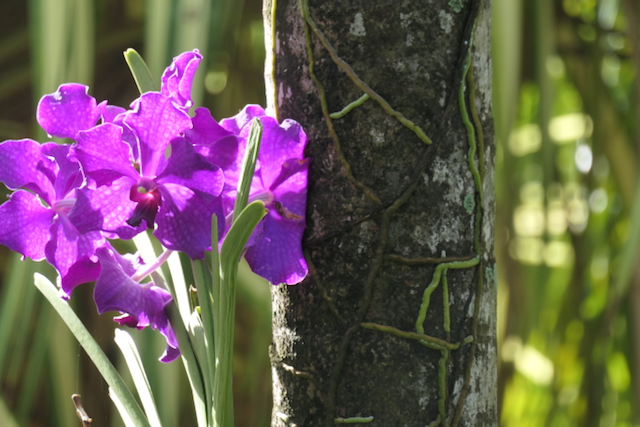
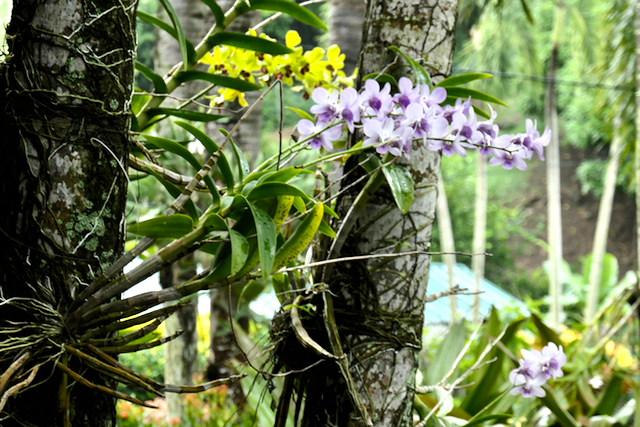
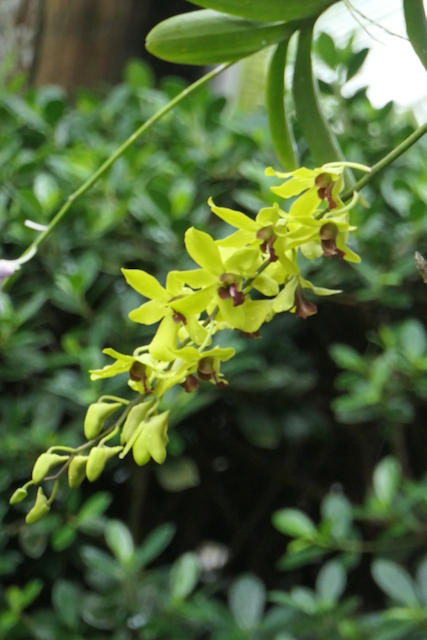
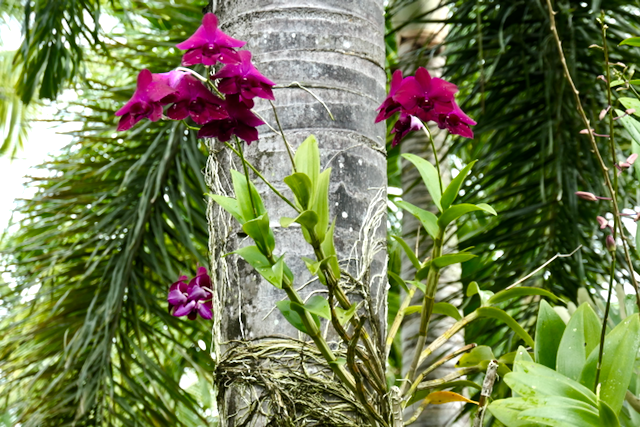
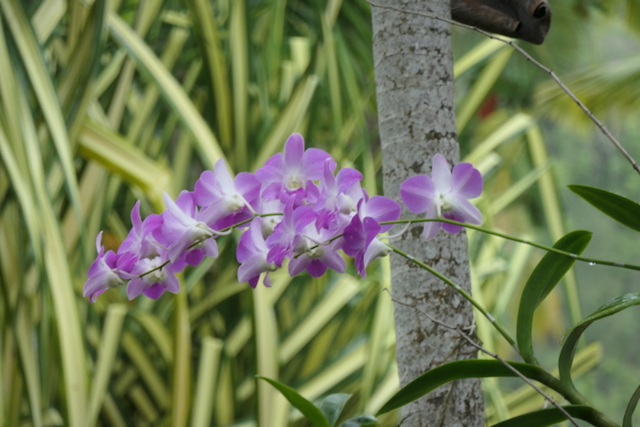
The grounds are nicely landscaped and orchids were blooming on many trees.  Perhaps best of all, Duhkxy, was welcomed everywhere, including the dining room where the resident dog. “Queeny” politely visited every table.

Landlubber Time is gardening time

Arriving Home
It is always exciting coming home after a long time away, but, it takes a bit of getting used to.  So much more space – so many things that need and/or we want to do.  Invariably, it feels a bit overwhelming at first.We had no worries when we were gone, as Diana looked after our house.  We arrived home, as always, to an immaculate home and staples and meals in the fridge.
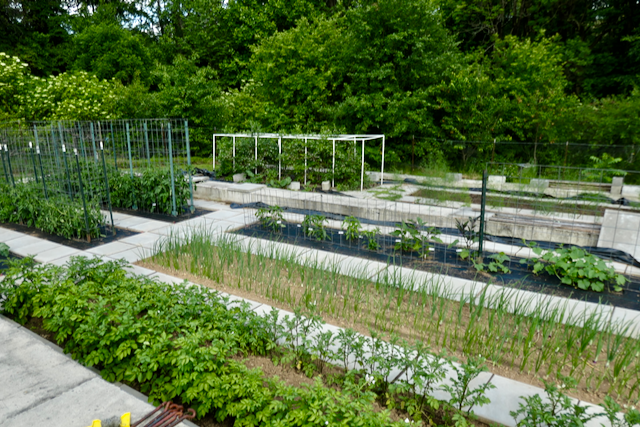
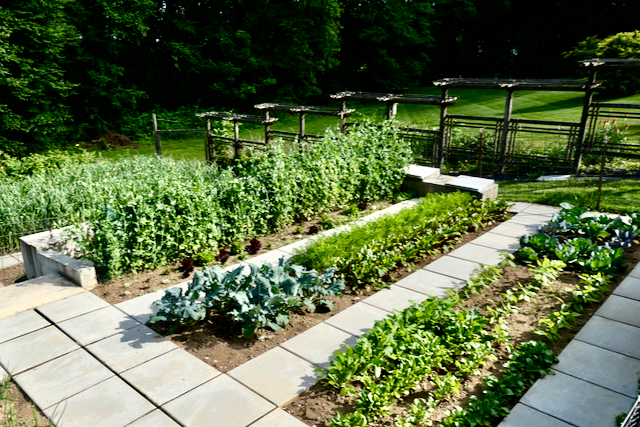
This year Diana also planted two tiers of our garden so we were also met with garden-fresh lettuce, spinach, and radishes, quickly followed by peas, carrots, beets, onions, garlic, string beans, zucchini, peppers, eggplant, tomatillos, cabbage, broccoli, potatoes, cucumbers, and enough heirloom tomatoes to feed 10 families.  The tomatoes kept yielding up until just before we left.

Diana continued to help with the harvesting and weeding throughout the summer. Nothing went to waste and the garden was weed free and tidy till the very end.  What a joy!

Our blueberry yield was great; as many as 8 quarts on many days.  Thanks again to Diana for all the help harvesting.  It is a time consuming task and you need to pick every couple of days.  I finally got my strawberry bed planted again and the raspberries pruned and fertilized – next year we should be swimming in berries.

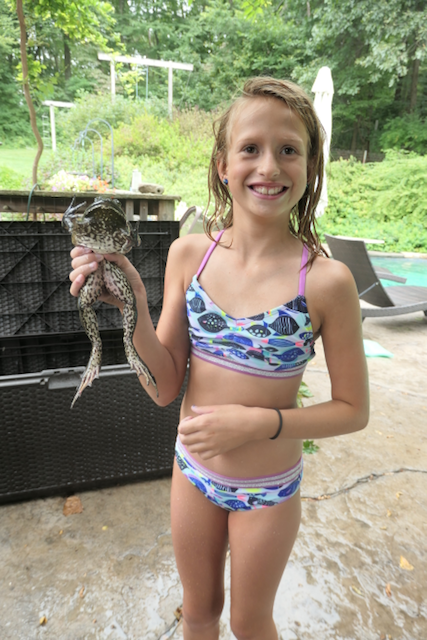
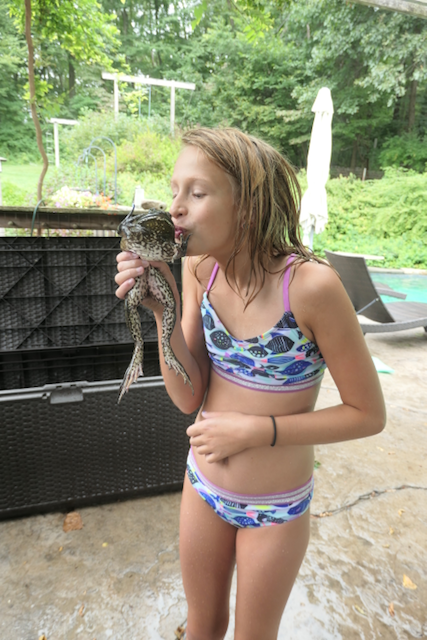
We had the pool opened soon after we got home.  It had been closed for 2 years and we found a number of inhabitants had established their homes there.  One was the largest frog we have ever seen in Pennsylvania.  I caught and released him several times;  the first, hoping he would like living in our small water garden.  That lasted about 15 seconds – he leapt out and took off with great long hopping strides towards the vegetable garden.  The last relocation was about 1500+ feet away in wet portion of the wooded area of our home.  We did not see him for several months and figured he had finally found a new home but in August, Riley fished him out of the pool, bigger than ever.

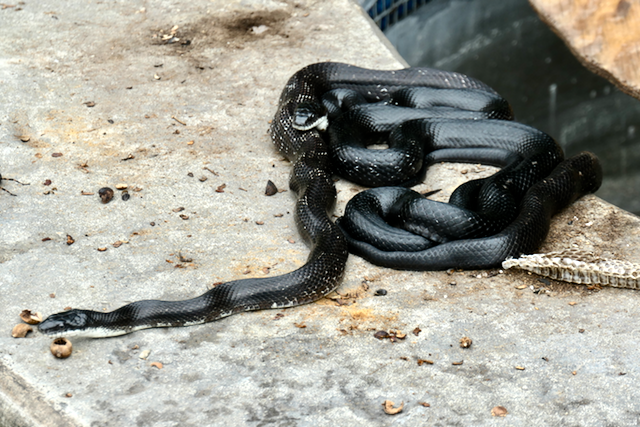
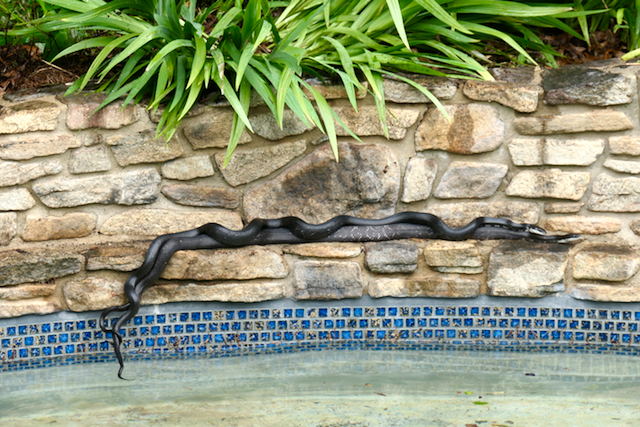
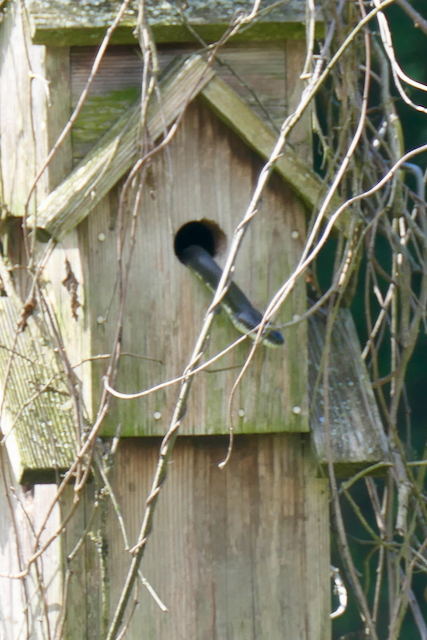
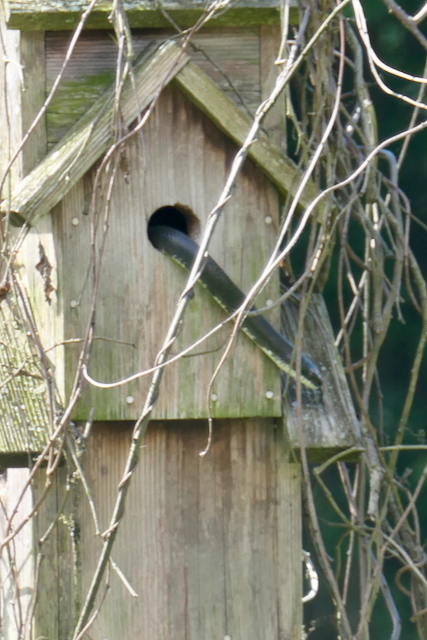
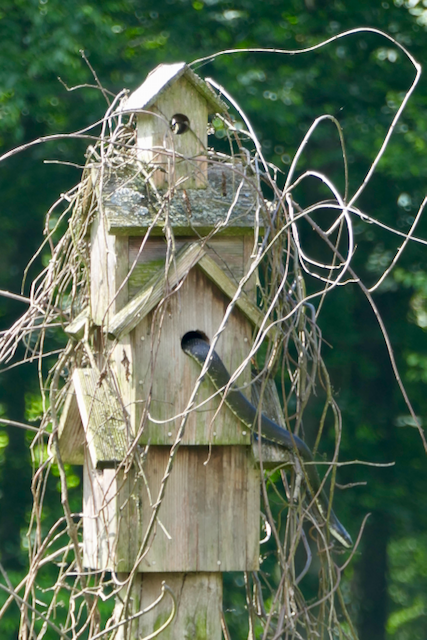
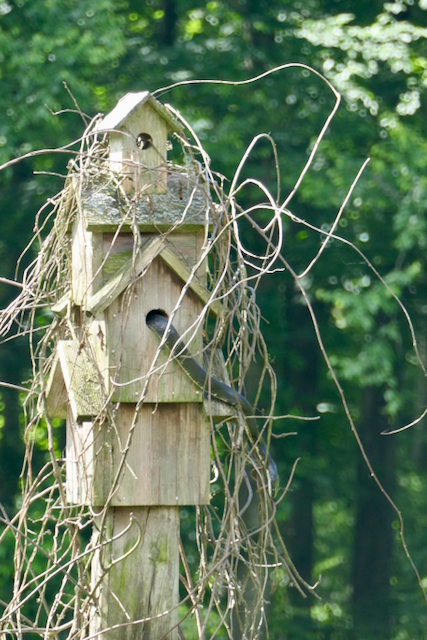
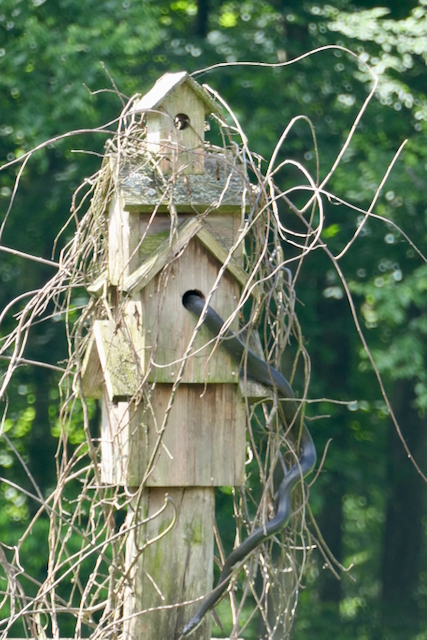
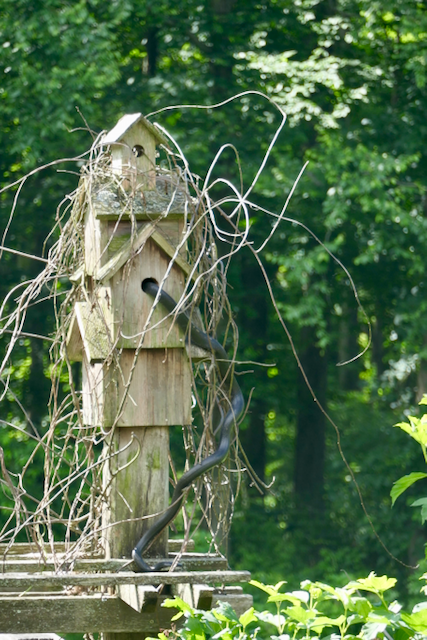
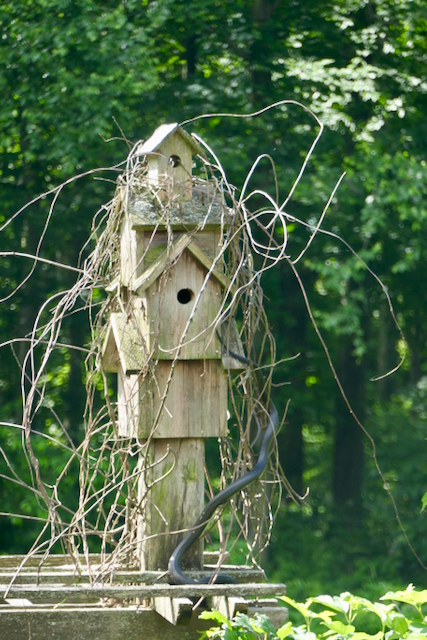
We also found many large black rat snakes had enjoyed the winter months under the pool cover.  A “couple” decided to start some new snakes before they took off.

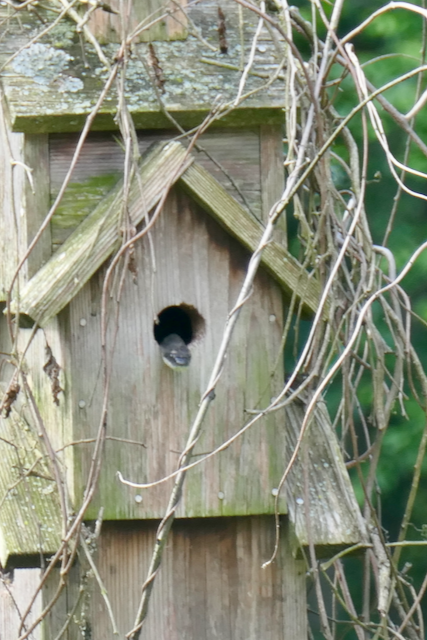
We are very happy to have as many rat snakes live with us as is possible.  They, as there name implies, do a great job keeping the rodent population in check.  Mother nature being what she is, you need to take the good with the bad.  While having breakfast on our living room porch, we noted a small head peaking out of a birdhouse that bluebirds regularly nest in.

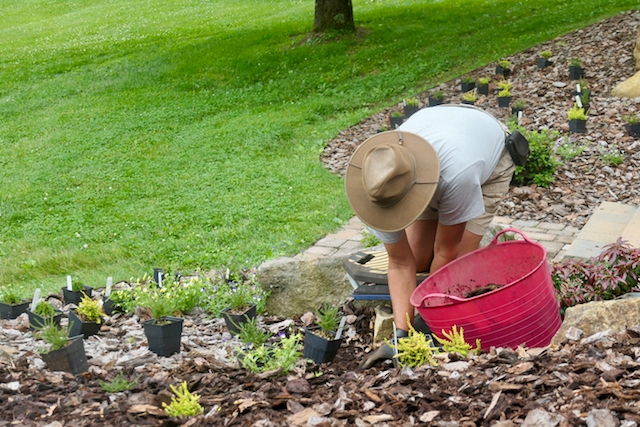
With the vegetable garden well in hand, our attention was drawn to what used to be our hillside heather garden.  We lost the heather when we failed to religiously prune and re-acidify the soil.  Our soil has a pH a bit above 7.  Heather require a pH below 5 or they cannot absorb any nitrogen from the soil.  It is the same with blueberries.  The heather so beautiful, I convinced George we could maintain a small section of heather.  The remainder we planted with low growing shrubs.

Landscaping on the driveway side of our house was replaced, the prior inhabitants having overgrown, died, or been destroyed by deer.  It was a lot of work, but we have finally restored all our landscaping, with the exception of the perennial garden we established just before Allison and Mike’s wedding.  It bloomed the first time for the wedding, and was destroyed by the dreaded pine voles over that winter.

Sailing Time and Landlubber time – the best of times

Circumnavigating Martinique

Exploring Martinique with Michael

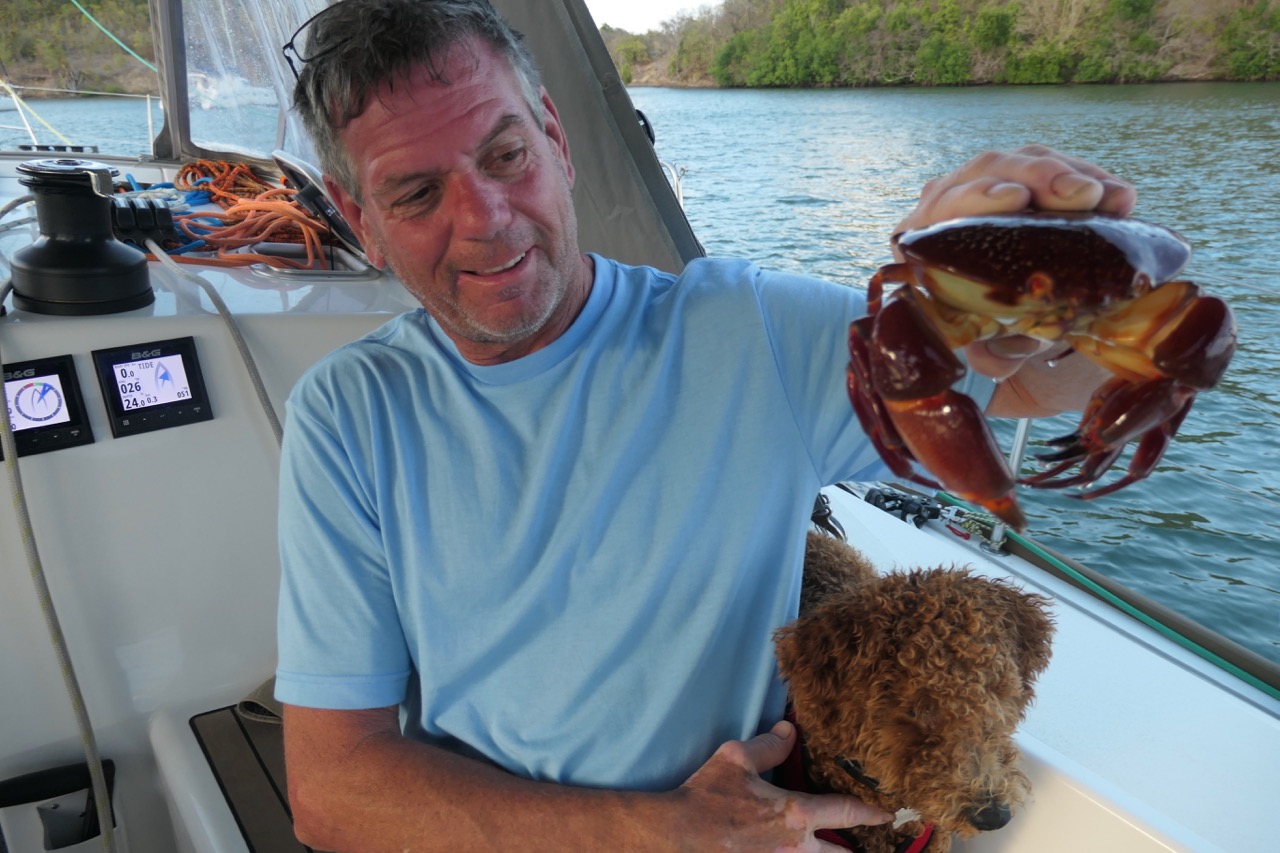
Michael’s dinner contribution – a batwing coral crab
Michael flew into Hewanorra airport in St. Lucia and would be with us for 8 days (excluding travel days).  Staying in St Lucia was not an option as Duhkxy’s application to visit the island was denied.  Martinique is less than a day’s sail away from St. Lucia so we planned to spend our time with Michael there.  Hewanorra airport is on the southern end of St. Lucia and Ice Floe was moored in Marigot Bay, near the north end of the island.  To conserve Michael’s vacation days I took a cab to meet him.
Most islands in the Caribbean have few, if any, protected anchorages on their eastern (Atlantic) side and the swell and winds on the Atlantic can make for very rough sailing.  Martinique’s Atlantic coastline, in contrast, is protected by an extensive, shallow, reef and we were armed with information contributed by sailingbreeze.com on “Active Captain” of several anchorages.  “Active Captain”, an invaluable, crowd-sourced descriptions from boaters of anchorages, marinas, and hazards.  We were eager to snorkel the reefs and the ability to circumnavigate Martinique was ideal.

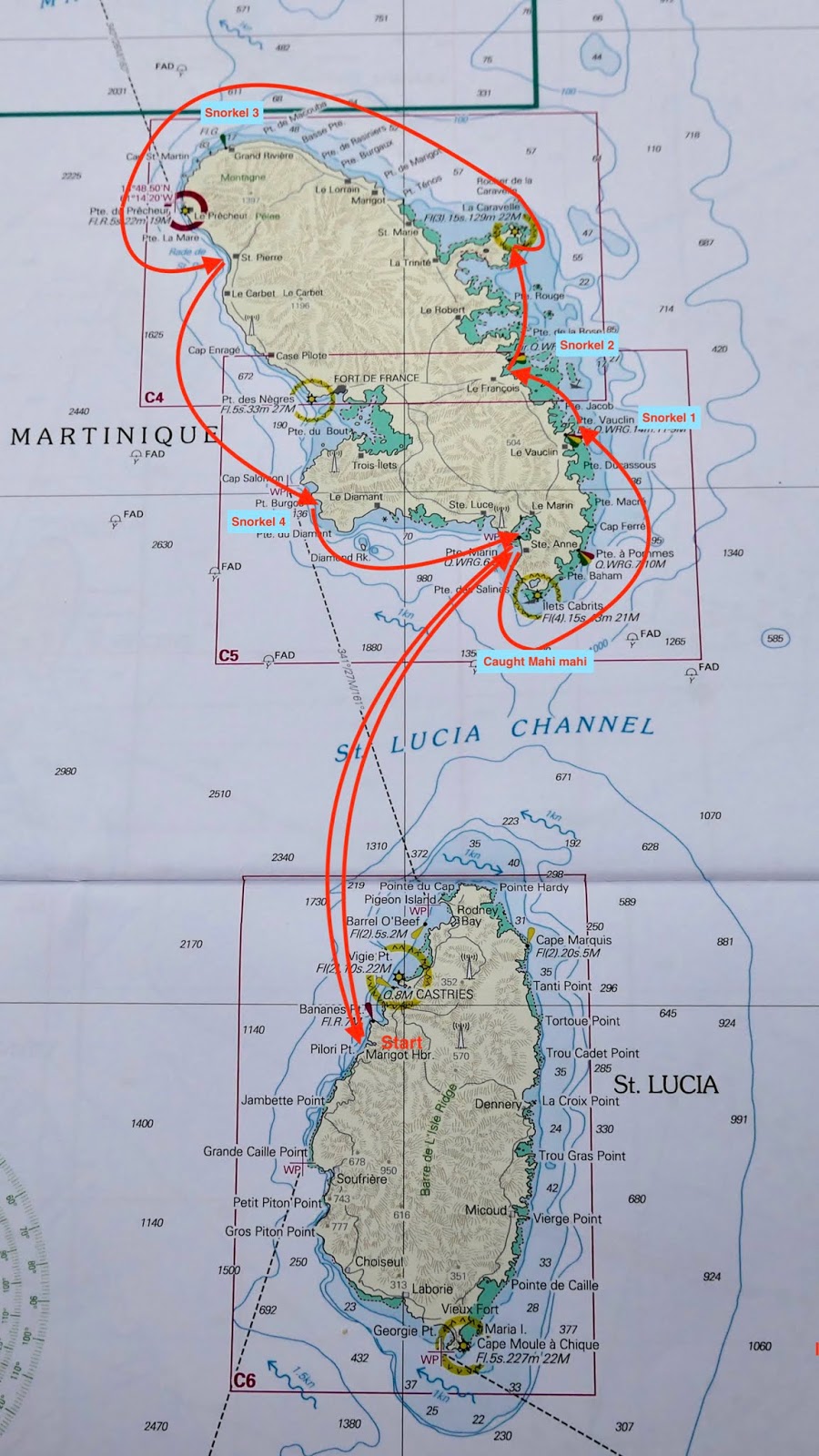
We decided to sail the eastern shore from south to north (new territory for us) and the western shore back (second time for us) and across to St. Lucia in time for Michael to fly home.  We concluded this was the best plan for all.  An approximation of our sailing route is shown below.
Sailing path and anchorages
Michael arrived in St. Lucia on April 26th and we were off to Martinique early the next morning.  Michael typically gets up around 4:30 am for work.  Just as I was making headway getting George to sleep in, the two of them began starting the day around 6:00 am.  I slept in as a silent protest.

We arrived in Martinique around 1:30 pm and anchored in St. Anne.

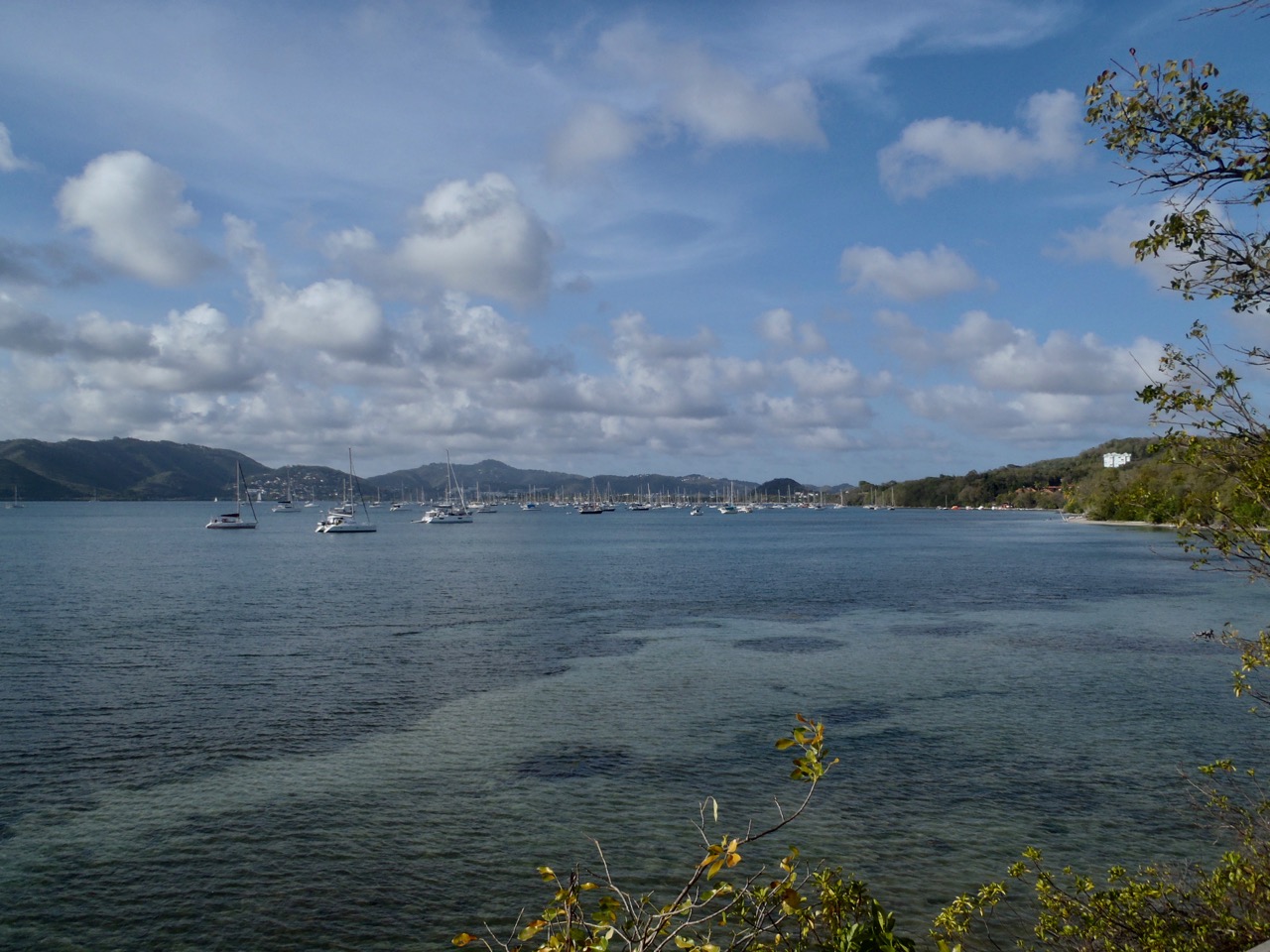
St. Anne Anchorage (Martinique)

After checking in we headed straight to a small beach.  The moment Duhkxy’s feet hit the sand, Michael got his first look at what a maniac Duhkxy becomes on a beach.

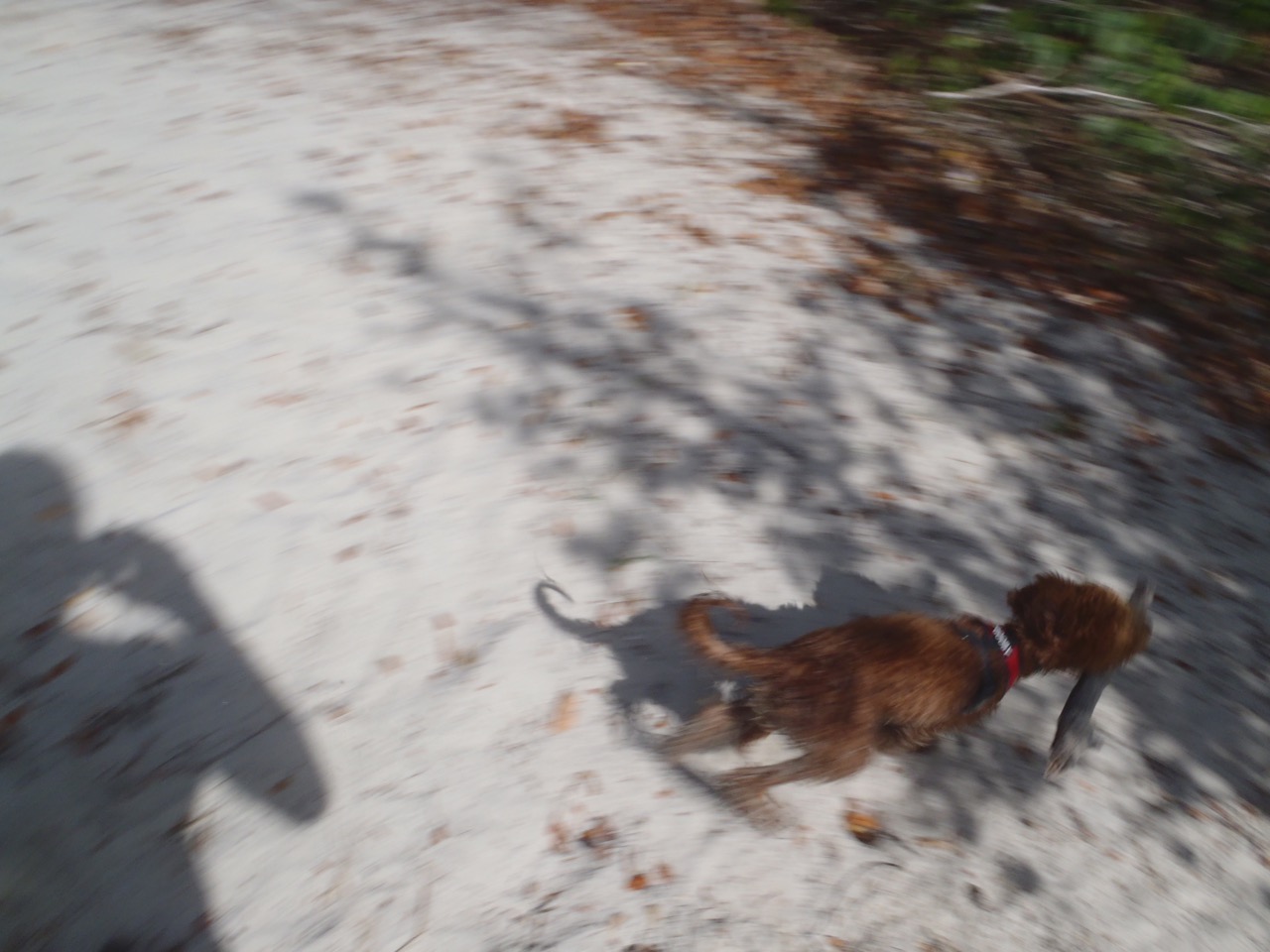
Michael grabbed a picture of Duhkxy on the beach – faster than a speeding bullet
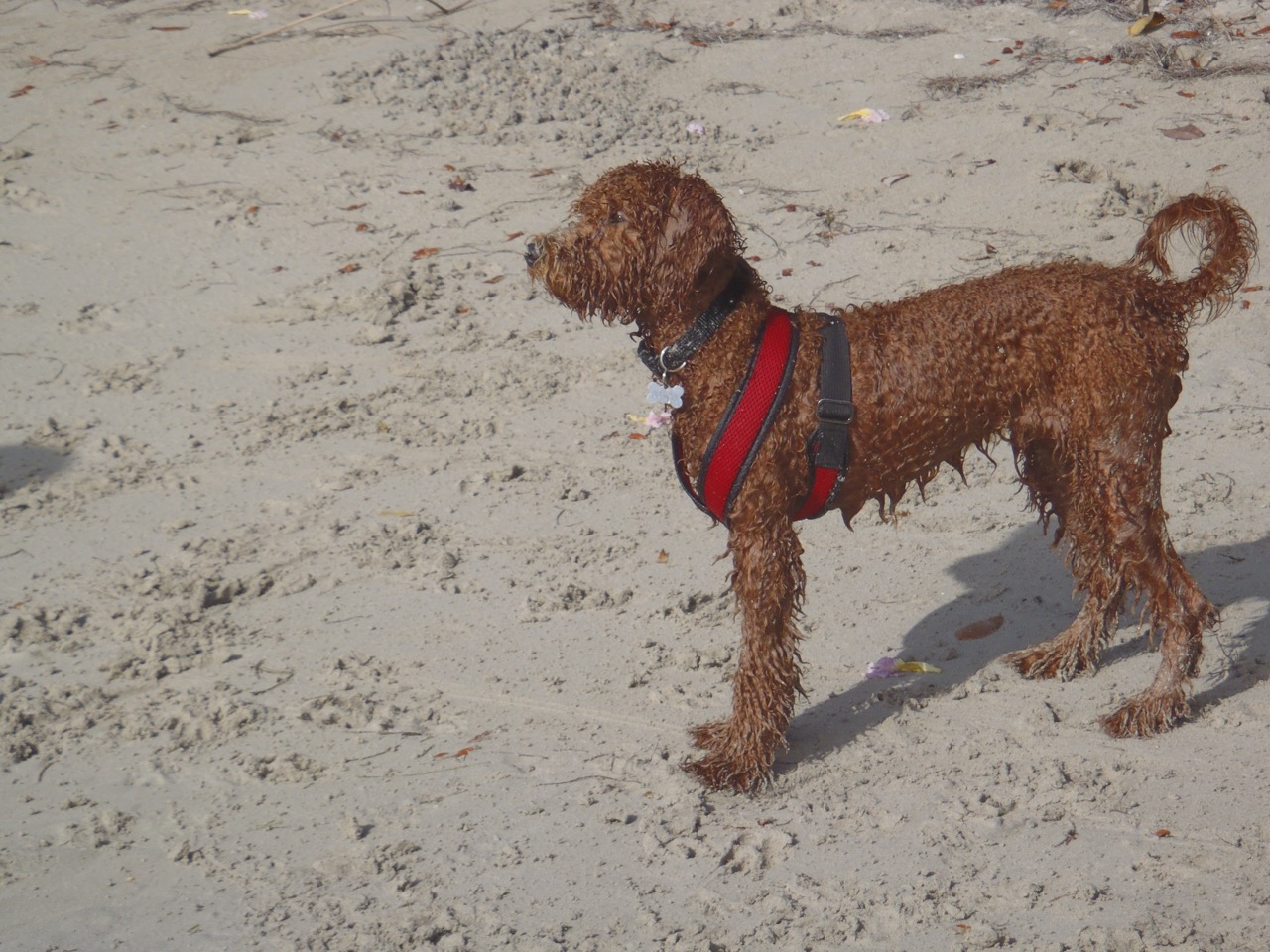
Wet and sandy – just the way he likes it
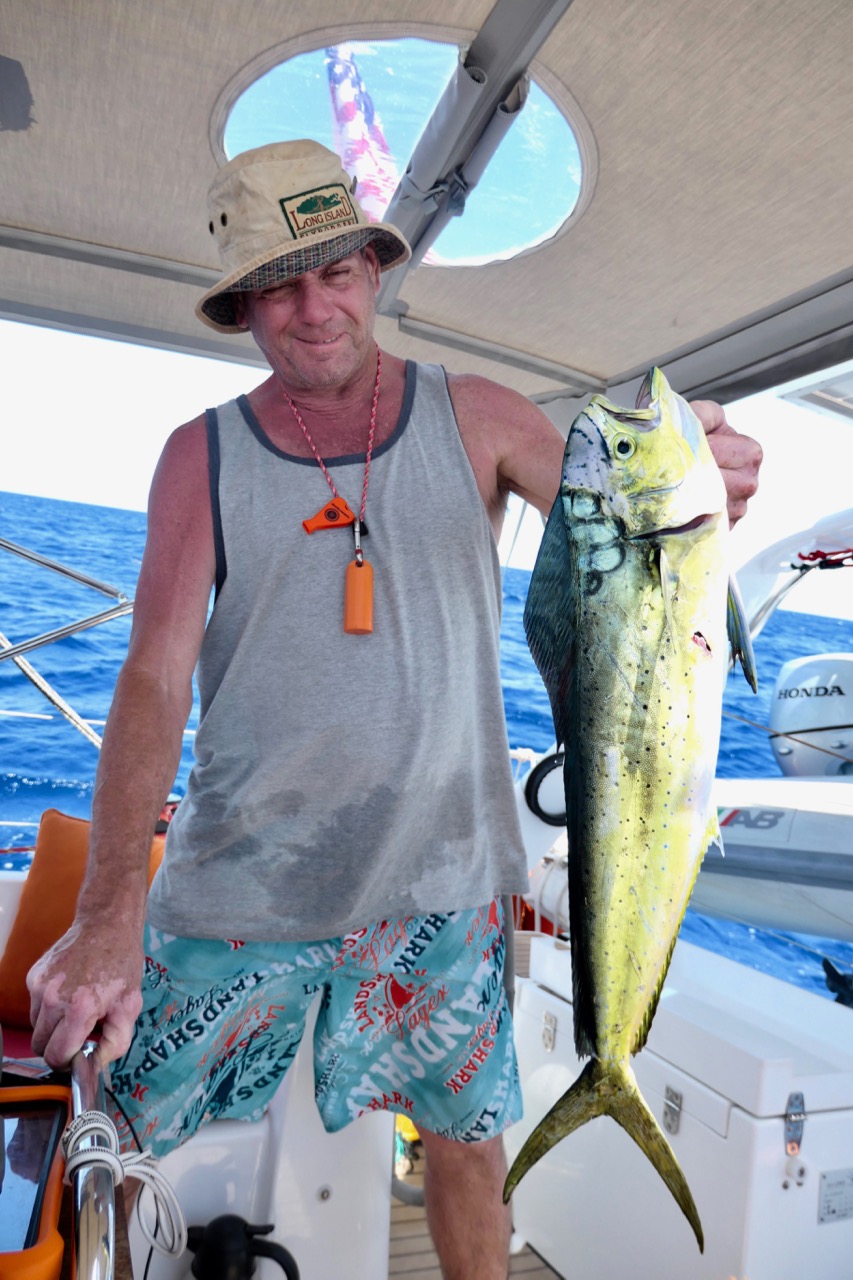
The next day we began our circumnavigation of Martinique.  The wind was down and we had a strong tide against us so we were motor sailing around the southern tip of Martinique when I caught a mahi mahi.  We fish with unattended hand lines so we don’t often see a fish hit the line.  Much to my delight, the fish struck the very instant my line was out and the mahi flew straight out of the water.  When I announced I caught a mahi, George thought I was joking.

Michael only looks tipsy – honest!!

Eastern Coast of Martinique

After landing the mahi we continued, now sailing, up the east coast en route to Port Vauclin, the first of the east coast anchorages described by sailingbreeze on Active Captain.

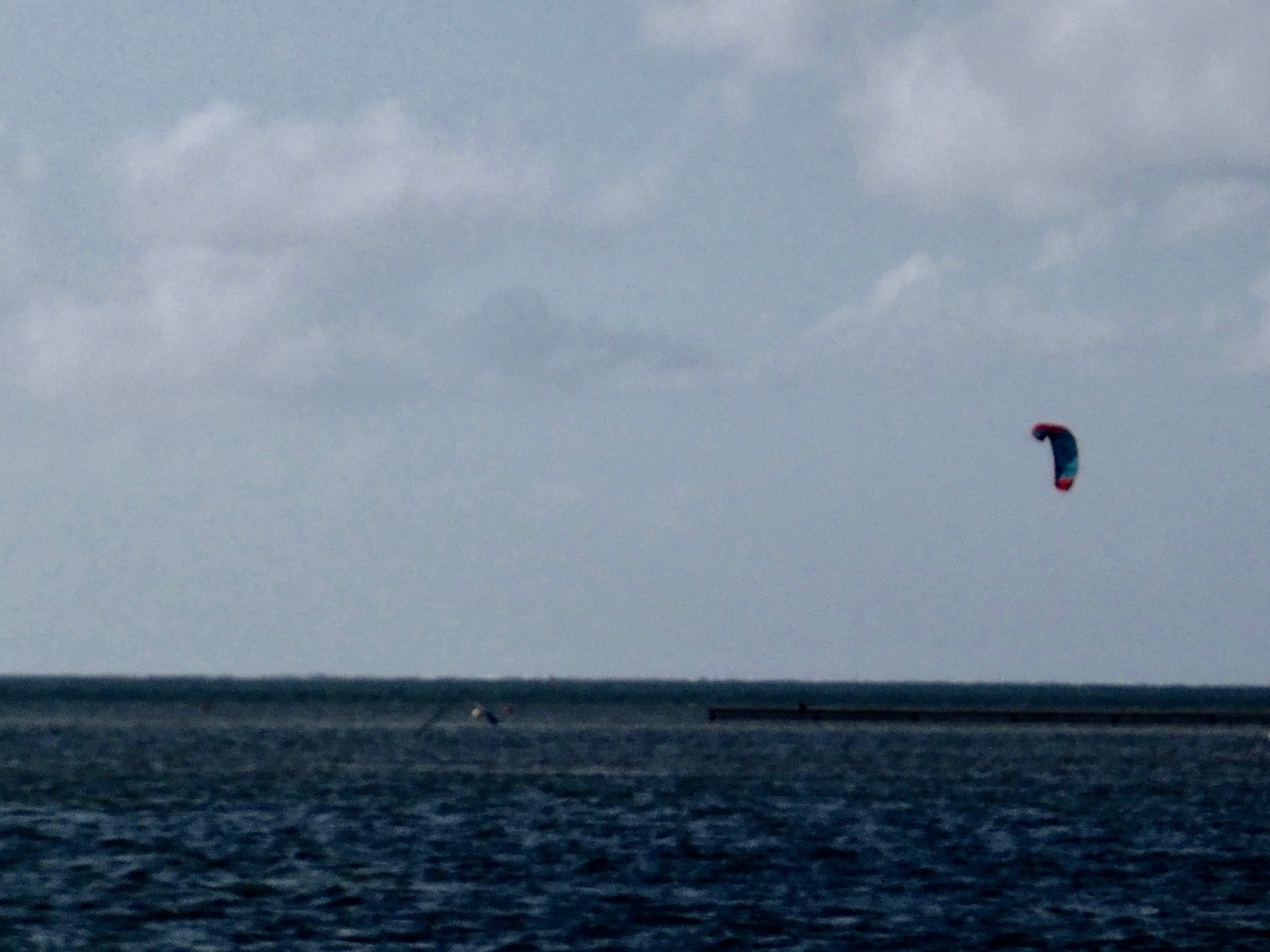
This anchorage is a wide open, increasingly shallow bay leading to a grassy sandbar.  These shallow waters were a playground for wind surfers and people bathing in the warm waters.  At a point where the water is only inches deep, we found sandy depressions with deeper water.  We followed the lead of others and immersed ourselves in these very warm pools while Duhkxy raced and jumped in the shallows.

In the photo below, you can see a barrier below the kite on the right.  This appeared to have been constructed to keep sargassum off the beach.  We understand that the sargassum on the Atlantic coasts had been especially problematic.  So much so that in some places, unhealthy hydrogen sulfide fumes were emanating from its decomposition.  The beach near this anchorage had enormous mounds of the seaweed that was being loaded into trucks and taken away.

Port Vauclin anchorage
Port Vauclin
From our anchorage in Port Vauclin
That evening, Michael did his best to reproduce his awesome blackening seasoning with spices we have on board (quite nice).  We had fish tacos and smoked the balance to savor it over the next couple of days.

Islands and rafts of sargassum are a recent problem in the Caribbean.
They make fishing very challenging and are fouling beaches
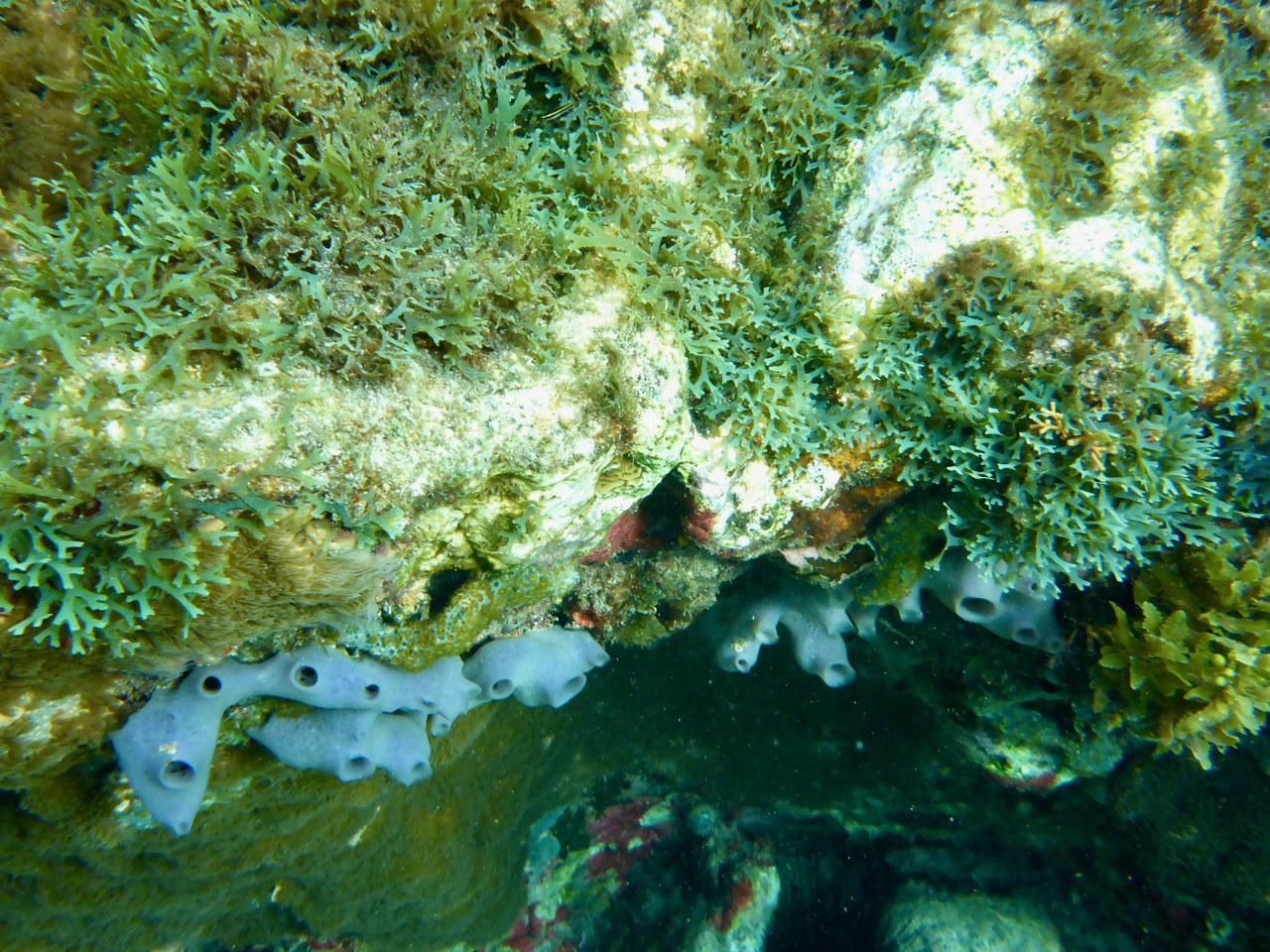
We spent the next couple of days sailing and snorkeling inside the reef and anchoring in Baie du Francois, and Baie du Tresor along the way.  The reef appeared to to be in a recovery phase with lots of new small coral heads getting started.  A fair amount of coral skeleton was covered with healthy plant and sponges which was a distinct improvement over the remnants of bleached coral.  There was certainly enough living coral, fish and invertebrates to encourage us and we hope to do more snorkeling there when we have enough time.  Michael spotted a batwing crab tucked in under a sandy shelf in ~ 6 feet of water and George was able to capture it with his lobster lasso and gloves.  The batwing crab in commonly found in this kind of shallow water

With our keel up we draw a little more than 3 feet but suggest a boat with a more typical draft would find enough water through this stretch, as well.

Michael demonstrating his romantic prowess
Baie du Francois
Small marina in Baie du Francois
Baie du Francois
Farmland bordering Baie du Francois
Baie du Francois
Baie du Francois
Loup-Garou, a beautiful, uninhabited, protected island just outside of Baie du Francois
Our sail beyond Baie du Tresor, now outside of the protective reef, was boisterous with winds up to 20 knots and swells of 10+ feet.  We can attest to the fact that Michael is a salty sailor.  He had no difficulty reading or going below despite the rollicking conditions.

Michael snaps a photo off the stern to capture the heeling of Ice Floe as we sailed around the northern tip of Martinique

As we sailed around the northern tip of Martinique, we paused to snorkel a reef in Anse Couleuvre, described as a top snorkeling spot in the “Snorkeling report” http://www.snorkeling-report.com/spot/snorkeling-anse-couleuvre-martinique/.

According to the description, snorkeling this reef was not advisable on a rough day.  It was blustery but there were no significant waves near two large rocks projecting out of the water that we believed marked the edge of the reef.  Michael and I headed out right off the sailboat as George was uncertain where he could anchor.  The current was strong against us and made just getting to the rocks exhausting.  In addition, Michael had very small flippers, great for fitting in a carry-on bag;  not so great for propelling oneself forward.

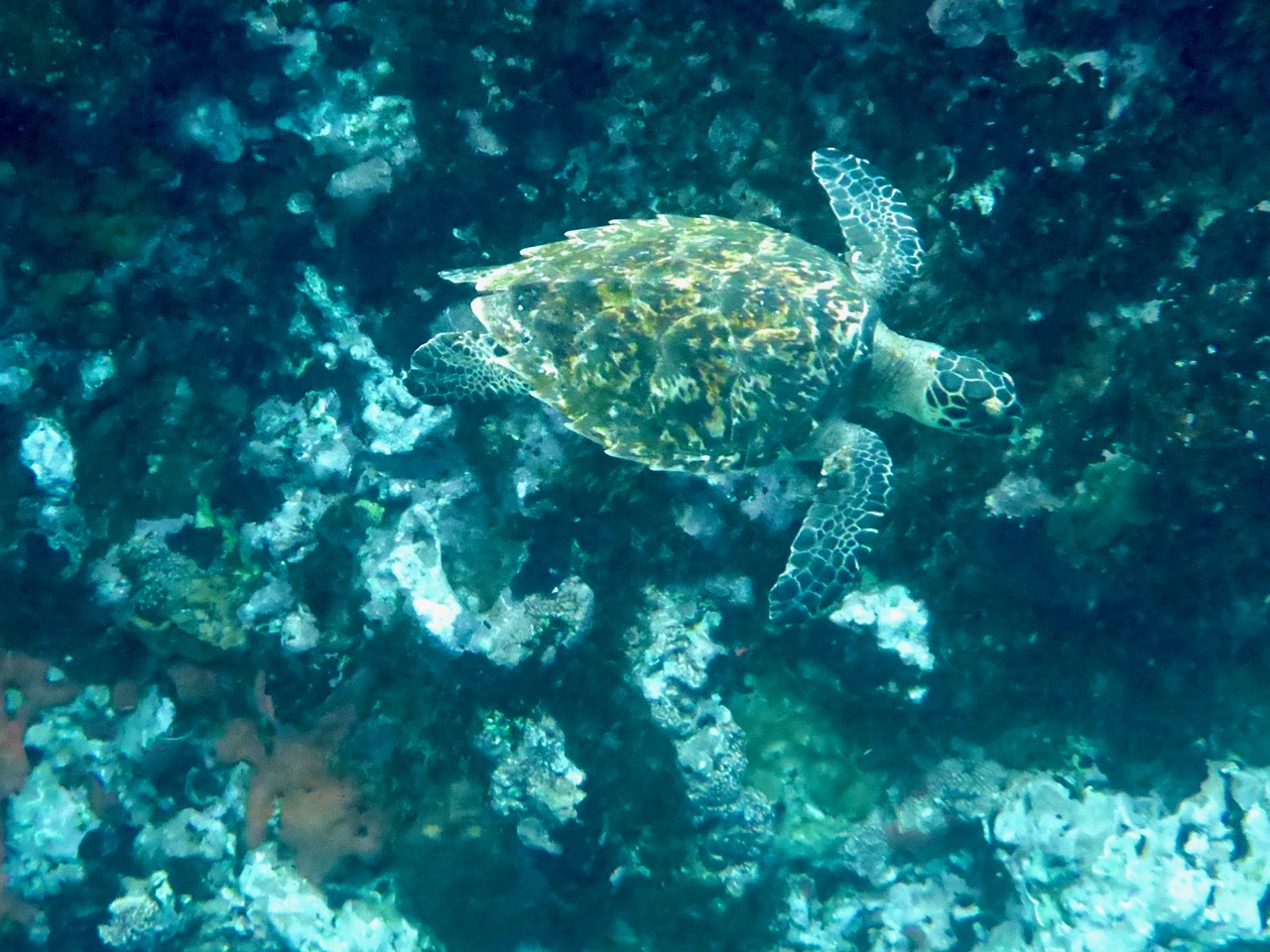
All in all, it was an ill-fated snorkel.  When we re-examined the maps of the bay we realized we had snorkeled off a small beach just south of the one recommended.  The reef was much closer to shore and was not contiguous with the large rocks we snorkeled on.  None-the-less, I offer a couple of photos of our very brief snorkel by the big rocks.  I am quite proud of my turtle photo.

Beyond the challenging sailing conditions and our strenuous snorkel, the day continued to challenge us.  Our gennaker sheet got caught in our propeller when George started the engine to avoid some poorly-marked fishing traps.  As noted previously, most were identified by no more than a soda bottle.  All’s well that ends well – we avoided the traps and George shut the engine down before the sheet was impossibly tangled around the prop and/or damage was done.

The West Coast of Martinique

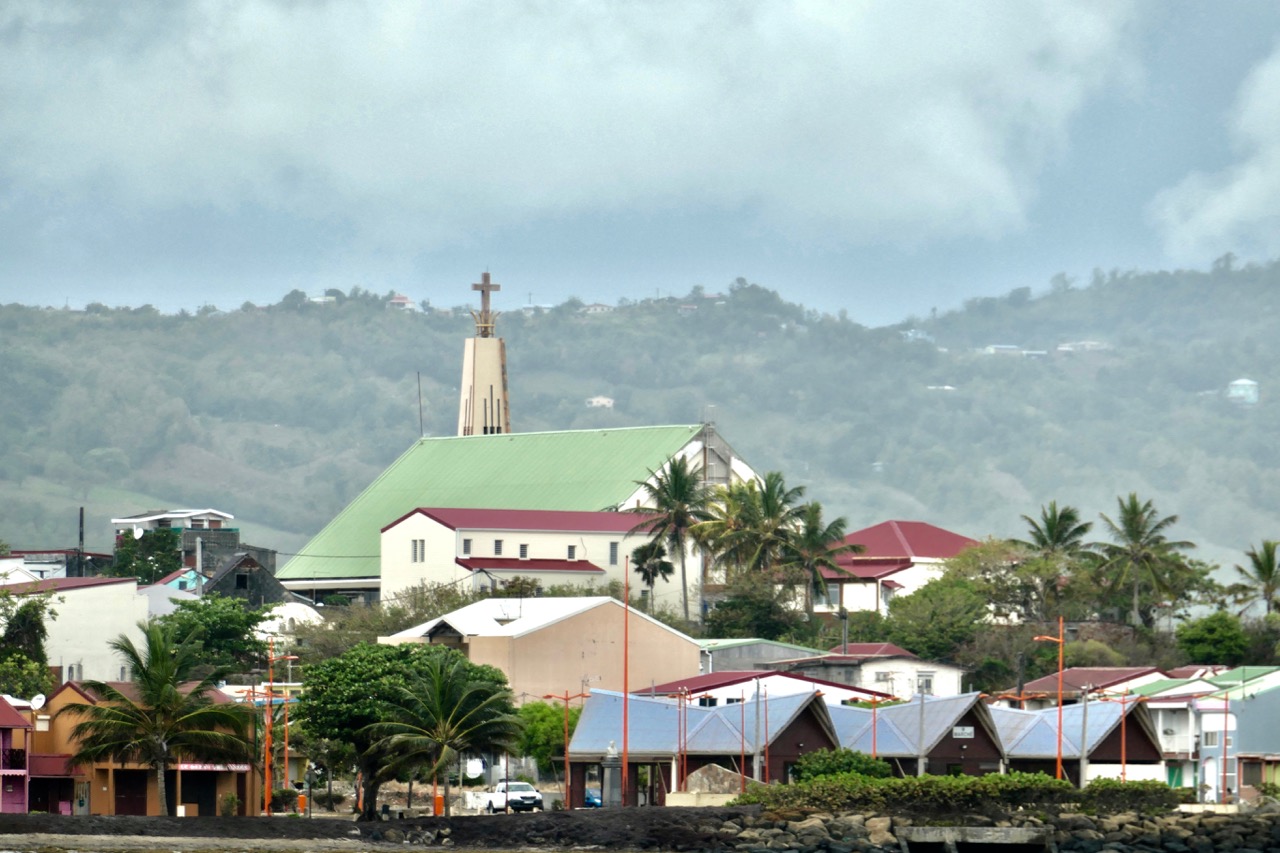
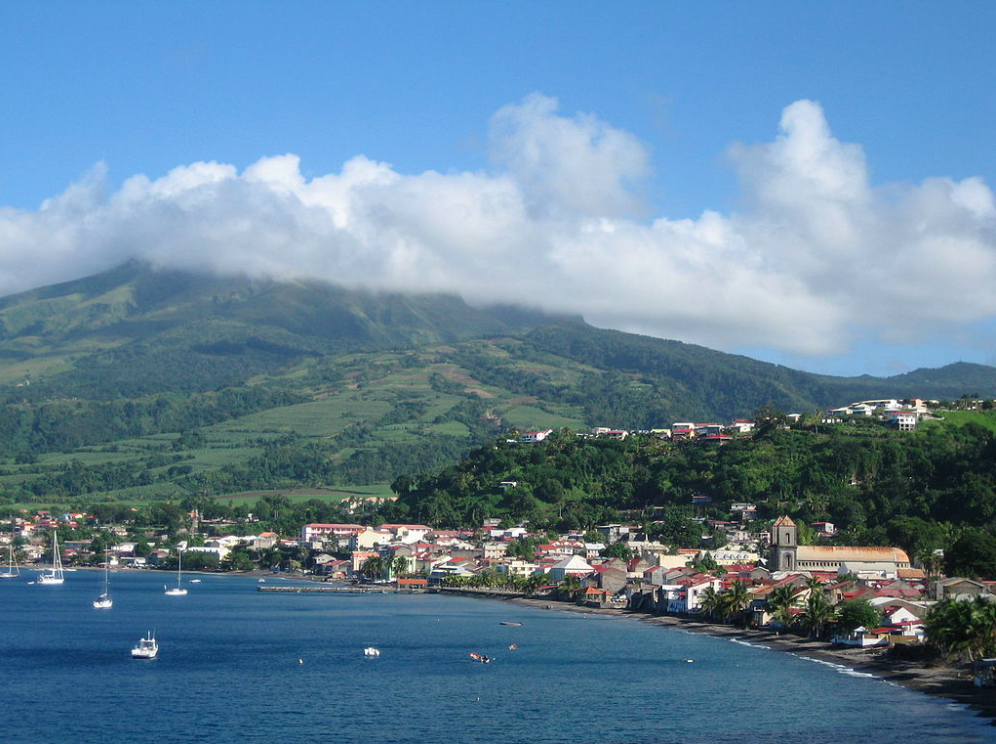
We continued on around the north end of Martinique and down the western shore and anchored in the harbor of St. Pierre.  St. Pierre is a village of approximately 15 square miles and a population of 4000.  Since the establishment of the town, it has suffered two catastrophic natural disasters:  a hurricane in 1780 with an 8 meter storm surge killing 9000, and the eruption of Mount Pelée in 1902 that killed everyone in the village (~28,000) save for two individuals.

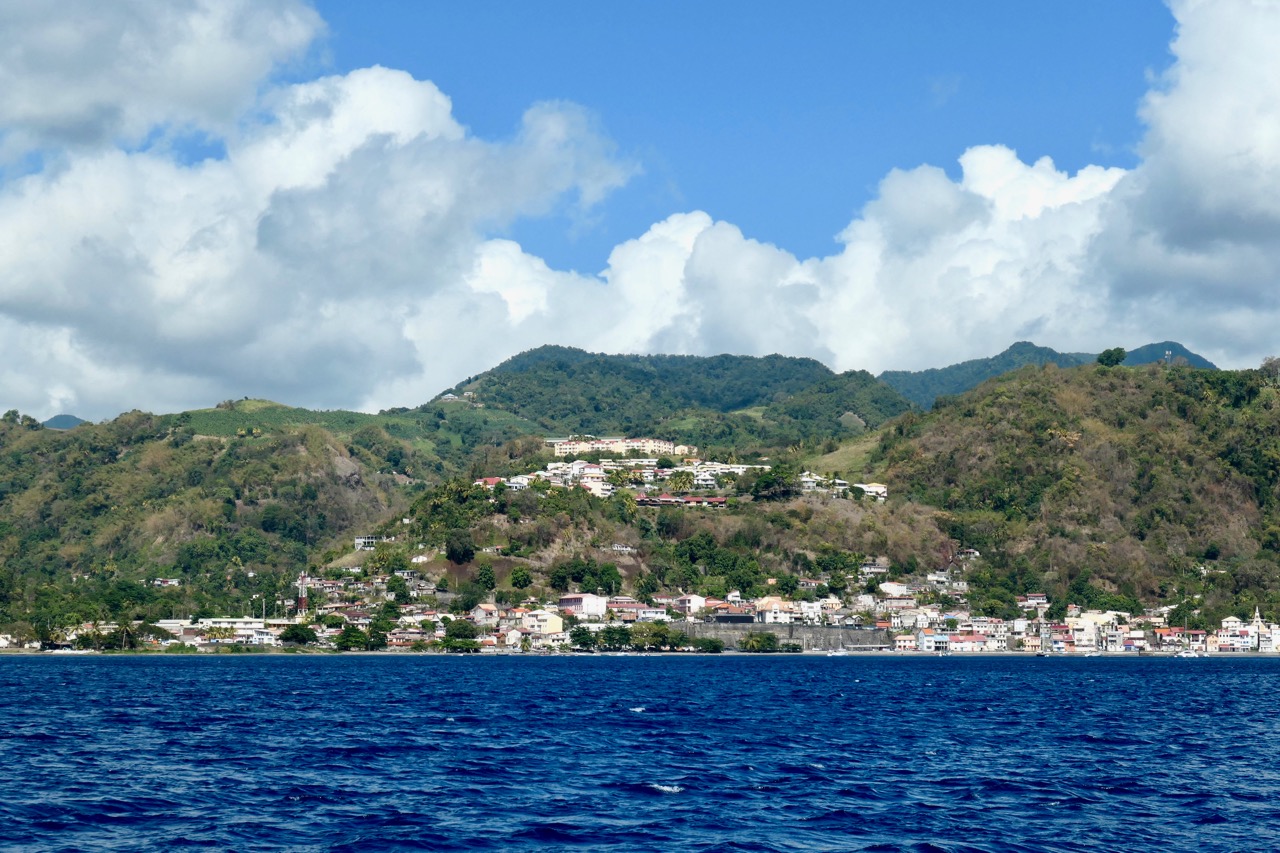
Approaching St. Pierre
St. Pierre, Martinique, with Mount Pelée in background (reproduced from Wikipedia.org, ib:user:Zenneke)

It had been an exhausting, 12 hour day (so far) and Michael was of a mind to treat us to dinner.  We took the dinghy in to find a nice restaurant for dinner and chill.  The selection of open restaurants was quite slim.  We chose one we had eaten in previously, but Duhkxy was turned away.  We remembered afterward that previously we snuck him into the restaurant in his airplane carrier..

It was a pleasant, relaxing, dinner off a short menu.  Michael was decidedly unimpressed, but we have grown accustomed to the local offerings, and every dinner out is a wonderful treat.

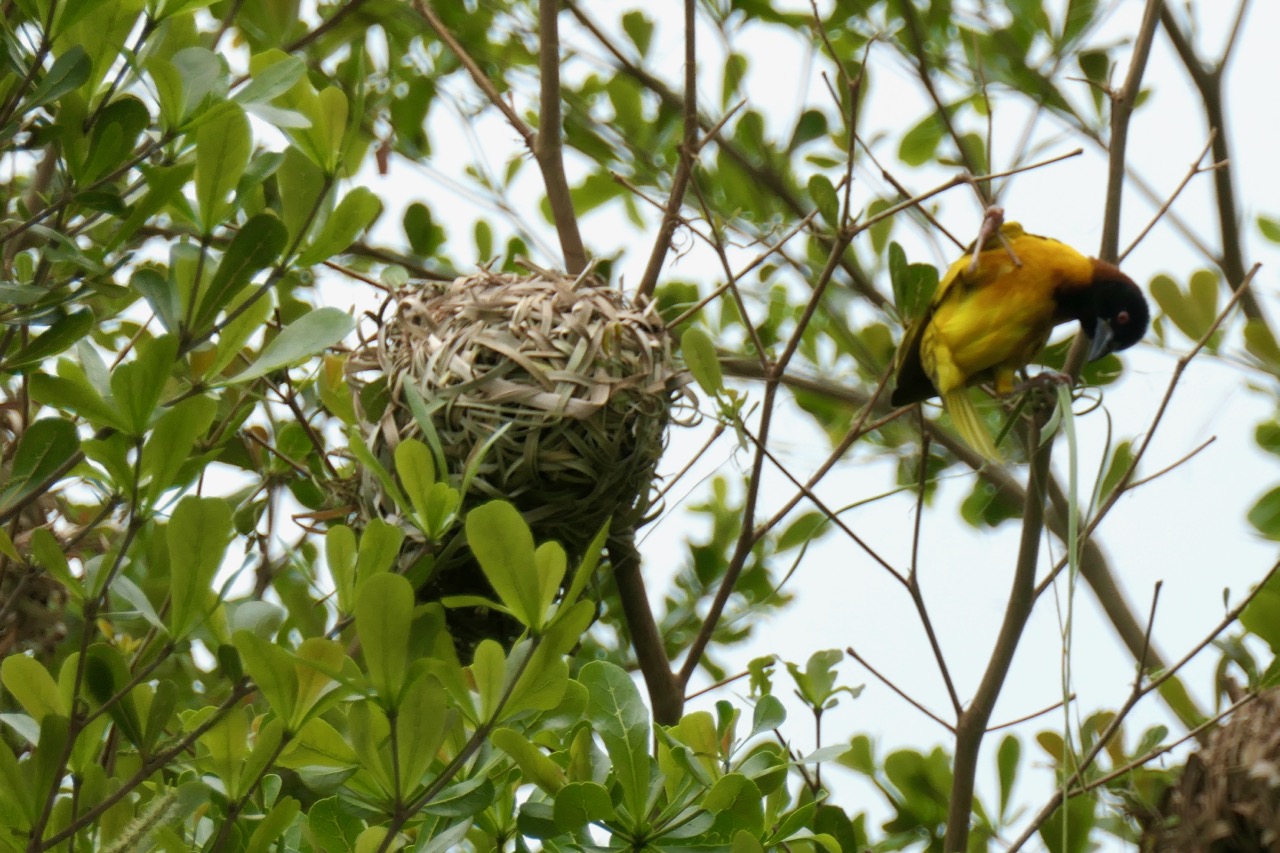
Immediately, as you step off St. Pierre’s dingy dock, is a lovely public square lined with trees. When we visited, these trees were inhabited by a large flock of bright yellow and black orioles who were building nests.  Many dozens of nests were completed or under construction.

As this beautiful oriole begins constructing a new nest, note the proximity of nests to right and left.
These birds characteristically nest in communities like these with nests almost close enough to touch.
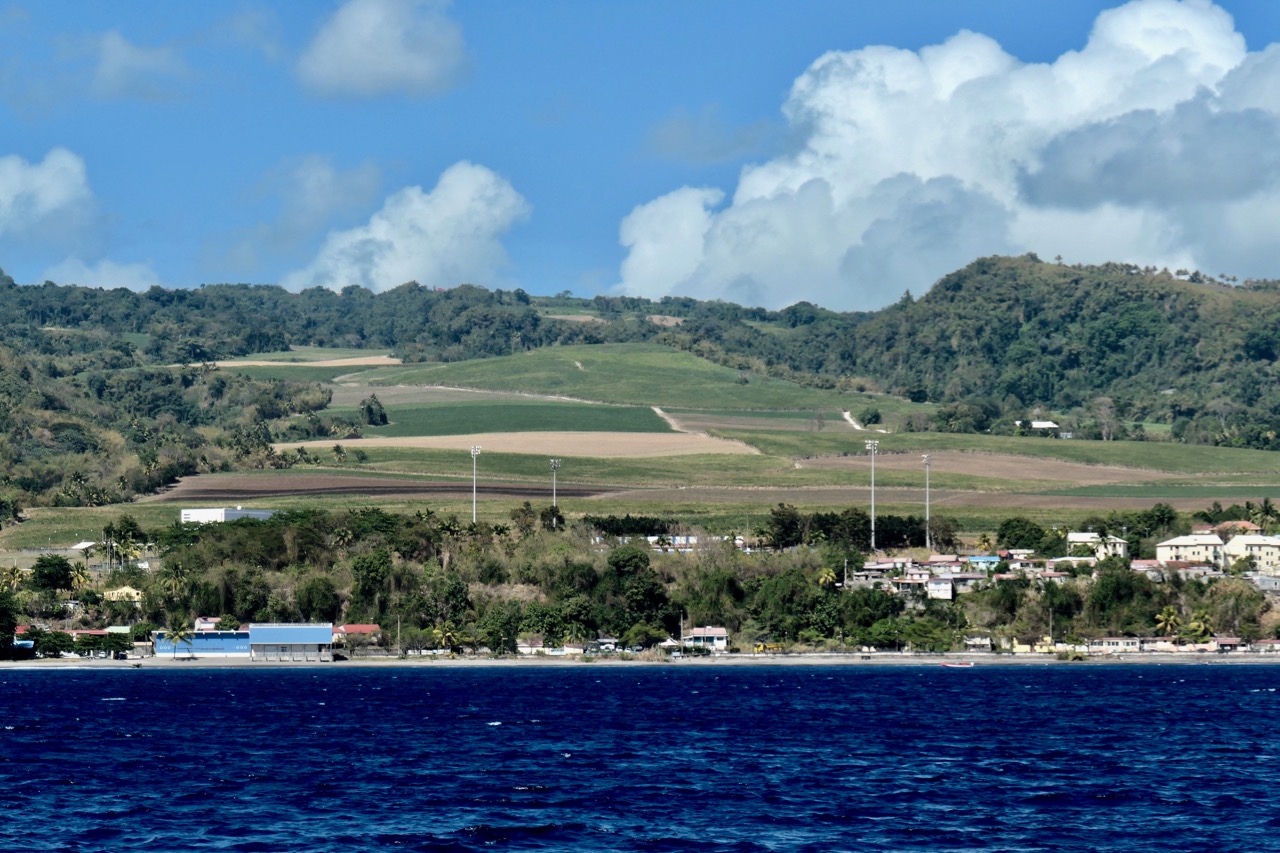
Farmland just beyond the town of St. Pierre
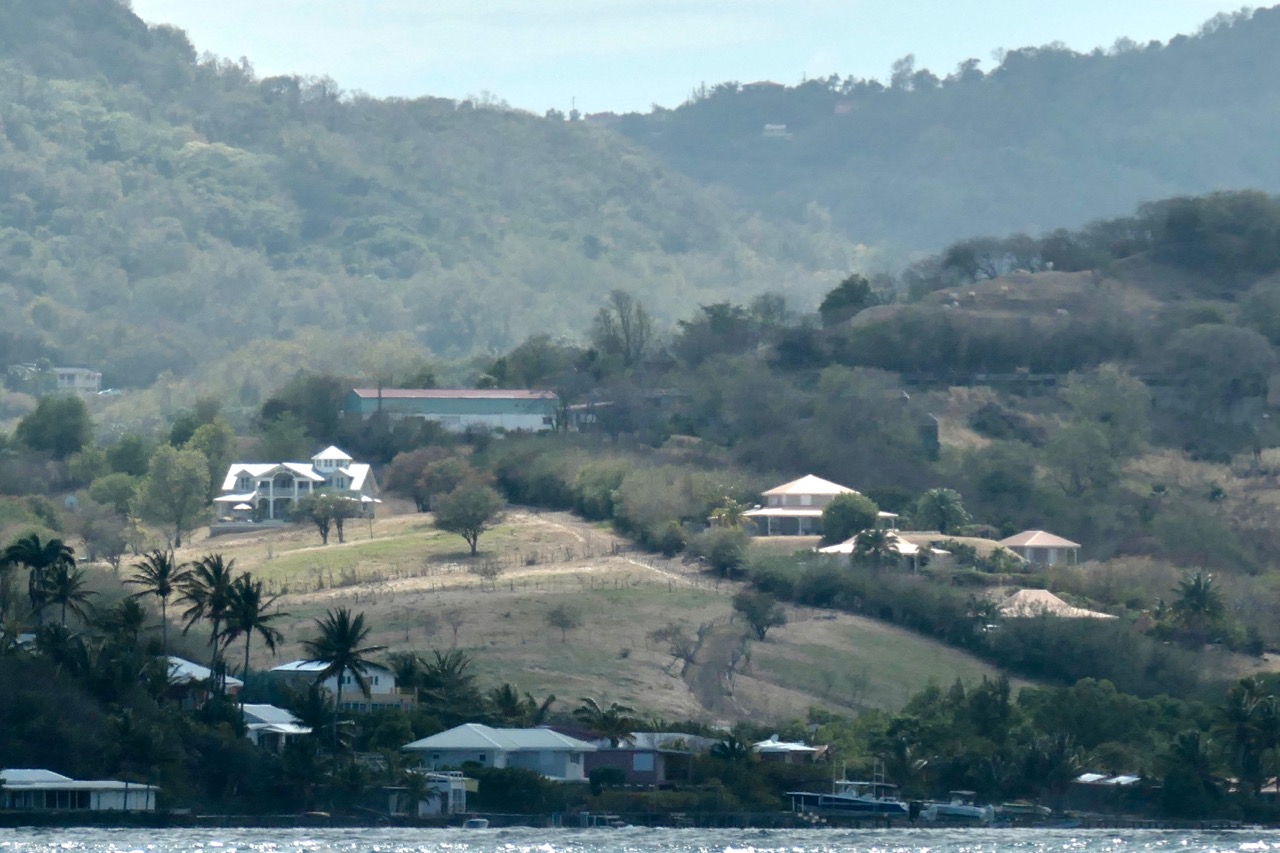
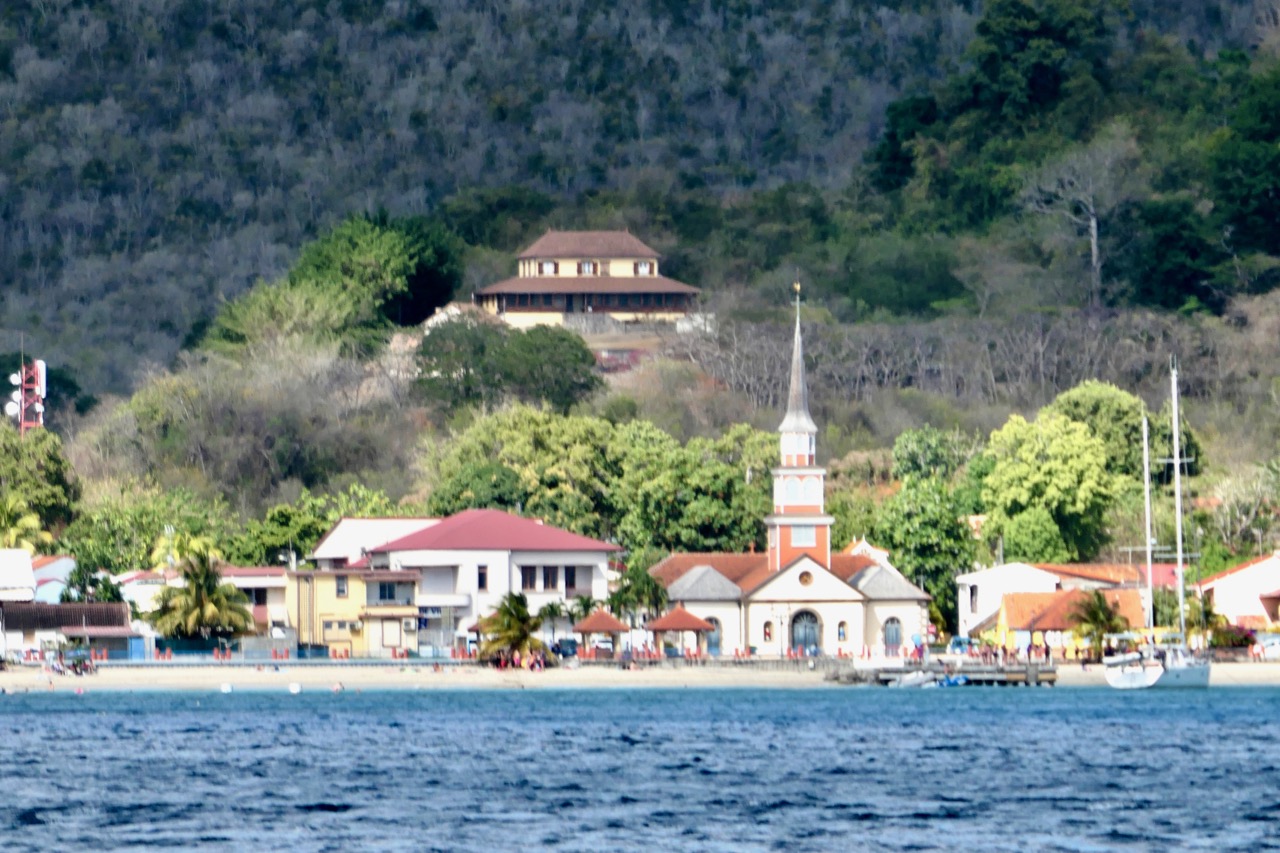
We set off the following morning heading for Anse D’Arlet, one of the loveliest towns we have encountered in our travels, thus far, in the Caribbean.  We snorkeled the north shore of the harbor;  one of the best snorkeling we did with Michael.

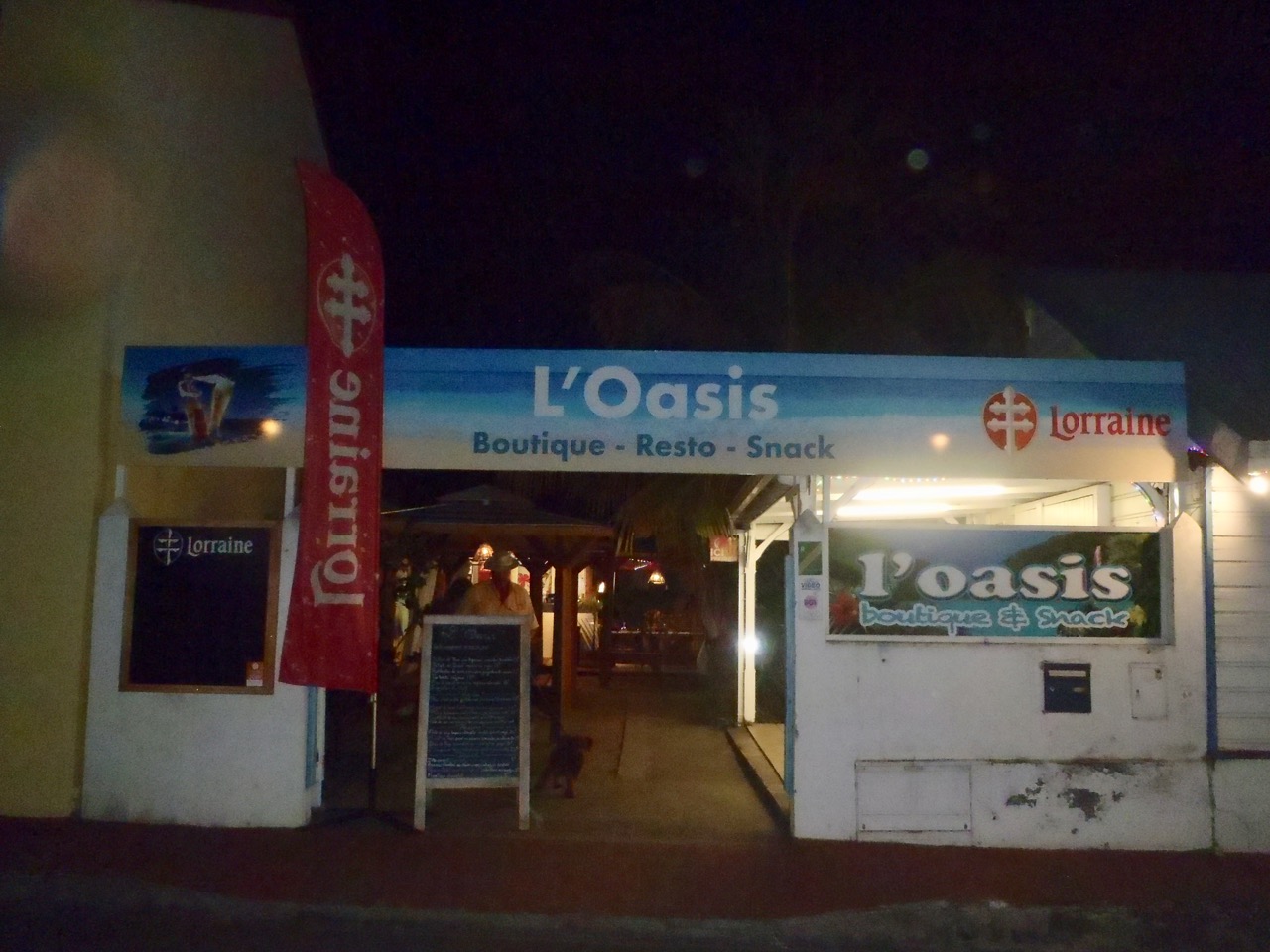
We visited the town and looked for a restaurant for dinner.  None, we encountered, looked particularly promising from their exterior.  Michael approached one, L’oasis, and took a peak inside and was pleasantly surprised.  He suggested we check out the menu board which offered a wide selection of entrees et al.  From the least inviting exterior, he had found an absolutely charming restaurant with outstanding food.

L’oasis, a 4.4 star restaurant in Anse D’Arlet (Trip Advisor) – don’t judge it by its exterior!!!
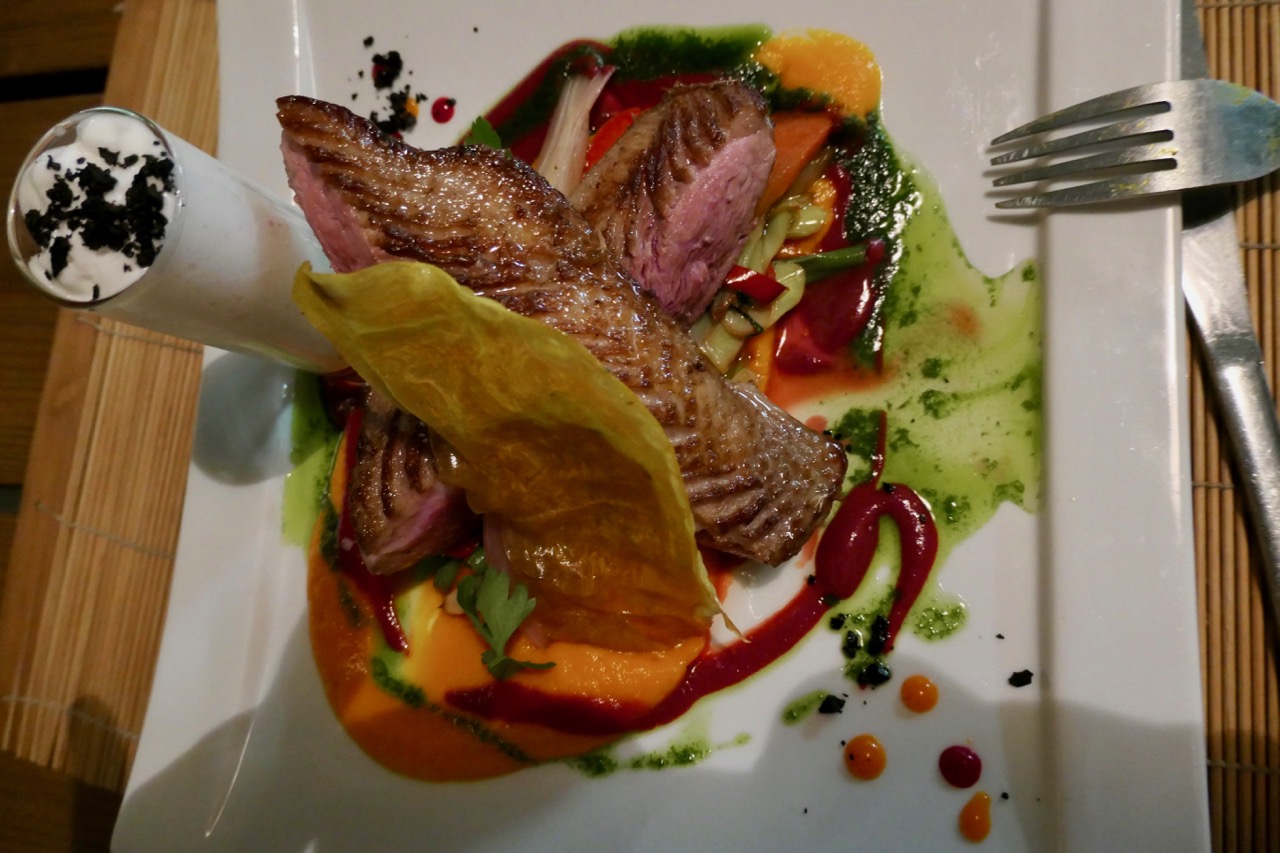
Magret du Canard (Duck Breast) – Michael and George both had duck
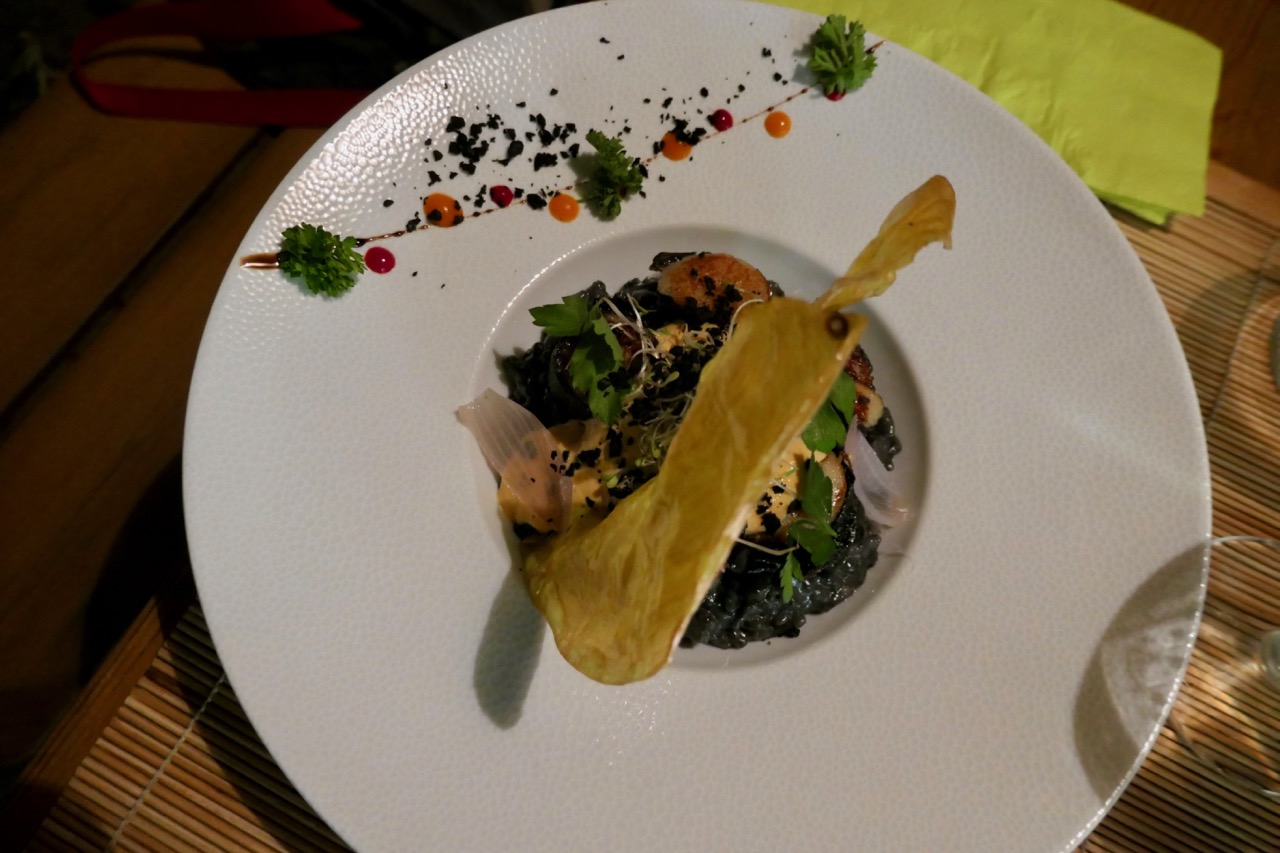
I had St. Jacques (scallop) risotto
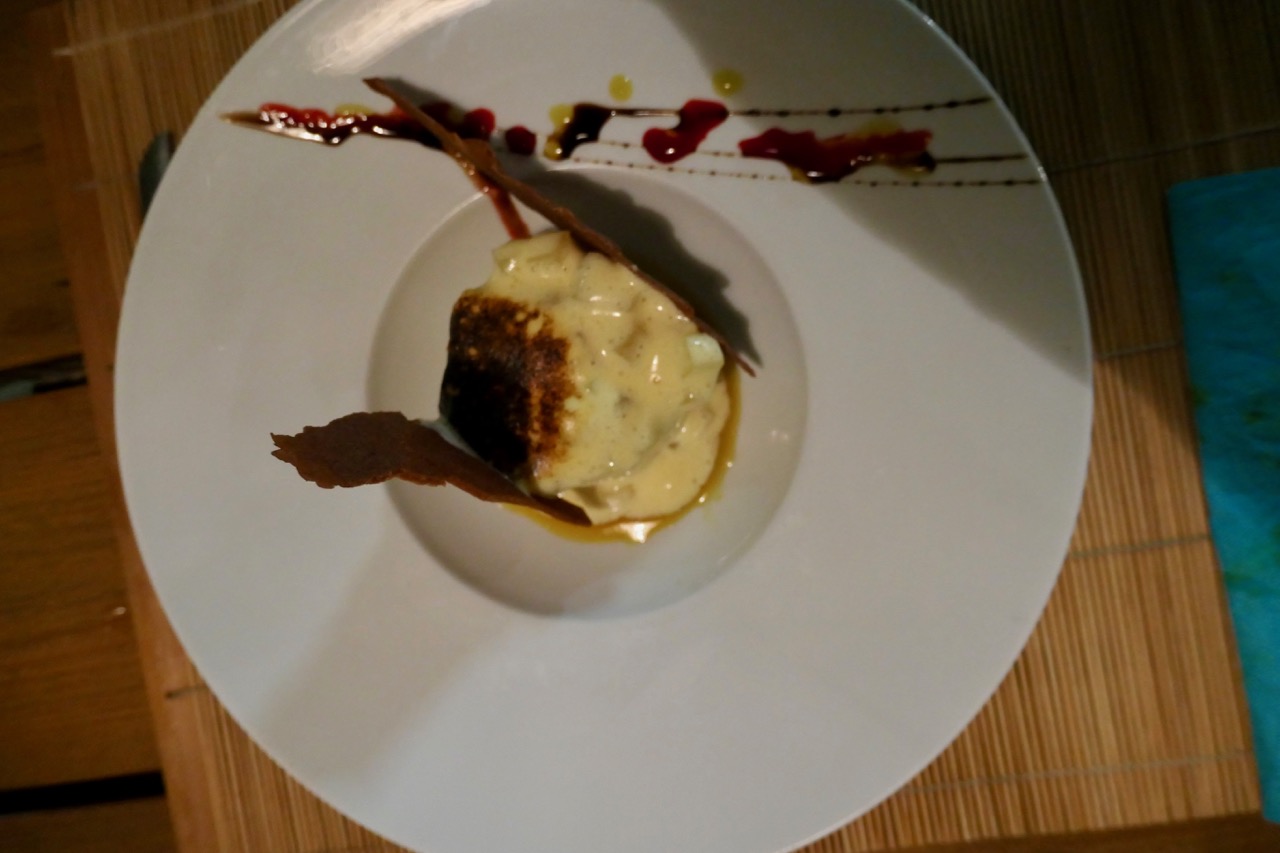
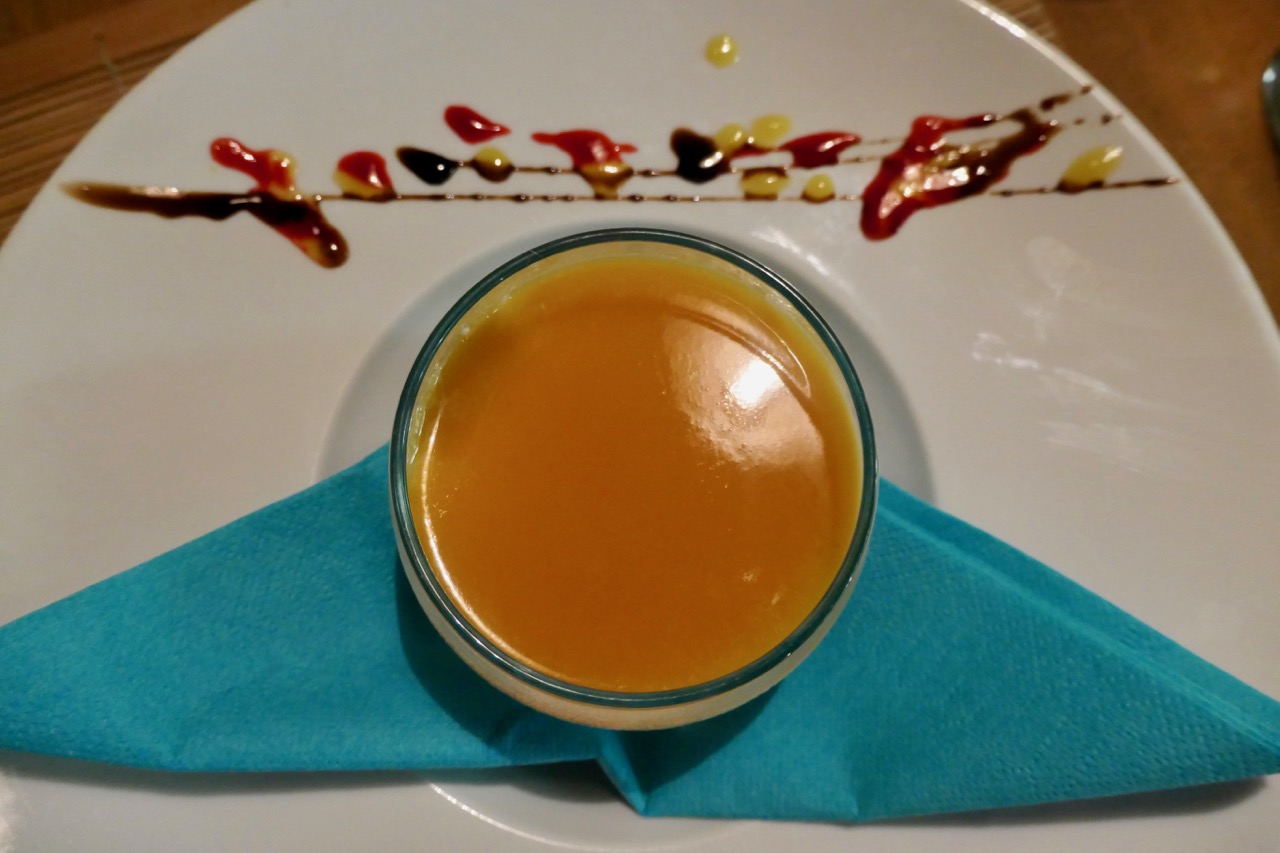
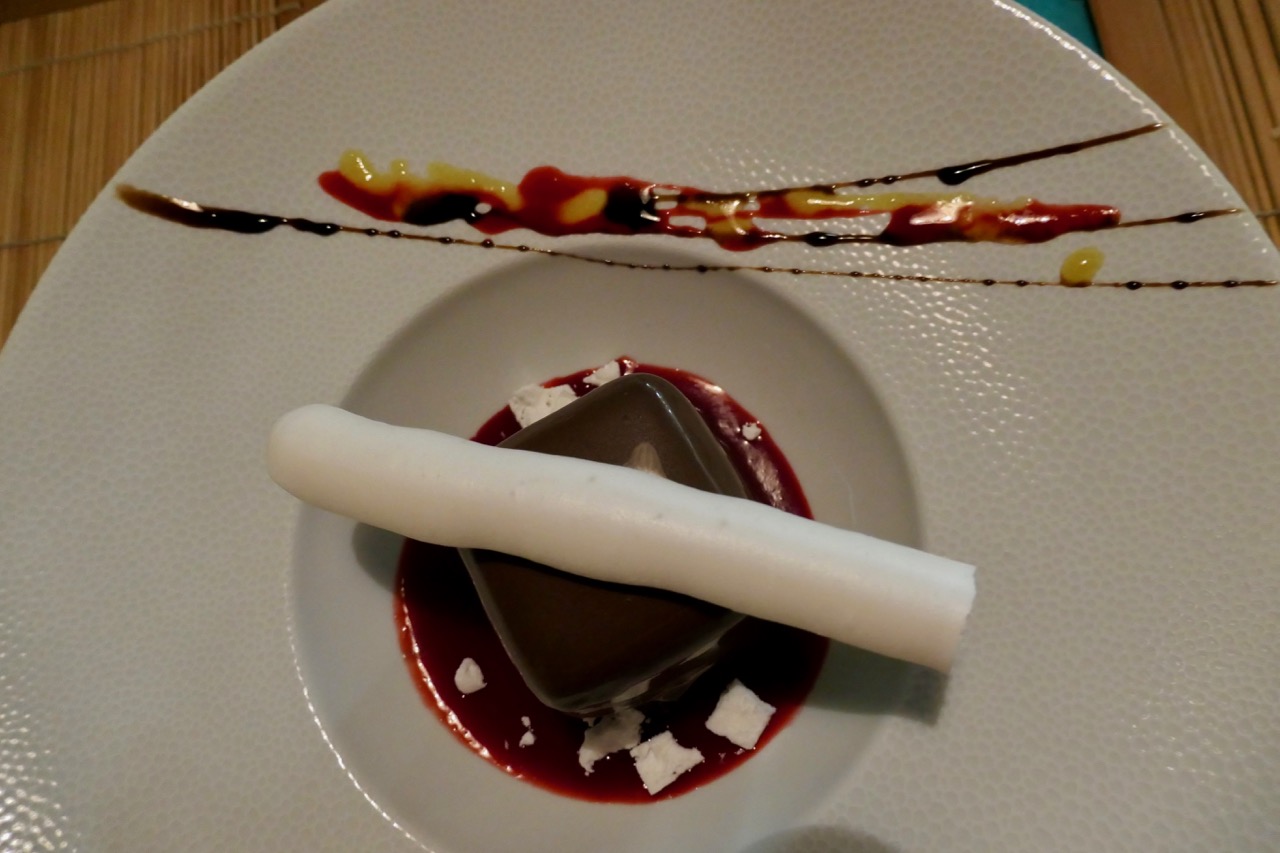
 Ah… Desert
Happy and full, if a bit fuzzy
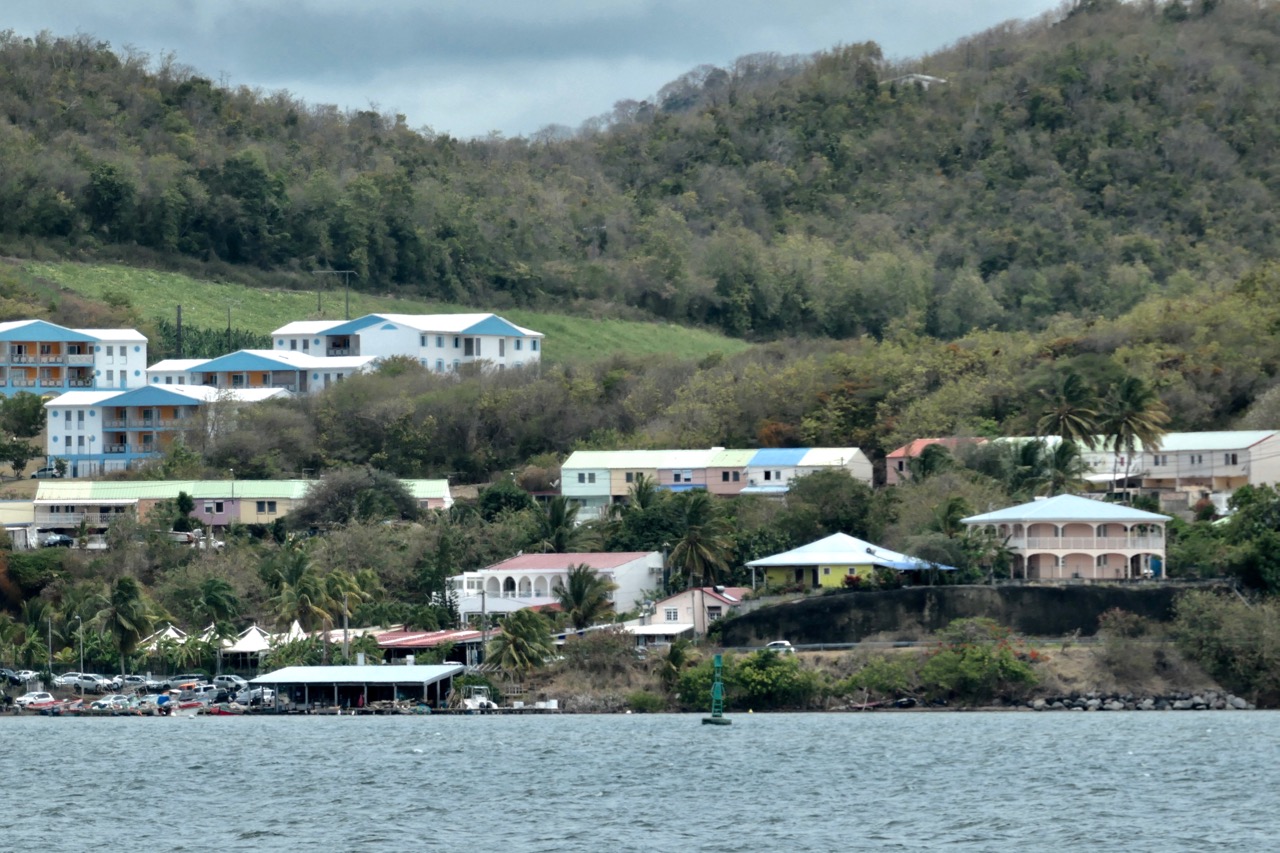
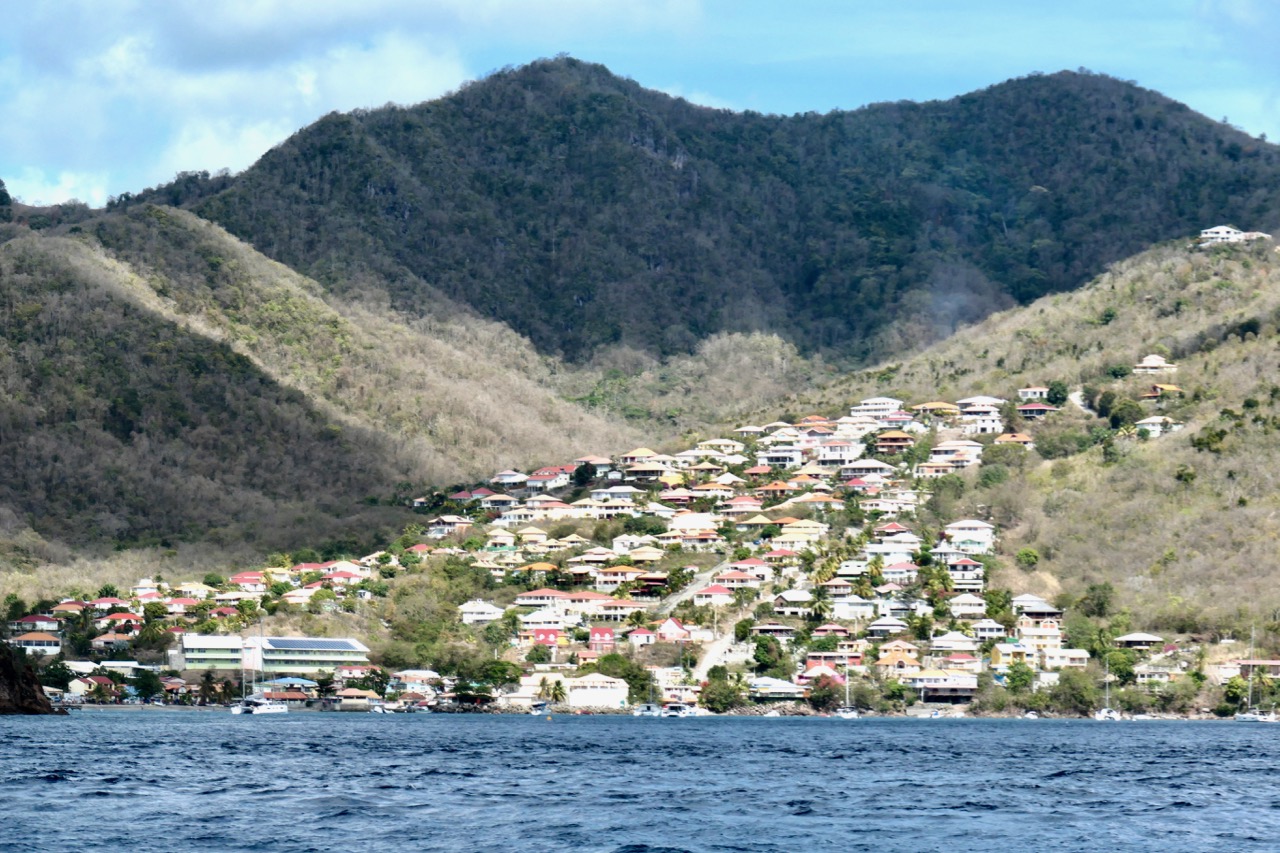
Approaching Anse D’Arlet

Michael’s last two days with us were spent sailing from Anse D’Arlet to Le Marin, and then back to Marigo Bay in St. Lucia.  We hope he enjoyed his visit with us as much as we enjoyed having him share our new “Way of Life” (Michael’s description).

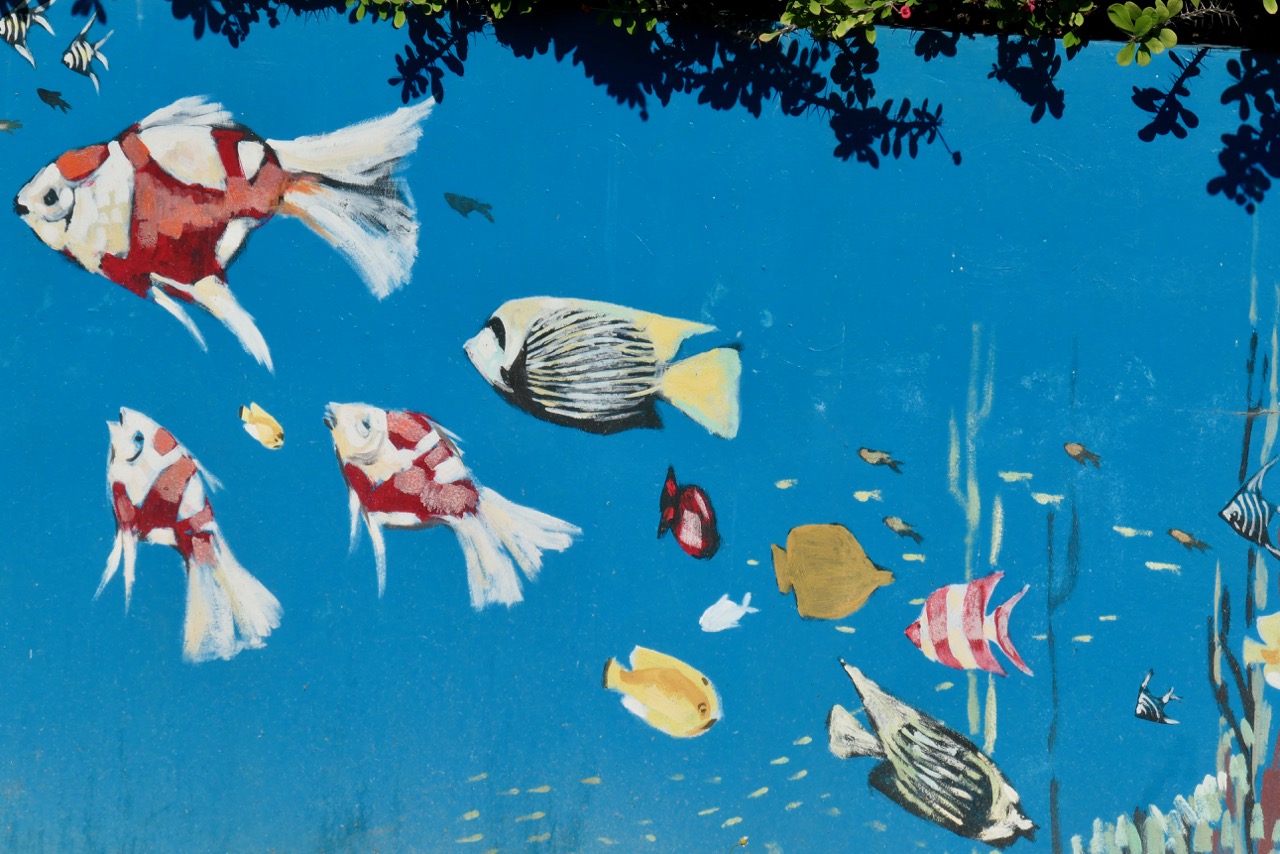
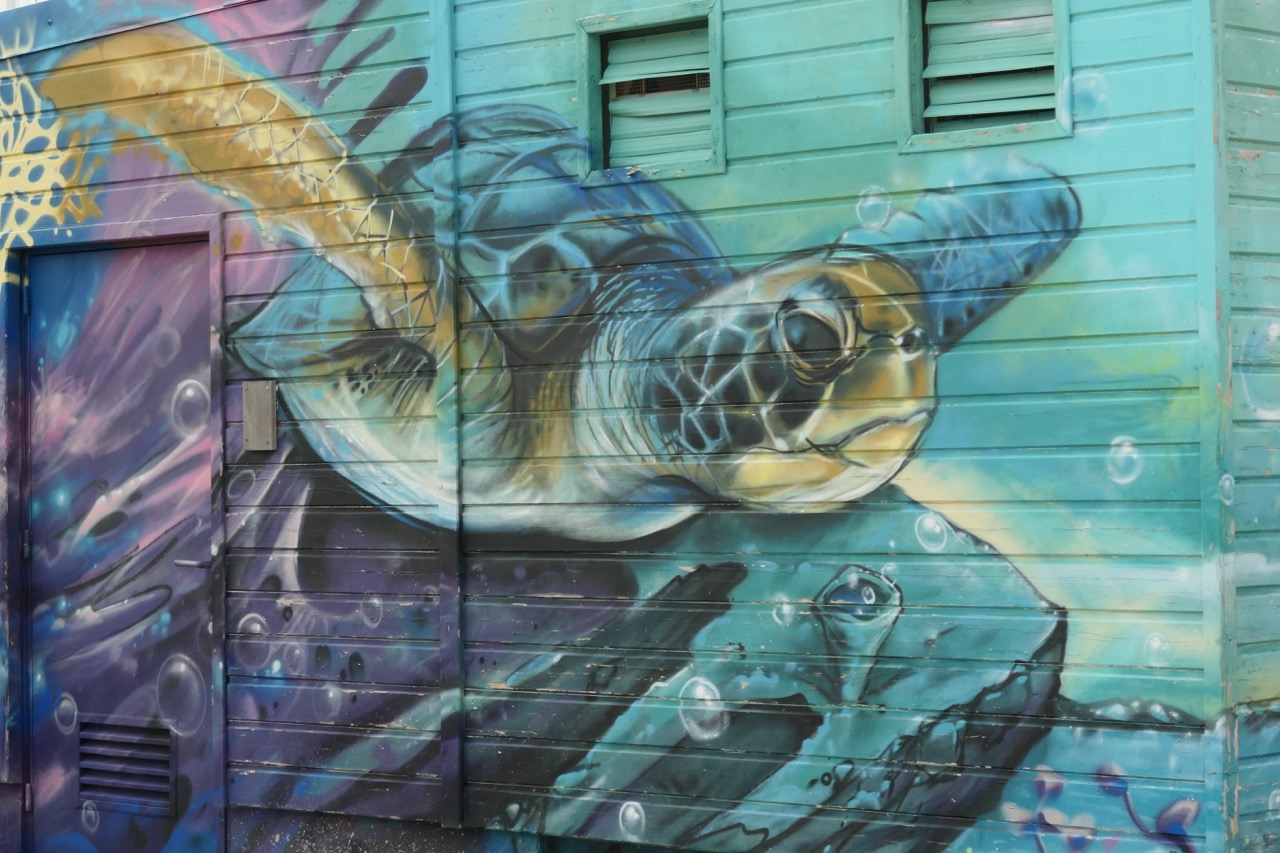
A portion of artwork on building in Le Marin